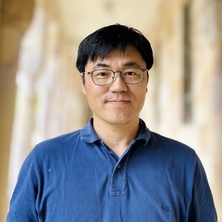
Marshall L. Fisher is the UPS Professor of Operations, Information and Decisions at the Wharton School, University of Pennsylvania. His research focuses on retailing and supply chain management, with notable work in dynamic pricing, omnichannel operations, and workforce optimization. Academic Affiliation: Wharton School, University of Pennsylvania Research Themes: Retail innovation, supply chain responsiveness, labor economics Recent Trends: Real-time pricing algorithms, inventory-demand interactions, digital transformation Scientific Recognition: INFORMS Kimball Medal (2007) POMS Fellow (2005) INFORMS Fellow (2002) NAE Election (1994) Academic Contributions: Pioneering work on Lagrangian relaxation in integer programming (1981), Edelman Prize-winning liquid gas optimization, and groundbreaking research on retail staffing and training effectiveness. His teaching includes courses on global supply chain management and AI in business.
Professor Lydia Bourouiba is a faculty member at the Massachusetts Institute of Technology (MIT), affiliated with the Department of Civil and Environmental Engineering and the Institute for Medical Engineering and Science (IMES). Her research focuses on the intersection of fluid dynamics and disease transmission, with a strong emphasis on biophysics, interfacial flows, turbulence, and multiphase systems. Ph.D. in Applied Mathematics from McGill University (2008) Research on fluid fragmentation, droplet/bubble dynamics, and pathogen transport Co-Founder and Associate Director of the NSF Center for Pandemic Prevention (APPEX) Her work spans fundamental and applied domains, including: Biophysics of pathogen transport in air and water Turbulent multiphase flows in respiratory events Fluid-plant interactions in agricultural disease Nonlinear dynamics in public health contexts Key article trends highlight: Biomedical fluid mechanics Climate and environment-driven disease modeling High-risk/high-reward public health innovations Interdisciplinary approaches combining physics, biology, and engineering Scientific awards include: Fellow of the American Physical Society (2021) American Institute for Medical and Biological Engineering Fellow (2022) Smith Family Foundation Odyssey Award for biomedical research Ole Madsen Mentoring Award She serves as Associate Editor for the journal FLOW and has founded conferences like the Gordon Research Conference on Fluids in Disease Transmission. Her lab (Fluids and Health Network) develops experimental and theoretical frameworks to address contamination, pandemic control, and fluid-health-environment interactions.
Yuanbo Xiangli is a postdoctoral researcher at Cornell University , advised by Prof. Noah Snavely. Previously, he obtained his Ph.D. from the Multimedia Lab in the Department of Information Engineering at the Chinese University of Hong Kong (CUHK) , supervised by Prof. Dahua Lin. His research focuses on 3D computer vision and deep generative modeling for urban scene reconstruction. 3D scene reconstruction from sparse images Neural rendering and Gaussian splatting Deep generative modeling for urban environments Multi-source geospatial data processing City-scale modeling and synthetic datasets His recent work includes advanced NeRF extensions (BungeeNeRF, GridNeRF), Gaussian splatting enhancements (GSDF, Scaffold-GS), and urban scene datasets (MatrixCity, OmniCity). A pioneer in combining classical vision techniques with modern deep learning approaches. ICLR 2020 Spotlight Award Collaborates with leading researchers in photorealistic rendering, including Noah Snavely and Dahua Lin. Develops systems enabling efficient 3D reconstruction from diverse data sources like satellite imagery and street-level panoramas.
Iain Murray is Professor of Machine Learning and Inference at the School of Informatics, University of Edinburgh. His research focuses on developing flexible probabilistic models applicable across diverse domains including cosmology, neuroscience, perception, speech, sports, and text. Program Chair for ICLR (2018) Publications Chair for ICML (2017, 2018) Area Chair for AISTATS, ICLR, ICML, NeurIPS, and UAI Amazon Scholar (2018-2024), first appointed in Europe Murray's research interests center on probabilistic reasoning using machine learning, with specific expertise in density estimation and Markov chain Monte Carlo methods. His work spans theoretical foundations and practical applications, with significant contributions to neural autoregressive distribution estimation (NADE), real-valued NADE (RNADE), and pseudo-marginal slice sampling techniques. His research has enabled advances in flexible probabilistic modeling across multiple domains. His publications show consistent focus on advancing probabilistic modeling techniques, with recent work emphasizing neural autoregressive models, density estimation methods, and efficient sampling algorithms. The research trajectory demonstrates progression from foundational work on NADE to increasingly sophisticated deep learning approaches for density estimation and inference. Notable Paper Award for NADE work Amazon Scholar (2018-2024) Murray has supervised numerous PhD students who have gone on to prominent positions at Google DeepMind, NYU, stability.ai, and other leading institutions. His teaching responsibilities include the Machine Learning and Pattern Recognition course and project supervision. His research group focuses on developing tractable probabilistic models with applications across multiple scientific domains.
Paul Boersma is a Professor of Phonetic Sciences at the University of Amsterdam within the Faculty of Humanities. His research explores how phonetic, phonological, and morphological phenomena emerge through computational modeling using artificial neural networks and Optimality Theory, with a focus on multi-level constraint interactions and distributional learning. University of Amsterdam Faculty of Humanities Phonetic Sciences Key research areas include: Computational Modeling : Simulations of phonological category emergence from phonetic data Optimality Theory : Gradual Learning Algorithm applications BiPhon Framework : Parallel bidirectional phonology/phonetics models Statistical Learning : Cross-situational and distributional learning mechanisms Recent publications emphasize: 2025: Inclusive speech recognition systems using Whisper model 2025: F0 ratio analysis for creaky voice diagnostics 2024: Prosodic clitics in child speech and checked tones in Shanghai Chinese 2023: Distributional learning in developmental language disorder contexts 2022: Substance-free phonological features and ghost segment phenomena He has also contributed extensively to the Praat software for phonetic analysis, with continuous updates since 1993.
Esa Ollila serves as Associate Professor in the Department of Signal Processing and Acoustics at Aalto University, Finland, and holds an adjunct professorship in Statistics at the University of Oulu. His academic appointments include Academy of Finland Research Fellow (2010-2015) and prior senior research/lecturing roles at both institutions. His educational background features: M.Sc. in Mathematics, University of Oulu (1998) Ph.D. in Statistics (with honors), University of Jyväskylä (2002) D.Sc.(Tech) in Signal Processing (with honors), Aalto University (2010) Professor Ollila's research centers on statistical signal processing and robust statistical methodologies , with significant contributions to array processing, high-dimensional data analysis, and covariance matrix estimation. His work bridges theoretical statistics with practical applications in radar systems, wireless communications, and big data analytics, emphasizing robustness against outliers and computational efficiency in modern data-intensive environments. Current focus areas include compressed sensing, sparse approximation, and blind source separation techniques. Analysis of his 15 most recent publications (2024-2025) reveals three dominant trends: (1) robust covariance learning for massive random access systems, (2) integrated sensing and communications (ISAC) for 6G networks using advanced beamforming, and (3) geometric approaches to elliptical distributions in statistical inference. His work increasingly incorporates deep learning (GANs, graph neural networks) while maintaining strong foundations in classical signal processing theory. Key recognitions include: Academy of Finland Postdoctoral Fellowship (2004-2007) Academy of Finland Research Fellowship (2010-2015) His research has been supported through prestigious Academy of Finland grants totaling over a decade of continuous funding. Professor Ollila currently leads an active research group at Aalto University, supervising doctoral candidates and collaborating internationally with institutions including Princeton University (where he served as Visiting Post-doctoral Research Associate during 2010-2011). He maintains strong ties with the University of Oulu through his adjunct professorship and has contributed to EURASIP's Special Area Team on Theoretical and Methodological Trends in Signal Processing. The Esa Ollila Research Group focuses on cutting-edge challenges in statistical signal processing, with current projects spanning robust DOA estimation under non-Gaussian noise, covariance matrix learning for massive MIMO systems, and machine learning-enhanced radar-communication integration. The group actively develops open-source tools like the fitHeavyTail R package for heavy-tailed distribution modeling and maintains collaborations with industry partners in wireless communications.
Joel Zylberberg is an Adjunct Assistant Professor at the University of California, Los Angeles (UCLA), affiliated with the Department of Ophthalmology within the School of Medicine . His research bridges Computational Neuroscience , Neural Networks , and Machine Learning , focusing on how neural activity and biological mechanisms inform artificial intelligence and visual cortex dynamics . Joel's work explores retinal computation , population coding , and neural adaptation , often analyzing mouse visual cortex and neurophysiological data . His recent publications highlight trends in dynamic retinal processes , stimulus-driven network topology , and brain-inspired machine learning , emphasizing the interplay between biophysics and computational modeling . Collaborators include Greg Field (UCLA), Richard Born (Harvard), and Michael DeWeese (UC Berkeley), with affiliations spanning institutions like University of Washington and University of California, San Diego (UCSD). His work appears in journals such as Nature Neuroscience , Neuron , and PLOS Computational Biology .
Joshua J. Coon is a Professor at the University of Wisconsin-Madison with appointments in the Department of Biomolecular Chemistry and the Department of Chemistry. He leads the Coon Group, focusing on advancing mass spectrometry technologies for proteomics, metabolomics, and lipidomics. His research addresses fundamental questions in cell biology, including stem cell differentiation, epigenetic regulation, and cancer biomarker discovery. Affiliations : Director of the NIGMS National Center for Quantitative Biology of Complex Systems. Research Emphasis : Instrumentation development, data analysis software, ion chemistry, and biological applications of proteomics. Laboratory : Located in the Genome Center of Wisconsin with a dozen hybrid mass spectrometers, including Orbitrap systems. Collaborations : Long-term partnership with Thermo Fisher Scientific and the Wisconsin Alumni Research Foundation (WARF) for technology commercialization. Training : Mentored 27 Ph.D. students since 2009, emphasizing interdisciplinary research and professional development.
Associate Professor Dan Dongseong Kim is Deputy Director of UQ Cybersecurity and an Associate Professor at The University of Queensland (UQ), Australia. Previously, he held permanent academic positions at The University of Canterbury (UC), New Zealand (2011-2018) as a Senior Lecturer and Lecturer. His research focuses on Cybersecurity and Dependability for AI, IoT, Autonomous Vehicles, Cloud Computing, and Moving Target Defenses (MTD). Doctor of Philosophy in Computer Engineering from Korea Aerospace University Postdoctoral Research at Duke University (2008-2011) Visiting Scholar at University of Maryland (2007) Dan's work explores Graphical Security Models , Moving Target Defense for proactive resilience, and AI-Driven Cybersecurity with emphasis on adversarial robustness and interpretable models. His recent publications (2024-2025) span journals like IEEE Transactions on Dependable and Secure Computing and conferences such as DSN , addressing automated defense, evolving attacks, and hardware-aware security frameworks. He has advised 15 Ph.D. graduates, including researchers now at institutions like RMIT University, La Trobe University, and CSIRO's Data61. Current supervision includes projects on Automated Penetration Testing , AI-Based Intrusion Response , and Moving Target Defense . Dan's research is funded by agencies including the Republic of Korea's Agency for Defence Development and US Army Research Lab . His professional roles include Associate Editor for IEEE Communications Surveys and Tutorials and Steering Committee Chair for IEEE PRDC .
Jennifer Dy is a Distinguished Professor at Northeastern University with joint appointments in Electrical and Computer Engineering and Khoury College of Computer Sciences. As Director of AI Faculty at the Institute for Experiential AI, she leads research in machine learning, computer vision, and explainable AI. Her work spans biomedical applications (COPD phenotyping, neuroimaging) and fundamental algorithms (active learning, continual learning). She holds a PhD from Purdue University and is an AAAI Fellow. Research Focus: Dy develops methodologies for robust and interpretable machine learning, including techniques for model stability in continual learning, dependency-aware active learning, and axiomatic explanation frameworks. Her applied research advances diagnostic tools using Raman spectroscopy, CT imaging, and multi-omics biomarker discovery. Awards: Recognized with the NSF CAREER Award, Faculty Research Team Award, and AAAI Fellowship for contributions to unsupervised learning and medical AI. Publication Trends: Recent articles demonstrate strong cross-disciplinary integration, combining theoretical advances in explainability/robustness with applications in healthcare, wireless systems, and particle physics. Methodological themes include optimal transport theory, probabilistic modeling, and transformer architectures.
Prof. Stephen Mayhew is a Professor at Aston University's School of Life & Health Sciences, affiliated with the College of Health and Life Sciences. He leads the Cognition & Neuroscience Research Group (CNRG) and contributes to the Aston Research Centre for Health in Ageing. His research focuses on multimodal neuroimaging (EEG/fMRI/MRI/MEG) to study brain activity in health and cognition, particularly negative BOLD responses and their role in neural inhibition and behavior. Recent work includes investigating task-demand effects on BOLD responses, brain state dynamics during rest, and neurovascular coupling methods. Education & Affiliations: Affiliated with Aston University's School of Life & Health Sciences Member of CNRG and Health in Ageing Centre Research Interests: His work explores collaborative/antagonistic brain networks, lifespan changes in brain function, and the functional significance of negative BOLD responses. Techniques include fMRI, EEG, and advanced neuroimaging analysis methods like fractal dimension and laminar 7T MRI. Key Contributions: Published over 30 peer-reviewed articles on neuroimaging and brain networks Systematic reviews on neurovascular coupling and transcranial Doppler methods Labs & Teams: Active in CNRG and collaborates across disciplines in health sciences and bioengineering.
Charless Fowlkes is a Professor in the Department of Computer Science at the University of California, Irvine (UCI). His research focuses on computational vision, spanning human visual system understanding, machine vision systems, and applications in biomedical informatics and forensic science. He holds a Ph.D. from UC Berkeley (2005). His work integrates techniques from computer vision, AI, and applied mathematics to address challenges in automated biological data analysis, morphology, and spatial gene expression. Key research areas include forensic science (e.g., shoeprint matching via 3D reconstruction), biomedical applications (e.g., heart function mapping and pollen classification), and AI-driven systems for scene understanding. Recent projects include a $20M forensic science center funded by the National Institute of Justice. His publications emphasize geometric reasoning, 3D reconstruction, and adaptive learning algorithms. Notable contributions include developing algorithms for 3D human pose estimation with scene constraints, automated pollen identification via CNNs, and frameworks for cross-domain forensic analysis. His work bridges theoretical computer vision with real-world applications in forensics, healthcare, and environmental science.
Laura Hengehold is a Professor of Philosophy at Case Western Reserve University, holding the endowed Beamer-Schneider Professorship in Ethics. Her research focuses on intersections of language, embodiment, and political conflict, drawing on 20th-century French philosophy (Foucault, Deleuze), feminist theory, and African-European political dialogue. She explores how knowledge systems shape women’s bodily experiences, emphasizing ethical and political implications. Key works include Simone de Beauvoir’s Philosophy of Individuation and The Body Problematic . She co-edited African Philosophy for the 21st Century and translated works by Seloua Luste Boulbina. Her scholarship bridges existentialism, post-structuralism, and transnational feminism. Research Interests: Feminist philosophy, continental philosophy, political theory, embodiment studies, decolonial thought. Awards: Beamer-Schneider Professorship in Ethics (2017–present). Teaching: Courses on social/political philosophy, feminist theory, African political thought, and Deleuze. Recent talks include engagements on Simone de Beauvoir’s ethics, African political thought, and Foucault’s influence. She collaborates with the Women and Gender Studies and World Literature Programs at CWRU.
Dr. Joyoung Lee is an Associate Professor in the Department of Civil and Environmental Engineering at New Jersey Institute of Technology (NJIT). He previously served as Laboratory Manager at the Federal Highway Administration's Saxton Transportation Operations Laboratory. His research focuses on Connected Vehicle (CV) systems, including applications in traffic management, signal control optimization, and autonomous vehicle infrastructure integration. Dr. Lee holds a Ph.D. (2010) and M.S. (2007) in Transportation Engineering from the University of Virginia, and a B.S. (2000) in Transportation Engineering from Hanyang University. His work emphasizes CV-based solutions for real-time traffic systems, cooperative vehicle-infrastructure systems (CVIS), and autonomous vehicle integration. Notable achievements include the 2019 IEEE CAVS Best Paper Award and multiple best paper recognitions from PTV User Group Meetings. His research also addresses traffic safety through innovations like the Virtual Guide Dog system for visually impaired pedestrians and advanced traffic monitoring frameworks using LiDAR and computer vision. Education: Ph.D., Transportation Engineering, University of Virginia (2010) M.S., Transportation Engineering, University of Virginia (2007) B.S., Transportation Engineering, Hanyang University (2000) Dr. Lee's research interests span smart city infrastructure, edge computing for traffic systems, and sustainable transportation solutions. He has pioneered algorithms for cooperative intersection management, automated platooning systems, and federated learning-based traffic optimization. His work bridges theoretical models with real-world implementation through partnerships with FHWA and industry stakeholders. Key contributions include development of the Cumulative Travel-Time Responsive (CTR) traffic signal control system, smart arrival notification systems for paratransit services, and advanced microsimulation calibration techniques. His lab focuses on translating CV data into actionable strategies for safer, more efficient transportation networks. Awards: IEEE CAVS Best Paper Award (2019) ASCE Grand Challenge Innovation Contest Honorable Mention (2017) PTV VISSIM Best Paper Awards (2012, 2008) Excellence in Research Award (University of Virginia, 2011) Ongoing projects include semi-decentralized graph neural networks for traffic forecasting and low-cost LiDAR-based traffic monitoring systems. His work addresses critical challenges in autonomous vehicle integration, incident management, and infrastructure resilience through interdisciplinary collaborations.
Jian Tang is an Assistant Professor at HEC Montréal and a core member of the Montreal Institute for Learning Algorithms (MILA). His research focuses on graph representation learning, generative models, and their applications in drug discovery and material science. Prior to this, he was a postdoctoral researcher at the University of Michigan and Carnegie Mellon University, and a researcher at Microsoft Research Asia (2014-2016). He has received several prestigious recognitions, including the Canada CIFAR Artificial Intelligence Chairs (CCAI Chair) and best paper nominations at WWW’16. His work on LINE (WWW’15) was recognized as the most cited paper in its year. Tang’s research spans theoretical foundations and practical systems, such as GraphVite for scalable graph embedding and TorchDrug for drug discovery. Key research interests include geometric deep learning for molecular structures, generative models for protein design, and neural-symbolic reasoning for knowledge graphs. He actively collaborates with leading biological labs and leverages industry partnerships for GPU resources. Recent publications emphasize molecular property prediction, 3D conformation generation, and algorithmic reasoning frameworks. He has secured grants from IBM/MILA, Amazon, and the National Research Council Canada, supporting projects like molecular pretraining and geometric representation learning. Tang teaches courses on graph representation learning and deep learning, and mentors a vibrant team of PhD and master’s students. His lab has developed impactful software tools like LINE, PTE, and LargeVis, widely used in the research community.