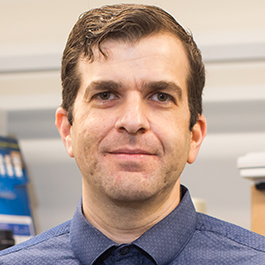
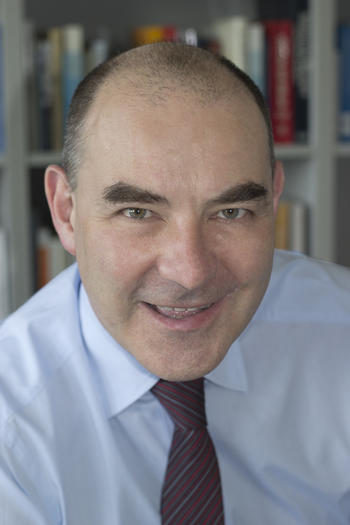
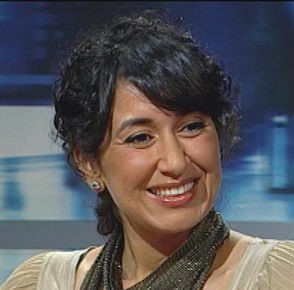
Mike Rubenstein is an Assistant Professor with joint appointments in the Department of Computer Science and Department of Mechanical Engineering at Northwestern University. He holds the Lisa Wissner-Slivka and Benjamin Slivka Professorship in Computer Science and is affiliated with the Center for Robotics and Biosystems. His educational background includes a Ph.D. in Computer Science from the University of Southern California, an M.S. in Electrical Engineering from USC, and a B.S. in Electrical Engineering from Purdue University. Prior to joining Northwestern, he completed a postdoctoral fellowship at Harvard University's Self-Organizing Systems Research Group. Rubenstein's research focuses on advancing multi-robot systems to enable capabilities beyond traditional single robots, emphasizing parallelism, adaptability, and fault tolerance at scale (hundreds to millions of robots). His work spans swarm shape control, modular self-reconfigurable robotics, bio-inspired satellite constellations, and novel sensing for air vehicle swarms. Key themes include algorithmic control for large-scale systems and hardware innovations to overcome current limitations in swarm robotics. His advising has produced notable student achievements, including Petras Swissler's Best Student Paper Award at DARS 2021 and Drew Curtis's NDSEG Fellowship. Research trends across his publications reveal a consistent emphasis on scalability, real-world applicability, and bridging hardware constraints with algorithmic innovation in swarm systems. Rubenstein actively mentors graduate students and leads projects involving swarm robotics platforms like FireAnt and PCBot. His lab focuses on developing systems where simplicity in individual robots enables emergent complexity at the swarm level, with applications ranging from space exploration to medical imaging.
Marc Sommer is a Professor of Biomedical Engineering and Psychology & Neuroscience at Duke University. He directs the Duke Institute for Brain Sciences and contributes to the Duke Initiative for Science & Society. His research focuses on neural circuits for cognition , particularly how the brain maintains visual perception and behavior through interactions between frontal cortex and subcortical regions. Key Techniques : Single neuron electrophysiology, optogenetics, psychophysics, computational modeling Translational Goals : Improving transcranial magnetic stimulation (TMS) and viral vector therapies for psychiatric and motor disorders Scientific Awards : Capers and Marion McDonald Award for Excellence in Teaching and Research (2021) Capers and Marion McDonald Award for Excellence in Mentoring and Advising (2017) Bass Fellow, Duke University (2017) Research Fellowship in Neuroscience, Alfred P. Sloan Foundation (2005) Marc Sommer's recent publications span visual stability across saccades , optogenetics in primates , TMS mechanisms , and viral vector applications . His work bridges cognitive neuroscience and biomedical innovation , with significant contributions to corollary discharge theory and neural circuit mapping . Lab Collaborations : Interdisciplinary partnerships across Duke University and external institutions, integrating engineering , neurobiology , and computer science to decode primate brain circuitry.
Rob Gleasure is a Professor in the Department of Digitalization at Copenhagen Business School (CBS), Denmark. His research focuses on the intersection of information systems, digital technologies, and human behavior, with particular expertise in blockchain technology, crowdfunding, AI applications, and technology adaptation. Based at Solbjerg Square 3 in Frederiksberg, he contributes to CBS's mission of advancing knowledge in business and society through digital transformation. Professor Gleasure's research spans several key areas within information systems and digital innovation: Digital finance and blockchain technologies, including cryptocurrency and financial applications Crowdfunding platforms and digital fundraising mechanisms Artificial intelligence applications in various domains including healthcare and banking Human-computer interaction and the psychological aspects of technology adoption Digital collaboration and the affective dimensions of online work Quantum computing infrastructure and emerging technologies His recent publications reveal an evolving research trajectory that increasingly addresses the societal implications of digital technologies. Gleasure has moved from foundational work on crowdfunding and blockchain to more complex examinations of AI ethics, gender bias in technological systems, and the psychological impacts of digital media. His research demonstrates growing attention to sustainable development goals, particularly those related to responsible consumption and production, reduced inequalities, and climate action. The interdisciplinary nature of his work bridges business, technology, and social sciences, often employing both qualitative and experimental methodologies. Professor Gleasure has served as a supervisor for numerous students (21 supervisor tasks mentioned) and has been active in academic service including co-chairing the ACM Collective Intelligence Conference in 2021. His research has attracted media attention, with contributions to discussions on cryptocurrency, carbon offsetting in aviation, and AI applications.
Jingrui He is a Professor and MSIM Program Director at the School of Information Sciences, University of Illinois Urbana-Champaign. She holds multiple faculty affiliate positions including with the Department of Computer Science, National Center for Supercomputing Applications (NCSA), Illinois Informatics, Center for Digital Agriculture (CDA), and Mayo Clinic Arizona. Her research spans machine learning with applications in diverse domains including healthcare, agriculture, security, and finance. Dr. He received her PhD in Machine Learning from Carnegie Mellon University in 2010. Her research focuses on heterogeneous machine learning, active learning, neural bandits, and self-supervised learning. She addresses complex data challenges where multiple types of heterogeneity coexist, developing methods for exploring, understanding, characterizing, and predicting real-world data through statistical machine learning techniques. Her recent publications demonstrate a strong focus on graph learning, federated learning, fairness in AI, and neural bandit algorithms. She has developed innovative approaches for class-imbalanced graph learning, Byzantine-robust federated learning, and privacy-preserving graph machine learning. Her work bridges theoretical foundations with practical applications across multiple domains. Her scientific awards include the Amazon Research Award (2025), ACM Distinguished Member (2023), AAAI Senior Member (2023), FAccT Distinguished Paper Award (2022), NSF CAREER award (2016), and multiple IBM Faculty Awards. She has been recognized as an excellent teacher and received Best Paper awards at major conferences including ICDM and SDM. Dr. He directs the iSAIL Lab and leads several major research projects including the AI Institute for Future Agricultural Resilience Management and Sustainability (AIFARMS). She has successfully mentored numerous doctoral students who have become co-authors on her publications. Her research has been funded through prestigious grants including the NSF CAREER award and IBM Faculty Awards.
Oliver Janz is Professor of Modern History at the Department of History and Cultural Studies at Free University of Berlin, where he has been teaching since 2007. He previously served as Dean of the Department from 2017-2021 and has held visiting professorships at institutions including the German Historical Institute in Rome, University of Bern, and University of Trient. His academic leadership extends to editorial roles for multiple book series and journals focusing on modern Italian history, transnational history, and World War I studies. Doctorate (1991): Freie Universität Berlin - History of Protestant clergy in Prussia 1850-1914 (summa cum laude) Magister Artium (1985): Freie Universität Berlin - History Studies (1978-1985): History, Philosophy and Sociology at University of Heidelberg, Bielefeld, and Freie Universität Berlin Professor Janz specializes in several interconnected research areas that examine European history through transnational and comparative lenses. His primary focus is on the history of World War I, particularly examining commemoration practices, the cult of fallen soldiers, and the war's transnational dimensions. He has extensively researched the history of the European bourgeoisie, nation and nationalism in Europe, and the intersection of family, gender, and political identity. His work on Italian history spans from the Risorgimento through the Fascist period, with particular attention to religious and cultural dimensions of political movements. Janz is a leading scholar in transnational history methodology, exploring how historical phenomena transcend national boundaries and how comparative approaches can illuminate shared European experiences. Janz's scholarly output demonstrates a consistent focus on memory, commemoration, and the cultural dimensions of warfare, particularly World War I. His work reveals how societies process collective trauma through rituals, monuments, and narratives that intertwine religious, familial, and national identities. The international encyclopedia project 1914-1918-online represents a significant contribution to digital humanities, creating a global platform for understanding the war's multifaceted impacts. His research increasingly examines the digital representation of historical memory, bridging traditional scholarship with contemporary digital culture. Research fellowship from the DFG (2000-2004): "The Cult of the Fallen: Soldiers in Italy during the First World War" DAAD Fellowship (1996): "Exchange of Young Scholars between Italy and Germany" Fellow of the FAZIT-Stiftung (1990) Maison des Sciences de l'Homme Fellowship (1985) Fellowship Grant from the "Studienstiftung des Deutschen Volkes" (1979-1985) Professor Janz has supervised numerous master's students at Freie Universität Berlin, with thesis topics spanning European history from the 19th century to the contemporary period. His students have examined subjects including war commemoration, gender history, colonial encounters, and political movements across Europe. As editor of the "1914-1918-online" International Encyclopedia of the First World War, he has coordinated significant international research funding. His leadership extends to multiple research projects including Collaborative EuropeaN Digital/Archival Infrastructure (CENDARI), Making War, Mapping Europe, and studies on German Soldiers and the Ottoman Empire. Janz leads the research team focused on World War I studies at the Friedrich-Meinecke-Institut, which includes multiple researchers working on the 1914-1918-online encyclopedia project. His team collaborates with international partners across Europe and beyond, creating a network of scholars dedicated to transnational approaches to war history. The research group maintains strong connections with institutions including the German Historical Institute in Rome and participates in the Berlin Program for Advanced German and European Studies.
Oliver Krüger is a Full Professor of Religious Studies in the Department of Social Sciences at the University of Fribourg, Switzerland. Appointed in 2007, he has served as president of the Swiss Association for the Study of Religion (2011-2014) and is a Fellow of the International Centre for Advanced Studies Morphomata at the University of Cologne. His academic journey spans from studying Sociology, Archaeology and Religious Studies in Bonn to research positions at Princeton University and Heidelberg University, establishing him as a leading scholar at the intersection of religion, media, and digital culture. Dr. Krüger studied Sociology, Archaeology and Religious Studies at the University of Bonn (1994-1999), working with scholars including Werner Gephart, Karl Hoheisel, and Wolfgang Gantke. He received his doctorate in 2003 from the University of Bonn with a dissertation on "Virtuality and Immortality: The Visions of Posthumanism," which was awarded by the German Association for the History of Religion. His academic development included research at Heidelberg University's Collaborative Research Center Ritual Dynamics (2002-2005) on Wicca movement communication online and at Princeton University's Center for the Study of Religion (2005-2007) exploring alternative funeral culture in the United States. Professor Krüger's research focuses on the intersection of religion, media, and digital culture, with particular emphasis on posthumanism and transhumanism. His work critically examines how religious concepts and practices transform in digital environments, analyzing phenomena like online rituals, virtual communities, and the religious dimensions of emerging technologies. He has developed significant theoretical frameworks for understanding "virtuality" as "the availability of the unavailability" and has consistently challenged normative preconceptions in the study of religion and media. His scholarship demonstrates how religious studies frameworks can illuminate technological discourses that often present themselves as purely secular. His publications reveal a consistent trajectory from early work on internet-based religious communities to current explorations of AI, posthumanism, and digital religion. Recent works increasingly analyze the relational aspects between secular and religious interpretations of technological progress, showing how posthumanist visions often replicate traditional religious patterns while claiming scientific objectivity. Krüger's approach emphasizes dynamic, relational perspectives over static definitions of religion, contributing significantly to paradigm shifts in the field. Professor Krüger has received notable recognition for his scholarly contributions, including: Dissertation Prize from the German Association for the History of Religions (2003/2004) Fellowship at the International Centre for Advanced Studies Morphomata, University of Cologne (2012/13) At the University of Fribourg, Krüger supervises graduate students researching digital religion, posthumanism, and media theory. He has edited several special journal issues that have shaped scholarly discourse, including "Theory and Methodology" (2005), "Religion and Ecology" (2022), and "The Dynamics of Religion, Media and Community" (2022). His habilitation thesis "Media-based religion. Problems and perspectives of media research in religious studies and the sociology of knowledge" (2012) comprehensively examines the history and research field of religion and media. Professor Krüger has been instrumental in developing academic networks around digital religion and posthumanism. He co-founded and edits the journal AЯGOS (Argonauts), which focuses on innovative approaches in religious studies. At Fribourg, he leads research initiatives examining the intersection of religion, media, and technology, fostering collaborations between scholars in religious studies, sociology, philosophy, and digital humanities. He has also worked extensively on the history of religious studies, particularly on Edmund Hardy (1852-1904), contributing to a more nuanced understanding of the discipline's development.
Professor Miriyam Aouragh is a Digital Anthropologist at the University of Westminster, affiliated with the Communication and Media Research Institute (CAMRI). Her work critically examines the intersection of technology, revolution, and anti-capitalism across West Asia and North Africa, with a focus on Palestine, Lebanon, Jordan, and Morocco. Through ethnographic fieldwork and critical theory, she explores how digital infrastructures mediate resistance, memory, and identity under settler-colonialism and neoliberalism. Key Research Areas: Revolution, Infrastructure, Anti-Capitalism, Critical Race Theory, Digital Colonialism Awards: NIAS Fellowship (2023), Swiss Foundation Grant (2024), TNI Fellow (2023-2028) Academic Engagements: Co-Director, Arab Media Centre (2018-2020); Co-Lead, Global Media Research Group; Coordinator, Labor-Tech Social Justice Working Group Her publications, including Palestine Online (2011) and Infrastructures of Empire (forthcoming), analyze techno-social politics from the Arab Spring to Palestinian cyber resistance. She critiques Western liberal democratic narratives and advocates for decolonial digital praxis, arguing against corporate co-optation of social justice movements. Public Engagement: Aouragh is a vocal critic of Big Tech capitalism and Israeli digital occupation, delivering keynotes at events like the Tom Hurndall Memorial Lecture. She connects struggles across Palestine, Ferguson, and Standing Rock through frameworks of radical kinship and intersectionality.
Jens Carlsson is a Professor at Uppsala University, affiliated with the Department of Cell and Molecular Biology and the Science for Life Laboratory (SciLifeLab) . His research focuses on computational biochemistry , particularly G protein-coupled receptors (GPCRs) , using physics-based modeling to advance structure-based drug design . Academic rank: Full Professor (since 2022) Key methodologies: Molecular dynamics simulations, docking, free energy calculations Research themes: GPCR ligand interactions, virtual chemical space screening, allosteric modulators Recent work (2025) highlights AI-driven discovery of brain disease therapeutics and DNA repair inhibitors , while 2024 projects explore AlphaFold applications in TAAR1 agonist design . His group has received Swedish Research Council grants (3.6M SEK, 6M SEK) and industry collaborations . Scientific awards include the Göran Gustafsson Prize (2016), Excellence Prize in Molecular Design (2022), and Ingvar Carlsson Award (2012). Key students include PhD candidates Mariama Jaiteh and Pierre Matricon , with postdocs like Nicolas Panel and Duy Duc Vo .
Mikael Rinne serves as Associate Professor in Rock Mechanics within the Department of Civil Engineering at Aalto University, Finland. Holding a Doctor of Science in Technology (D.Sc. Tech.), he brings extensive industry experience from Finnish and Swedish consulting firms (1988-2008) where he specialized in rock engineering and project management for tunneling and geological disposal of radioactive waste. His research focuses on rock and fracture mechanics with direct applications to rock engineering, mining, and tunneling. Current investigations center on digital characterization methods including photogrammetry, videogrammetry, and virtual reality systems for both practical engineering solutions and educational advancement. His work addresses critical challenges in fracture hydro-mechanics, rock mass characterization, and sustainable mining practices. Analysis of his 15 most recent publications (2023-2025) reveals a strong emphasis on digital transformation in rock mechanics. Key trends include non-contact surveying techniques for rock mass characterization, scale effects in fracture properties, and virtual learning environments for engineering education. His research bridges theoretical modeling with field applications in tunneling, mining, and radioactive waste disposal, demonstrating consistent innovation in measurement technologies and computational methods. No scientific awards were mentioned in the source materials. While specific advising details and grant information were not provided, his leadership of the Mineral-based materials and mechanics research group indicates active supervision of graduate students and management of research projects. His industry background suggests strong connections with tunneling and mining sectors for applied research collaboration. He directs the Mineral-based materials and mechanics research group at Aalto University, which develops advanced methodologies for rock characterization and engineering applications. Current initiatives integrate digital tools like smartphone LiDAR, 360-degree cameras, and virtual reality systems to enhance both field practices and educational outcomes in rock engineering.
Anthony Bloch is the Alexander Ziwet Collegiate Professor of Mathematics and Professor of Mathematics at the University of Michigan, serving as Chair of the Department of Mathematics. He is affiliated with the Center for the Study of Complex Systems (CSCS) in Weiser Hall. His research focuses on: Geometric Mechanics : Hamiltonian/Lagrangian mechanics, symplectic geometry, and integrable systems including Toda lattices and rigid body dynamics Nonlinear Dynamics : Nonholonomic systems with nonintegrable constraints, stability analysis, and continuous-discrete flow relationships Control Theory : Nonlinear and optimal control applications extending to quantum dynamics and astrophysical systems Recent publications demonstrate geometric methods applied to nonholonomic control, virtual constraints, and stabilization, with growing interdisciplinary work in network dynamics, quantum control, and cosmological models like cosmic reheating. Through the Center for the Study of Complex Systems, Professor Bloch collaborates across disciplines to investigate complex phenomena in natural and engineered systems, leveraging geometric frameworks to address fundamental questions in mechanics and dynamics.
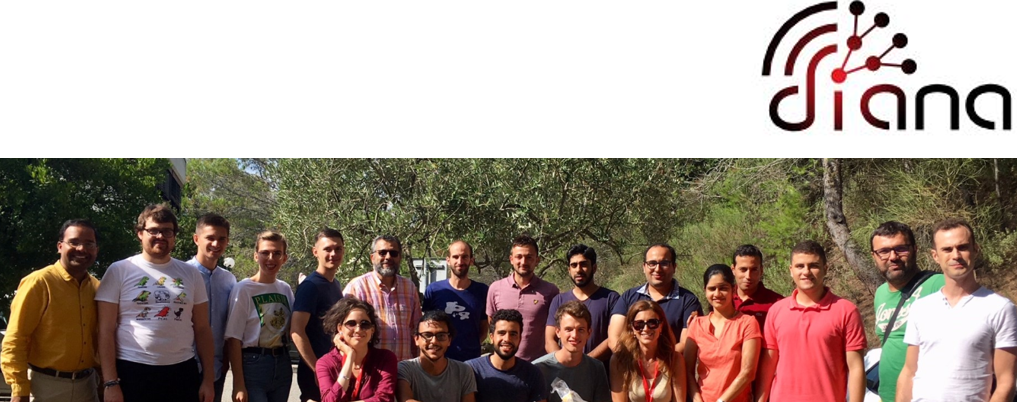
Chadi Barakat is a Senior Researcher (Directeur de Recherche) at Université Côte d'Azur's Inria research center, leading the DIANA project-team. He holds a PhD in Computer Science from University of Nice Sophia Antipolis (2001) and Habilitation (HDR) in 2009, with academic credentials from Lebanese University (1997) and French institutions. PhD: Computer Science (2001), University of Nice Sophia Antipolis HDR: Computer Science (2009), University of Nice Sophia Antipolis Master's: Computer Science (1998), University of Nice Sophia Antipolis BSc: Electrical & Electronics Engineering (1997), Lebanese University His research focuses on Internet measurement and traffic analysis , with significant contributions to Quality of Experience (QoE) modeling, 5G/ICN/SDN network architectures , and network performance evaluation . Recent articles highlight browser-based network monitoring, fidelity-aware network emulation, and ray tracing optimization for radio frequency mapping. He has supervised 12 PhD students to completion and currently directs the Academy of Excellence 'Networks, Information, and Digital Society' at Université Côte d'Azur. His work has received multiple best paper awards at CNSM, CloudNet, and SECON conferences, while serving as associate editor for Elsevier Computer Networks journal and active in ACM/IEEE conference committees. Director, Academy of Excellence 'Networks, Information, and Digital Society' (2025-present) Senior IEEE Member (2010) & ACM Senior Member (2018) General Co-Chair: ACM IMC 2022, ACM CoNEXT 2012 Guest Editor: IEEE JSAC special issue on Internet Sampling
Sherif Khattab is a Teaching Assistant Professor in the Department of Computer Science at the University of Pittsburgh's School of Computing and Information. With a Ph.D. in Computer Science from the University of Pittsburgh (2008), he brings extensive expertise in cybersecurity systems with applications across cloud computing, Internet of Things, electronic voting, and Big Data security. His research focuses on the systems aspects of cybersecurity, maintaining an h-index of 16 (Google Scholar) and 10 (Scopus) with over 60 publications. Khattab has successfully supervised more than 15 graduate students throughout his academic career. Prior to his position at Pitt, he served as an Associate Professor at Cairo University's Department of Computer Science, Faculty of Computers and Information. Professor Khattab teaches numerous undergraduate and graduate courses, with particular emphasis on hands-on ethical hacking and security education. His current teaching portfolio includes Algorithms and Data Structures (CS 0445) and Network Security (CS 1653), with extensive experience teaching operating systems, formal methods, and computer networks across multiple semesters. His research publications reveal consistent focus on practical security solutions for emerging technologies, with recent work addressing IoT security frameworks, blockchain-based voting systems, and cloud security challenges. The publication trend shows increasing emphasis on practical implementation aspects alongside theoretical security models. With industry experience from internships at Google Inc., Ericsson Data Networks, and Bosch Research, Khattab bridges academic research with real-world security challenges. His educational background includes a Bachelor's in Computer Engineering from Cairo University (1998) and both M.Sc. and Ph.D. in Computer Science from the University of Pittsburgh (2004 and 2008).
Marcus Gerhold is an Assistant Professor in the Formal Methods and Tools group at the University of Twente's Faculty of Electrical Engineering, Mathematics and Computer Science. His research focuses on model-based testing for software reliability in critical infrastructures, particularly railway systems, alongside significant contributions to game design and programming language analysis. His educational background includes: PhD in Computer Science from University of Twente (2018): Choice and Chance: Model-based Testing of Stochastic Behaviour MSc in Mathematics from Friedrich Schiller Universität Jena (2013): Embeddings of Weighted Morrey Spaces BSc in Mathematics from Friedrich Schiller Universität Jena (2011): Entropy-, Approximation- and Kolmogorov Numbers on Quasi-Banach Spaces Gerhold's research integrates theoretical model-based testing with practical critical infrastructure applications . His work on railway conformance testing addresses EULYNX controller validation, while his game design research explores affective mirroring in NPCs and procedural dungeon generation. The code modernity analysis stream leverages static analysis to quantify legacy code evolution across languages like Python and PHP, revealing version identification challenges through deep learning. Publication trends show consistent focus on model-based testing methodologies (40%), railway safety applications (25%), and innovative game design/code analysis (35%). Recent work increasingly incorporates AI/ML techniques for UML assessment and Python version identification, while maintaining rigorous formal methods foundations. He actively mentors 63 students across all academic levels and contributes to major research initiatives: STORM_SAFE (ERDF, 2024): Daily Supervisor for WP1/WP2 on software reliability for critical infrastructures ZORRO (KIC grant, 2023): Daily Supervisor for WP4 on zero downtime in cyber-physical systems MISSION (MSCA RISE, 2021-2025): Interim coordinator (early 2024) for space systems modeling As part of the Formal Methods and Tools research group, Gerhold participates in European collaborations while serving on SAC-SVT 2024 and FormaliSE 2023 program committees.
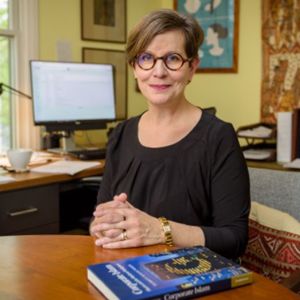
Dr. Patricia Sloane-White is a Professor of Women & Gender Studies and Anthropology at the University of Delaware, serving as Chair of Women & Gender Studies. She holds a DPhil from the University of Oxford. Her research focuses on Islam, capitalism, and gender in Malaysia, with a specific emphasis on how Sharia influences modern corporate culture. She has conducted extensive fieldwork, supported by two Fulbright awards, and authored influential works like *Corporate Islam: Sharia and the Modern Workplace* (2018). Dr. Sloane-White’s academic roles include past directorships of Islamic Studies and leadership in the College of Arts & Sciences’ Plastino Scholars program. She teaches courses on global capitalism, Asian women’s roles, and Muslim communities. Her work bridges anthropology with contemporary economic and religious dynamics, exploring themes of identity, modernity, and power structures. Current research includes domestic violence in Malaysia. Education: DPhil, Social Anthropology, University of Oxford Research Interests: Her interdisciplinary work examines the intersection of Islamic principles and capitalist modernity, particularly in Malaysian contexts. Key themes include: Sharia’s role in corporate governance and workplace ethics Class, gender, and ethnic dynamics in Southeast Asia Islamic philanthropy and corporate zakat practices Modern Malay Muslim identity and globalization Awards: Fulbright Research Fellowship (2008-2009) Fulbright Specialist Scholar (2014) Grants & Advising: No listed advisees, but supervises undergraduate and graduate research through University of Delaware programs. Active in interdisciplinary initiatives like the Diversity Research Café and Carter Lecture series. Labs/Teams: Leading anthropological research projects in Malaysia through institutional partnerships with the University of Malaya and International Islamic University of Malaysia.
Professor Kelly Lyons is a Professor at the Faculty of Information at the University of Toronto, cross-appointed to the Department of Computer Science. Her research focuses on service science, knowledge mobilization, social media, and data-driven innovation. Prior to academia, she held roles at IBM Toronto Lab's Centre for Advanced Studies. She has secured extensive funding from NSERC, IBM, and industry partnerships, and has advised numerous graduate students. Her work bridges interdisciplinary collaboration, emphasizing AI governance, digital economy impacts, and fostering Women in Technology initiatives. Research interests include the application of social platforms in service systems, data science for knowledge translation, and the societal implications of AI. Key projects involve analyzing gender dynamics in user reviews, open-source software structures, and pandemic-driven innovation trends. Her grants span data science, healthcare analytics, and smart city technologies. Publications span empirical studies on GitHub collaboration, AI governance frameworks, and biomedical knowledge systems. She received the Best Paper Award for 'The Effect of Collaborative Games on Group Work' (2015). Her teaching emphasizes service systems design and project management, with a focus on practical, interdisciplinary learning. Active in scholarly service, she chairs the Consortium for Software Engineering Research and serves on ACM-W's Executive Council. Collaborations include cross-institutional projects with University College London and UCL on AI governance frameworks. Her work extends to promoting STEM education and diversity in tech.