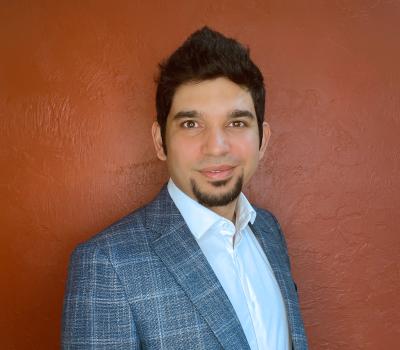
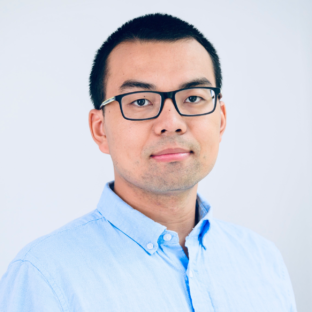
Jetmir Haxhibeqiri is a Postdoctoral Researcher at Ghent University 's Faculty of Engineering and Architecture , Department of Information Technology. His work focuses on Time-Sensitive Networking (TSN) over wireless systems, WiFi optimization, and Industrial IoT solutions. Key projects: IMEC Postdoctoral Fellowship Collaborations: Jeroen Hoebeke (UGent), Ingrid Moerman (UGent), Xianjun Jiao (UGent) Research Interests : Wireless network coordination, SDN integration for heterogeneous networks, low-latency communication, and machine learning applications in network optimization. Specialized in WiFi-LPWAN coexistence , In-Band Network Telemetry , and Cross-Technology Synchronization . Recent Publications : 2025 work on Wi-Fi-UWB synchronization, 2024 studies on coordinated spatial reuse in WiFi 7, and 2022 research on hardware-efficient PTP clock synchronization. Contributions span from theoretical models to practical implementations in industrial environments. Technical Expertise : Network densification strategies, interference management, and performance evaluation of large-scale wireless deployments. Developed simulation frameworks for LoRaWAN and WiFi TSN, with a focus on ns-3 validation. Education : PhD in Industrial Wireless Communication (2019, Ghent University).
Dante Fratta is a Professor in the Department of Civil & Environmental Engineering at the University of Wisconsin-Madison, where he has been actively involved in research and teaching since 2000. His work focuses on geotechnical engineering, environmental monitoring, and fiber optic sensing technologies. Education: PhD (1999) – Georgia Institute of Technology M.A.Sc. (1995) – University of Waterloo Diploma (1993) – Universidad Nacional de Córdoba Research Interests: Geomaterial process evaluation using elastic and electromagnetic waves, fundamental physical behavior of soils and rocks, geophysical assessment of near-surface environments, and distributed fiber optic sensing methods. Recent Publication Trends: He has pioneered applications of Distributed Acoustic Sensing (DAS) and fiber optic technologies for geotechnical, environmental, and energy infrastructure monitoring, including wind turbines, geothermal systems, and mining operations. Scientific Awards: Benjamin Smith Reynolds Award for Excellence in Teaching (2012) Chi Epsilon Excellence in Teaching Award (2008) Best Paper Award, GeoCongress Sensing Methods and Devices Track (2006) Distinguished Alum, Universidad Nacional de Córdoba (2013) Multiple keynote and invited speaking engagements Teaching: Fratta teaches graduate and undergraduate courses in geotechnical engineering, including Foundations, Applied Geophysics, and Pre-Dissertator Research, with active involvement in Spring 2025 classes.
Greg J. Evans is a full Professor in the Faculty of Applied Science and Engineering at the University of Toronto , where he also serves as Director of the Southern Ontario Centre for Atmospheric Aerosol Research (SOCAAR) and the Institute for Studies in Transdisciplinary Engineering Education and Practice (ISTEP) . In addition, he is Principal Investigator of the Evans Research Group . Education: B.A.Sc. – Bachelor of Applied Science M.A.Sc. – Master of Applied Science Ph.D. – Doctor of Philosophy P.Eng. – Professional Engineer FCAE – Fellow of the Canadian Academy of Engineering FAAAS – Fellow of the American Association for the Advancement of Science Research Interests: Professor Evans leads interdisciplinary research that bridges atmospheric aerosol science, environmental health, and engineering education. His work in urban air pollution focuses on understanding traffic-related emissions, developing low-cost sensor networks, and elucidating the oxidative toxicity of particulate matter under climate change scenarios. Within engineering education, he investigates transdisciplinary competencies, metacognitive development, and evidence-based pedagogies that prepare students for lifelong learning and societal impact. Research Trends in Recent Publications: Across his 2021-2023 publications, a dominant theme is the health impact of fine particulate matter (PM2.5) and its oxidative potential. Studies integrate large-scale epidemiological datasets with detailed chemical analyses to reveal how specific PM constituents—such as transition metals and sulfur—mediate cardiovascular and respiratory outcomes. Methodological innovations include mobile “lab-on-wheels” platforms and harmonized acellular assays for oxidative potential, enabling high-resolution spatiotemporal exposure assessment and cross-study comparability. Scientific Awards & Honors: CIC Environment Division Research and Development Dima Award (2022) NSERC Brockhouse Canada Prize for Interdisciplinary Research (2021) Fellow of the Canadian Engineering Education Association (2020) 3M National Teaching Fellowship (2017) Faculty of Applied Science & Engineering Research Leadership Award (2017) President’s Teaching Academy, University of Toronto (2015) Fellow of the Canadian Academy of Engineering (2015) Ontario Colleges and Universities Faculty Association Teaching Award (2015) Fellow of the American Association for the Advancement of Science (2015) Allan Blizzard Award (STLHE) (2014) Northrop Frye Award (2013) ASEE St. Lawrence Section Outstanding Teaching Award (2010) Engineers Canada Medal for Distinction in Engineering Education (2010) Ontario Professional Engineers Award – R&D Medal (2009) Joan E. Foley Student Quality of Student Experience Award (2008) Graduate Advising & Funding: Professor Evans is currently potentially accepting both PhD and MASc students. His research grants support interdisciplinary projects ranging from mobile air-quality monitoring campaigns to large-scale educational data-mining initiatives. Labs & Teams: He directs the Evans Research Group , housed within SOCAAR, which operates the MAPLE “lab-on-wheels” for real-time aerosol characterization. Through ISTEP, he oversees a cohort of 11 faculty members advancing engineering education scholarship.
Anna Brunström is a Full Professor and Head of the Distributed Intelligent Systems and Communications Research Group (DISCO) at Karlstad University's Department of Computer Science. She holds a part-time role as a Researcher at the University of Malaga's Institute of Software Engineering and Technologies (ITIS). Her research focuses on computer networking, Internet architectures, low latency communication, and 5G/6G mobile systems. She leads the nationally funded DRIVE initiative and collaborates on European projects like 6G-PATH. She actively contributes to IETF standardization, notably as a former rmcat WG chair. Her work spans over 200 publications, emphasizing network measurement, latency optimization, and multipath protocols. Education: Ph.D. (1996) and M.Sc. (1993) from College of William & Mary, B.Sc. (1991) from Pepperdine University. Research Interests: Distributed systems, IoT networking (NB-IoT), satellite communication (Starlink), machine learning for positioning, and transport protocols (QUIC, MPTCP). Recent work includes latency-aware scheduling, 5G/6G performance analysis, and edge computing frameworks. Publications highlight trends in: 1) Satellite network throughput modeling, 2) 5G/6G architecture validation, 3) Machine learning applications for positioning and network analysis, 4) Cross-layer optimization of latency-critical services. Collaborations with industry and academia drive applied research in smart grids, healthcare, and automotive communication. Labs/Teams: DISCO group at Karlstad University, leading the DRIVE research profile and 6G-PATH consortium involvement.
Arno Siebes is Professor of Algorithmic Data Analysis in the Department of Information and Computing Sciences at Utrecht University's Faculty of Science. His research focuses on data mining methodologies, particularly pattern mining and Minimum Description Length (MDL) principles. Key research areas include: Developing efficient algorithms for pattern discovery Applying MDL to data characterization Creating interpretable models for complex datasets Addressing challenges in data science education Recent publications demonstrate applications in diverse domains including mobility analysis, genomic screening, and pandemic response. His work combines theoretical foundations with practical implementations for knowledge discovery.
Bjorn Birgisson is the Chair of the School of Environmental, Civil, Agricultural and Mechanical Engineering and holds the Georgia Power E-Mobility Distinguished Professorship at the University of Georgia. His research focuses on infrastructure resilience, pavement engineering, materials science, and novel construction technologies. He has pioneered work on asphalt mixture performance, autonomous vehicle impacts on roadways, and extraterrestrial construction materials using lunar regolith. His interdisciplinary approach integrates computational modeling, experimental testing, and environmental sustainability. Educational Background: Ph.D., P.E. credentials are highlighted but formal education details are not provided in the text. His professional appointments emphasize practical application of research to real-world infrastructure challenges. Research Interests include: Transportation infrastructure resilience to climate change Advanced material characterization for pavements Additive manufacturing for space exploration Non-destructive evaluation techniques His recent publications (2020-2025) address: Moisture variation in clayey soils Pavement crack initiation modeling Autonomous truck infrastructure impacts Lunar regolith utilization Scientific Awards: Georgia Power E-Mobility Distinguished Professorship recognizes his contributions to sustainable transportation infrastructure. Advising/Grants: While student names are not listed, his research teams focus on doctoral-level projects in geotechnical engineering and materials science. Grant activities likely include federal/state transportation initiatives and space exploration partnerships. Labs/Teams: Active in the Boyd Research and Education Center, collaborating with industry partners on pavement testing and additive manufacturing technologies.
Mihai Marasteanu serves as Professor and Miles Kersten Chair in the Department of Civil, Environmental, and Geo-Engineering at the University of Minnesota, with affiliations at the Center for Transportation Studies. His research bridges fundamental material science and practical pavement engineering solutions for Minnesota's infrastructure network. His primary research focuses on asphalt pavement engineering , specializing in fracture mechanics and viscoelasticity applied to low-temperature cracking analysis. Key interests include recycled material integration , asphalt binder-mixture property relationships , and innovative testing methodologies for quality control. His work emphasizes cost-effective solutions for local roads while advancing predictive models for pavement performance. Recent publications (2022-2024) demonstrate strong trends in asphalt mixture optimization , probabilistic density modeling , and nanomaterial-enhanced asphalt (e.g., graphene nanoplatelets). The research consistently targets Minnesota-specific challenges including cold-climate durability, recycled material validation, and field-compaction efficiency. Professor Marasteanu maintains active funding through 9 current projects including: Tools to improve asphalt pavement durability (MN DOT, 2025-2027) Asphalt lift thickness impact on density (MN DOT, 2024-2026) Sawing/sealing joints for cracking control (MN DOT, 2023-2026) EV data for pavement quality assessment (FHWA, 2023-2025) His national leadership includes coordinating pooled fund studies with Wisconsin, Iowa State, and Illinois researchers on low-temperature cracking. While specific lab names aren't documented, his team operates within University of Minnesota's testing facilities, utilizing advanced rheometers and computational models to validate size-effect theories and representative volume element concepts for asphalt mixtures.
Sadie Creese is Professor of Cybersecurity in the Department of Computer Science at the University of Oxford. She serves as Director of the Global Cyber Security Capacity Centre at the Oxford Martin School and Director of the Oxford Martin Programme on AI Threat Detection. Additionally, she is a Governing Body Fellow at Worcester College and Chair of Examiners for the MSc in Computer Science. Professor of Cybersecurity, Department of Computer Science, University of Oxford Director, Global Cyber Security Capacity Centre, Oxford Martin School Director, Oxford Martin Programme on AI Threat Detection Governing Body Fellow, Worcester College Chair of Examiners for MSc in Computer Science Sadie Creese holds a DPhil in Computer Science from the University of Oxford, an MSc in Computation, and a BSc (Hons) in Mathematics and Philosophy. Her academic background bridges theoretical computer science with practical applications in security. Her research spans multiple domains of cybersecurity including cyber situational awareness, visual analytics for cybersecurity, predicting organizational cyber-value-at-risk, agent-based simulations for malware propagation, threat modeling and detection, network defense, and cyber-resilience strategies. She also studies national cybersecurity capacity, working with countries and international organizations worldwide. Her interdisciplinary approach integrates insights from computer science, social sciences, and policy studies to address complex security challenges in an interconnected digital world. Analysis of her recent publications reveals a consistent focus on practical cybersecurity applications with strong emphasis on human factors in security systems. Her work bridges technical security mechanisms with organizational and human elements, particularly in areas like insider threat detection, risk communication, and security operations. The research demonstrates a trajectory toward more integrated security frameworks that consider both technical vulnerabilities and human behaviors within complex systems. Sadie Creese has been recognized as one of The 50 most influential women in cyber-security UK . Her work with the Global Cyber Security Capacity Centre has influenced national cybersecurity strategies worldwide, and she actively contributes to policy discussions through platforms like the World Economic Forum's AI Governance Alliance. The 50 most influential women in cyber-security UK Professor Creese has supervised numerous PhD and Master's students including Mary Bispham, Rodrigo Carvalho, Elizabeth Phillips, Marcel Stolz, and Meredydd Williams. Her research has been supported by significant grants including AXIS-sponsored projects on cyber-risk modeling, World Economic Forum collaborations on cybersecurity futures, and Lloyds Register Foundation funding for cyber security research related to the Industrial Internet of Things. She leads major interdisciplinary projects that bridge technical security research with policy implications. Principal Investigator on AXIS-sponsored project 'Analysing Cyber-Value-at-Risk, Residual Risk and models for Systemic Cyber-Risk' Collaboration with World Economic Forum's Shaping the Future of Cybersecurity Platform Co-Chair of Lloyds Register Foundation sponsored Foresight review of cyber security for the Industrial Internet of Things Professor Creese founded and directs the Global Cyber Security Capacity Centre (GCSCC) at the Oxford Martin School, which conducts research into national cybersecurity capacity. She was also the founding Director of Oxford's Cybersecurity Network (now CyberSecurity@Oxford), established in 2008. Her team includes senior researchers like Ioannis Agrafiotis, Louise Axon, and Michael Goldsmith, who collaborate on projects spanning cyber analytics, security protocols, and identity management. The GCSCC works with governments and international organizations to build cybersecurity capacity globally, while the Oxford Martin Programme on AI Threat Detection focuses on emerging security challenges posed by artificial intelligence technologies.
Bradley Reaves serves as an Associate Professor in the Department of Computer Science at North Carolina State University and is a core member of the Wolfpack Security and Privacy Research (WSPR) Lab and the Secure Computing Institute. His work focuses on real-world security and privacy challenges across cellular networks, mobile platforms, and software systems. Education: Ph.D. in Computer Engineering, University of Florida (2017) M.S. in Computer Science, Georgia Institute of Technology (2015) Research Interests: Dr. Reaves pioneers interdisciplinary security solutions combining signal processing, machine learning, and cryptography to combat robocalls, mobile fraud, and software vulnerabilities. His work spans telephone network security (e.g., call authentication systems), mobile money security in developing economies, and software secret leakage in repositories. He emphasizes practical impact through industry collaboration and deployable tools. Publication Trends: Recent work (2023-2024) shows concentrated focus on telecom security (call traceback, SMS phishing), software vulnerability management (LLM-assisted patching, secret leakage), and network policy systems . His research consistently bridges theoretical innovation with real-world data collection, including analysis of 1.5 million robocalls and mobile money transaction fraud. Awards: Best Paper at ACM WiSec (2013) Advising and Collaborations: Dr. Reaves mentors Ph.D., Master's, and undergraduate researchers through structured pathways: Ph.D. applicants must demonstrate specific interest in his publications; Master's students typically engage via courses like CSC 574; undergraduates require CSC 230 completion and 10+ weekly hours. Industry partnerships include data sharing under confidential agreements, student hiring pipelines, and commissioned research for telecom fraud analysis. Labs and Teams: He leads the Wolfpack Security and Privacy Research (WSPR) Lab, which operates within NC State's Secure Computing Institute. The lab specializes in large-scale security measurement studies and develops tools like SNORCall for robocall analysis and SecretBench for secret leakage detection.
Sally Pusede is an Associate Professor in the Department of Environmental Sciences at the University of Virginia's College of Arts & Sciences, where she directs atmospheric chemistry research and co-leads the Repair Lab. Her work bridges atmospheric science and environmental justice through measurements from ground, aircraft, and satellite platforms in urban and agricultural environments. Dr. Pusede earned her Ph.D. from the University of California Berkeley in 2014. Her educational background established the foundation for her interdisciplinary approach combining chemical measurements with community engagement. As an atmospheric chemist, Pusede investigates reactive nitrogen cycles, greenhouse gas emissions (particularly nitrous oxide), and neighborhood-level air pollution disparities. Her research employs spatial and temporal variability analysis to derive mechanistic insights into urban atmospheric processes, with emphasis on how pollution adversely affects human health and ecosystems. She is co-director of UVA's Repair Lab, which develops community-based solutions to environmental justice issues like coal dust pollution in Hampton Roads and industrial swine facility impacts in North Carolina. Analysis of her 15 most recent publications (2022-2025) reveals three dominant research thrusts: 1) Quantifying air pollution inequality using satellite remote sensing (especially nitrogen dioxide and ammonia), 2) Investigating reactive nitrogen chemistry in urban-agricultural interfaces, and 3) Developing community-driven repair frameworks for environmental justice. Her work consistently demonstrates how neighborhood-level pollution disparities contribute to health outcomes and ozone formation, particularly in communities of color. Dr. Pusede's scientific contributions have been recognized with prestigious awards including: Presidential Early Career Award for Scientists and Engineers (PECASE), Biden Administration, 2024 Future Horizons in Climate Science Turco Lectureship, American Geophysical Union, 2022 National Science Foundation (NSF) CAREER Award, 2021 NASA New Investigator Program Award, 2021 Environmental Sciences Organization Faculty Teaching Award, University of Virginia, 2016 She mentors graduate students through the Pusede Lab while securing major grants from NSF, NASA, and the White House Office of Science and Technology Policy. Her teaching portfolio includes EVSC 4380 (Air Pollution and Environmental Justice), EVSC 4490/7490 (Air Pollution), EVSC 5350 (Atmospheric Chemistry), and EVSC 3300 (Atmosphere and Weather). The Repair Lab operates as an interdisciplinary environmental justice hub where Pusede collaborates with community practitioners, embedding researchers in Virginia communities through its practitioner-in-residence program. This lab focuses on coal dust pollution in Hampton Roads and industrial swine facility impacts in Eastern North Carolina, using satellite data to document environmental injustices while co-developing solutions with affected residents.
Dr. Haydar Aygun serves as Associate Professor in Acoustics and Building Services at the Bioscience and Bioengineering Research Centre, Department of Civil and Building Services Engineering, University of Salford. He holds multiple leadership roles including Course Director for the MSc Environmental and Architectural Acoustics, Diploma in Acoustics and Noise Control, and The Acoustics Apprenticeship programs. With a PhD in Acoustics and Vibration from the University of Hull (2006), his academic foundation includes a MSc in Advanced Materials, Processes and Manufacturing (2002) and a BSc in Mechanical Engineering. Dr. Aygun's research spans multiple critical domains of acoustics: Development and characterization of novel acoustic materials and metamaterials for noise control Duct acoustics and sound propagation through complex media Biomedical applications including bone analysis and respiratory sound detection Vibration control of porous materials using advanced computational methods Environmental noise assessment and building acoustics solutions His publication record shows consistent scholarly output with 46 research items from 2006-2025, demonstrating particular productivity in recent years (7 publications in 2023). His work shows increasing integration of computational methods with experimental validation, expanding applications in medical diagnostics and sustainable building technologies. Dr. Aygun actively contributes to the academic community through multiple service roles: Editorial Board Member for Journal of Applied Acoustics EPSRC Grant Reviewer Reviewer for Journal of Applied Acoustics and Journal of the Acoustical Society of America Deputy leader of Biomedical Acoustics Special Interest Group within UK Acoustics Network As an educator, Dr. Aygun has supervised numerous PhD students and teaches across multiple levels from undergraduate Building Services Engineering to specialized postgraduate Acoustics programs. His consultancy work bridges academic expertise with practical industry applications in noise assessment, building acoustics, and event sound management.
Kun An is a Professor at the Department of Traffic Information and Control Engineering within the College of Transportation Engineering at Tongji University. She has previously held academic positions at Monash University (Senior Lecturer, 2018–2019; Lecturer, 2016–2018) and conducted postdoctoral research at the University of Illinois at Urbana-Champaign (2015–2016) and The Hong Kong University of Science and Technology (2014–2015). Her academic journey includes a PhD in Civil Engineering from HKUST (2014) and a Bachelor's degree from Tongji University (2009). PhD: Civil Engineering, The Hong Kong University of Science and Technology (2014) Bachelor's: Transportation Engineering, Tongji University (2009) Dr. An specializes in intelligent transportation systems, focusing on optimizing complex traffic networks, characterizing traveler behavior in stochastic environments, and advancing electric vehicle sharing infrastructure. Her research spans urban transit planning, carsharing logistics, battery electric bus deployment, and real-time traffic signal optimization, with applications to mitigate rail disruptions and enhance multimodal connectivity. Her publications emphasize solving transport challenges through stochastic programming, game theory, and behavioral analysis. Key themes include autonomous vehicle integration, demand uncertainty modeling, and sustainable mobility solutions. Awards include the Hong Kong PhD Fellowship and multiple best paper recognitions. Hong Kong PhD Fellowship (2010–2014) TRBADB30 Best Paper Nomination (2014) Best Paper at 18th Hong Kong Transportation Annual Meeting (Second Author, 2013)
Erdem Coleri is an Associate Professor at Oregon State University's College of Engineering, Department of Civil and Construction Engineering. He joined OSU in 2014 after postdoctoral work at the University of California Pavement Research Center. His research focuses on sustainable pavement materials, energy-efficient design, and infrastructure health monitoring using wireless sensor networks. He directs the OSU Asphalt Materials and Pavements (AMaP) Lab, emphasizing recycled materials and pavement sustainability. Education: Ph.D., Civil and Environmental Engineering (UC Davis, 2011); M.S. and B.S., Civil Engineering (Middle East Technical University, Turkey). Research interests include asphalt characterization, pavement management systems, and wireless sensor networks for infrastructure monitoring. Notable awards include the John and Jean Loosley Faculty Fellow (2015) and Oregon State University Teaching Excellence (2020). He advises students like David Covey and Aiman Mahmoud, focusing on tack coat performance and recycled materials. His lab develops technologies to reduce environmental impact and improve pavement longevity. Key projects include the AMaP Lab's work on permeable pavements, warm-mix asphalt, and energy-efficient designs. He collaborates with ODOT and agencies on field tests and sensor systems. Recent publications address balanced mix design, recycled materials, and fuel efficiency linked to pavement roughness.
Haijian Sun is an Assistant Professor at the University of Georgia's School of Electrical & Computer Engineering. His research focuses on advanced wireless communication systems, including 5G/6G networks, federated learning, mobile edge computing, and physical layer security. He explores cutting-edge topics like reconfigurable intelligent surfaces (RIS), hybrid active-passive symbiotic radio systems, and UAV-enabled communication. His work integrates machine learning and optimization techniques to address challenges in channel modeling, energy efficiency, and network security. Recent projects include autonomous agricultural monitoring via drones and energy-harvesting sensors, as well as secure IRS-VLC communication strategies. Publications highlight innovations in dynamic wireless charging for electric vehicles, graph-based phishing detection, and radio radiance field modeling. While no specific awards are listed, his contributions reflect significant engagement with industry-relevant 6G research. Research collaborations involve digital twin networks, IoT systems, and smart grid applications. His team develops practical solutions for real-world communication challenges, emphasizing both theoretical rigor and deployable technologies.
Yifan Sun is an Assistant Professor in the Department of Computer Science at William & Mary, leading the Scalable Architecture Lab. He holds a Ph.D. in Electrical and Computer Engineering from Northeastern University (2020). His research focuses on GPU architecture, simulation tools, and multi-GPU system design. Recent work includes TrioSim (a lightweight DNN workload simulator) and NetCrafter (optimizing multi-GPU network traffic). He has published extensively at top venues like ISCA, MICRO, and IEEE Vis. Educations: Ph.D. in Electrical and Computer Engineering, Northeastern University (2020); M.S. and B.S. not explicitly stated but implied through academic progression. Research Interests: Developing explainable architecture tools, improving simulation frameworks (Akita/MGPUSim), and addressing challenges in wafer-scale GPU design. His work bridges hardware-software co-design with visualization techniques to enhance human understanding of complex architectures. Grants: Awarded NSF CCRI and CRII grants for simulation-as-a-service and explainable architecture projects. Collaborations include UVA, NUS, and Northeastern University. Labs/Teams: Scalable Architecture Lab (SARCHLAB), focusing on GPU systems, simulation, and visualization. Active in organizing workshops and GitHub repositories (e.g., https://github.com/sarchlab).