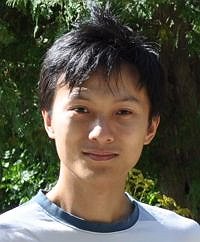
Frank Hennrichمشاهده پروفایل
پژوهشگر
- Nanomaterials
- Carbon Nanotubes
- Fullerenes
- +۷ مورد دیگر
Dr. Frank Hennrich is a Project Leader at the Institute of Nanotechnology (INT), Karlsruhe Institute of Technology (KIT), Germany, within the Research Unit for Physical Chemistry of Nanoscale Systems. His research focuses on the synthesis, separation, and functionalization of carbon nanotubes and related nanomaterials. His primary research interests include nanomaterials, particularly carbon nanotubes and fullerenes, with an emphasis on their physical chemistry, spectroscopic characterization, and optoelectronic properties. His work spans synthesis, separation techniques, defect engineering, and applications in photonics and electronics. Recent publications highlight investigations into electroluminescence from quantum-defect-engineered nanotubes, ion mobility of metalated complexes and superatoms, and advanced separation methods for nanotubes. The trend in his recent publications shows a strong focus on the fundamental physical and chemical properties of low-dimensional carbon materials. His work integrates advanced spectroscopic and separation techniques such as trapped ion mobility spectrometry, Raman spectroscopy, and dielectrophoresis to understand and manipulate nanotube chirality, electronic type, and defect states. There is a clear trajectory toward optoelectronic applications, particularly in quantum light sources and integrated photonic devices operating in the telecom band. Dr. Hennrich has not been mentioned to have received any specific scientific awards in the provided text. He has collaborated extensively with leading researchers such as R. Krupke, M. M. Kappes, P. Weis, and others across numerous publications, indicating a strong network in the nanomaterials research community. While no specific grants are listed, his sustained publication record in high-impact journals suggests ongoing research funding. He has contributed significantly to the development of methods for sorting and functionalizing carbon nanotubes, which are foundational for their technological applications. His research is conducted within the Institute of Nanotechnology at KIT, a prominent institution for nanomaterials research, where he leads a group focused on the physical chemistry of nanoscale systems, particularly carbon-based nanostructures.