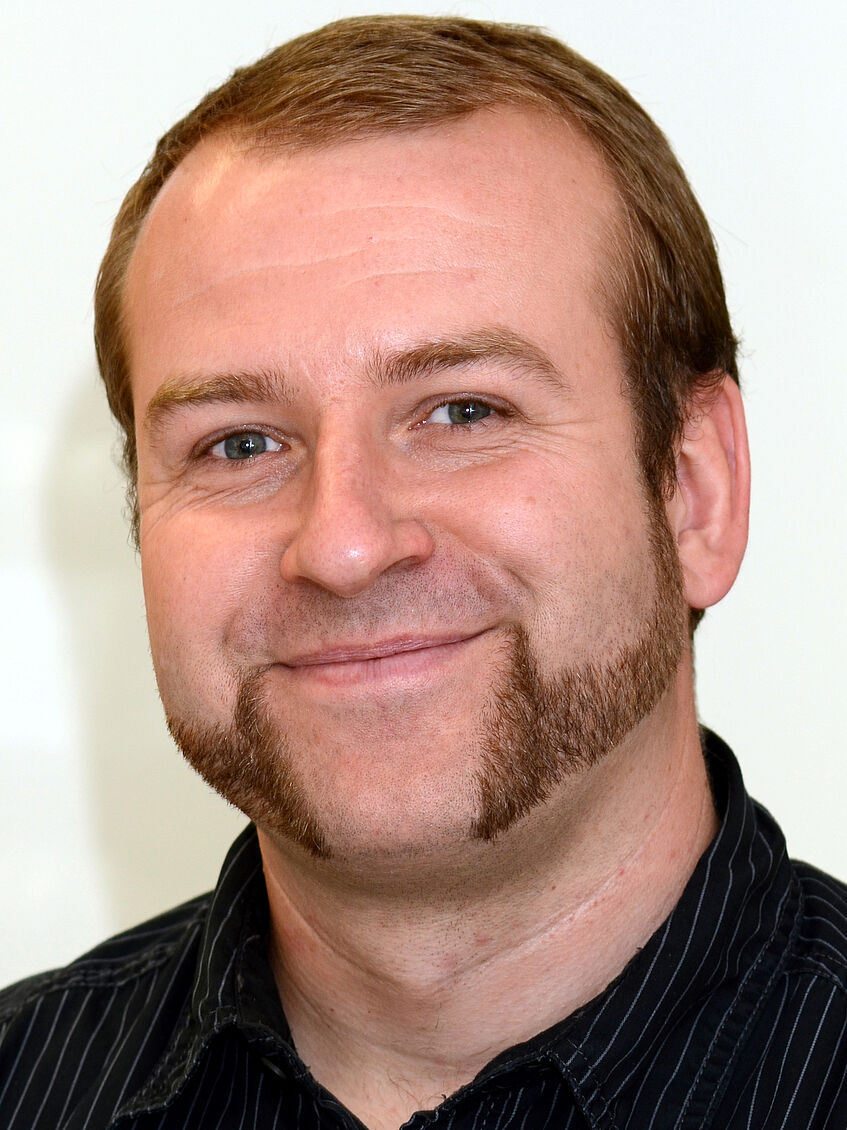
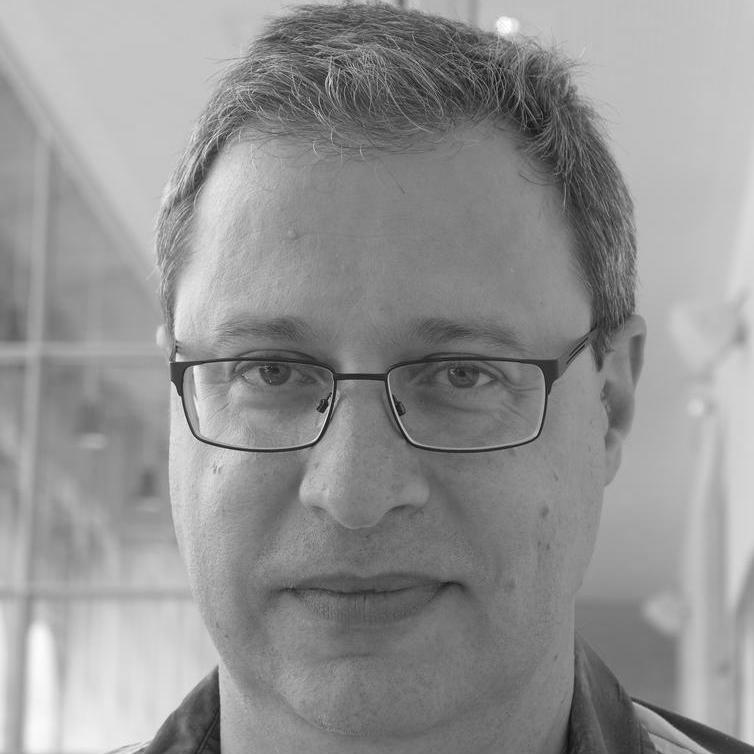
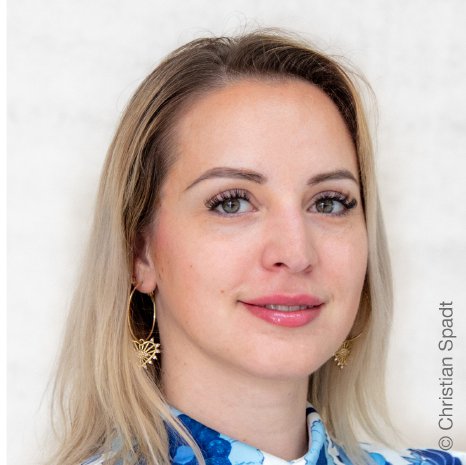
Josef Zollneritsch is a researcher affiliated with the Institute of Psychology and the Institute for Educational Research and Teacher Training at Karl-Franzens-University Graz . His work spans interdisciplinary research areas, including educational psychology, teacher training, and knowledge modeling. His research aligns with the university’s profile areas such as BioHealth and Smart Regulation , as well as research networks like Learning – Education – Knowledge and Models and Simulation . The focus appears to bridge psychological methodologies with educational innovation and simulation-based approaches. For detailed inquiries, he can be reached at josef.zollneritsch@uni-graz.at . No scientific awards or publications were explicitly mentioned in the provided text.
Gerald Quirchmayr is a Professor at the Faculty of Computer Science , leading the Research Group Multimedia Information Systems . His work focuses on Cybersecurity , Information Security , and Privacy Requirements Engineering , with applications in logistics, e-health, and cybersecurity education. Recent research trends include the integration of graph databases for ICT risk models, situational awareness in cybersecurity systems, and privacy-aware software development methodologies. Key sub-fields span Logistics Security Contextual Integrity Cybersecurity Education Data Flow Diagrams Knowledge Graphs Risk Management Scientific Awards Best Paper Award (2016) for 'Implementation of a Generic ICT Risk Model using Graph Databases' Quirchmayr actively contributes to educational initiatives , including the Sec Tech project (2016-2018) for cybersecurity teaching and the ongoing Dynamic Cybersecurity Management project (2022-2025). His lab develops tools like PrivacyStory to enhance privacy awareness in user stories.
Dr Benjamin Sames is a permanent scientific staff member (micropalaeontologist & stratigrapher) at the University of Vienna , Institute of Geology – Department for Geodynamics and Sedimentology, and simultaneously serves as an Affiliate Research Associate in Vertebrate Palaeontology at the Sam Noble Oklahoma Museum of Natural History (USA) and as a Stratigraphic Consultant for Petrobras (Brazil). His career has been dedicated to advancing the taxonomy, phylogeny and biostratigraphic application of non-marine ostracods and charophytes, integrating these microfossils into refined Mesozoic stratigraphic and palaeoclimatic frameworks. Education & Career Path 2003 – Diploma (equiv. M.Sc.), Freie Universität Berlin: thesis on the ostracods & charophytes of the Tendaguru Beds, Tanzania. 2009 – Dr. rer. nat., Freie Universität Berlin: doctoral dissertation on Late Jurassic–Early Cretaceous non-marine ostracod taxonomy, phylogeny and biostratigraphy with focus on the North American Western Interior. 2006–2011 – Research/Scientific Assistant, Freie Universität Berlin & University of Vienna. Since 2015 – Project Leader, Austrian Science Fund (FWF) project P 27687 “Lower Cretaceous Climate and Non-marine Stratigraphy (LCCNS)”. 2017–2019 – Project Leader, Austrian Academy of Sciences (ÖAW) / IGCP 632 “Late Mesozoic lacustrine systems in Tunisia”. 2020–2024 – Principal Investigator, Petrobras service contract “BrasCretOst I” and ÖAW/UNESCO IGCP 710 sub-project “NOMAJU”. Research Focus Dr Sames’ work centres on the micropalaeontology of Mesozoic non-marine ostracods and charophytes , integrating these data into high-resolution biostratigraphy, chemostratigraphy and cyclostratigraphy . A second pillar is Cretaceous palaeoclimatology , exploring greenhouse climate dynamics, short-term sea-level changes driven by aquifer-eustasy, and ocean–land interactions. Methodologically he couples classical taxonomy with quantitative stratigraphic techniques, XRF geochemistry and climate modelling. Awards & Honours 2004 – Katharina-Heinroth-Preis (Gesellschaft Naturforschender Freunde zu Berlin) for Diploma thesis. 2012 – Hanns-Bruno-Geinitz-Preis (Senckenberg Naturhistorische Sammlungen Dresden) for Doctoral thesis. 2014 – Eponymous ostracod species Vecticypris samesi established by Ayress & Whatley in recognition of his scientific contributions. International Projects & Leadership FWF Project P 27687 “LCCNS” – integrating palaeoenvironmental and climate cyclicities in the non-marine Lower Cretaceous. ÖAW/IGCP 632 – Late Mesozoic lacustrine systems in Tunisia and global correlation. Petrobras BrasCretOst I – revision of non-marine ostracod taxonomy in Brazilian basins (2020-2024). UNESCO-IUGS IGCP 710 sub-project NOMAJU – Mid-Jurassic marine–non-marine correlation and sea-level dynamics. Secretary & Scientific Collaborator, UNESCO-IUGS IGCP 609 “Climate-environmental deteriorations during greenhouse phases”. Editorial & Reviewing Roles Associate Editor, Austrian Journal of Earth Sciences (AJES) ; guest editor/co-editor of Geological Society of London Special Publication 498 “Cretaceous Climate Events and Short-Term Sea-Level Changes” and several special issues in Palaeogeography, Palaeoclimatology, Palaeoecology and Science China Earth Sciences ; reviewer for >15 international journals. Laboratory & Collaboration Networks Dr Sames operates within the University of Vienna Sedimentology & Palaeontology laboratories and maintains active collaboration with institutions such as Queen Mary University of London, University of Oklahoma, Nanjing Institute of Geology & Palaeontology, Chinese Academy of Sciences, and Petrobras CENPES, ensuring access to global sample sets and multi-proxy analytical facilities.
Georg Arbesser-Rastburg is a researcher at the Institute of Human-Centred Computing, Faculty of Computer Science, Graz University of Technology (TU Graz), Austria. He holds a BSc and Dipl.-Ing. in engineering and focuses on applying information technology to water infrastructure challenges and virtual reality-based energy simulation. Research Interests: Water Supply Management under Climate Change Virtual Reality for Urban Energy Data Visualization Serious Games for Water Resource Awareness Optimal Sensor Placement in Water Networks Trading Mechanisms in Digital Economies His recent publications demonstrate a clear trend toward gamified engineering tools, merging virtual reality with hydraulic modeling to address sustainability challenges in urban water systems and energy efficiency. Key projects include EWA (web-based water supply awareness) and VR4UrbanDev (immersive energy data visualization), reflecting interdisciplinary collaboration between computer science and civil engineering. Awards: ÖVGW Studienpreis 2020 for innovative water supply research Arbesser-Rastburg actively secures research funding through projects like GAIA (2024-2026) on green infrastructure impacts and contributes to public discourse through Austrian media coverage of his water management tools. His work emphasizes practical applications for climate adaptation in urban infrastructure.
Berthold Kerschbaumer serves as a Professor at the Research Center Hagenberg within the University of Applied Sciences Upper Austria. His academic profile shows continuous research activity from 1999 through 2024, with particular focus areas in computer science applications for medical imaging and educational initiatives in informatics. His research interests demonstrate a dual focus: technical applications in medical imaging systems and educational sociology within computer science. In medical imaging, he specializes in surgical planning systems, image data analysis, and multispectral analysis techniques. Concurrently, he maintains strong research in gender diversity within informatics education, with multiple publications addressing strategies to increase female participation in computer science fields. His work on sustainable development education represents another significant research strand. Analysis of his publication history reveals consistent output with notable concentration in 2019 (two publications on gender diversity in informatics) and continued activity through 2024. The publications span conference contributions, peer-reviewed articles, and commissioned reports, demonstrating engagement with both academic and practical applications of his research. Berthold Kerschbaumer has served on program committees and as a reviewer for multiple conferences including the IEEE European Modeling & Simulation Symposium and the Forschungsforum der österreichischen Fachhochschulen. His organizational activities include chairing the Forschungsforum der österreichischen Fachhochschulen in 2021 and participating in the Forschungsforum FFH 2018.
Stefan Boresch is a Professor at the Department of Computational Biological Chemistry within the Faculty of Chemistry at the University of Vienna. His research focuses on understanding soft matter properties through atomistic simulations, particularly targeting peptides and proteins, with a strong emphasis on free energy difference calculations using molecular dynamics. Develops and optimizes alchemical free energy methods for industrial applications Applies neural network potentials (NNP) to replace traditional force fields in simulations Collaborates with companies like Exscientia and Recursion Addresses limitations of current NNP approaches in condensed phases His work bridges computational and experimental approaches, aiming to provide microscopic insights into chemical and biological questions. He has contributed to CHARMM software developments and organized major conferences like the 2015 CHARMM meeting in Vienna. Boresch also served as scientific editor for Martin Karplus' autobiography Facetten meines Lebens and authored an obituary for his mentor. He presented at the 2024 ACS Spring Meeting and the 2024 Workshop on Free Energy Methods in Drug Design, with resources like slides and recordings publicly available.
Christoph Bock is a Principal Investigator at CeMM Research Center for Molecular Medicine and Professor/Head of the Institute of Artificial Intelligence at Medical University of Vienna. He leads the Biomedical Sequencing Facility and contributes to the Human Cell Atlas and ELLIS initiatives. Key research areas: Single-cell biology , Epigenetics , CRISPR screening , Machine learning , Cell therapy , Multi-omics Major contributions: CellWhisperer (natural language single-cell analysis), JAK-STAT signaling in immune homeostasis, LIQUORICE for liquid biopsies, and RnBeads software Scientific Awards include: ERC Starting Grant (2016) ERC Consolidator Grant (2021) Overton Prize (2017) Erwin Schrödinger Prize (2022) Clarivate Highly Cited Researcher (2019-2024) His lab develops bioinformatics tools (e.g., RnBeads, LIQUORICE) and applies systems immunology to understand disease mechanisms. Startup leadership : Co-founder of Myllia Biotechnology. Collaborations include clinical translations and tech development with the Biomedical Sequencing Facility.
Konstantin Schekotihin is an Associate Professor at the Department of Artificial Intelligence and Cybersecurity, Alpen-Adria University of Klagenfurt. His research focuses on artificial intelligence, machine learning, and semantic technologies with applications in industrial systems and semiconductor manufacturing. Reinforcement learning for industrial scheduling Answer Set Programming (ASP) and stream reasoning Failure analysis automation and ontology engineering Neuro-symbolic AI integration Knowledge-based systems in manufacturing Recent publications emphasize AI-driven optimization in semiconductor production, decomposition strategies for scheduling problems, and multi-agent systems for workflow management. His work combines symbolic reasoning with machine learning to address complex industrial challenges. Contact: Konstantin.Schekotihin@aau.at
Fabian Paischer is a Researcher at the Institute for Machine Learning, Johannes Kepler University Linz (JKU), holding a Doctorate and Master of Science degree. His work bridges machine learning with high-impact scientific domains including plasma physics for fusion energy and reinforcement learning systems. Education: Doctorate (Dr.) Master of Science (MSc) His research focuses on developing neural surrogate models for plasma turbulence simulations and advancing reinforcement learning through pre-trained model modulation and human-readable memory architectures. This interdisciplinary work integrates deep learning with computational physics and autonomous decision-making, targeting applications in sustainable energy and intelligent systems where interpretability and data efficiency are critical. Analysis of his 2023-2025 publications reveals two dominant research thrusts: (1) neural operator applications for plasma edge simulations requiring long-term predictive accuracy in fusion environments, and (2) modular reinforcement learning frameworks enabling knowledge transfer between pre-trained models. These directions highlight his commitment to solving complex scientific computing challenges through novel AI methodologies. Dr. Paischer actively participates in academic communities, including the ELLIS Doctoral Symposium (2021), and maintains ongoing research output through preprints and conference publications at venues like NeurIPS and ICLR workshops.
Páhi Timea serves as an Assistant Professor in the Department of Computer Science and Security at the University of Applied Sciences St. Pölten, where she teaches in the Cyber Security and Resilience (MA) program. Her academic credentials include an MA and BSc, positioning her at the intersection of theoretical research and practical security applications. Professional trajectory includes: 2015-2022: Scientist at AIT Austrian Institute of Technology GmbH, leading scientific research projects with specialization in cyber exercise development 2022-2024: Manager at Deloitte GmbH, applying security expertise in corporate contexts Her research program centers on cyber resilience frameworks, with particular emphasis on live-fire cyber exercises for threat response training. This work bridges academic theory and real-world security operations through simulated attack scenarios and infrastructure hardening techniques. Current investigations focus on adaptive defense mechanisms against evolving threat landscapes. No scientific awards are documented in the available institutional records. Advising activities and grant funding details remain unspecified in the provided materials, though her project leadership at AIT suggests experience in research team coordination. The absence of student listings indicates either early-career status or non-primary advising responsibilities within her current role. Departmental infrastructure within Computer Science and Security likely provides access to security laboratories and threat simulation environments, though specific lab affiliations aren't detailed in the source material.
Maximilian Jakob Schirl serves as a Junior Researcher at the Centre for Secure Energy Informatics within the Department of Computer Science, Faculty of Natural and Mathematical Sciences at Paris Lodron University of Salzburg. His work focuses on cybersecurity, energy informatics, and data-driven solutions for smart energy systems, contributing to multiple funded research projects including FTZ CyberSec and ECOSINT. His research spans cybersecurity in energy infrastructure, smart meter data analytics, industry 4.0 adoption, and digital readiness assessment. He employs advanced techniques like reinforcement learning and privacy-preserving algorithms to address challenges in local energy communities, supply chain resilience, and sociodemographic profiling from energy consumption patterns. Key methodologies include microaggregation for data anonymization, load profile analysis, and interoperability frameworks for Austrian energy systems. Recent publications demonstrate a strong trend toward machine learning applications in energy informatics, particularly reinforcement learning for production systems and privacy risk assessment in smart grids. His work bridges theoretical algorithms with practical industrial implementations, emphasizing data-driven optimization of low-voltage networks and secure energy community integration. Dr. Schirl actively participates in major funded projects including FTZ CyberSec (2025-2028) for cybersecurity evaluation, DAWN (2025-2026) for data-driven network optimization, ECOSINT (2021-2024) for energy community integration, and DIH West (2019-2023) supporting SME digitalization. These initiatives involve cross-institutional collaborations with researchers like G. Eibl and D. Radovanovic across Austria. As a core member of the Centre for Secure Energy Informatics, he contributes to developing secure, interoperable energy community frameworks through the ECOSINT project and advances privacy-preserving techniques for smart meter data within the FTZ CyberSec initiative.
Dominik Vereno is a Researcher at the Information Technologies and Digitalisation Centre for Dependable Systems Engineering, specializing in co-simulation techniques and smart grid integration. His work directly contributes to UN Sustainable Development Goals through advancements in energy system reliability and cybersecurity. His research profile shows dominant expertise in Co-simulation (100%) and Smart Grid technologies (98%), with significant contributions to Model-based Systems Engineering (38%), Artificial Intelligence (38%), Quantum Power Flow (23%), and System of Systems (21%). This fingerprint reveals a strategic focus on solving interoperability challenges in complex energy infrastructures through architectural modeling and simulation frameworks. Recent publications (2024-2025) demonstrate a clear trajectory toward sector-coupled energy systems, with increasing emphasis on retrieval-augmented generation for transportation architectures and computational models for electric vehicle integration. The research consistently bridges automotive and power grid domains while addressing scalability in distributed energy resources. Scientific recognition includes: Best Paper Award (2024) Best Paper Candidate (May 4, 2024) As Co-Investigator in the Josef Ressel Centre for Dependable System-of-Systems Engineering (2020-2025), Vereno leads critical work on smart grid interoperability and co-simulation frameworks with an international research consortium. His grant portfolio demonstrates sustained funding in dependable systems engineering. He operates within a dense research network spanning co-simulation, smart grid cybersecurity, and low-temperature anergy systems, with active collaborations visible across European energy research initiatives and conference circuits.
Stefanie Wallinger is a Researcher in the School of Business and Tourism specializing in sustainable tourism systems, resilience frameworks, and computational social science applications. Her work directly contributes to United Nations Sustainable Development Goals through empirical studies on tourism sustainability, social capital dynamics, and digital transformation in Alpine and Southeast Asian contexts. Her research portfolio spans sustainable tourism development, resilience engineering in destination management, agent-based modeling of tourist flows, circular economy integration in food tourism, and gender dynamics in retirement migration. She investigates ambivalence in tourism sociology through social capital theory while pioneering data-driven approaches to tourism sustainability using computational methods. Her work bridges disciplinary divides between tourism studies, sociology, and computer science to address complex systemic challenges in destination resilience. Analysis of her 2023-2025 publications reveals a decisive shift toward computational methodologies in tourism research, with 60% of recent work employing agent-based modeling or data-driven frameworks. Key thematic clusters include sustainable Alpine tourism strategies (33% of output), social capital in resilient destinations (33%), and retirement migration gender dynamics (33%). Her research increasingly incorporates generative AI applications for academic writing and tourism policy simulation. Scientific Awards Award for the best thesis of the Tourism Research Working Group and the Tourism Research Initiative (2025) Wallinger has secured €1.2M+ in research funding across 12 projects since 2015, demonstrating exceptional grant acquisition capability. She currently leads three major initiatives: the cross-border resilience strategy project (2024-2026), CEFoodCycle circular economy study (2022-2025), and dTS data-driven tourism platform (2021-2024). Her collaborative network spans 8 institutions with 15+ international co-investigators, focusing on transdisciplinary knowledge transfer between computational science and tourism practice. Though no formal students are documented, her project leadership roles indicate significant mentorship of junior researchers through hands-on project involvement. She maintains active collaborations with Austrian tourism boards, Thai cultural institutions, and EU-funded research consortia. Current work centers on spiritual tourism energy renewal practices (RETURN project), generative AI applications in academic writing centers, and food waste reduction through circular economy models in Alpine tourism ecosystems.