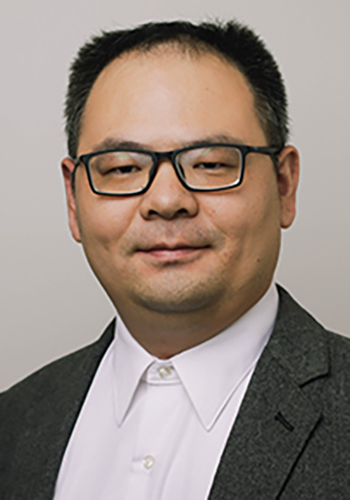
Dr. Lei Fan is an Assistant Professor in the Department of Engineering Technology at the University of Houston, with a joint appointment in the Electrical and Computer Engineering (ECE) Department. His research focuses on power system operations, optimization algorithms, quantum computing, and energy storage systems. He holds a Ph.D. from the University of Florida and a B.S. from Hefei University of Technology. Education: Ph.D., University of Florida B.S., Hefei University of Technology Research Interests: Dr. Fan’s work bridges theoretical optimization and practical energy systems, including quantum algorithms for power grid management, battery storage planning, and distributed quantum computing architectures. His LORE (Learning & Operations Research & Energy) lab explores cutting-edge applications in teleoperation, satellite networks, and environmental monitoring. Publications: Recent work emphasizes quantum computing’s role in solving complex optimization problems, such as entanglement routing in satellite networks and distributed hydrogen-power systems. His research also integrates machine learning for methane plume detection and hyperspectral imaging. Labs/Teams: He leads the LORE lab, advancing interdisciplinary research in energy systems and quantum technologies.
Bryan J. Cuevas is the John F. Priest Professor of Religion at Florida State University’s Department of Religion, part of the College of Arts and Sciences. He holds a Ph.D. from the University of Virginia and has held visiting appointments at École Pratique des Hautes Études (Paris), UC Berkeley, Princeton, and Emory University. His research focuses on Tibetan history, Buddhist magic and sorcery, death narratives, and the politics of ritual power in premodern Tibetan societies. He has been supported by major grants from the Guggenheim Foundation, NEH, and AIIS. Research interests include Tibetan biographical literature, Buddhist ritual practices, and the intersection of religion and power. Cuevas is currently accepting graduate students for Tibetan and Buddhist Studies research. His publications include books such as The Hidden History of the Tibetan Book of the Dead and articles analyzing ritual texts, magical warfare, and historical periodization. Scientific awards include prestigious fellowships from the John Simon Guggenheim Memorial Foundation and NEH. His work bridges textual analysis with historical and anthropological approaches, emphasizing the role of ritual in Tibetan sociopolitical structures. Cuevas advises graduate students and has contributed to editorial projects like The Buddhist Dead: Practices, Discourses, Representations .
Girija Chetty is a Full Professor in Computing and Information Technology at the University of Canberra's School of Information Technology and Systems. She holds a PhD in Information Sciences and Engineering and has over 35 years of experience in academia and research leadership roles, including Head of Software Engineering and Program Director of ITS courses. Her research focuses on multimodal systems, medical image computing, AI, and data science. She leads a dynamic research group comprising PhD students, postdocs, and international collaborators. Education: PhD in Information Sciences (Australia, 2007), MSc and BSc in Electrical Engineering/Computer Science (India). She has held visiting roles at Deakin University and CSIRO. Research interests span computer vision, pattern recognition, and medical diagnostics, with 200+ publications in top journals/conferences. Her work addresses global challenges via AI-driven solutions in healthcare (e.g., pain assessment systems, malaria diagnostics) and sustainability (SDG impact frameworks). Projects include AI for remote ultrasound imaging and smart farming systems. She actively collaborates with industry and global research institutions. Grants/Projects: 12 funded initiatives including AI for extreme environment healthcare, malaria pathogen detection, and big data-driven population health. Awards: Senior IEEE/Australian Computer Society membership, editorial roles in IEEE/Elsevier journals. Labs/Teams: Leads a multidisciplinary research group focused on medical AI and multimodal systems.
Prof Noel O'Connor is a Full Professor at Dublin City University's School of Electronic Engineering, specializing in cutting-edge research at the intersection of artificial intelligence (AI), medical imaging, robotics, and smart city technologies. His work spans applications such as cardiac MRI reconstruction, robotic manipulation using reinforcement learning, and the development of the Smart DCU Digital Twin for autism-friendly university environments. Research interests include AI-driven medical diagnostics, multimodal data fusion, and adaptive systems. His contributions to cardiac MRI reconstruction and transformer-based medical imaging analysis reflect a strong focus on healthcare innovation. He also explores ethical AI practices to reduce social bias in foundation models. Recent work emphasizes smart infrastructure projects, such as optimizing parking recommendations for electric vehicles and enhancing accessibility through digital twin frameworks. His research often integrates real-time sensor data and multi-agent systems to address complex urban challenges. No scientific awards are listed. Collaborations include the ASU-DCU International Research Program on Sensors and Machine Learning. Advising details and grant information are not explicitly provided.
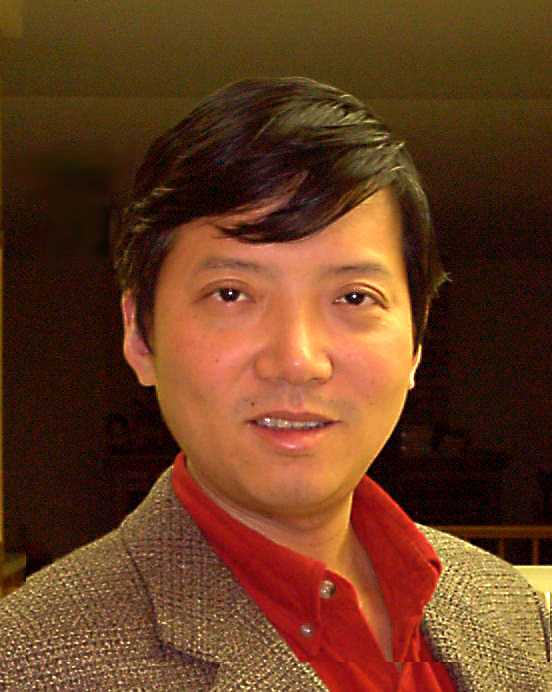
Charles Ling is a Professor of Computer Science at Western University, holding the title of Science Distinguished Research Professor. He also serves as Director of the Data Mining and Business Intelligence Lab and Associate Scientist at the Lawson Health Research Institute. His academic background includes a B.Eng. (CS and EE) from Shanghai Jiao Tong University and MSc/PhD from the University of Pennsylvania (UPenn). Research interests span machine learning, deep learning, AI, and healthcare informatics, with notable contributions to the GlucoGuide diabetes management system. He has authored over 220 peer-reviewed papers and a book titled Crafting Your Research Future , focusing on academic career development. Awarded Fellow of the Canadian Academy of Engineering (CAE) and recipient of the First Prize for Best Clinical Research Presentation (2011). Active in grants (NSERC, FedDev, Mitacs) and organizational roles in top conferences (KDD, ICDM). Supervises 5 PhD and 4 MSc students, with notable advisees including Harry Zhang and Victor Sheng. Leverages AI in education to enhance children's cognitive abilities through video-based programs like Power Thinking , approved by Curriculum Services Canada. His work integrates machine learning with healthcare, finance, and software engineering.
Neil Lin is an Assistant Professor in the Department of Mechanical and Aerospace Engineering at the University of California, Los Angeles (UCLA), with a joint appointment in Bioengineering. His research focuses on developing 3D-printed tissues that replicate the structure, mechanics, and functionality of human organs, with applications in drug screening and regenerative medicine. Lin leads the Lin Lab - Living Soft Material Engineering , advancing soft and living material engineering through interdisciplinary approaches. Lin holds a Ph.D. and M.S. in Engineering from Cornell University (2016 and 2013) and a B.S. in Engineering from National Tsing Hua University, Taiwan (2008). His work spans biomaterials mechanics, quantitative imaging, and AI-driven biological analysis. Research interests include the structure and dynamics of soft biomaterials, image-based force measurements, and quantitative imaging techniques for material characterization. Recent work explores cell morphology regulation, AI applications in microscopy, and mechanical heterogeneity in live tissues. Lin’s publications highlight advancements in cell trapping, AI-based image translation, and prostate cancer metabolism modeling. He has received prestigious awards, including the Young Investigator Award (2022), Hellman Fellowship, and NIH Maximizing Investigators' Research Award (2022). His lab integrates engineering and biology to address challenges in tissue engineering, with ongoing projects on 3D kidney models, drug response assays, and AI-driven phenotyping of senescent cells.
Oscar Mendez Maldonado is a Lecturer in Robotics and Artificial Intelligence at the University of Surrey's School of Computer Science and Electronic Engineering, affiliated with the Robotics Department and CVSSP Centre. He holds a PhD (2018) and BEng (2013) from the University of Surrey. His research focuses on Machine Learning, Computer Vision, and Robotics, with emphasis on autonomous systems, localisation, and SLAM applications. Key projects include the Autonomous Valet Parking (AVP) system for indoor navigation and the SMILE project for sign language assessment using AI. He has supervised students like James Ross (Autonomous Vehicles), Xihan Bian (Reinforcement Learning), and Nimet Kaygusuz (Visual Odometry). Notable achievements include the Sullivan Thesis Prize (2018) and impactful publications in IEEE conferences (e.g., ICRA, CVPR, IROS). Research spans topics like 3D hand pose estimation via diffusion models, graph-based visual odometry fusion, and Raman spectroscopy for localisation. He contributes to open-source tools (e.g., RaSpectLoc GitHub) and collaborates with industry partners like Parkopedia. His work bridges theoretical advances with real-world applications in autonomous systems and healthcare.
Philbert Tsai is an Associate Teaching Professor in the Department of Physics at the University of California, San Diego (UCSD). He has held roles as QBio Lab Coordinator/Project Scientist (2015–Present) and Associate Project Scientist (2011–2015), overseeing advanced laboratory setups and bio-imaging research projects. His work focuses on neurovascular systems, microscopy techniques, and cortical blood flow dynamics. Education: Ph.D., Physics, UC San Diego, 2004 Research Interests: Quantitative analysis of cortical microvascular networks Development of ultra-high-resolution imaging systems (e.g., STED, two-photon microscopy) Neurovascular coupling mechanisms and their impact on brain oxygen supply Biomedical engineering applications in neuroscience research Lab & Projects: QBio Lab: Advanced instrumentation including confocal microscopes, 3D printers, and wet-lab equipment Developed vectorized models of mouse brain vasculature and ultra-wide-field multiphoton imaging systems Grants & Awards: No specific awards listed in provided text Collaborations: Worked extensively with colleagues like Dr. David Kleinfeld and Dr. Berislav Zlokovic on neurovascular projects.
Anna Beer is a researcher in the Faculty of Computer Science, specializing in data mining and machine learning with a focus on density-based clustering, spectral clustering, and interactive clustering frameworks. She holds a BSc and MSc in computer science and maintains an ORCID profile (https://orcid.org/0000-0002-6890-997X) for her research contributions. Research Themes: Development of clustering algorithms (e.g., DISCO, Scar, LUCKe), fairness in density-based clustering (FairDen), and applications to molecular dynamics and climate research (DROPP). Collaborations: Works with colleagues like Ira Assent, Christian Plant, and Lars Krieger, with recent contributions to conferences like ICLR 2025. Activities: Presented research on density-connectivity distance at a 2023 oral contribution. Publications: 9 publications since 2019, including 3 in 2025 and 6 in 2024, covering topics from cluster evaluation to deep active learning strategies.
Silvia Jiménez Fernández is an Associate Professor in the Department of Signal Theory and Communications at Universidad Autónoma de Madrid. Her research focuses on optimization algorithms, smart grids, renewable energy systems, telemedicine, and machine learning applications. She holds a Ph.D. from Universidad Politécnica de Madrid (2009), supervised by Dr. Francisco del Pozo Guerrero and Dr. Paula de Toledo Heras. Her work integrates interdisciplinary approaches, such as combining evolutionary algorithms with engineering challenges in energy systems and healthcare. Key contributions include advancements in coral reefs optimization algorithms for energy management, machine learning for battery health estimation, and telemedicine systems for chronic disease monitoring. Recent research trends emphasize hybrid learning models in education, multi-objective optimization in renewable energy systems, and risk analysis in smart grids with electric vehicles. She is affiliated with the GHEODE Research Group (Modern Heuristics and Network Design).
Stavros Vougioukas is a Professor and Vice Chair in the Department of Biological and Agricultural Engineering at the University of California, Davis, within the College of Engineering. He is actively involved in research and graduate mentorship, focusing on agricultural robotics and automation for specialty crops. His work integrates engineering solutions to improve efficiency and sustainability in farming systems. His research interests include agricultural robotics , automation of harvesting processes , sensors and control systems , precision agriculture , and wireless sensor networks for orchard environments . He develops technologies for robotic and robot-aided harvesting, particularly in strawberries and orchard crops, emphasizing optimal management of inputs and yield monitoring. The recent publications reflect a strong trend in robotics integration , real-time sensing , and data-driven decision-making in agriculture. His work spans mechanical design, signal processing, path planning, and structural durability, indicating a multidisciplinary approach to solving agricultural challenges through engineering innovation. Scientific Awards and Recognition: $1.6M grant (2021) to develop innovative fruit-picking machines CITRIS Seed Award (2023) for engineering solutions in agriculture Professor Vougioukas mentors graduate students and leads funded research projects focused on automation and robotics in agriculture. He has secured significant grants, including a $1.6M award for fruit-picking robotics, demonstrating strong research leadership. His collaborations span institutions and disciplines, particularly in agricultural machinery design and sensor network deployment. He leads research efforts in agricultural automation, particularly through projects involving robot-aided harvesting , orchard navigation systems , and wearable worker tracking devices . His lab contributes to the development of intelligent systems for sustainable farming, integrating mechanical, electronic, and computational components.
Lars Andreas Akslen is a Professor at the Department of Clinical Medicine, University of Bergen, and serves as the Centre Director of CCBIO (Centre for Cancer Biomarkers). He is based at Haukeland University Hospital and leads a major translational cancer research group focused on biomarker discovery and validation. Position: Professor, Centre Director of CCBIO Institution: University of Bergen Department: Department of Clinical Medicine Location: Haukeland University Hospital, Bergen, Norway Email: lars.akslen@uib.no His research is centered on translational oncology, with a strong emphasis on identifying and validating novel biomarkers for improved biological classification and grading of malignant tumors. His work spans breast cancer , malignant melanoma , prostate cancer , and gynecologic cancers . By integrating human tumor sample analysis with experimental cell and animal models, his team aims to enhance the clinical utility of biomarkers in predicting aggressive tumor behavior and guiding personalized treatment strategies. The recent publications highlight a consistent focus on tumor microenvironment, immune biomarkers, imaging mass cytometry, AI in diagnosis, and age-related phenotypes in cancer. There is a strong trend towards high-dimensional spatial profiling and integration of molecular and clinical data to refine prognostic and predictive models. Lars Andreas Akslen has no listed scientific awards in the provided text. He leads the Tumor Biology Research Group (established in 1995) and the CCBIO center, indicating significant mentorship and leadership in cancer research. While specific students are not listed, his extensive collaboration network suggests active supervision of PhD and postdoctoral researchers. No specific grants are mentioned, but leadership of a national research center implies substantial funding acquisition. He is affiliated with CCBIO and the Tumor Biology Research Group, both based at the Department of Clinical Medicine, University of Bergen, and operating from Haukeland University Hospital. These teams focus on translational cancer biomarker research using advanced molecular and imaging technologies.
Emanuele (Manuel) Trucco is a Professor of Computing and holds the NRP Chair of Computational Vision in the School of Science and Engineering at the University of Dundee. He is also an Honorary Clinical Researcher at NHS Tayside and previously served as an Adjunct Professor at the Chinese Academy of Sciences (2018–2021). His research is centered on computational vision and medical image analysis, particularly in retinal imaging and its applications in systemic disease detection. PhD, Electronic Engineering, University of Genoa (1990) MSc, Electronic Engineering, University of Genoa (1984) Manuel Trucco's research focuses on computer vision and medical image analysis , with a strong emphasis on retinal image analysis for early detection of diseases such as diabetes, cardiovascular conditions, stroke, dementia, and neurodegenerative disorders. He co-directs the VAMPIRE (Vessel Assessment and Measurement Platform for Images of the Retina) initiative, a collaborative effort between the Universities of Dundee and Edinburgh. This platform enables automated, multi-modal analysis of retinal images and has been used in biomarker studies across the UK and internationally. His work integrates deep learning , artificial intelligence , and biomedical engineering to develop non-invasive, scalable diagnostic tools. Industrial collaborations include Canon Medical, OPTOS plc, NIDEK, and Epipole plc, while institutional partners include the Royal College of Ophthalmologists and the UK Biobank Eye and Vision Consortium. Recent publications highlight a strong trend in using AI and deep learning to extract clinical insights from retinal images, including predicting cardiovascular outcomes in diabetic patients, estimating biological age, and analyzing retinal vasculature changes under physiological stress. His work bridges computer science, ophthalmology, and public health, contributing to precision medicine and health equity. His scientific contributions have been recognized through fellowships: FRSA (Fellow of the Royal Society of Arts) FIAPR (Fellow of the International Association for Pattern Recognition) Trucco has led or co-led major research projects, including a £7M NIHR grant on precision medicine for diabetes (Dundee-Chennai), a £1.1M EPSRC grant on vascular dementia biomarkers (PI), the 3M-Euro ITN "REVAMMAD", and several PhD studentships sponsored by OPTOS, NIDEK, SINAPSE, and Toshiba. He has served on the organizing and program committees of major international conferences such as MICCAI and the European Conference on Computer Vision. He is a key member of the VAMPIRE research team and the UK Biobank Eye and Vision Consortium , contributing to large-scale data analysis efforts in vision and systemic disease. His work is at the forefront of AI-driven healthcare innovation, with real-world applications in early disease detection and personalized medicine.
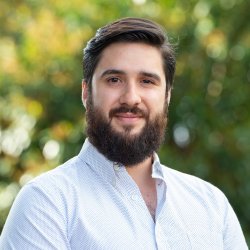
Dr. Hamidreza Mohades Kasaei is an Associate Professor in the Department of Artificial Intelligence at the University of Groningen, Netherlands. He holds positions in both the Faculty of Science and Engineering and the Faculty of Medical Sciences/UMCG, focusing on Robotics and image-guided minimally-invasive surgery. His work bridges theoretical advances in machine learning with practical robotic applications. Dr. Kasaei's research focuses on developing algorithms for adaptive perception systems through interactive environment exploration and open-ended learning. His specific interests include 3D object perception, grasp affordance detection, object manipulation, and active perception. He has evaluated his research on various robotic platforms including PR2, UR5e, Kinova, Franka robotic arms, and humanoid robots. His work enables robots to learn from past experiences and intelligently interact with non-expert human users using data-efficient techniques. Analysis of his recent publications reveals strong trends toward increasingly sophisticated manipulation capabilities, particularly in dual-arm coordination and handling dense clutter. There's a clear progression toward integrating language models with robotic control systems, as seen in works like 'Lifelong Robot Library Learning' and 'Towards Open-World Grasping with Large Vision-Language Models.' His research consistently addresses real-world challenges in agricultural robotics, assistive technologies, and service robotics applications. Gratama Science Award (2022) Google Research Scholar Award in Machine Learning (2023) Outstanding Associate Editor for IEEE Robotics and Automation Letters (2023) Dr. Kasaei has successfully supervised multiple PhD students including Zhenxing Zhang (thesis on 'Generative Adversarial Networks for Diverse and Explainable Text-to-Image Generation') and Hamed Ayoobi (thesis on 'Explain What You See: Argumentation-Based Learning and Robotic Vision'). His research is supported by significant grants including the Google Research Scholar Award for 'Continual Robot Learning in Human-centered Environments' and various conference organization roles including workshops at RSS 2023 and NeurIPS 2022. He leads the Lifelong Interactive Robot Learning Lab (IRL-Lab), which focuses on six key research directions: Perception and Perceptual Learning, Object Grasping and Manipulation, Lifelong Interactive Robot Learning, Dual-Arm Manipulation, Dynamic Robot Motion Planning, and Exploiting Multimodality. The lab develops cutting-edge approaches for robots to learn in open-ended fashion through interaction with non-expert human users, with applications in assistive robotics for people with disabilities.
Changhyun Choi is an Assistant Professor in the Department of Electrical and Computer Engineering at the University of Minnesota (UofM), Twin Cities. His research focuses on visual perception for robotic manipulation using deep learning. Assistant Professor, UofM Electrical and Computer Engineering (2018–present) Postdoctoral Associate, MIT CSAIL (prior to 2018) Research Interests : Visual perception for robotic manipulation Deep learning for object grasping and assembly Soft manipulation techniques Object pose estimation and tracking Active perception and reinforcement learning Combining vision with manipulation Scientific Awards : NSF CAREER Award (2022) Sony Research Award (Faculty Innovation Award, 2021 & 2024) Russell J. Penrose Excellence in Teaching Award (2021) IEEE ICRA 2022 Outstanding Student Paper Award Advising & Collaborative Research : He advises 5 PhD students (Jiacheng Yuan, Alireza Rezazadeh, Houjian Yu, Ross Worobel, Mingen Li) and 2 Master's students (Chase Anderson, Nikhilanj Venkata Pelluri). His work involves grants from NSF, MnRI, and NRF (Korea).