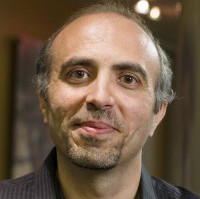
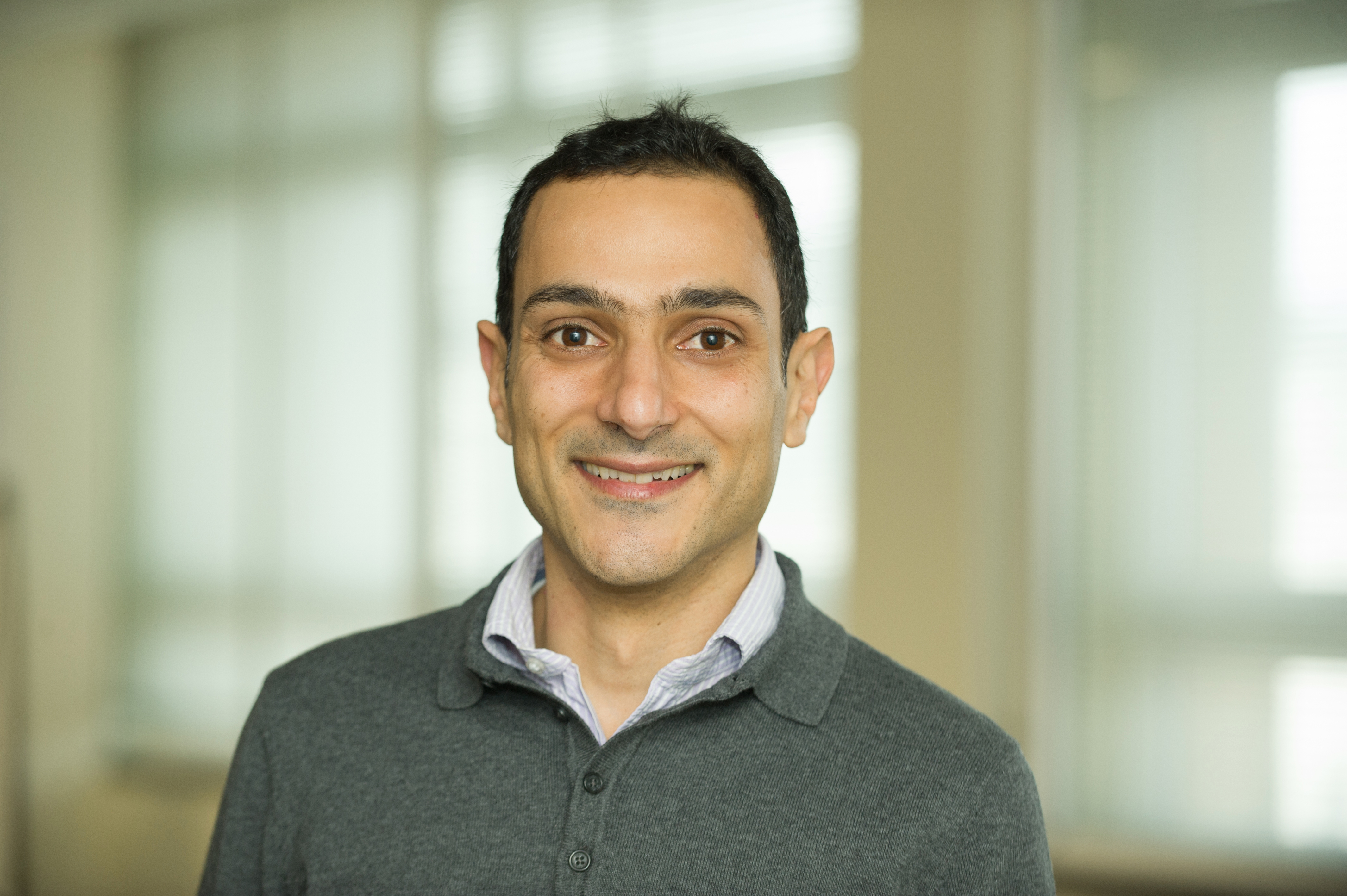
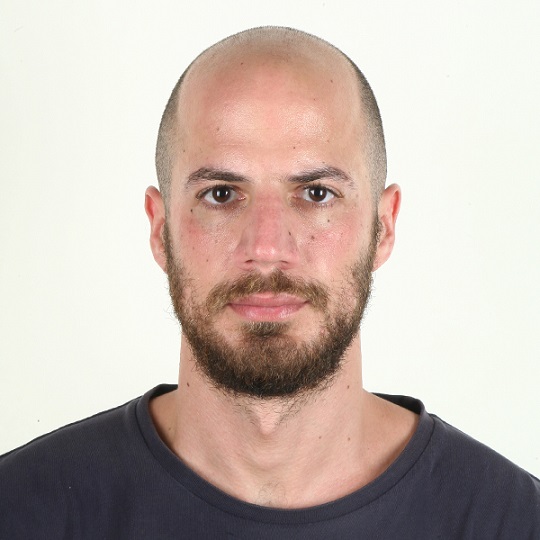
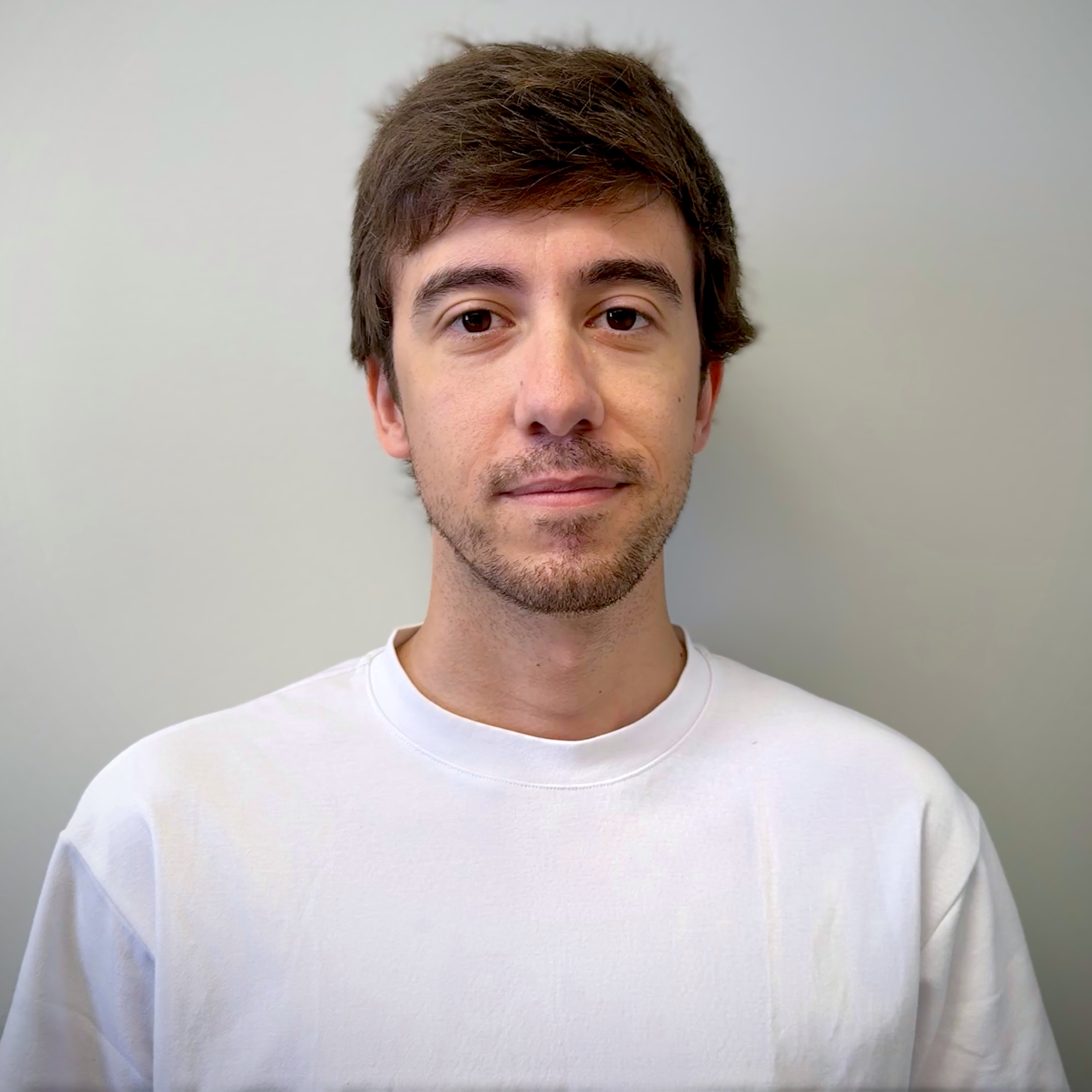
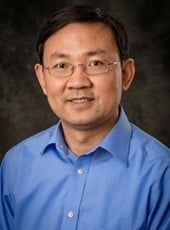
Stephan Clémençon is a Full Professor at Telecom Paris, part of the Institut Polytechnique de Paris. He holds roles as head of the S2A research team and has led the master program Big Data and industrial chairs such as ML4BGD and DSAI4DIS. His expertise spans Machine Learning, AI, Stochastic Processes, and Nonparametric Statistics, with applications in quantitative finance, biosciences, and signal/image processing. He has advised numerous PhD/Master’s students and collaborated on projects with industry partners like Renault, BNP EXANE, and IDEMIA. Research contributions include anomaly detection, ranking algorithms, and survival analysis. He has published extensively in journals like Electronic Journal of Statistics , TEST , and Bernoulli , with recent work on bipartite ranking, extreme value statistics, and fairness in facial recognition systems. His grants and collaborations highlight interdisciplinary research in AI and industry-driven innovation. He leads the S2A team focusing on statistical learning and signal applications.
Dr. Barbie Klein is an Associate Professor with joint appointments in the Department of Anatomy (School of Medicine) and Department of Cell and Tissue Biology (School of Dentistry) at UCSF. She co-directs the Anatomy Learning Center and advises the Willed Body Program. Her research focuses on interprofessional anatomy education, instructional design, and applications of 3D printing/virtual reality in medical education. Her work spans: Gross anatomy/histology curriculum development VR-based medical simulations Deep learning for medical image reconstruction Innovative pedagogy assessment Honors include induction into the UCSF Academy of Medical Educators (2024). She leads NIH-funded projects on educational technology integration and maintains collaborations with engineering departments for imaging research. Current projects explore AI-enhanced spectroscopic microscopy and federated learning for cancer staging.
Ho-fung Leung is a Professor at the Department of Computer Science and Engineering, Faculty of Engineering, Chinese University of Hong Kong. With a prolific publication record spanning over three decades, his research has significantly contributed to the fields of artificial intelligence, multi-agent systems, and natural language processing. His educational background, though not explicitly stated in the provided text, likely includes advanced degrees in computer science or a related field, given his extensive research contributions and faculty position at a prestigious university. Professor Leung's research interests span multiple areas within artificial intelligence, with a particular focus on multi-agent systems, reinforcement learning, natural language processing, and human-computer interaction. His work often explores the intersection of theoretical foundations and practical applications, developing novel algorithms and frameworks that address real-world challenges in AI systems. He has made significant contributions to constraint satisfaction problems, trust and reputation systems in multi-agent environments, and more recently to deep learning applications in NLP and human activity recognition. His recent publications demonstrate a strong trend toward applying advanced machine learning techniques to complex problems in natural language understanding, knowledge representation, and human activity recognition. Many of his papers focus on improving the efficiency, robustness, and interpretability of AI systems through innovative architectural designs and learning paradigms. Key research themes include few-shot learning, knowledge-enhanced models, and theoretical analysis of reinforcement learning dynamics. Professor Leung has received recognition for his work through numerous publications in top-tier conferences and journals, though specific awards are not detailed in the provided information. He has supervised numerous students throughout his career, with many of his publications featuring junior researchers in first-author positions. His research group appears to focus on cutting-edge problems in AI, with current projects spanning reinforcement learning theory, knowledge graph applications, and multimodal learning systems. Collaborators include researchers from across CUHK and international institutions. Professor Leung is actively involved in multiple research projects, with recent work focusing on human activity recognition using wearable sensors, knowledge-enhanced language models, and theoretical aspects of reinforcement learning. His research continues to evolve while maintaining strong connections to foundational AI principles, demonstrating remarkable adaptability in a rapidly changing field.
Jerzy Wieczorek is an Associate Professor in the Department of Statistics at Colby College. His research focuses on developing robust statistical methodologies for survey sampling, cross-validation techniques, and machine learning applications. Notably, he co-authored the influential paper "K-fold Cross-Validation for Complex Sample Surveys" with students Cole Guerin and Thomas McMahon, addressing challenges in data collection and model validation. His work bridges theoretical statistics with practical applications, such as improving poverty measurement in developing countries and enhancing algorithms for self-driving cars. Recent professional activities include organizing the 25th Annual New England Isolated Statisticians Meeting (2024), presenting at Wellesley College and the CANSSI-CRT Workshop (2024), and publishing "Design-based conformal prediction" in Survey Methodology (2023). He has developed open-source software packages like surveyCV and CIPerm , which have been downloaded over 3,000 times. His collaborations emphasize interdisciplinary research, combining statistical rigor with real-world impact. Wieczorek’s educational contributions include mentoring undergraduate researchers, such as Guerin and McMahon, who worked on large-scale surveys and algorithm development. He actively contributes to statistical pedagogy through think-aloud interviews to identify student misconceptions in introductory data science courses.
Forrest Sheng Bao is an Assistant Professor of Computer Science at Iowa State University (ranked 63rd in U.S. CS departments). His research focuses on AI, NLP, EDA, and medical data analytics. He holds a Ph.D. in Computer Science (with Electrical Engineering minor) from Texas Tech University (2012), followed by a postdoc at Stony Brook University. Previously, he served as an Assistant Professor at the University of Akron (2013–2017). His work is funded by NSF, FAA, AFRL, Microsoft, and others, with media coverage in MIT Technology Review and Lancet Neurology. Education: Ph.D., Computer Science (minor in Electrical Engineering), Texas Tech University, 2012 Postdoc, Stony Brook University (2012–2013) Research Interests: AI/ML, NLP (NLG metrics, review analysis), EDA (circuit routing, HDLs), medical signal/image processing (EEG/MRI). His publications span top conferences like ACL, NAACL, EMNLP, DAC, and DATE, with notable work in EDA using reinforcement learning and NLP metrics. He advises students on NLP and EDA projects, co-founding startups Funix.io and Codepod.io. His lab focuses on applying ML to PCB/IC design and biomedical applications. Awards: Best Paper Award at HPCC 2019, NSF grants totaling $462k. Teaching: Courses in NLP, Machine Learning, and Python. Actively mentors students through research and TA/RA opportunities. He engages in entrepreneurship (AI and hardware startups) and maintains active GitHub repositories for educational projects like PyEEG and Mercury.
Nicolas Flammarion is a tenure-track Assistant Professor in Computer Science at the École Polytechnique Fédérale de Lausanne (EPFL). He holds positions in multiple departments including the Theory in Machine Learning (TML) lab under the School of Computer and Communication Sciences (IC). His roles include teaching and doctoral program leadership across disciplines like Communication Systems and Computer Science. Education: PhD in 2017 from École Normale Supérieure (Paris), advised by Alexandre d’Aspremont and Francis Bach. Postdoctoral fellowship at UC Berkeley under Michael I. Jordan. Research focuses on machine learning theory, optimization, and statistical methods. Key areas include adversarial robustness, algorithmic generalization, and optimization dynamics. Notable contributions include work on SGD/GD comparisons, adversarial benchmarking (RobustBench), and safety in AI systems. Awards include the 2018 Fondation Mathématique Jacques Hadamard PhD Prize, 2021 NeurIPS Outstanding Paper Award, and 2024 Trust & Safety Google Research Award. Supervises PhD students in topics like algorithm design and machine learning theory. Labs/Teams: Leads TML lab and contributes to EPFL's doctoral programs in Informatics and Communication Sciences. Active in curriculum development for advanced machine learning topics.
Zoi Kaoudi is an Associate Professor at the IT University of Copenhagen, affiliated with the Data, Systems, and Robotics school and the Data-intensive Systems and Applications department. Her research focuses on advancing data systems, knowledge graphs, and large-scale data analysis. She leads the Rank4QO project (2024–2027), funded by the Carlsberg Foundation, which explores query optimization using ranking algorithms. Her work emphasizes machine learning integration in data management systems, including frameworks like Apache Wayang, which unifies diverse data analytics platforms. Key collaborations include projects with Volkswagen Group and SAP, addressing dynamic graph processing and knowledge graph embeddings. Notable contributions include innovative approaches to parameter management (e.g., Good Intentions ), automated data science pipelines ( DORIAN ), and efficient graph processing algorithms. Her recent publications (2023–2025) highlight advancements in machine learning systems, distributed data processing, and adaptive optimization techniques. Current projects aim to bridge machine learning and data management through frameworks like Wayang and Dorian, with applications in air cargo revenue management and semantic web systems.
K. Selcuk Candan is a Professor of Computer Science and Engineering at Arizona State University (ASU) and Director of the Center for Assured and Scalable Data Engineering (CASCADE). He holds affiliations with multiple institutes, including the Global Futures Scientists and Scholars and the Center for Cybersecurity and Trusted Foundations. Candan has been at ASU since 1997, following his PhD from the University of Maryland. His research focuses on managing and analyzing non-traditional data types like multimedia, web, and scientific data. Key interests include scalable data processing, sensor data integration, and accessibility technologies for visually impaired individuals. He has led numerous grants from NSF, DoD, and others, resulting in over 250 peer-reviewed publications and 9 patents. Notable contributions include the DataStorm framework for coupled simulations and the OASIS system for accessible digital content. Candan has served as program chair for top conferences like SIGMOD and MM, and is an ACM Distinguished Scientist. His awards include the SIGMOD Contributions Award and Dan Jankowski Legacy Award. He has advised numerous students and led interdisciplinary projects in areas like pandemic modeling (APPEX Center) and building automation security. His work bridges theory and application, emphasizing real-world impact in healthcare, urban systems, and educational accessibility.
Kate Larson is a Professor at the David R. Cheriton School of Computer Science, University of Waterloo. Her research explores artificial intelligence with emphasis on multiagent systems, reinforcement learning, and AI applications for sustainability and climate challenges. She employs game-theoretic approaches to address coordination and cooperation in complex systems. Education Ph.D. in Computer Science from Carnegie Mellon University (2004), M.Sc. from Washington University in St. Louis (1999), and B.Sc. from Memorial University of Newfoundland (1997). Research Focus Professor Larson's work bridges theoretical AI and practical societal impacts. Key areas include: Designing cooperative AI frameworks for multiagent environments Developing value-alignment mechanisms for ethical AI Applying reinforcement learning to climate change mitigation Creating robust AI systems through game-theoretic guarantees Publication Trends Her recent publications (2024-2025) demonstrate strong focus on AI safety, game-theoretic foundations, and multimodal learning systems. Dominant themes include: algorithmic alignment techniques, multi-agent risk management, and interpretable AI architectures, with increasing emphasis on real-world climate and sustainability applications. Awards & Recognition No major scientific awards mentioned in source materials. Research Infrastructure No specific labs or teams detailed in available information.
Panos Parpas is a Reader in Computational Mathematics at the Department of Computing, Imperial College London. His research focuses on mathematical optimization algorithms, computational mathematics, and scientific computing, with applications in science, engineering, and finance. He previously held roles as a postdoctoral fellow at MIT and a quant at Credit Suisse. Key research interests include dynamical systems, numerical methods for optimization, and stochastic processes. He teaches courses such as Computational Optimization and Computational Finance with C++. His work bridges theoretical optimization with practical applications in areas like water distribution networks, financial modeling, and machine learning. Panos has authored numerous publications on topics like multilevel optimization methods, stochastic mirror descent algorithms, and the analysis of saddle points using Witten Laplacians. His research emphasizes algorithmic efficiency and scalability, particularly in high-dimensional and distributed settings. Notable collaborations include projects on optimizing water distribution systems (e.g., pump scheduling and pressure management) and developing robust algorithms for financial and engineering systems. His contributions span journals like Automatica , SIAM Journal on Scientific Computing , and Journal of Optimization Theory and Applications .
Alexandros Gelastopoulos is a Research Fellow at the Institute for Advanced Studies in Toulouse with a PhD in Mathematics from Boston University (2019). His research employs mathematical modeling to study biological and social systems, focusing on probability theory, stochastic processes, and reinforcement dynamics in social contexts like cumulative advantage and ranking-based behaviors. Primary research interests include analyzing how popularity rankings influence social systems, studying brain oscillations for memory functions, and exploring decision-making paradoxes. His work often bridges mathematical rigor with behavioral sciences to uncover mechanisms driving social inequalities and neural computations. His publication trends show strong emphasis on social dynamics (e.g., lock-in effects, reinforcement processes) and computational neuroscience (e.g., neural rhythms, memory substrates), using stochastic modeling and empirical validation across disciplines. European Commission's Seal of Excellence (2024) Collaborates extensively with international researchers on projects involving mathematical sociology and behavioral experiments. Teaches game theory and mathematical courses while developing expository materials on real analysis and information theory.
Weilin Li is an Assistant Professor in the Department of Mathematics at the City College of New York (CUNY). His research focuses on applied and computational harmonic analysis, with emphasis on super-resolution, quantization methods, and signal processing. He holds a PhD in Mathematics from the University of Maryland, College Park, and was previously a Courant Instructor at New York University. Education PhD in Mathematics, University of Maryland, College Park (201X) Courant Instructor, New York University, 201X-201X Research Interests Dr. Li's work bridges pure mathematics and applied sciences, with key areas including nonharmonic Fourier analysis, spectral super-resolution, and compressed sensing. His methods address challenges in signal reconstruction under quantization constraints and subspace estimation techniques. Recent Trends in Publications Recent work explores optimality of spectral estimation algorithms (e.g., Gradient-MUSIC), stability of Fourier matrices, and applications of scattering transforms in hyperspectral imaging. His research often intersects with machine learning, particularly in understanding approximation capabilities of neural networks under quantization. Awards & Grants Recipient of the 2021 Charles Chui Young Researcher Best Paper Award Funded by NSF, PSC-CUNY, and City College Foundation grants Academic Engagement Co-organizer of the One World MINDS Seminar, CUNY GC Harmonic Analysis and PDE Seminar, and CUNY analysis learning seminars. Active in mentoring graduate students, including Ben Tupper who joined the PhD program in 2025.
Yu Xiang is an Assistant Professor in the Department of Electrical and Computer Engineering at the University of Utah since 2018. He holds a B.E. (highest distinction) from Xidian University (2008), a Ph.D. from UC San Diego (2015), and completed a postdoc at Harvard University (2015-2018). His research focuses on statistical signal processing, information theory, and machine learning, with applications in healthcare, IoT, and computational biology. Key areas include distributed testing, trustworthy AI under distribution shifts, and non-stationary time series analysis. Education: Ph.D., Electrical and Computer Engineering, UC San Diego (2015) B.E., Telecommunications Engineering, Xidian University (2008) His work emphasizes causal inference, invariant representation learning, and communication-efficient distributed systems. Recent studies explore Byzantine-robust testing, covariate shift adaptation, and causal discovery in mental health contexts. He has contributed to theoretical bounds in machine learning and signal processing. Grants & Labs: Active in federally funded projects on distributed inference and causal AI. Leads the Invariant Learning Lab at the University of Utah, focusing on interdisciplinary applications of statistical theory.
Miguel Serras Vasco is a postdoctoral researcher at KTH Royal Institute of Technology in Stockholm, Sweden, affiliated with the Robotics, Perception and Learning (RPL) division. He holds a PhD from Instituto Superior Técnico, University of Lisbon (2023), where his work earned the Best PhD Thesis in AI in Portugal award. His research focuses on multimodal perception, reinforcement learning, and aligning artificial agents with human perception. He previously worked as an RSS Pioneer and research intern at Sony AI. Education: PhD in Artificial Intelligence, Instituto Superior Técnico, University of Lisbon (2023) Research Interests: Vasco’s work bridges robotics, neuroscience, and AI, emphasizing embodied agents that co-exist with humans. He explores representation learning, human-aligned image models, and sample-efficient reinforcement learning. His recent projects include super-human autonomous racing agents and olfactory perception modeling with transformers. Key Contributions: Vasco co-developed the GT Sophy racing agent, achieved outstanding results in visual decoding from brain activity, and proposed methods like FLoRA for preference-based RL. His work on NeuralSolver advances algorithm extrapolation in reinforcement learning. Awards: Best PhD Thesis in AI in Portugal (APPIA, 2023) Outstanding Paper Award at RLC 2024 (for autonomous racing research) Grants/Advising: Vasco advises students on multimodal and reinforcement learning topics. He actively organizes conferences like the Reinforcement Learning and Video Games Workshop (RLVG) at RLC 2025 and collaborates with institutions like INESC-ID (Lisbon). Labs/Teams: Associated with the Collaborative Autonomous Systems unit at KTH and previously with the GAIPS Lab (INESC-ID, Lisbon).
Zhenlin Wang is a Professor and Chair of the Department of Computer Science at Michigan Technological University's College of Computing. He earned a BS (1992) and MS (1995) from Peking University, and a PhD in Computer Science from the University of Massachusetts, Amherst (2003). He joined Michigan Tech in 2003 as an assistant professor, became associate professor in 2009, and full professor in 2015. University: Michigan Technological University School: College of Computing Department: Computer Science Academic Rank: Professor His research bridges compilers, operating systems, and computer architecture , with core focus on memory system optimization and virtualization. Key research areas include: Memory hierarchy optimization Cache replacement modeling GPU programming and architecture Virtualization and cloud computing Datacenter resource management Heterogeneous memory systems Recent publications analyze GPU speculation (GSpecPal), hardware-assisted virtualization (Accelerating Address Translation), and graph neural network-based memory inefficiency detection (GRAPHSPY). His work often integrates compiler analysis with hardware insights for performance improvements. Scientific Awards NSF CAREER Award 0643664 (2007-2012) NSF SaTC2225424 (2022-2025) Best Paper Award at ICS’23 (FLORIA paper) He has advised numerous PhD and MS students in memory systems, virtualization, and distributed computing. Current advisees include Shiwei Ding (PhD candidate) and Junyao Yang (PhD candidate).