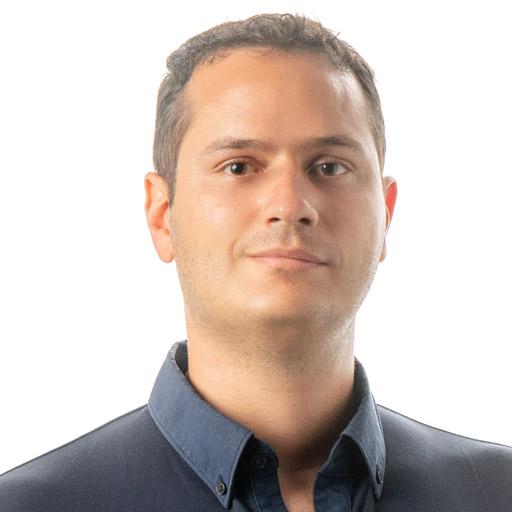
Dr. Wenjuan Yu is a Lecturer at the School of Computing and Communications (SCC), InfoLab21, Lancaster University, UK. She holds a PhD in Communication Systems from Lancaster University and has held prior roles, including Research Fellow at the 5G Innovation Centre (5GIC), University of Surrey (2018–2020), and part-time Research Officer at the University of Essex (2017–2018). She is a Fellow of the Higher Education Academy and a Senior Member of IEEE. Her research focuses on communication systems, with emphasis on radio resource management, mMTC, low-latency communications, B5G/6G, MEC, and machine learning. She actively contributes to IEEE conferences as a Technical Program Committee (TPC) member and holds editorial roles, including Executive Editor for Transactions on Emerging Telecommunications Technologies (2019–2022). Current teaching includes CNSCC141 Professionalism in Practice and CNSCC365 Advanced Networking . Dr. Yu supervises PhD students in EE/CS, particularly welcoming applicants from China via CSC scholarships. Her projects include DSI-funded initiatives on sustainable AI-driven resource allocation for 6G and Smart Multi-RAT Traffic Steering for V2X systems. She leads research groups in Security Lancaster (Networks, Systems, Distributed Systems).
Sohag Kabir is an Associate Professor in the School of Computer Science, Artificial Intelligence, and Electronics at the University of Bradford. He leads the MSc Big Data Science and Technology, MSc Artificial Intelligence and Machine Learning, and MSc Applied Computer Science and Artificial Intelligence programs. He holds a Ph.D. in Computer Science from the University of Hull (2016), an M.Sc. in Embedded Systems, and a B.Sc. in Computer Science and Engineering. Dr. Kabir's research focuses on safety, reliability, and security assurance of cyber-physical autonomous systems. His work includes model-based safety analysis, probabilistic risk assessment, dynamic reliability analysis, and stochastic modeling. Current projects address IoT security, machine learning certification for automotive systems, and dependability frameworks for complex systems. His publications demonstrate consistent focus on developing integrated frameworks for system dependability, with recent work emphasizing IoT security, autonomous vehicle safety, and AI certification challenges. Dr. Kabir has contributed to multiple EU-funded projects including DEIS (Dependability Engineering Innovation for Cyber-Physical Systems) and MAENAD (Model-based Analysis & Engineering of Novel Architectures for Dependable Electric Vehicles).
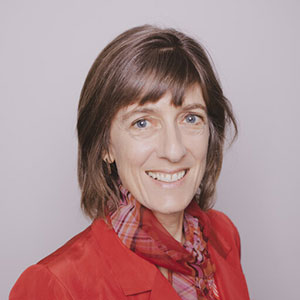
Dr. Md Noor-A-Rahim is an Assistant Professor (Lecturer-Above the Bar) at the School of Computer Science and Information Technology, University College Cork (Ireland). He previously served as a Senior Researcher and Marie Curie Fellow at the same institution. His academic journey includes a PhD from the University of South Australia (2015) and the prestigious Michael Miller Medal for his outstanding thesis on wireless communication systems. His research focuses on Intelligent Transportation Systems, Machine Learning, IoT, Wireless Networks, and DNA-based data storage. He has published extensively on topics like 6G-V2X systems, time-sensitive networking, and error characterization in DNA storage. His work integrates cutting-edge technologies such as intelligent reflecting surfaces (IRS), federated learning, and ultra-reliable low-latency communication (URLLC). Research Interests : Dr. Rahim's research bridges theoretical advancements and real-world applications in vehicular networks, smart manufacturing, and next-generation communication systems. He explores challenges in autonomous driving, edge computing, and bio-constrained data storage. His contributions include novel coding schemes for anytime transmission and frameworks for mitigating big vehicle shadowing in V2X communications. Key Publications : His recent work includes a comprehensive survey on wireless TSN (2025), analysis of 6G-V2X systems (2022), and breakthrough studies on DNA data storage error modeling (2023). These publications highlight his expertise in both foundational research and industry-relevant solutions. Awards : Recipient of the Michael Miller Medal (2015) for doctoral research excellence. Grants & Labs : While specific grants are not listed in the text, his research portfolio suggests involvement in collaborative projects with industry partners and funding bodies. He leads interdisciplinary efforts in smart manufacturing and vehicular communication systems.
Dr. Anil Ufuk Batmaz is an Assistant Professor in the Department of Computer Science and Software Engineering at Concordia University. His research focuses on Virtual Reality (VR), Augmented Reality (AR), and Human-Computer Interaction, with emphasis on interaction techniques, immersive analytics, and motor skill training systems. He holds a BSc in Electrical and Electronics Engineering (2007-2011), an MSc in the same field (2011-2013), and a PhD in Biomedical Engineering (2015-2018). His work bridges engineering and cognitive science, investigating how visual and haptic feedback impact user performance in immersive environments. Research interests include: 3D interaction techniques for mid-air tasks Effects of display technologies on motor coordination Hybrid UI design for mixed reality systems Training systems for precision tasks using VR Recent publications emphasize evaluation of AR/VR interfaces in healthcare, sports training, and collaborative environments. His work has appeared in venues like IEEE TVCG, ACM CHI, and ISMAR, addressing challenges in spatial navigation, error feedback, and system reliability.
Luca Sterpone is a Full Professor at the Department of Control and Computer Science (DAUIN), Politecnico di Torino. He serves as Head of the Control and Computer Engineering Department (2023-2027), coordinates the Aerospace and Safety Computing Lab, and is a member of the Academic Senate and Power Electronics Innovation Center (PEIC). His research spans reconfigurable computing, fault tolerance, and radiation effects analysis in electronic systems. Professor since 2021 Department Head (DAUIN) since 2023 Coordinates international collaborations with ESA, AMD Xilinx, NVIDIA, and Thales Alenia Space Develops radiation-hardened FPGA tools (SETA, VERI-Place, PyXEL) 2007 EDAA Outstanding Dissertation Award and 2005 IEEE Best Paper Award Research Focus : Designing radiation-tolerant systems for aerospace, including fault-tolerant AI accelerators, FPGA reliability, and software-based error mitigation. He investigates soft error propagation in nanoscale circuits and develops tools for radiation sensitivity analysis in VLSI. His work integrates hardware-software co-design for mission-critical applications. Awards : EDAA Outstanding Dissertation Award (2007) IEEE European Test Symposium Best Paper (2005) SMACD Best EDA Tool Award (2018) ARC Best Paper candidate (2018) Teaching : He leads courses in Reconfigurable Computing (PhD level), GPU Programming , and Operating Systems . He has formal responsibility for teaching roles across 9 bachelor's and 7 master's years, and mentors multiple PhD students. Collaborations : Coordinates with the European Space Agency (ESA), University of Bielefeld, Universidad de Sevilla, and industrial partners like AMD Xilinx, NVIDIA, and General Motors. He leads projects such as RESCHIP4EU, VEGAS, and TERRAC for radiation-hardened computing solutions.
Maxime CORDY is a Research Scientist at the Interdisciplinary Centre for Security, Reliability and Trust (SnT) , University of Luxembourg, within the Security, Design and Validation group (SerVal) . He holds a PhD from the University of Namur (Belgium, 2014) and specializes in software engineering, applied artificial intelligence, and cybersecurity. His work focuses on adversarial machine learning, deep learning robustness, and model checking for critical systems. Research interests include adversarial attacks on tabular data , energy system optimization , code understanding models , and software quality assurance . Recent projects address challenges in secure AI deployment, automated test generation, and fault detection in large language models. Publications emphasize empirical studies on adversarial defenses, data augmentation for code models, and energy consumption forecasting. He contributes to tools like Daedalux (variability-aware model checking) and benchmarks like Tabularbench for adversarial robustness evaluation. Current affiliations include leadership within the SerVal group and collaborations on interdisciplinary projects such as MALETSQUE (Machine Learning Techniques for Software Quality Evaluation). His work bridges theoretical computer science with practical applications in energy systems, medical imaging, and space program design.
David Soler Soneira is a Professor in the Department of Electrical Engineering and Systems at the School of Engineering (ICAI) of Comillas Pontifical University, where he has been teaching since 1994. He is also a Visiting Researcher at the Institute for Research in Technology (IIT), focusing on electric power systems. His academic and professional work is deeply rooted in the technical and economic aspects of modern power systems. Research Interests: His primary research areas include ancillary services, operation and planning of electric power systems, and electricity market economics. He specializes in voltage control, reactive power management, and regulatory models for grid services. His work bridges engineering and market design, contributing to the efficient and stable operation of power networks. Publications and Research Trends: His most recent publications, primarily in IEEE journals, focus on voltage regulation, secondary reserve markets, and reactive power markets. These works emphasize market mechanisms, economic valuation, and operational strategies for ancillary services in competitive electricity environments. His research consistently addresses real-world challenges faced by transmission and distribution operators. Scientific Awards: Director of prizewinning work in Honorary Distinction to the best Doctoral Thesis on Engineering «Modelo regulatorio del control de tensiones en los sistemas eléctricos de potencia» by Pablo Frías Marín, Universidad Pontificia Comillas, Jan 2009 Advising and Grants: He has supervised at least one doctoral thesis and has led or participated in numerous research and consulting projects funded by major energy companies such as Iberdrola, Unión Fenosa, Duro Felguera Energía, and REE (Red Eléctrica de España). These projects have focused on voltage control strategies, automation of power plants, and regulatory modeling. Labs and Teams: He is affiliated with the Institute for Research in Technology (IIT), a leading research center in energy systems at Comillas Pontifical University, where he contributes to advanced research in power systems and energy policy.
Professor Helena Cooper-Thomas is a faculty member at Auckland University of Technology (AUT), holding the position of Professor of Organizational Behavior in the AUT Business School. She also holds honorary positions at the University of Auckland and the University of Waikato, reflecting her broad academic influence in Aotearoa New Zealand. Her research and teaching focus on organizational behavior, with an emphasis on employee development and workplace relationships. Her research interests include: New employee adjustment and organizational socialization Proactive behavior and work engagement Workplace wellbeing and quality of working life Workplace friendships and person-organisation fit Quantitative and qualitative research methods Professor Cooper-Thomas's recent publications explore themes such as workplace gossip, psychological contracts, job crafting, and sustainability in organizations. Her work often investigates the social dynamics of onboarding, the role of leadership in psychological safety, and the impact of environmental practices on employee wellbeing. She employs both empirical and methodological approaches, contributing to both theoretical and practical understanding in organizational psychology. She has received scientific recognition including: Best Paper Award, Group & Organization Management (2024) Best Paper selected by the Careers Division of the Academy of Management (2023) Professor Cooper-Thomas is actively involved in mentoring and supervising graduate students at both Master’s and PhD levels, with recent projects covering topics such as broken psychological contracts, psychological safety for racial minorities, and menopause in the workplace. She contributes significantly to academic service as a Representative-at-Large for the Academy of Management’s Organizational Behavior Division (2022–2025) and as a member of the Royal Society Te Apārangi Marsden Panel for Economics and Human Behaviour (2022–2024). She also serves on editorial boards for the Journal of Business and Psychology and Journal of Managerial Psychology, and regularly reviews for top journals and grant agencies. Her outreach includes public engagement through articles in The Conversation and NZ Management magazine, translating research into practical leadership insights. She has collaborated with institutions across Europe, North America, and Asia, and has been a visiting scholar at the University of Toronto, Cass Business School, Tilburg University, and Exeter Business School. She co-organizes the annual Aotearoa New Zealand Organisational Psychology and Organisational Behaviour Conference, fostering scholarly exchange nationally.
Zhe Hou is a Senior Lecturer at the School of Information and Communication Technology , Griffith University, Australia. His academic journey includes a PhD in automated reasoning for separation logic from the Australian National University (2015) and prior research roles at Nanyang Technological University, Singapore (2015-2017). He joined Griffith University in 2017 and became permanent faculty in late 2019. Research Interests : Formal methods for software verification Automated reasoning with logical frameworks Blockchain technology and security Quantum computing verification Integration of LLMs with rigorous reasoning Sports analytics via model checking Recent Publications demonstrate expertise in neural-symbolic reasoning, blockchain security, quantum SAT solvers, and runtime verification frameworks. His work combines formal logic with machine learning for applications in cybersecurity and AI trustworthiness. Scientific Awards : ACM SIGSOFT Distinguished Paper Award (2025) Supervision Roles : Principal/Associate Supervisor for 6+ doctoral projects in blockchain security, AI verification, and network security. Professional Activities : Editor for Springer-Nature and Formal Aspects of Computing special issues, conference chair for ICFEM, ICECCS, and ISACE symposia.
Dr Nickolaos Koroniotis is a Senior Lecturer at the School of Professional Studies, University of New South Wales (UNSW) Canberra, focusing on cybersecurity, artificial intelligence, and Internet of Things (IoT) research. His work bridges network forensics with deep learning, particularly in smart environments like airports and battlefield systems. BSc in Informatics and Telematics (2014) MSc in Web Engineering and Applications (2016) PhD in Cybersecurity (2020) His research emphasizes network-based attack detection and deep learning-driven vulnerability assessment for IoT security. Key areas include smart airports , Internet of Battlefield Things , and federated learning for digital forensics. His recent articles (2025-2019) highlight trends in AI-powered IoT security , federated learning frameworks , and explainable intrusion detection . Topics span from smart environment defense to generative AI for vulnerability discovery. Email: n.koroniotis@unsw.edu.au
Thomas Henzinger is a Professor at the Institute of Science and Technology Austria (ISTA), where he leads the Henzinger Thomas Group focused on improving software reliability through mathematical methods. He previously served as ISTA's President (2009–2022) and held academic positions at EPFL, Max Planck Institute, UC Berkeley, and Cornell University. Education: Dipl.-Ing. in Computer Science (Johannes Kepler University, Austria), M.S. in Computer and Information Sciences (University of Delaware), PhD in Computer Science (Stanford University), and Honorary Doctorates from Fourier University (France) and Masaryk University (Czech Republic). The group's research spans concurrent systems , embedded systems , quantitative model checking , runtime monitoring , and trustworthy AI . They develop tools like HyTech and VAMOS, emphasizing predictability, robustness, and fairness in safety-critical software. Recent publications highlight trends in quantitative automata , fairness in AI , quantum algorithms , and automata theory , reflecting interdisciplinary applications from cyber-physical systems to neural networks. Collaborative projects include SPyCoDe (security foundations) and VAMOS (software monitoring). Honors & Awards: 2024 Fellow of the Royal Society 2020 Member, US National Academy of Sciences 2015 Royal Society Milner Award 2012 Wittgenstein Award 2006 ACM and IEEE Fellow 1995 NSF CAREER and ONR Young Investigator Awards Henzinger advises current and former PhD students including Mahyar Karimi, Pavol Kebis, and Mathias Lechner. His grants include ERC Advanced Grants (QUAREM, VAMOS) and FWF funding (Wittgenstein Award, NFN RISE). Labs & Teams: He leads the Henzinger Thomas Group at ISTA, collaborating with FORSYTE (TU Wien) and contributing to EU-funded initiatives. The group integrates postdocs, PhD students, and interns in formal methods and system verification.
Chris F. Kemerer is the David M. Roderick Professor of Information Systems and Professor of Business Administration at the University of Pittsburgh's Katz School. He previously served as an associate professor at MIT Sloan School of Management and as a principal at American Management Systems Inc. PhD in Systems Sciences (Information Systems), Carnegie Mellon University BS (magna cum laude) in Economics and Decision Sciences, Wharton School, University of Pennsylvania His research spans management and measurement issues in information systems and software engineering, including technical debt, software metrics, network effects, and technology adoption. He has made significant contributions to software design metrics and empirical analysis of IT markets. His publications over the last 15 years emphasize technical debt management, software reliability, standards competition, and economic dynamics in microcomputer software. These works bridge software engineering economics with real-world applications in enterprise systems and global markets. ISI/Thomson Reuters Highly Cited Researcher in Computer Science INFORMS Information Systems Society Distinguished Fellow He has secured grants from the National Science Foundation and IBM for software evolution research. His consulting includes expert testimony in landmark cases like Microsoft antitrust litigation and Oracle v. Google. He has taught courses in economics of information systems, software design, and technology diffusion at the PhD, Executive DBA, MBA, and EMBA levels.
Shad Roundy is an Associate Professor at the University of Utah , holding dual appointments in the Department of Mechanical Engineering and Department of Electrical and Computer Engineering within the College of Engineering . He directs the Integrated Self-Powered Sensing Lab , focusing on energy harvesting, wireless power transfer, and ubiquitous sensing systems. PhD in Mechanical Engineering, University of California, Berkeley (2003) Senior Lecturer, Australian National University (postdoctoral) His research bridges mechanical design , smart materials , and sensor networks , with significant contributions to: Self-powered biomedical implants Wearable health-monitoring devices Underground agricultural sensor networks MEMS sensor development His 15 most recent publications demonstrate interdisciplinary work spanning wireless power transfer for soil sensors, flexoelectric materials, and disease severity assessment via wearables. Articles emphasize energy efficiency , novel transducer designs , and environmental sensor applications . Scientific recognition includes: NSF CAREER Award for magnetoelectric implant powering Associate Editor, Smart Materials and Structures and International Journal of Precision Engineering and Manufacturing-Green Technology Research funded by National Science Foundation , NASA , and industry partners through the ASSIST Engineering Research Center . Publications highlight collaborations across biomedical, agricultural, and wearable technology domains.
Ridha Khedri is a Professor in the Department of Computing and Software at McMaster University . His research spans formal methods in software engineering, cybersecurity, information security ontology, network segmentation, and covert channels analysis. Full Professor since 2000 Contact: khedri@mcmaster.ca Research Interests : Prof. Khedri develops algebraic frameworks for software security, with recent work on network segmentation , ontology engineering , and covert channel detection . His interdisciplinary efforts include hybrid machine learning-ontology models for environmental predictions (e.g., river ice breakup) and digital twin healthcare systems . Article Trends : His 15 most recent works (2016-2025) focus on network security , knowledge representation , and formal verification . Notable trends include automated security testing , ontology modularization , and multi-context reasoning systems . Teaching : He has taught courses like Software Design (CAS 703), Discrete Mathematics (SFWRENG 2DM3), and Algebraic Methods in Software Engineering (CAS 738) since 2017.
Matthew Stephenson is Professor of Law at Harvard Law School , where he teaches administrative law, legislation and regulation, anti-corruption law, and the political economy of public law. He has been a faculty member since 2005, promoted to full Professor in 2010, and remains an active academic. He holds a J.D. and Ph.D. in Political Science from Harvard University and a B.A. from Harvard College. Assistant Professor of Law, Harvard Law School (2005–2010) Professor of Law, Harvard Law School (2010–Present) Clerk, U.S. Court of Appeals for the D.C. Circuit (2003–2004) Clerk, Supreme Court of the United States (2004–2005) His research centers on the application of positive political theory to public law, with a strong focus on administrative procedure, anti-corruption, judicial institutions, and separation of powers . He combines legal analysis with political science and economics to examine how institutions can be designed to promote integrity and effective governance. Recent publications reveal a consistent scholarly trajectory in constitutional law, administrative law, statutory interpretation, and anti-corruption . His work frequently analyzes institutional workarounds, the legitimacy of judicial doctrines, and innovative strategies for legislative and regulatory reform. He has published in top journals such as Harvard Law Review , Texas Law Review , and Yale Journal on Regulation , and has contributed to policy-oriented platforms including the Washington Post and Compliance Week . Notable scholarly contributions include: Critiques of the Major Questions Doctrine and textualism Proposals for reforming the Congressional Review Act Comparative studies on specialized anti-corruption courts Historical analysis of systemic corruption in the U.S. Conceptual frameworks for understanding corruption as a self-reinforcing trap He has advised on international anti-corruption initiatives, including serving as a principal co-drafter of a United Nations guide on national anti-corruption strategies. He is also the co-author of a leading casebook, Legislation and Regulation: Cases and Materials , and maintains an active public presence through the Global Anticorruption Blog and media commentary. His advising and grant activity is not detailed in the texts, but his collaborative research with scholars like Jody Freeman, John Manning, and Sofie Arjon Schütte suggests strong academic partnerships. He has no listed scientific awards in the provided materials. Professor Stephenson leads and contributes to research teams focused on corruption, institutional design, and public law reform. His work is associated with initiatives such as the Global Anticorruption Blog and the U4 Anti-Corruption Resource Centre, indicating engagement with policy communities and interdisciplinary research networks.