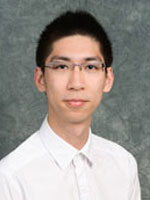
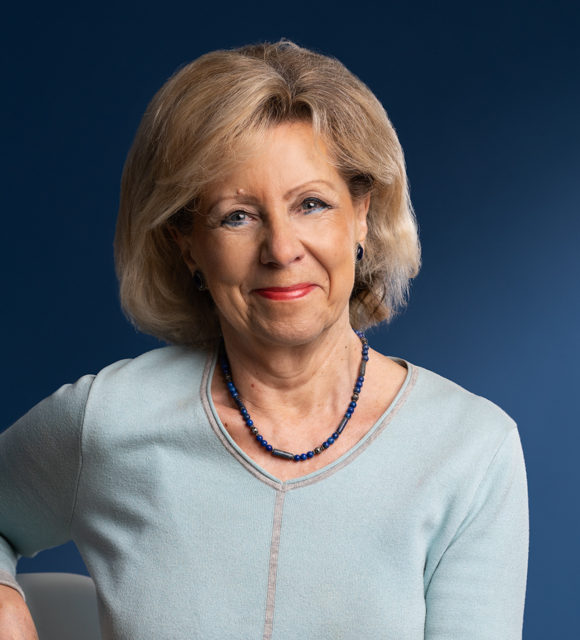
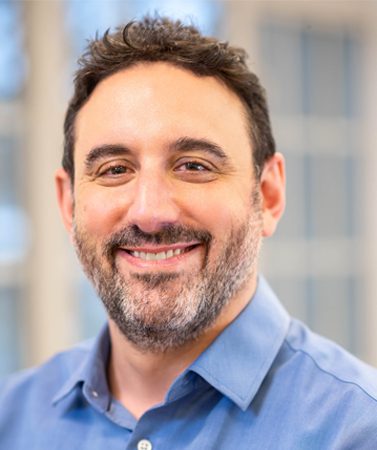
Mingbin (Ben) Feng is an Associate Professor of Actuarial Science at the University of Waterloo's Department of Statistics and Actuarial Science. His research focuses on Monte Carlo simulation design, nested simulation, and applications in risk management, financial engineering, and stochastic optimization. He holds an ASA designation from the Society of Actuaries and a Certified Analytics Professional (CAP) credential. Education: Ph.D. in Industrial Engineering and Management Sciences (Northwestern University, 2016), M.Math in Actuarial Science (University of Waterloo, 2011), and B.Math with Distinction (University of Waterloo, 2010). His academic journey includes internships at AXIS Capital Holdings and The Hong Kong University of Science and Technology. Research Interests: Machine learning, green simulation, derivative pricing, systemic risk, and simulation analytics. Awards: Royal E. Cabell Fellowship, Hickman Scholarship, and Arthur P. Hurter Award. Teaching: Courses include Corporate Finance, Financial Mathematics, and Portfolio Optimization. He advises a diverse group of graduate and undergraduate students, with notable contributions to developing the vamc R package for variable annuity modeling. Key Research Contributions: Innovations in nested simulation efficiency, green simulation methodologies, and applications of machine learning in actuarial science.
John R. Dutcher is a Professor and Research Chair in Novel Sustainable Nanomaterials at the University of Guelph's Department of Physics. His work bridges soft matter physics, biophysics, and sustainable nanotechnology through experimental studies of polymers, biopolymers, and bacterial systems at surfaces and interfaces. PhD in Condensed Matter Physics (Simon Fraser University, 1989) NSERC Postdoctoral Fellow (University of Arizona, 1989-1990) Director of University of Guelph’s B.Sc. Nanoscience program Research focuses on: Phytoglycogen nanoparticles from sweet corn for biomedical/personal care applications Machine learning analysis of polymer degradation in cross-linked pipes Bacterial motility and biofilm formation via optical microscopy Hydration forces and mechanical properties of nanomaterials His lab employs state-of-the-art equipment including AFMs, SPRi, and rheometers, with industrial partnerships like HeatLink. Recent publications analyze β-VAE applications in IR spectroscopy, acid hydrolysis effects on nanomaterials, and bacterial colony dynamics. Scientific honors include: Tier 1 Canada Research Chair in Soft Matter and Biological Physics (2006) Fellow, American Physical Society (2007) University of Guelph Innovation of the Year (2017) He has co-founded spin-off company Mirexus Biotechnologies and mentored over 50 graduate/undergraduate researchers, with alumni holding faculty positions at Waterloo, McMaster, and Lakehead University. Lab facilities include: Custom self-nulling ellipsometer TA Instruments DHR-3 rheometer Brookhaven BI200-SM light scattering system Thermo/Nicolet Continuum infrared microscope Wyatt SEC-MALS system Advanced microbiology/Biophysics equipment
Ka Tat Tsang is a Professor at the Factor-Inwentash Faculty of Social Work, University of Toronto, where he has been teaching since 1993. He also serves as an Honorary Professor at Beijing University's Civil Engineering and Architecture department since 2018. Dr. Tsang directs the Faculty's China project, which he initiated in 1997, and previously held the Factor-Inwentash Chair of Social Work in the Global Community from 2008-2018. As a psychotherapist, social worker, and organizational development consultant, his work spans clinical practice, academic research, and international collaboration. Dr. Tsang's educational background includes: Ph.D. from University of Toronto, Canada M.Soc.Sc. from University of Hong Kong, Hong Kong, China B.Soc.Sc. from University of Hong Kong, Hong Kong, China Dr. Tsang's research spans multiple domains of social work practice and theory. He is best known for developing the SSLD (Strategies and Skills Learning and Development) System and the Multiple Contingencies Management (MCM) approach to psychotherapy. His work integrates clinical practice with cross-cultural considerations, particularly focusing on Chinese communities in Canada and China. He has made significant contributions to understanding sexuality, spirituality, mental health, and geriatric social work. His Integrative Cross-Cultural Psychotherapy (ICCP) Model represents over a decade of research on culturally responsive practice. Recent work has focused on Play Intervention for Dementia (PID) and addressing mental health needs in diverse populations. Analysis of Dr. Tsang's recent publications reveals a strong focus on cross-cultural mental health practice, with particular attention to Chinese communities. His work bridges academic theory and practical application, often developing specific intervention models like SSLD and PID. There's a clear trajectory toward addressing complex intersectional issues in social work, with increasing attention to decolonizing knowledge production and developing contextually appropriate practice models. His research demonstrates consistent engagement with both Canadian and Chinese academic and practice communities. Dr. Tsang's significant professional recognition includes the Factor-Inwentash Chair of Social Work in the Global Community (2008-2018) and development of widely adopted practice models (SSLD, MCM, PID). His work has received research funding for cross-national projects between Canada and China, supporting his innovative approaches to social work practice. Dr. Tsang actively supervises Masters and PhD students and has developed an extensive international collaboration network. His Play Intervention for Dementia (PID) project, supported by the Canadian Centre for Aging and Brain Health Innovation, exemplifies his approach to developing evidence-based practice models with real-world application. Through the Centre for Learning and Change, Ltd. in Hong Kong, he extends his research into practice settings across multiple countries, creating training programs and certification pathways for practitioners. Dr. Tsang leads several major research initiatives including the Play Intervention for Dementia program and the international SSLD research network. His China project, established in 1997, serves as a hub for cross-national collaboration between the University of Toronto and multiple Chinese institutions. The SSLD system has developed into a global network with practitioners across Canada, China, Hong Kong, Taiwan, and beyond, creating a vibrant community of practice focused on advancing social work knowledge and intervention.
Annick Germain is a Professor at the National Institute of Scientific Research (INRS) and Director of the Urban Studies Program at the Urbanization Culture Society Research Centre in Montréal, Québec. She holds a PhD in Sociology from the Université de Montréal (1981) and has established herself as a leading expert in urban sociology with a focus on immigration, intercultural cohabitation, and municipal diversity management. PhD in Sociology, Université de Montréal, 1981 MSc in Sociology, Université de Montréal, 1974 Licence in Sociology, Université catholique de Louvain (Belgium), 1971 Professor Germain's research focuses on the sociological understanding of urban phenomena, particularly examining public spaces and sociability, social mix, neighborhood life and lifestyles, housing and social ties, and urban heritage and planning. Her work specifically investigates the interface between cities and immigration, exploring interethnic cohabitation in neighborhoods, controversies surrounding the planning of places of worship, municipal management of diversity, and cultural communities in urban life (including participation, housing, racism, and more). She has directed the Metropolis Centre of Quebec – Immigration and Metropolises, one of five Canadian centers of excellence that contributed to the Metropolis project on integration, diversity and urban dynamics. Her recent publications demonstrate a consistent focus on urban diversity, particularly examining the role of immigrant communities in reshaping suburban landscapes, religious diversity in Montréal, and interethnic cohabitation in middle-class neighborhoods. Her work employs both qualitative and quantitative approaches to understand how diverse populations navigate urban spaces, with particular attention to the everyday practices of cohabitation and the municipal policies that shape diversity management. Prix Planète INRS, Carrière d'excellence en recherche National Metropolis Award in immigration, university researcher category, 2017 Professor Germain has supervised numerous graduate students and postdoctoral fellows throughout her career, including over 30 master's and doctoral students. Her research has been supported by various funding agencies including SSHRC, FQRSC, and municipal partnerships. She is actively involved in multiple research networks, including the Quebec Interuniversity Centre for Ethnic Studies and serves as a Fellow at the Institute for Research on Public Policy. Her collaborative work extends internationally, with partnerships in Europe and North America examining comparative urban diversity. She is a member of the research team for FRQ (dir. M. Paquet, Concordia), the Quebec Immigration Research Team, a Fellow at the Institute for Research on Public Policy (IRPP), and a member of the steering committee of the Interdisciplinary Research Centre in Montreal Studies (CRIEM) at McGill University. Her work has significantly influenced municipal approaches to diversity management in Montréal and beyond.
Jesse Perla is an Associate Professor in the Vancouver School of Economics at the University of British Columbia, Faculty of Arts. He maintains an office in the Iona Building 201B and is actively engaged in research and teaching within the economics department. Dr. Perla received his PhD in Economics from New York University in 2013 and completed his undergraduate studies in Applied Mathematics at Columbia University in 1997. His academic journey has positioned him at the intersection of economics, mathematics, and computational methods. His research focuses on macroeconomics and growth from the firm perspective, with particular emphasis on information diffusion, heterogeneous agents, and computational approaches to economic modeling. He has developed significant expertise in applying machine learning techniques and high-dimensional methods to economic problems, with notable work on technology diffusion, financial frictions, and dynamic programming. His research agenda spans theoretical and computational economics, with increasing integration of artificial intelligence methods in recent years. Perla's publications reveal a strong trend toward computational economics, with growing emphasis on deep learning applications to overcome the curse of dimensionality in economic models. His work frequently explores how information diffusion affects firm behavior and economic growth, often employing sophisticated mathematical and computational techniques to model complex economic phenomena. He is a co-author of the influential open textbook Quantitative Economics with Julia and has made significant contributions to computational economics education. His teaching focuses on preparing students for graduate work in economics, with particular emphasis on mathematical preparation and computational skills. He has published extensive course advice for UBC undergraduates interested in pursuing graduate studies. Perla actively contributes to the development of computational tools for economists, particularly through the Julia programming language ecosystem. His work includes developing educational materials on differential equations for epidemiological modeling in economics and maintaining comprehensive data source references for economic researchers.
Laurie McNeill is a Teaching Professor and Associate Dean, Students, at the University of British Columbia's Department of English Language and Literatures within the Faculty of Arts. Her academic work focuses on contemporary autobiography studies, particularly digital life narratives, and she teaches courses in autobiography, archival studies, and academic writing within both English and the Coordinated Arts Program. Education: Earned a PhD from the Department of English at UBC. Her research spans trauma, memory, disability studies , and digital self-representation , examining how rhetorical genre theories frame questions of access and agency in autobiography. She co-edited Online Lives 2.0 (2015) with John Zuern, exploring digital life narratives, and is co-editing Teaching Lives (2017) with Kate Douglas, focusing on pedagogical applications of life writing. Recent publications analyze digital self-narration ( Life Bytes , 2013), social networking's impact on selfhood ( There is No 'I' in Network , 2012), and commemorative writing limitations ( Memory Failure , 2010). Her work frequently intersects Canadian cultural contexts with global auto/biographical practices , emphasizing how narrative forms respond to contemporary cultural situations through social actions and critical pedagogy.
Laura Huey is a Professor in the Department of Sociology at Western University, specializing in criminology with a focus on policing, mental health, and countering violent extremism. She holds a PhD from the University of British Columbia and has held academic positions at Western University since 2008, advancing from Assistant to Professor rank. Her research emphasizes evidence-based policing (EBP), police reform, and the intersection of mental health with law enforcement. Notable roles include Director of the Canadian Society of Evidence-Based Policing, Research Fellow with the London Police Service, and Senior Research Fellow at the Police Foundation. She contributes to international initiatives, including advisory roles at the University of Cambridge and the International CyberCrime Research Centre. Huey has authored over 12 books and 60+ refereed articles, focusing on police practices, data processes, and policy impacts. Her work addresses challenges like officer paperwork burdens, mental health response protocols, and missing persons investigations. Awards include the Royal Society of Canada’s College of New Scholars membership (2017–2024) and SSHRC grants. Huey collaborates with agencies like the Toronto Police Service and the Canadian Network for Research on Terrorism, Security, and Society. Her research often bridges academic and practical domains, aiming to improve policing strategies and community safety through rigorous, actionable insights. Current projects include exploring police responses to cybercrime, Indigenous policing gaps, and the psychological toll of policing on support staff. She also advocates for transparency in data collection and EBP training for officers.
Dr. Nathalie Berube is a Professor in the Department of Anatomy and Cell Biology at Western University, specializing as a Basic Scientist in Pediatrics. Her research focuses on epigenetic regulation of brain development, particularly through the study of chromatin remodeling complexes like ATRX. Her work employs mouse models to explore neuronal survival, differentiation, and the molecular basis of neurodevelopmental disorders such as autism and intellectual disability. Education: Dr. Berube holds a Ph.D., though specific details of her academic training are not provided in the text. Her professional affiliations include the Medical Sciences Building and the London, Ontario campus of Western University. She contributes to both basic science and translational research in pediatric neurobiology. Research Interests: Her studies emphasize the role of ATRX protein in chromatin structure, gene transcription, and DNA methylation. Key areas include neurodevelopmental deficits, glial cell biology, and the interplay between epigenetic regulation and cognitive disorders. Her work bridges molecular mechanisms with clinical implications, such as autism spectrum disorder and intellectual disability syndromes. Publications: Over 50 peer-reviewed articles span topics from chromatin accessibility to microglial function. Notable contributions include mouse model studies of ATRX deficiency and insights into epigenetic signatures of genetic disorders. Full publication lists are accessible via Google Scholar and PubMed. Grants and Advising: While specific grants or student advisees are not detailed, her research program likely involves collaborative grants given the complexity of her experimental systems. No awards are explicitly mentioned in the provided texts. Labs/Teams: Active in the Anatomy and Cell Biology department, her lab focuses on epigenetic mechanisms in neurodevelopment. Collaborations with pediatric and genetic research groups are implied through her work on syndromes like ATRX-related intellectual disability.
Mike Domaratzki is an Associate Professor and Chair of the Department of Computer Science at Western University. His research focuses on bioinformatics, genomics, and theoretical computer science, with recent emphasis on machine learning tools for genomic prediction in crops. He has held academic roles at Western University and previously at the University of Manitoba and Acadia University. Education: (No explicit details provided in texts) Research Interests: Domaratzki’s work bridges computational methods and biological systems, including algorithm design for genomic analysis, machine learning applications in agriculture, and theoretical foundations of computing. His recent projects address challenges in imbalanced data classification and crop yield prediction using advanced neural networks. Teaching: He has taught a wide range of courses, including introductory programming, data structures, algorithms, bioinformatics, and automata theory across multiple institutions. Notable courses include COMPSCI 1026/1027 at Western, and COMP courses at the University of Manitoba/Acadia covering foundational CS topics and specialized areas like bionformatics algorithms. Publications: His work spans machine learning, genomics, and theoretical computer science, with recent trends emphasizing agricultural genomic applications and data-driven health analytics. Key themes include imbalanced data solutions, neural network architectures for genomics, and computational tools for biological data interpretation. Grants/Advising: No specific grants or student advising details are listed, though his teaching and research imply active involvement in mentoring. His lab focuses on interdisciplinary projects combining computational methods with biological datasets.
Dr. Sihang Liu is an Assistant Professor in the School of Computer Science at the University of Waterloo. Prior to this role, he served as a visiting faculty member at SystemsResearch@Google. He holds a PhD from the University of Virginia, where his research was supported by the Google Fellowship Award. His academic career has been marked by contributions to computer architecture, systems, and persistent memory technologies. Dr. Liu's research interests span computer architecture, systems, and cybersecurity, with a focus on persistent memory systems, energy-efficient computing, and data center optimization. His work bridges hardware-software co-design and explores challenges in scalable computing, fault tolerance, and sustainable AI systems. His recent publications highlight advancements in adaptive memory tiering (HybridTier), carbon intensity forecasting (EnsembleCI), and securing persistent memory (Side-Channel Attacks on Optane). These contributions underscore his commitment to addressing critical issues in modern computing systems' performance, security, and environmental impact. Awards: Google Fellowship Award (PhD), NVMW Memorable Paper Award Finalist (2019), 2019 MICRO Top Picks Honorable Mention Professional Service: Program committees for ISCA, MICRO, ASPLOS; Artifact evaluation roles in leading conferences As an advisor, Dr. Liu mentors a diverse group of students, including current PhD candidates Henry Tian and Desen Sun, and numerous undergraduates. His lab focuses on innovation in sustainable computing and resilient systems design.
Dr. Ian Church is an Associate Professor in the Department of Geodesy and Geomatics Engineering within the Faculty of Engineering at the University of New Brunswick. He specializes in ocean mapping using acoustics, with primary research interests in integrating hydrodynamic numerical modeling with ocean mapping, marine habitat mapping, acoustic water column interpretation, and evaluating autonomous mapping platforms. His research aims to better understand the marine environment using acoustics and minimize uncertainty in ocean mapping products. Dr. Church received all his degrees (B.Sc.Eng, M.Sc.Eng, Ph.D.) from UNB while working with the Ocean Mapping Group. His professional experience includes operating and managing multibeam sonar systems onboard the coast guard ship Amundsen in the Canadian Arctic (2005-2013), and positions at the University of Southern Mississippi before returning to UNB in 2016. His publications demonstrate consistent focus on hydrographic surveying, ocean mapping technologies, and marine data processing. Recent trends show increased emphasis on AI applications in seabed mapping, advanced sensor technologies, collaborative training programs, and hydrodynamic modeling for coastal management. Dr. Church also contributes to educational initiatives like the COMREN International School on Hydrographic Surveying.
Tim Conley is Professor and Chair of the Department of English Language & Literature at Brock University's Faculty of Humanities. Holding a PhD from Queen's University, he specializes in twentieth-century literature with expertise in James Joyce, Beckett, Nabokov, and Borges. His research bridges modernist literature, translation theory, and cognitive approaches to reading. Education: PhD, Queen's University MA, McGill University BA (Hons.), York University Conley's scholarship explores the intersections of international modernism and contemporary experimental writing, emphasizing Joyce's legacy, translation practices, and literature's cognitive dimensions. His work frequently engages with avant-garde traditions and cultural theory, contributing significantly to comparative literature studies through both critical analysis and creative production. Recent publications (2020-2024) reveal expanding engagement with postmodern American literature (particularly William Gaddis), digital humanities, and intersections between literature, economics, and technology. While maintaining core focus on Joyce and modernist studies, his research increasingly examines cognitive frameworks, translation extremes, and literary responses to financialization and digital culture. Scientific Awards: James M. Flaherty Visiting Professorship, Trinity College Dublin (2016) Faculty of Humanities Award for Excellence in Teaching, Brock University (2016) Social Sciences and Humanities Research Council of Canada (SSHRC) Standard Research Grant (2007-09) Professor Conley supervises graduate research in Brock's Studies in Comparative Literature and Arts (SCLA) program, guiding students in modernist studies, translation theory, and experimental literature. His SSHRC-funded research has produced influential scholarly editions and critical monographs, while his international collaborations—evidenced by co-edited symposium volumes and the Trinity College Dublin professorship—demonstrate his standing in global Joyce scholarship. Conley actively participates in international Joyce communities through co-editing major symposium proceedings and maintaining scholarly networks across North America and Europe. His editorial collaborations with researchers like Onno Kosters and Peter de Voogd highlight his role in advancing Joycean studies through collective academic projects.
Peter R. Grant is a Professor in the Department of Psychology and Health Studies at the University of Saskatchewan's College of Arts and Science. His research focuses on intergroup relations, particularly examining how social identity theory and relative deprivation theory explain collective protest actions, immigrant acculturation challenges, and nationalism. He holds degrees including a Ph.D. and has contributed extensively to studies on skilled immigrant credentialing issues, Canadian national identity development, and the psychological dynamics of social change. Education: B.Sc., B.A., M.A., Ph.D. (degrees not explicitly sourced to specific institutions) Grant’s work bridges academic research and applied policy evaluation, with over 20 years of publications analyzing immigration-related social issues, including technical reports on immigrant entrepreneurship, labor market barriers, and cultural integration. His recent studies employ meta-analytic approaches to validate the SIRDE model, linking identity-based deprivation and efficacy to collective action. Collaborations span institutions like the Saskatchewan Intercultural Association and the British Psychological Society. His research highlights the psychological mechanisms behind protest movements among marginalized groups, particularly skilled immigrants facing credentialing challenges, and explores how national identity functions as both a unifying and divisive force in multicultural societies. Conference presentations emphasize methodological advancements in measuring identity scales and well-being metrics. Grant’s applied work includes program evaluations for immigrant support services, Aboriginal student initiatives, and mental health interventions, reflecting his commitment to socially impactful research.
May Haidar is an Assistant Professor in the Department of Electrical Engineering & Computer Science at York University. Her work bridges theoretical and applied domains, focusing on software engineering, web applications, and formal verification techniques. Education: Ph.D. in Computer Science (Université de Montréal, 2008), M.S. (Concordia University), B.S. (American University of Beirut) Current Role: Teaching Object-Oriented Programming, Advanced Programming, and Web Development courses Her research explores formal methods in software engineering, particularly temporal logics and run-time verification for web applications. She has contributed to hybrid analysis techniques for composite web services and anomaly detection frameworks. Publications span formal verification, web application security, and embedded systems design, with a focus on integrating temporal logic extensions into validation processes. While no explicit awards are listed, her work has been presented at global conferences, including events in Dubai, Cambridge, and Las Vegas.
Jane Ku is an Associate Professor in the Department of Sociology and Criminology and the Women and Gender Studies program at the University of Windsor, affiliated with the Faculty of Arts and Humanities. She holds a PhD from the University of Toronto’s Ontario Institute of Studies in Education. Her research focuses on antiracism, intersectional feminism, immigrant settlement, and diasporic identity formation. Dr. Ku employs autoethnography and community-based approaches to explore activism, resilience, and decolonial practices. Education: PhD (Sociology and Equity Studies, University of Toronto), MA (Community Psychology, University of Toronto), BA (Psychology and Sociology, York University). Research interests emphasize community activism as transformative praxis, with projects on African-centered capacity-building, immigrant youth resilience, and Japanese Canadian identity. She critiques colonial and patriarchal structures through teaching, encouraging students to engage critically with social inequities. Recent work includes SSHRC-funded research on anti-racist solidarity and diasporic narratives. She has collaborated on grants totaling over $300k, including projects analyzing “Canadian Experience” discourse and LGBTQ+ newcomer needs in Windsor-Essex. Her teaching philosophy prioritizes unsettling colonial perspectives and fostering engaged citizenship. Service includes board roles with Windsor Women Working with Immigrant Women and AIDS Committee of Windsor. Graduate students under her supervision explore antiracism, community partnerships, and intersectional analyses.