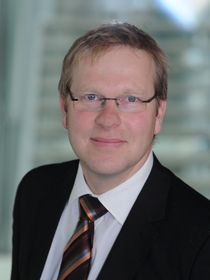
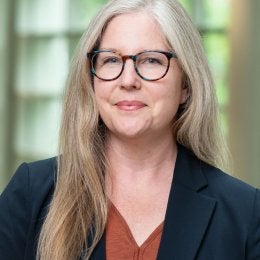
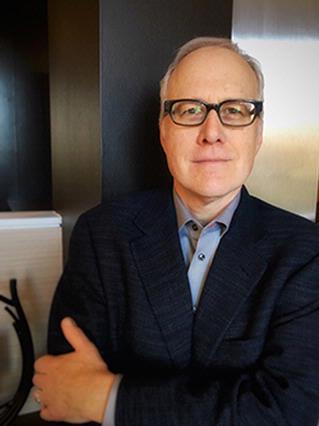
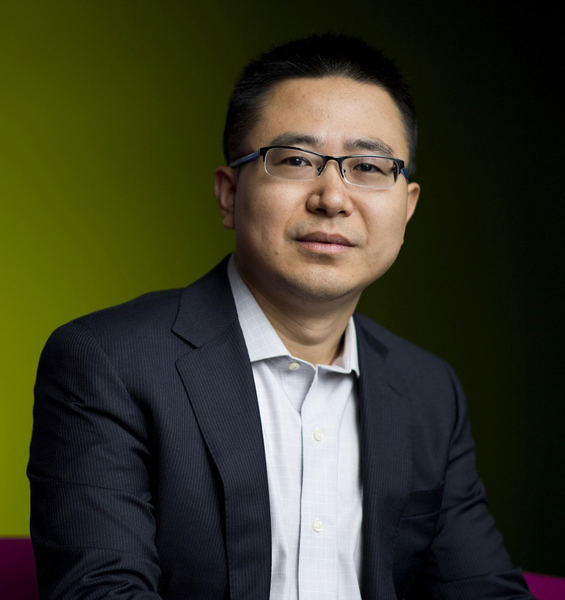
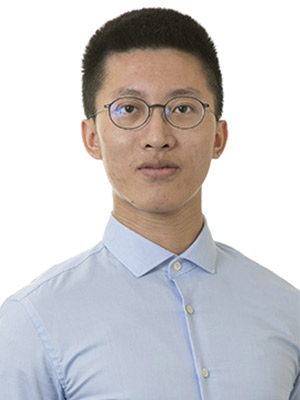
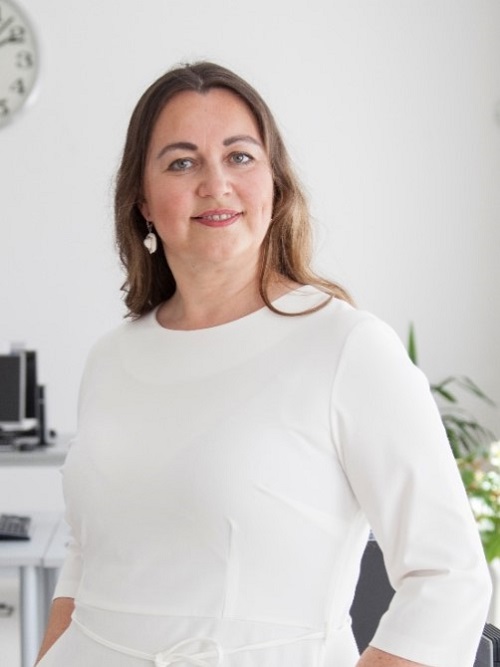
Mathias Czaika is a University Professor in Migration and Integration and Head of the Department for Migration and Globalisation at the University for Continuing Education Krems, Austria. He coordinates the PhD Programme in Migration Studies and has previously directed the International Migration Institute at Oxford University. His research focuses on international migration drivers, policy impacts, globalization, and development implications. Education: Master’s in Economics from the University of Konstanz, PhD in Political Economy from the University of Freiburg. He has advised national and international bodies like the EU, DfID, and the Swedish Migration Agency. Research interests include migration policy formulation, asylum systems, skilled migration, and involuntary immobility’s development impacts. Key projects include 'Valuing Open Source Intelligence' (ÖAW-funded) and 'Development implications of involuntary immobility in Africa' (FWF-funded). He leads initiatives on migration scenarios, diaspora engagement, and integration policies. Grants and funding include EU Horizon 2020, FWF, and national grants. Notable publications address migration governance, diaspora organizations, and climate change effects on mobility. His work bridges academic research with policy through dialogues between science, politics, and practice.
Dr. Khoa Phan is a Senior Lecturer in the Department of Computer Science and Information Technology at La Trobe University, Australia. He holds an ARC DECRA Senior Research Fellowship (2020-2023) and has held prior positions at UCLA, Monash University, and others. His academic background includes a B.Eng. (UNSW), two M.Sc. degrees (University of Alberta and Caltech), and a Ph.D. in Electrical Engineering from McGill University. Dr. Phan's research focuses on optimizing next-generation communication networks, particularly in wireless communications, IoT, satellite systems, and machine learning applications. He has secured significant grants, including ARC Discovery Projects and industry partnerships. His work emphasizes secure cyber-physical systems, federated learning, and edge computing. He has received prestigious awards such as the ARC DECRA and Atwood Fellowship. His research spans over 100 publications, with contributions to areas like OTFS modulation, secure satellite communications, and graph-based anomaly detection. He actively supervises PhD students and collaborates internationally, including initiatives to strengthen ties between La Trobe University and Vietnamese institutions. Grants include ARC Discovery Projects (totaling $1.3M+), CRC SmartSAT, and industry scholarships. His work addresses energy efficiency, secure resource allocation, and AI-driven solutions for 5G/6G networks and the metaverse.
E is a Personal Professor in Soil Biology and Operations Manager at Wageningen University & Research, Netherlands. He specializes in soil ecology, nutrient cycling, and sustainable agricultural practices. His research focuses on optimizing agrifood systems through soil management, cover crops, and organic amendments. He leads multiple interdisciplinary projects addressing climate-smart agriculture in sub-Saharan Africa and China. Key research areas include tropical soil fertility, micronutrient dynamics, and meta-analyses of agroecological systems. He actively supervises PhD candidates investigating soil health, biodiversity effects, and nutrient cycling in grasslands and crop rotations. Notable contributions include studies on boron fertilization in maize, nitrogen replacement values of organic waste, and cover crop mixtures reducing nitrogen leaching. Projects: 19 active/finished projects on soil functions, carbon sequestration, and agrifood system sustainability Supervision: Mentor to 17 PhD candidates since 2017 Collaborations: Extensive international networks in Africa, Asia, and Europe Prominent datasets include soil carbon-nitrogen dynamics in grasslands and micronutrient partitioning studies. His work bridges fundamental soil biology with applied agricultural solutions for global food security challenges.
Dr. Kerry H. Alexander is an Assistant Professor of Literacy Education in the Department of Teaching and Learning, Policy and Leadership at the University of Maryland, College Park. She holds a Ph.D. in Language and Literacy Studies from The University of Texas at Austin. Her research focuses on sociocultural dimensions of early literacy, critical literacy, and justice-focused coaching, emphasizing equitable practices in elementary education. Alexander has published extensively in journals such as Language Arts , English Education , and Journal of Education and Social Justice , and co-authored works on teacher education and equity-focused networks. She teaches courses like ‘Materials and Instruction for Creating Skilled and Motivated Readers’ and ‘Culturally Responsive Language and Literacy Teaching.’ Her work integrates community-centered inquiry, exploring how state policies shape classroom practices and teacher identities. Recent research includes playful languaging, neuro-affirming pedagogies, and critical discourse analyses around literacy instruction. Alexander previously taught elementary English Language Arts for ten years and is committed to supporting preservice teachers through mentorship and anti-racist professional discernment. Dr. Alexander leads the Elementary Writing Teacher Development and Practice: From UMD to MS DoE grant, funded by UMD’s College of Education. She mentors graduate students interested in connecting teaching practice with research, particularly those with public elementary school experience. Her lab, part of the Literacy, Language, and Social Innovation (LLSI) initiative, focuses on innovative literacy education strategies.
Peter A. Wyman, PhD is a Professor at the University of Rochester School of Medicine and Dentistry, Department of Psychiatry, Child and Adolescent Services. He serves as Director of the Network Health and Prevention Program and Co-Director of the Center for Study and Prevention of Suicide. Dr. Wyman's research focuses on using natural social networks to deliver interventions for suicide, depression, and substance use prevention. His Connect Program suite of interventions has been implemented in diverse settings including the US Air Force (Wingman-Connect), police departments (Police-Connect), and predominantly Black churches (HAVEN-Connect). Columbia University - A.B. in Psychology, 1982 University of Rochester - M.A. in Clinical Psychology, 1984 University of Rochester - Ph.D. in Clinical Psychology, 1987 University of Rochester - Postdoctoral Fellowship, University Health Service, 1986-1988 Dr. Wyman's research centers on developing and implementing network-based suicide prevention interventions. His work examines how natural social networks can be leveraged to build social bonds and shared healthy norms to sustain intervention impacts. His research spans multiple settings including schools, military contexts, workplaces, and community organizations. He investigates how peer leadership, social integration, and network structure influence mental health outcomes, particularly among adolescents and high-risk populations. His work integrates implementation science, social network analysis, and prevention research to develop scalable, evidence-based interventions. His recent publications demonstrate a consistent focus on suicide prevention through social networks, with increasing emphasis on digital health approaches, implementation science methodology, and attention to equity in suicide risk screening. His work spans multiple disciplines including psychiatry, public health, social network analysis, and implementation science, reflecting the interdisciplinary nature of modern prevention research. Action Partner Award, National Association of School Psychologists (NASP). 2016 Excellence in Suicide Prevention Award, Suicide Prevention Center of New York State. 2012 Distinction for Ph.D. Comprehensive Examinations, University of Rochester. 1985 NIMH Research Fellowship (merit-based). 1982 - 1983 Magna Cum Laude, Columbia College, Columbia University, New York, NY. 1982 Cleveland Foundation Research Award (merit based). 1979 Dr. Wyman's research has been funded by major national agencies including the National Institutes of Health, Department of Defense, and Centers for Disease Control and Prevention. He has led significant clinical trials, including a current study testing peer-led network interventions to prevent adolescent vaping. Beyond his research, he has held influential policy positions, having co-chaired the New York State Governor's Task Force on Suicide (2017-2019) and serving as a member of the Community Prevention Services Task Force, an independent advisory group appointed by the CDC Director. Dr. Wyman leads the Network Health and Prevention Program, which develops and tests network-based interventions across multiple settings. His Connect Program suite represents a significant contribution to suicide prevention, with adaptations for military personnel, police officers, and faith communities. His work bridges research and practice, translating scientific findings into real-world interventions that address critical public health challenges.
Dr. Bulat A. Ziganshin is an Associate Research Scientist in the Department of Surgery (Cardiac Surgery) at Yale University School of Medicine and Research Director at the Aortic Institute at Yale-New Haven Hospital. He holds dual degrees: an MD from Kazan State Medical University (2007) and a PhD in Pharmacology (2016), along with residency training in Cardiovascular Surgery. His research focuses on aortic diseases, genetics, pharmacology, and global health, with over 200 peer-reviewed publications and 19 textbook chapters. He serves as Associate Editor of AORTA Journal and has contributed to drug reference books. Key research interests include thoracic aortic aneurysms, genetic overlaps with intracranial aneurysms, beta-blocker efficacy in aneurysm management, and somatic variants in disease pathogenesis. Collaborations with experts like Dr. John Elefteriades and Sandip Mukherjee highlight his interdisciplinary work. Recent studies explore patient-specific surgical criteria and JAK2 mutations in aneurysms. Dr. Ziganshin’s work bridges clinical research and global health, addressing both cardiovascular pathophysiology and agricultural engineering (e.g., tractor efficiency). He actively publishes in Genes , European Heart Journal , and Aorta , emphasizing translational insights from genetic and molecular studies. His contributions span drug development, surgical protocols, and diagnostic methodologies in diverse fields.
Yun Fu is a tenured Professor in the Department of Electrical and Computer Engineering at Northeastern University, with a joint appointment in the Khoury College of Computer Science. He has established himself as a leading researcher in Artificial Intelligence, with over 500 publications in top-tier venues including IEEE/ACM transactions and major AI conferences. His work spans both theoretical foundations and practical applications, with significant impact in computer vision and machine learning. Professor Fu earned his Ph.D. in Electrical and Computer Engineering from the University of Illinois at Urbana-Champaign. His academic career progressed from Assistant Professor at SUNY Buffalo to his current position as tenured Professor at Northeastern University, where he has held appointments since 2012. His educational background includes a Beckman Graduate Fellowship at UIUC (2007-2008). His research focuses on advancing Artificial Intelligence with particular emphasis on Computer Vision, Pattern Recognition, and Machine Learning. His seminal work includes the "Residual Dense Network for Image Super-Resolution" presented at CVPR 2018, which was ranked among the Top 10 Most Influential CVPR papers. His research interests span image processing, anomaly detection, multimodal learning, and trajectory prediction, with applications ranging from healthcare to consumer technology. Analysis of his recent publications reveals a strong trend toward developing efficient and robust AI systems that bridge computer vision with language understanding. His work increasingly focuses on multimodal learning, trajectory prediction for multi-agent systems, anomaly detection in complex environments, and model validation techniques for black-box systems, while maintaining practical applications in real-world scenarios. Professor Fu's extensive recognition includes: Fellow of IEEE (2018), OSA (2019), SPIE (2018), IAPR (2016), AAIA (2021), and AAAI (2025) Member of Academia Europaea (2022) and European Academy of Sciences and Arts (2023) Fellow of National Academy of Inventors (2023) Multiple Young Investigator Awards from NAE, ONR, ARO, IEEE, ACM, and INNS 12 Best Paper Awards from major conferences Industrial Research Awards from Google, Amazon, Samsung, JPMorgan, and others Professor Fu has successfully mentored numerous Ph.D. students who now hold prominent positions in academia and industry at institutions including Amazon, Microsoft, Meta, Adobe, and major universities. His entrepreneurial ventures include founding Giaran (acquired by Shiseido in 2017) and co-founding TVision Insights, demonstrating his commitment to translating research into real-world impact. He has secured significant research funding from both government agencies and industry partners. As the PI and Founding Director of the SmiLe Lab at Northeastern University, Professor Fu leads a dynamic research group focused on advancing the state-of-the-art in AI and Computer Vision. The lab fosters interdisciplinary collaboration across computer science, electrical engineering, and applied mathematics, with ongoing projects in efficient deep learning, multimodal understanding, and practical AI applications.
Dr. Atakelty Hailu is an Associate Professor at the UWA School of Agriculture and Environment, University of Western Australia. He serves as Graduate Research Coordinator and Coordinator of the Master of Agricultural Economics program. His educational background includes a BSc in Agricultural Economics from Alemaya University (1990) and PhD from University of Alberta (1998), with postdoctoral research at the Canadian Sustainable Forest Management Network. Research Expertise: Hailu's research spans productivity and efficiency analysis, environmental policy design, whole-farm bioeconomic modeling, agent-based computational economics, and non-market valuation. His current projects examine marine recreation valuation, economic-hydrologic modeling, China's carbon abatement costs, and human development indicators. Publication Focus: Hailu's recent publications reflect his interdisciplinary approach, addressing technical efficiency in agriculture across multiple countries (Vietnam, Pakistan, Kenya, Bangladesh), sustainable intensification practices, fisheries management innovations, and economic valuation methods. His work consistently integrates econometric methods with environmental policy applications. Awards and Recognition: Outstanding Doctoral Thesis Award (Canadian Agricultural Economics Society) Chancellor's Gold Medal for undergraduate achievements Publication of Enduring Quality Award (CAES, 2018) Graduate Supervision: Hailu has supervised numerous PhD students on projects including marine reserve effectiveness, agricultural efficiency in Vietnam and Ethiopia, conservation valuation in national parks, and fisheries management systems. Current PhD advisees focus on topics ranging from no-take marine reserves to efficiency in Kenyan agriculture. Research Funding: Hailu has secured multiple grants including projects on natural hazard economics (Bushfire CRC), marine conservation strategies (Australian Marine Conservation Society), environmental service policies (AgriFutures Australia), and conservation tender optimization (Dept of Agriculture).
Kazuaki Negishi is a Professor of Medicine and Head of the Discipline of Medicine at Sydney Medical School Nepean, University of Sydney's Faculty of Medicine and Health. He holds adjunct professorships at the University of Tasmania and is a board-certified cardiologist in Japan and Australia. His expertise spans cardio-oncology, air pollution-cardiovascular links, space medicine, and advanced imaging. Clinically, he practices at Nepean Hospital and previously led the Echo lab at Royal Hobart Hospital. He completed his MD and PhD in Japan, with additional training at Cleveland Clinic, USA. Research interests include cardiovascular imaging, subclinical myocardial insults, and health policy. He leads a team of 1 Senior Research Fellow, 2 Post-Doctoral fellows, and supervises PhD students across multiple institutions. Awards include the National Heart Foundation Future Leader Fellowship and international society recognitions (FACC, FESC, FAHA). Key collaborations include NASA, Gunma University (Japan), and the ANZACT Network. His work on SUCCOUR trials and REDUCE trial (sonothrombolysis) aims to improve cardiovascular outcomes in oncology patients. He chairs editorial boards for JACC: Cardiovascular Imaging and Journal of the American Society of Echocardiography .
Allison Jing is a Lecturer (Assistant Professor) at RMIT University’s School of Computing Technologies and an adjunct Researcher at the Empathic Computing Lab at the University of South Australia. Her research focuses on Mixed Reality (MR) technologies to enhance human abilities through multimodal interaction, including gaze-based cues, biosignals, and AI-driven empathy. She holds a PhD in Information Technology from the University of South Australia (2023) and an MSc in Information Technology from the University of St Andrews (2017). Dr. Jing’s academic roles include coordinating Mixed Reality and Programming courses at RMIT. She has extensive industry experience, working at Meta Reality Labs, Microsoft, Amazon, and startups, which informs her user-driven research approaches. Her work spans collaborative VR/AR systems, empathic computing, and digital health applications. Key research interests include cross-reality collaboration, empathetic AI, and physiological signal integration. She collaborates with global institutions like CSIRO Data61 and Meta RLR. Her awards include runner-up in the XR Workshop (2023) and finalist in Deloitte Cyber Capture the Flag (2018). Teaching and supervision: Coordinates COSC2476/77 (Mixed Reality) and COSC2801 (Programming Bootcamp Java). Currently supervises PhD students and mentors research interns from Oxford, NYU, and other universities. Serves on program committees for CHI, MobileHCI, and ISMAR. Labs/Teams: Empathic Computing Lab, Australian Research Centre for Interactive and Virtual Environments (IVE), and ARIVE network. Active in industry partnerships for collaborative projects in MR and AI.
Dr. Sarah Foley is a Lecturer in Applied Psychology and Human-Computer Interaction at the School of Applied Psychology, University College Cork (UCC). Her research focuses on healthcare technology, qualitative methodologies, and dementia care. She completed her PhD in 2019, examining design and technology in dementia care, and currently leads projects on women’s health and pluralistic qualitative research. She is a member of the Irish Network for Pluralism in Qualitative Research (INPQR) and a Principal Investigator (PI) in the Lero Centre for Software Engineering. Education: PhD in Applied Psychology (2019), University College Cork. Research interests include HCI in healthcare, qualitative mixed-methods approaches, and technology design for vulnerable populations. Notable areas are intergenerational engagement in dementia care, maternal healthcare for autistic adults, and the role of social media in mental health and fitness. Her work emphasizes ethical research practices and participatory design in sensitive settings. Recent articles explore themes like online support networks for pregnancy loss, nature-based mental health interventions, and challenges in adapting mental health care for autistic individuals. Her studies highlight digital health innovations and systemic healthcare inequities. Scientific Awards: Lero Impact Award 2024 NUI Early Career Award 2020 Teaching responsibilities include modules on Research Methods, User-Experience Design, and Social Computing. She coordinates the User-Experience Design undergraduate module and contributes to postgraduate courses on Designing in Workplaces. Labs/Teams: Active in the INPQR and Lero Centre for Software Engineering, collaborating on projects that bridge technology and healthcare ethics. Current initiatives include participatory design frameworks for dementia care and digital tools for cervical self-sampling.
Dr. Yan Li is an Assistant Professor in the Department of Industrial and Systems Engineering at Texas A&M University. He earned his Ph.D. in Operations Research from Georgia Institute of Technology (2024), advised by George Lan and co-advised by Tuo Zhao, with collaborations involving Anton Kleywegt and Alexander Shapiro. His research focuses on the computational perspective of learning optimal decisions from data, emphasizing first-order methods and their applications in data science. B.S. in Mathematics and Applied Mathematics & B.B.A. in Accounting, Nankai University (2016) M.S. in Statistics, Georgia Institute of Technology (2018) Ph.D. in Operations Research, Georgia Institute of Technology (2024) Dr. Li’s research interests span dynamic optimization (Markov decision processes, reinforcement learning), robust/risk-averse optimization, minimax optimization, and optimization for machine learning. His work addresses computation- and sample-efficient algorithms, distributional ambiguity in dynamic optimization, and gradient-based methods for ML applications. Industry collaborations include Meta (ads ranking optimization) and Bytedance (deep retrieval models), with ongoing projects in urban transportation and recommendation systems. His publications include 15 recent articles on policy optimization, stochastic minimax methods, and implicit regularization in reinforcement learning. Awards include the Alice and John Jarvis Ph.D. Student Research Award, The Margaret and Stephen Kendrick Research Excellence Award, and the ISyE Outstanding Graduate Student Instructor Award. Teaching accolades highlight his clarity, passion, and accessibility in courses like ISEN 310 (Uncertainty Modeling) and ISEN 320 (Operations Research I). Peer reviewer for journals like Mathematical Programming and conferences including ICML and NeurIPS Industry partnerships with Ford (multi-agent RL) and Meta (embedding learning) Active in optimization communities (INFORMS, MOPTA)
Corey Roos, PhD, is an Assistant Professor of Psychiatry at Yale School of Medicine. His research focuses on developing behavioral and digital mindfulness-based interventions for substance use and eating disorders. He leads the development of the Mindful Journey app for substance use recovery and conducts trials on web-based interventions for relapse prevention. Roos has published over 50 peer-reviewed papers and co-authored a book on mindfulness in psychotherapy. He holds a K23 grant from NCCIH/NIDA for his work on digital mindfulness treatments. Education: PhD in Clinical Psychology from University of New Mexico (2018) Research Interests: Precision medicine, mindfulness therapies, digital health interventions His work emphasizes translating mindfulness practices into scalable treatments, with studies on reward/relief drinking profiles and predictors of eating disorder relapse. Roos mentors Yale postdocs, medical students, and undergraduates in addiction and mindfulness research. Awards: K23 Career Development Grant (NCCIH/NIDA), recognition for work on sleep disturbance in opioid use disorder.
Dr. Min Chen is a Professor in the Department of Mathematical Sciences at the University of Texas at Dallas (UTD), affiliated with the School of Natural Sciences and Mathematics. He holds an adjunct professorship at the University of Texas Southwestern Medical Center. His expertise spans statistical genomics, bioinformatics, Bayesian methods, and sampling techniques. He completed his Ph.D. in Statistics and Decision Science at the University of Texas at Austin and a postdoctoral fellowship in statistical genomics at Yale University. Education: B.S. in Computer Science (University of Science & Technology of China, 1994); M.A. in Statistics (University of Pittsburgh, 1999); Ph.D. in Statistics (UT Austin, 2006); Postdoc in Statistical Genomics (Yale University, 2008–2010). Research focuses on statistical methodologies in genomics, including genome-wide association studies, network-based modeling, and Bayesian integrative analysis. He also explores spatial modeling and ranked set sampling. His work addresses challenges in cancer genetics, epigenetics, and single-cell gene regulation. Notable awards include the NIH Career Development Award (2013), David Bruton Fellowship (2006), and R.L. Anderson Student Paper Award (2006). He is a member of the American Statistical Association and International Chinese Statistical Association. He advises graduate students in Data Science, Statistics, and Bioinformatics & Computational Biology (BCBM) programs. His teaching includes courses on advanced statistical methods and data science. Research contributions span over 40 peer-reviewed articles, with recent work in tumor pathology imaging, antibiotic resistance, and Alzheimer’s disease mechanisms.
Roles and Affiliations: Currently holds the rank of Professor at Vilnius University Šiauliai Academy, within the Faculty of Education's Department of Education. Previously served as Dean of the Faculty of Education at Šiauliai University (2008–2013) and held academic roles such as Associate Professor and Head of various departments related to education and mathematics didactics. Education: Earned a Doctor of Social Sciences (Education) degree. Extensive academic background in educational theory and practice, with specialization in mathematics education and pedagogical methodologies. Research Interests: Focuses on teaching and learning processes, early mathematical education, self-directed and personalized learning, and educational quality management. Her work emphasizes sustainable education practices, teacher training innovations, and the integration of critical thinking in digital contexts. Key areas include social media literacy for educators, flipped classroom models, and interdisciplinary mathematics curricula. Publications Trends: Recent work explores the impact of social media on teacher education, critical thinking development, and sustainable educational practices. Prominent contributions include co-authored books on self-directed learning systems and methodological guides for educators. Research often addresses teacher well-being, resilience, and systemic challenges in education quality. Consulting and Grants: Played a pivotal role in creating Lithuania's pre-school education programs and competence frameworks. Involved in EU-funded projects like 'INTERPEARL' (teacher education innovation) and 'CTIS' (critical thinking in education). Active in national and international educational networks, including the Lithuanian Educational Research Association (LERA) and European Educational Research Association (EERA). Professional Networks: Board member of LERA and Chair of the General Education Network. Member of global organizations such as the World Education Research Association (WERA) and European Alliance for Social Sciences and Humanities (EASSH). Engaged in strategic educational initiatives like Researchers' Excellence Network (RENET).