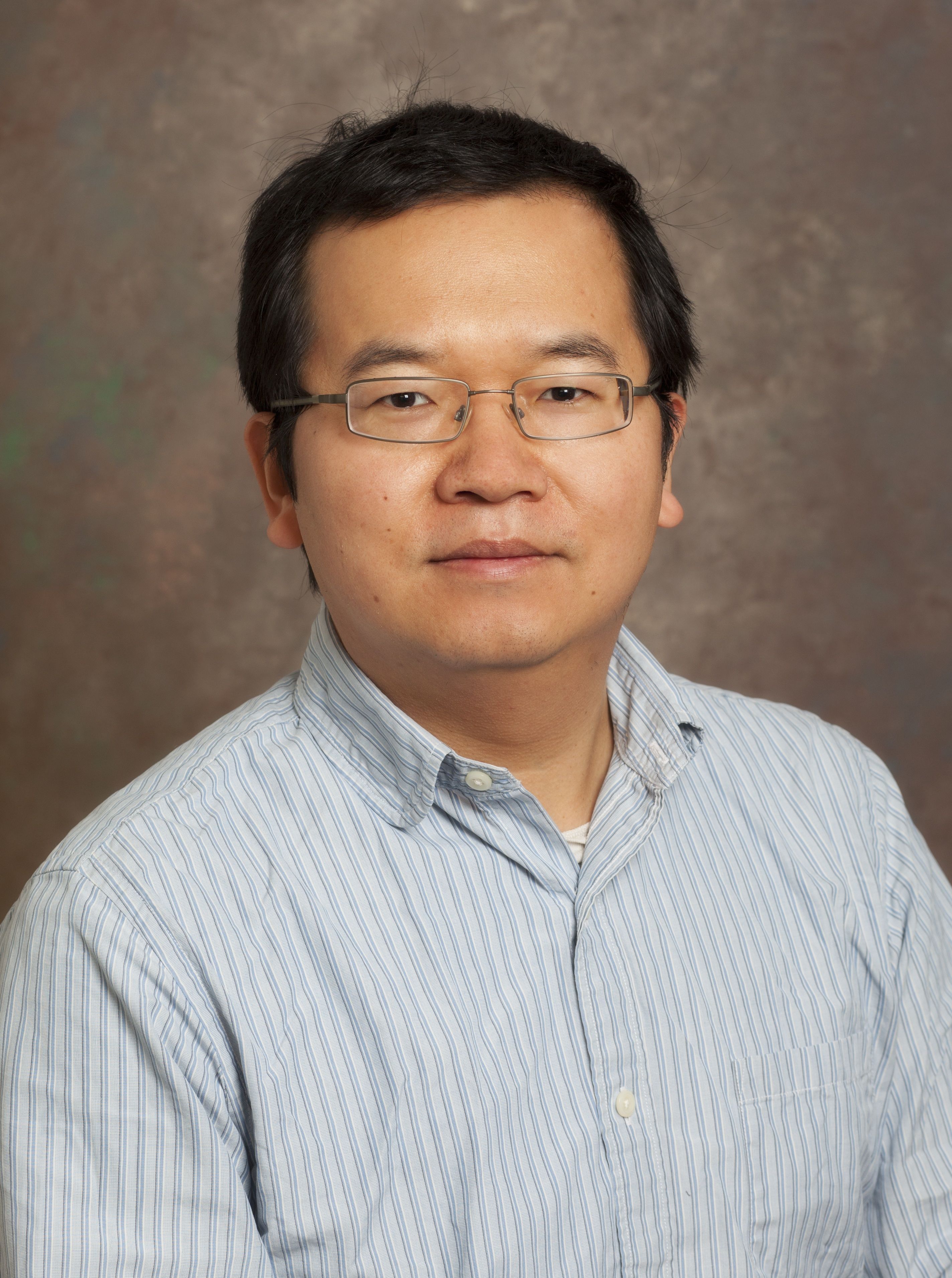
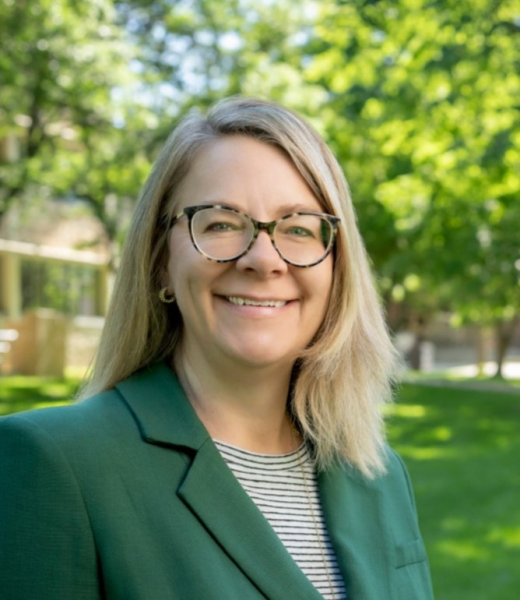
Peter Chien is an Adjunct Professor in the Department of Biochemistry and Molecular Biology at the University of Massachusetts Amherst. His research focuses on regulated protein degradation and quality control in bacteria, with a particular emphasis on mechanisms governing proteolysis during the bacterial cell cycle. PhD, University of California, San Francisco Postdoctoral Training, Massachusetts Institute of Technology The Chien Lab employs interdisciplinary approaches including biochemistry, structural biology, and cell biology to study proteolytic mechanisms in Caulobacter crescentus. Their work explores how AAA+ proteases like ClpXP and Lon recognize substrates with precision and how this impacts cellular regulatory networks. Recent research trends from the lab include investigations into Lon protease modulation , DNA damage responses , protein homeostasis under stress , and genetic regulators of proteostasis . Studies often integrate structural analysis with functional assays to uncover molecular principles of protease specificity. The lab is affiliated with multiple graduate programs, including the Molecular and Cellular Biology (MCB) program, Chemistry-Biology Interface Program, Biotechnology Training Program, and the Institute for Applied Life Sciences at UMass Amherst.
Byron Boots is the Amazon Professor of Machine Learning in the Paul G. Allen School of Computer Science and Engineering at the University of Washington, where he directs the UW Robot Learning Laboratory. He also serves as a Principal Research Scientist in the Seattle Robotics Lab at NVIDIA Research and co-chairs the IEEE Robotics and Automation Society Technical Committee on Robot Learning. Dr. Boots received his Ph.D. from the Machine Learning Department in the School of Computer Science at Carnegie Mellon University, where he was a member of the Sense, Learn, Act (SELECT) Lab co-directed by Carlos Guestrin and his advisor Geoff Gordon. Prior to joining the University of Washington faculty, he was an Assistant Professor in the School of Interactive Computing within the College of Computing at Georgia Tech, and before that, he completed a post-doc in the Robotics and State Estimation Lab directed by Dieter Fox at the University of Washington. Professor Boots' research focuses on the intersection of machine learning, artificial intelligence, and robotics, with particular emphasis on developing theory and systems that tightly integrate perception, learning, and control. His work spans computer vision, state estimation, localization and mapping, high-speed navigation, motion planning, and robotic manipulation. His group develops algorithms drawing from deep learning and neural networks, nonparametric statistics, graphical models, nonconvex optimization, quantum physics, online learning, reinforcement learning, and optimal control. The research demonstrates a strong theoretical foundation while maintaining practical relevance to real-world robotic systems. His recent publications reveal a clear trend toward integrating advanced machine learning techniques with robotics, particularly in model predictive control, motion planning, and learning-based approaches to robot control. His work shows increasing focus on developing theoretically grounded methods that can handle the complex, nonlinear dynamics of real-world robotic systems while maintaining computational efficiency. The publications span top venues including ICRA, CoRL, IROS, and NeurIPS, demonstrating broad impact across multiple subfields of robotics and AI. Finalist for Best Systems Paper at Conference on Robot Learning (CoRL-2021) Multiple papers selected for oral presentations at top robotics conferences Work recognized for theoretical contributions and practical applications in robot learning As director of the UW Robot Learning Laboratory, Boots leads a vibrant research group focused on fundamental and applied research in robot learning. The lab maintains strong collaborations with NVIDIA Research and has produced numerous high-impact publications that bridge theory and practice. Professor Boots teaches courses in autonomous robotics, machine learning, and reinforcement learning, contributing to both undergraduate and graduate education at the University of Washington.
Karisa Cloward is an Associate Professor in the Department of Political Science at Southern Methodist University (SMU), with affiliations at the John Goodwin Tower Center for Political Studies. Her research bridges international relations and comparative politics, focusing on NGOs, international norms, transnational activism, and Sub-Saharan African politics. She holds a Ph.D. from Yale University (2010). Education: Ph.D. in Political Science (Yale, 2010), M.Phil. (2007), M.A. (2005), B.A. in International Relations and Economics (University of the Pacific, 2003, summa cum laude). Research Interests: Explores how local communities respond to international norms, particularly regarding gender-based violence and FGM/C. Uses Kenya as a key case study, emphasizing NGO dynamics and policy implementation. Recent work includes analyzing civil society workers' transitions to political office and the NGO lifecycle in Kenya. Awards: Finalist for the Charles Grawemeyer Award (2018) and recipient of the Robert O. Keohane Award (2014). Over 10 grants and fellowships, including Tower Center fellowships and SMU research grants. Grants & Service: Extensive grants from institutions like the Tower Center and SMU. Serves as Undergraduate Advisor in the Political Science Department and on Tower Scholars Program committees. Engages in community service through gender rights initiatives and public lectures on harmful cultural practices. Books & Publications: Authored When Norms Collide (Oxford UP, 2016), a finalist for the Grawemeyer Award. Over 10 refereed articles in journals like Studies in Comparative International Development and International Organization .
Oheneba Boateng is an Assistant Professor of Political Science at Clark University, specializing in international organizations and African politics. His research focuses on regional and global humanitarian governance, particularly the roles of the African Union and transnational NGOs. PhD in Political Science from Free University Berlin (2018) M.A. in Globalization Studies (McMaster University, 2014) B.A. in History (Kwame Nkrumah University, 2008) Research interests include African regional humanitarianism, Pan-African diplomacy, and decolonizing knowledge systems. He is completing a book on African homegrown humanitarian regimes versus global governance frameworks. Recent publications address reparations agendas, knowledge gaps in African scholarship, and Ebola litigation in Sierra Leone. His work has been featured in The Round Table and Third World Quarterly . Current projects include a book manuscript on African international organizations (projected 2027) and a co-edited handbook on humanitarianism and inequality.
Brane Grambozov is a Clinical Professor in the Department of Radiotherapy and Radiation Oncology at the Medical University of Vienna. His research focuses on oncology, radiation therapy, and immunotherapy, particularly in lung cancer treatment and molecular mechanisms of non-small cell lung cancer (NSCLC). He has contributed to studies on Durvalumab's impact on survival outcomes and radiation dose escalation strategies in NSCLC Stage III patients through the Austrian Radio-Oncological Lung Cancer Study Association Registry (ALLSTAR). Education: Not explicitly stated. Research interests include immunotherapy efficacy, radiation dosimetry, and biomarkers in oncology. His work emphasizes clinical trials and real-world data analysis to improve treatment outcomes and reduce toxicities like pneumonitis. He has collaborated with teams like the ALLSTAR Group and contributed to interdisciplinary studies involving radiotherapy planning and molecular biology. Key awards include the 2022 Platz Research Prize from the Austrian Society for Radiation Oncology. His advising/grant activities are not detailed but reflect contributions to lung cancer research through institutional and collaborative efforts. Labs/teams: Collaborations with the ALLSTAR Group and involvement in multidisciplinary oncology research networks.
Gianmarco Pinton is an Associate Professor in the Department of Biomedical Engineering at the University of North Carolina at Chapel Hill. His research focuses on nonlinear ultrasound and mechanical wave propagation, with applications to medical imaging and therapy. He specializes in traumatic brain injury, shear shock waves, and ultrasound therapy. Ph.D., M.S., and B.S.E. in Biomedical Engineering/Physics from Duke University His lab develops physics and simulation tools for nonlinear wave propagation, aiming to create advanced diagnostic ultrasound methods. Key areas include traumatic brain injury, transcranial imaging, and therapeutic ultrasound. His recent work explores super-resolution imaging, brain motor circuits, and Alzheimer's disease vascular mapping using ultrasound. Article trends highlight innovations in transcranial ultrasound, super-resolution techniques, lung imaging, and neuromodulation. His publications address image degradation, contrast agents, and shear wave dynamics in neurological contexts.
Xiaoming Li is an Associate Professor in the Department of Electrical and Computer Engineering at the University of Delaware , focusing on compiler optimization, GPU computing, and hardware-software interaction. His work bridges machine learning with code generation to enhance program efficiency. B.S. and M.E. from Nanjing University (1998, 2001) Ph.D. in Computer Science from University of Illinois at Urbana-Champaign (2006) Research interests include: Compiler optimizations for static and dynamic code transformation Machine learning-driven code generation techniques FFT algorithms for sparse and hybrid systems Non-traditional compilers for SAT solvers and virtual machines GPU acceleration for large-scale computational problems His publications span 15 years , emphasizing: FFT optimization across GPU/CPU architectures Compiler techniques for heterogeneous systems Adaptive scheduling and error resilience Integration of empirical and model-driven approaches Notable awards: NSF CAREER Award (2008) Best Paper Award at ADAPT Workshop (2013) Advising highlights: Current students: Ryan Taylor, Sha Li, Shuo Chen, Yuanfang Chen, Chao Yang, Chaoyu Chen Graduates: Liang Gu (FFT Libraries), Jakob Siegel (GPGPU Frameworks), Murat Bolat (Context-Aware Compilation)
Jennifer Hubbert is a Professor of Anthropology and Asian Studies at Lewis & Clark College. She holds a PhD and MA from Cornell University and a BA from Stanford University. Her research focuses on the anthropology of the state, Chinese soft power, and gun culture in the U.S., with notable work examining Confucius Institutes, the Shanghai Expo, and evolving demographics of gun ownership. Hubbert has been awarded grants including a 2023 National Endowment for the Humanities grant for her project on liberal gun ownership and its implications for citizenship and emancipatory democracy. Her academic contributions span books like China in the World: An Anthropology of Confucius Institutes, Soft Power, and Globalization (2019) and over 20 peer-reviewed articles. She has held prestigious fellowships, including the 2018-2020 USC Center on Public Diplomacy Research Fellowship. Hubbert’s recent NEH-funded research explores how non-traditional gun owners reimagine citizenship through gun ownership, aligning with humanities perspectives on technology’s societal impact. Her work bridges global-local dynamics, analyzing how institutions like Confucius Institutes shape cultural perceptions, and how urban events like the Beijing Olympics construct national identity. Her teaching includes courses on power and resistance, China’s representation in media, and ethnographic research methods.
Dr. Nilanjan Banerjee is a Professor in the Department of Computer Science and Electrical Engineering at the University of Maryland, Baltimore County (UMBC). He leads the Mobile, Pervasive, and Sensor System Lab, focusing on embedded and distributed systems for mobile, pervasive, and sustainability-based computing. His research spans renewable energy-driven systems, health diagnostics, mobile usability, and experimental testbed design. He holds a Ph.D. in Computer Science from the University of Massachusetts (2009), an M.S. from the same institution (2007), and a B.Tech. (Hons) from the Indian Institute of Technology (2004). Dr. Banerjee's work emphasizes interdisciplinary innovation, including low-power wearable devices for health monitoring (e.g., RestEaZe), cybersecurity frameworks for embedded systems (e.g., CARE), and sensor-based solutions for environmental sustainability. His contributions address challenges in mobility, energy efficiency, and accessibility, such as the Presight sidewalk localization system for visually impaired riders and the Inviz gesture-recognition textile sensors. His recent publications (2018–2021) reflect a focus on health technology, cybersecurity, and sustainable systems. Notable trends include: Integration of machine learning with sensor data for medical applications (e.g., sleep analysis, infection detection) Development of lightweight security protocols for embedded devices Exploration of renewable energy solutions for mobile and sensor networks No scientific awards are explicitly listed in the provided text. His academic advising and grant activities are not detailed here, but his lab's active research suggests significant collaborative projects. The lab also pioneers educational strategies in mobile app development and inclusive faculty recruitment through peer education programs like STRIDE.
Junier Oliva is an Assistant Professor in the Department of Computer Science at the University of North Carolina at Chapel Hill and Lead Faculty of the Master of Applied Data Science program. His research focuses on machine learning, artificial intelligence, and nonparametric statistics, particularly in high-dimensional density estimation, sequential modeling, and learning from complex/structured data. He holds a B.S., M.S., and Ph.D. in Computer Science from Carnegie Mellon University, with prior industry experience at Yahoo! and Uber ATG. Research Interests: Machine learning, artificial intelligence, nonparametric statistics, deep learning, statistical data mining, signal processing, kernel methods, and scalability. His work bridges machine and human learning via collective approaches, emphasizing simple yet flexible models for massive datasets. Awards/Grants: $592K AIM-AHEAD/NIH Grant for Human+AI Collaboration $594K NSF Grant for Scientific Discovery $500K NSF Grant for 'Machine Detectives' Project ACM BCB Best Paper Award (2022) for transparent single-cell classification work Labs/Teams: Director of the LUPA Lab, which develops machine learning techniques for holistic data understanding across domains like healthcare, earth science, and computer vision.
Elena Grigorescu is a Professor at the University of Waterloo, Department of Computer Science. She holds a Ph.D. from the Massachusetts Institute of Technology (2010), an M.S. from MIT (2006), and a B.A. from Bard College (2004). Her research focuses on sublinear-time algorithms, error-correcting codes, computational complexity, and learning theory. She explores foundational aspects of algorithms with constraints on time/space, privacy-preserving computation, and applications in graph theory and optimization. Her work includes advancements in spanner algorithms for network design, differential privacy in sublinear-time settings, and learning-augmented approaches for online optimization. Recent publications address trace reconstruction, privacy-utility trade-offs, and combinatorial optimization techniques. Grigorescu is actively involved in conferences like APPROX/RANDOM and IEEE Foundations of Computer Science, contributing to algorithmic theory and practical implementations. Her research emphasizes theoretical rigor while addressing real-world challenges in data analysis and distributed systems. No awards or formal advisees are explicitly listed in the provided information.
Gauthier Gidel is an Associate Professor at the Department of Computer Science and Operations Research (DIRO) within the Faculty of Arts and Science at Université de Montréal, where he also holds the prestigious Canada CIFAR AI Chair position. He is a core faculty member of Mila, Quebec's AI research institute, and maintains active research collaborations with leading institutions. His academic journey includes a PhD in Computer Science under the supervision of Simon Lacoste-Julien, with internships at Sierra, ElementAI, and DeepMind during his doctoral studies. Dr. Gidel's research spans multiple critical areas in machine learning, with particular emphasis on generative modeling , adversarial machine learning , and variational inequalities for machine learning. His work explores the intersection of optimization theory and practical AI systems, focusing on challenges like LLM safety alignment, multi-agent cooperation, and robustness against adversarial attacks. He is particularly known for his contributions to understanding the theoretical foundations of generative adversarial networks through variational inequality frameworks. His recent publications reveal a strong trend toward addressing critical challenges in large language model safety and alignment, with numerous 2024-2025 papers focusing on adversarial robustness, safety evaluation methodologies, and alignment techniques for LLMs. Simultaneously, his foundational work continues in optimization theory, particularly in variational inequalities and performative prediction, demonstrating his dual focus on practical AI safety concerns and theoretical machine learning foundations. Canada CIFAR AI Chair Core member of Mila Organizer of popular NeurIPS workshops on smooth games Co-founder of the ICLR blog post track Dr. Gidel actively supervises an extensive research group with approximately 10 current graduate students and numerous alumni who have secured positions at leading institutions including Inria Lyon, Oxford, and industry research labs. His research is supported by multiple substantial grants from CRSNG, MITACS, and IVADO, including the prestigious CRSNG Discovery Grant program and MITACS Acceleration Québec projects focused on fraud detection in music streaming and conditional generation. His laboratory maintains strong connections with both academic and industry partners, fostering a collaborative environment focused on advancing AI safety and theoretical understanding.
Eve S. Puffer is the Pamela and Jack Egan Associate Professor of Psychology & Neuroscience at Duke University, affiliated with Trinity College of Arts & Sciences. She holds additional roles as Associate Research Professor of Global Health (Duke Global Health Institute) and affiliate of the Center for Child and Family Policy. Her work focuses on global mental health interventions, particularly in sub-Saharan Africa, addressing child mental health, family functioning, and HIV prevention. She has led studies in Kenya, Liberia, Thailand, and Guatemala, emphasizing culturally adapted, community-based approaches. Education: PhD (2008), MA (2005) in Psychology from the University of South Carolina; BS (2002) from Furman University. Research Interests: Dr. Puffer develops interventions to reduce violence against children, promote positive parenting, and address HIV risk behaviors. Her work integrates family systems and community engagement, often collaborating with religious institutions and local leaders. Recent projects include adapting interventions for refugee families in Jordan and virtual family support during the pandemic. Grants & Recognition: Principal investigator on NIH-funded projects (e.g., ESTEEM intervention in Guatemala) and grants from the International Rescue Committee and Oxford University. Notably selected for the Thomas Langford Award (2023) and featured in Duke’s global health initiatives. Labs/Teams: Active in Duke Initiative for Science & Society and Center for Child and Family Policy, focusing on scalable mental health solutions for marginalized populations.
Kjerstin Thorson serves as the Dean of the College of Liberal Arts at Colorado State University, a position she assumed on August 1, 2024. Previously, she was the Brandt Endowed Professor of Political Communication and Associate Dean for Strategic Initiatives at Michigan State University’s College of Communication Arts & Sciences. An internationally recognized scholar, her research centers on digital platforms and their impact on civic life and culture. Her educational background includes: BA in English from Macalester College MA in Journalism from the University of Missouri-Columbia PhD in Mass Communication from the University of Wisconsin-Madison Thorson's research explores the intersection of digital media, political communication, and civic engagement. She investigates how social media platforms shape political participation, news consumption, and civic discourse, with a particular focus on young adults and historically marginalized communities. Her work addresses critical issues such as equity in digital civic infrastructure, the role of algorithms in political exposure, and the dynamics of online moderation and community governance. She examines both the empowering potentials and the challenges of digital media for democratic participation. Her recent publications (2023-2025) reveal a sustained investigation into platform governance, volunteer moderation, and the urban-rural divide in digital civic engagement. She also delves into Gen Z's civic behaviors, the spread of misinformation, and the evolving landscape of political learning on social media. Her work often employs mixed-methods approaches, combining digital trace data with surveys to understand complex media effects. Thorson has received notable recognition for her contributions: Michigan State University’s Teacher-Scholar Award 2022-2023 Fellow of the Big 10 Academic Alliance Leadership Program Her research has been supported by prestigious organizations including the National Science Foundation (NSF), the Social Science Research Council, and the Spencer Foundation. In her administrative roles, she has prioritized student success through initiatives like the Ignite the Future program, which supports first-generation and marginalized students, and has championed faculty development through the creation of a Center for Teaching and Learning. While specific advisees are not listed, her leadership in student success programs underscores her commitment to mentoring. Under her leadership at Michigan State University, the College of Communication Arts & Sciences expanded its revenue-generating partnerships, created a college-wide Center for Teaching and Learning, launched the Ignite the Future family of programs, and grew the esports initiative. She has also focused on improving culture and climate through promotion pathways for non-tenure track faculty, climate surveys, and community-building events.
Prof. Tobias Plieninger holds dual appointments as Professor of Social-Ecological Interactions at the Universities of Kassel and Göttingen, Germany, and currently serves as Dean of Research at Kassel’s Faculty of Organic Agricultural Sciences. He specializes in sustainability science focusing on rural landscape dynamics, ecosystem services, and transformative change processes. His work examines intersections between agriculture, forestry, nature conservation, and natural resource management. Education: PhD in Forest and Environmental Sciences (2004, University of Freiburg), Habilitation in Landscape Ecology (Humboldt-Universität zu Berlin). Prior roles include Associate Professorships at the University of Copenhagen and leadership at the Berlin-Brandenburg Academy of Sciences. Research focuses on biocultural landscapes, agroforestry systems, and participatory methods. Notable projects include coordination of the EU’s HERCULES initiative and leadership in IPBES’ Transformative Change Assessment. Recognitions include Clarivate’s Highly Cited Researcher (2019–2022) and the Henriette Herz Fellowship (2022). Editorial roles: Lead Author for IPBES, Associate Editor at Landscape and Urban Planning and People and Nature . Over 200 publications span topics like ecosystem service synergies, high nature value farming, and rewilding strategies. Active in policy engagement through Germany’s Leopoldina Academy and the Joint Programming Initiative on Cultural Heritage. Research Themes: Landscape sustainability, participatory governance, biodiversity in agricultural systems Key Projects: SINCERE (forest ecosystem services), AGFORWARD (agroforestry innovation) Awards: Clarivate’s Highly Cited Researcher, Alexander von Humboldt Foundation fellowship Current initiatives emphasize transdisciplinary approaches, integrating local knowledge with scientific frameworks to address global sustainability challenges.