Carlos Jesús Bernardos Cano is a Professor at the Telematics Engineering Department of University Carlos III of Madrid, part of the School of Engineering. He holds a Telecommunication Engineering degree (2003) and a PhD in Telematics (2006), both from the same university. Teaching: Courses on Advanced Communications Networks, Mobile Networks, NFV/SDN, and Software Networks. Research: Focuses on IP mobility management, network virtualization, 5G networks, vehicular communications, and experimental evaluation of mobile wireless networks. Projects: Led EU-funded initiatives like 5G-TRANSFORMER, 5Growth, and MEDIEVAL as Project Coordinator or Technical Manager. Standardization: Active IETF contributor with co-authored RFCs (e.g., RFC 6276, RFC 7028, RFC 7148) and co-chair roles in multiple working groups. His recent publications emphasize 5G network slicing, NFV/MEC integration, and distributed ledger applications, reflecting his leadership in evolving mobile and cloud-based architectures. Scientific contributions include a Best Paper Award at IEEE INFOCOM 2011 and over 100 peer-reviewed articles. Advising: Mentored numerous PhD and Master’s students (e.g., Fabio Giust, Marco Gramaglia). Collaborations: Works closely with IMDEA Networks Institute and international institutions like University of Cambridge and University of Coimbra.
Prof. Dr.-Ing. Wolfgang Kellerer is a full professor at the Chair of Communication Networks within the Department of Computer Engineering , TUM School of Computation, Information and Technology . He also serves as an adjunct professor in the Department of Informatics. His research focuses on adaptive, programmable communication networks, particularly Software Defined Networking (SDN) , Network Function Virtualization (NFV) , and 6G technology . He has contributed to quantifying network flexibility and AI-driven network management. Member of the ERC Peer Review Panel (2023-2024) Scientific Director of TUM Venture Lab Robotics/AI/Communication (2020-present) Editorial roles: IEEE Transactions on Network and Service Management , IEEE Communications Surveys & Tutorials His research spans from 5G to 6G , emphasizing ultra-low latency, resilience, and cross-layer optimization. Key projects include 6G-life , 6G Future Lab Bavaria , and ERC FlexNets , with over 300 publications and 40 patents. Scientific Awards include the ERC Consolidator Grant (2015) , IEEE Fellow (2025) , and multiple best paper awards at IEEE/IFIP CNSM, IEEE Future Networks, and ACM SIGCOMM.
Ashutosh Dutta is a Senior Scientist and 5G Chief Strategist at the Johns Hopkins University Applied Physics Laboratory (JHU/APL). He also serves as an Adjunct Professor at The Johns Hopkins University and chairs the Electrical and Computer Engineering Department of the Engineering for Professional Program at JHU. With a career spanning over 30 years, he has held key technical and leadership roles at AT&T, NIKSUN, Telcordia Research, and Columbia University. He is a co-author of the book Mobility Protocols and Handover Optimization: Design, Evaluation and Application and holds 31 issued patents. Education: BS in Electrical Engineering from NIT Rourkela, India MS in Computer Science from NJIT PhD in Electrical Engineering from Columbia University, New York Research Interests: Ashutosh focuses on advanced 5G network technologies, including security protocols, Software Defined Networking (SDN), Network Function Virtualization (NFV), and mobility management systems. His work drives innovation in future networks to support emerging applications like IoT and autonomous systems. Awards and Honors: IEEE MGA Leadership Award (2009) IEEE-USA Professional Leadership Award (2010) Elevated to IEEE Fellow for contributions to 5G and network security ACM Distinguished Speaker Leadership and Contributions: He co-founded the IEEE Future Networks Initiative and served as co-chair for IEEE 5G World Forums. Ashutosh has organized 65+ global 5G World Summits and led industry outreach efforts for IEEE Communications Society (2014-2019). He also co-founded the IEEE STEM Conference (ISEC) and promoted EPICS projects in high schools.
Meiling Jiang serves as a Clinical Assistant Professor in the Department of Information Systems and Business Analytics within the Hankamer School of Business at Baylor University. She earned her PhD from the State University of New York at Buffalo in 2021, specializing in Management Science and Systems with research in cloud computing and network analysis. Her academic credentials include: PhD in Management Science and Systems, State University of New York at Buffalo (2021) Master of Science in Applied Mathematics, State University of New York at Buffalo (2016) Dr. Jiang's research centers on cloud computing infrastructure optimization and social media dynamics, particularly examining online misinformation propagation, emotional expression impacts in digital marketplaces, and availability-aware resource allocation. Her interdisciplinary work bridges computer science, business analytics, and consumer behavior to address real-world challenges in technology-driven business environments. Her publication record reveals a strong trajectory in applying information systems to business problems, with recent works analyzing emotional cues in the sharing economy, computational rumor modeling, and cloud resource management. These studies, featured in journals like Production and Operations Management and IEEE Journal on Selected Areas in Communications, demonstrate both theoretical rigor and practical business applications. In teaching, Dr. Jiang mentors students through courses including Introduction to Business Analytics (QBA 3305), Business Intelligence (MIS 4344/5342), and Cloud Computing (MIS 5V98). While specific grant details are not provided, her active research output indicates ongoing scholarly engagement in advancing information systems knowledge and pedagogy.
Simon Bauer is a Research Scientist at the Chair of Materials Engineering of Additive Manufacturing at the TUM School of Engineering and Design, Technical University of Munich. Research focus: Additive Manufacturing of Metals, Functionally Graded Structures, Multimaterial Transfer Printing, Computational Material Design Contact: Freisinger Landstraße 52, 85748 Garching bei München, Germany; Email: simonpatrick.bauer@tum.de His recent publications span networking and material science. In networking, he investigates TCP throughput monitoring , QUIC protocol , and CDN performance . In material science, his work centers on additive manufacturing and multimaterial structures .
Qixia Zhang is a Postdoctoral Research Fellow in Computer Science at UiT The Arctic University of Norway and a guest researcher at University of Oslo. Their research spans multiple cutting-edge domains including cloud/edge computing, AI and machine learning, distributed systems, energy efficiency, and IoT applications. Zhang is actively involved in several major research projects including HAPADS, MISO, EMLEMS, eX3, DILUTE, and AirQMan, which focus on environmental monitoring, energy efficiency, and advanced computing systems. Dr. Zhang completed their educational journey at Huazhong University of Science and Technology in China, earning a B.Eng. degree in 2016 and a Ph.D. degree in 2021. Additionally, they studied Economics at Wuhan University from 2014-2016. Their academic path demonstrates a strong interdisciplinary foundation combining computer science with economic perspectives. Zhang's research interests focus on the intersection of computing technologies and environmental sustainability. They investigate how edge and cloud computing architectures can be optimized for energy efficiency while supporting demanding applications like air pollution monitoring and renewable energy integration. Their work on machine learning applications spans multiple domains including wind energy forecasting, IoT data collection, and vehicular edge computing. The research demonstrates a consistent theme of applying computational intelligence to solve real-world environmental challenges. The publication record reveals a strong trajectory in both theoretical and applied research. Early work focused on network function virtualization and edge computing infrastructure, while more recent publications show increasing emphasis on environmental applications including air pollution monitoring, wind energy analysis, and climate-related computing challenges. The research demonstrates a clear evolution toward addressing sustainability challenges through advanced computing techniques, with recent publications heavily featuring Norwegian environmental contexts. Best Paper Award of IEEE/ACM IWQoS 2019 National Scholarship of China for PhD First-class Academic Scholarship Outstanding Graduate Award Excellent Student Cadre Scholarship Zhang serves as a guest editor for Journal Symmetry's Special Issue on Applications based on Symmetry in Machine Learning and Data Mining. They are actively involved in multiple research projects funded by the Research Council of Norway, including HAPADS, MISO, EMLEMS, eX3, DILUTE, and AirQMan. These projects represent significant funding commitments to advance computing technologies for environmental monitoring and energy efficiency. Zhang is also a member of the Arctic Green Computing (AGC) research group at UiT. Based at UiT's Department of Computer Science in Tromsø, Zhang collaborates with the Arctic Green Computing research group and maintains active connections with University of Oslo's Department of Informatics. Their research environment bridges theoretical computer science with practical environmental applications, leveraging Norway's unique position in Arctic research and renewable energy development. The recent guest researcher position at Karlsruhe Institute of Technology further demonstrates their international research network and collaborative approach.
Kishor Trivedi is the Hudson Distinguished Professor of Electrical and Computer Engineering at Duke University's Pratt School of Engineering. He also holds a professorship at Duke Kunshan University. With over 600 publications and supervision of 48 Ph.D. dissertations and more than 50 postdoctoral associates, he is a leading international expert in reliability and performability evaluation of dependable systems. Education: B.Tech. Indian Institute of Technology, Bombay (India), 1968 M.S. University of Illinois, 1972 Ph.D. University of Illinois, 1974 Professor Trivedi's research focuses on reliability modeling, availability modeling, performability modeling, survivability modeling, cyber security, software reliability, software fault tolerance, and software aging and rejuvenation. His work has made seminal contributions to stochastic modeling formalisms and their efficient solution. He currently conducts experimental research in software reliability during operation, researching software fault tolerance through environmental diversity, including software bug classification and empirical study of real failure data. His most recent publications (2022-2025) demonstrate continued leadership in software reliability, with a focus on emerging technologies including container-based services, microservice chains in edge computing environments, NFV-enabled vehicle platooning, and UAV-based service chains. His work increasingly incorporates machine learning techniques for bug prediction and classification while maintaining his foundational work on Markov models, fault trees, and stochastic Petri nets. Selected Awards and Honors: IEEE Reliability Society's Lifetime Achievement Award (2021) IEEE Life Fellow (2017) IEEE Computer Society Technical Achievement Award (2008) Thomson Reuters Highly Cited Researcher (2001) IEEE Fellow (1992) Professor Trivedi has supervised 48 Ph.D. students and over 50 postdoctoral associates. His research has been supported by grants from NASA, NATO, NSF, DARPA, AFOSR, ARO, NIH, NSWC, ONR, and RADC. He has collaborated with numerous high-profile companies including Boeing, IBM, Cisco, and Huawei on reliability modeling projects. His Duke High Availability Assurance Lab (DHAAL) continues to be a leading research center in reliability engineering. Professor Trivedi is the author of several influential textbooks including 'Probability and Statistics with Reliability, Queuing and Computer Science Applications' (Wiley), 'Performance and Reliability Analysis of Computer Systems' (Springer), 'Queueing Networks and Markov Chains' (Wiley), and 'Reliability and Availability Engineering: Modeling, Analysis and Applications' (Cambridge University Press, 2017).
Nicholas Race is a Professor of Networked Systems at Lancaster University's School of Computing and Communications, where he also serves as Associate Dean for Research for the Faculty of Science & Technology since 2020. His academic career at Lancaster spans over two decades, progressing from Research Assistant (2000-2001) to his current professorship (2017-present), with previous roles including Reader in Networking (2015-2017) and Senior Lecturer (2008-2015). His educational background includes a Doctor of Philosophy from Lancaster University (2000) and a 1st Class B.Sc. Hons in Computer Science from the same institution (1996). Race leads significant research initiatives including NG-CDI (an EPSRC/BT funded Prosperity Partnership), AI4ME (an EPSRC/BBC funded project), and MANY, building on previous leadership roles in projects such as 5GRIT, INITIATE, MPAT, and several EU-funded initiatives. Race's research focuses on Software Defined Networking (SDN) and Network Functions Virtualisation (NFV) for developing next-generation networking services. His work spans network security (including the TENNISON framework for distributed SDN security), media distribution with Quality of Experience optimization, and autonomic network management. His recent publications reveal a strong emphasis on intent-based networking, security automation, quality of experience in adaptive streaming, and the integration of 5G with other networking technologies. His scholarly output shows consistent contributions across multiple venues, with recent work addressing challenges in low-latency streaming, network security evaluation frameworks, and the practical implementation of software-defined networking concepts. The publications demonstrate an interdisciplinary approach bridging theoretical networking concepts with practical implementations. Race serves on the editorial board of Computer Communications and has held leadership roles in major conferences including as Programme Co-Chair of DE2013: Open Digital and as PC Member for ACM Multimedia, Multimedia Systems, and EWSDN. As a research supervisor, he mentors multiple PhD students working on topics related to SDN, network security, and media delivery. His projects attract significant funding from EPSRC, BT, BBC, and EU sources, demonstrating the applied relevance of his work to both industry and academic communities. Race is affiliated with several research groups including the Cyber Security Research Centre (Networking), Data Science Institute Foundations, Security Lancaster (Networks), and other specialized centers focusing on network security and systems.
Dr. Levi Perigo is a Research Professor and Scholar in Residence at the University of Colorado Boulder's Department of Computer Science. He also serves as Co-Director of the Professional Master's Program in Network Engineering. Previously, he worked as a Senior Network Engineer at ADTRAN Inc. and contributed to SDN and OpenFlow standardization at the Open Networking Foundation. His academic roles include teaching and mentoring students through hands-on network engineering projects. Dr. Perigo holds an MS in Information and Communication Sciences from Ball State University and a PhD in Information Systems from Nova Southeastern University. His research focuses on network automation, SDN/NFV implementation, and energy-efficient networking. He currently advises the MEF Research Council on SDN/NFV advancements. His research interests span internetworking technologies including VoIP security, IPv6, next-generation protocols, and network design. He explores practical applications of SDN in real-world scenarios, emphasizing automation and performance optimization. Recent work includes strategic APT detection models, green power forwarding, and VoIP framework development. Outside academia, Dr. Perigo actively participates in outdoor activities like cycling, rock climbing, and trail running. His professional certifications in networking technologies reflect his commitment to staying current in emerging standards.
Dr. Cristoffer Leite is Assistant Professor in Data Governance and Security within the Department of Mathematics and Computer Science at Eindhoven University of Technology. His research develops automated solutions for cyber threat intelligence and incident response, particularly focusing on IoT ecosystems and 5G networks. Research Focus: Leads the INTERSECT project on secure IoT infrastructures. Core innovations include DNS-based threat attribution frameworks, privacy-preserving anomaly detection systems, and automated cyber threat intelligence generation for multi-host environments. Publication Trends: Recent works demonstrate progression from theoretical security frameworks (lattice-based access controls) to applied systems for threat intelligence automation. Key contributions include novel methods for IoT device classification, network function virtualization, and phishing countermeasures. Professional Engagement: Active in major security conferences including IEEE BigData and NordSec. Research integrates with European initiatives for resilient critical infrastructure.
Aleksandar Kuzmanovic is a Professor in the Department of Computer Science at Northwestern University, leading the Northwestern Networks Group. He holds a Ph.D. from Rice University (2005) and B.S./M.S. degrees from the University of Belgrade (1996/1999). His research focuses on computer networking, including denial-of-service resiliency, protocol design, and Internet-scale systems. Notable contributions include the TCP-LP protocol adopted in Linux, Explicit Congestion Notification (ECN) as an Internet standard, and denial-of-service defenses for Akamai’s CDN. He has over 60 publications in top venues such as SIGCOMM, NSDI, and IMC. Education: Ph.D., Electrical and Computer Engineering, Rice University (2005) M.S., Electrical Engineering, University of Belgrade (1999) B.S., Electrical Engineering, University of Belgrade (1996) Research Interests: Network protocols and congestion control Security and resiliency in distributed systems CDN optimization and edge computing Privacy-preserving network architectures Internet measurement and standardization Professional Activities: Visiting Professor at University of Electronic Science and Technology of China Steering Committee Member of Measurement Lab (Measurement Lab) Co-founder of bloXroute Labs, Inc. Awards: NSF CAREER Award (2008) Microsoft Trustworthy Computing Award (2006) Searle Junior Fellowship (2006) Rice Presidential Fellowship (1999) Teaching: EECS 110: Introduction to Computer Programming EECS 397/497: IoT Networks Seminar
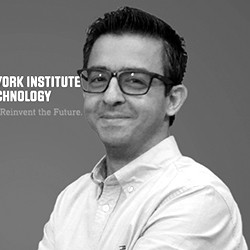
Zakaria Alomari is an Assistant Professor of Computer Science at the Vancouver campus of New York Institute of Technology. He joined NYIT in 2023 after earning his Ph.D. in Software Engineering from the University of Quebec in Montreal (2022) and an M.Sc. in Software Engineering from Concordia University (2017). His research focuses on AI/ML applications in networking, cloud computing, and future Internet architectures. He explores challenges like service function chain survivability, cloud pricing mechanisms, and network security solutions. Zakaria’s educational background includes: Ph.D. in Software Engineering, University of Quebec, Montreal, Canada (2022) M.Sc. in Software Engineering, Concordia University, Montreal, Canada (2017) His research interests span Cloud Computing , Software Defined Networking , Network Performance Evaluation , Resource Management , and Network Security . He investigates how AI-driven methods can enhance security and efficiency in distributed systems, including anomaly detection and IoT encryption. His work addresses scalability issues in NFV environments and future network architectures like FlexNGIA, aiming to resolve performance and reliability bottlenecks. Recent publications highlight trends in leveraging machine learning for cybersecurity (e.g., DDoS detection, IoT IDS), cloud compliance frameworks, and NFV optimization. He also explores public health sentiment analysis via social media data. Current projects include the FlexNGIA initiative to redefine future Internet architectures. Zakaria has no noted scientific awards or accolades. He teaches advanced courses such as Data Centre Security (INCS 775), Cryptography (INCS 741), and Project I (INCS 870) at NYIT. His advising and grants focus on guiding students through these technical domains and advancing research in emerging network technologies. His work contributes to interdisciplinary teams tackling challenges in cloud security, NFV resilience, and AI-driven network solutions.
Professor Xavier Lagrange Frédéric Launay is affiliated with the Université de Poitiers, specializing in advanced telecommunications research. He is actively involved in the IMTFor5G+ project, offering training courses on 5G radio access and contributing to academic discourse on 5G/6G network architectures. His work focuses on network slicing, machine learning integration in telecommunication systems, and protocol innovations like MSISDN-less SMS for IoT devices. Education and career details are not explicitly provided in the texts, but his research interests span 5G network architecture, admission control functions (NSACF), AI/ML lifecycle management, and IoT communication protocols. He frequently collaborates with industry standards bodies like 3GPP, referencing specifications such as TR 28.908 and TS 23.501 in his analyses. His recent publications explore technical advancements in network slicing resource management, AI model deployment in 5G cores, and SMS protocol evolution for non-traditional devices.
Dirk H J Pesch is a Professor at the School of Computer Science and Information Technology , University College Cork (UCC), and currently serves as Head of School. His research focuses on future networked systems for the Internet of Things (IoT) and Cyber-Physical Systems (CPS), with applications in smart communities, health, and manufacturing. He leads the Science Foundation Ireland-funded ADVANCE CRT and is a co-PI of the CONNECT Centre . Prior to UCC, he was at Cork Institute of Technology (now Munster Tech U), where he founded the Nimbus Research Centre. He holds a PhD from the University of Strathclyde and a Dipl.Ing from RWTH Aachen University. Research Interests include IoT/CPS protocols, system architectures, interoperability challenges, and AI-driven analysis for well-being. He has authored/co-authored over 250 publications and co-edited a book on energy-positive urban systems. His work spans conference organization (e.g., IEEE SmartComp 2025 General Chair) and industry collaborations, with €80M+ in grant funding. Key contributions include developing low-power wireless protocols (e.g., MeshMAC), smart building monitoring systems, and frameworks for IoT in energy-positive neighborhoods. His recent work explores loneliness detection via passive sensing and 6G-V2X technologies for autonomous driving. Grants & Leadership: Directed €16M of his own research grants, managed large-scale EU/Irish projects, and advised on industrial IoT implementations. His Nimbus Centre became a leader in IoT applications under his leadership. Labs/Teams: Founded Nimbus Research Centre; active in Cork Smart Gateway initiative. Supervised numerous students and researchers in interdisciplinary projects.
Manuel Gil Pérez is an Associate Professor in the Department of Information and Communication Engineering at the University of Murcia, Spain. As member of the Faculty of Informatics, he focuses on cybersecurity research areas including intrusion detection systems, trust management, privacy-preserving data sharing, and security operations in dynamic environments. PhD in Computer Science from University of Murcia (2015) Co-supervised by Dr. Gregorio Martínez Pérez and Dr. Antonio Skarmeta Gómez Active researcher with 70+ scientific publications His research spans multiple cutting-edge domains: 5G/6G network security and trust frameworks Decentralized federated learning systems (Fedstellar platform) Knowledge graph applications for cyber threat intelligence Device behavior fingerprinting for IoT security Healthcare data protection through blockchain and SSI Botnet detection and mitigation strategies Recent publications demonstrate trends in: Antifragile cybersecurity architectures Semantic inference for threat profiling Reputation systems in multi-stakeholder environments Edge computing security solutions Integration of AI/ML in network defense As part of the Intelligent Systems and Telematics research group, he collaborates on major EU-funded projects including 5GBarcelona, 5GZORRO, and SoftFIRE. His work addresses critical challenges in network security, trust management, and decentralized learning systems through practical implementations and benchmarking frameworks like LwHBench.