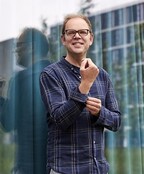
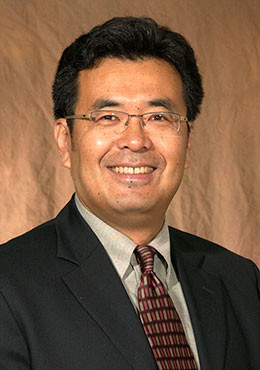
Professor Karl Jenkins is a Professor of Computational Engineering at Cranfield University , where he leads the Centre for Computational Engineering Sciences . His expertise spans Computational Fluid Dynamics (CFD) , Turbulent Combustion , High Performance Computing (HPC) , and Multiphase Flow Modeling . Jenkins has published over 100 papers and received the Gaydon Prize for his contributions to combustion research. His research focuses on reacting flows , turbulence modeling , and compressible multiphase flows , with recent work addressing green hydrogen production , aircraft component segmentation , and virtual reality applications in aviation safety. He has developed high-order numerical methods for shock wave analysis and interface-capturing in unstructured mesh environments . A former Sir Arthur Marshall Research Fellow at Cambridge University, Jenkins combines academic rigor with industrial collaboration , having worked with companies like Rolls-Royce plc , Airbus SE , and Siemens AG . He mentors research students including Yiren Tong and actively contributes to LES/DNS computational frameworks for aerospace and environmental applications .
Max Peters is a Researcher at the Department of Mechanical Engineering , Eindhoven University of Technology, specializing in high-pressure hydrogen injection for sustainable combustion systems. His work with the Argon Power Cycle (APC) project (2020–2025) focuses on eliminating NOx, soot, and CO2 emissions through hydrogen fuel integration and optical diagnostics. Education: PhD in Mechanical Engineering (2025), Eindhoven University of Technology, thesis: 'Hydrogen injections for future combustion engines'. MSc in Mechanical Engineering (2020), Eindhoven University of Technology, thesis: 'The relevance of cetane number for bio-based future fuels'. Research Interests: Max’s work bridges Mechanical Engineering and Sustainable Energy , with expertise in hydrogen injection dynamics, combustion efficiency, and emission reduction. His research aligns with UN Sustainable Development Goals (SDG7: Affordable Clean Energy; SDG13: Climate Action). Publication Trends: His recent articles/posters (2020–2024) emphasize experimental combustion analysis, optical diagnostics (Rayleigh scattering, LIF), and hydrogen fuel applications. Key themes include high-pressure jet dynamics, APC optimization, and biofuel ignition properties. Scientific Recognition: Combura 2022: Third place for poster on hydrogen injection characterization. Collaborative Involvement: Active in the Engine Combustion Network (ECN) , contributing to hydrogen injection research through invited talks (ECN9, 2023) and workshops (ECN8.4, 2022; ECN9.14, 2025). Collaborated with Prof. J.A. van Oijen and Dr. N.C.J. Maes on APC systems.
Andrei Gornykh is a Professor at the Academic Department of Social Sciences of the European Humanities University (EHU), Vilnius. He specializes in media studies, cultural theory, and film analysis, with a focus on psychoanalysis and visual culture. His research explores topics such as media ideology, post-Soviet cultural identity, and the intersection of capitalism and cultural forms. Education: PhD in Philosophy from Saint-Petersburg State University (1999). Teaching Areas: TV as Cultural Form, Media Theory, Psychoanalysis and Culture, and Critical Theory. Dr. Gornykh's research encompasses media anthropology, Soviet and post-Soviet cinema, and the philosophy of visual communication. He has published extensively on figures like Andrei Tarkovsky and Jacques Lacan, analyzing themes such as psychobiography, symbolic exchange, and ideological structures in media texts. His work bridges cultural studies, philosophy, and visual theory, with a particular interest in late capitalism's ideological frameworks. Recent publications include studies on Tarkovsky's psychobiography, Lacanian image theory, and the cultural commodification of history. He has presented at international conferences on topics like information warfare, university networks, and the aesthetics of cinema. Dr. Gornykh has led educational projects such as DVD-ROMs on Soviet cinema and public lectures on visual culture. His current projects explore digital media's impact on knowledge production and the role of fantasy in modern ideology.
Fei He is a Research Fellow at the School of Engineering, The University of Western Australia, with a casual teaching role. He holds a Doctor of Philosophy (PhD). His research focuses on fluid dynamics, hydrodynamics, and environmental engineering, particularly in flow through porous media, cylinder arrays, and scour modeling. He has contributed to studies on obstacle arrangement effects, drag coefficient analysis, and vortex-induced vibrations. Research interests include fluid dynamics in coastal, civil, and mechanical engineering contexts. His work addresses challenges in flow control, sediment transport, and wave attenuation by vegetation. Key contributions include semi-empirical models for scour analysis and experimental studies on coral grain settling. Recent publications (2023–2025) explore hydrodynamic forces, three-dimensional flow past cylinders, and porous obstruction dynamics. Collaborations span geophysical, environmental, and mechanical engineering domains.
Jan S. Hesthaven is a Professor and Provost at EPFL, leading academic affairs. He holds a Master's from the Technical University of Denmark (DTU) and a PhD in Numerical Analysis, followed by an honorary dr.techn degree from DTU. His research focuses on high-order computational methods for wave problems, reduced order models, and machine learning integration. He has co-authored over 175 papers and 4 monographs. Previously, he served as Dean of the School of Basic Sciences at EPFL and held roles at Brown University, including Director of the Center for Computation and Visualization. Awards include the Alfred P. Sloan Fellowship and the Philip J. Bray Award. Education: Master of Science in Computational Physics, DTU (1991) PhD in Numerical Analysis, DTU (1995) dr.techn in Computational Mathematics, DTU (2009) Research Interests: Development of high-order numerical methods, computational wave propagation, geophysical flows, and machine learning applications in scientific computing. His work bridges traditional methods with AI-driven approaches for real-time modeling and structural health monitoring. Recent Work: His 2023–2025 publications emphasize machine learning-enhanced models, reduced order methods, and seismic data analysis for environmental applications. Key techniques include physics-informed neural networks and graph-based operator learning. Awards: Alfred P. Sloan Fellowship (2000) NSF Career Award (2002) Philip J. Bray Award (2004) Dr.techn from DTU (2009) Grants & Leadership: Led the Center for Computation and Visualization (CCV) at Brown (2006–2013) and co-directed the NSF Institute ICERM (2010–2013). Current roles include Provost at EPFL and leadership in MATHICSE. Collaborates with industry and applied scientists on computational challenges. Labs & Teams: Active in the MATHICSE lab, focusing on numerical methods and high-performance computing. Involved in interdisciplinary projects combining AI with traditional computational science.
Bryan Higgs, Ph.D., is an Assistant Professor in the Department of Civil Engineering at the University of the District of Columbia (UDC), affiliated with the School of Engineering and Applied Sciences. He serves as Director of the UDC Center of Climate Change Analytics and Undergraduate Program Director for the Civil Engineering Department. His research focuses on climate change impact analysis, critical infrastructure resilience, and transportation engineering with applications in geospatial data mining, artificial intelligence, and game theory. Dr. Higgs holds three degrees from Virginia Tech: a B.S., M.S., and Ph.D. in Civil Engineering, all specializing in Transportation Engineering. His professional roles include leadership positions such as Chair of the Curriculum Committee and SEAS Union Representative for the UDC Faculty Association. His research portfolio includes over $1 million in NSF-funded grants, including the HBCU-RISE initiative focusing on climate change infrastructure protection. He has received prestigious awards including the 2023 Black Engineer of the Year Award and UDC's Scholarly Excellence Award. Dr. Higgs teaches advanced courses like Game Theory Applications in Engineering and Traffic Engineering, while maintaining active involvement in curriculum development and engineering education innovation. His lab develops web-based tools for rainfall analysis and collaborates across disciplines to address climate-related infrastructure challenges.
Dr. Angela Giovanangeli is a Senior Lecturer in International Studies at the University of Technology Sydney (UTS), Faculty of Arts and Social Sciences. Her research focuses on French language policy, creative city studies, intercultural learning, and Indigenous language revival. She holds a doctoral degree from the University of Sydney and degrees from the Sorbonne and Sorbonne Nouvelle in Paris. Her work explores intersections of culture, education, and urban transformation, with recent studies on Aboriginal language revitalization, Mediterranean port cities, and postcolonial art pedagogy. She leads funded research projects such as 'Shaping European Geographies' and advises UTS's study abroad programs. Dr. Giovanangeli actively contributes to academic leadership roles including editorial work for the Portal Journal and conference organizing for Francophone studies. Her teaching includes French language and in-country studies, emphasizing intercultural responsiveness. Key themes in her 48+ publications span urban regeneration, Indigenous ecologies, and transcultural art practices.
Joe K. Kearney is a Professor in the Department of Computer Science at the University of Iowa and the University of Minnesota. His career spans over three decades, focusing on virtual reality, computer vision, and human-computer interaction research. Key affiliations: University of Iowa (Iowa City, IA, USA), University of Minnesota (Minneapolis, MN, USA) Research domains: Virtual environments, perception-action coupling, motion capture systems, pedestrian behavior simulation Research trends show sustained contributions to immersive visualization , autonomous navigation , and human factors in virtual reality . His 2014-2025 work explores AR-based pedestrian safety systems, while earlier studies (1986-2006) established foundational frameworks for virtual environment simulation and optical flow analysis. Long-term collaborations with Jodie M. Plumert (1986-2021), James F. Cremer (1986-2009), and Pooya Rahimian (2015-2017) demonstrate consistent team research in VR cognition and autonomous systems.
Anne Håkansson is a Professor of Computer Science at KTH Royal Institute of Technology, specializing in Artificial Intelligence and intelligent systems. She also holds a full professorship at UiT The Arctic University of Norway since 2018, with a guest professorship at NTNU Norwegian University of Science and Technology (2020–2022). Her affiliations include leadership roles such as Director of the Senseable Stockholm Lab and Director of Studies for Bachelor and Master Degree projects at KTH. Education : PhD and Associate Professor (Docent) in Computer Science (Uppsala University, 2004 and 2006) Current Roles : Professor at KTH (2010–present), Full Professor at UiT (2018–present), Guest Professor at NTNU (2020–2022) Her research focuses on intelligent software systems, multi-agent systems, and cyber-physical systems (CPS) for applications in smart cities, explainable AI, and environmental impact assessment. She pioneered visualization techniques for colon cancer detection and developed tools like the EIA-system and T-uck for user-centered knowledge modeling. Recent publications emphasize autonomous CPS design, ontology integration, and context-aware systems, reflecting trends in smart urban technology and trustworthy AI in transportation. She has received the KES Award (2012) and served as Uppsala City Ambassador (2009). Scientific contributions include: Supervising over 90 master’s and bachelor’s theses Advising PhD students such as Esmiralda Moradian and Dan Wu Organizing international conferences like KES-AMSTA 2009 and SEB’12 She leads projects such as DigiCityClimate and Volatile Multiple Smart Systems (VoLM2s), emphasizing sustainability and adaptability in heterogeneous environments.
Vyjayanthi Ratnam Selinger is the Stanley F. Druckenmiller Associate Professor of Asian Studies at Bowdoin College, specializing in Japanese literature and culture. Born and raised in India, she moved to the United States for doctoral studies and has established herself as a leading scholar of medieval Japanese literature with a focus on representations of conflict, war, and legal frameworks in historical texts. Her work bridges American and Japanese academic traditions, as she publishes and presents in both languages. Dr. Selinger earned her BA from Jawaharlal Nehru University (1994), MA from Harvard University (1998, where she received the Joseph Fletcher Memorial Award), and PhD from Cornell University (2007). Her educational journey included significant research time in Japan supported by the Japanese Government Scholarship (1994-1995) and multiple Japan Foundation Fellowships. Her research examines literary representations of conflict in medieval Japan as a lens to explore war memory, legal constraints, Buddhist mythmaking, and women's roles. She is particularly known for her work on the Heike monogatari (Tale of the Heike), analyzing blood symbolism, horse imagery, and legal disputes. As a scholar of Indian origin, she maintains a distinctive focus on cross-cultural flows between India and Japan, notably examining the transmission of the Ramayana to Japanese contexts through figures like Minakata Kumagusu. At Bowdoin College, her teaching spans from medieval to modern topics including Japanese animation, samurai culture, monster culture, and WWII memory. Dr. Selinger's scholarly output reveals a consistent trajectory from analyzing foundational narratives of warrior authority toward increasingly nuanced examinations of legal frameworks and ritual practices in medieval Japanese society. Her work demonstrates how literary texts engage with courtroom drama, famine representation, and symbolic fluids to construct narratives of power and justice, with growing attention to gender dimensions and cross-cultural connections. Bonnier Wheeler Fellowship (for Women Medievalists), 2024 Fulbright Core Scholar Award, August 2017-April 2018 Japan Foundation Research Fellowship, Spring-Summer 2010 Japan Foundation Doctoral Dissertation Fellowship, Jun. 2002—Feb. 2003 Joseph Fletcher Memorial Award for Excellence in writing of the M.A thesis, Harvard University, June 1998 The Japan Foundation Study Tour Award, 1994 Japanese Government (Mombusho) Scholarship, 1994-1995 While specific advisees aren't listed in the provided materials, Dr. Selinger actively mentors students through diverse pedagogical initiatives including leading student trips to Japan to study environmental crises and curating museum exhibitions on postwar Hiroshima and supernatural themes in Japanese prints. Her research has been substantially supported by prestigious grants including the Fulbright Core Scholar Award and multiple Japan Foundation Fellowships, enabling extensive archival research and scholarly exchange in Japan. Dr. Selinger maintains an active international scholarly presence with recent invited talks at University of Pennsylvania (2024), Wesleyan University (2023), and University of Chicago (2019), demonstrating ongoing engagement with cutting-edge research questions in Japanese studies. She collaborates with institutions like the Bowdoin College Museum of Art on exhibitions connecting Japanese cultural history with contemporary concerns.
Adriano Lopes is an Invited Assistant Professor at Iscte - Instituto Universitário de Lisboa, affiliated with the Department of Information Science and Technology within the School of Technologies and Architecture. He is also an Associate Researcher at ISTAR-IUL, the university's research center in Information Sciences, Technologies, and Architecture. His academic work spans software systems engineering, visual analytics, and big data technologies. PhD in Computer Science – University of Leeds, UK (1999) Master’s in Computer Science – University of Coimbra (1993) Bachelor’s in Electrical Engineering (Computer Science branch) – University of Coimbra (1986) Postgraduate studies in Financial Analysis – Technical University of Lisbon, ISEG (2013) Adriano Lopes’ research focuses on visual analytics, big data, software engineering, and computer graphics, with a strong emphasis on data visualization and its applications in domains such as smart tourism and urban planning. His work integrates human-centric design with advanced computational techniques to support decision-making in complex systems. His recent publications highlight a shift toward applied research in digital transformation for sustainable tourism, particularly through spatiotemporal visualization of tourism crowding and carrying capacity modeling. These works demonstrate a consistent trend in leveraging data-driven platforms for real-world societal challenges, especially in the context of post-pandemic recovery and sustainable development. Adriano has supervised numerous Master’s students at both Iscte and Universidade Nova de Lisboa, with thesis topics covering sentiment analysis, GPU-based rendering, anomaly detection, and tourism flow forecasting. He has participated in EU-funded research projects such as RESETTING, which aims to relaunch sustainable tourism models through digitalization. His academic service includes organizing roles in major visualization conferences like EUROVIS 2006 and the Eurographics UK Conference. He has been actively involved in research labs and teams including ISTAR-IUL and CITI (research center at FCT/UNL), contributing to interdisciplinary projects that bridge computer science with architecture, telecommunications, and tourism. His work reflects a strong commitment to collaborative, applied research with societal impact.
Noah Rhodes is a CNLS Postdoctoral Associate at Los Alamos National Laboratory's Center for Nonlinear Studies (CNLS), working within the Theoretical Division (T-Division). His research focuses on mathematical optimization applications for power grid challenges, particularly infrastructure flexibility and wildfire risk mitigation. Office contact: TA-3, Building 1690, Room 123; email: nrhodes@lanl.gov. Educational background includes: B.S. in Electrical Engineering, University of Wisconsin-Madison (2019) Ph.D. Minor in Energy Analysis and Policy, University of Wisconsin-Madison (2022) Ph.D. in Electrical Engineering, University of Wisconsin-Madison (2024) Rhodes' research centers on enhancing power grid resilience through optimization techniques, with emphasis on reducing infrastructure needs and managing wildfire-related outages. His work bridges theoretical mathematics with practical energy security challenges, developing frameworks for public safety power shutoffs and grid restoration under extreme conditions. His 2021-2025 publications reveal a trajectory from foundational grid restoration algorithms toward integrated environmental considerations. Recent work combines carbon intensity analysis with grid operations while advancing open-source tools (PowerModelsRestoration.jl, ElectricityEmissions.jl) for academic and utility applications. Key trends include stochastic optimization for emergency response and topology-aware power flow formulations. No scientific awards are listed in the provided materials. No student advisement or grant information is documented in the source text. Rhodes operates within CNLS—a hub for nonlinear science research at LANL—which fosters interdisciplinary collaboration on complex systems. His work interfaces with T-Division's theoretical frameworks while addressing real-world energy infrastructure vulnerabilities through computational modeling and optimization.
Dr. Jelle Zuidema is Associate Professor in Natural Language Processing, Explainable AI and Cognitive Modelling at the Institute for Logic, Language and Computation (ILLC) of the University of Amsterdam, with primary affiliation in the Natural Language Processing research group and secondary affiliation in Language & Music Cognition. He directs the Cognition, Language and Computation lab (CLC-lab) within the Faculty of Science. His research bridges artificial intelligence, cognitive science and linguistics with focus on interpretable deep learning models for text and sound. He pioneered techniques including diagnostic classification (probing), attention rollout, TreeLSTM, and masked language modeling. His work addresses fundamental questions about hierarchical compositionality in language and how neural networks can represent linguistic structure. Analysis of his publication record reveals consistent innovation in neural network interpretability methods, with recent work focusing on bias detection in language models and attention flow quantification. His research trajectory shows evolution from foundational neural parsing work to current emphasis on explainable AI and cognitive plausibility of deep learning models. Dr. Zuidema actively supervises PhD and MSc students while teaching courses including Evolution of Language and Music, Foundations of Neural and Cognitive Modelling, and Interpretability & Explainability in AI. He coordinates the Cognitive Science track in the Brain & Cognitive Sciences master's program. He directs the CLC-lab which pursues both hypothesis-driven methods (diagnostic classifiers, representational similarity analysis) and data-driven methods (layer-wise relevance propagation, contextual decomposition) for neural network interpretation. The lab's InDeep project focuses on interpreting deep learning models for text and sound processing.
Lee D. Han is a Professor in the Department of Civil and Environmental Engineering at the University of Tennessee, Knoxville, within the College of Engineering. He is also a Collaborating Scientist at Oak Ridge National Laboratory (ORNL), reflecting his strong ties to national research initiatives. His work bridges academia and applied transportation systems, with a focus on intelligent transportation, traffic operations, and emergency management. Dr. Han earned his PhD from the University of California, Berkeley, an MS from Virginia Tech, and a BS from National Taiwan University, all in Civil & Environmental Engineering. His educational background reflects a strong foundation in transportation systems and infrastructure. His research interests are centered on traffic engineering, intelligent transportation systems (ITS), traffic flow theory, emergency evacuation, crash analysis, and transportation data systems. He has pioneered work in evacuation modeling, license plate recognition, and adaptive signal control. His research integrates simulation, data analytics, and real-world applications to improve safety and efficiency in transportation networks. The recent articles highlight a consistent focus on intelligent transportation technologies, including driver behavior analysis, incident detection, evacuation modeling, and freight systems. His work often combines empirical data with advanced computational methods such as machine learning, fuzzy logic, and optimization. There is a clear trend toward real-time, adaptive systems that enhance traffic safety and operational efficiency. TCE Teaching Fellow, 2019 L.R. Hesler Award for Excellence, 2017 Chancellor's Citation for Research, 2014 TCE Research Achievement Award, 2014 TCE Teaching Fellow, 2013 Leon & Nancy Cole Superior Teaching Award, 2012 Chair of Faculty Senate Research Council, 2011-13 TRB University Representative, 2007- Charles E. Ferris Faculty Award, 2007 COE Teaching Fellow Award, 2013 Closest to Hole prize at the 15th ASCE Scholarship Golf Tournament, 2012 Dr. Han has secured over $10 million in externally sponsored research funding, significantly reducing institutional fiscal burden by recovering much of his salary. He advises PhD students, including Stephanie Hargrove, who has received the NSF EPASI and Dwight D. Eisenhower Fellowships. He leads the Transportation Systems Laboratory (TSL) and an eFacility for data transfer, supporting collaborative research with sponsors, visiting scholars, and students. He leads the Transportation Systems Laboratory (TSL) at Perkins Hall and has established an eFacility for secure data exchange. The lab supports research in traffic modeling, simulation, and ITS applications, serving as a hub for students, faculty, and collaborators. His team engages in both theoretical and applied research, often in partnership with federal and state agencies.