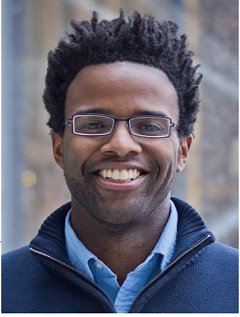
Michael Carbin is the Jamieson Career Development Assistant Professor of Electrical Engineering and Computer Science at the Massachusetts Institute of Technology (MIT) and leads the MIT Programming Systems Group. His research focuses on programming systems that address system uncertainty to enhance performance, energy efficiency, and resilience, particularly in environments involving neural networks , approximate computing , and unreliable hardware . His work spans probabilistic programming , quantum computing , and machine learning systems . Articles highlight contributions in pruning neural networks , quantum data structures , and compiler optimization , reflecting trends in deep learning , formal verification , and language-driven systems . Scientific Awards : MIT Frank E. Perkins Award (2020) Sloan Research Fellowship (2020) Facebook Research Award (2019) NSF CAREER Award (2018) Best Paper Awards at OOPSLA (2013, 2014) He has advised numerous graduate students and postdocs including Eric Atkinson, Cambridge Yang, and Charles Yuan, and served on program committees for conferences like POPL, OOPSLA, and ICLR. His group collaborates with institutions such as MIT CSAIL and explores applications in quantum algorithms and probabilistic inference .
Professor Thomas Bein is affiliated with the Department of Chemistry at Ludwig-Maximilians-Universität München (LMU) , where he leads the Functional Nanosystems research group. His work focuses on synthesizing and characterizing nanostructured materials with applications in energy, catalysis, and biomedical delivery. Mesoporous nanoparticles for drug delivery Semiconductor nano-morphologies for photovoltaics Photoelectrochemical water splitting Metal-organic frameworks (MOFs) Electroactive networks His research emphasizes atomic-scale control of material architectures using self-assembly, hydrogen bonding, and covalent interactions, enabling precise tuning of electronic, optical, and catalytic properties. A review of his recent publications reveals cutting-edge investigations into covalent organic frameworks (COFs), perovskite-inspired solar materials, and functional nanoparticle systems. Key trends include optimizing energy conversion efficiency, enhancing stability in optoelectronic devices, and exploring bio-compatible nanocarriers for targeted therapies. Professor Bein’s group actively contributes to interdisciplinary projects at the intersection of chemistry, physics, and biomedical engineering, with ongoing collaborations in solar energy, sustainable materials, and nanomedicine.
Prof. Stefan Leutenegger is a tenure-track Assistant Professor at Technische Universität München (TUM), leading the Machine Learning for Robotics group within the TUM School of Computation, Information, and Technology. Previously, he held roles as Senior Lecturer (2018–2021) and Lecturer (2014–2018) at Imperial College London's Dyson Robotics Lab, where he founded the Smart Robotics Lab. He earned his PhD (2014) from ETH Zurich, focusing on autonomous solar-powered aircraft navigation, and holds BSc (2006) and MSc (2009) in Mechanical Engineering from ETH Zurich. His research centers on mobile robotics, particularly enabling robots (e.g., drones) to perceive and navigate complex environments using machine learning and sensor data fusion. Key focus areas include SLAM, event-based vision, 3D reconstruction, and autonomous exploration. He has pioneered algorithms like BRISK (2011), OKVIS (2014), and ElasticFusion (2016), advancing real-time robotics perception. Notable Awards: Imperial College President's Award (2018), Best ECCV Paper (2016), ETH Medal for Dissertations (2015). Labs: TUM's Machine Learning for Robotics Group, Imperial's Smart Robotics Lab. Publications: Over 100 papers, including seminal works in CVPR, ECCV, and Robotics: Science and Systems. Current projects include DigiForests (forest inventory via robotics), aerial additive manufacturing, and object-centric semantic mapping. His work bridges theory and practice, with applications in autonomous drones, construction robotics, and human-robot interaction.
Prof. Stefan Müller is a Professor at the Institute for German Language and Linguistics , part of the Faculty of Languages and Literature at Humboldt University. His research focuses on syntax, formal grammar theories (especially Head-Driven Phrase Structure Grammar), and computational linguistics. He leads the CoreGram Project , developing cross-linguistic grammars using HPSG formalisms. His work includes analyses of German syntax, constituent order, anaphoric binding, and register phenomena. He is also involved in open-access publishing initiatives through Language Science Press . Contact: St.Mueller@hu-berlin.de . Education and academic background details are not explicitly stated in the provided text, but his professional trajectory indicates deep expertise in theoretical linguistics. His research spans multiple languages including German, Mandarin, and Persian, with a focus on grammar implementation and syntax-semantics interfaces. Key contributions include the Head-Driven Phrase Structure Grammar Handbook (2024), analyses of headless nominal structures in German (2022), and exploration of large language models' theoretical implications (2024). He actively engages in interdisciplinary projects bridging formal grammar and computational methods.
Paul Gölz is an Assistant Professor at Cornell University's School of Operations Research and Information Engineering (ORIE), with affiliations in Computer Science. His research focuses on computational social choice, algorithmic fairness, and AI ethics, addressing topics like democratic innovation, fair resource allocation, and AI systems for diverse users. Education: Undergraduate studies at Saarland University (Germany), PhD in Computer Science from Carnegie Mellon University, followed by postdoctoral research at Harvard University, UC Berkeley, and the Simons Laufer Mathematical Sciences Institute. His work has been recognized with awards including the JPMorgan Chase AI Research Fellowship (2021) and honorable mentions for prestigious dissertation awards (Dantzig and ACM SIGecom). Research Highlights : Developed Panelot, a tool for selecting citizens' assemblies using state-of-the-art algorithms. His work on fair refugee resettlement and apportionment methods has been featured in Operations Research and Nature . Recent projects include AI alignment distortion analysis and generative social choice mechanisms. Teaching : Teaches Optimized Democracy (Spring 2025) and Mathematical Programming (Fall 2024). Supervises PhD students in ORIE, focusing on interdisciplinary applications of optimization and social choice. Awards & Grants : Received a $40K Structural Democracy Fellowship (Crankstart) and an OpenAI grant for Democratic Inputs to AI. Active in policy briefs (e.g., mini-public selection strategies). Labs/Tools : Co-developed Panelot.org , a nonprofit platform for fair citizen assembly selection. Active in open-source tool development for social choice applications.
Prof. Laura Leal-Taixé is a Professor at the Technical University of Munich (TUM) in the Department of Informatics, leading the Dynamic Vision and Learning group. She holds the Rudolf Mößbauer Tenure Track Assistant Professorship, promoted to W3 Associate Professorship in 2022. Her research focuses on computer vision and machine learning, particularly video analysis, multi-object tracking, and autonomous driving applications. Education: B.Sc./M.Sc. in Telecommunications Engineering (Technical University of Catalonia, UPC) Ph.D. in Information Processing (Leibniz University of Hannover, Germany) Postdoctoral Research at ETH Zürich (Switzerland) and TUM Research Interests: Laura’s work addresses challenges in video analysis, including motion analysis, semantic segmentation, and integrating social dynamics into urban traffic modeling. Her project socialMaps , funded by the Sofja Kovalevskaja Award, explores decoupling vehicle and pedestrian traffic using dynamic maps. Her research combines optimization techniques, deep learning, and sensor data for real-world applications like autonomous systems. Recent Trends: Her publications highlight advancements in multi-object tracking, 3D LiDAR segmentation, and trajectory forecasting, emphasizing neural networks and geometric approaches. Collaborations with industry and academia underscore her work’s practical impact. Awards: 2017 Sofja Kovalevskaja Award (€1.65M, Humboldt Foundation) 2017 DAAD Australia-German Joint Research Grant Travel grants from Women in CV, CVPR Doctoral Consortium, and Vodafone Foundation Labs & Projects: Leads the Dynamic Vision and Learning group at TUM, focusing on vision-based AI for autonomous systems and environmental monitoring. Active in developing datasets like DynamicEarthNet for semantic change analysis.
Prof. Magnus Fröhling is a Full Professor of Circular Economy and Sustainability Assessment at the Technical University of Munich (TUM), leading the Chair of Circular Economy and Sustainability Assessment at TUM Campus Straubing. He holds a doctorate and habilitation from the Karlsruhe Institute of Technology (KIT), specializing in material flow analysis and resource efficiency. His career includes roles as a professor at TU Bergakademie Freiberg before joining TUM in 2018. Fröhling’s research focuses on quantitative approaches for circular economy systems, including industrial value chains, built environments, and bioeconomy. He co-leads the TUM Mission Network Circular Economy, an interdisciplinary platform for research and innovation. **Education:** Bachelor/Master in Industrial Engineering, Karlsruhe University (TH) PhD in Industrial Engineering (2005), Karlsruhe University Habilitation in Business Administration (2011), KIT **Research Interests:** Circular economy concepts for automotive industry, buildings, and energy systems; sustainability assessment in bioeconomy; policy instruments for resource efficiency. His work emphasizes lifecycle analysis and closed-loop systems. **Awards:** TUM Sustainability Award (2021) and recognition for groundbreaking research on sustainability in industrial biotechnology (2020). **Advising & Grants:** Leads research initiatives like CirculaTUM, focusing on interdisciplinary collaboration. His work integrates policy analysis, technological innovation, and industrial ecology to advance sustainability goals. **Labs/Teams:** Active in TUM’s Green Fuel Center and SynBioFoundry@TUM, promoting sustainable energy and biotechnology solutions.
Prof. Alois Christian Knoll is a full professor at the Technical University of Munich (TUM) in the School of Computation, Information and Technology. His academic career includes roles at Bielefeld University and leadership in major EU initiatives like the Human Brain Project and ECHORD++. He specializes in robotics, AI, and autonomous systems, with a focus on medical robotics, sensor-based systems, and neuromorphic engineering. Knoll has supervised over 100 doctoral theses and authored/co-authored over 1,000 publications. Education: Diploma in Electrical Engineering (University of Stuttgart, 1985); PhD in Computer Science (Technical University of Berlin, 1988); Habilitation (TU Berlin, 1993). He has been at TUM since 2001, leading the Robotics, AI, and Real-Time Systems department. Research interests span autonomous systems, neuro-IT integration, and traffic simulation. Key projects include fortiss (Bavarian State Institute for Computer Science) and TUM-CREATE (Singapore collaboration). Awards include IEEE Fellow, University of Tokyo Fellow, and the Carl-Ramsauer-Prize (1990). Current roles include editorships in robotics journals, leadership in EU flagship projects, and teaching across multiple programs. His work bridges computer science, neuroscience, and engineering, with applications in healthcare, automotive systems, and urban mobility.
Angela Capel Cuevas is an Assistant Professor of Quantum Information Theory/Theoretical Quantum Computation at the University of Cambridge's Department of Applied Mathematics and Theoretical Physics (DAMTP). Previously, she held a Junior Professorship at Eberhard Karls Universität Tübingen (2021-2024) and was an MCQST Distinguished PostDoc at TU München (2020-2021). Her research focuses on the intersection of quantum information theory and quantum many-body systems, particularly studying thermalization dynamics via quantum functional inequalities. She is a recipient of the Simons Emmy Noether Fellowship and Forbes 30 Under 30 (Spain 2023). Education: PhD in Mathematics, Universidad Autónoma de Madrid/ICMAT (2015-2019) Master in Computational Engineering and Mathematics, URV/UOC (2016-2018) Bachelor in Mathematics, Universidad de Granada (2009-2014) Research: Angela's work applies analytic and geometric tools to quantum systems, emphasizing decay of correlations in Gibbs states and quantum dissipative evolutions. Key topics include entropy inequalities, modified logarithmic Sobolev inequalities, and thermalization rates in spin chains. Her recent work bridges quantum functional analysis with practical implications for quantum computing and thermalization phenomena. Grants & Roles: PI of CRC TRR 352 'Mathematics of Many-Body Quantum Systems' (7M€) Co-PI of QuantERA project TouQan (1.25M€) Organized workshops at BIRS and Tübingen (2023-2024) Awards: Simons Emmy Noether Fellowship (2023) Forbes 30 Under 30 (2023) Vicent Caselles RSME-FBBVA Award (2022) Labs/Teams: Leads a group studying quantum dissipative systems and thermalization at DAMTP. Collaborates with institutions globally on quantum functional inequalities and Gibbs state properties.
Prof. Dr. Nikolaus A. Adams is a full professor and Chair of Aerodynamics and Fluid Mechanics at the Technical University of Munich (TUM), affiliated with the TUM School of Engineering and Design. Born in 1963, he holds a doctorate from TUM (1993) and habilitation from ETH Zurich (1999). His research focuses on numerical methods, turbulent flows, microfluidics, and multiphase systems. He has held leadership roles, including Dean of the Faculty of Mechanical Engineering since 2023 and Vice Dean (2015–2016). Education: PhD from TUM (1993), habilitation from ETH Zurich (1999) Research interests include aerodynamics, fluid-structure interaction, and numerical techniques for compressible flows. His work spans high-speed aerodynamics and computational fluid dynamics (CFD). Awards include ERC Advanced Grants (GENUFASD 2023, NANOSHOCK 2015), the Gordon Bell Prize (2013), and Fellow of the American Physical Society (2011). Grants and leadership: Spokesperson of DFG SFB/TRR 40 (2008–2020), co-author of 'Large-Eddy Simulation for Compressible Flows' (2009), and editorial roles in J. Comput. Phys.
Nate Foster is a Professor of Computer Science at Cornell University and currently serves as the Associate Dean for Research in the Ann S. Bowers College of Computing and Information Science. He is also a Visiting Researcher at Jane Street and served as a Visiting Professor at École Polytechnique Fédérale de Lausanne during the 2023-24 academic year. His research uses ideas from programming languages to solve problems in networking, databases, and security. BA in Computer Science, Williams College (2001) MPhil in History and Philosophy of Science, University of Cambridge (2008, all work completed in 2003) PhD in Computer and Information Science, University of Pennsylvania (2009) Foster's research focuses on developing languages and tools that make it easy for programmers to build secure and reliable systems. His current work centers on the design and implementation of languages and tools for programmable networks, particularly using the P4 language. His past work includes bidirectional languages (also known as 'lenses'), database query languages, data provenance, type systems, mechanized proof, and formal semantics. His research group at Cornell has made significant contributions to network verification, software-defined networking, and formal foundations for programmable data planes. Analysis of Foster's recent publications reveals a strong focus on network verification and programming language foundations for networking. His work consistently applies formal methods to practical networking problems, with a particular emphasis on the NetKAT and P4 languages. Over the past five years, his research has evolved toward more complex network verification techniques, including infinite state verification, active learning of network models, and dependently-typed approaches to network programming. His work bridges theoretical computer science with practical networking systems, making formal methods accessible to network engineers. ACM Fellow (2025) ACM SIGPLAN Robin Milner Award (2023) ACM SIGCOMM Rising Star Award (2018) NSF CAREER Award (2013) Alfred P. Sloan Fellowship (2012) Multiple distinguished paper awards across top conferences including POPL, PLDI, and SIGCOMM Foster has advised numerous PhD and Master's students who have gone on to prominent positions in both industry and academia, with many continuing work in programming languages and networking. He has led multiple significant research grants including an NSF CAREER Award and has been involved in the P4 Language Consortium, serving as Chair of the P4 Language Governing Board. His work has been supported by various organizations including NSF, DARPA, and industry partners like Intel and Jane Street. Foster is also active in the programming languages research community, serving on numerous program committees and as Vice Chair of DARPA's Information Science and Technology (ISAT) study group. Foster leads a vibrant research group at Cornell focused on programming languages for networks, with collaborators from academia and industry. His group has developed several influential tools and frameworks including NetKAT, Petr4, and KATch. They maintain strong connections with the P4 community and work closely with industry partners to ensure their research has practical impact on real-world networking systems.
Prof. Dr. Dennis Säring is a faculty member at the University of Applied Sciences Wedel , specifically affiliated with the School of Engineering. His academic and research activities focus on Deep Learning , Medical Image Analysis , and applications of Artificial Intelligence in healthcare and biomedical imaging. He has led seminars on Deep Learning topics and supervised student projects in Autonomous Driving at Audi's AADC 2018 competition. Research Highlights : Cardiovascular imaging, forensic age estimation via MRI, neural network-based bone segmentation, and cerebrovascular aneurysm analysis. Technical Expertise : Cardiac MRI, 3D/4D image processing, parametric mapping, and spatiotemporal data fusion. His recent publications (2018-2023) emphasize 3D MR segmentation for age assessment, CMR strain analysis in athletes, and T1/T2 mapping for myocarditis. Key collaborations include institutions like the University Medical Center Hamburg-Eppendorf and Wedler Hochschulbund, with funding for autonomous vehicle research. While no explicit scientific awards are listed, his work spans clinical cardiology, forensic radiology, and AI-driven medical diagnostics.
Cyrill Stachniss is a Full Professor at the University of Bonn , where he heads the Lab for Photogrammetry and Robotics and is affiliated with the Lamarr Institute for Machine Learning and Artificial Intelligence . He was previously a Visiting Professor in Engineering at the University of Oxford until 2025. His academic journey includes positions at the University of Freiburg, University of Zaragoza, and the Swiss Federal Institute of Technology. University: University of Bonn School: Faculty of Engineering Department: Department of Photogrammetry Academic Rank: Professor His research spans robotics, photogrammetry, SLAM, autonomous navigation, perception systems, agricultural robotics, and unmanned aerial vehicles . He emphasizes probabilistic techniques for mobile robots and has made significant contributions to visual and LiDAR-based localization, scene understanding, and 3D reconstruction. The recent publications highlight a strong trend toward neural implicit representations, agricultural phenotyping, radar-based perception, and active learning . His team develops robust systems for real-world deployment in dynamic and unstructured environments, particularly in precision farming and autonomous vehicles. Scientific Awards: IEEE RAS Early Career Award (2013) Microsoft Research Faculty Fellow (2010) 7th EURON Georges Giralt Award (2008) Multiple Best Paper Awards at ICRA, IROS, RSS, and RAL Faculty Teaching Award, University of Freiburg He has advised numerous students and leads the DFG Cluster of Excellence PhenoRob and Research Unit FOR 1505 Mapping on Demand . His lab has co-founded three startups, reflecting strong industry and societal impact. He also runs the educational video series 5 Minutes with Cyrill , explaining key robotics concepts.
Prof. Dr.-Ing. Hakan Kayal serves as University Professor for Aerospace Engineering at the University of Würzburg, holding the Chair of Computer Science VIII (Space Technology) and chairing the Interdisciplinary Research Center for Extraterrestrial Studies (IFEX). His leadership bridges computer science and space systems engineering within the university's Institute of Computer Science. Research focuses on three synergistic domains: nanosatellite development for extraterrestrial missions (including the SONATE-2 6U platform demonstrating AI-driven onboard processing), scientific investigation of Unidentified Anomalous Phenomena (UAP) through the university's collaboration with the Federal Aviation Office, and spacecraft autonomy systems enabling higher mission independence. Current projects include the NEAlight mission (extended to develop the Apophis Interceptor concept for the 2029 asteroid flyby), VaMEx3-MarsSymphony for Mars exploration, and JMU Space Observatory initiatives. Publication trends reveal strong emphasis on asteroid defense strategies (particularly for Apophis), CubeSat-based UAP detection methodologies, and real-time AI processing in constrained space environments. His team actively engages students through ADS-B tracking, Meteosat App development, and Moon Base 2030 projects, while recent recognition includes co-authoring a landmark UAP review in Progress in Aerospace Sciences with 33 international scientists.
Bernhard J. Berger is a Lecturer in the Department of Computer Engineering at the Institute of Embedded Systems, Hamburg University of Technology (TUHH). His research focuses on software security, static code analysis, machine learning, optimization, and research data management. He has held significant roles such as Program Committee member for ICPC 2025 and MSR 2025, and has received awards including the Best Reviewer Award (ICPC 2023) and Best Engineering Paper Award (SCAM 2019). His work spans interdisciplinary applications including maritime systems security, GPU-accelerated AI, and evolutionary algorithms. Recent studies emphasize AI-driven security tools (e.g., ML-SAST) and domain-specific language approaches to optimization (EvoAl). He has contributed to over 30 peer-reviewed publications, with notable work in IEEE Transactions on Software Engineering and Science of Computer Programming. Berger collaborates closely with industry through DAAD review committees and serves on artifact evaluation boards for ISSTA and ARES conferences. Education: Doctoral Thesis (2022), Diploma in Computer Science (2007) Key Projects: ArchSec tool suite, Threat Modeling Frameworks, Bauhaus static analysis methodology Lab Affiliation: Embedded Systems Design Group His advisory roles include Deputy of TUHH's Election Verification Committee and Session Chair at IEEE Congress on Evolutionary Computation 2023. Current research trends integrate machine learning with static analysis for automated vulnerability detection, while also exploring explainable AI techniques for neural network optimization.