Dr. Eoin O'Connell is an Associate Professor in the Department of Electronics & Computer Engineering at the University of Limerick. He is affiliated with the Centre for Robotics and Intelligent Systems (CRIS) and the Optical Fibre Sensors Research Centre (OFSRC), actively contributing to IoT research and founding the IOT@UL seminar in 2016. Research Interests include cyber-physical modeling, digital twinning, system scalability, security vulnerabilities, edge processing techniques, and sensor development. His work intersects IoT, fiber optics, smart manufacturing, and cloud computing. Recent publications focus on interoperable IoT systems, AI-driven failure detection in additive manufacturing, and digital twin integration, reflecting his expertise in scalable, secure IoT solutions. He has supervised over 40 postgraduate students throughout his career. Teaching Hero Award (2021) Education includes a PhD in wireless integration of fiber optic sensors, an MBA, a Bachelor's in Telecommunications, and certifications in Cisco Networking and cloud computing.
Siobhán Clarke is a Professor at the School of Computer Science and Statistics, Trinity College Dublin, specializing in software systems for smart urban environments . Her work addresses dynamic software adaptation in large-scale, mobile IoT ecosystems , with a focus on QoS optimization and collaborative agent models . Director, Enable : National SFI IoT Research Programme Director, Future Cities Centre for Smart & Sustainable Cities Co-Lead, ADVANCE : SFI Centre for Advanced Networks Co-PI, CONNECT (Future Networks) and Lero (Software Research) Her research spans smart city infrastructure , edge computing , and multi-agent coordination , informed by 15+ years of publications on service-oriented architectures , QoS prediction , and self-adaptive systems . Key project contributions include DIVERSIFY (2016) and TRANSFoRm (2015). Scientific awards include election to the Royal Irish Academy (2023) and a Best Student Paper at IEEE ICWS 2011. She has supervised 20+ PhD/MSc students, including Fan Li (2020: SLA Negotiation Systems), Gary White (2020: IoT QoS Forecasting), and Andrei Palade (2019: Stigmergic Optimization).
Hadi Tabatabaee is an Assistant Professor at the School of Computer Science, University College Dublin (UCD), leading the Sustainable Orchestration in Computing Continuum (SOC² Lab). His research focuses on sustainable orchestration of services across edge-cloud environments, emphasizing energy efficiency, carbon-aware systems, and AI-driven applications like large language models (LLMs). Key roles include Associate Editor for IEEE Access and Management Committee member of COST Action CA22151 (CYPHER). He holds a PhD in Computer Engineering from the University of Isfahan and has held academic positions at Maynooth University, Shahid Beheshti University, and Trinity College Dublin's CONNECT research program. Education: PhD (Computer Engineering, University of Isfahan), MSc (Computer Engineering), with a research visit at TU Delft (2010-2011). Certifications include Epigeum's Research Leadership and Research Integrity courses. Languages: Persian (fluent), Azerbaijani (spoken). Research Interests: Edge-cloud continuum, dynamic service placement, distributed AI workloads, LLM optimization, and sustainable resource management. Recent work includes zero-trust vehicular networks, parallel algorithms for recommender systems, and geospatial event processing. Awards: None explicitly listed, though his contributions include over 20 journal articles in IEEE/Elsevier/Springer venues. Professional Activities: IEEE Senior Member, TPC member for IEEE conferences, and reviewer for multiple journals. Teaching: Coordinates/teaches Cloud Computing, Computer Networks, and Principles of Computer Organization at UCD.
Rem Collier is an Associate Professor in the School of Computer Science at University College Dublin (UCD). He holds a PhD in Computer Science from UCD (2001) and has held academic roles including Assistant Lecturer (2004), College Lecturer (2005–2018), and his current position since 2018. His research focuses on Multi-Agent Systems (MAS), Agent-Oriented Software Engineering (AOSE), Hypermedia MAS, Digital Twins, and applications in smart agriculture and urban simulation. He leads the CONSUS project (2022–2024) and collaborates on CAMEO (2021–2024). Education: BSc (Pure/Applied Mathematics, University of Bristol, 1994), MSc (Computation, UMIST, 1995), MPhil (UMIST, 1996), PhD (UCD, 2001). Research interests include Agent Factory Framework, ASTRA programming language, and integrating MAS with microservices. Notable achievements include the CIA System Innovation Award 2003 (ACCESS architecture) and Best Paper Awards at EMAS2020 and Mobile Learning 2006. His work spans over 150 peer-reviewed publications and grants such as HOTAIR (2004–2005) and SIFT (2008–2011). Teaching includes modules on Multi-Agent Systems, Distributed Systems, and Security. He has coordinated courses at UCD and the Joint UCD-Fudan program in Beijing and Sri Lanka. Labs/Teams: Active in Hypermedia MAS Simulation, collaborating on projects like CONSUS and CAMEO, emphasizing smart agriculture and distributed knowledge graphs.
Malachy Eaton is an Associate Professor in the Department of Computer Science and Information Systems at the University of Limerick. His research focuses on evolutionary computation, humanoid robotics, and graph theory. Institution: University of Limerick Department: Computer Science and Information Systems Academic Rank: Associate Professor Email: Malachy.Eaton@ul.ie His work spans Genetic Algorithms , Humanoid Robotics , and Artificial Intelligence , with notable contributions to evolutionary robotics, graph layout optimization, and computational intelligence. Research includes: Evolutionary approaches to humanoid robot motion Simulated annealing for graph drawing Force-directed layout algorithms Bridging simulation-to-reality gaps Edge crossing reduction techniques Data mining to evolutionary robotics Key themes in his publications reflect strong expertise in Genetic Algorithms (100% usage), Humanoid Robots (66-100%), and Artificial Intelligence (100%).
John Sheppard is a Lecturer in the Department of Computing and Mathematics at South East Technological University. His research focuses on digital forensics , AI applications in cybersecurity , and network intrusion detection . His expertise spans forensic methodologies and the ethical implications of generative AI in investigations. Research interests include: AI-driven forensic analysis techniques Resource-constrained security systems Multimedia evidence processing Recent publications (2023-2024) demonstrate a strong emphasis on AI-enhanced cybersecurity solutions and innovative forensic geolocation methods . Work explores limitations and opportunities in applying large language models to digital investigations.
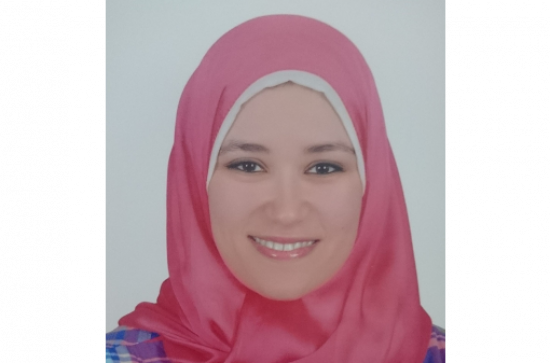
Abeer Eshra is a Postdoctoral Researcher at the Hamilton Institute, Maynooth University, specializing in cutting-edge DNA computing research. She works from the Eolas Building, 3rd Floor, Room 340, and serves as Principal Investigator for significant research projects advancing molecular computing. Dr. Eshra's research focuses on developing innovative DNA-based computing systems that address critical limitations in the field. Her work spans DNA logic circuits, renewable computing architectures, and biomolecular reaction networks. She has made substantial contributions to creating reusable DNA computing systems that overcome the traditional one-time-use limitation of DNA circuits through thermal regulation and photoregulation techniques. Her research program demonstrates a clear trajectory from fundamental DNA computing concepts toward practical applications in nanotechnology, drug delivery, and biosensing. The interdisciplinary nature of her work bridges computer science, molecular biology, and nanotechnology, positioning her at the forefront of molecular computing innovation. Principal Investigator for €658,510 project: "Thermally-regulated Renewable and Automated DNA Computing Devices" (2025-2029) Multiple high-impact publications in top journals including Nature Nanotechnology and Journal of the American Chemical Society Research advancing sustainable and energy-efficient computational paradigms through molecular approaches Dr. Eshra's work has significant implications for future computing technologies, offering potential breakthroughs in sustainable computing, nanobiosensors, and targeted therapeutic delivery systems. Her research represents a critical step toward making DNA computing practical for real-world applications beyond theoretical demonstrations.
Emanuel Popovici is a Senior Lecturer in Electrical and Electronic Engineering at University College Cork (UCC), Ireland. He holds a Dipl. Ing. in Computer Engineering from the University Politehnica Timisoara, Romania, and a PhD in Microelectronics from UCC. His research focuses on AI at the edge, low-power embedded systems, and secure computing, with applications in healthcare, energy, and IoT. Notable projects include award-winning work in neonatal EEG monitoring, smart beehive systems, and energy-efficient wireless nodes. He has authored over 250 papers and received prestigious awards like the Qualcomm Faculty Award (2024) and three IEEE/IBM Smarter Planet Challenge titles. Education: Dipl. Ing. in Computer Engineering, University Politehnica Timisoara (Hardware Design focus) PhD in Microelectronics, UCC (National Microelectronics Research Centre) Research interests span AI-driven hardware, secure communications, and interdisciplinary collaborations across engineering, medicine, and environmental science. His work emphasizes practical solutions for real-world challenges, such as energy-efficient sensor networks and medical diagnostic tools. Scientific achievements include over 50 awards, including the Reed and Mallick Medal (2020) for urban planning contributions. His lab pioneered innovations like the neonatal EEG sonification system and blockchain-based IoT security frameworks. Collaborative projects span disciplines like anatomy, medicine, physics, and business. His group's work on ultra-low-power wireless nodes and FPGA-based cryptographic processors highlights their focus on energy efficiency and reliability.
Dr. Deirdre Kilbane is the Director of Research at the Walton Institute for Information and Communications Systems Science, Department of Computing and Mathematics, Waterford Institute of Technology (SETU). She is also an Adjunct Lecturer in the School of Physics at University College Dublin (UCD), contributing to academic teaching and research supervision. Her strategic leadership drives innovation in AgriTech, Healthcare, Smart Cities, Energy, and ICT. Education: PhD in Mathematical Physics, Maynooth University (1999–2004) BSc in Experimental Physics, University College Dublin (1995–1999) Her research focuses on nanotechnology, artificial intelligence, quantum physics, and molecular communications , with applications in brain implants for epilepsy, quantum key distribution, and smart agricultural systems. She leverages interdisciplinary approaches to solve real-world challenges in healthcare and communications. Her work aligns with UN Sustainable Development Goals, particularly in health and innovation. The most recent publications highlight a strong trend in quantum communication systems , especially satellite-based QKD, and AI-driven edge solutions for industrial IoT, including dairy processing. There is also significant focus on nanoscale biosensing for neurological conditions, reflecting her involvement in the EU Horizon 2020 PRIME project. These works span quantum engineering, AI, and biomedical applications, indicating a highly interdisciplinary research profile. Scientific Awards and Recognition: Coordinator and Principal Investigator, EU Horizon 2020 FETOpen PRIME project Member, Science Foundation Ireland Research Centres: CONNECT and FutureNeuro Featured among '9 women in deep tech you should be following' (2024) Regular invited speaker on quantum technologies and EuroQCI Dr. Kilbane actively advises PhD students, including Rahul Mhapsekar, and leads major research grants from Horizon Europe and SFI. Her projects often involve cross-institutional and international collaborations, particularly in quantum communication and 6G technologies. She has secured significant funding, including SETU’s largest Horizon Europe drawdown to date. Her leadership extends to public engagement, policy input, and media commentary on emerging technologies. She is a key member of the Walton Institute’s research divisions, which focus on future networks, communications, and intelligent systems. Her team works on cutting-edge projects in quantum communication, AI for IoT, and neurotechnology, often in collaboration with CONNECT and FutureNeuro. The institute serves as a national hub for innovation in ICT and smart systems, with Dr. Kilbane playing a central role in shaping its research direction.
Dr. Meisam Gordan is an Assistant Professor in Civil Engineering at University College Dublin (UCD), affiliated with the School of Civil Engineering. Previously, he held Postdoctoral Research Fellow positions at UCD (2022–2024) and the University of Malaya (2021–2022), and was a Graduate Research Assistant at the University of Malaya (2019–2020). He earned his PhD in Civil Engineering (2020) from the University of Malaya, specializing in Structural Health Monitoring, Data Mining, and Artificial Intelligence, supported by a High Impact Research Scholarship. **Education**: PhD in Civil Engineering, University of Malaya (2020) MSc in Civil Engineering, University Technology of Malaysia (UTM) **Research Interests**: Focuses on integrating Civil Engineering with Computer Science using Industry 4.0 technologies such as IoT, Big Data, Blockchain, Digital Twins, and Circular Economy. Key areas include Structural Health Monitoring, Machine Learning, Vibration Control, and Smart Infrastructure. Current projects include the Di-Rail project (railway fault diagnosis) and the Horizon 2020-funded PRECINCT (critical infrastructure resilience). **Publications**: Over 40 peer-reviewed articles, with recent work emphasizing hybrid digital twins, smart cities, and cybersecurity. His articles analyze trends in SHM with AI, edge-IoV networks, and resilience frameworks for critical infrastructure. **Awards**: High Impact Research Scholarship (2014), recognized as a reliable peer reviewer for journals like Structural Health Monitoring and IEEE Access. **Teaching**: Coordinates modules on Environmental Engineering, Transportation, and Structural Dynamics at UCD. Teaches courses like CVEN30170 Analysis of Structures 2 and CVEN20070 Computer Applications in Civil Engineering. **Grants/Projects**: Lead roles in PRECINCT and Di-Rail. Previously contributed to projects on recycled rubber energy dissipation systems and blockchain-based sensor data storage. **Labs/Teams**: Collaborates with the Structural Dynamics and Assessment Laboratory (SDA-Lab) at UCD and the PRECINCT Living Labs. Active in the UCD Civil Engineering research community.
John O'Raw is a Lecturer in the Department of Computing at Donegal Letterkenny. His academic focus spans network security, time synchronization, and critical infrastructure protection, with emphasis on power systems, GNSS spoofing detection, and industrial IoT security. His research explores Precision Time Protocol (PTP) optimization in distributed networks Threat mitigation for GNSS-based timing systems Secure data communications in energy infrastructure Human behavior modeling for emergency evacuation planning His publications analyze cybersecurity frameworks for electrical substations, industrial IoT vulnerabilities, and practical implementations of standards like IEC 61850 and OAuth 2.0, with recent work on microwave IP networks and LinuxPTP for time synchronization.
Dr. Michael O'Grady is a Senior Research Fellow at University College Dublin’s School of Computer Science. He holds a Grad Dip in University Teaching & Learning from UCD. His research focuses on smart technologies, including pervasive health, energy management, climate-smart agriculture, and participatory citizen science. He has led over 200 publications, achieving a H-index of 28, and contributed to EU initiatives like ISEED and Interreg AGEO. He serves on editorial boards and conference committees, including co-chairing Mobihealth 2020. His research interests emphasize transdisciplinary approaches to citizen observatories, smart city governance, and Responsible Research and Innovation (RRI). Notable contributions include the MÉRA Data Extraction toolkit for meteorological data and the development of the Citizen Observatory platform for community-based environmental monitoring. He has also explored edge computing’s role in smart agriculture and healthcare applications like wearable IoT-enabled health monitoring systems. Recent work addresses challenges in citizen science data practices, including surveys of citizen scientist experiences and open science principles. His articles highlight innovations in sensor technology, activity recognition, and participatory disaster risk reduction. Professional memberships include the European Alliance for Innovation (distinguished member), ACM, and IEEE (senior member). Teaching interests include problem-based learning in computing education and reflective pedagogical practices. He has coordinated modules at undergraduate and postgraduate levels, emphasizing transformative learning for sustainable development. Grants include the MAIA project (2003–2005), exploring mobile adaptive interface agents. Current collaborations involve COST action PARQ (cardiac arrest prediction) and EU citizen science initiatives. His work bridges technology, policy, and societal needs, with a focus on participatory frameworks for sustainable development.
Viet Quoc Pham is an Assistant Professor in Networks and Distributed Systems at Trinity College Dublin's School of Computer Science and Statistics and a CONNECT Associate Investigator. His research integrates convex optimization, game theory, and machine learning to advance edge computing, wireless AI, and next-generation networking for 6G, IoT, and blockchain applications. Education: PhD in Telecommunications Engineering, Inje University, Korea (2017) His work centers on three interconnected thrusts: (1) Computing innovations in edge AI, aerial computing, and edge of things; (2) Intelligence through wireless AI and federated learning; and (3) Networking advancements in 6G, IoT, intelligent surfaces, metaverse, and blockchain. This cross-disciplinary approach optimizes cloud-edge systems and wireless infrastructure using mathematical frameworks. Recent publications (2021-2024) demonstrate applied impact across security (smart speaker intrusion detection), environmental science (satellite carbon monitoring), healthcare (mental disorder detection), and e-commerce (basket recommendation systems), reflecting his methodology of adapting AI/optimization to domain-specific challenges. Scientific Awards: Korea NRF funding for outstanding young researchers (2019-2024) Best Ph.D. Dissertation Award, Inje University (2017) Top Reviewer Award, IEEE Transactions on Vehicular Technology (2020) Golden Globe Award, Vietnam Ministry of Science (2021) IEEE ATC Best Paper Award (2022) Enterprise Ireland Coordination Support Award (2023) Dr. Pham secured competitive funding including Korea NRF and Enterprise Ireland grants. As Editor for Journal of Network and Computer Applications and Scientific Reports, and Lead/Guest Editor for IEEE Internet of Things Journal, IEEE Transactions on Consumer Electronics, and Computer Communications, he shapes discourse in networking and computer systems through rigorous peer review and special issues. Through the CONNECT Centre, he collaborates with industry partners on Ireland's national research initiative for future networks, focusing on practical implementations of 6G architectures, IoT security protocols, and edge AI frameworks for real-world deployment.
Utz Roedig is a Full Professor of Computer Science at University College Cork (UCC), Ireland, and a Principal Investigator at the CONNECT Centre. Previously, he served as Professor at Lancaster University, UK, leading the Academic Centre of Excellence in Cyber Security Research (ACE-CSR), and held research positions at UCC and Darmstadt University of Technology, Germany. Education: Dipl.-Ing in Engineering from Darmstadt University of Technology Dr.-Ing (Doctor of Engineering) from Darmstadt University of Technology His research spans computer networks and network security , with over 150 publications in IoT security, industrial control systems, 5G networks, and voice assistant vulnerabilities. Recent work integrates machine learning for intrusion detection and fault prediction while addressing human factors in secure coding. Industry collaborations have yielded multiple patents. Analysis of 2023-2025 publications reveals dominant themes in industrial IoT security (e.g., resilient time-sensitive networking), 5G infrastructure protection, and voice assistant threats (wake word jamming/spoofing). His team develops countermeasures using protocol design and ML-driven anomaly detection, with growing emphasis on human-centric security challenges. Scientific Awards: No specific awards are documented, though research impact is evidenced by patents and sustained funding from major international bodies. Advising and Grants: Secured funding from EU, EPSRC, and industry partners. Serves as grant reviewer for EPSRC (UK), ESF (EU), and FWO (Belgium), and on TPCs for DCOSS, EWSN, and IPSN conferences. Student supervision details are unavailable, but research leadership implies active mentoring. Grants: EU, EPSRC, Industry Review Roles: EPSRC, ESF, FWO Labs and Teams: Leads research at UCC's CONNECT Centre (telecommunications security). Previously directed Lancaster University's ACE-CSR, a UK government-designated cybersecurity research hub.
Professor Martin J. Hayes serves in the Department of Electronic and Computer Engineering at the University of Limerick's Faculty of Science and Engineering. His institutional affiliation includes campus location ERB2-021 and contact details: email Martin.J.Hayes@ul.ie and phone +353 (0)61 202577. His research concentrates on Artificial Intelligence and Computer Vision applications within Smart Manufacturing and Autonomous Vehicles . Key specialties include deep learning for defect detection, visual question answering systems, and real-time failure monitoring in industrial environments. He also investigates interoperable IoT security frameworks and private 5G network implementations for Industry 4.0. Analysis of recent publications (2023-2025) reveals dominant themes in AI-driven manufacturing solutions and autonomous driving technologies. His work consistently addresses data-constrained training environments and real-time performance requirements, with growing emphasis on human-machine interaction patterns and subjective evaluation frameworks for vision systems. Scientific Awards: No scientific awards were documented in available sources Advising and Grants: While specific student advisement records and grant details were not provided, Professor Hayes' extensive publication output across manufacturing automation, autonomous systems, and wireless communications indicates active leadership in multiple research initiatives. His involvement in the REEdI (Rethinking Engineering Education in Ireland) project demonstrates commitment to educational innovation alongside technical research.