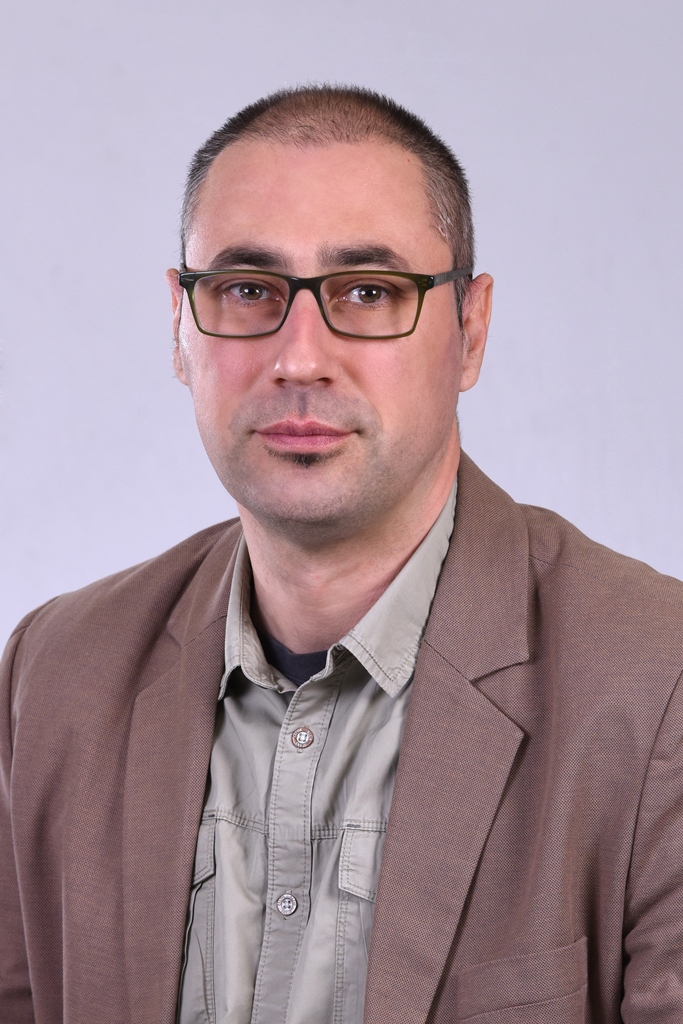
Francesco Mancini is Vice Dean (Executive Education) and Associate Professor at the Lee Kuan Yew School of Public Policy , National University of Singapore. Additionally, he serves as an Adjunct Associate Professor at Columbia University's School of International and Public Affairs (SIPA) and previously taught at New York University. Education: Bocconi University (BSc in Business Administration), Columbia University (Master of International Affairs with Saltzman Institute Fellowship ) Research Focus: Global governance, UN system analysis, conflict resolution mechanisms, security-development intersections, and technology-enabled peacekeeping His scholarship spans 15 major works covering: 2010-2017: 7 publications on UN peacekeeping reform and coordination 2016: 2 studies on crisis resilience in Asian cities 2013: Research on digital conflict prevention tools 2011: Analysis of public-private security partnerships Scientific Recognition 2009 Saltzman Institute Fellowship at Columbia University Honorary Senior Fellow at NUS Middle East Institute Associate Fellow at Leiden University Peace Informatics Lab Professional Contributions 2014-2017: Senior Director of Research at International Peace Institute (IPI) 2004-2014: Adjunct Professor at Columbia University 2002-2004: Senior Associate at EastWest Institute
Irena Vodenska is Professor of Finance and Director of Finance Programs at Boston University’s Metropolitan College, Department of Administrative Sciences. She holds a PhD in statistical finance and an MA in economics from Boston University, an MBA from Vanderbilt University, and a BS in computer information systems from the University of Belgrade. She is also a Chartered Financial Analyst (CFA) charter holder. Her research is at the intersection of finance, complexity science, and artificial intelligence, focusing on systemic risk modeling, ESG investments, and financial network dynamics. She has led major interdisciplinary research projects funded by the National Science Foundation, the European Commission, and the U.S. Army Research Office. PhD, Statistical Finance – Boston University MA, Economics – Boston University MBA – Owen Graduate School of Management, Vanderbilt University BS, Computer Information Systems – University of Belgrade Dr. Vodenska’s research interests include network theory in finance, systemic risk propagation, AI-powered ESG analysis, cryptocurrency price forecasting, and financial regulation. She employs big data, machine learning, and natural language processing to analyze financial news, market dynamics, and corporate sustainability. Her work investigates how climate disinformation spreads via social networks and influences public policy and governance. The recent articles highlight a consistent focus on modeling financial and economic systems using network science and AI. Trends include systemic stress testing, sentiment analysis in financial markets, cascading failures, and the interplay between macroeconomic indicators and financial networks. Her work spans econophysics, behavioral finance, public health economics, and ethical AI in fintech. National Science Foundation (NSF) research grant (2023) NSF EAGER Award (2014–2015) European Commission FET Open Grant (2012–2014) U.S. Army Research Office (ARO) Grant (2020–2021) MEXT Post-K Computer Grant, Japan (2016–2019) Alexander Hamilton Fulbright Fellowship (1994) Owen Graduate School Fellowship (1995–1996) Dr. Vodenska teaches core finance courses such as Investment Analysis and Portfolio Management, Derivatives Securities, and Financial Regulation and Ethics. She co-developed the MET AD 678 course with Professor Tamar Frankel from BU Law, emphasizing real-world case studies and ethical decision-making. Her research grants have supported innovative work in systemic risk modeling, AI for ESG, and financial network stability. She is actively involved in mentoring, conference organization, and editorial roles in leading journals. She is a key organizer of the International School and Conference on Network Science (NetSci) and the Big Data in Economics, Science, and Technology (BEST) Conference. Her lab and research team focus on complexity in financial systems, bringing together economists, physicists, computer scientists, and data analysts to study global financial stability and sustainability.
Maryse Bouchard is an Associate Professor at the Université de Montréal's Département de santé environnementale et santé au travail and a researcher at the Centre de recherche du Centre Hospitalier Universitaire Sainte-Justine. She holds the Canada Research Chair in Environmental Contaminants and Population Health. Her research focuses on the health effects of environmental contaminants, particularly neurotoxic and endocrine-disrupting chemicals like pesticides, manganese, and BPA. She leads epidemiological studies examining vulnerable populations, including children and occupational workers, and has contributed to understanding pollutant impacts on neurodevelopment and metabolic health. Education: Ph.D. in Environmental Sciences, Université du Québec à Montréal (2007) M.Sc. in Biological Sciences, Université du Québec à Montréal (2001) Postdoctoral training in Environmental Epidemiology at Harvard School of Public Health and UC Berkeley (2013) Research Interests: Her work integrates epidemiological approaches to study contaminants' effects on neurodevelopment, endocrine systems, and metabolic disorders. Key areas include pesticide neurotoxicity, manganese exposure in drinking water, and longitudinal studies of prenatal chemical exposure. She emphasizes population-level surveillance and policy-relevant findings. Grants & Awards: Canada Research Chair (2019-2024) CIHR and FRQS grants for studies on PFAS, BPA, and hydraulic fracturing chemicals Collaborations with international networks, including the EU-funded research programs and the Paris Descartes University Teaching & Mentorship: She supervises graduate students in environmental health and public health programs, focusing on quantitative analysis and epidemiology. Current projects include studies on personal care product chemicals and PFAS exposure in children. Labs & Teams: Affiliated with the Centre de recherche Azrieli du CHU Sainte-Justine and collaborates with global networks on environmental health and policy initiatives.
Professor Nikolaus Wolf is a faculty member at the Department of Economics, Humboldt University of Berlin, and a CESifo Research Network Fellow. He is affiliated with the Global Economy research area at CESifo. His work focuses on international trade, economic history, macroeconomics, and monetary policy, with a particular emphasis on historical economic dynamics and globalization processes. Research Interests: Professor Wolf explores the interplay between economic systems and historical contexts, including the impact of energy transitions (e.g., coal and oil), cultural factors like dialects and religion on trade, and the structural challenges of economic integration. His research often spans long-term historical periods, such as the interwar years and the Austro-Hungarian Empire era. Recent Work Trends: His publications since 2008 highlight themes such as the persistence of borders on trade, the origins of microfinance, and regional economic disparities in Europe. He frequently collaborates with institutions like CESifo, producing policy-relevant analyses on globalization, historical economic policies, and the consequences of geopolitical shifts. Awards & Affiliations: While no specific awards are listed, his affiliation with CESifo as a distinguished researcher underscores his academic standing. His work is disseminated through CESifo Working Papers, contributing to debates on global economic institutions and historical economic phenomena. Advising & Grants: No advising or grant information is explicitly provided in the text, but his extensive co-authorship network suggests active collaboration in research teams. His work is supported by institutional affiliations like Humboldt University and CESifo. Labs/Teams: While no specific labs are mentioned, his affiliation with CESifo implies participation in collaborative research networks focused on global economic issues.
Professor James Griffin is a leading scholar at the University of Exeter Law School specializing in Intellectual Property Law's intersection with emerging technologies. His research examines copyright frameworks for quantum computing, biological systems, and 3D printing, with significant contributions to digital watermarking and automated licensing systems. As Vice Chair of BILETA (2024-2027), he bridges academic research and policy development. His educational foundation includes a PhD from the University of Bristol (2002-2005), supported by a Law Department Scholarship and Graduate Teaching Assistantship. This training underpins his interdisciplinary approach combining legal theory with technological innovation. Griffin's research explores how Intellectual Property laws must evolve to address disruptive technologies. His monograph The State of Cultural Biology (2023) argues for historical awareness in regulating biological computing, while The State of Creativity (2019) examines societal development through creative frameworks. Current interests span copyright rationality, meme culture, and AI's impact on authorship, always emphasizing the legal-philosophical dimensions of technological change. Analysis of his recent publications reveals three dominant trajectories: blockchain authentication for 3D printing IP (2023), quantum computing's copyright implications (2024), and crisis-driven IP access models (2021). His work consistently bridges theoretical innovation with practical applications, particularly in watermarking technologies and cross-jurisdictional dispute resolution. Griffin has secured substantial research funding as Principal or Co-Investigator: 2024-2025: £167,156 Neuron Intelligence project (PI) 2021-2023: £82,218 AHRC grant for 3D printing in China 2015-2017: £97,000 AHRC-Newton Fund project on Chinese 3D printing Multiple EPSRC grants totaling over £60,000 for IP-technology convergence He leads the AHRC-funded 3D printing consortium involving Nottingham Ningbo, Essex, and Durham universities, driving practical implementations including patented watermarking systems (CN-107330844B). His current work with Yawning Titan on neuron intelligence exemplifies his commitment to translating theoretical frameworks into operational technologies for quantum watermarking and digital rights management.
Dr Zichong Lyu is a researcher at the Hertfordshire Business School, specializing in optimization and decision-making in complex systems. His work integrates operations research, business analytics, and data science to address challenges in healthcare workforce planning, patient pathway optimization, and logistics operations. Education PhD in Mechanical Engineering (University of Canterbury, Christchurch) Research Interests : Focused on enhancing system resilience through stochastic modeling, hub-and-spoke architectures, and discrete-event simulation. Key applications include sustainable freight networks, last-mile delivery optimization, and climate change adaptation in logistics. Article Trends : Recent publications emphasize sustainable transportation systems, with a focus on electric vehicle adoption, stochastic optimization of urban freight networks, and resilience planning for climate-related disruptions. Methodologies include simulation-based modeling, cluster analysis, and multi-objective optimization frameworks. Research Groups : Active member of the Business and Digital Research Group and Sustainability Research Group at the University of Hertfordshire.
Dr. Darko Dimitrovski serves as a Full Professor at the Faculty of Hotel Management and Tourism, University of Kragujevac, specializing in Tourism and Hotel Management. His academic journey spans over two decades with progressive appointments from assistant (2013) to associate professor (2019) and finally full professor (2023). His educational background includes: Bachelor's in Geography from University of Belgrade (2002) Master's in Tourism and Hotel Management from University of Novi Sad (2009) PhD in Geography from University of Belgrade (2013) Postdoctoral research at University of Tras-os-Montes, Portugal (2016-2017) Dimitrovski's research focuses on tourism management with specialized expertise in wine tourism, food markets, event tourism, and sustainable practices. His work examines tourist behavior in urban food markets (e.g., Barcelona's La Boqueria), wine tourism apps, crisis management in hospitality, and economic impacts of sporting events. Recent publications explore digital transformation in tourism through mobile apps and green leadership frameworks. His publication trends reveal deep engagement with: Wine and food tourism dynamics Digital platforms and mobile technology in tourism Sustainable destination management Methodological approaches in tourism economics Urban tourism experiences Professionally, Dimitrovski contributes as Associate Editor for Tourism Management Perspectives and serves on editorial boards of multiple tourism journals including European Journal of Tourism Research. His project portfolio includes European Union-funded initiatives like INNOVINE & WINE and COST Action OceanGov, focusing on wine tourism innovation and ocean governance. His teaching portfolio spans undergraduate to doctoral levels, covering Management of Travel Agencies, Business Tourism, Crisis Management, and Event Tourism. Early career included teaching positions at various Kragujevac technical schools (2002-2013) before joining the University of Kragujevac faculty in 2013.
Dr. Donna Wake serves as Professor and Director of Assessment and Accreditation at the University of Central Arkansas College of Education, leveraging her Ed.D. in Curriculum, Instruction, and Technology in Education from Temple University with specialized focus on literature and language arts. Her leadership spans accreditation oversight and scholarly contributions to teacher education reform. Her academic credentials include: Ed.D. in Curriculum, Instruction, and Technology in Education (Literature/Language Arts) - Temple University M.A. in Education - La Salle University M.A. in Art History - University of Arkansas at Little Rock B.A. in English Literature - Hendrix College Dr. Wake's research establishes her as a leading voice in literacy development , educational technology integration , and equity-focused pedagogy . She pioneers work on critical literacy frameworks for diverse classrooms, arts-infused instructional strategies , and teacher narrative analysis . Her scholarship consistently addresses systemic barriers in rural education while advocating for culturally responsive teaching and multiliteracies as tools for empowerment. Current investigations examine digital equity in remote learning contexts and school librarians' evolving leadership roles. Analysis of her 2019-2025 publications reveals three dominant trajectories: (1) Technology-mediated equity solutions addressing the digital divide in Southern rural schools, (2) School librarian innovation in creating collaborative digital spaces during pandemic disruptions, and (3) Critical examinations of discipline disproportionality through Grow Your Own teacher pipeline initiatives. Her work bridges theoretical frameworks with Arkansas-specific implementation challenges. No scientific awards are documented in available sources. As an educator, Dr. Wake teaches graduate courses including Digital Equity & Culturally Responsive Teaching in the Digital Age (EDDL 7342), Literacy Seminar for Teachers (MAT 6320), and Qualitative Research (CLEI 8315). Though specific advisees aren't listed, her role involves mentoring future educators through the Ph.D. in Change Leadership program. She contributes to grant initiatives including GEAR UP and Upward Bound, focusing on college access for underrepresented Arkansas students. Dr. Wake actively engages with the Arkansas Leadership Academy and Arkansas Public School Resource Center, developing statewide professional learning communities that connect university research with K-12 practice. Her current projects examine technology acceptance among preservice librarians and longitudinal demographic impacts on ESSA accountability metrics.
Işık Özge Yumurtacı Hüseyinoğlu is an Associate Professor at the Department of Logistics Management, Izmir University of Economics , where she has been employed since 2005. She holds a PhD in Logistics and has been a visiting researcher at Cranfield University (UK) and University of Bremen (Germany) . Her academic journey includes roles as Research Assistant (2005-2007), Instructor (2009-2012), and Post-doctoral researcher in 2014-2015. Education: BA in Business Administration (Dokuz Eylul University, 2005), MA in Logistics Management (Izmir University of Economics, 2007), PhD in Logistics (Izmir University of Economics, 2011). Her research focuses on supply chain management, retail logistics, and retail marketing , with a particular emphasis on omni-channel retailing, sustainable logistics, and pandemic-related disruptions. Her recent publications explore: 2024 studies on food supply chain performance, home delivery sustainability, and pandemic logistics research foundations. 2023 work addressing accessibility barriers in retail services and agricultural supply chain dynamics. 2022 analyses of cost-effective logistics systems and SME retail capabilities. She has received scholarships for her MA and PhD studies and collaborates with international scholars like Herbert Kotzab and Christoph Teller. Her work spans both theoretical and applied perspectives, including case studies (e.g., Whirlpool) and cross-country comparisons (Germany-Turkey).
Masauso Chirwa serves as a Lecturer at the University of Zambia since 2008 and holds a Visiting QES Scholar position at Queen's University since 2019. His academic foundation spans social sciences, public health, and disability studies across multiple continents. His educational trajectory includes: Post Doctoral in Public Health at Queen's University (2019-present) PhD in CLL from University of Warwick (2013-2018) Advanced Certificate in Participatory Planning from Wageningen University (2013) Dual MSc degrees in Peace and Development Studies and International Social Work from Linnéuniversitet (2009-2011) BA in Social Development Studies from University of Zambia (2004-2008) Chirwa's research interrogates systemic barriers faced by marginalized populations, with particular focus on intellectual and developmental disabilities in African contexts. His work bridges public health infrastructure analysis, maternal-child health disparities, and social policy impacts on vulnerable groups. Methodologically, he employs mixed-methods approaches combining large-scale cross-national surveys with deep qualitative investigations of lived experiences in Zambian communities. His 2020-2024 publications reveal three dominant trajectories: pandemic impacts on IDD populations (6 studies), European adolescent bullying dynamics (3 studies), and historical/critical analyses of Zambian disability systems (2 studies). These demonstrate consistent engagement with health equity frameworks while expanding geographically from localized Zambian studies to pan-European collaborations. His scientific recognition includes: Vice Chancellor's Scholarship from University of Warwick (2013) NUFFIC Scholarship from Wageningen University (2013) IASSIDD Travel Grant (2016) Queen's University QES Scholar award (2019) Chirwa has secured major research funding including the University of Warwick-funded 'Experiences of Mothers of Children with Disabilities' project (2013-2017), IASSIDD's 'Inclusive Education' award (2016), and Queen's University's 'Disabled Mothers Accessibility to Maternal and Child Health Services' grant (2019). His collaborative approach involves mentoring through team-based research despite no formal advisees listed in public records. He actively shapes policy through leadership roles in the International Association for the Scientific Study of Intellectual and Developmental Disabilities (Treasurer and Executive Committee Member since 2013), alongside memberships in the Southern Africa Social Protection Expert Network, Zambia Monitoring and Evaluation Association, and Social Workers’ Association of Zambia.
Prof. Dr. Jan Nagler is an Associate Professor of Computer Science at Frankfurt School of Finance & Management and Director of the Center for Human and Machine Intelligence since 2023. His career spans institutions like Boston University, Max-Planck-Institute for Dynamics and Self-Organization, and ETH Zurich. PhD in Dynamical Systems (Chaos in Astrophysics) Postdoctoral research: Networks, Econophysics, and Risk Modeling Research interests: Networked Stochastic Systems, Game Theory, Phase Transitions, Ethically Aligned AI His work bridges physics, biology, and socio-economic systems, focusing on explanatory and predictive modeling of real-world dynamics. Recent publications analyze network disruption , percolation universality , and contagion dynamics . He leads the Deep Dynamics Group , which explores ethical AI design and cross-disciplinary system dynamics in finance, ecology, and socio-technological systems.
Alessandro Bombelli is a Professor at Delft University of Technology (TU Delft) in the field of Aerospace Engineering, Operations & Environment . His research bridges operations research, logistics, and transportation systems, with a focus on air transport, maritime logistics, and optimization frameworks. He actively collaborates with colleagues like I.A. Parmaksizoglou, A. Sharpanskykh, and B. Atasoy to innovate transport solutions. Recent research emphasizes multimodal collaboration in marine terminals, air cargo resilience during disruptions (e.g., extreme weather, pandemics), and interactive learning for optimization. His work spans technical domains like vehicle routing , distributed constraint optimization , and complex network theory , addressing real-world challenges in transport efficiency. Scientific Awards : TU Delft Educator of the Year 2023 Open Education Stimulation Fund 2022 Bombelli contributes to open-access publications and datasets, including the Air Cargo Transport Network (ACTN) Dataset , demonstrating his commitment to accessible research. His recent articles highlight interdisciplinary approaches to logistics and optimization, with applications in both aerial and maritime domains.
Matthias Rieger is a Full Professor at the Erasmus School of Health Policy & Management, Global Health department at Erasmus University Rotterdam. His academic profile demonstrates a strong commitment to interdisciplinary research at the intersection of economics and health policy. Professor Rieger's research focuses on Development Economics, Health Economics, and Behavioral/Experimental Economics. His work employs rigorous methodological approaches including synthetic control methods, field experiments, and survey experiments to address pressing global health challenges. His fingerprint analysis reveals particular expertise in corruption economics, public service delivery, and team teaching methodologies. His publication record shows consistent output with 43 research contributions including 39 articles, 3 working papers, and 1 book chapter. His most recent work spans diverse geographical contexts including Indonesia, Mexico, Cambodia, Brazil, and South Africa, demonstrating a strong international research presence. 12 citations for food choice experiments with children in Indonesia 37 citations for trade in foods research in Mexico 14 citations for self-help groups research in Cambodia 27 citations for particle pollution and cognition studies in Brazil Professor Rieger has supervised 5 research projects and maintains active collaborations across multiple countries, with particular emphasis on Global South contexts where health and economic challenges intersect. His research has been referenced in policy documents and shared widely through academic networks.
Annalisa Croce is a Full Professor at the Graduate School of Management, Politecnico di Milano, where she teaches courses including Business Data Analytics and Economia e Organizzazione Aziendale (Business Economics and Organization) at undergraduate and graduate levels since 2014. She serves as Director of the Executive MBA Part Time program and Teaching Area Coordinator for Finance. Her educational background includes: PhD in Management Economics and Industrial Engineering, Politecnico di Milano Master of Science in Management Engineering, Politecnico di Milano Professor Croce's research specializes in empirical analyses of entrepreneurial finance, with core expertise in venture capital, business angel investments, and corporate governance in high-tech firms. Her work spans corporate finance dynamics, innovation economics, efficiency estimation across sectors, and emerging fields like social impact finance and climate finance. She employs diverse empirical methodologies to examine financing mechanisms, ownership structures, and innovation determinants in entrepreneurial ventures. Analysis of her 15 most recent publications reveals intensifying focus on gender diversity in venture capital, internationalization of angel investments, cleantech policy frameworks, and digital transformation in entrepreneurial finance. The trajectory shows growing integration of machine learning approaches and heightened attention to sustainability themes, particularly climate finance and social impact investing since 2021. Her honors include: Gate2Growth 2006 Second Best Paper Award for 'Venture Capital and the Investments of New Technology Based Firms' European Community Short-Term Scientific Mission grant (COST-STSM-IS0604-06244) at Universidad Complutense de Madrid Professor Croce directs the Bureau of Entrepreneurial Finance and serves on the Scientific Committee of Politecnico di Milano's Observatory of Climate Finance. She holds extensive editorial responsibilities including Board of Review membership for Journal of Business Venturing, Editorial Review Board for Entrepreneurship Theory and Practice, and guest editorship for Technological Forecasting and Social Change special issue on digital entrepreneurial finance. Her peer review work spans top journals in economics, finance, and management.
Martina Musteen serves as the Charles W. Hostler Professor of Global Business at San Diego State University's Fowler College of Business, where she also directs the Wendy Gillespie Center for Advancing Global Business and advises academic programs. Her career spans nearly two decades at SDSU since joining in 2006 after completing her Ph.D. at the University of Kansas, with significant contributions to international business education and research. Education: Ph.D. in Business Administration, University of Kansas (2006) MBA, University of Kansas (2000) B.A. in Business Management, University of Maryland (1999) Professor Musteen's research centers on international entrepreneurship and global business strategy , with particular expertise in how entrepreneurial firms internationalize, foreign market entry modes, and spatial dimensions of international venturing. Her work bridges theoretical frameworks with practical applications in emerging markets and service offshoring, emphasizing how institutional contexts shape global business decisions. She employs both quantitative and qualitative methodologies to explore behavioral aspects of internationalization. Her 15 most recent publications reveal a strong trajectory in cross-border acquisitions , SME internationalization , and digital transformation in global business. Key themes include pandemic impacts on global value chains, crowdfunding platforms for international opportunities, and cultural intelligence development. The research consistently applies multidisciplinary lenses spanning strategic management, entrepreneurship, and institutional theory. Scientific Recognition: Program Excellence Award, NASBITE (2025) Most Influential Professor awards in MSGBD and MBA programs Teaching Excellence Award (2022) Faculty Monty Award for university contributions (2017) Professor Musteen actively mentors through three signature programs: the International Business Opportunity Development (IBOD) consulting project with international startups, the Live Case project with local companies expanding globally, and the International Business Development Practicum requiring student travel abroad. She serves as Senior Editor for the Journal of World Business and Editor-in-Chief of ie-scholars.net, significantly shaping scholarly discourse in international business while directing the Wendy Gillespie Center's initiatives. Through the Wendy Gillespie Center for Advancing Global Business, she leads initiatives connecting academic research with practical business applications, including international consulting projects that send students abroad to develop market entry strategies. Her leadership extends to conference organization, including chairing the California Entrepreneurship Educators Conference and serving on editorial boards for top journals.