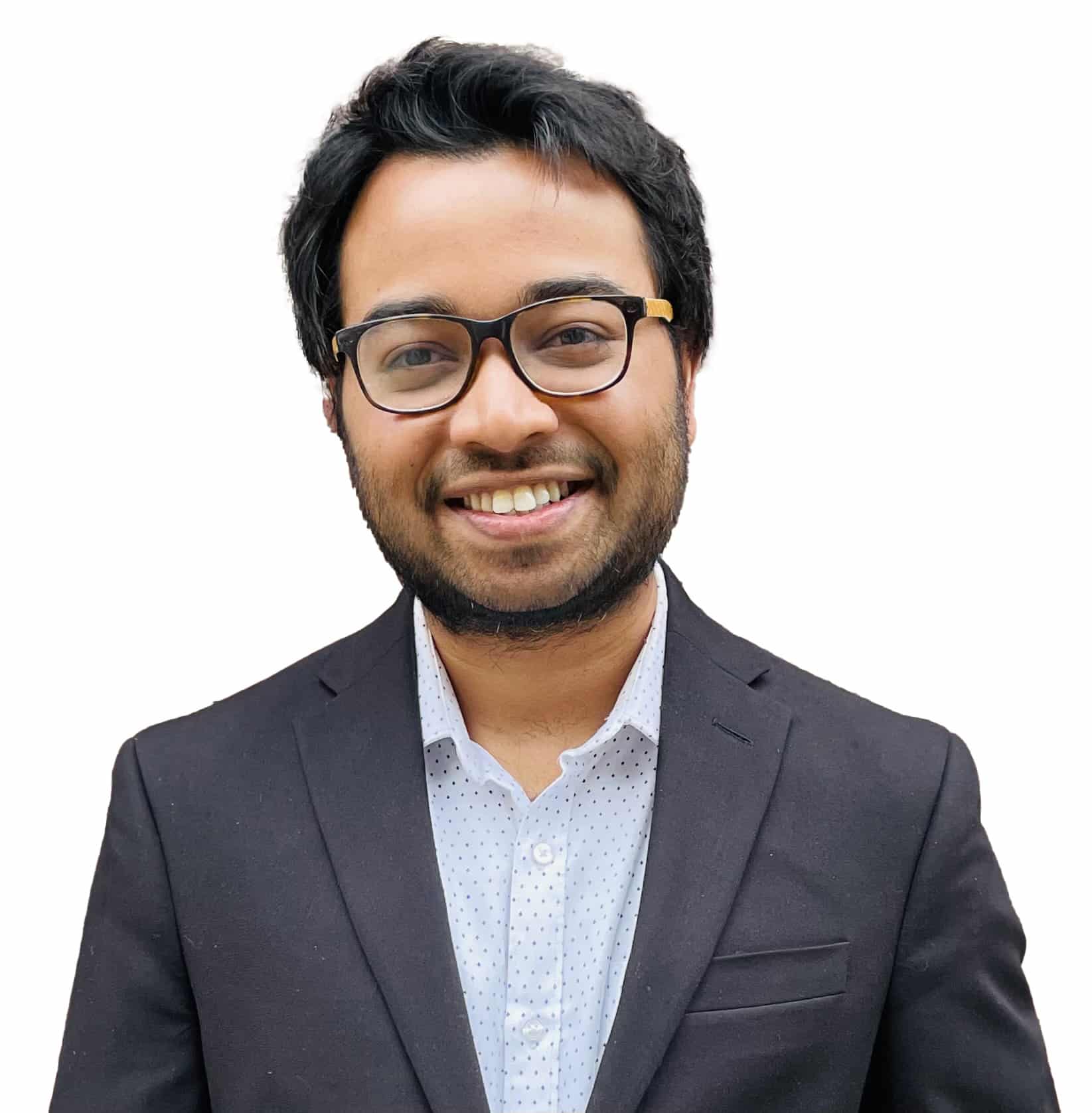
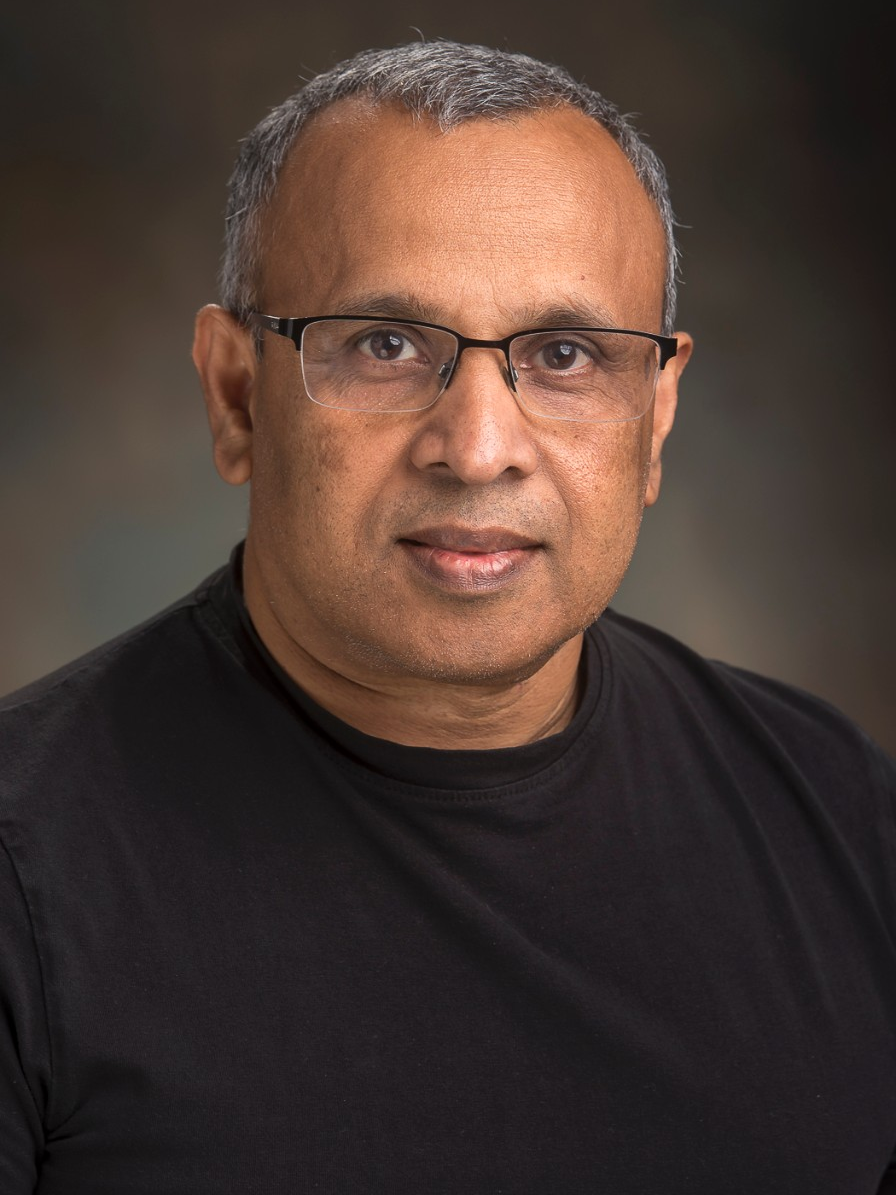
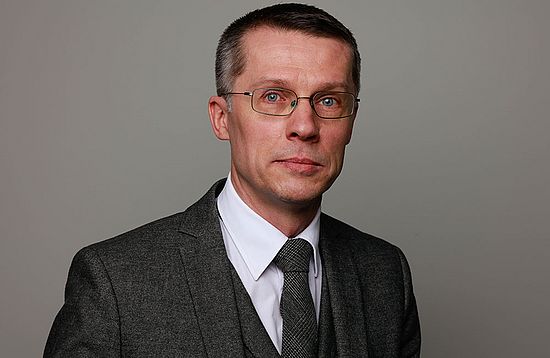
Professor Yahya Fathi specializes in optimization and operations research at North Carolina State University. His research includes mathematical programming, production systems, and quality engineering, with applications in manufacturing and data analytics. Awarded multiple teaching excellence honors.
Aritra Mitra is an Assistant Professor in the Department of Electrical and Computer Engineering at North Carolina State University. He holds a Ph.D. from Purdue University (2020), an M.Tech. from IIT Kanpur (2015), and a B.E. from Jadavpur University (2013). Before joining NC State, he was a postdoctoral researcher at the University of Pennsylvania. His research focuses on enabling reliable, efficient learning and decision-making in large-scale distributed systems, addressing challenges like computation, communication constraints, and adversarial robustness. Key areas include control theory, machine learning, signal processing, and network science. Education: Ph.D., Electrical and Computer Engineering, Purdue University (2020) M.Tech., Electrical Engineering, Indian Institute of Technology Kanpur (2015) B.E., Electrical Engineering, Jadavpur University (2013) Research Interests: Dr. Mitra’s work bridges theoretical foundations with practical applications in distributed systems. He designs algorithms for federated learning, reinforcement learning, and adversarial robustness, with applications in control systems and networked environments. Recent efforts emphasize finite-time analysis of TD learning, heterogeneous federated systems, and resilient control under communication constraints. His contributions often integrate tools from stochastic approximation, optimization, and signal processing. Publications: His articles explore cutting-edge topics like federated TD learning, robust system identification under heavy-tailed noise, and distributed multi-agent optimization. Recent trends highlight advancements in asynchronous algorithms, delay-adaptive systems, and model-free control under communication bottlenecks. Grants & Labs: While specific grants are not detailed, his research aligns with themes in distributed computing and control, suggesting potential involvement in NSF or industry-funded projects. No lab-specific details are provided in the text.
Abraham Punnen is a Professor of Operations Research at the Department of Mathematics, Simon Fraser University (SFU), Surrey. He holds a Ph.D. in Operations Research from the Indian Institute of Technology, Kanpur (1990). His research focuses on discrete optimization, combinatorial optimization, and their applications in transportation, logistics, healthcare, and satellite systems. He has supervised numerous graduate students and postdoctoral fellows, contributing to impactful projects like satellite downlink scheduling and fiber optic network design. Education: Ph.D. in Operations Research, Indian Institute of Technology, Kanpur (1990). Research Interests: Operations Research, Combinatorial Optimization, Scheduling, Transportation Logistics, Healthcare Optimization, Satellite Mission Planning, and Network Design. Grants/Projects: Completed projects include satellite downlink scheduling, ferry scheduling, and fiber optic network design. He collaborates with industries on optimization challenges. Students/Advising: Supervised over 20 M.Sc., Ph.D., and postdoctoral researchers, many of whom now work in academia, industry, and consulting.
Professor Tommy Chan is Chair in Civil Engineering at Queensland University of Technology's School of Civil and Environmental Engineering. With over $10M in research funding, his work focuses on structural health monitoring of bridges and infrastructure systems. His research group develops cutting-edge methods for assessing structural integrity using vibration analysis, optical sensors, and machine learning. Professor Chan leads major projects including the ARC-funded 'Next Generation Bridge Monitoring' initiative developing real-time monitoring systems for prestressed concrete bridges. His team's innovations include GNSS-based settlement monitoring and synergic identification methods for prestress force evaluation. Current research explores vehicle-bridge interactions, damage detection algorithms, and novel materials for impact protection. He has received numerous honors including the Vice Chancellors' Leadership Award and Top Supervisor Award. Professor Chan founded the Australian Network of Structural Health Monitoring and serves on editorial boards for multiple journals in structural engineering.
Dr. Jianqiang Cheng is an Associate Professor in the Department of Systems and Industrial Engineering at the University of Arizona, College of Engineering. He is also a member of the Graduate Faculty and affiliated with the Applied Mathematics and Statistics Graduate Interdisciplinary Programs. His research is centered on optimization under uncertainty with applications in energy systems and logistics. Research Interests: His primary research areas include stochastic programming, robust optimization, distributionally robust optimization, semidefinite programming, and chance-constrained optimization. He applies these methodologies to challenges in power systems, renewable energy integration, microgrid design, and resilient supply chains. The recent publications (2020–2022) reflect a strong trend toward data-driven and computationally efficient methods in optimization. Key themes include distributionally robust optimization under moment and Wasserstein ambiguity, chance-constrained AC optimal power flow, and resilient supply chain modeling under disruptions such as the COVID-19 pandemic. His work frequently appears in top journals like INFORMS Journal on Computing , IEEE Transactions on Power Systems , and European Journal of Operational Research . Scientific Awards: Best Short Paper Award, INFORMS Workshop on Data Science (Fall 2022) NSF CAREER Award, National Science Foundation (Spring 2022) Science Foundation Arizona's 2017 Bisgrove Scholar (Spring 2017) Dr. Cheng has secured significant research funding, including the NSF CAREER Award, supporting his work in data-driven optimization. He collaborates extensively with researchers in energy systems and operations research, including K. Pan, M. Cheramin, A. M. Fathabad, and A. Lisser. While specific advisees are not listed, his role as a member of the Graduate Faculty indicates active supervision of graduate students in systems engineering, applied mathematics, and statistics. His research contributes to the development of advanced optimization models for real-world systems affected by uncertainty, particularly in energy and logistics. Though no specific lab is mentioned, his work implies involvement in computational optimization and energy systems modeling research groups within the College of Engineering.
Ahmed M. Attia is a computational mathematician at the Mathematics and Computer Science Division, Argonne National Laboratory, Lemont, IL, USA. He is also a member of the Laboratory for Applied Mathematics and Numerical Software (LANS) at Argonne. Previously, he was a postdoctoral researcher at Argonne and a research fellow at SAMSI, with affiliation to the Department of Mathematics at North Carolina State University. Education: Ph.D. in Computer Science and Applications, Virginia Tech, 2016 M.S. in Statistics and Computer Science, Mansoura University, 2008 B.S. in Mathematics, Statistics and Computer Science, Mansoura University, 2004 His research spans computational science and engineering, focusing on data assimilation, uncertainty quantification, optimal experimental design, PDE-constrained optimization, Bayesian inference, and high-performance computing . He integrates machine learning and statistical methods into scientific computing frameworks. His work enables robust and scalable solutions for inverse problems in complex physical systems. The primary trend in his recent publications centers on the development of PyOED, an open-source framework that unifies variational and Bayesian data assimilation with optimal experimental design, featuring novel optimization and machine learning solvers. This work bridges applied mathematics, computational science, and software engineering. Scientific Awards: No awards explicitly mentioned. Advising and Grants: Ahmed has mentored and collaborated with researchers such as Abhijit Chowdhary and Shady E. Ahmed on the PyOED project. His research is supported by the U.S. Department of Energy (DOE), particularly through the Office of Science and the Advanced Scientific Computing Research (ASCR) program. Labs and Teams: He is an active member of the Laboratory for Applied Mathematics and Numerical Software (LANS) at Argonne National Laboratory, contributing to national efforts in applied mathematics and scientific computing.
Dietmar Maringer is Professor of Computational Economics and Finance at the University of Basel's Faculty of Business and Economics (WWZ), where he leads research at the intersection of finance, computational methods, and artificial intelligence. His work focuses on risk management, portfolio optimization, algorithmic trading, and financial simulations. His research interests span computational finance, artificial intelligence in finance, data analysis, risk management, portfolio optimization, algorithmic and high-frequency trading, financial networks, complex adaptive systems, and market simulations. He applies advanced computational and heuristic optimization techniques to solve real-world financial problems, contributing significantly to quantitative finance and financial engineering. His recent publications demonstrate a consistent focus on applying evolutionary algorithms, reinforcement learning, and numerical optimization to portfolio management, market impact modeling, and financial forecasting. The research integrates econometrics, machine learning, and financial theory, emphasizing practical implementation and robust risk-aware decision-making. Several best-paper awards Maringer has served as Chair of the Portfolio Optimization Section of the IEEE Computational Economics and Finance Technical Committee from 2008 to 2018 and is frequently involved in organizing and program committees of international conferences. He has advised or collaborated with numerous researchers, though specific student names are not listed. His research has been supported through academic affiliations and likely institutional or conference-based grants, though explicit funding sources are not detailed. He is affiliated with several research groups, including IEEE Computational Economics and Finance TC, COMISEF, ERCIM, Centre for Innovative Finance, and the European Financial Management Association, reflecting a broad collaborative network in computational finance and economics.
Ameya Jagtap is an Assistant Professor (Tenure-Track) in the Department of Aerospace Engineering at Worcester Polytechnic Institute (WPI), USA. Prior to this, he served as an Assistant Professor of Applied Mathematics (Research) at Brown University from 2021 to 2024. He holds a Ph.D. and M.E. in Aerospace Engineering from the Indian Institute of Science (IISc), and completed postdoctoral research at TIFR-CAM (India) and Brown University's Division of Applied Mathematics. His research bridges mechanical/aerospace engineering, applied mathematics, and computation, focusing on scientific machine learning algorithms that integrate data and physics. Key areas include physics-driven deep learning, uncertainty quantification, multi-scale simulations, and novel neural network architectures like quantum and graph networks. He serves on editorial boards for Neural Networks , Neurocomputing , and others. His work emphasizes interpretable neural operators for PDE solutions, domain decomposition methods, and adaptive activation functions to enhance PINN convergence. Notable contributions include XPINNs (extended physics-informed neural networks) and causal sweeping frameworks for PDEs. His research has been widely cited, particularly for PINN applications in supersonic flows and high-dimensional PDEs. Jagtap has delivered invited talks at institutions like Los Alamos National Laboratory, Tsinghua University, and the Alan Turing Institute. He is also recognized as a Top 2% World Scientist by Stanford University.
Manju Puri is the J.B. Fuqua Professor of Finance at Duke University's Fuqua School of Business. She holds a Ph.D. in Finance from New York University and an MBA from the Indian Institute of Management, Ahmedabad. Previously, she was an Associate Professor at Stanford Business School. Her research focuses on financial intermediation, corporate finance, household finance, entrepreneurship, and FinTech. Her work examines traditional and emerging financial systems, including digital payments, Buy Now Pay Later (BNPL) models, and FinTech credit scoring. She explores implications for financial inclusion, regulatory frameworks, and market dynamics. Puri's publications emphasize empirical analysis of banking stability, venture capital, digital finance, and behavioral incentives. Recent trends highlight FinTech innovations, regulatory challenges, and geopolitical impacts of digital currencies. Awards & Honors: Sloan Research Fellowship Four FMA Annual Meeting Best Paper Awards Brennan Best Paper Award (Review of Financial Studies) Fellow of the Financial Management Association Multiple NSF grants She mentors Ph.D. students placed at institutions like MIT, Yale, and Columbia. She has advised the Federal Reserve, FDIC, and governments globally.
Michael Trick is the Senior Associate Dean for Faculty and Research and Higgins Professor of Operations Research at the Tepper School of Business, Carnegie Mellon University. His research focuses on combinatorial optimization, sports scheduling, constraint programming, and operations research applications. He has contributed to seminal work on sports timetabling (e.g., scheduling college basketball conferences) and the traveling tournament problem. Trick's work bridges theoretical advancements with practical applications, including integer programming, branch-and-price methods, and stochastic dynamic programming. He has led initiatives in operations research education and served as President of INFORMS, emphasizing the field's societal impact. His research also spans voting systems, optimization for newspaper zoning, and algorithmic design for complex scheduling problems. Trick's expertise spans academic leadership, research methodology, and cross-disciplinary applications. His articles address topics like auction design for spectrum allocation, bike-sharing logistics, and robust scheduling strategies. He collaborates across academia and industry, contributing to both theoretical advancements and real-world operational challenges. His work often highlights the practical utility of mathematical programming techniques in diverse domains.
Marco Martino Rosso is a Research Fellow at the Department of Structural, Building and Geotechnical Engineering (DISEG) at the Polytechnic University of Turin, where he also serves as an external lecturer and teaching assistant in both DISEG and the Department of Mathematical Sciences (DISMA). He is affiliated with the Doctoral School (SCDOTT) and completed his PhD under the supervision of Professor Giuseppe Carlo Marano. His academic work bridges civil engineering with advanced computational methods, focusing on structural health monitoring, optimization, and machine learning applications. His research interests center on Structural Health Monitoring , Machine Learning in Civil Engineering , Earthquake Engineering , Structural Optimization , Operational Modal Analysis , and AI-driven diagnostics for infrastructure. He applies deep learning, neural networks, and hybrid modeling techniques to problems such as damage detection, post-earthquake assessment, tunnel and bridge monitoring, and dynamic analysis of timber and concrete structures. His recent publications, spanning from 2023 to 2025, demonstrate a strong trend toward integrating artificial intelligence with structural engineering, particularly in automating modal analysis, optimizing structural forms, and enhancing seismic resilience. These works appear in journals like Mechanical Systems and Signal Processing , Computers & Structures , and Bulletin of Earthquake Engineering , as well as in proceedings of international conferences such as IOMAC and EWSHM. Marco Rosso has not received any explicitly mentioned scientific awards in the provided text. However, his extensive publication record and active role in research projects indicate strong recognition in his field. He has contributed to teaching as a course collaborator in subjects including Dynamic Identification of Structures , Statistics , Construction Techniques , and Safety Assessment and Retrofitting of Structures . He has also been involved in the ARTISTE 2025 Summer School, indicating engagement in advanced training programs. While no formal lab or team name is specified, his frequent collaborations with researchers such as Angelo Aloisio, Giuseppe Carlo Marano, and Jonathan Melchiorre suggest he is part of a vibrant research group focused on intelligent structural systems and data-driven engineering at Politecnico di Torino.
Tanja Blascheck is a PostDoc Researcher and Margarete von Wrangell Fellow at the Institute for Visualization and Interactive Systems (VIS) at the University of Stuttgart. Her work focuses on visual analytics , eye tracking , and microvisualizations for smartwatches and other wearable devices.
Catherine Bovill serves as Personal Chair of Student Engagement in Higher Education at the University of Edinburgh's Institute for Academic Development (IAD). As a member of the Learning and Teaching Team, she leads the Programme Design and Teaching Enhancement Team, which provides comprehensive support for designing programs and courses, enhancing teaching approaches, and administering the Principal's Teaching Award Scheme. Professor Bovill actively contributes to the University's strategic educational initiatives as a member of the Learning and Teaching Strategy Implementation sub-stream, Senate Quality Assurance Committee, Student Lifecycle Management Group, and Bristol Case Working Group. Her leadership extends to organizing the University's annual Learning and Teaching Conference and managing the influential Teaching Matters blog. Professor Bovill's research program centers on co-created curriculum and student-staff partnership in learning and teaching, establishing her as a globally recognized authority with nearly 100 keynote presentations across 15 countries. Her scholarship examines how students and staff can collaboratively design curriculum, assessment, and teaching approaches to create more democratic, inclusive, and effective educational experiences. She has developed influential frameworks for understanding different types and levels of co-creation in higher education settings, with particular attention to power dynamics, identity, and equity considerations within partnership models. Her work bridges theoretical foundations with practical implementation strategies, making significant contributions to transformative educational practices. Analysis of Professor Bovill's recent publications reveals an evolving research trajectory with increasing focus on practical applications of student-staff partnership, particularly in assessment design and implementation. Her scholarship consistently demonstrates attention to identity, power dynamics, and equity considerations within partnership frameworks. The pandemic period expanded her research into online and hybrid learning environments, examining how co-creation principles can be maintained during remote education. Her work increasingly addresses intersectional aspects of partnership, recognizing diverse student experiences and backgrounds, while maintaining her signature emphasis on practical tools and frameworks that educators can implement in their teaching contexts. National Teaching Fellow Principal Fellow of the Higher Education Academy Fellow of the Staff and Educational Development Association Member of the Society for Research in Higher Education Member of UK National Teaching Excellence Awards Panel Visiting Fellow at the University of Bergen, Norway Professor Bovill plays a significant role in academic development through her teaching on the PGCAP programme and mentoring staff undertaking the Edinburgh Teaching Award, the University's CPD framework for Advance HE recognition. She assesses colleagues seeking Advance HE recognition as part of this scheme, directly influencing teaching excellence across the institution. Her strategic leadership in educational development extends to supporting implementation of the University's Learning and Teaching Strategy and enabling colleagues to develop and enhance their teaching practice and expertise through various workshops and networks. Within the Institute for Academic Development, Professor Bovill leads the Programme Design and Teaching Enhancement Team, which serves as a central hub for educational innovation at the University of Edinburgh. This team not only provides direct support to academic staff but also organizes major institutional initiatives like the annual Learning and Teaching Conference. Her work connects with broader educational communities through her editorial roles, including previously serving as Associate Editor (Europe) of the International Journal for Academic Development and currently as a Review Board member for Higher Education.
Dr. Leila Moslemi Naeni is a Senior Lecturer at the University of Technology Sydney (UTS), School of Built Environment, with a dual appointment in the Faculty of Design, Architecture and Building. She previously served as a Lecturer at UTS (2016-2018) and Sessional Lecturer at Curtin University (2015-2016). PhD in Computer Science (University of Newcastle, 2017) MSc in Industrial Engineering (Sharif University of Technology, 2007) BSc in Industrial Engineering (Iran University of Science and Technology, 2004) Her research focuses on project management under uncertainty, integrating fuzzy systems and mathematical modeling with applications in construction, ESG reporting, and disruptive technologies. She developed innovative methods for statistical control charts in project monitoring and leads research on leveraging blockchain and digital tools for sustainable infrastructure. Recent publications highlight her work on resource-constrained scheduling algorithms, ESG integration in megaprojects, and gamification in project management education. She serves as Review Editor for Frontiers in Environmental Science and on the Editorial Board of Smart and Sustainable Built Environment . 2016 PMI NSW Research Award 2022 Walt Lipke Award 2013 FEBE Postgraduate Research Prize As an active research mentor, she supervises PhD students in machine learning applications, disaster management technologies, and social infrastructure investments. Her teaching emphasizes simulation-based learning, collaborating with Oulo University (Finland) to quantify educational value.
Nadia Heninger is a Professor in the Computer Science and Engineering department at the University of California, San Diego. Previously, she was an assistant professor at the University of Pennsylvania from 2013 to 2018. Her research focuses on mathematical and empirical cryptanalysis of public-key cryptographic systems, with significant contributions to identifying vulnerabilities in widely deployed cryptographic implementations. Her primary research interests include cryptography, cryptanalysis, and security, with particular emphasis on mathematical cryptanalysis aimed at real-world applications. Her work frequently employs lattice techniques, computational number theory, coding theory, and network measurement to uncover weaknesses in cryptographic systems. She has made notable contributions to understanding the security of RSA, Diffie-Hellman, and ECDSA implementations in practice. Heninger's research output shows a consistent focus on practical cryptanalysis, with recent work including the Blast-RADIUS vulnerability discovery, SSH key compromise via lattice techniques, and analyses of cryptographic implementations in blockchain systems like Bitcoin. Her publications span top security and cryptography venues including Crypto, Eurocrypt, Usenix Security, and CCS, often receiving best paper awards. Among her scientific achievements are an NSF CAREER award and multiple best paper awards from premier conferences including Crypto, PKC, CCS, and Usenix Security, as well as test of time awards from Crypto and Usenix Security. These accolades reflect the significant impact of her work on the field of cryptography and security. She advises several PhD students including Miro Haller, Laura Shea, Adam Suhl, and George Sullivan, and has a substantial list of notable alumni who have gone on to successful careers in academia and industry. Her research has been supported by various grants, including an Amazon Research Award for work on 'Bringing Modern Security Guarantees to End-to-End Encrypted Cloud Storage.'