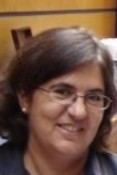
Maria José Serna Iglesias is a Full Professor at the Departament de Ciències de la Computació of the Universitat Politècnica de Catalunya (UPC), Barcelona Tech . She leads the research group ALBCOM (Algorithmics, Bioinformatics, Complexity and Formal Methods) and coordinates doctoral programs in Computing. Her research focuses on algorithmics, computational complexity, social network analysis, and game theory. She actively participates in conferences such as SEA 2023-2025 , CIAC , and Algorithmic Decision Theory . Teaching includes advanced algorithmics courses for undergraduate and master’s programs. Current projects include the MOTION initiative (PID2020-112581GB-C21) on large-scale data processing. Past projects involve EU initiatives like WISEBED and DELIS . Her work bridges theoretical computer science with applications in networks and social systems, emphasizing algorithmic solutions for complex problems.
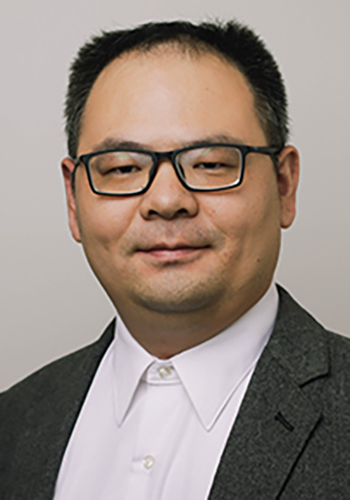
Dr. Lei Fan is an Assistant Professor in the Department of Engineering Technology at the University of Houston, with a joint appointment in the Electrical and Computer Engineering (ECE) Department. His research focuses on power system operations, optimization algorithms, quantum computing, and energy storage systems. He holds a Ph.D. from the University of Florida and a B.S. from Hefei University of Technology. Education: Ph.D., University of Florida B.S., Hefei University of Technology Research Interests: Dr. Fan’s work bridges theoretical optimization and practical energy systems, including quantum algorithms for power grid management, battery storage planning, and distributed quantum computing architectures. His LORE (Learning & Operations Research & Energy) lab explores cutting-edge applications in teleoperation, satellite networks, and environmental monitoring. Publications: Recent work emphasizes quantum computing’s role in solving complex optimization problems, such as entanglement routing in satellite networks and distributed hydrogen-power systems. His research also integrates machine learning for methane plume detection and hyperspectral imaging. Labs/Teams: He leads the LORE lab, advancing interdisciplinary research in energy systems and quantum technologies.
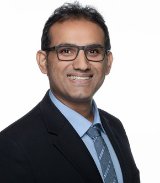
Gaofeng Jia is Associate Professor in Civil and Environmental Engineering at Colorado State University's Walter Scott, Jr. College of Engineering. He specializes in natural hazard risk assessment, infrastructure resilience, and uncertainty quantification. Research integrates simulation-based approaches with high-performance computing for assessing complex engineering systems. Core areas include infrastructure deterioration modeling, wave energy converter optimization, tsunami evacuation planning, and surrogate modeling techniques. Recent work emphasizes physics-informed machine learning for engineering applications. Publications demonstrate consistent methodological innovation in uncertainty quantification across domains including seismic engineering, coastal hazards, renewable energy systems, and structural reliability. Articles employ advanced computational statistics, Bayesian methods, and multi-fidelity modeling. Young Researcher Best Paper Award Best Student Paper Award
Dr. Tom Aben is a Researcher at Tilburg University's Tilburg School of Economics and Management (TiSEM), specifically within the Department of Information Systems and Operations Management. His work focuses on the intersection of digital transformation, supply chain management, and data governance in complex organizational settings, with particular emphasis on collaborative networks and critical infrastructure management. Dr. Aben's research interests center around purchasing and supply management (PSM) in multi-party networks, data sharing solutions, and collaborative governance approaches. He investigates how organizations can effectively manage digital transformation in critical infrastructure contexts, with particular attention to contract design, trust-building mechanisms, and network governance structures. His work often addresses societal challenges through collaborative approaches across public and private sectors, contributing to United Nations Sustainable Development Goals related to sustainable infrastructure and innovation. His recent publications reveal a consistent focus on how digitalization transforms traditional buyer-supplier relationships and necessitates new governance approaches. Aben's research shows particular expertise in data sharing within critical infrastructure networks, examining how organizations jointly develop data clauses and navigate the challenges of information asymmetry in digital environments. His work has significant implications for both academic theory and practical implementation of collaborative governance models. Dr. Aben has received recognition for his contributions to the field, including: Nomination for the 2021 Tilburg University Impact Award for the NWO/NGinfra LONGA VIA project Nominee for the Best PhD Dissertation Award in 2023 Currently, Dr. Aben is actively involved in the VIA AUGUSTA research project (2022-2026), which focuses on leveraging System-of-Systems approaches to infrastructure management. Previously, he contributed to the Longavia project (2018-2022) examining legal and organizational aspects of data-driven innovations in infrastructure management. He has also organized academic events such as the workshop 'Moving Towards Cross-Sectoral Collaboration: Challenges and Opportunities of 'Joint' Action' in December 2024, demonstrating his leadership in advancing knowledge in his field. His research spans multiple sectors including critical infrastructure management, healthcare, and public administration, with a particular focus on Dutch contexts but with implications that extend internationally. Dr. Aben frequently collaborates with researchers including Wendy van der Valk, Luc van de Sande, and David Wodak, indicating strong research networks both within Tilburg University and with external partners.
Dr. Muhammad Azmat is a Lecturer and researcher at Aston University's School of Engineering and Applied Science, specializing in Engineering Systems & Supply Chain Management. He holds a PhD from Vienna University of Economics and Business, an MBA from Iqra University, and completed leadership programs at Oxford. His research focuses on disruptive technologies like autonomous vehicles, IoT, and their applications in supply chains and mobility. He has collaborated with organizations such as the Federal Procurement Agency of Austria and the Kühne Foundation, addressing challenges in logistics, urban mobility, and humanitarian aid. Education: PhD in Transport, Logistics & Supply Chain Management (Vienna University of Economics and Business, 2019) MSc in Supply Chain Management (Vienna University of Economics and Business, 2015) MBA in Supply Chain Management (Iqra University, 2013) Research Interests: Dr. Azmat explores innovation in mobility (autonomous/connected vehicles, shared platforms), logistics 4.0, and humanitarian supply chains. He examines how technologies like IoT and big data can enhance efficiency while addressing ethical and operational challenges. Recent work includes drone applications for disaster relief and blockchain for supply chain transparency. Publications Trends: His work spans urban logistics optimization, technological adoption barriers in SMEs, and cross-border humanitarian coordination. A common theme is leveraging emerging tech to solve real-world logistical and infrastructural problems. Awards: Best paper in Health and Environment (2019) PhD Distinction Award (2019) PhD Supervision & Collaboration: Actively supervises PhD candidates in mobility innovation and supply chain resilience. Leads industry-academia projects with highway authorities and tech firms, focusing on pilot testing autonomous vehicle infrastructure and IoT-based logistics solutions. Labs/Teams: Collaborates with Aston's Logistics Research Group and external networks like the Kühne Foundation to advance sustainable logistics systems and smart mobility frameworks.
Christos Nicolaides is an Assistant Professor at the Department of Business and Public Administration within the School of Economics and Management at the University of Cyprus (UCY), holding a secondary appointment as a Digital Fellow at MIT's Initiative on the Digital Economy. Previously, he spent three years as a James McDonnell Foundation-funded Postdoctoral Fellow at MIT Sloan School of Management. His educational background includes a PhD in Engineering from Massachusetts Institute of Technology (2014), SM from MIT (2011), MSc in Applied Mathematics from Imperial College London (2009), and BSc in Physics from University of Thessaloniki (2008). Nicolaides' research applies mathematical, statistical, and computational tools to large-scale empirical questions in social influence mediated by digital technologies. His work spans Data Science , Machine Learning , Social Networks , and Computational Social Science , with significant contributions to understanding human mobility patterns, disease transmission dynamics, and social contagion effects. His research has established novel methodologies for analyzing complex network structures in mobility data and social interactions. Analysis of his 15 most recent publications reveals a consistent focus on applying network science to real-world problems, particularly in pandemic response (12 publications), human mobility analytics (9 publications), and social contagion dynamics (7 publications). His work demonstrates increasing interdisciplinary integration, combining computer science, epidemiology, and organizational behavior since 2020. Marie S. Curie Fellow Two Highly Cited Papers by Web of Science (2017, 2020) Best Paper Award by Risk Analysis Society (2019) Professor of The Week by Poets & Quants (2020) As principal institutional investigator, Nicolaides has secured over €1 million in research funding from the European Commission, industry partners, Cyprus Innovation and Research Foundation, and Cyprus Ministry of Health. His current teaching includes Social Networks and Entrepreneurship, Introduction to Operations Management, and Quantitative Methods in Management. Media coverage of his work spans major outlets including The New York Times, CNN, Nature, and Science, with significant impact on public health policy discussions during the COVID-19 pandemic.
Prof. Karl Kunisch is the Scientific Director at RICAM (Johann Radon Institute for Computational and Applied Mathematics) and a Full Professor of Mathematics at the University of Graz, Austria. He has held academic positions worldwide, including visiting roles at Brown University, INRIA, and Technical University Berlin. His research focuses on Optimization and Optimal Control, Partial Differential Equations (PDEs), Inverse Problems, and their applications in mathematical imaging, medicine, and computational science. Education: 1975: Diploma Degree, Technical University of Graz, Austria 1975: Master Degree, Northwestern University, Evanston, Illinois, USA 1978: Ph.D. Degree, Technical University of Graz 1980: Habilitation, Technical University of Graz Research Interests: Prof. Kunisch’s work spans theoretical and applied aspects of optimal control, including stabilization of PDEs, infinite horizon control problems, and feedback design. He explores numerical methods for PDE-constrained optimization and their applications in medical imaging, cardiac electrophysiology, and machine learning. His projects also address shape optimization and mathematical models for fluid dynamics and quantum systems. Publications Trends: His recent articles emphasize feedback stabilization for nonlinear systems, sparse control approaches, and the intersection of optimal control with machine learning. Key themes include robust algorithms for uncertainty handling, efficient numerical methods for high-dimensional problems, and applications in biomedical engineering. Awards: Pro Scientia-Scholarship (1974–1977) Research Award of Theodor-Körner-Fonds (1979) Fulbright Travel Scholarship (1979/80, 1985) Max Kade Scholarship (1982–83) Japanese Society for the Promotion of Science Fellowship (1990) Christian Doppler Laboratory Fellowship (1992) Advising & Grants: Prof. Kunisch leads the Optimization and Optimal Control research group at RICAM and has directed projects on mathematical data science and inverse problems. His work involves collaborations with institutions globally and has been supported by grants from NASA, the European Union, and national funding bodies. He has advised numerous researchers, though specific student names are not listed here. Labs/Teams: Group Leader of the Group "Optimization and Optimal Control" at RICAM since 2004, contributing to interdisciplinary research in computational mathematics and its applications.
Eloi Moliner Juanpere is a Doctoral Researcher and Doctoral Student at Aalto University's School of Electrical Engineering, Department of Information and Communications Engineering. His research focuses on audio signal processing, leveraging diffusion-based generative models for tasks such as dereverberation, timbre transfer, and audio restoration. His work aligns with the UN Sustainable Development Goals through innovative contributions to audio technology. Proficient in deep learning and inverse problem solving, Moliner Juanpere has published extensively in top conferences like IEEE ICASSP and DAFx, emphasizing unsupervised methods for audio enhancement. Recent publications highlight advancements in diffusion models for room acoustics estimation blind bandwidth extension neural audio effects modeling timbre transfer in musical signals Scientific recognition includes Best Student Paper Award (1st place) at IWAENC 2024 Best Student Paper Award at ICASSP 2023 Third Best Paper Award at DAFx-22 He contributes to collaborative projects such as NordicSMC (2018–2023) and SA Profi 6 (2021–2027), focusing on neural networks and audio signal enhancement. His research also involves creating datasets like the Magnetic Tape Recorder Dataset (2023) for audio restoration applications.
Ain A. Grooms serves as an Assistant Professor in the Educational Leadership and Policy Analysis Department at the University of Wisconsin-Madison School of Education. Her research centers on K-12 educational equity, specifically examining access and outcomes for students of color and traditionally disenfranchised communities through the critical lens of race and place. She investigates how educational policies impact student achievement and leadership practices across school, district, and state levels. Her primary research domains include: Educational equity frameworks and implementation Race and place intersections in policy analysis Retention strategies for educators of color Equity-focused principal pipeline development Computer science education policy implementation Chronic absenteeism in marginalized communities Analysis of Dr. Grooms' recent publications reveals a consistent focus on dismantling systemic barriers through leadership development and policy innovation. Her work examines how educational leaders navigate racialized contexts, with particular attention to computer science equity, pandemic response adaptations, and the sustainability of equity-focused initiatives. Publications span high-impact journals including Educational Policy and Urban Education, demonstrating rigorous mixed-methods approaches to educational justice. Her scholarship connects theoretical frameworks with practical leadership applications, emphasizing community-engaged solutions to persistent educational inequities. Current projects investigate institutional responses to demographic shifts and the development of counterspaces for marginalized students and educators.
Seungjin Han is a Professor in the Department of Economics at McMaster University, specializing in economic theory with applications in game theory, mechanism design, and public policy. His work bridges theoretical rigor with practical economic questions in taxation, matching markets, and corporate finance. His academic foundation includes a Bachelor of Economics from Korea University, Seoul; Master of Arts in Economics from McGill University, Montreal; and PhD in Economics from the University of Toronto. Research interests center on competing mechanism games, signaling theory, and market design. Key contributions address equilibrium analysis in strategic environments, tax incidence in differentiated markets, and incentive structures in matching frameworks. His theoretical work frequently appears in top journals like the Journal of Economic Theory and Journal of Mathematical Economics. Recent publications (2021-2025) reveal consistent focus on competing mechanisms and signaling dynamics, with growing emphasis on policy-relevant applications in public finance and labor markets. Over half his work involves collaborative research networks spanning international institutions. Teaching encompasses graduate-level Microeconomic Theory (ECON 721), Mathematical Methods (ECON 765), and Advanced Economic Theory (ECON 4T03) since 2017, reflecting deep engagement with core economic methodology.
Christopher Thomas Ryan is an Associate Professor in the Operations and Logistics Division at the UBC Sauder School of Business. He holds a PhD and BA from UBC in Management Science and Mathematics, respectively. His research spans optimization theory, game theory, theoretical economics, video game design, and pedagogy for business education. He has held positions at the University of Chicago Booth School of Business and is affiliated with the Colibri Learning Foundation. Education: BA (Mathematics) and PhD (Management Science) from UBC; BA (Sociology and Economics) from University of Guelph. He has authored numerous textbooks and case studies, including works on research careers, operations management, and teaching methodologies. His work integrates human-centric approaches to operations and education systems. Research Interests include small business operations, education operations, theoretical economics, and the design of video games. He has published in top journals like Management Science, Econometrica, and Mathematical Programming. His grants include SSHRC and NSERC awards. Ryan advises students across multiple institutions and has mentored prominent faculty in marketing, operations, and MIS fields. Teaching focuses on core operations management for MBA programs and pedagogical innovation. He has developed cases on AI in education, early childhood development, and small business sustainability. Ryan’s work bridges academic research with practical applications in business and education sectors.
Assoc Prof Luke David O'Sullivan is an Associate Professor in the Department of Political Science at the National University of Singapore (NUS). His work focuses on the history of ideas, political theory, and the philosophy of history, with notable contributions to studies on Michael Oakeshott and the concept of categories in Western thought. He holds a PhD and has published extensively in journals like Journal of the History of Ideas and History and Theory . Research interests include intellectual history, the philosophy of history, visual culture, and political theory. His recent book Categories: A Study of a Concept in Western Philosophy and Political Thought (2024) examines the evolution of categories from Plato to contemporary thought. He co-edited volumes in the Collected Works of Jeremy Bentham and maintains an active presence in academic networks like Academia.edu and ResearchGate. Teaching excellence is highlighted by three consecutive FASS Teaching Excellence Awards (2009–2011). Courses taught at NUS include Democratic Theory, Politics and Visual Culture, and Research Design. Prior institutions include University College London and Reading University. Key awards include recognition for teaching and scholarly contributions. His work bridges philosophy, political science, and history, with a focus on interdisciplinary themes like metanarratives, indigenous knowledge, and cinematic political theory.
Eileen Scanlon is the Regius Professor of Open Education at the Open University, a title awarded for her groundbreaking contributions to educational technology and science communication. She holds a PhD in cognitive models of physics problem solving and has been affiliated with the University since 1975, working extensively in the Institute of Educational Technology (IET). As Associate Director of Research and Innovation in the IET, she leads strategic research initiatives in technology-enhanced learning (TEL), including directing the openTEL research theme. Her work focuses on bridging formal and informal learning contexts, advancing citizen science, and leveraging digital tools for inclusive education. She has pioneered platforms like nQuire for community-driven inquiry and contributed to influential reports like the Innovating Pedagogy series. Scanlon also holds visiting roles at the University of Edinburgh and previously served at Bletchley Park and the University of California, Berkeley. Her research interests span educational technology, science communication, and open educational resources (OERs), with an emphasis on democratizing access to science. Key achievements include developing frameworks for MOOCs, advancing virtual microscopy in distance learning, and promoting participatory citizen science initiatives. Education: PhD in physics education (1990), Open University Affiliations: Institute of Educational Technology (IET), Moray House School of Education (Edinburgh) Grants: Leadership in openTEL, EC-funded MAZI project, and MASELTOV incidental learning initiatives Labs: Computers and Learning Research Group (CALRG), Centre for Research in Education and Educational Technology (CREET)
Anders Rantzer is a **Professor** at the **Department of Automatic Control** at Lund University, affiliated with LTH (Lund Institute of Technology). He is also a member of key initiatives like ELLIIT (IT and mobile communication) and LTH's profile areas for AI & Digitalization and The Energy Transition. His research focuses on scalable control systems, energy networks, and adaptive methodologies. He has published extensively in top journals and led major projects like the WASP NEST initiative on learning in networks. Rantzer advises numerous PhD students and collaborates internationally on topics ranging from district heating optimization to AI-driven control systems. His work bridges theoretical advancements with practical applications in energy and digital infrastructure.
Seth Frey is an Associate Professor in the Department of Communication at the University of California, Davis. His research focuses on computational social science, exploring governance institutions and complex human decision-making through computational methods, large datasets, and web-based experiments. He examines online communities as models of governance, with expertise in computational approaches to institutional design and strategic behavior analysis. Education: Ph.D. in Cognitive Science and Informatics, Indiana University, 2013 B.A. in Cognitive Science, UC Berkeley, 2004 Research Interests: Frey's work integrates data science, lab experiments, and computational modeling to study human organizations and communication. Key areas include governance technology, cognitive mechanisms of social outcomes, and institutional evolution. His projects span online games, sports, and open-source software communities, emphasizing topics like collective action, self-governance, and cooperative behavior. Publications & Funding: His work appears in journals like PNAS and Nature Scientific Reports, and has been funded by NSF, NASA, and the Ford Foundation. He contributes to the Ostrom Workshop at Indiana University and directs the Computational Communication Lab at UC Davis. Teaching: Frey teaches courses on data visualization, simulation methods, and online data analysis in the social sciences.