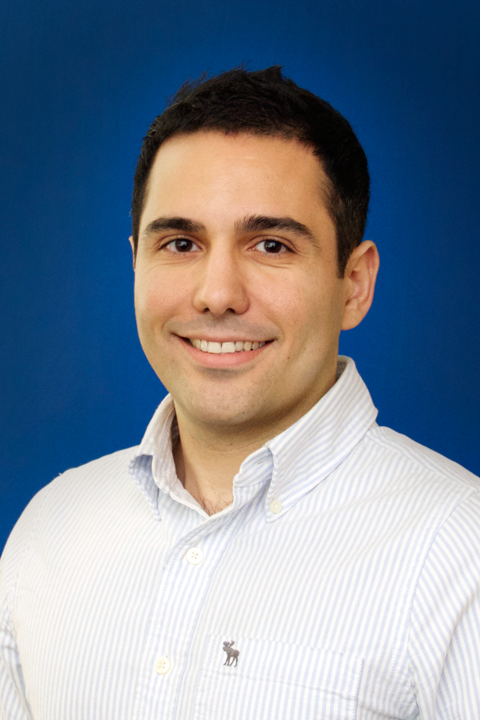
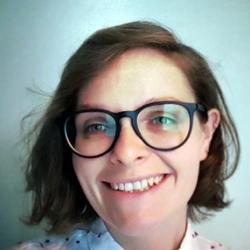
Minseok Ryu is an Assistant Professor at the School of Computing and Augmented Intelligence, Arizona State University (ASU). He holds a Ph.D. in Industrial & Operations Engineering from the University of Michigan (2020). Prior to ASU, he was a postdoctoral appointee at Argonne National Laboratory’s Mathematics and Computer Science Division. His research focuses on optimization methodologies for decentralized and stochastic decision-making distributed algorithms for machine learning and operations research applications in healthcare systems and energy grids Teaching responsibilities include courses on applied deterministic operations research (IEE 574), optimization (IEE 622), and research practicums (IEE 792). His work emphasizes computational challenges in decision-making under uncertainty, with recent projects addressing nurse staffing optimization, federated learning frameworks (e.g., APPFL/APPFLX), and resilient power grid systems. He has no recorded academic awards but actively contributes to open-source software and cross-disciplinary research collaborations. Research interests bridge theory and practice, targeting social goods through optimization techniques like distributionally robust optimization, federated learning, and heuristic algorithms for energy and healthcare systems.
Osman Yağan is a Research Professor in the Department of Electrical and Computer Engineering at Carnegie Mellon University (CMU), with affiliate faculty status in the School of Computer Science. He is also a core member of CyLab Security and Privacy Institute. Prior to joining CMU in 2013, he was a Postdoctoral Research Fellow at CyLab. He holds a Ph.D. in Electrical and Computer Engineering from the University of Maryland (2011) and a B.S. from Middle East Technical University (2007). His research focuses on modeling, analysis, and optimization of computing systems, leveraging applied probability, network science, data science, and machine learning. Key areas include multi-armed bandits, resilient machine learning, contagion processes in networks, and cybersecurity. Research Interests include Machine Learning, Data Science, Network Science, Cybersecurity, and Robustness in Cyber-Physical Systems. He has advised numerous students, including current PhD candidates Yurun Tian, Orkun İrsoy, and Ishank Juneja, as well as notable alumni such as Mansi Sood (now at MIT) and Jun Zhao (Assistant Professor at Nanyang Technological University). Key Awards include the CIT Dean's Early Career Fellowship, IBM Academic Award, and Best Paper Awards at ICC 2021, IPSN 2022, and ASONAM 2023. His work spans theoretical contributions (e.g., contagion models in multi-layer networks) and applied research (e.g., mitigating cascading failures in power systems). He leads or co-leads grants from ONR, NSF, and ARO, focusing on resilient machine learning, network robustness, and pandemic modeling.
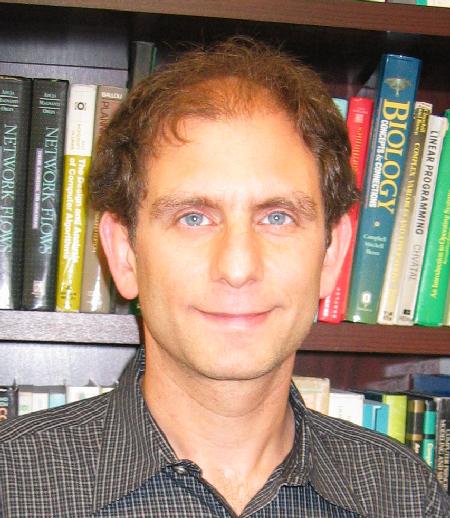
Clifford Stein is a Professor of Industrial Engineering and Operations Research (IEOR) and Computer Science at Columbia University, and Associate Director for Research at the Data Science Institute. He holds a Ph.D. (1992), M.S. (1989), and B.S.E. (1987) from MIT and Princeton University, respectively. His research focuses on algorithms, combinatorial optimization, operations research, scheduling, and computational biology. A co-author of the best-selling textbook Introduction to Algorithms , Stein has published widely in top venues and holds prestigious awards like ACM Fellow and NSF Career Award. His work includes foundational contributions to minimum cut algorithms, scheduling theory, and network optimization, supported by NSF and Sloan Foundation grants. Stein has advised over 40 graduate and undergraduate students, many now in academia and industry.
Snježana Babić serves as Associate Professor and Head of the Graduate Study Program Informatics - Teaching Major at the Faculty of Informatics in Pula , University of Pula. With a PhD obtained in 2016 and university affiliation since 2017, she teaches across undergraduate and graduate programs focusing on ICT fundamentals, web design, digital competencies, and informatics education methodology. Her educational background includes graduation in 1993 followed by doctoral studies culminating in 2016. Though specific institutions aren't detailed in the text, her career trajectory shows progression from foundational ICT teaching to specialized informatics education leadership. Babić's research centers on educational technology adoption with particular emphasis on programming pedagogy for young learners through the MEMA method. Her work investigates digital competencies across multiple educational contexts, from primary schools to higher education. Recent publications demonstrate rapid adaptation to emerging technologies, with 2025 studies examining ChatGPT integration in Croatian educational settings and cross-cultural applications of programming methods. Analysis of her 15 most recent publications reveals consistent focus on technology acceptance models applied to Croatian educators and students. The research trajectory shows evolution from foundational e-learning systems (2016-2020) to cutting-edge AI and robotics applications (2022-2025), maintaining strong methodological focus on teacher motivation , implementation barriers , and culturally-specific adoption factors . Her teaching portfolio demonstrates deep integration with research interests: Undergraduate: ICT Fundamentals, Web Design and Application Graduate: Digital Competencies in Education, Informatics Education Methodology, Practicum for IT Educators Cross-disciplinary: ICT in Nursing, Healthcare Informatics Babić actively contributes to institutional leadership as program head while maintaining robust research productivity. Her work bridges theoretical technology adoption frameworks with practical implementation challenges in Croatian educational contexts, particularly examining how emerging technologies like humanoid robots and AI assistants can be effectively integrated into teaching practices.
Erniel Bayhon Barrios is a Professor at the Malaysia School of Business, Monash University. Formerly a professor at the University of the Philippines Diliman and a visiting scholar at Karlstad University (Sweden) and the Asian Development Bank Institute (Japan). He holds a PhD in Statistics (1990) from the University of the Philippines Diliman. His research focuses on computational statistics, nonparametric methods, data science, and computational econometrics, with applications in spatiotemporal modeling, time series, and financial markets. He has contributed to high-dimensional data analysis, volatility modeling, and robust statistical techniques. Key projects include the National Mental Health Survey and Well-Being (2019–2021) and building a data-driven organization for the Habib Group (2025–2026). He is an elected member of the International Statistical Institute (2012), associate editor of Communications in Statistical Applications and Methods , and served on the board of the International Association of Statistical Computing (2022–2025). He advises PhD students on topics like stochastic frontier models, data assignment in big data, and high-frequency time series analysis. His work aligns with UN Sustainable Development Goals related to education and economic growth.
Prof. Laura Leal-Taixé is a Professor at the Technical University of Munich (TUM) in the Department of Informatics, leading the Dynamic Vision and Learning group. She holds the Rudolf Mößbauer Tenure Track Assistant Professorship, promoted to W3 Associate Professorship in 2022. Her research focuses on computer vision and machine learning, particularly video analysis, multi-object tracking, and autonomous driving applications. Education: B.Sc./M.Sc. in Telecommunications Engineering (Technical University of Catalonia, UPC) Ph.D. in Information Processing (Leibniz University of Hannover, Germany) Postdoctoral Research at ETH Zürich (Switzerland) and TUM Research Interests: Laura’s work addresses challenges in video analysis, including motion analysis, semantic segmentation, and integrating social dynamics into urban traffic modeling. Her project socialMaps , funded by the Sofja Kovalevskaja Award, explores decoupling vehicle and pedestrian traffic using dynamic maps. Her research combines optimization techniques, deep learning, and sensor data for real-world applications like autonomous systems. Recent Trends: Her publications highlight advancements in multi-object tracking, 3D LiDAR segmentation, and trajectory forecasting, emphasizing neural networks and geometric approaches. Collaborations with industry and academia underscore her work’s practical impact. Awards: 2017 Sofja Kovalevskaja Award (€1.65M, Humboldt Foundation) 2017 DAAD Australia-German Joint Research Grant Travel grants from Women in CV, CVPR Doctoral Consortium, and Vodafone Foundation Labs & Projects: Leads the Dynamic Vision and Learning group at TUM, focusing on vision-based AI for autonomous systems and environmental monitoring. Active in developing datasets like DynamicEarthNet for semantic change analysis.
Prof. Dr. Ahmet Taşağıl is a prominent historian specializing in Turkic studies, Eurasian history, and pre-Islamic cultures. He holds the rank of Professor at Yeditepe University's Faculty of Arts and Sciences, History Department, since 2015, and previously served at Mimar Sinan Fine Arts University. His academic journey includes a PhD from Istanbul University (1989-1991) and extensive research on ancient Turkic empires like the Gokturks and Huns. Education: PhD in General Turkish History (Istanbul University), MSc in Medieval History (Istanbul University), BA in History (Istanbul University). Affiliations: Currently at Yeditepe University; previously at Mimar Sinan Fine Arts University and Kirgizistan-Türkiye Manas Üniversitesi. Research Interests : Focuses on early Turkic states (Gokturks, Huns, Uyghurs), cross-cultural relations between Turkic and Chinese empires, shamanism, and pre-Islamic Turkic societies. His work bridges archaeology, ethnohistory, and political analysis, with a particular emphasis on primary sources like Chinese records and Orkhon inscriptions. Publications : Over 50 books and articles, including seminal works like Kök Tengri’nin Çocukları , Avrasya'nın Sekiz Asrı Çengizoğulları , and İslamiyet Öncesi Türkler . His research often examines the socio-political structures of nomadic empires and their legacy in Eurasian history. Awards : Recipient of the Moğalistan Devlet Onur Madalyası, Muğla Sıtkı Koçman Tarih Ödülü, and numerous academic honors. His contributions to Turkic cultural heritage are widely recognized internationally. Grants & Projects : Led projects on Central Asian archaeology, cultural atlas of the Turkic world, and historical studies of Siberian tribes. Collaborated with institutions in Kazakhstan, Russia, and Turkey. Teaching : Offers courses on pre-Islamic Turkic history, Eurasian empires, and historical methodology in Turkish and English.
Suhas Diggavi is a Professor in the Department of Electrical and Computer Engineering at the University of California, Los Angeles, within the Henry Samueli School of Engineering and Applied Science. His primary research area is Signals and Systems, with a strong focus on information theory and its interdisciplinary applications. His research interests span Information Theory , Machine Learning , Differential Privacy , Federated Learning , Cyber-Physical Systems , and Bio-informatics . He investigates fundamental limits and practical algorithms for secure, efficient, and robust data processing in distributed and networked environments. The recent publications highlight a strong trend in privacy-preserving machine learning, particularly in the shuffled model of differential privacy , communication-efficient distributed SGD , and robust optimization . His work bridges theoretical information-theoretic foundations with real-world applications in federated learning, wireless networks, and genomic data analysis. Notable scientific awards include: Guggenheim Foundation Fellow (2021) ACM CCS Best Paper Award (2021) IEEE Fellow (2013) IEEE Donald G. Fink Prize Paper Award (2006) Multiple Google, Amazon, and Facebook Research Awards Suhas Diggavi actively advises graduate students and leads a research group focused on learning, information, and optimization. His work is supported by major industry grants and collaborations, particularly in privacy and distributed learning. He has made significant contributions to information-theoretic models in bio-sequencing and wireless security. He leads the LIOS (Learning, Information, Optimization, and Stochastic Systems) research group at UCLA, where his team develops theoretical frameworks and practical algorithms for next-generation data-driven systems.
Yang P. Liu is an Assistant Professor at Carnegie Mellon University 's Department of Computer Science . He received his PhD from Stanford University under the supervision of Aaron Sidford and previously studied at MIT . Fields of Interest : Graph Algorithms, Optimization, High-Dimensional Geometry, Additive Combinatorics, Theoretical Computer Science. His research focuses on algorithmic design and analysis for graph problems, optimization, and combinatorics, with applications in machine learning and complexity theory. Recent work includes advancements in parallel repetition games , combinatorial lines , and dynamic graph algorithms . In 2024, his research spanned FOCS , STOC , and RANDOM conferences, addressing problems in k-CSPs , min-cost flow , and hypergraph sparsification . Earlier contributions (2023) included deterministic flow algorithms and spectral hypergraph techniques. Scientific Awards : NDSEG Fellowship (2018-2021), Google PhD Fellowship (2022-2023), FOCS Best Paper (2022), STOC Best Student Paper (2022), FOCS Best Student Paper (2021). He teaches CS 15-759 , a graduate course on convex optimization theory and applications, covering gradient descent, interior point methods, and algorithmic sparsification techniques.
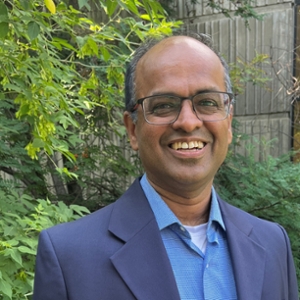
Prof. Ramakrishna Gokaraju is a Professor and Graduate Chair in the Department of Electrical and Computer Engineering at the University of Saskatchewan. His academic journey includes roles as Assistant Professor (2003), Associate Professor (2009), and full Professor (2015). He holds a B.E. from NIT Trichy (1992), M.Sc. and Ph.D. from the University of Calgary (1996, 2000). His research focuses on power system protection, smart grids, and sustainable energy systems, including small modular reactors (SMRs) and renewable integration. He has advised 8 PhD and 25+ Master’s students, with over 80 publications in top journals/conferences. Dr. Gokaraju’s honors include the Izaak Walton Killam Memorial Scholarship (1998–2000) and the Professor of the Year Award (2008). He has held visiting roles at the University of Manitoba (2009–2010), IIT Kanpur (2018), and institutions in Australia and India. His work emphasizes high-speed digital relaying, PMU-based solutions, and transient stability protection. Current research includes wind generator modeling, SMR integration, and energy storage systems for remote communities. His technical contributions span fault location algorithms, grid resilience enhancement, and GPU-based optimization for transport systems. Ongoing projects explore hybrid energy systems combining SMRs with renewables. Lab affiliations include the Power Systems Research Group at the University of Saskatchewan, focusing on smart grid innovation and sustainable energy solutions.
Hernan Galperin is a Professor of Communication and Director of Doctoral Studies at the USC Annenberg School for Communication and Journalism. His expertise lies in Internet policy, digital inequality, and the intersection of technology adoption with social stratification. He holds affiliations with institutions like the Annenberg Research Network on International Communication (ARNIC) and the USC Annenberg Innovation Lab. Galperin has authored four books and published in leading journals such as Telecommunications Policy and New Media & Society. His research, funded by organizations like the Pew Charitable Trust and the Inter-American Development Bank, focuses on broadband accessibility, digital inclusion, and policy impacts. Notable awards include membership in the World Economic Forum’s Global Future Council and top paper awards from the International Communication Association (2020, 2022). Education background: While not explicitly detailed in the provided text, his academic roles and publications imply advanced training in communication studies, public policy, or related fields. His work integrates quantitative methods with policy analysis to address global challenges in technology access. Research highlights include studies on broadband’s role in poverty reduction (Ecuador), geographic discrimination in the gig economy, and the gender digital divide in Latin America. He has contributed policy briefs on the Affordable Connectivity Program and digital inclusion in public housing, demonstrating real-world policy impact. His affiliations with global institutions reflect a focus on international collaboration in addressing digital divides. Grants and awards: His funding sources include the Pew Charitable Trust, IDRC-Canada, and the Internet Society. Awards highlight his contributions to cyberpolicy and global media governance. His work often bridges academic research with actionable policy recommendations, particularly in underserved regions. Labs and teams: He directs ARNIC and collaborates with the USC Annenberg Innovation Lab and USC Price Center for Social Innovation, fostering interdisciplinary approaches to communication and technology challenges.
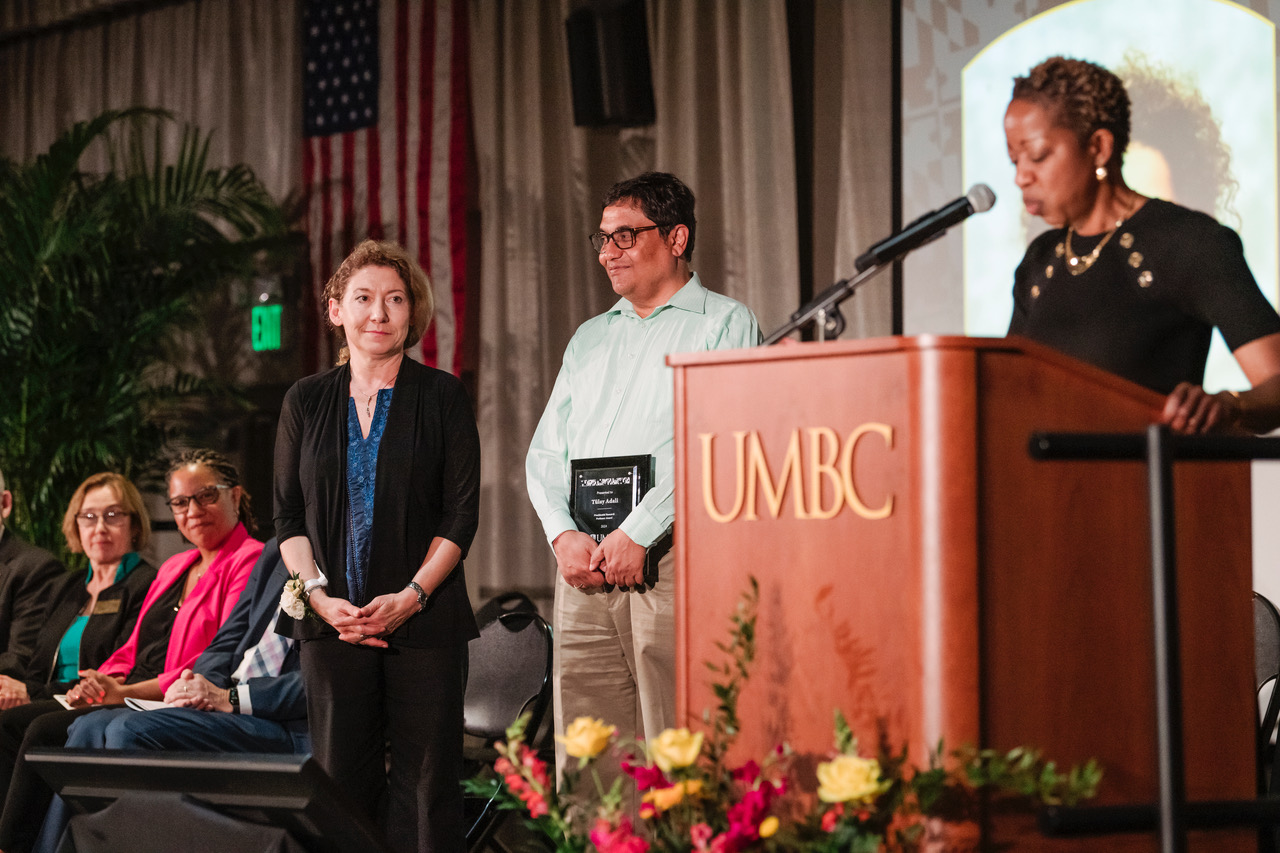
Tülay Adali is a Professor in the Department of Computer Science and Electrical Engineering at the University of Maryland, Baltimore County (UMBC). She has held this position since 1992 and was named a Distinguished University Professor in 2015 for her contributions to statistical signal processing and machine learning. Currently serving as Editor-in-Chief of the IEEE Signal Processing Magazine, she has also held leadership roles in IEEE committees and conferences. Her research focuses on statistical signal processing, machine learning, and their applications in medical imaging and data fusion. Dr. Adali earned her Ph.D. in Electrical Engineering from North Carolina State University in 1992. Her work integrates foundational signal processing techniques with biomedical applications, addressing challenges in neuroimaging analysis. She leads the Machine Learning for Signal Processing laboratory, supported by grants from NSF and NIH. Her lab develops algorithms for analyzing complex signals in medical contexts, emphasizing reproducibility and interdisciplinary collaboration. Recognition includes IEEE Fellow, AIMBE Fellow, AAIA Fellow, Humboldt Research Award, and NSF CAREER Award. She has authored numerous papers on fMRI analysis, independent component analysis, and multimodal data fusion. Her editorial leadership and service to technical communities reflect her commitment to advancing signal processing and education. Education: Ph.D. in Electrical Engineering, North Carolina State University (1992) Grants: NSF, NIH-funded projects on medical imaging and signal processing Awards: SPS Meritorious Service Award, SPIE Pioneer Award
Hans Beck serves as Professor of Greek History at the University of Münster (Westfälische Wilhelms-Universität) since 2018, with an additional appointment as Adjunct Professor in the Faculty of Arts at McGill University. His academic career includes previous positions as Professor of Ancient History and Director of Classical Studies at McGill University (2005-2018), Heisenberg Fellow at Goethe-Universität Frankfurt (2004-2005), and Research Assistant at the University of Cologne (1997-2004). Beck earned his academic training through doctoral studies at the Universities of Erlangen, Canterbury, and Cambridge (1989-1996), followed by a fellowship at the Center for Hellenic Studies in Washington, DC (2001-2002). His educational background reflects a strong international foundation in classical studies. His research spans multiple interconnected fields within ancient history, with particular emphasis on the history and culture of ancient Greece, historical geography of Greece, environmental studies of the ancient Greek world, political culture of the Roman Republic, and ancient historiography. Beck's work consistently explores themes of localism, federalism, and political structures across ancient societies, with notable contributions to understanding Greek city-states, regional identities, and comparative political systems. His approach often bridges geographical, historical, and cultural perspectives to examine how ancient communities organized themselves politically and maintained regional identities within larger frameworks. Analyzing his recent publications reveals a sustained focus on local political structures within broader contexts, particularly examining how Greek city-states maintained autonomy while participating in federal leagues. His work increasingly incorporates comparative approaches, connecting Greek political structures with those of Rome and even ancient China, reflecting his editorial work on cross-cultural studies. Beck demonstrates particular expertise in analyzing how physical landscapes shaped political organization and how religious practices reinforced regional identities. Fellow of the Royal Society of Canada (2018) Anneliese Maier Research Award from Alexander von Humboldt Foundation (2014) Heisenberg Fellowship from Deutsche Forschungsgemeinschaft (2004) Doctoral scholarship from German Academic Exchange Service (1995) Doctoral scholarship from Hanns Seidel Foundation (1994) Beck has supervised numerous doctoral students including Jordan Christopher (2022), Chandra Giroux (2021), Wentian Fu (2020), Rebecca Robinson (2017), Alex McAuley (2015), and François Gauthier (2015), covering diverse topics from ancient Qin and Macedon to cult practices in ancient empires. His academic leadership extends to directing research projects B3-49 'Belonging in/to Lakonia' and B3-40 'Localism and Religion in Ancient Greece' within the Excellence Cluster focusing on 'Religious Diversity and Legal-Political Unity.' As head of the project 'Belonging in/to Lakonia' and 'Localism and Religion in Ancient Greece,' Beck leads interdisciplinary research teams examining archaeological and historical evidence from the Sanctuary of Apollo at Amyklai and its surroundings. His work integrates textual analysis with material culture studies, creating comprehensive approaches to understanding ancient regional identities and religious practices. Beck's leadership in these projects demonstrates his commitment to bridging traditional disciplinary boundaries in classical studies.
Nina Balcan is a Professor at Carnegie Mellon University and holds the Cadence Design Systems Professorship in Computer Science. She is affiliated with the School of Computer Science, specifically the Machine Learning Department (MLD) and Computer Science Department (CSD). Her research spans foundational aspects of machine learning, artificial intelligence, theoretical computer science, algorithmic game theory, and interdisciplinary connections in learning theory. Machine Learning Artificial Intelligence Theoretical Computer Science Algorithmic Game Theory Multi-Agent Systems Data-Driven Algorithm Design Her recent work focuses on advancing algorithm design through machine learning, robustness in adversarial environments, and economic modeling. Key contributions include Learning to Branch (JACM 2024), Regret Minimization in Stackelberg Games (NeurIPS 2024), and Learning Accurate Decision Trees (UAI 2024, Outstanding Student Paper Award). She has pioneered novel approaches to data-driven optimization, semi-supervised learning, and privacy-preserving clustering. Nina has received prestigious accolades including ACM Fellow AAAI Fellow Simons Investigator 2019 ACM Grace Murray Hopper Award Her teaching at CMU includes graduate courses on machine learning, advanced machine learning, and specialized topics like algorithmic game theory.
Professor Rebecca Lawson is a Professor of Neuroscience and Computational Psychiatry at the University of Cambridge, affiliated with the Department of Psychology and Bye-Fellow at Peterhouse College. Her research focuses on understanding how humans learn to make predictions under uncertainty, with applications to mental health conditions such as anxiety and depression. She leads the Prediction and Learning (PaL) Lab, which combines computational modeling, neuroimaging (e.g., 7T MRI), and behavioral experiments to study cognitive processes in typical and atypical populations. Key research interests include computational psychiatry, autism spectrum disorders, neuroimaging techniques, and the neurochemical basis of learning mechanisms. She has received significant funding, including a £4.3m Wellcome Mental Health Award and the Sir Henry Dale Fellowship. Notable contributions include advancing theories of neural gain and sensory expectations in autism, as well as studies on uncertainty processing in anxiety and depression. Professor Lawson holds academic awards such as the BNPA Lishmann Prize and the BAP Psychopharmacology Award. She actively contributes to public engagement, including initiatives like Knit-a-Neuron and involvement with PrideinSTEM. Her lab collaborates internationally, with projects like the CamRAA study investigating autism-anxiety overlaps and the Chemical and Brain Basis of Uncertainty (CBBU) study exploring pharmacological interventions. Education: PhD in Cognitive Neuroscience (University of Cambridge), BA (Hons) Psychology & Philosophy (University of Glasgow). Grants: £4.3m Wellcome Award, Parke-Davis Fellowship, Lister Institute Prize. Labs/Teams: Principal Investigator of the PaL Lab; collaborations with MRC Cognition and Brain Sciences Unit, Yale University, and Brown University.