Gunnar Karlsson is a Professor at KTH Royal Institute of Technology, specializing in teletraffic systems and network engineering. He has served as Head of the Department of Network and Systems Engineering until 2017 and currently engages in continuous education initiatives through Cybercampus Sweden and KTH Center for Total Defence. His academic background includes a PhD from Columbia University (1989) and MSc from Chalmers University of Technology (1983), with visiting professorships at EPFL and ETH Zurich. Research Interests: Mobile communication, Internet QoS, opportunistic networks, cybersecurity, and higher education pedagogy. Public Engagement: Active contributor to debates on university roles, technology's societal impact, and automation's consequences for work. Teaching: Involved in courses including Computer Networks , Data Communications , and Security Engineering , with focus on ethics and societal implications. Awards: Recipient of the KTH Pedagogic Prize (2015) for innovative teaching approaches. Leadership: Editor for IEEE Journal on Selected Areas of Communication; advocates for engineering's role in societal progress.
Karl Meinke is a Professor at KTH Royal Institute of Technology, where he serves as Head of the Computer Science Department and Head of the Division of Theoretical Computer Science within the School of Electrical Engineering and Computer Science. His research focuses on applying machine learning techniques to software testing, particularly for safety-critical systems like autonomous vehicles and embedded systems. His research interests span machine learning, software testing, safety critical systems, embedded systems, autonomous driving, digital pathology, and graph neural networks. Meinke has developed innovative approaches like Learning-Based Testing that combine machine learning with formal methods for system validation. His work bridges theoretical computer science with practical applications in automotive systems and medical diagnostics. His recent publications show a strong trend toward applying graph neural networks to diverse domains including program analysis, digital pathology, and autonomous vehicle testing. His research demonstrates a consistent focus on solving the test oracle problem and generating meaningful test cases for complex systems where traditional testing approaches fall short. Meinke actively collaborates with Karolinska Institutet (KI), indicating interdisciplinary work between computer science and medical research. He is responsible for Masters level education in software testing at KTH and serves as examiner for several advanced courses including Degree Projects in Computer Science and Software Reliability. His research group has developed tools like LBTest for learning-based testing of reactive systems, and he has secured funding for projects such as the ITEA3 Testomat Project focused on next-level test automation. His work has significant implications for validating autonomous systems where safety is paramount. Meinke leads research in using machine learning to address fundamental challenges in software testing, particularly for systems where traditional test oracles are unavailable or impractical. His approach of combining active learning with formal specifications has created new pathways for validating complex cyber-physical systems.
Karl Norrman is an Industry doctoral student and Researcher at the Department of Theoretical Computer Science (TCS) at KTH Royal Institute of Technology, concurrently working as a Security Researcher at Ericsson Research since 2001. His academic appointment at KTH is part-time (20% time allocation), while he spends the majority of his time (80%) at Ericsson, where he holds the formal title of Expert Mobile Network Security. He is supervised by Professor Mads Dam for his doctoral studies and receives partial research funding from the Wallenberg AI, Autonomous Systems and Software Program (WASP). His educational background includes: PhD candidate in Computer Science at KTH Royal Institute of Technology, Department of Theoretical Computer Science (ongoing). Research focuses on formal modeling and proofs for cryptographic protocols using pen-and-paper proofs and mechanized proof-support tools such as Tamarin and EasyCrypt. Master's degree in Computer Science from Stockholm University, Department of Mathematics (2001). Thesis: "RTP Security in 3G Networks." During this work, he contributed to the development of the Secure Real-time Transport Protocol (SRTP), standardized in IETF as RFC 3711. Norrman's research centers on formal methods for security protocol verification , with particular expertise in cryptographic protocol analysis, modeling, and mechanized proof techniques. His work bridges theoretical computer science and practical security applications, focusing on making formal verification tools accessible for industrial adoption. Key research areas include 5G/6G security architectures, privacy-preserving mechanisms for mobile networks, authentication and key agreement protocols, and software security. He advocates for "goal oriented and motivated security designs" that balance theoretical rigor with practical implementation constraints while specializing in translating complex security requirements into implementable solutions for telecommunications infrastructure. Analysis of Norrman's publication history reveals a consistent evolution from foundational work on SRTP (2002-2007) through LTE security analysis (2014-2015) to pioneering 5G security research (2016-2020) and now 6G security exploration (2024). His work demonstrates methodological progression from analyzing existing protocols to designing novel security mechanisms and developing verification frameworks like OpenSAW. A distinctive pattern is his focus on industrial applicability —ensuring theoretical security models translate to real-world implementations, particularly evident in his work on USIM-compatible protocols and error-correcting authentication for noisy wireless channels. Recent publications increasingly address cross-domain challenges like secure federated learning in mobile networks, reflecting the expanding scope of telecommunications security. Professional engagement: Reviewer for ACM CCS 2023, EURO S&P 2023, ACM CCS 2022, NordSec 2022, Vietcrypt 2006, IEEE Telecommunications Journal Active contributor to 3GPP security standardization processes Co-author on multiple Ericsson whitepapers shaping industry security practices Norrman maintains a unique dual affiliation that enables direct translation of academic research into industrial security solutions. At KTH, he contributes to the Theoretical Computer Science group's formal methods research, while at Ericsson he applies these techniques to real-world security challenges in mobile network development. His work on OpenSAW exemplifies this bridge between academia and industry, creating practical tools for automated security testing of component-based software systems. This position allows him to identify emerging security challenges in next-generation networks while maintaining theoretical rigor in his approach.
Tianyi Zhou is a doctoral student and researcher at the Division of Theoretical Computer Science , KTH Royal Institute of Technology, Sweden. Supervised by Professor Aristides Gionis, his work is funded by the ERC project REBOUND . He is also affiliated with the Wallenberg AI, Autonomous Systems and Software Program (WASP). Research Interests Graph data mining Recent Article Trends His recent publications explore opinion dynamics through timeline algorithms and low-rank updates (2024), as well as heterogeneous information networks in social coding (2021). These works bridge graph theory, social network analysis, and computational modeling. Teaching Roles Assistant for Advanced Algorithms (DD2440) Assistant for Introduction to the Philosophy of Science and Research Methodology for Computer Scientists (DA2210) Assistant for Machine Learning (DD2421) Assistant for Software Engineering Fundamentals (DD2480) Grants Research supported by the ERC project REBOUND .
Eva Eliasson is a Senior Lecturer at the Department of Education, Stockholm University, specializing in vocational education and training (VET), pedagogy, and health education. Her research explores vocational teacher identity, healthcare pedagogy, migrant integration through education, and 21st-century skills in vocational programs. Research Groups: Pedagogy and Health; Vocational and Educational Training (VET/YL) Key Themes: Vocational knowledge, gender dynamics in education, language development, and policy implementation Her recent publications focus on skilled migrants' access to professions, healthcare teacher practices, and vocational teacher identity conflicts. She employs sociocultural and social constructionist frameworks in her studies.
Hercules Dalianis is a Professor at the Department of Computer and Systems Sciences, Stockholm University. His research focuses on Natural Language Processing, particularly in clinical text mining for Swedish language data. He leads the Natural Language Processing Research Group and serves as director of the Health Bank - Swedish Health Record Research Bank infrastructure. MSc in Electrical Engineering (1984), KTH PhD in Technology (1996), KTH Professor of Computer and Systems Science (2011), Stockholm University His research addresses privacy-preserving NLP for clinical text analysis, including automated de-identification , domain adaptation of BERT models , and clinical entity recognition . Current projects like DataLEASH and Privacy-Preserving Techniques explore machine learning solutions that balance data utility with patient confidentiality. Key publication trends show emphasis on Swedish clinical text processing , ICD-10 coding automation , and privacy-aware language modeling . Collaborations span Karolinska University Hospital, Nordic healthcare institutions, and international AI research communities. He teaches courses in Internet Search Techniques and Business Intelligence (ISBI) , Natural Language Processing (NLP) , and Principles and Foundations of Artificial Intelligence (PFAI) . His work has produced the open-access textbook Clinical Text Mining: Secondary Use of Electronic Patient Records , establishing foundational frameworks for clinical NLP in low-resource languages.
Håkan Grahn is a Professor of Computer Engineering at the Department of Computer Science, School of Computing, Blekinge Institute of Technology (BTH) in Sweden. He has been a faculty member since 1996, becoming a full professor in 2007. His academic leadership includes serving as Head of Department (1999-2002) and Dean of Research (2011-2013) at BTH. He leads multiple significant research projects including GPAI (General Purpose AI Computing) and Green Clouds, with funding from ELLIIT, the Knowledge Foundation, and Vinnova. His educational background includes: M.Sc. in Computer Science and Engineering (1990) from Lund University Ph.D. in Computer Engineering (1995) from Lund University Håkan's research spans several interconnected domains in computer science and engineering, with a strong emphasis on practical applications. His work in computer architecture focuses on optimizing system performance through innovative cache coherence protocols and memory management techniques. In the realm of parallel computing , he investigates multicore systems, GPU computing, and thread-level speculation to enhance computational efficiency. His research in AI and machine learning addresses energy efficiency, data stream mining, and practical applications in areas like district heating systems and airborne networks. The integration of image processing with machine learning forms another significant strand of his work, particularly in historical document analysis and medical imaging applications. These research areas converge in his leadership of major initiatives like BigData@BTH and GPAI, where he bridges theoretical advances with real-world implementation challenges. Analysis of Håkan's recent publications reveals a clear trajectory toward increasingly applied research with strong industry connections. While maintaining foundational work in computer architecture, his output increasingly focuses on practical AI applications, energy efficiency in computing, and domain-specific implementations in sectors like telecommunications, energy systems, and defense. The interdisciplinary nature of his work is evident in collaborations spanning computer science, engineering, and domain-specific applications, with a growing emphasis on sustainability and resource optimization in computing systems. Håkan has successfully supervised numerous doctoral students, with ten graduates and six current Ph.D. candidates. His research has been supported by substantial funding from: The Knowledge Foundation (BigData@BTH, HINTS, Green Clouds) ELLIIT (GPAI project) Vinnova (FANET-MCA, Directed COM & EW) Industry partners including Ericsson, Saab, Telenor, and Fortnox He is actively involved in multiple research groups including DISL (Distributed and Intelligent Systems Lab), CCS-Lab (Communication and Computer Systems Research Lab), and previously PAARTS (Parallel Architectures and Applications for Real-Time Systems). His leadership extends to organizing academic events like the Nordic workshop on Multi-Core Computing and the Swedish Artificial Intelligence Society workshop.
Mattias Alenius is a full Professor at the Department of Molecular Biology , Umeå University , Sweden, where he heads an active research group investigating the molecular and cellular bases of olfaction and taste. His laboratory exploits the genetic tractability of Drosophila and the physiological relevance of mouse models to uncover conserved mechanisms that govern sensory neuron specification, ciliary trafficking, and systemic feedback control of sensory perception. Research Focus His team is particularly interested in: Homeostatic control of neuronal activity and how its failure leads to neurodegenerative diseases. Olfactory and gustatory circuits —leveraging the numerically simple and genetically powerful Drosophila system. Hedgehog signaling and its role in ciliary transport of odorant receptors across species. Inter-organ communication , including gut-to-brain signaling that modulates feeding behavior. Epigenetic inheritance , exploring how paternal diet shapes chromatin states and metabolic phenotypes in offspring. Methodologically, the group integrates in vivo genetics, single-cell transcriptomics, live-cell imaging, cryo-EM, and behavioral assays to dissect these processes from molecule to organism. Scientific Output & Trends Across more than two decades, Prof. Alenius has produced a steady stream of high-impact publications in journals such as Nature Communications , Cell Reports , PNAS , Cell , PLoS Biology , and BMC Biology . His recent work (2022-2024) increasingly centers on nutrient sensing and gut-brain taste modulation , while earlier studies laid the groundwork for understanding ciliary dynamics and transcriptional codes specifying olfactory receptor choice. Collectively, the publications reveal a trajectory from developmental specification of sensory neurons to systemic metabolic control, unified by a focus on hedgehog signaling , cilia-mediated processes , and transcriptional/epigenetic mechanisms . Labs & Teams Prof. Alenius leads the Group Mattias Alenius located in rooms 6K and 6L within the hospital area at Umeå University. The group participates in the university’s Department of Molecular Biology and collaborates extensively across neuroscience and metabolism communities both nationally and internationally. Contact Email: mattias.alenius@umu.se Phone: +46 90 786 91 57
György Kovács is a Senior Lecturer at Luleå University of Technology, Department of Computer Science, Electrical and Space Engineering, working within the Embedded Intelligent Systems LAB. His primary research focus is on Machine Learning applications, particularly in speech and language technology. His research interests span multiple areas of speech and language processing, including: Automatic Speech Recognition across diverse conditions and languages Paralinguistic Speech Processing for emotion detection and speaker state analysis Audio event classification, including medical applications like cough sound analysis Sentiment analysis in written text, with particular interest in hateful language detection Bot detection in social media analysis Kovács has supervised numerous Master's theses since 2021, with topics ranging from accent classification and sentiment analysis to AI-generated code quality assessment. Many of these supervisions have led to co-authored publications with students. His recent publications demonstrate a strong focus on applying machine learning to diverse domains including remote sensing, healthcare technology, and natural language processing. The research shows a clear pattern of interdisciplinary work connecting machine learning with practical applications across environmental monitoring, healthcare, and social media analysis. His academic contributions include co-supervising PhD students such as Sana Al-Azzawi and Nosheen Abid, whose dissertation work on Unsupervised Curriculum Learning for Earth Observation represents significant contributions to the field. Notable publications include work on cloud detection using synthetic datasets, seagrass classification, and emotion classification using EEG in healthcare settings. Kovács also teaches courses including Introduction to Artificial Intelligence (D0032E) and Machine Learning and Pattern Recognition (D0033E), demonstrating his commitment to both research and education in the field of artificial intelligence.
Karl Mårild serves as a University Lecturer (adjunct) in the Department of Pediatrics at the University of Gothenburg's Faculty of Medicine, with clinical research affiliation at Queen Silvia's Children's and Adolescent Hospital in Gothenburg. His work bridges pediatric gastroenterology clinical practice and population health research through extensive collaboration with Karolinska Institutet and Nordic research networks. Dr. Mårild's research focuses on pediatric inflammatory bowel disease (IBD) and celiac disease epidemiology , specifically investigating early-life environmental determinants including dietary patterns, infection history, antibiotic exposure, socioeconomic factors, and perinatal conditions. His methodology leverages Scandinavian population-based birth cohorts and national health registries to track disease development from infancy through adulthood, with particular emphasis on nutritional epidemiology and risk factor identification. Analysis of his 15 most recent publications reveals dominant research themes in childhood nutrition-disease relationships (35% of papers), perinatal risk factors (25%), and methodological registry validation (20%). His work demonstrates consistent Nordic collaboration, with 85% of recent publications involving multi-country Scandinavian research teams. As an active researcher, Dr. Mårild contributes to clinical guidelines through publications like the ESPGHAN Position Paper on Celiac Disease management. His research program generates actionable insights for preventive strategies in pediatric gastrointestinal disorders while advancing epidemiological methods for studying chronic disease origins.
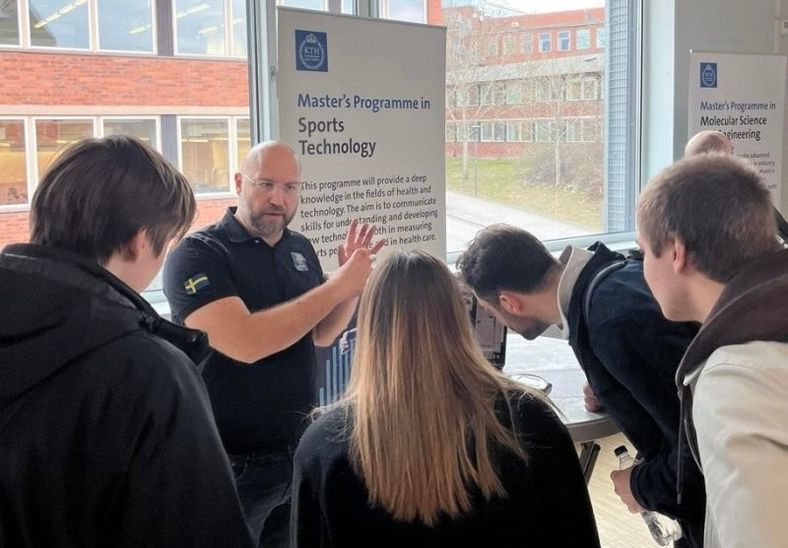
Jonas Willén is a Lecturer at KTH Royal Institute of Technology, working within the Division of Health Informatics and Logistics. He serves as Program Director for the MSc in Sports Technology and Director of RIU (National Sports University) at KTH. His professional focus centers on developing technological solutions to improve quality of life through health and sports applications. Willén's research interests span health informatics and sports technology, with particular emphasis on wearable sensor systems, data synchronization, and applications for assisted living. His work addresses critical issues in elderly care, such as developing mobile security alarm systems that overcome the limitations of current home-bound solutions. He also focuses on sports instrumentation for performance analysis and coaching, with applications for both elite athletes and general fitness. His publication record from 2011-2025 shows consistent research in sensor networks, wearable technology, and applications in healthcare and sports. The research trends indicate a progression from foundational work on data synchronization and sensor networks toward more applied solutions in health monitoring and sports performance analysis. His recent work demonstrates increasing focus on real-world implementation of these technologies. As an educator, Willén teaches multiple courses including FullStack Development and DevOps, Health and Sports Instrumentation, Medical Engineering, Mobile Applications and Wireless Networks, and Sports Technology and Instrumentation. His teaching reflects his research interests, bridging theoretical knowledge with practical applications in technology development. Willén's professional philosophy emphasizes technology's potential to evolve human capabilities, particularly in health and sports contexts. His work consistently aims to translate technical solutions into tangible benefits for end users, whether seniors needing reliable security systems or athletes seeking performance insights.
Rolf Lundén serves as Professor at Uppsala University's Department of English, specializing in Modern American literature and interdisciplinary cultural studies. His academic career spans over five decades with significant contributions to short story theory, film adaptation studies, and transatlantic cultural exchange. Lundén maintains active international collaborations through visiting positions at University of Pennsylvania, University of Virginia, UC Berkeley, and Dartmouth American Studies Institute. Education: PhD, Uppsala University (1973) Docent, Uppsala University (1975) Professor Lundén's research centers on narrative structures across literary and cinematic forms, particularly short story composites and episodic films. His scholarly work explores intertextuality in American literature, cultural transmission between America and Scandinavia, and biographical studies of marginalized transnational artists. Current projects include Episodic Fiction and Film: Affinities and Adaptations examining structural parallels between short story cycles and episode films, and Choosing Oblivion: The Divided Life of David Edstrom - a biography of the Swedish-American sculptor who achieved European fame but faded into obscurity after returning to America. His methodology combines close textual analysis with cultural history and reception theory. Lundén's publication record demonstrates consistent scholarly output across multiple formats including monographs, edited collections, and journal articles in venues like American Literature , Modernism/Modernity , and Adaptation . His recent articles (2017-2020) reveal increasing focus on Gertrude Stein's transnational influence, cinematic adaptation processes, and narrative strategies in short fiction. The thematic continuity across his career shows sustained engagement with American cultural production and its global reception patterns, particularly within Scandinavian contexts. Academic Service: Dean of Language Faculty (1999-2002) Visiting Research Scholar at multiple US institutions Contributor to American National Biography Professor Lundén's scholarly impact extends through his editorial work on significant collections including Networks of Americanization and Authority Matters: Rethinking the Theory and Practice of Authorship . His textbook Short Fictions: Stories from the English-Speaking World has shaped English language pedagogy in Sweden. Current research trajectories indicate continued exploration of narrative fragmentation, transnational artistic careers, and American cultural influence in Sweden through ongoing projects and planned publications.