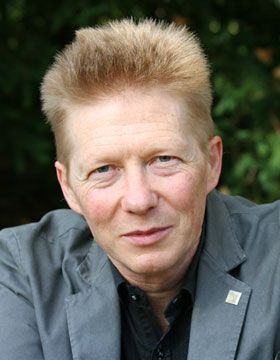
Prof. Josef Nossek is a Full Professor of Network Theory and Signal Processing at the Technical University of Munich (TUM), Department of Electrical Engineering and Information Technology. His research focuses on signal processing in mobile communications, multi-antenna systems deployment, and technical/physical constraints in communication systems. He holds visiting professorships at UC Berkeley, Vienna University of Technology, and Pazmany University in Budapest. Before joining TUM in 1989, he worked at Siemens AG as Head of Microwave Radio Systems Development. He is a Fellow of IEEE and a member of acatech (German Academy of Science and Engineering). Notable awards include the Federal Cross of Merit (2008), IEEE Education Award (2008), and Bavaria's Prize for Good Teaching (1998). His research interests emphasize practical applications of signal processing theory, including MIMO systems, reconfigurable intelligent surfaces (RIS), and antenna array design. His work bridges theoretical foundations with real-world constraints to optimize wireless communication performance.
Prof. Dr.-Ing. Eckehard Steinbach is a Full Professor of Media Technology at the Technical University of Munich (TUM), affiliated with the TUM School of Computation, Information and Technology. His research focuses on haptic communication, the Tactile Internet, multimedia systems, and machine learning-driven analysis of sensory data. He holds an IEEE Fellowship (2015) for contributions to visual and haptic communications and has led projects like the Centre for Tactile Internet with Human-in-the-Loop (CeTI). Education: Studied Electrical Engineering at the University of Karlsruhe, University of Essex, and ESIEE Paris. Earned a Ph.D. from Friedrich-Alexander University of Erlangen-Nuremberg (1999). Postdoc at Stanford University (2000–2002). Research Interests: Haptic data compression, teleoperation, networked multimedia systems, and applications of machine learning in sensory data analysis. Key projects include the IEEE 1918.1.1-2024 standard for haptic codecs and 5G-based teleoperation systems. Awards: ERC Starting Grant (2011–2015), Alcatel-Lucent Research Award (2011), VDE-ITG Publication Award (2009). Grants and Projects: Led initiatives in tactile internet, 5G testbeds for eHealth, and radar-based human activity monitoring. Collaborates on robotics and remote collaboration systems via platforms like the Munich 5G Research Hub. Labs/Teams: Chair of Media Technology at TUM, contributing to TUM-IAS and the Munich Institute of Robotics and Machine Intelligence (MIRMI).
Prof. Dr. Dr. Dominik Bach holds the Hertz Chair for Artificial Intelligence and Neuroscience at the University of Bonn within the Transdisciplinary Research Area - Life and Health . His research focuses on understanding the computational architecture of the human mind and brain, particularly in threat avoidance and human behavior, using serious games, virtual reality, and associative learning setups. His work bridges cognitive neuroscience with artificial intelligence, aiming to unpack mechanisms of psychiatric conditions like anxiety disorders and PTSD through computational modeling and experimental platforms. Recent projects involve decoding aversive memory inhibition, threat memory maintenance, and developing novel treatments through transcranial stimulation and neural network analysis. Research Trends : Dominik Bach's publications emphasize computational characteristics of escape decisions , threat learning , and neural circuitry in anxiety , with methodological innovations in VR-based behavioral experiments and neuropharmacology. His 2025 work explores experiment-based calibration and transdiagnostic psychiatric symptom dimensions. Advising and Grants : While no specific students or grants are listed in the provided texts, his leadership in TRA Life and Health and collaborations with institutions like University Hospital Bonn highlight his role in cross-disciplinary research initiatives.
Prof. Dr. Christian Schwägerl is a Professor of Communication Management at Osnabrück University of Applied Sciences, part of the Faculty of Management, Culture and Technology. His research focuses on organizational communication, strategic communication, leadership communication, and language in management. He has published extensively on topics including internal communication diagnostics, alumni networks, and the communicative constitution of organizations. Research Interests: Communication Management Organizational Development & Change Strategic Communication Language in Organizations Recent Work Trends: His publications highlight interdisciplinary approaches to communication challenges in organizations, with a focus on discourse analysis, stakeholder dialogue, and digital transformation. Recent work emphasizes risk management in stakeholder communication and the role of language in PR practices. Awards: He received the Best Paper Award at the 2018 EUPRERA Conference for his analysis of communicative practices in strategic communication. Grants & Advising: His work integrates academic research with practical organizational challenges, though specific grant details are not listed here.
Dr. Stefan Gugler is a Postdoctoral Researcher at the Technical University of Berlin (TU Berlin), affiliated with the Berlin Institute for the Foundations of Learning and Data (BIFOLD) and the Machine Learning Group led by Prof. Dr. Klaus-Robert Müller. His research focuses on integrating machine learning methods, such as diffusion models and Gaussian processes, into theoretical chemistry to address challenges like molecular similarity, reaction networks, and catalyst design. He holds a PhD in quantum chemistry from ETH Zurich (2023), where he developed machine learning approaches for dispersion interactions, and a Master’s degree in computational inorganic chemistry from MIT (2018). His work has been recognized with an MSDE Award for his thesis on transition metal complexes. Gugler’s contributions include open-source software tools like qcscine/readuct and qcscine/puffin , advancing computational chemistry and machine learning workflows. Education: PhD in Quantum Chemistry, ETH Zurich (2023) Master’s in Computational Inorganic Chemistry, MIT (2018) Interdisciplinary Sciences (BSc/MSc), ETH Zurich (2016–2018) Research Interests: Molecular similarity and chemical reaction networks Diffusion models and generative AI for chemistry Machine learning in quantum chemistry and materials science Explainable AI (XAI) for scientific applications Awards: MSDE Award (2018), MIT Labs/Teams: Active contributor to BIFOLD and the qcscine open-source project, focusing on machine learning-driven computational chemistry tools.
Johannes Niediek is a Postdoctoral Researcher at Technical University of Berlin , specializing in computational neuroscience and neurophysiology. He holds a PhD in Neuroscience from the University of Bonn (2018) and a Diplom in Mathematics (2011). His research focuses on applying machine learning techniques to understand neural processes, particularly in reinforcement learning models and electrophysiological data analysis. Previously, he worked in Prof. Israel Nelken’s group at the Hebrew University of Jerusalem, studying behavioral modeling with reinforcement learning methods. He also contributed to epilepsy research at the Department of Epileptology in Bonn, analyzing depth-electrode recordings from epilepsy patients. His open-source contributions include the Combinato spike sorting toolkit, widely used in electrophysiological studies. Active on GitHub, he maintains repositories focused on neuroscience data processing and visualization. Research interests span neural coding mechanisms, temporal dynamics of memory, and the interplay between neural oscillations and cognitive functions. His work bridges computational modeling and experimental neurophysiology to uncover fundamental principles of brain function.
Dr. Sebastian Spreizer is a Professor in the Department of Human-Computer Interaction at the University of Trier, part of Faculty IV (Computer Science). He holds a PhD in neurobiology from the University of Freiburg, where his doctoral research focused on neuronal network activity dynamics driven by structural conditions. His current work centers on developing the NEST Desktop platform, a web-based educational tool designed to advance computational neuroscience education. As part of the EU's Human Brain Project, he extends this tool for broader scientific accessibility. His research interests span computational neuroscience, educational software development, and neural network simulation. Notable contributions include advancing NEST Desktop's functionality for visualizing neural network simulations and supporting interdisciplinary neuroscience education. He has published extensively in venues such as PLOS Computational Biology and G-Knoten, focusing on topics like spatiotemporal neural dynamics and educational tool design. Dr. Spreizer collaborates with institutions like the German Research Center for Artificial Intelligence (DFKI) and is affiliated with the Human-Brain-Project consortium. His work bridges theoretical neuroscience with practical educational technologies, emphasizing open-source software and user-centered design principles in computational science tools.
Jianbo Liu is a prolific researcher with a focus on interdisciplinary fields spanning machine learning, remote sensing, signal processing, and computer vision. His work emphasizes developing advanced algorithms for applications in environmental monitoring, telecommunications, and data-driven decision-making. Liu collaborates frequently with institutions and researchers in China and internationally, contributing to journals like IEEE Transactions on Wireless Communications , Remote Sensing , and Pattern Recognition . Research Interests: Machine learning frameworks for computer vision tasks, remote sensing data analysis, signal processing in communication systems, and optimization of industrial processes. Key Collaborators: Fu Chen, Jimmy S. J. Ren, Ningyuan Cao, Hongsheng Li, and Boyang Cheng. Publications: Over 138 papers across venues such as CVPR, ICCV, and IEEE journals, demonstrating expertise in neural networks, sensor fusion, and spatiotemporal data analysis. His recent work highlights contributions to physics-informed machine learning, gesture recognition via hierarchical attention networks, and secure communication protocols for satellite systems. Liu’s research bridges theoretical advancements with practical applications in environmental science, healthcare, and smart infrastructure.
Prof. Werner Henkel is a Professor of Electrical Engineering at Jacobs University Bremen. He holds a Dr.-Ing. (Ph.D.) from Technische Universität Darmstadt (1989), with research focused on coding theory, communications, and signal processing. His roles include chairing the Electrical and Computer Engineering (ECE) program and serving as Dean for Engineering and Mathematical Sciences (2012–2014). Affiliations: Jacobs University Bremen: School of Engineering and Science Constructor University Bremen (prior affiliation) Education: Ph.D. (Dr.-Ing.) in Electrical Engineering, TU Darmstadt (1989) Diploma in Electrical Engineering, TU Darmstadt (1984) Research Interests: Prof. Henkel’s work spans physical-layer security , LDPC codes , neural networks , impulse noise treatment , and DNA analysis . His recent focus includes secure key generation in FDD systems, joint source-channel coding, and applications in IoT and power-line communications. He has contributed to DSL standardization and industrial projects in satellite communication and cybersecurity. Grants & Projects: Research on impulse noise mitigation in wireless/wireline channels Collaborations with industry on satellite communication and PLC systems Labs & Teams: Active in multidisciplinary teams at Jacobs University, focusing on communications, coding, and bioinformatics.
Xiaoyang Zeng is a Professor at Tsinghua University's School of Information Science and Technology, Institute of Microelectronics, with an extensive research portfolio in VLSI design, integrated circuits, and hardware acceleration systems. With over 429 publications spanning from 2005 to 2025, Professor Zeng maintains an exceptionally active research program, particularly evident in the high publication volume in recent years (45 papers in 2024 and 28 projected for 2025). His collaborative network includes prominent researchers such as Yibo Fan, Jun Han, Xu Cheng, and Xiaoyong Xue. Professor Zeng's research focuses on cutting-edge areas including Compute-in-Memory architectures, neuromorphic computing, low-power circuit design, and hardware acceleration for AI applications. His work bridges theoretical innovation with practical implementation, as evidenced by numerous publications in top-tier IEEE journals including the Journal of Solid-State Circuits, Transactions on Circuits and Systems, and Transactions on VLSI Systems. Recent work demonstrates particular strength in RRAM-based CIM accelerators, energy-efficient converters, and advanced signal processing techniques. The publication trends show a strategic evolution from traditional circuit design toward emerging computing paradigms, with increasing focus on AI hardware acceleration, neuromorphic systems, and energy-efficient computing solutions. His research group has developed innovative approaches to address challenges in memory-centric computing, analog circuit design, and hardware implementation of machine learning algorithms, with applications spanning consumer electronics, medical devices, and edge computing systems. Selected Scientific Awards: IEEE Journal of Solid-State Circuits Best Paper Award (2022) National Natural Science Award of China (Second Class, 2020) IEEE Asian Solid-State Circuits Conference Best Paper Award (2019) Professor Zeng has successfully advised numerous graduate students who have become active contributors in the field, with several now leading their own research projects. His research has been supported by multiple national-level grants from the National Natural Science Foundation of China and the Ministry of Science and Technology, focusing on next-generation computing architectures and advanced circuit design methodologies. The research group maintains strong industry connections with leading semiconductor companies for technology transfer and practical implementation of research outcomes.
Wouter Joosen is a Professor at KU Leuven (Catholic University of Leuven) in Belgium, with an extensive research career spanning from 1988 to the present. His primary research focuses on cybersecurity, privacy, and secure software engineering, with significant contributions to threat modeling frameworks, particularly LINDDUN. Dr. Joosen's research interests center around privacy-enhancing technologies , security threat modeling , and machine learning applications in cybersecurity . His work bridges theoretical security concepts with practical implementations, focusing on real-world security challenges in cloud computing, authentication systems, and data protection. He has pioneered approaches to automate threat modeling processes and develop robust security mechanisms for modern distributed systems. His publication record shows a clear evolution from traditional software security in the 1990s-2000s to contemporary research on privacy-preserving machine learning, secure infrastructure as code, and advanced authentication systems. A notable trend in his recent work (2021-2025) is the integration of machine learning techniques to enhance security mechanisms while maintaining privacy constraints, particularly in access control systems and threat modeling frameworks. Dr. Joosen has collaborated extensively with researchers across Europe, particularly with Dimitri Van Landuyt, Davy Preuveneers, Danny Hughes, and Bert Lagaisse, indicating strong research group leadership and international collaboration. His research has significant practical applications in GDPR compliance, secure authentication, privacy-preserving technologies, and robust security frameworks for cloud-native applications. His work on OAuth 2.0 security, biometric authentication, and infrastructure security directly addresses current industry challenges in securing modern web applications and services.
Prof. Dr. Evangelos Moulas is the Head of the Metamorphic Processes Group at the Institute of Geosciences, Johannes Gutenberg University Mainz. His research focuses on metamorphic petrology, geodynamics, and the interplay between tectonics and geochemical processes. He leads a multidisciplinary team investigating crustal deformation, metamorphic reactions, and the mechanical behavior of minerals under high pressure-temperature conditions. Key research areas include: Thermobarometry and geochronology of metamorphic rocks Fluid-rock interactions in subduction zones Numerical modeling of tectonic processes Mineral physics and phase equilibria Continental crust evolution and orogenic systems Prof. Moulas has authored/co-authored over 50 peer-reviewed articles (2013–2024), focusing on topics such as crustal xenolith dating, ophiolite emplacement mechanisms, and stress-induced metamorphic reactions. His work bridges field observations with computational simulations to unravel Earth's deep processes. He is affiliated with the Institute's Metamorphic Processes Group and collaborates with international research networks. His laboratory specializes in advanced mineralogical analysis and thermodynamic modeling tools like GDIFF and KADMOS codes.
Professor Giovanni Galizia is a faculty member at the University of Konstanz, holding the position of Professor of Zoology and Neurobiology. He is also a Permanent Fellow at the Wissenschaftskolleg zu Berlin. Born in 1963 in Rome, he studied Biology at the Freie Universität Berlin and Zoology at the University of Cambridge. His research focuses on olfactory coding in insects, particularly honeybees and fruit flies, exploring how neural networks process odor information and assign meaning to odors. Recent work includes investigating how honeybees recognize disease-related odors and use collective behavior to manage hive health. Education: Biology, Freie Universität Berlin Zoology, University of Cambridge Research Interests: Galizia's work delves into understanding the neural mechanisms underlying olfactory perception and coding in insects. Key areas include odorant receptor responses, neural circuitry in the insect brain, and the role of olfaction in behaviors like colony defense and disease detection. His studies also aim to model brain circuits computationally to better comprehend how odors are encoded and interpreted. Key Contributions: Author of Neurosciences: From Molecule to Behavior (2013) Lead researcher on honeybee olfactory coding and neural network modeling Investigating the use of insect olfactory systems for recognizing disease-related odors Professional Engagement: Galizia has presented at numerous events, including the 2022 Colloquium Odor Songs in the Bee Brain and discussions on topics like honeybee dreaming and virus-related research. His work bridges neurobiological studies with broader implications for understanding brain function and sensory processing. Labs/Teams: His research is conducted at the University of Konstanz, with collaborations at the Wissenschaftskolleg zu Berlin, focusing on experimental neurobiology and computational modeling.
Giuseppe Di Fatta is a Professor in the Department of Mathematics and Computer Science at the University of Salerno, Italy. With an extensive publication record spanning from 1998 to 2025, he has established himself as a leading researcher in multiple areas of computer science. His academic journey began with a PhD from the University of Palermo in 2003, focusing on active solutions in computer networking, which laid the foundation for his diverse research career. Di Fatta's research interests span a broad spectrum of computer science disciplines, with particular expertise in Machine Learning, Data Mining, and Distributed Computing. His work bridges theoretical foundations with practical applications, especially in Bioinformatics and Healthcare Informatics where he has made significant contributions to Alzheimer's disease prediction through advanced machine learning techniques. He has also pioneered research in Edge Computing and IoT systems, addressing critical challenges in distributed data processing for resource-constrained environments. His recent publications demonstrate a strong focus on deep learning applications, particularly in addressing class imbalance problems and multi-task learning frameworks. His publication trends reveal a strategic evolution from foundational work in network protocols and distributed systems toward increasingly sophisticated machine learning applications in healthcare and other domains. The last five years show a pronounced emphasis on medical applications, particularly Alzheimer's disease prediction, where he has developed innovative feature selection and transfer learning approaches. His research demonstrates strong interdisciplinary collaboration, working with medical researchers, data scientists, and domain experts across various fields. Di Fatta has served as editor for major conferences including the IEEE ICDM Workshops and Internet and Distributed Computing Systems (IDCS) conference series, demonstrating his leadership in the academic community. His editorial contributions span multiple conference proceedings published by Springer in the Lecture Notes in Computer Science series. His research has been consistently funded through collaborative projects that bridge academia and practical applications. Notably, the 5VREAL Project demonstrates his work translating computer vision research into sports analytics applications. His research methodology often combines theoretical rigor with practical implementation, addressing real-world challenges in data-intensive domains while contributing to the theoretical foundations of machine learning and distributed computing.
Francisco M. Delicado Martínez is an academic researcher specializing in telecommunications, wireless networks, and IoT applications. His work focuses on Quality of Service (QoS) mechanisms, Software Defined Networks (SDN), and blockchain integration in fog computing environments. He has contributed to optimizing resource allocation in OFDMA and IEEE 802.16 networks, and developed IoT-based systems for environmental monitoring (e.g., glyphosate detection, agrochemical spray drifts, and Aedes aegypti surveillance). His recent research emphasizes low-cost IoT ecosystems and blockchain-driven e-government services for public administration and construction management. Research interests span across wireless communications, network optimization, and distributed computing architectures. His publications address challenges in contention resolution, bandwidth request mechanisms, and machine learning integration for disease vector monitoring. Collaborations include projects on fog computing orchestration, SDN-based network enhancements, and multimedia transmission over TDMA/TDD wireless networks. Key contributions include the S-HIDRA architecture (blockchain & SDN for fog computing), DriftGLY and SpectroGLY IoT systems, and the MosquIoT framework for mosquito population monitoring. His work bridges theoretical network protocols with practical applications in agriculture, public health, and smart infrastructure.