

François-Raymond Boyer is an Associate Professor in the Department of Computer Engineering and Software Engineering at Polytechnique Montréal. He holds a B.Sc. and Ph.D. from Université de Montréal and teaches courses in programming and digital audio. His research spans: Computer architecture and VLSI systems Network processing and traffic management Digital audio signal processing Hardware acceleration and optimization He is affiliated with ReSMiQ (Strategic Cluster for Microsystems) and OICRM (Music Research Observatory). Recent publications focus on 5G network processing, modular programming frameworks, and high-speed traffic management architectures, primarily in IEEE Access and IEEE Transactions on VLSI Systems. Professor Boyer has supervised 3 PhD and 6 Master's students, with research topics including network architecture, audio processing, and hardware design. No scientific awards are mentioned in the available records.
جستوجوی استاد و پژوهشگر
استاد راهنما، استاد دانشگاه یا پژوهشگر مناسب برای مسیر پژوهشیتان را پیدا کنید و با او ارتباط بگیرید.
نمایش ۵۷۱-۵۷۶ از ۵۷۶ استاد راهنما
اطلاعات این پروفایلها از صفحات عمومی دانشگاهها جمعآوری شده و ممکن است بهروز نباشد.

Michel C. Desmarais is a Full Professor in the Department of Computer Engineering and Software Engineering at Polytechnique Montréal, where he has been faculty since 2002. With a PhD in Psychology from Université de Montréal, his research bridges artificial intelligence, educational technology, and human-computer interaction. He holds affiliations with IVADO and LAMA-WeST research groups, and has held visiting positions at Sorbonne University, Eindhoven Technical University, and other European institutions. His research focuses on three interconnected pillars: 1) Cognitive modeling and educational data mining , developing algorithms for student knowledge assessment and adaptive learning systems; 2) AI-driven educational tools , including automated grading systems and peer instruction platforms; and 3) Recommendation systems and user modeling , particularly for personalized learning interfaces. His work consistently applies machine learning to solve practical challenges in technology-enhanced education. Analysis of his 150+ publications reveals strong trends in educational NLP (sentence similarity for short-answer grading), generative AI (LLM-generated code validation), and Bayesian modeling (Q-matrix refinement). Recent work increasingly focuses on transformer architectures and real-world educational datasets. He maintains an active supervision record, having graduated 35+ graduate students. Current PhD candidates work on NLP for educational applications (Bakhtiari, Kamdem) and AI for engineering (Wang). His teaching covers user interface design, recommender systems, and intelligent interfaces. Professional service includes editorial leadership (JEDM journal), conference co-chairing (UMAP 2017, EDM founding), and grant review panels for NSERC, MITACS, and EU programs. Industry experience includes prior roles as R&D Director at MVM Inc. and researcher at Montreal Computer Research Center.
- Aeronautics and Aerospace
- Intelligent and Autonomous Systems
- Industrial Internet of Things
- +۳ مورد دیگر
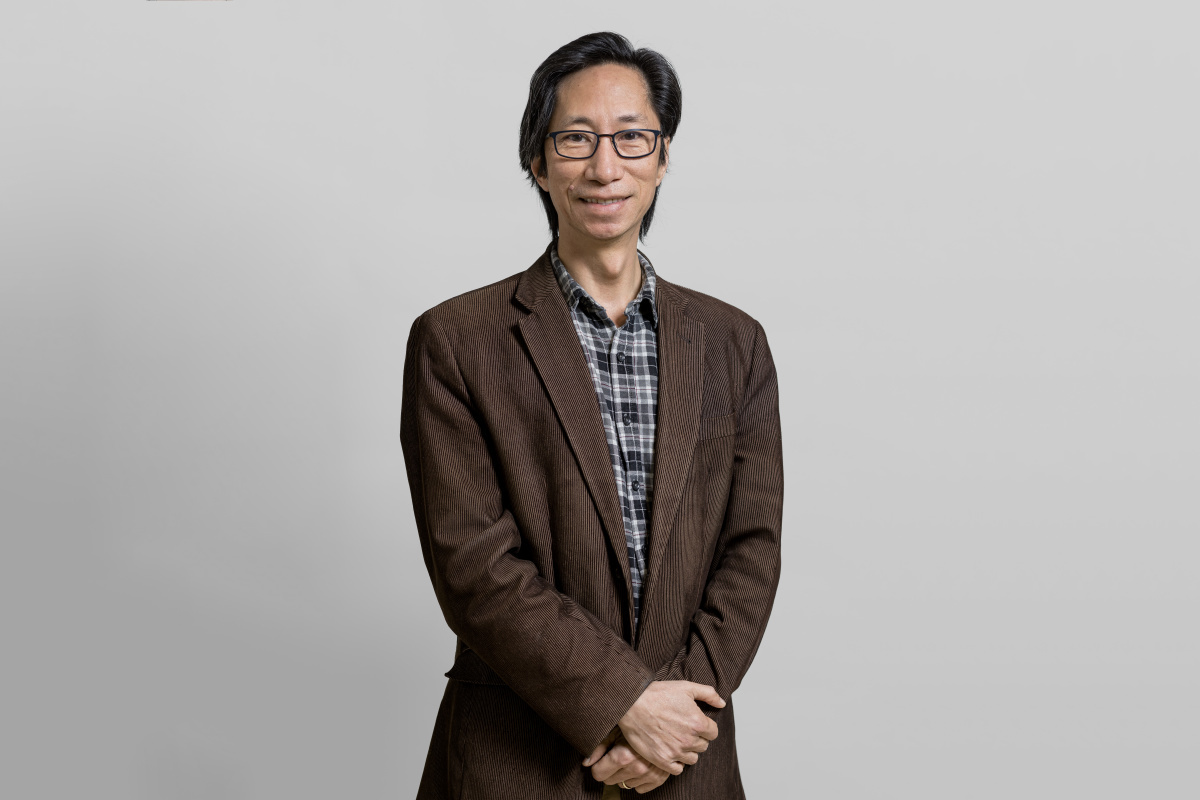
Tony Wong is a Professor in the Department of Systems Engineering at École de technologie supérieure (ÉTS), specializing in aeronautics, autonomous systems, and industrial automation. He holds affiliations with three key research laboratories: the Control and Robotics Laboratory (CoRo), LARCASE (Aeronautical Research), and SYNCHROMEDIA (Multimedia Communication). His work bridges theoretical optimization and practical applications, particularly in UAV design, renewable energy, and blockchain logistics. Research interests span: Aeronautics/Aerospace : Morphing wing optimization, computational fluid dynamics, UAV performance enhancement. Intelligent Systems : Robotic automation, machine learning for predictive maintenance, low-code industrial solutions. Sustainable Technologies : Hybrid energy systems, IoT for resource optimization, edge computing deployments. Dr. Wong mentors 47+ graduate students, with recent projects including wind-tunnel validations of morphing wings, AI-driven supply chains, and solar energy forecasting. His publication record (31+ journal articles since 2021) demonstrates consistent contributions to aerodynamic design and computational intelligence. While no awards are documented, his leadership in collaborative labs underscores institutional recognition. Laboratory engagements focus on experimental validation and industrial partnerships, utilizing ÉTS facilities like the Price-Païdoussis Wind Tunnel and advanced flight simulators. Current projects prioritize sustainability, including aerodynamic drag reduction and blockchain-enabled cost optimization.

- Corporate governance
- Board of directors and performance
- External audit market and regulations
- +۳ مورد دیگر
Jean Bédard is a Professor at the School of Accounting, Université Laval (FSA ULaval), where he has been a faculty member since December 1985. He holds a Ph.D. in Accounting from the University of Southern California and a BBA in Public Accounting from HEC Montréal. His primary academic affiliation is with the School of Accounting at Université Laval's Faculty of Business Administration in Quebec City, Canada. Professor Bédard's research focuses on corporate governance, board of directors effectiveness, external audit market regulations, audit quality, and risk management and control. His scholarly work examines how governance mechanisms and audit practices influence financial reporting quality, with particular attention to audit committees, board composition, and regulatory frameworks. He has conducted comparative studies between Canadian, French, and American regulatory approaches. His publication record spans several decades with recent contributions in 2024 examining engagement partner identification and audit quality. His research often employs empirical methods to investigate how expanded audit reports, including key audit matters and going concern opinions, affect market participants and financial reporting outcomes. Professor Bédard has published in leading journals including Auditing: A Journal of Practice & Theory, Contemporary Accounting Research, and Accounting Horizons. Professor Bédard has made significant contributions to understanding audit committee effectiveness, gender diversity on corporate boards, and the impact of regulatory changes on audit practices. His comparative work between hard law approaches (like quotas in France) and soft law approaches (like in Canada) to increase gender diversity on boards has provided valuable insights for policymakers. As an educator, Professor Bédard teaches in the areas of Audit and Governance, drawing on his extensive research and practical insights to inform his teaching. His long-standing career at Université Laval demonstrates his commitment to advancing both the theory and practice of accounting and auditing.
- Bioinformatics
- Genomics
- Non-coding RNA Research
- +۴ مورد دیگر
Michelle Scott is a Full Professor in the Department of Biochemistry and Functional Genomics at the University of Sherbrooke's Faculty of Medicine and Health Sciences, with a concurrent appointment in the Computer Science Department. Her academic trajectory shows progressive advancement from Assistant Professor (2011) to Associate Professor (2016), culminating in her current Professorship (2021). She directs an active research program focused on non-coding RNA biology, particularly small nucleolar RNAs (snoRNAs), with emphasis on their roles in ovarian cancer and transcriptomic regulation. Her research interests center on bioinformatic characterization of RNA networks , development of computational tools for RNA-seq analysis (including CoCo and snoDB), and molecular mechanisms of snoRNAs in cancer . Recent work employs low-structure-bias sequencing (TGIRT-seq) to overcome technical limitations in transcriptome analysis, revealing previously undetected non-coding RNAs and non-canonical snoRNA functions. Her group investigates snoRNA roles in alternative splicing regulation, cancer progression (particularly high-grade serous ovarian carcinoma), and nucleolar biology. The 15 most recent publications demonstrate strong focus on methodological innovation in transcriptomics (6 articles), snoRNA functional characterization (5 articles), and cancer genomics applications (4 articles). Key trends include addressing RNA-seq reproducibility issues, developing computational frameworks for multi-mapped read resolution, and expanding the functional landscape of snoRNAs beyond canonical roles. FRQS Senior Researcher Fellowship (2025) RECMUS Award for Supervision Excellence (2021) Tremplin Award for Early-Career Research (2021) Multiple FRQS Junior Fellowships (2017, 2021) Dean's List for Exceptional Performance (2015-2021) Scott has successfully mentored numerous graduate students (including 15 first-author publications by trainees) and secured substantial competitive funding, including a $$1\text{,}525\text{,}000$$ CIHR Project Grant (2021-2026) on proteogenomics approaches to define the human proteome. Her laboratory maintains strong affiliations with the CHUS Research Center and actively participates in the RiboClub network, which she has organized since 2014. Current work focuses on characterizing nucleolar snoRNAs in ovarian cancer and improving transcriptomic annotation frameworks.
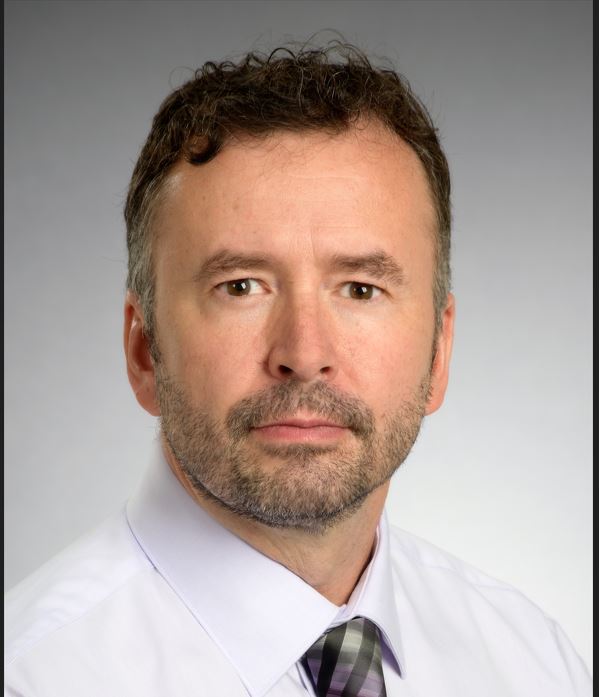
Dr. Ronald R. Martin serves as Professor in the Department of Educational Psychology and Coordinator of the MA/MSc Program in Gerontology at the University of Regina's Faculty of Education. A Registered Doctoral Psychologist, he maintains an active research program supported by Tri-Council and provincial funding, with committee leadership roles including Chair of the Faculty of Education Research Ethics Board. His academic journey includes: Ph.D. in Clinical Psychology, West Virginia University (1998-2001) Pre-Doctoral Internship, University of Rochester School of Medicine (2001-2002) Post-Doctoral Fellowship, University of Regina (2002-2004) M.A. degrees in Counselling Psychology and Lifespan Development from University of Victoria B.A. in Psychology, Queen's University Dr. Martin's research bridges gerontology and health psychology, with dual emphases on teacher wellness and senior health. His work develops practical interventions for work-related stressors in new educators and addresses critical issues in senior care including pain management and falls prevention among dementia patients. Current projects focus on multidimensional approaches that integrate online peer support networks for teachers and comprehensive care improvements for long-term care residents. His publication record demonstrates consistent contributions to aging research, with recent work emphasizing psychosocial dimensions of pain and functional decline. Key trends include longitudinal examination of fear-avoidance behaviors in seniors and ethical analysis of healthcare systems serving aging populations. Scientific recognition includes: New Investigator’s Award (Saskatchewan Health Research Foundation, 2006) Dr. Martin actively mentors graduate students through the Gerontology program and leads significant grant-funded initiatives including a $2.4M provincial team grant implementing nutritional improvements, falls prevention, and person-centered care enhancements in long-term facilities. His SSHRC-funded teacher wellness project develops innovative support networks addressing early-career stressors through peer collaboration and health-promoting behaviors. Professional engagement extends to community service as former Board Member of the Alzheimer's Society of Saskatchewan (2005-2007) where he chaired the Research Priorities Committee, demonstrating commitment to translating research into community impact.