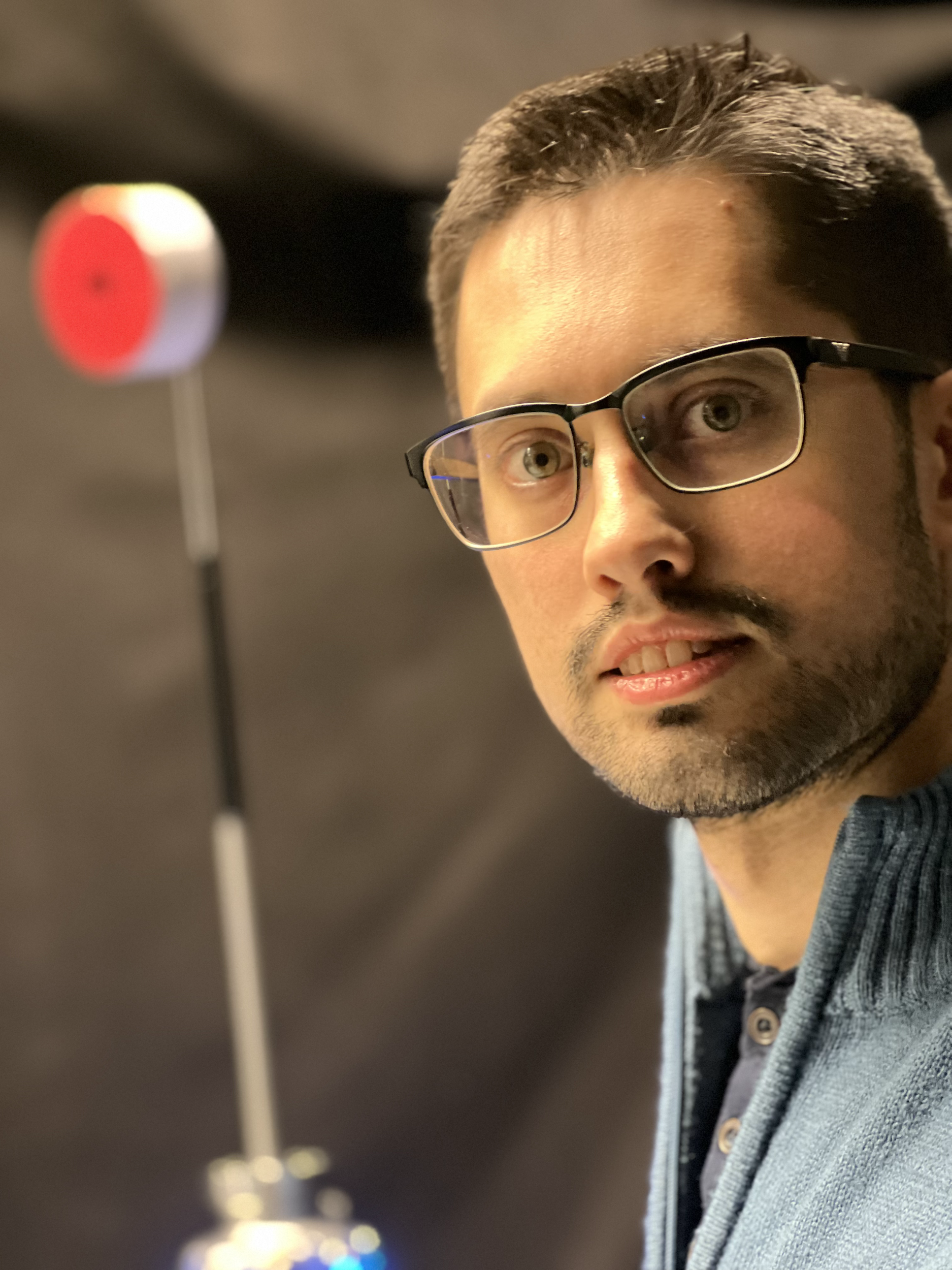
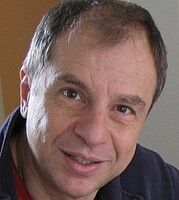
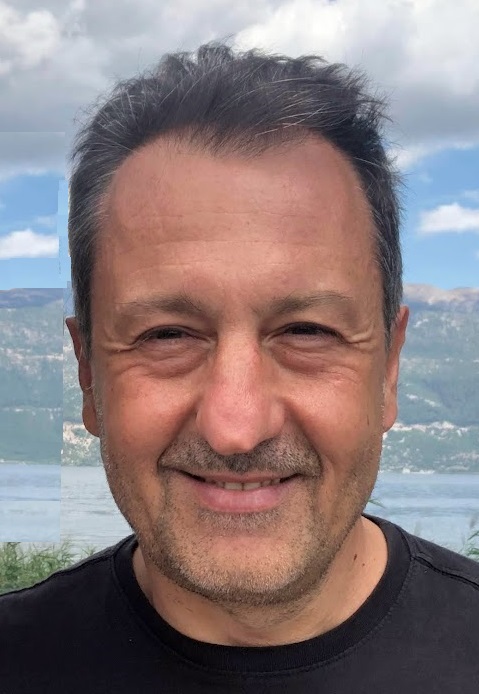
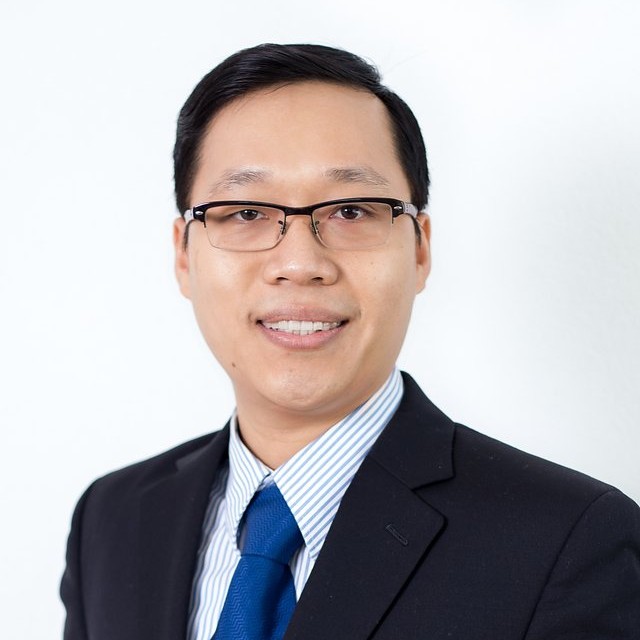
Davide Tateo is a postdoctoral researcher and visiting professor at TU Darmstadt, leading the Safe and Reliable Robot Learning Research Group within the Intelligent Autonomous Systems group of the Computer Science Department. His research focuses on developing safe and efficient reinforcement learning algorithms for real-world robotics applications. His work spans Reinforcement Learning (Safe RL, Deep RL) and Robotics (fast motion planning, locomotion). He is involved in multiple funded projects including KIARA (advanced manipulation in risky scenarios), DeepWalking (human gait learning), and INTENTION (active perception for legged robots). Recent publications highlight his expertise in Safe RL (inductive biases, collision probability fields), Locomotion (multi-embodiment, morphology-aware policies), and Optimization (contact planning, trajectory distillation). He collaborates with the PEARL lab at TU Darmstadt and has contributed to key workshops like CoRL 2024 and RSS 2024. Contact details: Email: davide.tateo@tu-darmstadt.de Room E303, Building S2|02, Hochschulstr. 10, Darmstadt Phone: +49-6151-16-20811
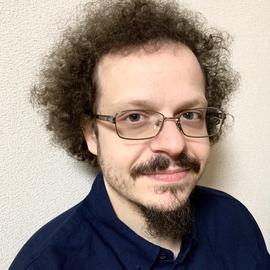
Jeremy P. Bos is an Assistant Professor in the Department of Electrical and Computer Engineering at Michigan Technological University. He serves as a Faculty Advisor for the Robotic Systems Enterprise and is affiliated with professional societies including SPIE (since 2011), OSA (since 2003), and IEEE. His work bridges engineering and optical sciences, with a focus on imaging through turbulent environments. PhD, Electrical Engineering (2012), Michigan Technological University MS, Electrical Engineering (2003), Villanova University BS, Electrical Engineering (2000), Michigan Technological University Dr. Bos’s research spans atmospheric optics , statistical optics , and quantum optics , with applications in image and signal processing , autonomous vehicles , and industrial automation . His work addresses challenges in imaging through atmospheric turbulence, including speckle noise mitigation, phase compensation, and adaptive optics. He also investigates machine intelligence for optimizing reconstruction algorithms. Recent publications highlight trends in non-Kolmogorov turbulence modeling , multiframe blind deconvolution (MFBD) , and hybrid adaptive optics systems . His studies focus on long horizontal-path imaging, anisoplanatic conditions, and performance metrics for turbulence correction. Scientific recognition includes: NRC Research Associateship Program Award CLEO 2012 Maiman Student Paper sEMI-Finalist Dr. Bos previously led the Paulding Lights Activity and contributed to SPIE student leadership committees. His expertise extends to electromagnetic compatibility (EMC) and RF system design , informed by industrial roles at General Motors, Johnson Controls, and Lockheed Martin.
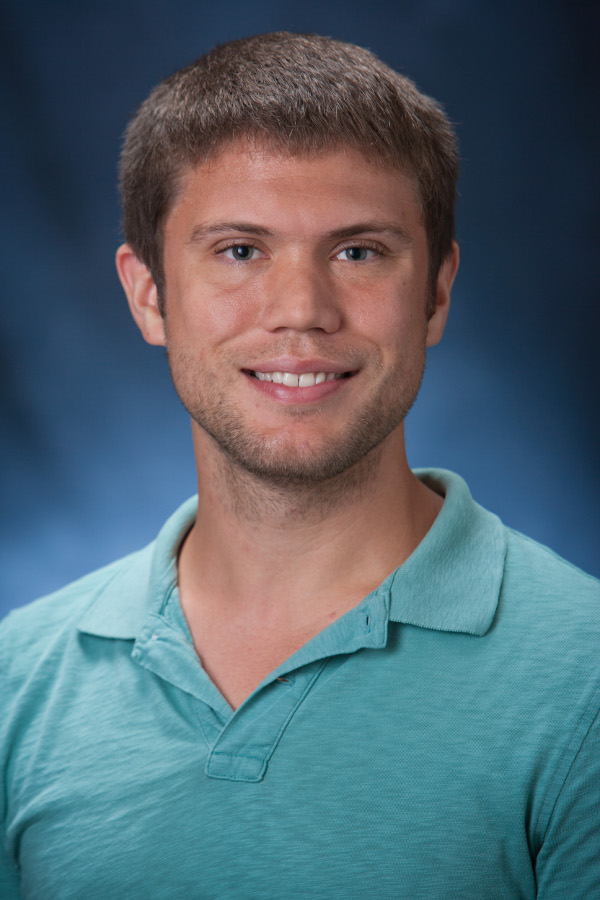
Assoc Prof Henry Nguyen is an Associate Professor at Griffith University's School of Information and Communication Technology, with expertise in data integration, data quality, recommender systems, and big data visualization. He directs the Responsible Big Data Lab and has secured over $3.5M in funding since 2015 from ARC, DFAT, and industry partners. PhD & Master's from EPFL, Switzerland ARC DECRA Award (2020) His research focuses on privacy-preserving AI for social data , IoT , and satellite analytics , with over 200 publications in top venues like SIGMOD, KDD, and IEEE TKDE. Recent work spans federated learning , graph neural networks , and secure AI systems . Article trends highlight 2024-2025 publications on: Federated recommendation security On-device AI optimization Privacy-preserving explainable AI Graph condensation techniques LLM-powered risk analysis Cloud-edge collaboration Scientific contributions include ARC DECRA Award 2020 Multiple senior PC roles in A* conferences Citations in International AI Safety Report 2025 Henry Nguyen supervises 12 active PhD/MSc students and has directed 8 completed doctoral theses . His funded projects include collaborations with Ubitech , KARI , and CSIRO , focusing on Australia-Korea partnerships and responsible AI development.
Jian Tang is an Assistant Professor at HEC Montreal and the Montreal Institute for Learning Algorithms (MILA), as well as an Associate Professor at the Department of Computer Science and Operations Research (DIRO) at Université de Montréal. He is also affiliated with IVADO (Institut de valorisation des données) as a member. His research spans multiple institutions including collaborations with leading biology labs worldwide and access to extensive computational resources through industry partners. Ph.D. in Computer Science, Peking University (2009-2014) Visiting Ph.D. student, University of Michigan (2011.10-2013.8) B.S. in Mathematics, Beijing Normal University (2005-2009) Professor Tang's research focuses on the intersection of deep learning and graph theory, with particular emphasis on geometric deep learning, knowledge graph reasoning, and applications in drug discovery. His work bridges symbolic and neural approaches to create robust reasoning systems that can handle complex structured data. He has pioneered techniques in graph representation learning that have significantly advanced the field of molecular property prediction and protein design. His publication record shows a clear trajectory toward applying geometric deep learning to biological problems, with a growing emphasis on protein design, molecular conformation generation, and multi-omics analysis. Recent work demonstrates sophisticated integration of 3D geometry with deep learning architectures to model complex biomolecular interactions. Canada CIFAR Artificial Intelligence Chairs (CCAI Chair) Tencent AI Lab Rhino-Bird Gift Fund Amazon Faculty Research Award Microsoft-Mila collaboration grant National Research Council Canada (NRC) Collaborative Research and Development Grant Professor Tang actively mentors doctoral and master's students, with six recent graduates working on cutting-edge topics including graph neural networks for reasoning, protein design, and molecular representation learning. His research is supported by substantial funding from industry partners including Microsoft, Amazon, and Tencent, as well as government agencies like NRC. He collaborates extensively with biology labs worldwide, applying AI to solve real-world biomedical challenges. He leads a research group focused on geometric deep learning for drug discovery, with active projects in protein design using geometric-aware models and large language models for multi-omics analysis. The group has access to thousands of GPUs through industry collaborations, enabling large-scale experiments in molecular simulation and generative modeling.
Mathieu Fontaine is an Associate Professor in Machine Listening at Télécom Paris , affiliated with the LTCI Lab within the IDS Department (Information, Data, Signal). His research focuses on machine listening for speech and audio signal processing. PhD in Informatics (2019), Lorraine University Master in Applied and Fundamental Mathematics (2015), Poitiers University BSc in Fundamental Mathematics (2013), Rennes University Fontaine's research spans speech enhancement , speaker separation , source localization , and music source separation using heavy-tailed probabilistic models and deep Bayesian networks , with applications in augmented reality . He has expertise in Python , signal processing , and machine learning (80% proficiency). His recent publications (2024) include work on diffusion models for speech synthesis , room acoustics estimation from 3D meshes , robust audio scene analysis , and direction-aware speech processing . Earlier publications (2022-2023) explore flow-based NMF , alpha-stable representations , and adaptive beamforming in multiparty environments. Fontaine collaborates with the S2A team and ADASP group at LTCI Lab. His work integrates probabilistic modeling with deep learning to address challenges in real-world audio processing, including reverberation, noise, and complex acoustic environments.
Brent Lagesse is an Associate Professor at the University of Washington - Bothell , affiliated with the Division of Computing & Software Systems under the School of Science, Technology, Engineering & Mathematics . His research focuses on security in emerging environments , particularly secure machine learning and privacy in sensor-rich systems . Ph.D. in Computer Science from the University of Texas at Arlington (2009) Research Interests include: Detecting and locating hidden webcams Scalable AI/ML defense mechanisms Privacy-preserving video sharing AI systems for air quality prediction Automated yeast cell analysis CRISPR/CAS9 guide-donor libraries Article Trends : Recent publications emphasize secure machine learning for smart city applications, privacy-preserving technologies , and resource-constrained security in crowdsensing environments . Collaborative work spans cybersecurity education , environmental monitoring , and context-aware systems . Scientific Awards : Cybersecurity Fulbright Scholar (University of Cambridge, 2018) Johann-von-Spix International Guest Professorship (University of Bamberg, 2019-20) Advising & Grants : Advises current research students Neil Prakasam and Nicholas Handaja NSA grant ($96k) for GenCyber curriculum development (2022) NSF grant ($300k) for AI-enhanced cybersecurity workforce studies (2021) T-Mobile grants for ML security metrics and dataset anonymization (2020-2022) Laboratory : Leads the Security of Emerging Environments (SEE) Lab , developing practical and theoretical frameworks for smart city security and privacy-preserving technologies .
Mingyi Hong is an Associate Professor in the Department of Electrical and Computer Engineering at the University of Minnesota , where he leads the OptimAI-Lab . His work bridges optimization theory , machine learning , and signal processing , with a focus on foundation models like LLMs and diffusion models. Education : Not explicitly mentioned in the text Current Projects : NSF grants on bilevel optimization, LLM unlearning, and inverse reinforcement learning Research Themes : Bilevel Optimization : Applications in LLM alignment, unlearning, and wireless systems LLM Safety : Unlearning, alignment with human feedback, robustness Diffusion Models : Inference-time alignment, adversarial training Distributed Optimization : Privacy-preserving algorithms, federated learning Recent Publications highlight trends in LLM unlearning (BLUR, LUME), optimization theory (Barrier Functions, νSAM), and diffusion models (Direct Noise Optimization). His group has secured NSF , AWS , Cisco , and Open Philanthropy grants. Scientific Recognition : IEEE Fellow (2025) SPS Best Paper Award (2022, 2021, 2018) Doctoral Dissertation Fellowship (2024) IBM Pat Goldberg Memorial Award (2022) He mentors PhD students like Siliang Zeng and Xinwei Zhang , and collaborates with institutions including Michigan State University , Amazon , and NIH on projects spanning UHF MRI technology to climate-smart agriculture .
Alan Mantooth is a Distinguished Professor holding the Twenty-First Century Research Leadership Chair in Engineering within the Department of Electrical Engineering at the University of Arkansas, Fayetteville. He serves as Director of the National Center for Reliable Electric Power Transmission (NCREPT), Executive Director for GRAPES (NSF I/UCRC) and SEEDS (DoE Center), and Deputy Director of the NSF Engineering Research Center for Power Optimization of Electro-Thermal Systems (POETS). His educational background includes: B.S. in Electrical Engineering, University of Arkansas M.S. in Electrical Engineering, University of Arkansas Ph.D. in Electrical Engineering, Georgia Institute of Technology Dr. Mantooth's research centers on analog/mixed-signal IC design, power electronics CAD, and semiconductor device modeling with emphasis on harsh-environment applications. His pioneering work in silicon carbide (SiC) and gallium nitride (GaN) power systems has enabled high-temperature operation for electric vehicles and renewable energy infrastructure, significantly advancing reliability in extreme conditions. His 2025 publications reveal strong trends toward AI-driven power electronics (e.g., SolarFormer++ for PV profiling), wide-bandgap device modeling (β-Ga2O3, SiC), and innovative packaging solutions. Key themes include reliability engineering for extreme environments, multi-physics optimization, and explainable AI for safety-critical power systems. Major scientific recognition includes: IEEE Fellow (2009) for power electronic device modeling Three R&D 100 Awards (2009, 2014, 2016) for SiC power modules IEEE Power Electronics Society Technical Achievement Award (2019) Multiple university teaching/research awards including SEC Faculty Achievement Award (2015) As an exceptional mentor (UA Outstanding Mentor 2006-2008), he co-founded Lynguent and Ozark Integrated Circuits. His centers NCREPT, GRAPES, and SEEDS have secured major funding from NSF, DoE, and industry partners, supporting over 350 refereed publications and numerous patents. Current research focuses on AI-enhanced power electronics, recyclable packaging, and next-generation wide-bandgap device characterization. He leads the NCREPT test facility and multi-institutional teams developing grid-connected power electronic systems, secure energy delivery architectures, and thermal management solutions for high-power-density applications, with direct impact on electric transportation and renewable energy integration.
Gaurav Nanda serves as an Assistant Professor in the School of Engineering Technology at Purdue University, where he leads research at the intersection of artificial intelligence and human-centered systems. His work develops intelligent decision support frameworks applicable across critical domains including occupational safety, smart manufacturing infrastructure, healthcare analytics, and educational technology. Education Background Ph.D. in Industrial Engineering, Purdue University Dual Degree: B.Tech. and M.Tech. in Agricultural and Food Engineering (Major) with Electrical Engineering Minor, Indian Institute of Technology Kharagpur His research program integrates applied machine learning and natural language processing to solve complex problems in safety analytics (injury surveillance systems), Industry 4.0 (IoT-enabled manufacturing), healthcare (breast cancer prediction models), and STEM education (MOOC feedback analysis). Current projects emphasize human-AI collaboration, with growing focus on ethical AI implementation and social justice integration in engineering contexts. The INDESS Research Group he directs develops systems that balance algorithmic precision with human factors considerations. Recent publications (2023-2025) demonstrate accelerating adoption of large language models and vision-language systems across application domains, particularly in safety analytics and educational technology. Key trends include human-in-the-loop validation frameworks, explainable AI interfaces, and multimodal data integration (eye-tracking, text, sensor data). His work increasingly addresses fairness considerations in AI deployment, especially regarding diversity in engineering education and workplace safety systems. Dr. Nanda actively mentors the next generation of engineers through the INDESS Research Group , advising Ph.D. candidates Madhumathi Ponnusamy and Shuning Yin, while previously supervising Master's graduates including Srushti Vichare and Meet Suthar. His research receives support through Purdue-affiliated institutes including ICON (Control/Optimization Networks), RDE (Digital Enterprise), and FWL (Future Work/Learning). He maintains active service roles as Editorial Board Member for the International Journal of Industrial Ergonomics and as reviewer for leading publications including IEEE Transactions on Learning Technologies and Safety Science. The research group maintains strong industry connections through the Purdue School of Engineering Technology, with projects spanning manufacturing automation, healthcare informatics, and educational technology platforms. Current initiatives focus on real-time anomaly detection systems, ethical AI frameworks for safety-critical applications, and inclusive curriculum development for engineering education.
Susan Landau is a Professor of Cyber Security and Policy in the Department of Computer Science at Tufts University. She previously held the Bridge Professorship at The Fletcher School and the School of Engineering, Tufts University. Her research focuses on the intersection of privacy, surveillance, cybersecurity, and law. Landau has authored influential books such as Listening In: Cybersecurity in an Insecure Age and Surveillance or Security? , and has testified before Congress and advised policymakers globally on encryption and cybersecurity issues. Education: BA from Princeton University, MS from Cornell University, PhD from MIT. Research Interests: Landau’s work addresses cybersecurity policy, privacy rights, and the ethical implications of surveillance technologies. She emphasizes the balance between national security and individual privacy, advocating for robust encryption standards and against government-mandated backdoors. Her interdisciplinary approach integrates technical, legal, and policy perspectives. Awards & Recognition: Landau has received prestigious awards including the McGannon Book Award, Surveillance Studies Book Prize, USENIX Lifetime Achievement Award, and induction into the Cybersecurity Hall of Fame. She is a Fellow of the Guggenheim Foundation, ACM, and AAAS. Professional Contributions: She has served on National Academies committees, NSF advisory boards, and editorial boards for journals. Landau also chairs workshops on AI contestability and cybersecurity policy, and advocates for diversity in STEM through initiatives like GREPSEC and the Athena Lectureship. Labs & Teams: While not explicitly mentioned, her work engages with interdisciplinary teams across academia, government, and industry to address cybersecurity challenges and policy frameworks.
Greg Stitt is a Professor in the Department of Electrical and Computer Engineering at the University of Florida, affiliated with the College of Engineering. His research focuses on reconfigurable computing, FPGA acceleration, embedded systems, and compiler design. He has received notable awards including the NSF CAREER Award (2012-2017) and the Undergraduate Teacher of the Year Award (2014). His work emphasizes elastic computing frameworks, intermediate fabrics for FPGA virtualization, and warp processors for dynamic hardware/software partitioning. Education: PhD, Computer Science, University of California-Riverside, 2007 BS, Computer Science, University of California-Riverside, 2000 Research Interests: Reconfigurable computing, FPGAs, GPUs, and their applications in high-performance computing Compiler optimization and synthesis techniques for embedded systems Elastic computing frameworks for heterogeneous systems Approximate computing and energy-efficient architectures Grants & Awards: National Science Foundation (NSF) grants for elastic computing (CNS-0914474) and intermediate fabrics (CNS-1149285) Recognition for contributions to FPGA-based scientific computing tools Teaching: Current courses include Reconfigurable Computing 2 and Digital Design Past course offerings span embedded systems, compiler design, and hardware architecture Labs & Teams: Active research in FPGA acceleration, novel architectures, and security for reconfigurable systems Contributions to the Novo-G scalable reconfigurable supercomputing project
Professor Dollas Apostolos serves as a Professor in the School of Electrical and Computer Engineering at the Technical University of Crete (TUC), where he has held leadership roles such as Department Chairman. He directs the Microprocessor and Hardware Laboratory, focusing on reconfigurable computing, embedded systems, and high-performance digital systems. His work emphasizes rapid prototyping and real-world implementation of computational solutions. Education: Ph.D., Computer Science, University of Illinois at Urbana-Champaign (1987) M.Sc., Computer Science, University of Illinois at Urbana-Champaign (1984) B.Sc., Computer Science, University of Illinois at Urbana-Champaign (1982) Research Interests: Reconfigurable computing architectures FPGA-based acceleration for bioinformatics and genomics Embedded systems and real-time processing Hardware-software co-design for high-performance computing His research bridges theoretical innovation with practical applications, such as FPGA implementations for genome assembly and aquaculture monitoring systems. Publications: Recent work highlights FPGA-based solutions for bioinformatics (e.g., genome assembly acceleration), real-time embedded systems (e.g., fish cage net monitoring), and scalable data processing frameworks. His articles often explore the intersection of FPGA technology with computational biology, embedded vision, and distributed systems. Awards and Affiliations: Senior Member, IEEE and IEEE Computer Society Recipient of IEEE Computer Society Golden Core and Meritorious Service Awards Twice honored with the University of Illinois Teaching Excellence Award He is a co-founder of IEEE conferences like FCCM and RSP, reflecting his leadership in the reconfigurable computing community. Teaching and Labs: Teaches courses on computer architecture, logic design, and VLSI design. The Microprocessor and Hardware Lab under his direction drives advancements in FPGA-based systems, with projects ranging from bioinformatics hardware accelerators to embedded vision systems.
Prof. Dr.-Ing. Stefan Schulte is a Full Professor at Hamburg University of Technology, leading the Institute for Data Engineering and the Christian Doppler Laboratory Blockchain Technologies for the Internet of Things (CDL-BOT). He holds a diploma in Economics and a Bachelor's in Computer Science from the University of Oldenburg, followed by a Master's in Information Technology (with Merit) from the University of Newcastle. After completing his PhD at TU Darmstadt in 2010, he held roles as Postdoctoral Researcher at TU Wien, Assistant Professor (tenure-track), and eventually Associate Professor before joining TU Hamburg in 2021. His research focuses on data engineering, blockchain technologies applied to IoT, elastic computing, and quality-of-service (QoS) aspects in smart systems. Notable contributions include work on fog computing, federated learning, and cross-blockchain interoperability. He has published over 140 papers in top-tier venues like IEEE Transactions on Services Computing and ACM Computing Surveys. Key awards include Best Paper Awards at the IEEE International Conference on Blockchain (2020) and the European Conference on Service-Oriented and Cloud Computing (2023). Prof. Schulte chairs major conferences such as the IEEE International Conference on Fog and Edge Computing (ICFEC 2025) and serves on editorial boards for journals like IEEE Transactions on Services Computing. He leads CDL-BOT, a lab exploring blockchain applications in IoT and manufacturing. His industrial collaborations include projects like SIMPLI-CITY (smart mobility) and CREMA (cloud-based manufacturing). Current research emphasizes blockchain interoperability, federated learning frameworks, and edge-AI systems. He actively reviews proposals for the German Research Foundation, EU programs, and industry initiatives.
Kostas Magoutis is Professor and Chair of the Computer Science Department at the University of Crete and collaborating researcher with FORTH-ICS. His research focuses on distributed systems, scalable data processing, IoT, and cloud computing, with projects including GreenInCities for urban regeneration and STREAMSTORE for stateful stream processing systems. Research interests include: Distributed computer systems architecture Elastic stream processing platforms Quantum-enhanced computing applications Multi-cloud application lifecycle management Recent publications demonstrate strong focus on federated data systems, quantum computing applications, and IoT-enhanced infrastructure, with consistent output in high-impact conferences and journals. Awards and distinctions: Multiple best paper awards from USENIX conferences Grand Challenge Audience Award at DEBS 2022 Marie Curie Fellowship and IBM Research awards Advises over 20 PhD and MSc students in distributed systems research. Leads multiple EU-funded projects and serves on program committees for top conferences including SOSP, EuroSys, and IEEE BigData. Directs research groups in distributed systems and cloud computing at FORTH-ICS.
Truong Nghiem is an Associate Professor in the Department of Electrical and Computer Engineering at the University of Central Florida (UCF), part of the College of Engineering and Computer Science. He holds a Ph.D. in Electrical and Systems Engineering from the University of Pennsylvania and previously served as an Assistant and Associate Professor at Northern Arizona University (2018–2024). His research focuses on intelligent cyber-physical systems, digital twins, physics-informed machine learning, and distributed optimization/control, with applications in smart buildings, autonomous vehicles, and robotics. He leads the intelligent Cyber-Physical Systems (iCPS) Lab, advancing foundational research in these areas. Notable awards include the NSF CAREER Award (2023) for composite physics-informed learning and the NSF ERI Award (2022) for building HVAC system research. He is a Senior Member of the IEEE and a member of the ACM. Recent work emphasizes safe machine learning for control systems, communication-efficient optimization algorithms, and physics-constrained motion prediction for autonomous systems. His publications span journals like IEEE Robotics and Automation Letters and conferences such as the American Control Conference. Grants and research initiatives include projects on HVAC system modeling, distributed trajectory planning for multi-vehicle systems, and adaptive sampling strategies for mobile sensor networks. Collaborations involve industry and academic partners in energy systems, robotics, and control engineering. The iCPS Lab’s work integrates theory, simulation, and real-world validation to address complex cyber-physical challenges.