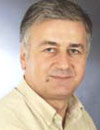
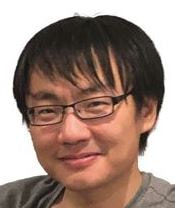
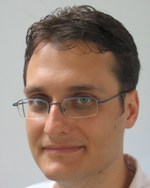
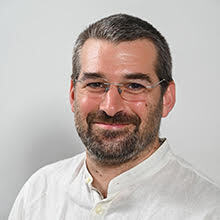
Dennis Akos is a Professor in the Department of Aerospace Engineering Sciences at the University of Colorado Boulder. He is affiliated with the Research and Engineering Center for Unmanned Vehicles (RECUV) and the Colorado Center for Astrodynamics Research (CCAR). His research focuses on RF signal processing, RF interference mitigation, integrated navigation systems, and VHF modulation. He holds a Ph.D. in Electrical and Computer Engineering from Ohio University (1997), with earlier degrees from the same institution. His professional experience includes roles at Stanford University’s GPS Laboratory and the Lulea Institute of Technology. He has received notable awards such as the Institute of Navigation Fellow (2022), Thurlow Award (2009), and multiple best paper awards. His work emphasizes GNSS security, spoofing detection, and low-cost receiver solutions. Recent articles highlight advancements in GNSS RFI localization, Android device navigation, and software-defined radio applications. His lab explores innovations in space situational awareness, multi-sensor PVT solutions, and interference-resistant systems. Collaborative projects leverage crowdsourced smartphone data to enhance GNSS reliability. Awards: Fellow of the Institute of Navigation, Thurlow Award, Samuel M. Burka Award, and FAA Excellence in Aviation Research. Grants/Advising: Advising on GNSS security and Android-based navigation systems; involved in federally funded research on interference mitigation and satellite clock stability. Labs/Teams: Leads research at RECUV and CCAR, focusing on unmanned systems and astrodynamics challenges.
Anna Brunström is a Full Professor and Head of the Distributed Intelligent Systems and Communications Research Group (DISCO) at Karlstad University's Department of Computer Science. She holds a part-time role as a Researcher at the University of Malaga's Institute of Software Engineering and Technologies (ITIS). Her research focuses on computer networking, Internet architectures, low latency communication, and 5G/6G mobile systems. She leads the nationally funded DRIVE initiative and collaborates on European projects like 6G-PATH. She actively contributes to IETF standardization, notably as a former rmcat WG chair. Her work spans over 200 publications, emphasizing network measurement, latency optimization, and multipath protocols. Education: Ph.D. (1996) and M.Sc. (1993) from College of William & Mary, B.Sc. (1991) from Pepperdine University. Research Interests: Distributed systems, IoT networking (NB-IoT), satellite communication (Starlink), machine learning for positioning, and transport protocols (QUIC, MPTCP). Recent work includes latency-aware scheduling, 5G/6G performance analysis, and edge computing frameworks. Publications highlight trends in: 1) Satellite network throughput modeling, 2) 5G/6G architecture validation, 3) Machine learning applications for positioning and network analysis, 4) Cross-layer optimization of latency-critical services. Collaborations with industry and academia drive applied research in smart grids, healthcare, and automotive communication. Labs/Teams: DISCO group at Karlstad University, leading the DRIVE research profile and 6G-PATH consortium involvement.
Prof. Dimitrios Georgakopoulos is a Professor of Computer Science at Swinburne University of Technology's School of Science, Computing and Emerging Technologies. He serves as Director of the ARC Industrial Transformation Research Hub for Future Digital Manufacturing and Swinburne's IoT Lab. Previously, he was Research Director at CSIRO's ICT Centre and a Professor at RMIT University. Affiliations: CSIRO Adjunct Fellow since 2014 Leadership: Directed 7 large cross-disciplinary initiatives with $100M+ funding Research Focus: IoT, Cyber-Physical Systems, Digital Manufacturing, Machine Learning Funding: Secured $77.1M in external grants; $59.7M at Swinburne Research Interests: Digital twins and AI for manufacturing IoT sensor sharing ecosystems 5G-enabled smart cities Autonomic IoT systems Quality assurance in Industry 4.0 Awards: 2023 National iAward (Public Sector), Vice Chancellor’s Innovation Award (2018), and multiple industry and academic recognitions. Grants & Projects: Lead researcher on ARC-funded initiatives in digital manufacturing, cybersecurity, and steel innovation. Collaborates with industry partners like Bega Cheese and FIA on IoT-driven solutions. Labs & Teams: Oversees Swinburne's IoT Lab and the ARC Future Digital Manufacturing Hub, advancing Industry 4.0 applications in manufacturing, healthcare, and smart infrastructure.
Stavrakakis Ioannis is a Professor at the Department of Informatics and Telecommunications, School of Science, University of Athens, where he has served since 2002. He previously held academic positions at Northeastern University (1994-1999) and University of Vermont (1988-1994). Ph.D., Electrical Engineering (1988), University of Virginia Diploma, Electrical Engineering (1983), Aristotle University of Thessaloniki His research focuses on network resource allocation algorithms , cooperative content dissemination , mobile ad hoc networks , and privacy-aware protocols . He leads the Advanced Networking Research (ANR) Group. Recent publications highlight trends in AI-driven network optimization , edge computing for VR , drone-assisted sensor networks , and privacy in vehicular systems . Key themes include game theory applications, energy-efficient protocols, and distributed learning frameworks. Contact: ioannis@di.uoa.gr
Xiaojun Ruan is an Associate Professor in the Department of Computer Science at California State University, East Bay. He holds a Ph.D. in Computer Science from Auburn University (2011) and a B.E. in Computer Science and Technology from Shandong University (2005). His primary research focuses on energy-efficient systems, cloud computing optimization, storage systems, and security-aware resource management. He has extensive experience in thermal modeling, parallel I/O performance, and distributed deep learning frameworks. Dr. Ruan’s work emphasizes balancing energy efficiency, reliability, and performance in storage and cloud environments. Notable projects include DuoFS (hybrid storage system), energy-aware VM allocation strategies, and securing cloud infrastructure against co-residence attacks. His research bridges hardware-software co-design principles with practical system optimizations. His publications span topics from NVMe SSD performance optimization to text augmentation for spam detection, reflecting a blend of storage systems and machine learning applications. He has actively contributed to improving Shuffle I/O in big data processing, thermal management in clusters, and secure virtualization techniques. Dr. Ruan collaborates on interdisciplinary projects involving distributed computing, cybersecurity, and real-time systems. His lab focuses on deploying energy-efficient solutions while maintaining robust reliability, evidenced by over 50 peer-reviewed articles and ongoing contributions to academic conferences.
Aggelos Bletsas is a Professor at the School of Electrical and Computer Engineering, Technical University of Crete. He holds a PhD from MIT (2005) and has expertise in wireless communication, backscatter networks, and RFID systems. His research focuses on scalable wireless networks, ultra-low-cost sensor technologies, and signal processing. Education: PhD, MIT Media Lab (2005) MSc, MIT Media Lab (2001) Diploma in Electrical & Computer Engineering, Aristotle University of Thessaloniki (1998) Research Interests: His work spans wireless transmission techniques, backscatter sensor networks, and RFID systems. Key areas include: Ultra-low-cost sensor deployment RFID localization and multi-static systems Energy-efficient hardware implementations Probabilistic inference in distributed networks Awards: IEEE Marconi Prize Paper Award (2008) Technical University of Crete Research Excellence Award (2012-2013) Multiple best paper awards at RFID-TA, ISWCS, and SENSORS Academic Contributions: He advises students who have won IEEE best thesis awards and leads projects funded by ERC grants. His laboratory focuses on practical implementations of wireless sensor networks and backscatter systems. Labs & Affiliations: Director of the Telecommunications Laboratory and affiliated with the Telecommunication Systems Institute (TSI).
Dr ASM Kayes serves as Senior Lecturer in Cybersecurity and Cyber Curriculum Lead at La Trobe University's Department of Computer Science and Information Technology, where he shapes cybersecurity education programs including Master's, Bachelor's, and Double Degrees. His academic journey began with a PhD from Swinburne University of Technology in 2015, followed by postdoctoral research at La Trobe before joining as Lecturer in 2019 and promotion to Senior Lecturer in 2022. His research spans critical cybersecurity domains including data security, privacy preservation, context-aware access control, malware/ransomware defense, and IoT/fog/cloud security leveraging AI/ML techniques. Dr Kayes has established himself as a leading voice in blockchain security frameworks, privacy policy analysis, and cyber incident response through publications in top-tier venues like ACM Computing Surveys, IEEE Internet of Things Journal, and Computers & Security. His recent publications reveal a strong trajectory toward integrating AI with traditional security frameworks, particularly in blockchain risk assessment (2025), cross-domain access control (2025), and IoT behavior prediction (2024). The research demonstrates consistent focus on practical security solutions addressing ransomware mitigation, privacy breaches, and emerging threats in decentralized systems. Over $880,000 secured as Chief Investigator for cybersecurity projects Australian Government Department of Social Services grant (2023-2026) for cyberbullying prevention AustCyber research funds with industry partners (2020-2023) SmartSat CRC and ASCRIN PhD scholarship grants (2021) Dr Kayes has successfully supervised 5 PhD candidates to completion and currently mentors 5 doctoral students across diverse topics including AI-driven threat hunting, satellite network security, and blockchain risk frameworks. His collaborative network spans UK, USA, Europe, and Asia, with active industry partnerships through Westpac, BHP, and Quantum Victoria. He serves on editorial boards for leading cybersecurity journals and has examined HDR dissertations globally, reflecting his significant standing in the academic community.
Ryan K. Williams is an Assistant Professor in the Bradley Department of Electrical and Computer Engineering at Virginia Tech. His research focuses on real-time systems optimization, multi-agent robotics, and computational frameworks for autonomous systems. He holds an NSF Career Award (2021) and has contributed to advancing algorithms for resilient and efficient multi-robot coordination. His work addresses challenges in distributed systems, including scheduling, fault tolerance, and resource allocation. Key areas include probabilistic security in multi-robot teams, topology control for stable coordination, and anticipatory planning for search and rescue operations. He also explores intersections with education, such as analyzing teacher professional learning impacts on student outcomes in STEM. Awards: NSF Career Award 2021 Grants: AF: Small grants (2024, 2021), CPS: Medium grant (2019) Labs/Teams: Collaborates on multi-robot systems and computational autonomy projects
Dr. Reuben Ng is an Assistant Professor at the Lee Kuan Yew School of Public Policy, National University of Singapore, and Lead Scientist at the Lloyd’s Register Foundation Institute for the Public Understanding of Risk. He holds a PhD in Public Health from Yale University, an MSc in Management Research from the University of Oxford, and degrees from NUS and NTU in Psychology. His research focuses on ageism, social gerontology, and quantitative social science, with a particular emphasis on leveraging behavioral insights and data analytics for evidence-based policymaking. He has contributed to Singapore’s Smart Nation initiatives and advised on risk communication strategies. Over $3.2M in research grants as PI and $4M as PI/Co-PI/Co-I. 50+ peer-reviewed publications and 85 conference presentations globally. Awards include the International Fulbright Science and Technology Award and the Harkness Fellowship. Dr. Ng serves on advisory boards in finance, defense, education, and sustainability. He leads workshops blending data analytics, behavioral insights, and design thinking. His work has been featured in major media outlets like The New York Times, The Guardian, and CNN, and he is ranked in the top 2% of global scientists by Stanford University.
Charles E. Leiserson is a Professor of Computer Science and Engineering at MIT, holding the Edwin Sibley Webster Professorship in Electrical Engineering and Computer Science. He leads the Supertech Research Group and is Faculty Director of the MIT-Air Force AI Accelerator. His work focuses on parallel computing, performance engineering, and algorithms. Leiserson is renowned for co-authoring the foundational textbook Introduction to Algorithms , widely used in computer science education globally. He has pioneered technologies like the Cilk multithreaded programming language and contributed to supercomputing architectures such as the Connection Machine CM-5. His research bridges theoretical computer science with practical applications, emphasizing cache-oblivious algorithms and compiler optimizations. Leiserson has received multiple awards for his academic contributions and educational impact, including the ACM-IEEE Ken Kennedy Award and Margaret MacVicar Fellow distinction at MIT. Education: B.S., Yale University, 1975 Ph.D., Carnegie Mellon University, 1981 Research Interests: Leiserson’s work addresses performance engineering challenges in post-Moore’s Law computing. His group develops algorithms, software systems, and hardware strategies for scalable parallelism. Key areas include parallel programming frameworks (e.g., OpenCilk), cache-aware algorithms, and compiler optimizations. He emphasizes making parallel computing accessible to mainstream programmers through tools like Cilk and educational initiatives such as MIT’s Software Performance Engineering course. Projects & Leadership: Leiserson leads the Supertech Research Group and contributed to the Cilk Arts Inc. venture, acquired by Intel. He chairs the MIT Undergraduate Practice Opportunities Program (UPOP) and teaches courses on algorithms and discrete mathematics. His leadership workshops for faculty have educated hundreds worldwide on team management in academia. Awards & Recognition: 2014 ACM-IEEE Ken Kennedy Award IEEE Taylor L. Booth Education Award ACM Paris Kanellakis Theory and Practice Award Member of the National Academy of Engineering Labs & Teams: Active in MIT’s CSAIL, Leiserson collaborates through the Supertech Group and Theory of Computation communities. His current projects include Tapir compiler infrastructure, graph neural network applications for anti-money laundering, and deterministic parallel scheduling algorithms.
Siamak Ravanbakhsh is an Associate Professor at McGill University's School of Computer Science and a Canada CIFAR AI Chair at Mila. His research focuses on machine learning, particularly representation learning with an emphasis on geometry, symmetry, and probabilistic inference. He has held academic positions at the University of British Columbia and was a postdoctoral fellow at Carnegie Mellon University. Education: B.Sc. in Computer Science, Sharif University of Technology M.Sc. and Ph.D. in Computer Science, University of Alberta (supervised by Russ Greiner) Postdoctoral Fellowship at Carnegie Mellon University (with Barnabás Póczos and Jeff Schneider) His research interests span geometric deep learning, equivariant networks, reinforcement learning, and AI for scientific applications. Notable contributions include work on symmetry-aware models, diffusion processes, and equivariant representation learning. Publications highlight advancements in causal abstraction, diffusion-based anomaly detection, and equivariant architectures for crystals and hierarchical structures. His work often bridges theory and application, emphasizing symmetry principles. Advising & Grants: Supervised over 20 graduate students and postdocs, including recent PhD graduates Daniel Levy and Mehran Shakerinava Active in mentoring M.Sc. and internship students He contributes to academic leadership roles at Mila and McGill, fostering interdisciplinary collaborations in AI research.
Sebastiano Vascon is an Associate Professor at Ca' Foscari University of Venice's Department of Environmental Sciences, Computer Science and Statistics (DAIS), and affiliated with the European Center for Living Technology. He earned his PhD in 2016 from the Italian Institute of Technology and University of Genoa, focusing on evolutionary game theory in pattern analysis and computer vision. His postdoctoral work spanned institutions like the Technical University of Munich and ETH Zurich, where he specialized in Active Learning and multi-object tracking. His research merges AI with interdisciplinary challenges, including climate change, environmental science, and cultural heritage preservation. Key areas include graph neural networks, computer vision, and game-theoretic models. He leads projects like RePAIR (AI for cultural heritage reassembly) and EasyWalk (AI-driven mobility solutions), and contributes to initiatives like MEMEX (digital storytelling). Teaching spans courses in Deep Learning, Machine Learning for Environmental Applications, and AI in Cultural Management. Research projects include: RePAIR: AI-driven 3D puzzle solving for artifact reconstruction EasyWalk: Socially-aware navigation systems MEMEX: AI for inclusive digital storytelling Climate modeling with IceBoost framework Publications highlight innovations in trajectory forecasting, environmental risk assessment, and graph-based methods. He actively reviews for top conferences (CVPR, ECCV) and journals.
Giuseppe Alessandro Veltri is a Full Professor at the University of Trento's Department of Sociology and Social Research. His expertise spans Behavioral Economics, Big Data, Computational Social Science, and Social Psychology. He currently teaches courses such as 'Big Data' and 'Social Dynamics Lab' within the Data Science and Previsione Sociale programs. His research focuses on understanding human behavior through digital methodologies, including studies on vaccine hesitancy, darknet markets, and the psychological aspects of pandemics. Veltri is also actively involved in designing computational tools like TextualLLMap to analyze societal biases in AI systems. His work bridges theoretical frameworks with empirical data, emphasizing interdisciplinary approaches to social science challenges. Research interests include the application of computational methods to study risk perception, online behavior, and policy design. Recent studies explore how behavioral insights can improve public health strategies during crises and how transparency in digital platforms influences consumer decisions. Veltri's contributions also extend to methodological innovations, such as optimizing online experiments and addressing gaps in cognitive sociology.
Anna Monreale is an Associate Professor in the Department of Computer Science at the University of Pisa and a key member of the Knowledge Discovery and Data Mining Laboratory (KDD-Lab), a joint research group with the Information Science and Technology Institute of the National Research Council (ISTI-CNR) in Pisa. Her academic career is rooted in the University of Pisa, where she completed her Bachelor's, Master's, and Ph.D. in Computer Science. Her research focuses on privacy-preserving data analytics, with core interests in big data analytics, social network analysis, spatio-temporal mining, and explainable AI. She is particularly known for her work on privacy-by-design in data mining and evaluating privacy risks in analytical processes. Her research bridges technical innovation with ethical and legal considerations in data science. Her recent publications reveal a strong trend toward explainable AI, privacy in federated learning, and risk assessment in mobility and health data. She actively contributes to developing methods for explaining black-box models, assessing privacy exposure, and balancing privacy, utility, and fairness in AI systems. Privacy by Design Ambassador (2014) ISTI-CNR Young++ Researcher Award (2014) Monreale has advised and co-chaired several international workshops, including PriSMO, PinSoDa, and MoKMaSD, and serves on editorial boards such as Transactions on Data Privacy. She teaches advanced data mining, big data ethics, and database systems across multiple graduate and undergraduate programs. She is involved in major EU projects like SoBigData, XAI, TAILOR, and HumMingBird, reflecting her leadership in data science and AI ethics. She is affiliated with the KDD-Lab, a prominent research group focused on knowledge discovery, social mining, and big data analytics, contributing to both theoretical advances and real-world applications in privacy-aware data science.
Simone Ferlin is an Adjunct Senior Lecturer at Karlstad University working with 5G and Internet evolution. She completed her PhD in computer science in 2017 at the Simula Research Lab and Universitetet i Oslo under the supervision of Dr. Ozgu Alay and Prof. Michael Welzl. Her PhD dissertation focused on increasing robustness in multipath transport with MPTCP. Dr. Ferlin's educational background includes a PhD in Computer Science from the Simula Research Lab and Universitetet i Oslo (2017). Her doctoral research centered on enhancing robustness in multipath transport protocols, specifically focusing on MPTCP (Multipath TCP). She also completed undergraduate work that contributed to a book project with Prof. Friedrich Oehme on electronics and circuit technology. Dr. Ferlin's research spans multiple domains at the intersection of networking, systems, and performance engineering. Her primary interests include network and system measurements, performance analysis, security, and congestion control. She investigates how networks like the Internet evolve, examining technology development, adoption patterns, and their impacts on various entities. Additionally, she explores ways to harmonize security and privacy while making them more usable and assessable. Her work particularly focuses on transport layer and multipath transport protocols, examining their performance and security aspects. She also investigates application and transport layer performance, automation, and monitoring. Her research extends to network programming in both Linux kernel and user space, mobile broadband networks from 2G to 5G, and their intersection with the Internet. She is deeply engaged in observability, distributed and system performance monitoring, and automation. Analysis of Dr. Ferlin's recent publications reveals a strong focus on next-generation networking technologies. Her work spans multiple domains including 5G/6G networks, transport protocols (particularly QUIC and MPTCP), network virtualization, container orchestration, and the application of machine learning to networking problems. She has increasingly incorporated large language models into network configuration and automation research. Her publications demonstrate a consistent emphasis on performance measurement, optimization, and security across diverse networking environments from the edge to the cloud. Dr. Ferlin has received notable recognition for her research contributions: Best paper award at IEEE ICIN'21 for 'Learning-based Incast Performance Inference in Software-Defined Data Centers' Applied Networking Research Prize (ANRP)'25 winner for 'NetConfEval: Can LLMs Facilitate Network Configuration?' Dr. Ferlin is actively involved in mentoring the next generation of networking researchers. She has co-supervised numerous Master's and PhD students across multiple institutions including Karlstad University, KTH, TU Berlin, University of Oslo, and universities in Brazil. Her students have worked on diverse topics including NAT64 performance comparison, system tracing visualization, network observability, ML applications to multipath transport, FEC integration with QUIC, high-performance networking for 5G, congestion control, shared bottleneck detection, multipath IoT applications, and container runtime performance. She is also involved in several significant research projects including Vinnova's SEMLA (Securing Enterprises via Machine-Learning-based Automation), Horizon Europe's CODECO (Cognitive Decentralised Edge Cloud Orchestration), and the Knowledge Foundation of Sweden's DRIVE (Data-driven Latency-Sensitive Mobile Services for a Digitized Society). Dr. Ferlin serves as Workshop Chair for ACM SIGCOMM '25, is a member of the ACM/IRTF Applied Networking Research Workshop (ANRW) steering committee, and co-chairs the Internet Congestion Control Research Group (ICCRG) at the IRTF. She previously served as Associate Technical Editor for IEEE Communications Magazine and has been active on numerous program committees for major networking conferences including SIGCOMM, CoNEXT, IMC, and PAM.