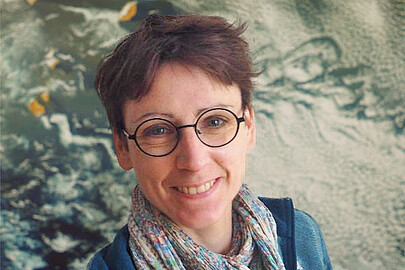
Dr. Gaël Kermarrec is a researcher at the Boundary Layer Meteorology Group , part of the Institute of Meteorology and Climatology within the Faculty of Mathematics and Physics at Leibniz University Hannover . His work focuses on atmospheric turbulence, GNSS applications, and remote sensing for environmental monitoring. Boundary layer meteorology Turbulence theory GNSS signal processing Terrestrial laser scanning Climate change impacts Geodetic time series analysis His research integrates advanced mathematical models like LR B-splines and Matérn covariance with large eddy simulations to study: Atmospheric turbulence effects on optical/GNSS signals Hydrospheric mass loading Deformation analysis of terrain/port infrastructure Climatic sea-level changes Machine learning for remote sensing The 15 most recent articles (2025-2023) demonstrate his focus on: GNSS-based turbulence detection AI-enhanced climate mapping Advanced surface approximation techniques Multi-sensor data fusion Stochastic modeling of geodetic observations Environmental impacts on optical measurements He has developed tools like the Klimascanner QGIS plugin for urban climate resilience and contributes to: Understanding atmospheric scale lengths Improving TLS/GNSS deformation monitoring Analyzing hydrospheric changes Wavefront modeling Ionospheric corrections
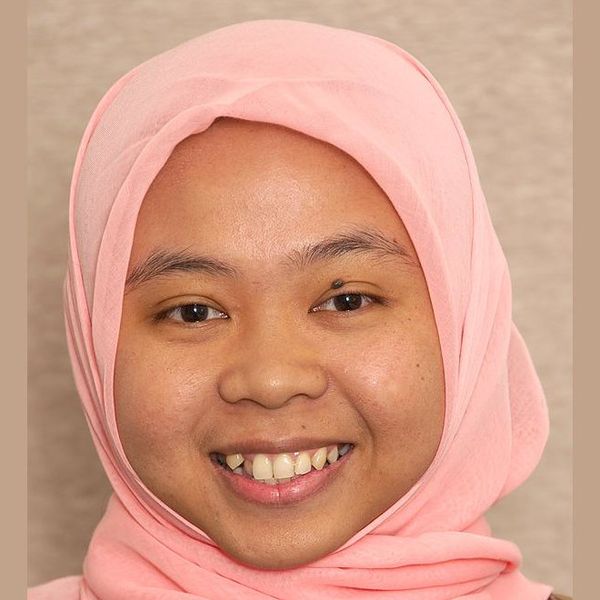
Derry Wijaya is an Associate Professor and Program Coordinator for the Data Science Program at Monash University Indonesia. She also co-directs the Monash Data and Democracy Research Hub, focusing on analyzing data's impact on democracy. Previously, she served as an Assistant Professor at Boston University's Department of Computer Science. Her research spans multilingual NLP, low-resource language technologies, and combating AI-driven misinformation. Education: PhD in Language Technologies, Carnegie Mellon University (2013) Postdoctoral Fellowship, University of Pennsylvania (2013–2015) Bachelor's & Master's in Computing, National University of Singapore Research Interests: Improving language model performance via self-consistency and reasoning Analysis of bias, toxicity, and framing in AI outputs Preservation of Indonesian indigenous scripts and languages Development of tools like OpenFraming AI for multilingual framing analysis Recent Work Trends: Her publications (2023–2025) emphasize ethical AI, low-resource language solutions, and social media analysis. Notable contributions include frameworks for metric calibration (MetaMetrics), debiasing generative models, and surveys on Indonesian language technology needs. Awards & Roles: Fulbright Scholarship recipient Serves on program committees for ACL, EMNLP, NeurIPS, and ICLR Co-created OpenFraming AI for multilingual framing analysis Grants & Labs: Leads the Monash Data and Democracy Hub, focusing on tech's societal impact. Active in grant-funded projects preserving Indonesia's linguistic heritage through digitization efforts.
Associate Professor Ivan Guo is a faculty member at Monash University's School of Mathematics, where he leads research in mathematical finance and stochastic modeling. He obtained his PhD in Mathematics from the University of Sydney in 2014 and currently accepts PhD students. His work bridges theoretical mathematics and practical financial applications, with active projects spanning 2022-2026. Research Focus Dr. Guo's research centers on three interconnected areas: Optimal Transport Applications : Developing transport-based methods for financial model calibration and derivatives pricing Market Microstructure : Analyzing market-making strategies, liquidity, and high-frequency trading dynamics Sustainable Finance : Modeling green investment impacts and energy market transitions using game-theoretic approaches Active Projects Can green investors drive transition to a low-emission economy? (2022-2026) Integrating energy storage into electricity markets (2022-2024) Data61 CRP #46 - Risklab mathematical sciences (2020-2023) Efficient computational techniques for econophysics (2019-2021) The role of liquidity in financial markets (2017-2020) His research consistently addresses model uncertainty, volatility dynamics, and computational methods across 18+ publications since 2012.
Wolfgang Bösch is a Professor at Graz University of Technology's Institute of Microwave and Photonic Engineering, specializing in advanced RF components and measurement techniques. His research advances high-frequency systems through innovations in antenna technology and electromagnetic theory. Research domains include: metamaterial-based antennas, precision measurement calibration, microwave filter optimization, and 3D-printed RF components. Recent work demonstrates strong focus on millimeter-wave systems and reconfigurable antenna arrays. Publications highlight expertise in: machine learning for filter design, metasurface applications, PCB transitions for high-frequency systems, and uncertainty quantification in RF engineering. Research consistently addresses miniaturization and performance optimization challenges. Awards recognize contributions to measurement science and antenna design: Fellow of IET, Houska Prize, and best paper awards. Current laboratories investigate liquid crystal antenna systems and error calibration methodologies for next-generation wireless systems.
Dr. Ahmed F. Abdelghany is the Associate Dean for Research and Professor of Operations Management at the David O'Maley College of Business, Embry-Riddle Aeronautical University, since January 2006. He specializes in commercial airlines, airports, big data cloud computing, business analytics, and operations research models. Prior to his academic career, Dr. Abdelghany worked in enterprise optimization at United Airlines, Chicago. Education: Ph.D. in Civil Engineering (Transportation Systems) from the University of Texas at Austin (2001) Dr. Abdelghany’s research focuses on airline network planning, flight scheduling, simulation of complex transportation systems, and NextGen air traffic management. He has authored two influential books: Modeling Applications in the Airline Industry (Routledge 2010) and Airline Network Planning and Scheduling (Wiley 2018). His publications analyze airline operations, competitive dynamics, and crowd management in transportation facilities. He teaches courses like Airline Management (BA 315) and Airline Operations & Mgmnt (BA 609), and participates in industry short courses. Dr. Abdelghany contributes to research projects such as NextGen air traffic implementation, integrated airport initiatives, and benefit-cost analysis of arrival management systems. His work bridges academic theory with real-world airline and transportation challenges.
Gideon Hartman is an Associate Professor in the Anthropology Department at the University of Connecticut, where he conducts interdisciplinary research at the intersection of paleoenvironmental reconstruction, plant and animal eco-physiology, anthropology, and archaeology. His work primarily employs stable isotope methods to reconstruct past environments, human mobility patterns, paleodiets, and ancient economic systems. Dr. Hartman received his Ph.D. from Harvard University in 2008. His educational foundation in anthropology and archaeological science has enabled his innovative approach to stable isotope analysis. Rather than treating isotopic values as static markers, he investigates the mechanisms causing variability in stable isotope ratios as they move along foodwebs from soil and atmosphere to plants and then to animals and humans. Hartman's research program uniquely begins in the contemporary world to establish principles that can be reliably applied to archaeological settings. His work spans diverse geographical regions including the Eastern Mediterranean, Levant, Jordan Valley, and Armenian Highlands, with temporal coverage from the Middle Pleistocene to the Early Bronze Age. He has made significant contributions to understanding how environmental factors like water availability, temperature, and soil conditions affect isotopic signatures in modern ecosystems, creating robust models for archaeological interpretation. His publication record demonstrates consistent productivity in high-impact journals, with research trends showing increasing sophistication in multi-isotope approaches applied to complex archaeological questions about pastoralism, trade networks, human migration, and human-environment interactions. His work increasingly integrates zooarchaeological, archaeobotanical, and geochemical evidence to build comprehensive pictures of past societies. As director of the Stable Isotope Preparation Lab at UConn, Hartman leads a research team that processes and analyzes samples from archaeological sites worldwide. His laboratory serves as a hub for interdisciplinary collaboration between archaeologists, anthropologists, geoscientists, and biologists seeking to apply isotopic methods to their research questions. His work has been instrumental in refining methodologies for interpreting strontium, carbon, nitrogen, and oxygen isotope data in archaeological contexts, particularly regarding animal and human mobility patterns in the Eastern Mediterranean region.
Edward J. Balistreri is the Duane Acklie Chair and Professor of Economics at the University of Nebraska-Lincoln, where he also serves as Department Chair. He became the Duane Acklie College of Business Yeutter Institute Chair in August 2020 and is a core faculty member of the Clayton Yeutter Institute of International Trade and Finance. Prior to joining UNL, he held academic positions at Iowa State University and the Colorado School of Mines, and has contributed to climate and trade-policy debates as both an academic and consultant. Ph.D. in Economics, University of Colorado-Boulder (1995) B.A. in Economics, Arizona State University (1989) Professor Balistreri specializes in international economics with a focus on trade policy analysis using computable general equilibrium (CGE) modeling. His research examines the impacts of trade agreements, trade disputes, and policy responses on economic outcomes, with particular expertise in agricultural and energy products trade. He has made significant contributions to the theoretical and empirical understanding of international trade structures, including Armington, Krugman, and Melitz models, and has applied these frameworks to analyze contemporary trade issues including the US-China trade war and the economic impacts of the COVID-19 pandemic. Balistreri's recent publications demonstrate a strong focus on contemporary trade policy challenges, particularly the analysis of disruptive trade policies and their economic impacts. His work spans theoretical advancements in trade modeling and applied policy analysis of recent trade conflicts. Notably, he has applied his expertise to analyze the economic impacts of the COVID-19 pandemic on global food security and regional economies, showcasing the versatility of his methodological approach across different economic contexts. Professor Balistreri has served as a research economist at the United States International Trade Commission and as a consultant, providing expertise on trade policy matters. His research has been supported by various funding sources, including a cooperative agreement between the U.S. Department of Agriculture, Economic Research Service, and the University of Nebraska-Lincoln for his work on global food security during the pandemic. Balistreri is a core faculty member of the Clayton Yeutter Institute of International Trade and Finance at the University of Nebraska-Lincoln, which serves as a hub for research and policy analysis on international trade issues. His collaborative work with researchers like David G. Tarr, Christoph Böhringer, and Thomas F. Rutherford demonstrates his engagement with international research networks focused on advancing trade modeling methodologies and policy analysis.
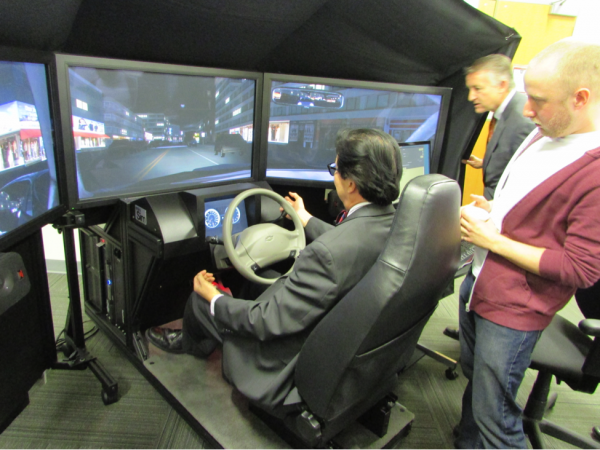
Professor Chris Lee is a faculty member in the Department of Transportation Science and Engineering at the University of Windsor's Faculty of Engineering. His research focuses on advancing transportation safety through the analysis of driver behavior, traffic flow dynamics, and the integration of emerging technologies like autonomous vehicles and machine learning. Key areas include collision risk prediction, driver vigilance assessment, and the development of advanced car-following models. He has contributed to initiatives such as the Transportation Science and Engineering scholarship program, supporting student research in innovative technologies like driving simulators for lane change behavior studies. His work bridges engineering and human factors, addressing challenges such as driver response to autonomous systems, heavy vehicle traffic management, and cross-cultural automotive design. Lee's interdisciplinary approach leverages data analytics, physiological signals, and machine learning to solve real-world transportation problems. His research has implications for policy-making, infrastructure design, and vehicle safety standards. Lee has collaborated extensively on projects analyzing crash precursors, variable speed limits, and the impact of ITS (Intelligent Transportation Systems) on safety. His publications span over two decades, demonstrating a commitment to both academic rigor and practical applications in transportation engineering. Notable contributions include refining car-following models, studying driver aggression, and evaluating the effectiveness of traffic management strategies.
Benjamin Faber is an Associate Professor of Economics at the University of California, Berkeley, affiliated with the Department of Economics within the College of Letters and Science. His research focuses on international and development economics, exploring topics such as rural-urban migration, spatial inequality, e-commerce impacts, and responsible sourcing policies. He has held positions since 2013, including teaching graduate and undergraduate courses in development economics and international trade. Faber has organized numerous seminars including the Berkeley International Econ Seminar and Trade Work in Progress Seminar, fostering academic collaboration. His work appears in top journals like the Quarterly Journal of Economics and Review of Economic Studies, addressing welfare measurement, firm heterogeneity, and spatial economic dynamics. Notable contributions include analyzing China's highway system effects and Mexico's tourism impacts. His research often bridges theory with empirical evidence, emphasizing policy-relevant outcomes in developing economies. Education details are not explicitly listed in the provided materials, but his academic trajectory is evident through his prolific publication record and teaching roles since 2013. Faber's affiliations include the National Bureau of Economic Research (NBER) and Center for Economic Policy Research (CEPR), with his work frequently featured in policy platforms like VoxDev.org and the World Trade Report. His research questions address critical contemporary issues such as the distributional impacts of globalization and the role of digital technologies in reducing rural-urban divides. Advising and grants information is not specified, but his extensive collaborations with global institutions and co-authors from universities like MIT, Yale, and Peking University highlight his network-driven research approach. Faber's work is methodologically rigorous, combining large-scale data analysis with theoretical frameworks to inform policy decisions on migration, trade, and development interventions.
Maurizio Ramanzin is a Full Professor at the University of Padova , affiliated with the School of Animal Science and Department of Agronomy, Animals, Food and Natural Resources (DAFNAE) . His research focuses on Agricultural Sustainability , Environmental Impact Assessment , and Precision Livestock Farming . Academic Field : AGR/19 Email : maurizio.ramanzin@unipd.it Address : Agripolis - Viale dell'università, 16 - Legnaro (Padova) – ITALY His work explores the interactions between livestock systems and ecosystem services in mountainous regions, with emphasis on: Grazing Management and biodiversity conservation Life Cycle Assessment (LCA) of dairy and beef systems Climate Change Adaptation in Alpine ungulates Animal Welfare in small-scale farms Technological Tools (GPS, NIRS) for monitoring grazing behavior Key trends in his recent publications include: Quantifying environmental drivers of wolf predation on livestock Developing low-cost biologging systems for dairy cows Analyzing social-ecological trade-offs in mountain agriculture Assessing microbial dynamics in alpine soils
Dr. Mourad Zeghal is a Professor in the Department of Civil and Environmental Engineering at Rensselaer Polytechnic Institute (RPI). His research focuses on computational geomechanics, seismic response monitoring, and geotechnical system identification. He leads projects addressing liquefaction mitigation, multiscale modeling of geosystems, and development of advanced computational tools for geotechnical analysis. Dr. Zeghal collaborates with RPI's Center for Network for Earthquake Engineering Simulation (CEES), Scientific Computation Research Center (SCOREC), and Inverse Problems Center (IPRPI). His work emphasizes reducing risks from natural hazards through improved design tools and model validation. Key projects include the Liquefaction Experiments and Analysis Projects (LEAP), which use centrifuge testing and machine learning to analyze soil behavior under seismic loads. Dr. Zeghal's research integrates experimental data with numerical simulations to enhance understanding of soil-structure interaction and lateral spreading during earthquakes. Research Interests: Soil liquefaction, multiscale modeling, inverse problem methods, computational geomechanics Key Collaborations: CEES, SCOREC, IPRPI, and global research networks Focus Areas: Centrifuge testing, model validation, seismic hazard mitigation His recent publications (2023–2025) highlight advancements in quantifying uncertainty in soil response, analyzing LEAP centrifuge experiments, and developing machine learning approaches for model calibration. Dr. Zeghal actively engages with industry and government labs to translate research into practical engineering solutions.
Naratip Santitissadeekorn is a Senior Lecturer in Data Assimilation at the School of Mathematics and Physics, University of Surrey, where he is affiliated with the Mathematics at the Interface Group. His work bridges mathematics, data science, and real-world applications in urban planning, crime analysis, and geophysical fluid dynamics. Dr. Santitissadeekorn received his PhD from Clarkson University in 2008, with a dissertation titled "Transport Analysis and Motion Estimation of Dynamical Systems of Time-Series data." His doctoral research was supervised by Professor Erik Bollt. Following his PhD, he completed two significant postdoctoral positions: from 2008-2011 at the University of New South Wales, Sydney, Australia, working with Professor Gary Froyland on numerical techniques for finite-time Lagrangian coherent set identification, with applications to delimiting the polar vortex and Agulhas rings; and from 2011-2014 at the University of North Carolina-Chapel Hill, working with Professor Chris Jones on data assimilation projects. Dr. Santitissadeekorn's research focuses on inverse problems and data assimilation in geophysical fluid dynamics, the applications of Lagrangian Coherent Structures (LCS), and computational ergodic theory. His work combines theoretical mathematics with practical applications, particularly in urban growth modeling and crime analysis. He has developed innovative methods for identifying coherent structures in fluid flows, estimating transition probabilities from spatiotemporal data, and creating data-driven frameworks for urban expansion scenarios. His research demonstrates how mathematical techniques can be applied to solve real-world problems in environmental science, urban planning, and public safety. An analysis of Dr. Santitissadeekorn's recent publications (2020-2023) reveals a strong focus on urban expansion modeling and network analysis. His work on urban growth has evolved from basic cellular automata models to sophisticated frameworks that manage uncertainty through parameter clustering and growth mode identification. His research on Hawkes processes has advanced ensemble-based filtering techniques for analyzing count data in large networks. These publications demonstrate a consistent pattern of applying mathematical rigor to complex spatiotemporal phenomena, with increasing emphasis on data-driven approaches and practical applications. Dr. Santitissadeekorn has made significant contributions to data assimilation methods, particularly through the development of the extended Poisson-Kalman filter (ExPKF) for urban crime modeling. His teaching includes courses in Algebra and Bayesian Statistics, reflecting his expertise in both theoretical and applied mathematics. While specific awards are not mentioned in the available information, his extensive publication record in high-impact journals demonstrates recognition within his field. Dr. Santitissadeekorn's research has practical implications for urban planning and law enforcement. His work on urban expansion models helps planners understand different growth trajectories, while his crime modeling research contributes to improved police patrolling strategies. His interdisciplinary approach, combining mathematics, computer science, and domain-specific knowledge, positions him at the forefront of applying data science to societal challenges.
Srijan Sengupta is an Associate Professor of Statistics at North Carolina State University (NC State) since 2020. Previously, he served as an Assistant Professor at Virginia Tech from 2016 to 2020. He holds a Ph.D. in Statistics from the University of Illinois at Urbana-Champaign (2016) and degrees from the Indian Statistical Institute (B.Stat and M.Stat with Distinction). His research focuses on statistical methodology for network data, anomaly detection, bootstrap methods, and scalable inference, with applications in healthcare analytics, epidemiology, and cybersecurity. Education: Ph.D. in Statistics, University of Illinois at Urbana-Champaign (2011–2016) M.Stat (1st Division with Distinction), Indian Statistical Institute (2007–2009) B.Stat (1st Division with Distinction), Indian Statistical Institute (2004–2007) Research Interests: His methodological work includes statistical inference in networks, anomaly detection, bootstrap techniques, and scalable algorithms for big data. Applications span social determinants of health, healthcare analytics, space physics, epidemiology, and cybersecurity. He emphasizes interdisciplinary collaborations, particularly in patient safety event analysis and medical device safety. Awards and Grants: Norton Prize for Outstanding PhD Thesis (2015) NIH R01 Grant ($890,055, Principal Investigator) for statistical algorithms in patient safety (2019–2022) Multiple grants for network inference and anomaly detection (NSF, Socially Determined Inc., Virginia Tech Foundation) Advising and Service: Advises over 20 students across PhD, master’s, and undergraduate research programs. Serves as an Associate Editor for Sankhya, Series B and peer reviewer for top journals. Active in university service roles at NC State and Virginia Tech, including faculty hiring committees and curriculum development. Labs and Collaborations: Leads research on statistical network analysis, including projects funded by NIH and NSF. Collaborates with institutions globally on topics like epidemic thresholds, cybersecurity defenses (e.g., phishing detection), and healthcare analytics.
Mariel Borowitz is an Associate Professor at the Sam Nunn School of International Affairs, Georgia Institute of Technology, and a leading expert in international space policy. Her work examines the intersection of technology, security, and global governance, with a focus on remote sensing, Earth observation, and space sustainability. PhD in Public Policy, University of Maryland MA in International Science and Technology Policy, George Washington University BS in Aerospace Engineering, Massachusetts Institute of Technology Her research explores space security , commercialization of space , and data sharing policies , analyzing how nations balance economic, environmental, and strategic interests. Recent publications address cislunar governance, satellite health monitoring, and the role of weather satellites in diplomacy. She has received multiple research awards, including the Ivan Allen College Gold Star Faculty Research Award (2024, 2021), and her work is supported by NSF, DoD, and NASA grants. Ivan Allen College Gold Star Faculty Research Award, 2024 MGMWERX Space Case Study Prize Challenge, 2020 European Commission Travel Grant, 2014 Dr. Borowitz serves as Director of International Space Situational Awareness Engagement at the U.S. Office of Space Commerce and has advised Congress on space safety. She has contributed to media outlets like NPR, The Verge, and Science Magazine.
Talal Shaikh is an Associate Professor at Heriot-Watt University's School of Mathematical and Computer Sciences in Dubai. He serves as Director of Undergraduate Studies and Programme Director for BSc Computer Science, BSc CS (AI), and MSc Software Engineering. With a decade of industry experience as a Chief Information Officer and Software Engineer, he bridges practical insights with academic research. Research Interests: Pervasive Computing, IoT/M2M, AI/ML, WiFi Sensing for Healthcare, Financial Machine Learning, Educational Technology Awards: Teaching Excellence Awards (2017/18), Fellow of the Higher Education Academy (FHEA), multiple Learning and Teaching Oscars (2016, 2017, 2018) His work spans Ubiquitous Computing and IoT , focusing on sensor networks and WiFi-based sensing for healthcare. In Artificial Intelligence , he applies ML to robotics, financial analytics, and educational innovation. Recent articles analyze Reinforcement Learning , Emotion Recognition , and WiFi Sensing applications. His teaching emphasizes student-centric learning, with over 100 supervised dissertations achieving distinctions. Collaborations include international conferences and interdisciplinary research in smart environments and adaptive systems.