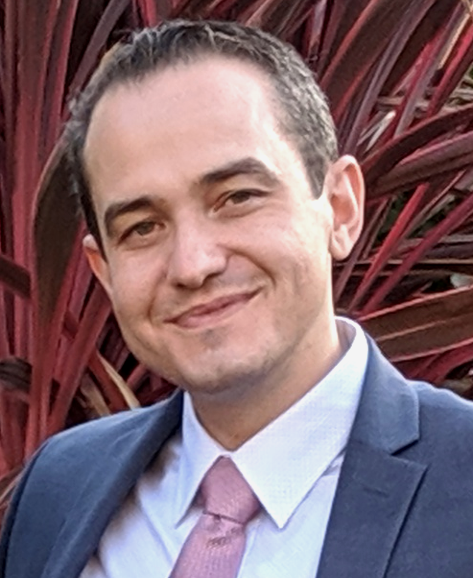
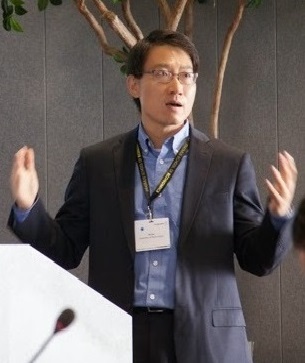
Ming Hu is a Professor and University of Toronto Distinguished Professor of Business Operations and Analytics at Rotman School of Management, University of Toronto. He serves as Area Coordinator for the Operations Management & Statistics Area and holds editorial leadership roles including Editor-in-Chief of Naval Research Logistics and Associate Editor for multiple top journals. MS in Applied Mathematics, Brown University (2003) PhD in Operations Research, Columbia University (2009) His research focuses on sharing economy , social operations , and platform economics , examining how operational decisions can maximize societal benefit. Key areas include crowdfunding , two-sided markets , crowdsourcing , and group buying , with applications to DEI , sustainability , and AI-empowered operations . Recent work analyzes spatial operations in delivery systems, algorithmic fairness , and climate change adaptation in agricultural supply chains. His publications span top journals like Management Science and Operations Research , covering topics from blockchain traceability to quantum-inspired optimization . Scientific recognitions include: Wickham Skinner Early-Career Research Award (2016) Best Operations Management Paper in Management Science (2017) 2018 Poets & Quants Best 40 Under 40 MBA Professors As an Amazon Scholar (2022–) and Chair of Chain Analytics Institute (2023–), he bridges academic research with industry applications in AI-driven logistics and sustainable operations.
Dr Andrew Rhead is a Senior Lecturer in the Department of Mechanical Engineering at the University of Bath, specializing in aerospace composites and damage tolerance analysis. His research focuses on impact damage detection, failure mechanism modeling, and Non-Destructive Evaluation (NDE) techniques for composite structures. MSci in Mathematical Sciences (Dynamical Systems) - University of Bristol (2006) PhD in Composite Damage Tolerance - University of Bath (2009) His work develops computationally efficient analytical models for compression after impact (CAI) strength prediction in composite laminates, surpassing traditional finite element methods. Key projects include hydrogen storage systems for aircraft, cryogenic composite testing, and steered fiber manufacturing optimization. Active in 10 projects including ASPIRE and HyFIVE Collaborates with Airbus, GKN Aerospace, and EPSRC Research trends show emphasis on sustainable aviation materials, structural battery integration, and advanced testing methodologies. Current affiliations include the Institute for Mathematical Innovation (IMI) and Centre for Integrated Materials, Processes & Structures (IMPS).
Professor Mette Eilstrup-Sangiovanni serves as Senior Lecturer in International Studies within the Department of Politics and International Studies (POLIS) at the University of Cambridge and holds a Fellowship in International Relations at Sidney Sussex College. Her teaching portfolio encompasses International Organization, International Relations Theory, International Security, History and Theory of European Integration, and Research Design and Methodology, reflecting her dual institutional commitments. Her research program centers on International Security, International Organizations, and European Integration with specialized expertise in Global Governance and Transnational Networks. She investigates how formal and informal institutions shape security governance frameworks, weapons proliferation regimes, and European defense architectures through rigorous application of network theory. This analytical lens reveals critical insights into cooperation dynamics and institutional evolution within international security contexts. Publication analysis shows consistent thematic development from foundational work on balance-of-power theory (2008-2009) toward contemporary examinations of multipolarity's institutional impacts (2013-2014). Her scholarship demonstrates methodological continuity in applying network analysis to diverse security challenges, from terrorist organizations to EU defense policy, while maintaining focus on institutional interplay in global governance structures.
Prof. Dr. Dennis Säring is a faculty member at the University of Applied Sciences Wedel , specifically affiliated with the School of Engineering. His academic and research activities focus on Deep Learning , Medical Image Analysis , and applications of Artificial Intelligence in healthcare and biomedical imaging. He has led seminars on Deep Learning topics and supervised student projects in Autonomous Driving at Audi's AADC 2018 competition. Research Highlights : Cardiovascular imaging, forensic age estimation via MRI, neural network-based bone segmentation, and cerebrovascular aneurysm analysis. Technical Expertise : Cardiac MRI, 3D/4D image processing, parametric mapping, and spatiotemporal data fusion. His recent publications (2018-2023) emphasize 3D MR segmentation for age assessment, CMR strain analysis in athletes, and T1/T2 mapping for myocarditis. Key collaborations include institutions like the University Medical Center Hamburg-Eppendorf and Wedler Hochschulbund, with funding for autonomous vehicle research. While no explicit scientific awards are listed, his work spans clinical cardiology, forensic radiology, and AI-driven medical diagnostics.
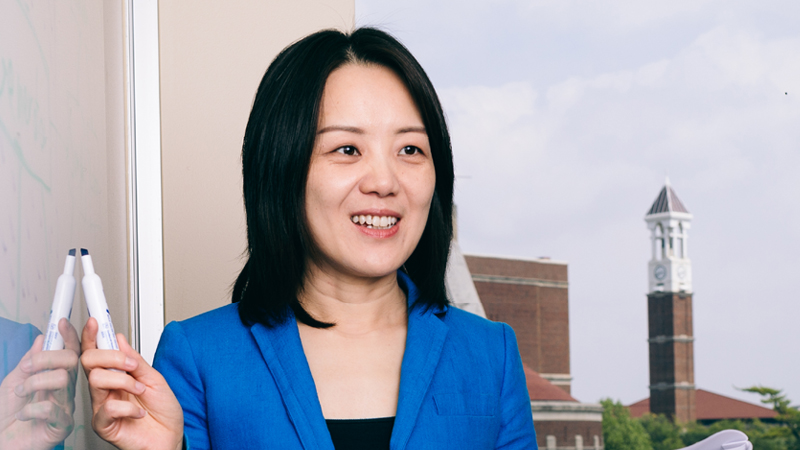
Lin Tan is a Professor of Computer Science at Purdue University , holding the Mary J. Elmore New Frontiers Professorship . She joined Purdue in 2019 after serving as a Canada Research Chair and associate professor at the University of Waterloo. She is an ACM Distinguished Member and IEEE Senior Member . Education: PhD in Computer Science, University of Illinois Urbana-Champaign BS in Computer Science and Technology, Zhejiang University Research Interests: Professor Tan’s research lies at the intersection of software engineering , artificial intelligence , and security . Her work focuses on software-AI synergy , software dependability , defect detection & repair , and software text analytics . She leverages machine learning and natural language processing to enhance software reliability, and conversely uses software techniques to improve the dependability of AI systems. Her recent projects include building binary foundation models (Nova), evaluating large language models for code generation and repair, and developing interactive debugging tools that reduce debugging time by one-third. She also explores robot task planning with LLMs and automated front-end development . Awards & Honors: Best Paper Award Finalist, ICRA 2025 ELATES Fellow, 2024-2025 ACM SIGSAC Distinguished Paper Award, CCS 2024 J.P.Morgan AI Faculty Research Awards (2020, 2021, 2022) ACM SIGSOFT Distinguished Paper Awards (ASE 2020, MSR 2018, FSE 2016) Canada Research Chair (2017) Ontario Early Researcher Award (2015) NSERC Discovery Accelerator Supplements Award (2015) Google Faculty Research Awards (2010, 2014) IEEE Micro Top Picks (2006) Advising & Funding: Professor Tan currently advises eight PhD students and has graduated 20+ PhD and Master’s students now thriving in academia (York University, Concordia University, University of Alberta) and industry (Microsoft, Meta, Amazon, Google). Her group is generously supported by NSF , Meta/Facebook Research Awards , J.P.Morgan AI Faculty Awards , and NSF REU programs. Labs & Teams: She leads the Software Reliability & AI Lab at Purdue, recruiting postdocs, PhD, MS, and undergraduate researchers year-round. Lab interests span binary recovery , LLM-based program repair , testing deep-learning libraries , and data-free model extraction .
Elena Maria Baralis is a Full Professor at the Department of Control and Computer Science (DAUIN) at the Polytechnic University of Turin. She serves as Pro-Rector, member of the Board of Directors (without voting rights), member of the Academic Senate (without voting rights), and coordinator of the University's Permanent Observatory for Monitoring the Academic Sector. She chairs the Control and Computer Engineering Department and previously chaired the Computer Engineering School from October 2012 to October 2018. Her research interests focus on database systems and data mining, specifically explainable AI, bias detection in data analytics, and machine learning algorithms for big data. Her work spans various application domains including predictive maintenance, Industry 4.0, and healthcare. Recent publications demonstrate her expertise in speech processing, bias mitigation, and innovative neural network architectures like Kolmogorov-Arnold Networks. Her research output shows a clear trend toward addressing fairness and explainability in AI systems while exploring novel approaches to speech and language understanding. Professor Baralis has received significant recognition including becoming a Fellow of the Academy of Sciences of Turin in 2017. She has served as Editor-in-Chief for IEEE Internet of Things Journal (2016-2019) and Knowledge and Information Systems (2014-present). She actively mentors doctoral students including Claudio Savelli (researching Machine Unlearning), Eleonora Poeta, Giuseppe Gallipoli, Alkis Koudounas, and others. Her research is supported by numerous projects including AI4CTI (Artificial Intelligence for Cyber Threat Intelligence, 2025-2028), Smart manufacturing driven by Machine Learning in Industry 4.0 (2019-2020), and I-REACT (2016-2019).
Gustavo Alonso is Full Professor at the Department of Computer Science (D-INFK) of ETH Zurich and Head of the Institute for Computing Platforms . He has been at ETH since 1995, first as a post-doc, then as Assistant Professor from April 1998, and promoted to Full Professor in October 2001. Within the Systems Group he leads the Information and Communication Systems Research Group . Education: 1989 – Telecommunications Engineering (undergraduate), Madrid Technical University (UPM-ETSIT), Spain 1992 – M.S. Computer Science, University of California, Santa Barbara (UCSB) 1994 – Ph.D. Computer Science, University of California, Santa Barbara (UCSB) Research Interests: His work spans databases, distributed systems, cloud-computing architecture, FPGAs, hardware acceleration for data science, parallel and reconfigurable computing . The group investigates how modern heterogeneous hardware—from GPUs to SmartNICs—can be integrated into data-processing systems to achieve orders-of-magnitude performance gains, energy savings, and new functionality such as in-network computation and serverless acceleration. Scientific Awards & Honors: Fellow of the ACM (Association for Computing Machinery) Fellow of the IEEE (Institute of Electrical and Electronics Engineers) Distinguished Alumnus, Department of Computer Science, UC Santa Barbara Four Test-of-Time / Most Influential Paper Awards across databases, programming languages, cloud computing, and software engineering Labs & Projects: He directs the Information and Communication Systems Research Group within the Systems Group ( systems.ethz.ch ). The lab develops open-source platforms such as Coyote v2 for FPGA abstractions, Shuhai for HBM benchmarking, and MicroRec for micro-second recommendation serving, while collaborating with industry on SmartNICs, serverless analytics, and cloud-scale data analytics.
Mark Crowley is an Associate Professor in the Department of Electrical and Computer Engineering at the University of Waterloo, with a cross-appointment in the Cheriton School of Computer Science. He is a member of the Waterloo Artificial Intelligence Institute (WAII) and the Waterloo Institute for Complexity and Innovation (WICI), and serves as National Secretary of the Canadian Artificial Intelligence Association (CAIAC). His educational background includes a Ph.D. and M.Sc. in Computer Science from the University of British Columbia, where he worked in the Laboratory for Computational Intelligence, and a B.A. in Computer Science from York University. He completed a postdoctoral fellowship at Oregon State University working with Tom Dietterich's machine learning group. Crowley's research focuses on developing dependable and transparent algorithms to augment human decision-making in complex domains with multiple agents, spatial structure, or uncertainty. His work spans Reinforcement Learning , Deep Learning , Ensemble Methods , and Manifold Learning . He frequently collaborates with researchers in applied fields including Computational Sustainability, Sustainable Forest Management, Autonomous Driving, Medical Imaging, and Material Design. His research is motivated by both theoretical opportunities and real-world challenges such as forest fire management, automotive applications, and medical imaging. His recent publications demonstrate a strong focus on addressing challenges in reinforcement learning, particularly around observation costs, multi-agent systems, and causal representation learning. His work on ChemGymRL provides a significant contribution to digital chemistry and material design through reinforcement learning frameworks. The textbook Elements of Dimensionality Reduction and Manifold Learning represents a major contribution to the theoretical foundations of machine learning. Crowley actively supervises graduate students, with recent thesis completions including Shayan Shirahmadi Gale Bagi (PhD, Feb 2025) and Oleksandra Nahorna (MASc, Dec 2024). His lab, UWECEML (Waterloo ECE Machine Learning Lab), focuses on developing new algorithms at the intersection of Machine Learning, Optimization, and Probabilistic Modeling. He teaches courses including ECE 457C (Reinforcement Learning), ECE 657A (Data & Knowledge Modelling & Analysis), and ECE 457B (Fundamentals of Computational Intelligence). His blog Computationally Thinking explores AI, machine learning, and the societal impact of these technologies.
Khuzaima Daudjee is a Professor and David R. Cheriton Faculty Fellow in the Cheriton School of Computer Science at the University of Waterloo. His research focuses on systems-oriented problems at the intersection of systems and data management, particularly building large-scale systems, storage infrastructure in the cloud, and modern hardware applications. He leads projects in distributed database systems, elastic scaling, and resource optimization. His recent work includes Caerus (geo-replicated transactions), Tiresias (predictive storage), and MorphoSys (automatic physical design metamorphosis). Daudjee has chaired major conferences including ICDE 2026 and serves on editorial boards for VLDB, SIGMOD, and IEEE TKDE journals. His awards include ACM Distinguished Scientist and multiple best paper awards. Educational initiatives include developing distributed systems teaching materials and supervising graduate students across database and distributed systems domains. His industry collaborations involve cloud infrastructure optimization and scalable data processing frameworks.
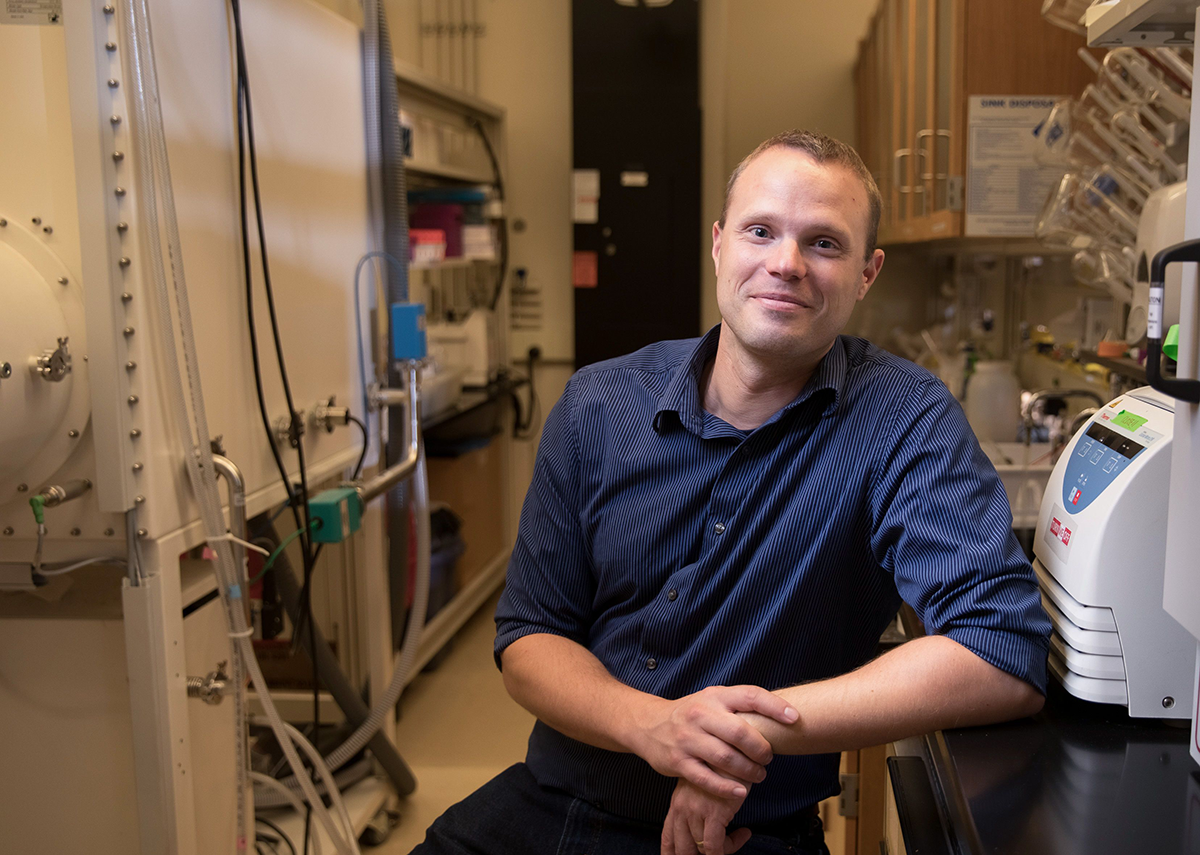
Bradley D. Olsen is a full professor in the Department of Chemical Engineering at the Massachusetts Institute of Technology (MIT), where he leads research at the intersection of polymer science, soft matter physics, and bioengineering. His work focuses on designing materials for critical applications in biotechnology, hemostasis, and sustainable polymer development while advancing fundamental understanding of polymer network mechanics and self-assembly. Education: Ph.D. in Chemical Engineering, University of California Berkeley (2007) S.B. in Chemical Engineering, Massachusetts Institute of Technology (2003) Olsen's research spans protein-based materials, block copolymer phase behavior, and mechanochemical hydrogels. He has pioneered methods for quantifying polymer network topology, developing hemostatic nanoparticles, and creating bio-inspired materials for selective biomolecular transport and medical applications. His recent publications emphasize data-driven approaches to polymer characterization and educational outreach in materials science. Scientific Awards: American Physical Society (APS) Fellow (2023) Fulbright Amazonia Scholar (2023) Alexander and I. Michael Kasser Chair in Chemical Engineering (2021) ACS Macro Letters Young Investigator Award (2021) MIT Committed to Caring Honor (2019) AIChE Owens Corning Early Career Award (2019) APS Dillon Medal (2018) Kavli Emerging Leader in Chemistry (2017) ACS Polymer Division Fellow (2016) Camille Dreyfus-Teacher Scholar (2015) Alfred P. Sloan Research Fellow (2014) NSF Career Grant (2013) NIH Postdoctoral Fellowship (2008-2009) Hertz Fellow (2003-2007) Barry M. Goldwater Scholarship (2002) Olsen has received significant grant support including NSF Career (2013) and AFOSR (2012) awards. His teaching activities include innovative international outreach like the 2025 soccer-themed science camp in Brazil. The Olsen Group at MIT explores advanced materials with applications ranging from trauma care to sustainable polymers.
Mark Lewis is the Kennedy Chair in Mathematical Biology at the University of Victoria, holding joint appointments in the Departments of Mathematics and Statistics and Biology. His research focuses on spatial ecology and mathematical modeling, addressing ecological challenges such as animal movement, invasive species, and disease dynamics. Lewis earned his D.Phil. in Mathematical Biology from the University of Oxford and has been elected a Fellow of the Royal Society UK. His work integrates mathematical analysis, field studies, and interdisciplinary approaches to solve ecological problems. Current projects include modeling polar bear populations, cyanobacteria dynamics, and the impact of climate change on wildlife. Lewis supervises students across both UVic and his former University of Alberta lab. Education: D.Phil. in Mathematics (Mathematical Biology), University of Oxford Awards: Royal Society Fellowship, CRM-Fields-PIMS Prize, and Okubo Prize Key Research Areas: Animal movement modeling, aquatic ecology, wildlife disease, and invasive species management Publications highlight his contributions to understanding disease spread, parasite dynamics, and ecological responses to environmental changes. Lewis collaborates widely, applying mathematical tools to real-world conservation and health challenges.
Christopher Kanan is a tenured Associate Professor of Computer Science at the University of Rochester, leading the AI Initiative within the Hajim School of Engineering & Applied Sciences. He holds secondary appointments in Brain and Cognitive Sciences, the Goergen Institute for Data Science and AI (GIDS-AI), and the Center for Visual Science. His research focuses on deep learning systems for artificial general intelligence (AGI), including continual learning, medical computer vision, and visual question answering. Previously, he was an Associate Professor at RIT’s Carlson Center for Imaging Science and a leader at Paige.AI, contributing to the FDA-cleared Paige Prostate system. Kanan earned his PhD from UC San Diego, completed postdoctoral work at Caltech, and worked at NASA JPL. Education: PhD in Computer Science, UC San Diego MS in Computer Science, University of Southern California Bachelor’s in Philosophy and Computer Science, Oklahoma State University Research Interests: Kanan’s work spans foundational AI capabilities like continual learning, medical imaging (pathology and radiology), multi-modal reasoning, and cognitive science-inspired models. His lab develops bias-robust AI systems and applies deep learning to healthcare and fusion research. Articles Trends: His recent work emphasizes out-of-distribution generalization, foundation models in pathology, and stability in continual learning. Key themes include AI applications in healthcare, model robustness, and neuroscience-inspired algorithms. Awards: NSF CAREER Award Senior Member, AAAI and IEEE DoE and NSF grants totaling $5M+ DARPA/ARL awards Advising & Grants: Mentored over 10 PhD students, including Robik Shrestha and Usman Mahmood. Secured grants for AI in nuclear fusion and medical imaging. Led RIT’s Center for Human-aware AI (CHAI) as Associate Director. Labs & Teams: Heads the University of Rochester AI Initiative, collaborates with Paige.AI, and leads teams advancing AI in pathology and robotics. His lab’s KLab (klab.cis.rit.edu) focuses on vision and learning systems.
Anders Søgaard is a Professor at the University of Copenhagen , affiliated with both the Department of Computer Science and the Department of Communication. His research bridges Natural Language Processing and Machine Learning with a focus on AI ethics , explainability , and human-AI interaction . Primary Affiliation: Department of Computer Science, University of Copenhagen Secondary Affiliation: Department of Communication, University of Copenhagen Email: soegaard@di.ku.dk, soegaard@hum.ku.dk Research Interests His work spans Natural Language Processing , Machine Learning , and AI ethics , with recent studies addressing: Trustworthiness in AI systems Explainable AI (XAI) frameworks Multilingual model fairness and alignment Human-AI collaboration in reasoning tasks Ethical implications of social robots Mental health analytics using ML Recent Publications His 2025 output highlights trends in: AI ethics (e.g., fairness metrics, trustworthy systems) Multilingual model analysis (knowledge retention, cross-lingual transfer) Human-centric AI (gaze data, cultural considerations) Applications in healthcare and social good
Zhi Da is the Howard J. and Geraldine F. Korth Chair in Finance and Professor of Finance at the University of Notre Dame , Mendoza College of Business, Department of Finance. He completed his Ph.D. in Finance at Northwestern University’s Kellogg School of Management (2006), preceded by an M.Sc. in Financial Engineering from the National University of Singapore (2001) and a B.B.A. with First-Class Honors (1999) from the same institution. Holding editorial roles at Journal of Finance , Management Science , Review of Financial Studies and several other top journals, he is a leading voice in empirical finance research. Education Ph.D. in Finance, 2006 – Kellogg School of Management, Northwestern University M.Sc. in Financial Engineering, 2001 – National University of Singapore B.B.A. (1st Class Honors), 1999 – National University of Singapore Research Interests Zhi Da’s scholarship sits at the intersection of asset pricing , behavioral finance , and market microstructure . He investigates how investor attention, institutional trading, liquidity frictions, and information flows jointly determine the cross-section of expected returns. His work delves into retail margin trading, the role of pension-fund flows in exchange-rate dynamics, the informational content of SEC filings, and the efficiency of short-selling mechanisms. By combining large-scale data analytics, textual analysis, and structural modeling, he uncovers novel predictors of returns ranging from presidential approval ratings to real-time attention measures. Recent projects explore fractional trading ’s impact on price efficiency, hedging demand as a driver of intraday momentum, and the hidden effort problem in delegated portfolio management. These themes collectively advance our understanding of limits to arbitrage and the formation of extrapolative beliefs. Publication Landscape Spanning 2025 back to 2009, his 15 most recent articles in Journal of Finance , Review of Financial Studies , Management Science , Journal of Financial Economics , and Journal of Financial and Quantitative Analysis converge on three broad motifs: (1) micro-level trading frictions—liquidity costs, margin requirements, and short-selling constraints; (2) macro-finance linkages—exchange rates, fiscal policy, and global capital flows; and (3) information economics—attention allocation, media analytics, and regulatory disclosures. The collective evidence demonstrates that seemingly small trading or informational frictions aggregate into large, persistent cross-sectional return predictability. Honors and Awards 2017 William F. Sharpe Award for Best Paper, Journal of Financial and Quantitative Analysis Lead-article distinctions in Journal of Finance , Review of Financial Studies , and Management Science Featured coverage in SmartMoney and CNBC Teaching & Mentorship At Notre Dame’s Mendoza College, Professor Da teaches Investments (undergraduate and MBA) and Fixed Income Securities , integrating cutting-edge research insights into the curriculum. While specific advisees are not listed, his extensive co-author network (22+ recurring collaborators) attests to a vibrant mentoring environment. Laboratory & Data Resources He publicly distributes the NAT (Net Arbitrage Trading) dataset, a stock-quarter panel of arbitrage positions used in Chen, Da & Huang (2019). This resource has become a standard tool for researchers studying arbitrage capital movements.
Janna Parker is a professor in the Department of Marketing at James Madison University, specializing in digital marketing, retailing, and nonprofit marketing. With a career transition from political campaigns, she focuses on social media's role in personal and professional branding. Her research examines work-personal social media boundaries, employer governance policies, and volunteerism in nonprofit contexts. Education: Bachelor's in History (California State University Sacramento), Master's (Cameron University), Doctorate (Louisiana Tech) Teaching Interests: Digital marketing education, social media strategy, nonprofit marketing Her scholarly work spans social media governance, volunteer engagement, and retail dynamics, with recent emphasis on digital marketing pedagogy and cancel culture implications. Parker has contributed to academic journals through empirical studies and conceptual commentaries. Key article trends include: Digital marketing education evolution (2024) Social media governance in corporate and nonprofit contexts (2024) Online teaching satisfaction in higher education (2022) Volunteer brand community dynamics (2020) Consumer behavior frameworks (2019) Her media appearances include expert commentary on holiday retail strategies and social media research, reflecting practical applications of her academic work.