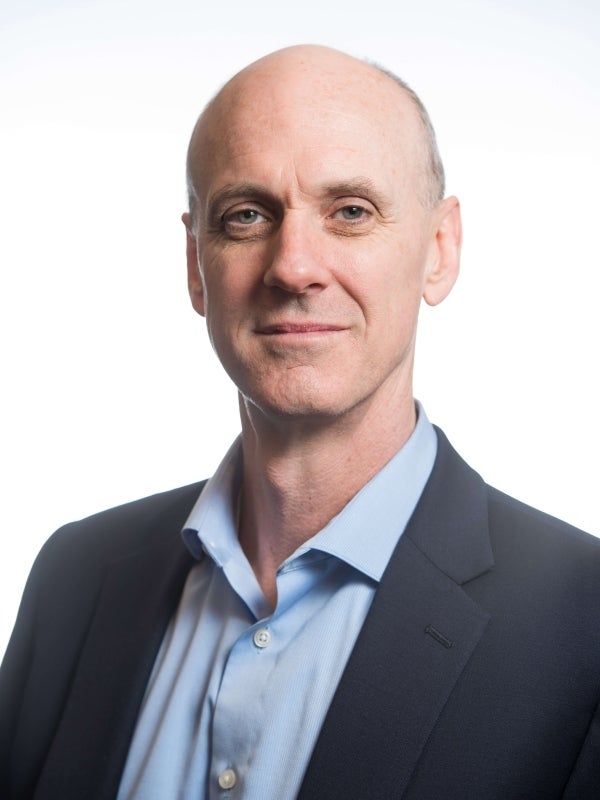
Lynnette Dray is a Principal Research Fellow at the University College London (UCL) , affiliated with the UCL Air Transportation Systems Lab and Bartlett School of Environment, Energy and Resources . With over 20 years of experience in aviation systems modeling, her work focuses on decarbonization, policy impact assessment, and stakeholder behavior simulation. PhD in Astrophysical Numerical Modeling (University of Cambridge, 2003) BA and MSci in Natural Science (University of Cambridge, 1999) Her research centers on aviation sustainability , including projects like ACCLAIM (airport expansion impacts), ToZCA (net-zero aviation), and AIM2015 (open-source aviation modeling). She specializes in: Economic and environmental impact assessment Integrated transport modeling Hydrogen and electric aircraft feasibility Policy uncertainty analysis Carbon leakage and taxation Lynnette’s scientific contributions include: High-resolution emissions inventories (GAIA model) Aviation profit maximization under constraints Long-term scenarios for pandemic recovery Ground-air multi-modal disruption management At UCL, she supervises student projects through MSc courses such as EPEE , ESDA , and SEBE , while collaborating with policymakers on climate-neutral aviation pathways.
Andreas Schafer is a Professor in Energy and Transport at the Bartlett School Env, Energy & Resources, University College London. He leads the Air Transportation Systems Laboratory (ATSLab.org) and focuses on energy and transportation systems analysis. Key Research Areas: Transportation Systems, Energy Economics, Environmental Impact Assessment, Aerospace Engineering. Notable Projects: Towards Zero-Carbon Aviation (TOZCA), Systems Aspects of Electric Commercial Aircraft (SAECA). Professional Roles: Director of ATSLab, Editorial Board Member of Transport Policy, and advisor to multiple international organizations. Past Appointments: Massachusetts Institute of Technology (MIT), University of Cambridge, Stanford University. His work spans econometric models of travel demand and integrated global air transportation systems. He has authored publications in journals like Nature Climate Change and Transportation Research Record.
Professor Yingli Wang is a Professor in Logistics and Operations Management and serves as Pro-Dean for Research, Impact and Innovation at Cardiff Business School, Cardiff University. She is an active researcher and supervisor, with a strong focus on digital transformation in supply chains. Her work is supported by major funding bodies including EPSRC, ERDF, Welsh Government, Highways England, and the Department for Transport. Education: PhD in Logistics and Operations Management, Cardiff University (2008) MBA in IT with Distinction, Coventry University (2003) BSc in Food Manufacturing, China (1995) Professor Wang’s research centers on the integration of emerging digital technologies—particularly blockchain, AI, IoT, 5G, and cloud computing—into logistics and supply chain systems to enhance efficiency, sustainability, and resilience. She explores how these technologies can be applied in maritime logistics, construction supply chains, and smart ports. Her work extends beyond traditional business contexts to address societal challenges, especially food poverty and health inequality, through innovative supply chain models such as community food redistribution systems. She is a key member of the South Wales Food Poverty Alliance and led the launch of Wales’ first Your local Pantr y social enterprise. Her recent publications demonstrate a strong trend toward blockchain applications in supply chains, digital material passports, BIM integration, and the role of 5G in enabling smart logistics. She has co-edited two influential books: E-Logistics: Managing Your Digital Supply Chains for Competitive Advantage (2nd ed., 2021) and the open-access Digital Supply Chain Transformation: Emerging Technologies for Sustainable Growth (2022). Scientific Awards and Recognition: James Cooper Memorial Cup (2009, CILT) for inventing Electronic Logistics Marketplaces 2020 Innovation and Impact Awards for work on food poverty Chartered Member, Chartered Institute of Logistics and Transport (CILT) Professor Wang collaborates extensively with industry partners such as Tesco, ASDA, BT, Tata Steel, and CEVA Logistics. She advises the World Economic Forum’s Centre for the Fourth Industrial Revolution on blockchain deployment and is a founding member of the Blockchain Connected Council in Wales. She has delivered blockchain masterclasses and webinars for global audiences and contributed white papers to the World Economic Forum. Her research on digital supply chains has informed policy and practice, including a guide on accelerating BIM adoption for Highways England and a foresight report for the UK Government Office for Science. Labs and Research Initiatives: Principal Investigator, Blockchain-Powered Digital Material/Product Passport: Accelerating Supply Chain Net Zero Goals (UKRI Innovation Launchpad) Key contributor to the development of the world’s first comprehensive blockchain deployment toolkit for supply chains Active in the Cardiff Business School research ecosystem, leading on digital innovation and societal impact projects
Stuart Galloway is a Professor of Compact Power Systems in the Department of Electronic and Electrical Engineering at the University of Strathclyde, Faculty of Engineering. He currently serves as Vice Dean – Knowledge Exchange and was previously Deputy Head of the EEE Department. He leads research groups in Novel Electrical Systems and Data Analytics within the Institute for Energy and Environment (InstEE), and is deeply involved in net-zero energy transition initiatives. His educational background includes a PhD in Numerical Modelling of Stefan Problems from the University of Edinburgh (1998), an MSc from the University of Edinburgh, and a BSc from the University of Paisley. Stuart's research focuses on applied mathematical optimisation, novel electrical systems, data analytics, and social aspects of energy. His work addresses challenges in aircraft energy distribution, electrification of transport and heat, and off-grid energy systems in developing countries. He integrates technical innovation with policy impact, particularly in sustainable mobility and energy decarbonisation. His recent publications highlight trends in electric vehicle charging infrastructure planning, harmonics in smart EV charging, and system dynamics modeling of sustainable transport policies. These works reflect a strong interdisciplinary focus on smart grids, energy demand characterization, and human factors in energy adoption. Editor-in-Chief, IET Journal of Electrical Systems for Transportation Academic Director, TIC Low Carbon Power and Energy Partnership (Strathclyde, ScottishPower, SSE) Directorate Member, ClimateXChange Centre Chair, Scotland Malawi Partnership Energy Forum Strategic Advisor, EPSRC JUICE Centre (UK-India Clean Energy) Invited Member, Scottish Government Expert Panels Stuart Galloway has supervised numerous research projects and students, with active roles as Principal or Co-investigator in initiatives such as UNDP-African Minigrids, ReSTOR (recyclable flow batteries), and Design HOPES (green transition in health ecosystems). He has secured funding across energy, transport, and sustainability domains, contributing to both academic advancement and real-world policy. He leads the Advanced Electrical Systems group and is embedded in the University’s Technology and Innovation Centre, focusing on Power & Energy and Human & Social Aspects of Technology. His lab activities involve multi-domain modeling of aircraft, marine, and micro-grid systems, alongside data analytics for smart energy and behavioral change.
Sharon Biermann is a Professor and Director of the Planning and Transport Research Centre (PATREC) at the University of Western Australia (UWA). She leads collaborative research in integrated land use, transport, and infrastructure planning. Her expertise spans urban sustainability, water management, and smart city technologies. Education: PhD in Geography, M.Sc. (part-time) in Land Use Planning. She has held roles at the CSIR (South Africa) and Queensland’s Urban Water Security Alliance, managing large-scale research programs. Research focuses on climate action in transport/land use, integrated freight optimization, and emerging technologies. Key projects include Climate Action in WA, Water Smart Cities, and Smart Transport Technologies. Grants/Projects: Over 60 grants, including initiatives on roundabout safety, active transport infrastructure, and low-carbon development. Collaborations span government agencies and industry partners. Key Awards: 2022 Research Impact & Innovation Award Tools Developed: ADAPT accessibility toolkit, RailSmart Planning Model Labs/Centers: PATREC (multi-university collaboration)
Professor Dongping Song is a faculty member at the Liverpool University Management School, University of Liverpool, specializing in logistics, supply chain management, and maritime transportation systems. His research focuses on applying data analytics, mathematical modeling, and AI to improve operational efficiency and sustainability in logistics and transportation, particularly in maritime contexts. He has led major projects funded by EPSRC, ESRC, and others. Education & Professional Background: Song has held academic positions at Nankai University, Zhejiang University, Newcastle University, Imperial College London, and Plymouth University before joining Liverpool in 2013. Research Interests: His work spans decarbonisation strategies for seaports, container shipping supply chain optimization, risk management in supply chains, and AI-driven logistics solutions. He emphasizes sustainable practices, such as emission reduction and green port development, alongside operational challenges like empty container repositioning and automated terminal management. Grants & Projects: Key projects include the UK National Clean Maritime Research Hub (EPSRC, £340k), ERGODIC (ESRC, £278k), and Green Shipping Corridor initiatives. His research has produced over 80 journal articles and five monographs, including works on stochastic supply chain systems and container logistics. Teaching & Roles: He teaches modules like Data Mining and Machine Learning, and Global Maritime Logistics. He serves as an Associate Editor for journals such as Transportation Research Part E and the International Journal of Shipping and Transport Logistics. Professional Contributions: Song has delivered keynote speeches at international conferences and reviewed research proposals for funding bodies like the Australian Research Council and the National Natural Science Foundation of China. He also mentors PhD students and leads research teams in digitalisation and decarbonisation efforts.
Thomas Magnusson is a Professor in the Department of Management and Engineering at Linköping University, Sweden. His research focuses on sustainability transitions, industrial ecology, and technological innovation systems. He is affiliated with the Project, Innovations and Entrepreneurship (PIE) initiative and the Biogas Solutions Research Center. Key research areas include green transitions in process industries, electrified freight transport, and the transformation of fragmented sectors like tourism. He leads the Graduate School in Energy Systems, exploring energy system interactions between technology and societal frameworks. His work emphasizes the governance of sustainable technologies, policy implementation at regional levels, and market shaping for alternative energy solutions such as biogas. Recent projects analyze ambidextrous programs for net-zero emissions in industries and the role of intermediaries in sustainability transitions. He has co-authored over 50 peer-reviewed articles on topics including hybrid-electric vehicles, climate policy enactment, and circular economy dynamics. Notable contributions include conceptualizing 'creative accumulation' in discontinuous industry change and frameworks for analyzing multi-level governance in innovation systems. His research has been applied to cases like the Swedish biogas market, automotive sector emissions standards, and urban freight electrification challenges. He collaborates with organizations like the Kamprad Family Foundation and participates in international sustainability initiatives.
Mukesh Pandey is an Assistant Professor in Aviation Management at CEES School of Engineering, focusing on airport operations, low-cost airline dynamics, and sustainable transportation systems. His research spans Thailand and India, addressing efficiency, service quality, and decarbonisation challenges in aviation and road freight. Affiliation : CEES School of Engineering Research Interests : Airport efficiency, fuzzy logic applications, low-cost carrier strategies, gender diversity in aviation, and decarbonisation technologies Recent work examines electrification barriers in road freight, airport design parameters, and gender disparities in pilot recruitment. Collaborations include international research partnerships in Thailand and India.
Amaya Vega is a Senior Lecturer in Economics at Atlantic Technological University (ATU) and a Visiting Research Fellow at the University of Valencia. She specializes in transport policy evaluation, regional economics, and behavioral economics, with a focus on sustainable transport systems and freight logistics. Her work contributes to UN Sustainable Development Goals related to equitable transport and environmental sustainability. Education: PhD in Transport Economics from University College Dublin (2007), Master in Economics (2003), and Bachelor in Business Administration from Universidad Autónoma de Madrid (2000). Research Interests: Transport Economics, Regional Competitiveness, Maritime Transport, and Sustainable Mobility. She leads the transport research stream for the €4M Atlantic Futures project and co-leads the EMBRACE-Mobility initiative under the SFI National Challenge Programme. Her projects often involve collaboration with policymakers, private operators, and communities to develop evidence-based strategies for net-zero transitions. Professional Activities: Member of the Sustainable Mobility Index working group for Ireland’s Western region, partner in the ROBUST project (Trinity College Dublin), and co-PI of the IDEAS doctoral programme funded by TU RISE. She advises PhD students and supports innovation through the DICE Innovation Academy. Labs/Teams: Active in the Design, Innovation, Creativity, Entrepreneurship (DICE) Innovation Academy at ATU, focusing on cross-disciplinary research and policy integration.
Martijn Altenburg is a City Net Zero City Logistics Lecturer/Researcher at the Faculty of Technology (FT) of Amsterdam University of Applied Sciences. His research focuses on sustainable urban logistics, with particular emphasis on light electric freight vehicles and emission reduction strategies. He contributes to projects like LEFV-LOGIC, exploring practical implementations of electric freight solutions in the Netherlands. Education: While specific academic credentials beyond his MSc are not detailed, his role indicates advanced expertise in logistics and transportation systems. Research interests include optimizing urban freight systems, decision-making processes in logistics, and transitioning to zero-emission urban service logistics. His work frequently involves case studies and collaborations with industry partners. Award: He co-received the 2017 KIEM Logistiek Award for contributions to urban logistics research. His media engagements highlight practical solutions for electric vehicle challenges in urban environments. Activities: Supervises educational programs and contributes to workshops and conferences on urban logistics innovation. Collaborates on projects addressing freight vehicle electrification and sustainable city planning.
Inês Azevedo is an Associate Professor in the Department of Energy Science & Engineering at Stanford University’s Doerr School of Sustainability. She is also a Senior Fellow at the Woods Institute for the Environment and the Precourt Institute for Energy. Her research focuses on integrating environmental, technical, economic, and policy dimensions of energy systems, with a particular emphasis on assessing energy system evolution, technology deployment, and decision-making processes. She holds an M.Sc. in Innovation and Management of Technology from IST Technical University of Lisbon and a Ph.D. in Engineering and Public Policy from Carnegie Mellon University. Education: M.Sc. in Innovation and Management of Technology, IST Technical University of Lisbon Ph.D. in Engineering and Public Policy, Carnegie Mellon University Inês’ research interests span energy system transitions, climate policy, air pollution impacts, and environmental justice. Her work often bridges technical analyses with policy implications, addressing issues like renewable energy integration, clean transportation, and equity in energy systems. Notable contributions include studies on the health and climate benefits of freight truck electrification, the equity implications of carbon dioxide removal, and the distributional effects of air pollution from coal power plants in India. Awards: C3E Women in Clean Energy, Research Award (2017) Her recent publications highlight interdisciplinary approaches to solving complex energy challenges, such as optimizing electricity grids with high renewable penetration and evaluating the societal impacts of emerging technologies like battery recycling and hydrogen storage. She emphasizes the need for policies that align climate goals with equitable outcomes across communities.
Miguel Martínez Velázquez is a Predoctoral Researcher at the Technological Research Institute (IIT) of Comillas Pontifical University, specializing in electrical power systems, renewable energies, and electric mobility. He joined IIT in March 2022 and focuses on integrating electric vehicles and distributed energy resources into power distribution networks. Bachelor's Degree in Industrial Technology Engineering (2019, ETSI ICAI, Comillas Pontifical University) Double Master's in Wind Energy (DTU) and Industrial Engineering (ETSI ICAI, Comillas Pontifical University) (2022) His research interests include power distribution network planning with demand flexibility, integration of distributed energy resources, and smart electric vehicle charging strategies. Recent publications analyze heating electrification, battery storage deferral of network upgrades, and optimization algorithms for grid flexibility. Scientific awards include the bp Chair for a Sustainable Net Zero Award for the best Final Year Project (2022-23) and directing an award-winning PFC at Comillas Pontifical University (2024). Projects funded by institutions like Fraunhofer Institute, European Commission, and IDAE highlight his expertise in energy system modeling and policy analysis.
Prof David Waddington is a Professor at the School of Science, Engineering & Environment, University of Salford, and serves as President-Elect of the Institute of Acoustics (2022-2024). His research centers on acoustics, noise control, and vibration analysis within environmental and occupational contexts, with significant contributions to understanding human and ecological impacts of anthropogenic noise. His research spans multiple critical domains including noise from emerging renewable technologies (particularly air source heat pumps), blast noise management, and vibration from transportation infrastructure. Recent work demonstrates a pronounced focus on wildlife conservation, specifically investigating mechanistic pathways of anthropogenic noise impact on avian species through systematic reviews and interdisciplinary frameworks. His expertise integrates environmental acoustics with ecological conservation needs, addressing challenges in sustainable development where noise pollution intersects with biodiversity protection. Analysis of his 2022-2025 publications reveals three dominant research trajectories: 1) Ecological impacts of noise on avian species (comprising 40% of recent outputs), 2) Noise challenges in net zero infrastructure (particularly heat pumps), and 3) Human response to vibration in residential environments. This reflects strategic alignment with global sustainability goals while addressing practical community concerns about new technologies. Prof Waddington leads substantial research initiatives including the EU FP7 CargoVibes project (2010-2013) on freight rail vibration and current major grants like PLAN-B (2024-2027) on noise impacts on biodiversity, and Future Homes Phase 2 (2025-2026) addressing heat pump noise. His role as President-Elect of the Institute of Acoustics highlights his leadership in shaping professional standards for the 3,000-member UK acoustics community. He operates within the Acoustics Innovation Institute at Salford, which provides multidisciplinary infrastructure for noise control research spanning environmental, industrial, and health applications. The institute's collaborative environment supports his work across traditional disciplinary boundaries, particularly in bridging engineering acoustics with ecological conservation science.
Dr. Ges Rosenberg is a Research Fellow at the University of Bristol's School of Electrical, Electronic and Mechanical Engineering. With qualifications including a BEng, PG Dip(Lond.), and PhD(Bristol), their expertise focuses on applying systems thinking and engineering to address complex sociotechnical and environmental challenges, particularly in sustainable cities, infrastructure resilience, and urban development. Their work emphasizes interdisciplinary collaboration, co-production methodologies, and policy design for net-zero transitions and decarbonisation. Education: BEng (undergraduate degree) PG Dip (London-based postgraduate diploma) PhD from the University of Bristol Research interests span systems engineering, urban futures, sustainable development, and the integration of technology with socio-technical systems. Key themes include resilience planning, equitable urban development, and the application of systems science to global challenges like climate change and pandemic risk. Recent projects include the DECIDE decision support system for urban planning and the TRUUD consortium tackling unhealthy urban development. Publications highlight innovative frameworks for stakeholder engagement, infrastructure interdependencies, and digital strategies for smarter cities. Collaborations with academics like Dr. Paul Harper and Emeritus Professor Colin Taylor underscore their interdisciplinary approach to complex problem-solving. Their work bridges academic research with real-world policy and infrastructure interventions.
Leon Clarke is a Research Professor in the School of Public Policy at the University of Maryland and a Research Scientist at the Joint Global Change Research Institute (JGCRI), a collaboration between the University of Maryland and the Pacific Northwest National Laboratory. He serves as Research Director for the Center for Global Sustainability (CGS). His expertise spans integrated assessment modeling, climate change mitigation strategies, energy systems, and policy design. Clarke holds a Ph.D. in Management Science and Engineering and a Master’s in Mechanical Engineering. Clarke’s research focuses on advancing low-emission development strategies in China, India, and Latin America, energy-water-land planning, and climate mitigation by U.S. cities and businesses. He has led multi-institutional studies on climate mitigation and serves as a Coordinating Lead Author for the IPCC’s 6th Assessment Report and the National Climate Assessment. His work emphasizes quantitative methods to inform policy decisions, including frameworks for measuring political economy progress in climate action. Key contributions include analyzing coal phaseout strategies, methane abatement solutions, and pathways for achieving net-zero emissions. Clarke has advised on U.S. emissions reduction targets and collaborated internationally to enhance climate ambition in national policies. His leadership at CGS and JGCRI underscores his role in bridging scientific research and actionable climate policy.