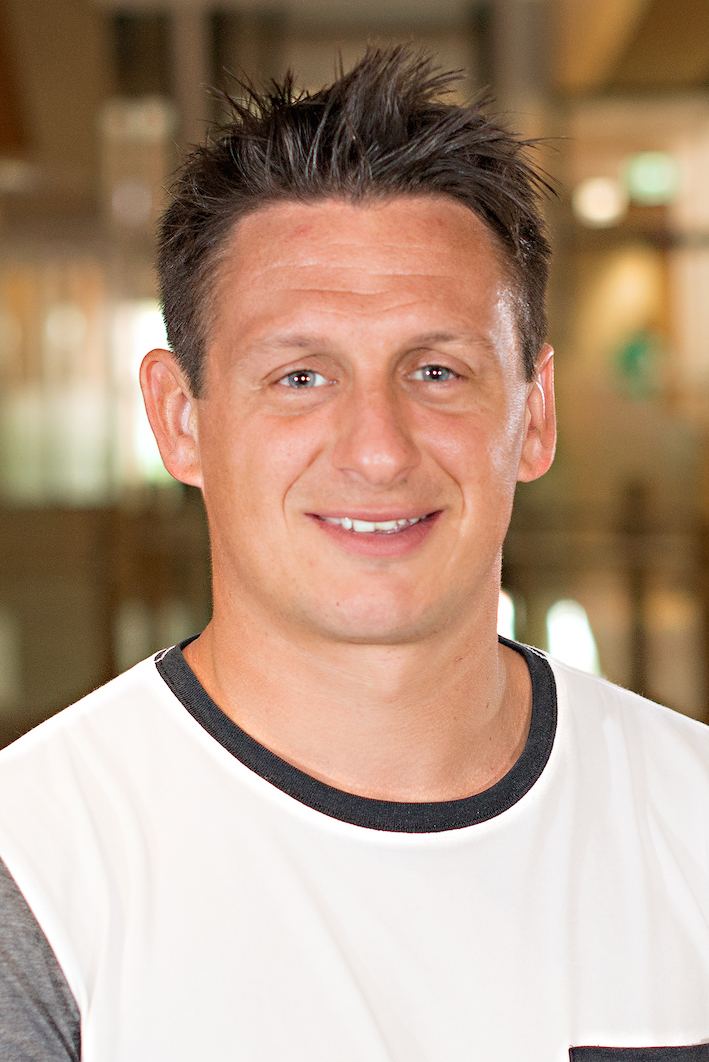
Dr. Scott Banks is a Lecturer in Chemical Engineering & Applied Chemistry at Aston University's College of Engineering and Physical Sciences. He is affiliated with the Energy and Bioproducts Research Institute (EBRI), where he researches thermochemical conversion technologies with a focus on sustainable bioenergy solutions. Education: PhD in Ash control methods to limit biomass inorganic content and its effect on fast pyrolysis bio-oil stability, Aston University (2014) Aston University Modular Award – Introduction to Learning and Teaching Practice (2020-2021) Research Focus: His work centers on catalytic pyrolysis, biomass ash control, bio-oil stabilization, and gasification char utilization. He develops advanced thermal conversion methods to create circular economy solutions and supports greenhouse gas reduction through renewable energy systems. Current work explores hydrogen production pathways from biomass derivatives. Publication Trends: Recent articles demonstrate a strong focus on biomass pyrolysis optimization, renewable policy frameworks, and sustainable feedstock development. His research employs experimental thermochemical analysis and reactor design to advance bioenergy conversion efficiency. Teaching: Module leader for Life Cycle Analysis, Renewable Energy, and Research Methods in the MSc Sustainable Engineering program.
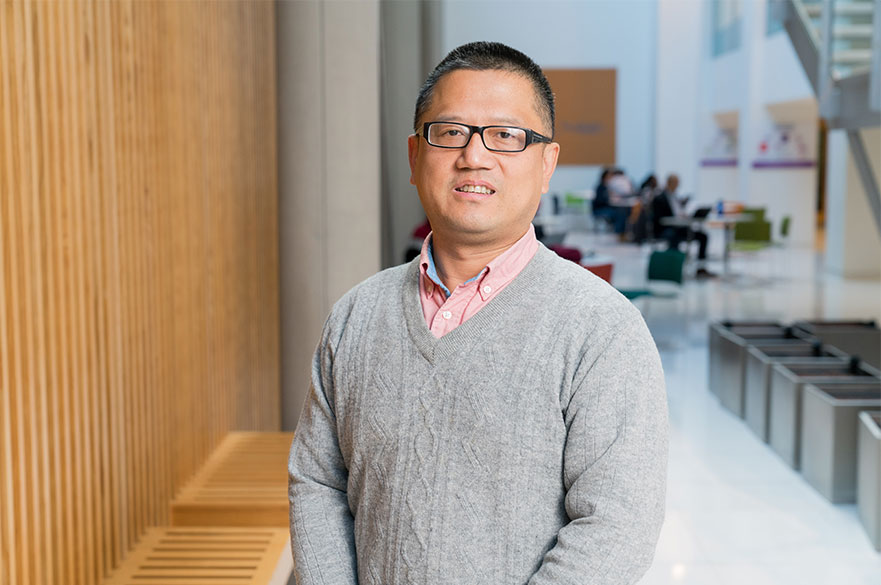
Yangang Xing is an Associate Professor at the School of Architecture Design and the Built Environment, Nottingham Trent University. He focuses on sustainable architectural science, integrating nature-based solutions, intelligent building technologies, and systemic modeling of post-carbon built environments. His work bridges building physics, smart cities, biophilia, and heritage conservation. Specializes in sustainable built environment and occupant wellbeing Develops AI-driven digital twin systems for circular energy renovation Active in EPSRC-funded projects on urban sustainability Chair of CIBSE Intelligent Building Group His research emphasizes creating holistic solutions to address societal challenges through interdisciplinary collaboration. Recent projects include the Innovate UK KTP partnership with Allsee Technologies, developing the Vieunite system for immersive digital nature experiences, and collaborations with Historic England on low-carbon materials. Fellow of the Higher Education Academy (FHA) Member of Chartered Institution of Building Services Engineers (MCIBSE) Dr. Xing supervises postgraduate research in areas including net-zero buildings, health-promoting urban design, and digital sustainability tools. His industrial experience complements academic research in economically viable carbon-neutral urban planning.
Associate Professor Brett Jason Hallam is a Scientia Fellow at the University of New South Wales (UNSW), affiliated with the School of Photovoltaic and Renewable Energy Engineering. His research focuses on advancing solar panel manufacturing, particularly improving efficiency and reducing costs through innovations like selective emitter formation, laser processing, and hydrogen passivation. Key areas include understanding hydrogen passivation mechanisms to address defects in silicon solar cells and developing next-generation technologies such as TOPCon and SHJ cells. Education: PhD in Photovoltaic Engineering (UNSW, 2014), BE (First Class Honours and University Medal) and BSc in Physics/Oceanography (UNSW, 2009). He has held research placements at Fraunhofer Institute (Germany), Oxford University (UK), and IMEC (Belgium). Research Interests: Advanced hydrogenation for solar cells, material challenges for terawatt-scale PV deployment, reducing silver consumption, and sustainable manufacturing. Current projects include ARENA-funded initiatives on high-efficiency solar cell technologies and next-generation selective emitters. Notable Awards: 2018 Scientia Fellow, 2017 NSW Premier Prize for Energy Innovation, and 2016 Ulrich Goesele Young Scientist Award. His work addresses global energy transition goals, aiming for net-zero emissions by 2050. Industry Experience: Consultant for Suntech Power and Technology Transfer Team at UNSW, collaborating with companies like LONGi and Jinko. He advises on silicon solar cell technologies and has 16 patents. Labs/Teams: Active in UNSW’s PV research groups, focusing on scalable solar solutions and material science innovations.
John Mandyck is an Adjunct Professor of Sustainability at the Leonard N. Stern School of Business, New York University, and the University of Connecticut School of Business. He brings over three decades of market and policy experience in sustainability, climate change, and urban resilience. His work bridges academia, corporate leadership, and public policy, with a focus on decarbonizing the built environment and advancing sustainable business practices. Education: M.P.A. in Public Administration, Syracuse University Maxwell School of Citizenship and Public Affairs B.A. in Policy Studies, Syracuse University Maxwell School of Citizenship and Public Affairs Executive Education, University of Virginia Darden School of Business John Mandyck's research and teaching center on sustainability, environmental policy, urban resilience, and climate change mitigation. His work explores the intersection of business strategy and ecological responsibility, emphasizing how corporations and cities can drive systemic change. He investigates food waste, energy efficiency in buildings, sustainable aviation, and the role of innovation in climate solutions. His interdisciplinary approach integrates public health, policy, and business leadership. The 15 most recent articles reflect a consistent focus on sustainability across sectors—urban development, business, aviation, and public health. They highlight trends in climate policy, corporate responsibility, and technological innovation. Keywords span environmental science, public policy, and business strategy, while subfields include building decarbonization, food systems, ESG, and resilient infrastructure, demonstrating a holistic view of sustainability challenges and solutions. Scientific Awards: 2024 Centennial Changemaker Award for Environmental Stewardship, Syracuse University John Mandyck has advised and contributed to major climate initiatives through his leadership roles. As CEO of Urban Green Council, he shaped landmark climate laws for buildings in New York City. He has led sustainability strategy at United Technologies Corporation, engaging stakeholders across global markets. Though no formal students are listed, his influence extends through executive education, public speaking, and policy advocacy. He has contributed to research grants and initiatives in urban sustainability, climate resilience, and food systems, often in collaboration with academic and nonprofit institutions. John Mandyck is affiliated with research and advocacy teams at Urban Green Council and has collaborated with scholars at Harvard University’s T.H. Chan School of Public Health. His work involves interdisciplinary teams focused on climate policy, building science, and public health, contributing to evidence-based solutions for sustainable cities.
Professor Deanna D'Alessandro is a Professor in the School of Chemical & Biomolecular Engineering and Director of The Net Zero Institute at The University of Sydney. Her research focuses on advanced materials such as Metal-Organic Frameworks (MOFs) for energy efficiency, sustainability, and carbon capture. She holds a BSc (Hons I & Medal) and PhD from James Cook University (2001, 2006), followed by postdoctoral research at the University of Sydney and UC Berkeley. She has been recognized with prestigious fellowships, including the L'Oreal Australia for Women in Science Fellow (2010), Australian Research Council Future Fellow (2018–2022), and Young Tall Poppy Science Award (2011). Her research explores MOFs for carbon capture, electrochemical systems, and photonics, with applications in energy transition and environmental sustainability. She leads projects on Direct Air Capture, 3D printing of nanomaterials, and solid-state spectroelectrochemistry. Notable collaborations include work with Prof. Ben Powell (UQ) and Prof. Adam Micolich (UNSW) on superconductivity and photonic devices. She directs The Net Zero Institute, focusing on multidisciplinary solutions for decarbonization. Education: BSc (Hons I & Medal) and PhD from James Cook University. Awards: Includes ARC Fellowships, L'Oreal Women in Science, and Young Tall Poppy. Grants: Over $6M for CO2 capture materials and collaborations with industry partners like Southern Green Gas Ltd. Labs/Teams: Leads the D'Alessandro Research Group and collaborates with Sydney Nanoscience Hub, Sydney Policy Lab, and international partners. Her work bridges fundamental science and applied technologies, with over 150 publications and patents on CO2 capture and MOF applications.
Professor Jin Xuan is the Associate Dean (Research and Innovation) at the University of Surrey's Faculty of Engineering and Physical Sciences, and holds a Chair in Sustainable Processes. He is also a Turing Fellow at the Alan Turing Institute. Previously, he led the Department of Chemical Engineering at Loughborough University. His research focuses on net-zero energy, circular economy, and sustainable development through AI and engineering innovations. He has pioneered Energy and AI as an interdisciplinary field, leading advancements in multiscale predictive models for energy systems and low-carbon solutions. Roles: Associate Dean, Professor of Sustainable Processes, Turing Fellow Affiliations: University of Surrey, Alan Turing Institute Prior Position: Head of Chemical Engineering, Loughborough University His research interests span AI-driven energy systems, CO2 capture/utilization, and renewable energy devices like fuel cells and electrolysers. He has developed novel models for complex systems and co-founded journals such as Energy and AI. He leads the UKRI CircularChem Centre, recognized with the IChemE Global Sustainability Award (2023). Awards: Philip Leverhulme Prize (2022), Beilby Medal (2020) Professor Xuan’s work bridges academia and industry, emphasizing ethical and policy frameworks in energy systems. He advises on grants and collaborates globally, fostering innovation in digital twins and sustainable technologies.
Bruce Stephen is a Senior Lecturer and Strathclyde Chancellor's Fellow in the Department of Electronic and Electrical Engineering at the University of Strathclyde, where he has been since 1999. His work lies at the intersection of data science and power systems engineering, with a strong focus on real-world industrial applications. His educational background includes a BSc in Aeronautical Engineering from the University of Glasgow (1997), an MSc from the University of Strathclyde (1998), and a PhD in Electronic and Electrical Engineering (2005) from the University of Strathclyde. Dr. Stephen's research centers on data-driven methodologies for solving complex engineering challenges in power systems, particularly under conditions of limited data or domain knowledge. His applications span the entire energy value chain—from generation (nuclear, wind, solar) to transmission, distribution, and end-use. He develops software solutions for condition assessment, anomaly detection, and predictive modeling to support asset management and future grid planning. Notably, he co-founded Silent Herdsman Ltd, a spin-out company applying intelligent systems to precision livestock farming. His recent publications highlight a strong trend toward advanced machine learning techniques such as transfer learning, surrogate modeling, and synthetic data generation (e.g., using CTGANs) to improve reliability and decision-making in power systems. These works emphasize explainability, uncertainty quantification, and scalability, particularly in renewable-rich and data-scarce environments. Dr. Stephen is currently the Principal Investigator on the EPSRC-funded Analytical Middleware for Informed Distribution Networks (AMIDiNe) project, aiming to identify barriers to Net Zero through improved data modeling of unmonitored networks. He has also contributed to major projects including EU FP7 ORIGIN, EPSRC APAtSCHE, AGILE, and Transactive Energy Supply Arrangements. He actively advises students and collaborates on interdisciplinary research. His professional activities include organizing the QFF Quarterly Forecasting Forum (2018) and delivering invited talks at industry workshops. He has supervised datasets and research involving structural health monitoring and industrial diagnostics. His work supports UN Sustainable Development Goals related to affordable and clean energy, industry innovation, and climate action.
Professor Karen Turner is a Professor and Director of the Centre for Energy Policy at the University of Strathclyde, which she founded in 2014. She leads research funded by UK Research and Innovation, philanthropic organizations, and government bodies. Her work focuses on ensuring equitable and sustainable transitions to net zero, influencing policy and public discourse on energy efficiency, electric vehicles, and carbon capture and storage. Education: PhD in Economics, University of Strathclyde (2002) MSc Economics, University of Glasgow (1999) BA (1st Class Honours) in Economics, University of Strathclyde (1998) Research Interests: Her research examines the economy-wide consequences of energy policy and industry developments, particularly in enabling decarbonization solutions. Key areas include: Economic impacts of energy transitions Public policy challenges in deploying large-scale decarbonization technologies Equitable prosperity in net-zero transitions Advising and Grants: Professor Turner supervises PhD students and has led over 50 projects, including: UK Energy Research Centre Phase 5 (EPSRC-funded, 2024–2028) Developing a mixed methods approach for low-carbon heat transition in Scotland (Energy Action Scotland, 2024–2027) Labs/Teams: As Director of the Centre for Energy Policy, she collaborates with institutions like the National Infrastructure Commission and the Climate Change Committee. The Centre focuses on interdisciplinary research to address global energy challenges.
Dr. Yu Zhang is a Lecturer of Data Science at the School of Business, UNSW Canberra. His academic career focuses on text mining, knowledge and information management, social computing, and bibliometric analysis, with interdisciplinary applications in areas such as sustainable logistics, supply chain management, and net-zero energy solutions. Fields of Interest: Text Mining, Information Management, Social Computing, Bibliometric Analysis, Machine Learning for Information Systems, Heterogeneous Network Analysis, Data Mining for Asset Management, Sustainable Logistics, Supply Chain Management, Net-zero Energy in Green Buildings, and Transportation. Grants: Served as CI in projects like "Online health monitoring in Li-ion batteries via trustworthy AI" (ACT Government, $1.22M) and "Delivering net-zero energy buildings" (TRaCE Lab to Market, $1.05M). Awards: Best Paper Award (Runner-up) at ADMA 2024 and Excellent Paper Award at ICEBE 2024. Teaching: Coordinated courses in Data Analytics, Workforce Planning Research, Business Capstone, and Logistics Intelligence with Big Data Analysis. Supervision: Guided research on topics like federated learning for healthcare fraud detection, blockchain-based carbon offset management, and tier-based supply chain visibility. His publications span materials science and photovoltaic technologies, with a focus on thin-film solar cells and defect passivation methods. For collaboration or supervision inquiries, contact him at m.yuzhang@unsw.edu.au .
Miroslava Kavgic is an Associate Professor in the Department of Civil Engineering at the University of Ottawa. She holds a Ph.D. (United Kingdom), M.Sc. (United Kingdom), and B.Sc. (Serbia), and is a Professional Engineer (P.Eng.). Her research focuses on sustainable building engineering, carbon-negative materials, and energy-efficient design for remote communities. She leads the Centre for Indigenous Community Infrastructure at uOttawa, emphasizing culturally appropriate solutions. Education: Ph.D. in Environmental Design and Engineering (University College London, 2013) M.Sc. in Environmental Design and Engineering (University College London, 2006) B.Sc. in Mechanical Engineering (Serbia) Research Interests: Carbon capture building materials (e.g., hempcrete composites) Bioclimatic design strategies for net-zero buildings Urban energy modeling to decarbonize cities Renewable energy systems integration Advanced HVAC controls and energy efficiency Her recent publications (2021–2025) emphasize: Phase change material applications in building envelopes Machine learning for energy demand prediction Optimization algorithms like MEVO for building performance Hybrid renewable energy systems Labs/Teams: Active in the Centre for Indigenous Community Infrastructure, focusing on Northern communities' sustainable infrastructure. Collaborates with industry on building design innovations.
Matthew Hornsey is a Professor and ARC Laureate Fellow at the University of Queensland's School of Business. He leads the Net Zero Observatory, a multidisciplinary team advancing rapid decarbonization strategies. His research focuses on the rejection of scientific consensus (e.g., climate change skepticism), intergroup relations, and conspiracy theories. He has secured over 20 grants, including an ARC Laureate Fellowship, to explore these themes. Education : Bachelor (Honours) of Arts, University of Queensland Doctor of Philosophy, University of Queensland Research Interests : Psychology of science rejection (climate skepticism, vaccine hesitancy) Intergroup conflict and prejudice reduction Motivations behind belief in conspiracy theories Strategies for pro-environmental behavior change Grants & Awards : ARC Australian Laureate Fellowship (2024–2029) ARC Discovery Projects on conspiracy theories and accent-based discrimination UQ grants on trust breaches in nonprofits and climate communication Supervision : Available for PhD supervision in climate communication, science rejection, and intergroup relations. Current projects include public perceptions of climate protests and applying intelligence techniques to business problems. Labs & Teams : Leads the Net Zero Observatory and collaborates with the Centre for Research in Social Psychology (CRiSP).
Frank Jotzo is a Professor at the ANU Crawford School of Public Policy and holds leadership roles as Head of Energy at the ANU Institute for Climate, Energy and Disaster Solutions (ICEDS) and Director of the Centre for Climate and Energy Policy. His research focuses on climate change economics, energy transition policies, decarbonisation strategies, and international climate policy. He has contributed to major policy initiatives, including the NSW Net Zero Commission and Australia's Carbon Leakage Review, and served as a Lead Author for the IPCC. His work emphasizes economic instruments for climate change mitigation, regional transition policies, and the analysis of hydrogen and coal sector dynamics. He teaches climate policy and economics at ANU and engages in executive education programs. Research interests include the economics of decarbonisation, zero-emissions industries, and structural economic changes in Australia, Europe, China, and Indonesia. He has advised governments on climate policy design, energy transitions, and the socio-economic impacts of coal phase-outs. Key projects include studies on green hydrogen cost competitiveness, China's coal import reduction strategies, and regional recovery post-coal plant closures. He holds a Dipl-VWL from Berlin and advanced degrees from ANU (MEcDev and PhD). Frank Jotzo’s contributions span over 80 publications, focusing on energy economics, climate policy frameworks, and the interplay between environmental and economic development. His work bridges academic research with policy implementation, particularly in Asia-Pacific contexts. He leads ANU's engagement in global climate policy dialogues and is a sought-after advisor on sustainable development strategies.
Prof. Dr. Bernd Möller is a faculty member at Europa-Universität Flensburg, specializing in sustainable energy systems management for developing countries. His research focuses on renewable energy integration, spatial analysis, and environmental planning, leveraging GIS tools for energy system transformation. Current position: Professor at Department Energy and Environmental Management Alumni of Flensburg University of Applied Sciences and Aalborg University (PhD in Energy Planning) Research interests encompass wind/solar/biomass systems, energy atlas development, and climate-resilient infrastructure. His work bridges technology, economics, and spatial planning in renewable transitions. Publications highlight trends in offshore wind modeling, biomass logistics, district heating expansion, and GIS-driven energy solutions. Key themes include decarbonization, resource constraints, and regional energy equity. Teaching involves applied GIS science, energy planning frameworks, and development cooperation. He leads the PhD program in Energy and Environmental Management for Developing Countries.
Dr Leok Lee is a Lecturer in the School of Electrical and Mechanical Engineering at the University of Adelaide . He is also an active member of the Centre for Energy Technology , contributing to cutting-edge research in renewable energy systems. Research Interests: Renewable energy systems, with a focus on solar thermal energy and energy storage. System integration and optimisation of complex transient energy systems. Computational fluid dynamics (CFD) and experimental design for energy applications. Decarbonisation of heavy industry through clean energy technologies. His research spans from fundamental studies in heat transfer and fluid mechanics to applied engineering solutions for decarbonising industrial processes. He has led and contributed to projects funded by ARENA and HILT CRC, targeting the integration of concentrated solar thermal energy into industrial applications such as the Bayer Alumina process. Supervision & Mentorship: Dr Lee is eligible to supervise Masters and PhD students and actively mentors undergraduate, Masters, and PhD candidates. He encourages prospective students to contact him via email to discuss research opportunities. Contact: Email: leok.lee@adelaide.edu.au Location: Room 3, Engineering South, North Terrace Campus
Daniel Kerr is a Research Fellow at the School of Engineering and Sustainable Development, De Montfort University (DMU), affiliated with the Institute of Energy and Sustainable Development (IESD). He leads the governance work package for the Leicestershire Collaborate to Accelerate Net Zero (LCAN) project and brings over 10 years of sustainability academia experience from UCL-Energy Institute and the University of Surrey's Centre for Environment and Sustainability. His educational qualifications include: PhD in Agent-based Modelling of Electricity Access in Sub-Saharan African Informal Settlements from De Montfort University (2018-2023) MSc in Energy and Sustainable Development from De Montfort University (2017-2018) BEng in Mechanical Engineering from the University of Warwick (2006-2009) Kerr's research centers on sustainable development with emphasis on local governance frameworks, sustainable energy business models, and Sub-Saharan African informal settlement electrification. His expertise spans South African electricity regulation, mini-grid deployment, clean cooking solutions, and agent-based modeling of complex adaptive systems, particularly examining municipal roles in sustainability transitions and equitable decarbonization pathways. His 2022-2023 publications demonstrate a cohesive research trajectory applying computational methods to Global South energy challenges, with strong thematic links between Indian transportation decarbonization, South African electricity access modeling, and cross-cutting governance analysis. These works bridge human geography, energy policy, and sustainability science through corpus linguistics and agent-based simulation approaches. Scientific Awards No awards mentioned in source text Advising and Grants No formal advisees listed. Grant leadership includes: Principal governance lead for LCAN (Leicestershire Collaborate to Accelerate Net Zero) Research Fellow on SIGMA (Sustainability, Inclusiveness & Governance of Mini-Grids in Africa) Multiple UKRI-funded projects at UCL and University of Surrey Open University consultancy on Sub-Saharan African mini-grid regulation (currently unavailable for new projects) Labs and Teams Core member of DMU's Institute of Energy and Sustainable Development (IESD), collaborating with principal investigator Andrew Reeves and research fellow John Rowlatt on net-zero transition projects.