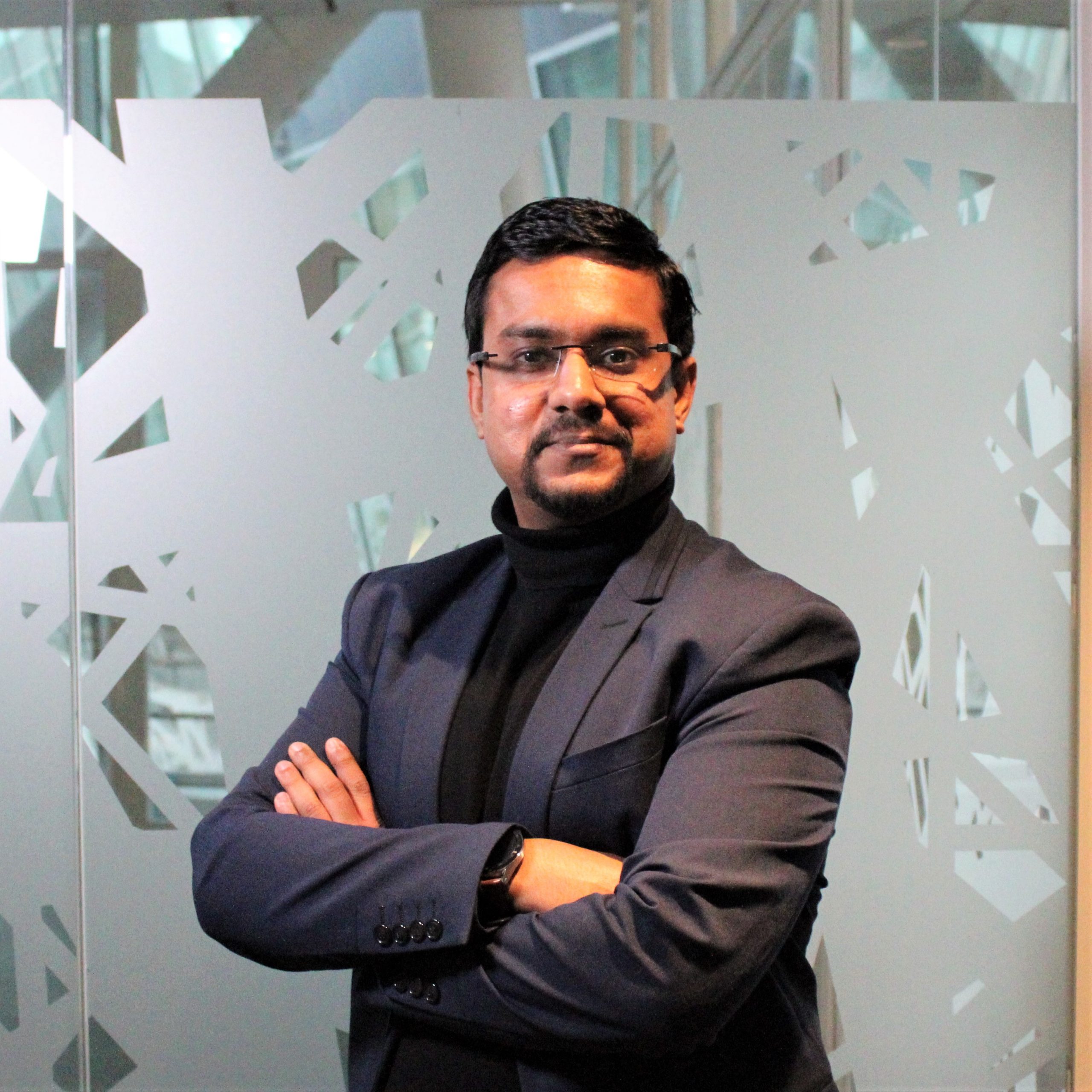
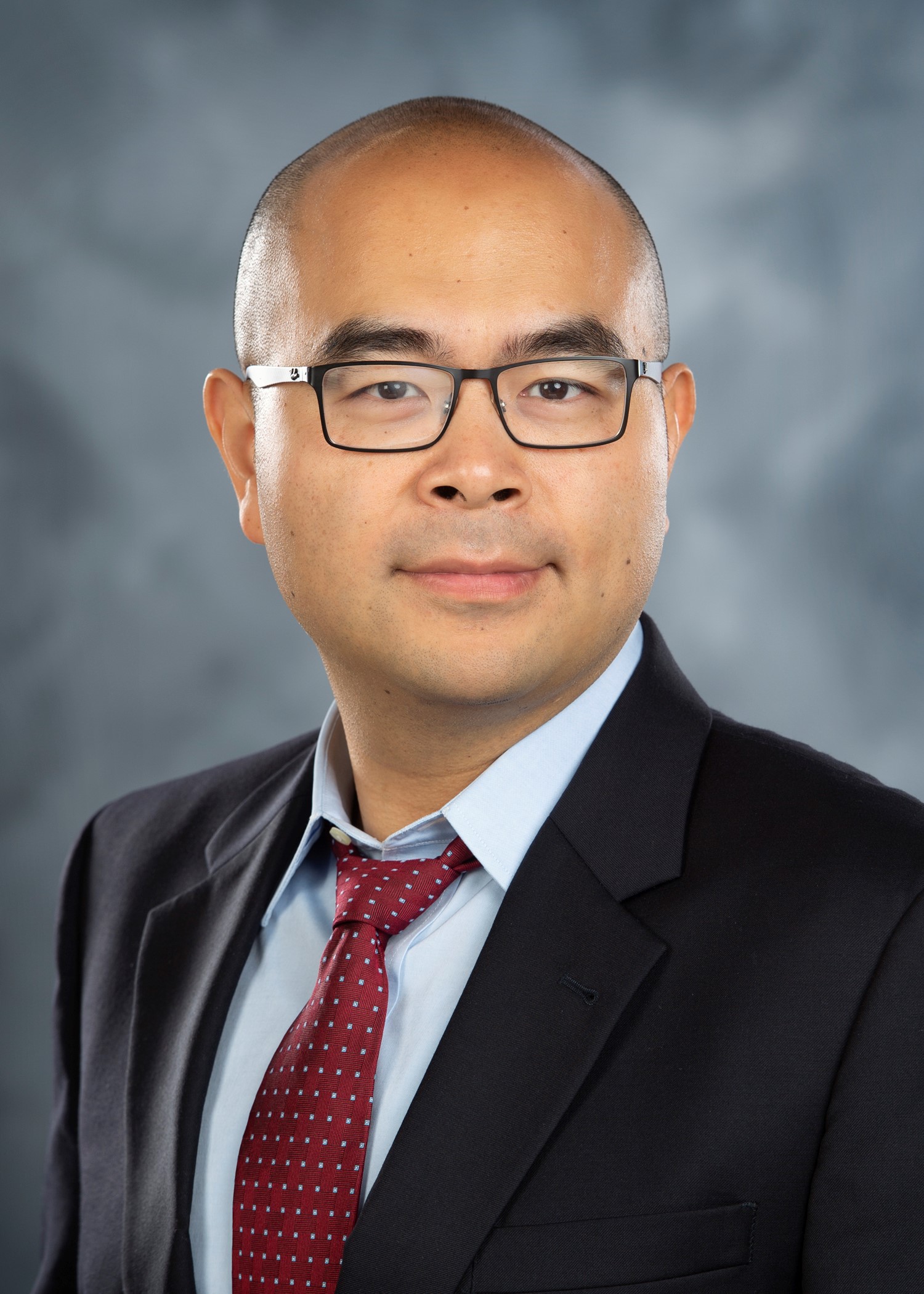
Miroslav Yosifov is an active researcher at the University of Applied Sciences Wels, specializing in X-ray Computed Tomography (X-CT), deep learning, and materials science. His work bridges industrial applications with advanced AI techniques to improve nondestructive testing and process optimization. Key projects: xCTing (MSCA-funded, 2021–2025) and PSSP (COMET-funded, 2018–2022). Research areas: X-CT, defect detection, fatigue life prediction, and AI-driven industrial automation. His recent publications focus on integrating machine learning with XCT for aerospace and aluminum components, with emerging trends in probabilistic fatigue assessment and unsupervised segmentation. Collaborations span European institutions, emphasizing Industry 4.0 process chains.
Dr. Aboozar Taherkhani is a Senior Lecturer in the School of Computer Science and Informatics at De Montfort University, UK, within the Faculty of Computing, Engineering and Media. His research integrates computer science and neuroscience, focusing on artificial intelligence, deep learning, and spiking neural networks. He is affiliated with the Institute of Artificial Intelligence (IAI) at DMU and has previously served as a full-time Research Fellow at Nottingham Trent University. His research interests include: Artificial Intelligence and Machine Learning Deep and Spiking Neural Networks Multimodal Data Analysis Image and Nonlinear Signal Processing Robotics, IoT, and Natural Language Processing Activity Recognition and Computational Neuroscience The recent publications highlight a strong trend in deep learning applications across domains such as healthcare (breast ultrasound segmentation, bone scaffolds), agriculture (hydroponics), robotics (3D reconstruction, gesture recognition), and privacy-preserving AI. His work emphasizes both theoretical advancements in neural models and practical implementations on edge devices and multimodal systems. Dr. Taherkhani has secured research funding through the Leverhulme Trust Research Project Grant RPG-2016-252 on multimodal data spaces. While no specific awards are listed, his extensive publication record in top journals reflects scholarly impact. He teaches courses such as Intelligent Mobile Robots, Natural Language Processing, Deep Neural Networks, and programming in C++, Python, and C#. He leads a research lab at DMU and supervises graduate students, though specific advisee names are not provided. His lab focuses on AI, robotics, and embedded intelligent systems.
Soumick Chatterjee is a Postdoctoral Researcher at the Glastonbury Group within the Genomics Research Centre of Human Technopole , Milan, Italy. He completed his PhD in Computer Science (summa cum laude) at Otto von Guericke University Magdeburg , Germany, focusing on reducing artifacts in MRI using deep learning. Education : PhD (2022), MSc (2017), and BCA (2013) in Computer Science. Current Role : Postdoc in Genomics Research Centre, Milan. His research spans deep learning applications in medical imaging, including MRI reconstruction , motion correction , brain tumor classification , and vascular segmentation . He also emphasizes interpretability of AI models through tools like TorchEsegeta. Publications (23+ in 2023) include work on undersampled MRI reconstruction, uncertainty quantification, and vessel segmentation via maximum intensity projection loss. Notable scientific achievements include winning the CHAOS Challenge (2019) and runner-up in the MOOD Challenge (2021). As a supervisor , he guided multiple Master’s students in deep learning projects. He co-organized events like ISACT 2021 and SMILE-UHURA 2023. Open science advocate with code publicly available on GitHub.
Jay Daniel is an Associate Professor specializing in Digital Supply Chain Research within the College of Business, Law and Social Sciences . His work focuses on blockchain technology integration in supply chains, data quality improvement, supply chain sustainability, and innovative educational technologies. He has published extensively on topics such as blockchain adoption barriers, supply chain decarbonisation, and strategic planning methodologies. Research contributions include case studies on Australian manufacturers adopting blockchain for supply chain transparency, flipped classroom experiments using social media, and collaborative forecasting models. His work bridges operational research techniques with real-world applications in logistics, healthcare, and manufacturing sectors. Jay is also an editor for the book Blockchain Technology: Transforming Businesses and Shaping the Future (2024). Key themes across his publications include: Technology-driven supply chain innovation (blockchain, IoT, AI) Sustainability metrics and decarbonisation strategies Data governance in healthcare and logistics Multi-criteria decision making frameworks His research has been disseminated through top conferences including POMS, AMCIS, and EDSI, with over 8,500 total article views and 2,275 downloads as of latest metrics.
Dr. Linkan Bian is the Thomas B. & Terri L. Nusz Endowed Professor in Industrial and Systems Engineering at Mississippi State University (MSU) and currently serves as a Program Director in the Advanced Manufacturing (AM) cluster at the National Science Foundation (NSF). He holds a Ph.D. from Georgia Institute of Technology and a B.S. in Applied Mathematics from Beijing University. His primary research focuses on additive manufacturing process modeling, AI/ML integration into manufacturing systems, and healthcare analytics. Key areas include process-structure-property relationships, defect detection via thermal imaging, and medical imaging analysis for cancer diagnostics. Dr. Bian has published over 60 peer-reviewed papers and secured federal funding from NSF, NIH, DoD, and industry partners. He received the IISE Outstanding Young Investigator Award and multiple Best Paper Awards. He serves as Associate Editor for IISE and ASME journals and previously led the IISE Quality Control and Reliability Engineering Division. His research lab, the CAVS Additive Lab, pioneers innovations in additive manufacturing quality control and AI-driven medical applications. Current NSF duties involve advancing advanced manufacturing research initiatives while maintaining MSU academic responsibilities. His work bridges manufacturing engineering with interdisciplinary applications in cybersecurity, predictive maintenance, and healthcare decision-support systems.
Dr. Özge Akbulut is an Associate Professor at Sabancı University's Faculty of Engineering and Natural Sciences in Istanbul. She received her B.S. in Materials Science and Engineering from Sabancı University in 2004, followed by a Ph.D. from Massachusetts Institute of Technology (MIT) in 2009, where she focused on cost-effective fabrication of biomolecular devices and surface science. She continued her research as a post-doctoral fellow in the Whitesides Group at Harvard University from 2009 to 2011, developing tools and techniques for resource-limited settings. Her research spans multiple cutting-edge areas of materials science and engineering: Colloidal science and rheology Additive manufacturing of advanced ceramics Silicone-based composite materials for surgical simulation Cement and construction materials Dr. Akbulut teaches several courses including Polymer Physics (MAT 404), Polymer Engineering II (MAT 402), and Introduction to Materials Science (ENS 205). She has successfully mentored numerous students, many of whom have gone on to prestigious institutions like EPFL, MIT, and Imperial College London. Her research group includes postdoctoral fellow Burcin Ustbas and PhD candidates Ayse Ay, Gizem Demir, and Isik Arel. She collaborates with researchers at institutions including EPFL, KAUST, Marmara University, and Istanbul Oncology Hospital. Dr. Akbulut is the founder of Surgitate, a company established in 2014 that develops tactile surgical training platforms. Her silicone-based composite models simulate breast tissue for surgical training, particularly for oncoplastic surgery. These models have been adopted in Australia, the UK, and India, with skin models available on Amazon being used in over 20 countries. She has received significant media attention for her work, including coverage in Hurriyet and WIPO Magazine. She has also launched a social responsibility project called "#kendimdensorumluyum" (I Am Responsible for Myself) which places 3D breast models in company facilities to encourage women to perform regular self-examinations. Dr. Akbulut has delivered numerous talks and seminars at prestigious institutions worldwide including EPFL, Bilkent University, Koç University, KAUST, and TEDx Reset. She has also participated in events like the Falling Walls conference in Berlin and the World Economic Forum in Dubai.
Rolf Wuthrich is a Professor in the Department of Mechanical and Industrial Engineering at Concordia University, Montreal, Canada. He leads the Electrocatalytic Green Engineering (EGE) group and holds academic roles including Head of Departmental Research Committee and Chair of the PhD comprehensive examination committee. His research focuses on non-traditional manufacturing processes, particularly glass micro-machining and electrochemical discharges, with applications in nano-particle fabrication for fuel cells and green energy systems. He has pioneered Spark Assisted Chemical Engraving (SACE) for precision glass machining and additive manufacturing integration. Wuthrich’s education includes a PhD in Micro- and Nano-Systems from École Polytechnique Fédérale de Lausanne (2000–2003), followed by postdoctoral research there. His work bridges electrochemistry, materials science, and manufacturing, emphasizing Industry 4.0 applications. His publications span electroforming, electropolishing of additively manufactured parts, and nanoparticle synthesis. He has received awards such as the Petro Canada Young Innovator Award (2007) and Concordia University Research Fellowship (2010). Research interests include stochastic process modeling, multi-physics modeling of two-phase electrolysis, and hydrogen production via engineered electrocatalysts. His group exploresIndustry 4.0-driven customization of glass tools and sustainable manufacturing techniques. Over 70 publications highlight his contributions to electrochemical manufacturing and nanomaterials.
Professor Neil Coe is a leading academic in Economic Geography at the School of Geosciences , University of Sydney. He joined in 2022 from the National University of Singapore (2012-2022), where he served as Head of Department. Previously, he spent 12 years at the University of Manchester. His research focuses on global production networks, labour regimes, and retail globalization. He is affiliated with the Sydney Southeast Asia Centre and The Net Zero Institute. Key research interests include the political economy of global value chains, state roles in resource governance, and the geographies of constrained labour agency. His work spans case studies in China, Singapore, and Southeast Asia, examining how transnational corporations and institutional frameworks shape economic development. Professor Coe has authored influential textbooks like Economic Geography: A Contemporary Introduction (3rd ed., 2020) and Global Production Networks (2015). His recent articles explore critical mineral strategies, platform capitalism in food retailing, and hybrid governance in Singapore's oil sector. He serves on editorial boards for major journals including Journal of Economic Geography . His research has been supported by grants such as the Australian Research Council project on high-value horticulture (2023) and a University grant on critical minerals (2022). He advises on strategic coupling in global production networks and has collaborated with international organizations like the Singapore Journal of Tropical Geography.
Dr. Xiao Chen is a Senior Lecturer in Electrical Machines at the School of Electrical and Electronic Engineering, University of Sheffield. He holds a PhD in Electrical Machines from the same university (2015) and prior degrees from Harbin Institute of Technology, China. His research focuses on advanced electrical machine design, thermal modeling, and manufacturing challenges. Notable roles include leading the EPSRC New Investigator Award project addressing bearing currents in power converters and managing the EPSRC Future Electrical Machine Manufacturing Hub’s work on core loss analysis. Education: BEng in Electrical Engineering, Harbin Institute of Technology (2009) MSc in Electrical Engineering, Harbin Institute of Technology (2011) PhD in Electrical Machines, University of Sheffield (2015) Research interests span bearing currents, high-frequency effects, neural network-based modeling, rare-earth-free machines, and traction systems. He has led industry projects on Litz wire losses, SiC inverters, and flux-switching machines. His work integrates computational efficiency and sustainability in machine design. Grants and Projects: EPSRC New Investigator Award (Bearing Current Mitigation) EPSRC Future Electrical Machine Manufacturing Hub (Core Loss Analysis) Industry collaborations with Dyson and others Teaching includes courses on power systems and electrical drives. He is a Senior Member of IEEE and contributes to student mentorship through the IEEE Student Branch at Sheffield.
Professor David Gethin is a faculty member in the Department of Mechanical Engineering at Swansea University. He holds a position within the Faculty of Science and Engineering and is affiliated with the Welsh Centre for Printing and Coating. His research focuses on net shape manufacturing, powder forming technologies, and printing/coating innovations. He is available for postgraduate supervision and maintains a basic proficiency in Welsh. Research Contributions: Professor Gethin has pioneered numerical/experimental techniques for casting process variants, including squeeze casting simulation and optimization. He contributed to early continuum-based powder compaction modeling and developed combined discrete/finite element methods for tabletting processes. His work bridges mechanical response characterization of powders with industrial validation. Recent efforts emphasize polymer electronics and biopolymer applications in biosensing devices, leveraging thin film hydrodynamics for scientific process development. Lab Affiliations: Core researcher at the Welsh Centre for Printing and Coating, where high-volume printing process fundamentals have been transformed from craft-based to scientifically validated methodologies over the past decade. Professional Links: Maintains an ORCID profile (https://orcid.org/0000-0002-7142-8253) documenting his technical contributions to manufacturing and materials science.
Professor Paul Rodgers is a faculty member in the Department of Design, Manufacturing and Engineering Management at the University of Strathclyde, within the Faculty of Engineering. He is an active researcher and leader in design research, with a focus on sustainability, health systems, and innovation. His research interests include design thinking, participatory design, sustainable design, and design for health. His work is deeply aligned with UN Sustainable Development Goals, particularly those related to climate action, health, and sustainable communities. He leads major interdisciplinary projects such as Design HOPES, which explores design-led interventions for net zero goals in Scotland’s health ecosystem. His recent publications (2024–2025) reflect a strong trend in applying design research to urgent societal challenges, including climate change, healthcare sustainability, and educational reform. These works span journals and conferences in design, sustainability, and health, indicating a transdisciplinary approach with real-world impact. Elected to the Editorial Board of The Design Journal (2023) Professor Rodgers has secured significant research funding from bodies like AHRC and EPSRC. He has supervised doctoral students and contributed to national and international research networks. His leadership in projects like the Doctoral Training Partnership and Design HOPES highlights his role in mentoring emerging researchers and shaping the future of design-led innovation. He is involved in the Design Research Group at Strathclyde and collaborates across disciplines including engineering, computer science, and health. His work fosters inclusive, collaborative environments that integrate diverse perspectives to drive transformational change.
Dr. Novana Hutasoit is a Lecturer in the School of Engineering at Swinburne University of Technology, Australia. She is actively engaged in research and teaching with a focus on advanced manufacturing technologies, particularly cold spray additive manufacturing (CSAM), and its applications in materials engineering and mechanical systems. Field: Manufacturing Engineering Field: Materials Engineering Field: Mechanical Engineering Her research interests center on cold spray additive manufacturing, with applications in thermoelectric materials, metal-matrix composites, antibacterial and antiviral coatings, and thermal interface engineering. She investigates the processing-structure-property relationships in additively manufactured materials, focusing on improving mechanical, thermal, and corrosion performance through innovative processing routes and post-treatments. Her recent publications highlight a strong trend in cold spray technology, particularly using compressed air as a carrier gas for cost-effective and sustainable manufacturing. Her work spans functional applications such as thermoelectric generator interfacing, antimicrobial surfaces for public health, and high-performance metal composites. The research demonstrates a consistent focus on industrial applicability, reproducibility, and performance enhancement. Dr. Hutasoit has secured multiple research grants from the Australian Department of Defence, supporting projects on thermoelectric materials, cold spray coatings, and composite development. She is actively supervising PhD students in advanced materials and manufacturing topics, indicating her role in training the next generation of engineers. Development of new low-cost thermoelectric material via cold spray additive manufacturing (2023–2025) Research and Development of new Low-cost Thermoelectric material via Cold Spray Additive Manufacturing (2023–2025) TEG Coating Phase 4 - Upgrading Equipment (2022–2023) Defence Science and Technology Group (DSTG) - TEG Coating Phase 3 Extension (2022) TEG Coating Phase 3 (2021–2022) Cold Spray Graphene Metal Matrix Composite (2021) TEG Coating (2020) She supervises PhD research on graphene-reinforced polymer nanocomposites and ceramic/metal composites, focusing on mechanical and thermal properties. Her collaborative network includes researchers such as S. Palanisamy, M.A. Khalik, and O. Tregenza. There is no mention of specific labs or teams, but her work is clearly embedded in a strong materials and manufacturing research group at Swinburne.
Professor Martin Jackson, affiliated with the School of Chemical, Materials and Biological Engineering at the University of Sheffield , is a leading expert in Advanced Metals Processing , specializing in Titanium Alloys and Field-Assisted Sintering Technology (FAST) . His career spans roles such as Director of Aerospace Engineering (2015-2019) and Royce Research Area Lead for Advanced Metals Processing (2019-2024) , alongside representing the UK at the World Titanium Committee . MEng (First Class Honors) from the University of Sheffield PhD from Imperial College London (EPSRC/QinetiQ funded) His research focuses on solid-state processing to reduce titanium costs, including FAST/SPS for near-net-shape components and Conform continuous extrusion for recycling aerospace swarf. He leads the STAR (Sheffield Titanium Research) group, pioneering digital fingerprinting of microstructures through machining force analysis and developing sustainable processing techniques like FAST-forge and AddFAST. Key publications highlight advancements in microstructural control , tool wear mechanisms , and recycling aerospace waste using FAST and Conform. Awards include the Royal Academy of Engineering/EPSRC Research Fellowship . Developed patents in titanium recycling with industry partners Collaborates with machine tool manufacturers for in-process NDE Active in international standards via the World Titanium Committee
Enrique J. Lavernia is University Distinguished Professor and M. Katherine Banks Chair at Texas A&M University, jointly appointed in the Departments of Materials Science & Engineering and Mechanical Engineering within the College of Engineering. He is a member of both the National Academy of Engineering and the National Academy of Inventors. Education Ph.D., Materials Engineering, Massachusetts Institute of Technology – 1986 M.S., Materials Engineering, Massachusetts Institute of Technology – 1984 B.S. (Honors), Solid Mechanics, Brown University – 1982 Research Interests Professor Lavernia’s research centers on the synthesis, processing, and mechanical behavior of nanostructured and multiscale materials . A major thrust is understanding processing fundamentals—such as additive manufacturing, powder metallurgy, and severe plastic deformation—and linking them to physical, mechanical, and functional properties. His group explores high-entropy alloys , refractory complex concentrated alloys , magnetic composites , and gradient architected materials , with applications ranging from aerospace structures to soft magnetic devices. Scientific Awards & Honors TMS Bruce Chalmers Award (2024) R&D 100 Award, Iron Nitride Soft Magnetics (2022) Metal Powder Industries Federation Distinguished Service Award (2021) ASM International Albert Sauveur Achievement Award (2021) Acta Materialia Gold Medal (2020) Distinguished Engineering Educator Award, National Engineers’ Council (2018) Member, National Academy of Inventors (2017) Alexander von Humboldt Foundation Research Award (2016) TMS Leadership Award (2016) Hispanic Hall of Fame, HEENAC Great Minds in STEM (2015) Member, National Academy of Engineering (2013) Research Productivity & Funding Lavernia’s group has produced more than 800 peer-reviewed articles and secured continuous funding from NSF, DOE, DOD, NASA, and industry consortia. His team operates state-of-the-art facilities for additive manufacturing (laser and electron-beam directed energy deposition), spark-plasma sintering, cryomilling, atom-probe tomography, and in-situ electron microscopy. Laboratories & Teams He directs the Enrique J. Lavernia Research Group , which comprises 20–25 graduate students, post-docs, and research scientists housed in the Texas A&M Engineering Experiment Station (TEES) and the Materials Characterization Facility (MCF). The group collaborates closely with the National Laboratories (Sandia, Oak Ridge, Lawrence Livermore) and international partners in Germany, Japan, and China.
Dr. Mostafa Yakout serves as an Assistant Professor in the Department of Mechanical Engineering within the Faculty of Engineering at the University of Alberta. A Professional Engineer (P.Eng.) licensed in Alberta and Ontario, he also holds an Adjunct Research Professor position at Western University (2022-2025). Previously, he served as a Sessional Instructor at McMaster University and an Assistant Lecturer at Alexandria University. His educational background includes: Postdoctoral Fellowship, McMaster University, Canada, 2019-2022 Ph.D. Mechanical Engineering, McMaster University, Canada, 2015-2019 M.Sc. Production Engineering, Alexandria University, Egypt, 2011-2013 B.Sc. Production Engineering, Alexandria University, Egypt, 2005-2010 Dr. Yakout's research focuses on developing process-driven solutions for additive manufacturing of next-generation materials, including alloys containing rare-earth metals, high-performance metal alloys, and high-temperature materials. His group employs numerical, analytical, and experimental methods to establish critical process-structure-property-performance relationships. This work directly supports clean technology development and industrial transformation toward net-zero emissions in Canadian manufacturing. Analysis of his recent publications (2021-2025) reveals dominant themes in laser powder bed fusion (LPBF), particularly Inconel 617 applications for small modular reactors, rare earth element-doped coatings, and magnetic alloy optimization for electric motors. His research consistently integrates multiphysics modeling, in-situ process monitoring, and microstructure-property relationship studies targeting aerospace, nuclear energy, and biomedical engineering applications. No specific scientific awards or fellowships are documented in the provided materials. Dr. Yakout currently accepts undergraduate students for research supervision. His group collaborates extensively with industry, government agencies, and academic institutions across Canada and internationally. As CARDD-Tech Research Lead, he focuses on critical minerals and rare earth elements to advance sustainable manufacturing solutions aligned with national clean technology initiatives. He leads the ANGAM Group, which specializes in additive manufacturing process development for advanced materials. The team's work emphasizes hybrid additive manufacturing techniques and design optimization for industrial applications requiring high-performance material solutions.