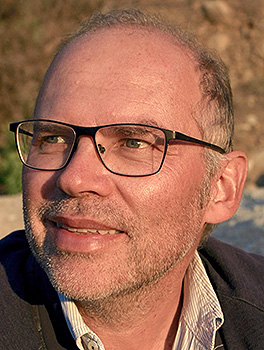
Prof. Willy Tinner is a leading academic at the University of Bern, serving as Head of the Paleoecology section and Vice Executive Director within the Institute of Plant Sciences. His research focuses on reconstructing past environmental changes through pollen analysis, vegetation dynamics, and human-ecosystem interactions. Tinner's work integrates paleoecological data with climatology, archaeology, and conservation biology to understand long-term ecological processes. His expertise spans Holocene climate impacts, Neolithic land use patterns, and biodiversity conservation challenges in alpine and Mediterranean ecosystems. Notable research includes studies on Fagus-Quercus forest coexistence in Italy, Abies alba climatic adaptations, and human-driven vegetation changes across Europe. Tinner collaborates internationally, contributing to projects in Greece, Ukraine, and the Balkans. He has published extensively on topics such as fire regimes, lake sediment archives, and the ecological consequences of ancient agricultural practices. His leadership positions reflect his role in shaping Switzerland's ecological research priorities through institutions like WSL Cadenazzo.
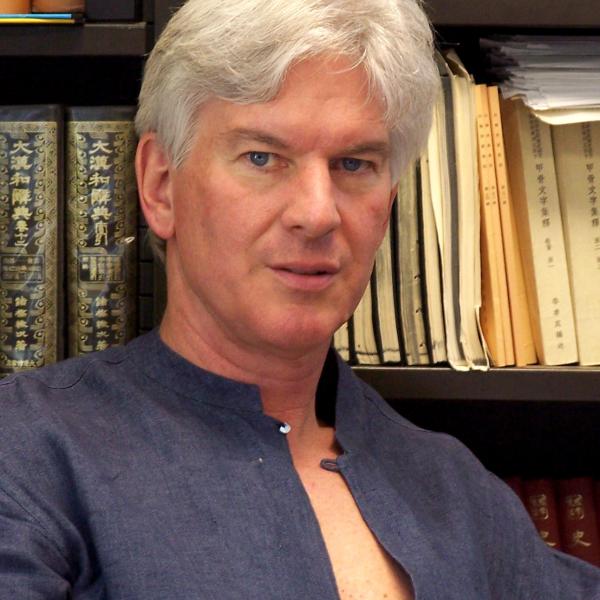
Edward L. Shaughnessy serves as the Lorraine J. and Herrlee G. Creel Distinguished Service Professor in Early Chinese Studies and Director of Graduate Studies in the Department of East Asian Languages and Civilizations at the University of Chicago. A renowned scholar of ancient China, he specializes in archaeologically recovered texts from the Zhou dynasty period (c. 1045-249 BCE), particularly bronze inscriptions, bamboo-slip manuscripts, and the classical texts Zhou Yi (I Ching), Shang Shu, and Shi Jing. His research interests focus on the intersection of archaeological discoveries and literary traditions, with particular expertise in bronze inscriptions and the Zhou Yi. Shaughnessy has pioneered efforts to bridge Western and Chinese scholarly traditions, publishing extensively in both English and Chinese. He has written seven volumes of technical scholarship in Chinese and is currently leading an international team translating Tsinghua University's fourth-century BCE bamboo-slip manuscripts. His recent scholarly output shows strong trends in paleographic studies, with numerous publications analyzing newly excavated manuscripts. His work demonstrates a consistent focus on textual transmission, historical context, and the relationship between archaeological evidence and received literary traditions. Notable patterns include systematic analysis of bamboo-slip manuscripts, comparative studies of textual variants, and interdisciplinary approaches combining philology, archaeology, and historical analysis. Shaughnessy has received recognition through his appointment as a Distinguished Service Professor, one of the highest academic honors at the University of Chicago. His scholarly contributions have significantly advanced the field of early Chinese studies through both original research and editorial work. As an educator, Shaughnessy teaches seminars on oracle-bone inscriptions, bronze inscriptions, bamboo-strip inscriptions, and courses on the Yi jing, Shi jing, and Shang shu. He serves as Director of Graduate Studies for the department and has supervised numerous graduate students. His current and upcoming courses include 'The Ji Zhong Discovery,' 'The Development of Early China Studies in the West,' 'Western Zhou Bronze Inscriptions,' 'The Shang shu,' and 'The Shi jing.' Shaughnessy maintains an active research program with current projects including the translation of Tsinghua University's bamboo manuscripts and serving as co-editor of the journal Bamboo and Silk. His scholarly network extends internationally, as evidenced by his 2013 lecture series at the Collège de France titled 'Unearthing the Chinese Classics,' where he presented on the Zhou Yi, Shang Shu, Shi Jing, and Laozi.
Andrew Bauer is an Associate Professor in the Department of Anthropology at Stanford University and serves as Director of the Stanford Archaeology Center. His research centers on anthropological archaeology with primary fieldwork in South India, investigating human-environment relations, landscape history, and institutionalized social inequalities across Iron Age, Early Historic, and Medieval periods. Bauer's work critically examines socio-politics of land use, cultural landscape production, and intersections between historical landscape practices and modern conservation/climate change frameworks. His methodology integrates fieldwork in Turkey, Iran, and the United States with South Indian case studies on mortuary practices, megalithic monuments, and agricultural systems to analyze power dynamics in prehistoric societies. Recent publications (2021-2024) demonstrate consistent focus on critical geoarchaeology, political ecology of landscapes, and periodization challenges in South Asian archaeology. His influential books including Before Vijayanagara (2015) and Climate Without Nature (2018) establish theoretical frameworks connecting material culture studies with Anthropocene discourse and social inequality analysis. No scientific awards were mentioned in the provided text. The available documentation does not specify details regarding graduate student advising or external grant funding. Bauer co-directs active fieldwork in South India's Tungabhadra Basin and Raichur Doab regions, utilizing remote sensing and soil analysis techniques. His Stanford research lab (Building 500, Room 103) supports interdisciplinary collaboration examining long-term socio-environmental change through landscape archaeology and critical theory approaches.
Prof. Ludwig D. Morenz is a Professor of Egyptology at the University of Bonn and Director of the Egyptian Museum Bonn. He holds positions as a Principal Investigator in archaeological research and leads excavations in Egypt. His academic journey includes a Habilitation from the University of Tübingen (2001), a PhD from Leipzig (1994), and extensive postdoctoral fellowships across Europe. His research focuses on Pharaonic socio-economic systems, particularly dependency relationships between state expeditions and Canaanite populations. He examines ancient Egyptian economy, religion, and cultural interactions through material and textual evidence. Key areas include the origins of alphabetic writing, solar deity symbolism, and Roman-Egyptian cultural hybridity. Morenz has secured over €1 million in third-party funding from institutions like the German Research Foundation (DFG) and Gerda Henkel Foundation. He supervises numerous doctoral and master's students, reviewing over 30 theses and international PhDs. His editorial roles include founding journals like Studia Sinaitica and Bonner Ägyptologische Beiträge . Major excavations under his leadership include the Elite Necropolis of Qubbet el Hawa and the Serabit el-Chadim Hathor temple project. He participates in consortia such as the DFG Research Training Group 'Archeology of Pre-Modern Economies' and the International Congress of Egyptologists. Awards: Heisenberg Fellowship (DFG), Feodor Lynen Fellowship (Humboldt Foundation), Herzog-Ernst Scholarship Exhibitions: Curated annual special exhibitions at the Egyptian Museum Bonn, including a landmark show on alphabetic writing origins at Cairo's National Museum Publications: 13 monographs, 4 edited volumes, and over 100 articles
Li Liu is the Sir Robert Ho Tung Professor in the Department of East Asian Languages and Cultures at Stanford University. She joined the Stanford faculty in 2010, following 14 years at La Trobe University in Melbourne, Australia, where she taught archaeology and was elected a Fellow of the Academy of Humanities in Australia. Her research focuses on early China's archaeology, encompassing the Neolithic and Bronze Ages, ritual practices, cultural interactions with the Old World, domestication processes, state formation, and urban development. She holds a B.A. in Archaeology from Northwestern University (Xi'an), an M.A. in Anthropology from Temple University (Philadelphia), and a Ph.D. in Anthropology from Harvard University (1994). Dr. Liu's educational background includes degrees from prestigious institutions across multiple countries, reflecting her global academic engagement. Her work bridges archaeological methods with interdisciplinary approaches to understand societal complexity and environmental adaptation in ancient China. Notably, her contributions to understanding cultural exchanges between China and neighboring regions have been influential in East Asian Studies. Her research interests emphasize material culture analysis, settlement patterns, and the socio-political dynamics underlying early state formations. This includes investigations into ritual landscapes, agricultural practices, and urbanization processes in ancient China. Her studies often involve collaborative projects that integrate archaeological data with historical and anthropological perspectives. Dr. Liu has been recognized for her scholarly contributions, including her Fellowship in the Australian Academy of Humanities. Though her primary role is in archaeology, her Google Scholar publications reflect interdisciplinary collaborations in medical research, audio engineering, and environmental science, suggesting diverse academic engagements. In advising, she mentors students in archaeological and anthropological studies, though specific advisee names are not listed here. Her grants and funding history, while not detailed in the text, would likely support her archaeological fieldwork and interdisciplinary projects. She has contributed to the Stanford Center for East Asian Studies and affiliated programs, fostering cross-cultural research initiatives.
Dr. Emma Pomeroy is an Associate Professor in the Evolution of Health, Diet and Disease at the University of Cambridge's Department of Archaeology. She is an active researcher with expertise spanning anthropology, archaeology, biological anthropology, and paleoanthropology. Her work combines human bioarchaeology with human biology and paleoanthropology, conducting research across South America, South Asia, Europe, and the Near East. Dr. Pomeroy's research focuses on understanding how past and present variation in human health, growth, and morphology is influenced by evolutionary processes including adaptation, neutral variation, and plasticity, as well as interactions with natural and social environments. Her specific interests in reproduction include the evolution and adaptation of the human pelvis, impacts of evolutionary and environmental factors on pelvic morphology and birth complications, and how early life conditions affect later growth and health which may influence birth complication risks. A significant portion of her recent work has investigated the evolutionary origins of low lean tissue mass among contemporary South Asians, which is implicated in elevated risk of type 2 diabetes and other chronic diseases. Dr. Pomeroy leads important archaeological projects including serving as the paleoanthropologist at renewed excavations at Shanidar Cave in Iraqi Kurdistan since 2016, where her team has made significant new Neanderthal discoveries. She also co-directs the Old St Bernard's Hospital Project in Gibraltar with Dr. Kevin Lane and Professor Clive Finlayson, investigating health, diet, and migration among skeletons from a 16th-17th century mariner's hospital. Her recent publications demonstrate a strong focus on human skeletal variation, Neanderthal studies, human adaptation, and the developmental origins of health and disease. Her work spans multiple geographical regions including the Americas, Europe, Mesopotamia and the Near East, and South Asia, examining periods from the Paleolithic through to contemporary populations. Dr. Pomeroy contributes to interdisciplinary research networks including Cambridge Reproduction, where she investigates the evolutionary aspects of human reproduction. Her methodological approaches integrate skeletal biology, archaeological science, and evolutionary theory to address fundamental questions about human variation and adaptation.
Wiebke Kirleis is Professor for Environmental Archaeology and Archaeobotany at the Institute for Pre- and Protohistory, Faculty of Arts and Humanities, Christian-Albrechts-Universität zu Kiel (CAU). She has held this position since May 2014 and was previously a junior professor at the same university from 2008 to 2014. She is actively involved in major interdisciplinary research projects, including the Cluster of Excellence ROOTS and the Collaborative Research Centre 1266 'Scales of Transformation', where she serves as co-speaker and technical platform speaker. PhD in Natural Sciences, University of Göttingen (2002) Diploma in Biology, University of Göttingen (1998) Studies in Botany, Anthropology, and Environmental History, University of Göttingen (1990–1998) Wiebke Kirleis' research centers on the interaction between humans and plants during the late Pleistocene and Holocene, with a focus on plant economy, domestication, agricultural development, and landscape transformation. Her work explores how wild and cultivated plants were used for nutrition, ritual, and technical purposes, and how agricultural innovations such as ploughing and manuring impacted Central European landscapes. She has a strong geographical focus on Northern and Central Germany, Southeastern Europe, the Near and Middle East, and Southeast and East Asia, particularly Indonesia. Her methodological expertise includes archaeobotany (analysis of charred and waterlogged plant remains), palynology (pollen and spore analysis from sediment cores), and anthracology (study of charcoal remains). Her recent research includes studies on broomcorn millet diffusion, early farming in Scandinavia and Russia, and plant use in Bronze Age settlements across Europe and Turkey. She leads and collaborates on numerous interdisciplinary projects, emphasizing the integration of botanical data into broader archaeological narratives. Her publications reflect a consistent trend in environmental archaeology, focusing on plant domestication, agricultural transitions, and human-induced landscape change. Keywords across her recent work include archaeobotany, palynology, Neolithic and Bronze Age subsistence, and environmental reconstruction. Her research spans subfields such as food security, cultural transmission of plant use, early monumentality, and socio-economic aspects of prehistoric agriculture. Board member, Cluster of Excellence ROOTS Co-speaker, CRC 1266 'Scales of Transformation' Speaker, ROOTS Technical Platform Board member, Johanna-Mestorf-Akademie Chair, Scientific Advisory Board, Dithmarschen Stone Age Park (since 2023) Full member, German Archaeological Institute (DAI) Elected member, Commission for Archaeology of Non-European Cultures (KAAK) Wiebke Kirleis has supervised numerous research projects funded by the DFG and other agencies, including the Graduate School 'Human Development in Landscapes'. She has advised students and collaborated internationally with institutions in Italy, Norway, Indonesia, and Australia. Her leadership roles in academic self-administration include serving on planning, budget, and equality committees at CAU Kiel. She is committed to science communication, having launched the digital exhibition 'Alles bleibt anders' and produced educational films on archaeobotany. She is also involved in mentoring female postdocs through the via:mento program. She leads the archaeobotanical component in the 'Superfood' module of the SFB 1266 digital exhibition and is actively involved in the ROOTS Cluster’s Subcluster 'Dietary ROOTS'. Her lab and research team operate within the Institute for Pre- and Protohistory, contributing to the university’s strong focus on interdisciplinary landscape archaeology.
Gülçin İlgezdi Bertram is a Professor at Kırşehir Ahi Evran University, Faculty of Arts and Sciences, Department of Archaeology, with a focus on Neolithic and Early Bronze Age studies in Anatolia. She specializes in zooarchaeology and animal domestication, employing multidisciplinary approaches to analyze prehistoric settlements. PhD in Prehistory-Bioarchaeology from Eberhard Karls University of Tübingen (2008) Master’s in Prehistory from Istanbul University (1999) BA in Archaeology from Istanbul University (1994) Her research explores the Neolithic and Early Bronze Age transitions, emphasizing animal exploitation, ceramic analysis, and settlement patterns. She integrates zooarchaeological methods with regional surveys to study cultural interactions and domestication processes. Recent projects include investigations at Ekşi Höyük, Hashöyük, and Beycesultan Höyük. Awards: DAAD Doctoral Scholarships (2001-2004) and Çatalhöyük Young Scholar Award (1999). She has advised multiple master’s students and contributed to international conferences and publications.
Kostalena Michelaki is an Associate Professor in the School of Human Evolution and Social Change at Arizona State University. Her research focuses on integrating geochemical, archaeological, and anthropological approaches to understand material culture production, exchange networks, and human-environment interactions across diverse geographic and temporal contexts. Her work spans prehistoric Europe, Mesoamerica, and North America, with particular emphases on ceramic technology, provenance studies, and the application of archaeometric methods. Methodologically, she specializes in elemental analysis of materials (ceramics, lithics, and metals), spatial analysis of archaeological landscapes, and experimental archaeology. She critiques traditional typological approaches by emphasizing the importance of integrating physico-chemical data to reconstruct ancient production systems and social dynamics. Recent projects include geochemical sourcing of Stonehenge sarsen stones, analysis of La Quemada ceramics in Mexico, and investigations into European copper distribution in 17th-century Canada. Her research consistently highlights how material objects encode histories of human creativity, resource management, and cultural exchange. Michelaki's publications emphasize methodological rigor in data interpretation, advocating for transparent analytical frameworks to avoid over-interpretation of archaeological materials. She collaborates extensively with geologists, chemists, and Indigenous communities to contextualize technical data within socio-cultural narratives.
Dr. Agnieszka Gruszczyńska is a researcher specializing in paleoenvironmental studies at an academic institution in Poland, working within the Department of Dynamics of Past Landscapes. She completed her PhD in 2023 after conducting extensive research on the paleogeographic development of the Great Sertei Lake Basin in the Vitebsk Lake District, using paleoecological analyses as her primary methodology. Education: 2016-2023: PhD studies on Paleogeographic development of the Great Sertei Lake Basin in the Vitebsk Lake District in the light of paleoecological studies 2014-2016: Master's degree in Environmental Protection, Faculty of Biology and Environmental Protection, University of Lodz, specialization in ecology and water protection 2012-2014: Master's degree in Pedagogy with physical and health education, Faculty of Geographical Sciences, University of Lodz Dr. Gruszczyńska's research centers on ecosystem responses to violent and extreme events throughout geological history, with particular expertise in Chironomidae ecology where she investigates non-temperature factors influencing population dynamics and community quality. Her work spans paleoecological analysis of aquatic invertebrate remains and examines climate change patterns throughout the Pleistocene and Holocene epochs. She frequently employs multi-proxy approaches to reconstruct past environmental conditions, with fieldwork concentrated in Eastern Europe, particularly Western Russia's Serteya region and various Polish lake districts. Her extensive publication record demonstrates a methodological focus on paleolimnology and paleoenvironmental reconstruction using lake sediments, peat bogs, and other natural archives. Recent work shows increasing emphasis on human-environment interactions throughout history, particularly regarding historical land use practices like charcoal production and their long-term ecological impacts. Her collaborative research bridges Quaternary science, archaeology, and modern environmental concerns, often examining how past environmental changes can inform contemporary ecological challenges. Dr. Gruszczyńska actively participates in international research collaborations, particularly with institutions in Russia and other European countries, contributing to our understanding of long-term environmental changes and human adaptation to these changes across the East European Plain.
Professor Alan Penn is a leading academic at University College London's The Bartlett School of Architecture , where he holds the title of Professor in Architectural and Urban Computing. He previously served as Dean of the Bartlett Faculty of the Built Environment from 2009 to 2019 and has been instrumental in establishing Space Syntax Ltd , a UCL knowledge transfer spin-out company. His affiliations include membership in the Space Syntax Laboratory, board membership of UCL Consultants Ltd, and trustee status at Shakespeare North Trust. Education: BSc (1978), Dip Arch (1980), MSc (1983) - all from University College London Alan Penn’s research investigates how spatial design influences social and economic behaviors through innovative space syntax methodologies . Key areas include: Agent-based simulations of human behavior Spatio-temporal representations of built environments Urban spatial network analysis Urban sustainability across multiple dimensions Cognitive markers in architectural design Historical urban growth modeling His recent publications demonstrate a strong focus on computational urbanism, evolutionary city patterns, and behavioral architecture. Research trends show interdisciplinary approaches combining architectural theory with: Machine learning applications Network science analysis Behavioral psychology insights Historical GIS techniques Complex systems modeling Public health considerations Scientific recognition includes: HEFCE Business Fellowship (2001-2005) KTP SE Region Award (2010) Multiple UCL Enterprise awards ‘Spirit of Enterprise’ Award (2008) As Principal Investigator he leads the £5m EPSRC-funded Urban Dynamics Lab , demonstrating sustained research excellence. His work extends to public engagement through: Shakespeare North Trust educational theatre development Media appearances (New Scientist, Slashdot) Public policy contributions
Adrian Parker is a Professor of Geography at Oxford Brookes University's School of Law and Social Sciences. He holds degrees including a DPhil from the University of Oxford. His research focuses on Quaternary science, geoarchaeology, and palaeoecology across the Middle East, North Africa, Southern Africa, and southern England. Key areas include multi-proxy environmental reconstruction using phytoliths, pollen, and geochemistry, with emphasis on understanding human-environment interactions during critical climatic transitions. Dr. Parker leads the Human Origins and Palaeo Environments (HOPE) group within the Centre for Environment and Society (CES). His fieldwork spans UAE, Saudi Arabia, Yemen, and Lesotho, addressing topics like Holocene socio-ecological systems, Neolithic settlement patterns, and climate change impacts. Recent projects include a £41,900 Ras al-Khaimah-funded geoheritage study and a £1,563 University of Michigan collaboration on phytolith analysis. He teaches modules on Quaternary Environmental Change and Arid Zone Environments. Professional accolades include Fellowships from the Society of Antiquaries, Royal Geographical Society, Royal Anthropological Institute, and Higher Education Academy. His advisory work includes mentoring two active PhD students: Sophie Edwards (hominoid craniodental morphology) and Kira Raith (Quaternary climate-landscape dynamics). Publications span over 40 peer-reviewed articles in journals like Quaternary Science Reviews , Scientific Reports , and Antiquity , with a focus on integrating geological and archaeological evidence to reconstruct past environments and human adaptations. His research bridges archaeology, geology, and environmental science, emphasizing interdisciplinary approaches to understanding long-term socio-ecological systems.
Christopher Miller is a Professor of Geoarchaeology at Eberhard Karls University of Tübingen (since 2016) and Director of Undergraduate Studies in the Institute for Archaeological Sciences (since 2013). He previously served as Junior Professor of Geoarchaeology (2010-2016) and Acting Head of the Archaeometry Division (2013-2015). His research focuses on site formation processes, archaeological micromorphology, and the role of fire in human evolution, with a particular emphasis on Paleolithic cave sites. Education: PhD (2010): Eberhard Karls University of Tübingen, Dissertation on Paleolithic cave sites' formation processes and settlement dynamics MSc (2004-2006): University of Maine, Thesis on geoarchaeological settings in the eastern US BA (2000-2004): Boston University, Dual degree in Archaeology and Earth Science Research interests include: Micromorphological analysis of archaeological sediments Geochemical tracing of Paleolithic sites Reconstruction of prehistoric human-environment interactions Development of novel microanalytical techniques for archaeological contexts His recent publications highlight interdisciplinary approaches to site formation processes, paleoenvironmental reconstruction, and the application of clumped isotope thermometry in archaeological contexts. He has conducted fieldwork in South Africa, Italy, Germany, and the Levant, focusing on cave systems and open-air sites. As an academic leader, he oversees the Geoarchaeology research group and collaborates with international teams on projects such as the Neolithic Movila lui Deciov settlement and the Swabian Jura Paleolithic sites. His work bridges geochemistry, archaeology, and environmental science to unravel the complexities of human adaptation in prehistoric environments.
Rolfe David Mandel is a University Distinguished Professor at the University of Kansas, specializing in Quaternary Geology and Geoarchaeology. His work focuses on landscape evolution, paleoenvironmental reconstruction, and the integration of geological and archaeological methodologies. Research Interests: Geoarchaeology of prehistoric landscapes Quaternary climate dynamics Fluvial and aeolian processes Remote sensing applications in archaeology Publications highlight his expertise in reconstructing Pleistocene/Holocene environmental changes in North America and globally. Notable projects include studies on the Nebraska Sand Hills, Yukon's Bluefish Caves, and extraterrestrial geoarchaeological frontiers. He also leads efforts in applying Quaternary science to cultural resource management challenges. Teaching emphasizes geoarchaeological methods and Quaternary geology, with courses on paleoenvironmental reconstruction and geomorphology. His work bridges geology and archaeology, addressing questions of human-environment interactions across timescales—from Paleolithic migrations to future lunar heritage preservation.
Marieke van de Loosdrecht is an External employee in the Department of Biosystematics at Wageningen University & Research. Her work focuses on the genetic and historical dimensions of crops and human populations, with a particular emphasis on African agricultural heritage and ancient DNA analysis. She collaborates internationally on projects exploring genomic diversity in traditional rice varieties and prehistoric human migrations. Research interests include crop domestication, colonial impact on agricultural systems, and the genetic histories of plant and human populations. For example, her work on Maroon rice varieties in Suriname and French Guiana traces 350 years of colonial influence through genomic data. Other projects involve analyzing ancient DNA from North African populations to understand prehistoric migration patterns. Her recent publications highlight interdisciplinary approaches combining genomics with anthropology and archaeology. Notable contributions include studies on Saharan pastoralism and the genetic continuity of Pleistocene hunter-gatherers in Iberia. She has contributed datasets to repositories like NCBI, preserving genetic information of heirloom rice varieties. Marieke has been featured in media outlets for her research on rice varieties' African origins and ancient DNA findings. Her work bridges academic disciplines to illuminate historical and biological processes shaping modern agricultural and human diversity.