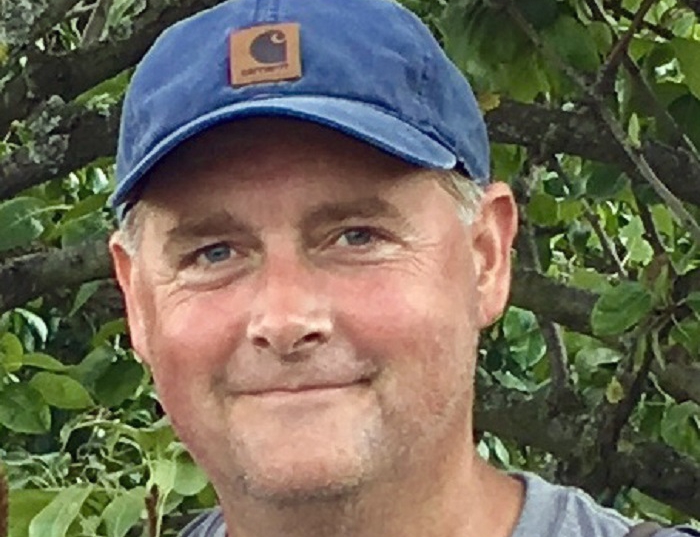
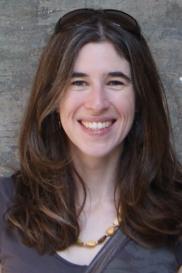
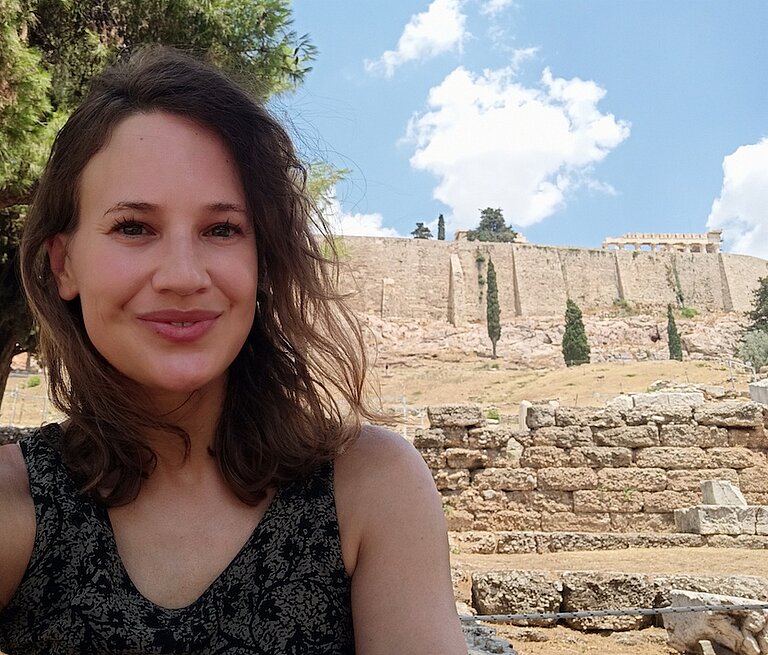
George Perry is a Professor of Anthropology at Pennsylvania State University, with research intersections in Biology, Evolutionary Medicine, and Genomics. He is affiliated with the Huck Institutes' Center for Infectious Disease Dynamics, Ecology, Molecular Cellular and Integrative Biosciences, and Bioinformatics and Genomics programs. Perry directs the Anthropological Genomics Lab , focusing on paleogenomics and evolutionary adaptation. Research areas: anthropological genomics, parasite evolution, human body size transitions, and evolutionary medicine Key collaborations: international teams in Madagascar, Europe, and Africa Leadership: Bioinformatics and Genomics Chair (2019–2023) His 2025–2022 publications span evolutionary responses to invasive species, human migration health impacts, chemosensory gene adaptation, and primate genomic diversity. Notable methodological contributions include ancient DNA recovery and comparative paleogenomics. Perry advises graduate students like Vanessa Garcia and Annette Mercedes, with grants including NIH support for Cuban health disparity studies. Scientific leadership includes tenure-line promotions (2023) and NASA Space Grant collaborations.
Bryan K. Hanks is an Associate Professor in the Department of Anthropology at the University of Pittsburgh's Dietrich School of Arts and Sciences. An archaeologist specializing in prehistoric Eurasian societies, his research spans from the Bronze Age steppes of Russia to Neolithic villages in the Balkans and Native American pit house settlements in Idaho. Education: Dr. Hanks earned his Ph.D. from the University of Cambridge in 2003, establishing his foundation in archaeological research. Research Interests: His work focuses on late prehistoric societies , particularly examining mobile pastoralism , early metallurgy , and settlement patterning . His projects integrate geophysical and geochemical methods to understand subsistence strategies, craft production, and social organization across Eurasia and North America. Research Trends: His publications reveal a consistent focus on Bronze Age societies of the Eurasian steppes, with particular attention to mortuary practices , metallurgical developments , and social complexity . Recent work has expanded to include Neolithic European settlements and Native American archaeology in the American West. Collaborations & Training: Dr. Hanks maintains extensive international collaborations with institutions in Russia, Serbia, the UK, and across the US. He is deeply committed to student training , regularly including graduate and undergraduate students in his international field projects and offering local geophysics training in Pittsburgh.
Andrew Bauer is an Associate Professor in the Department of Anthropology at Stanford University and serves as Director of the Stanford Archaeology Center. His research centers on anthropological archaeology with primary fieldwork in South India, investigating human-environment relations, landscape history, and institutionalized social inequalities across Iron Age, Early Historic, and Medieval periods. Bauer's work critically examines socio-politics of land use, cultural landscape production, and intersections between historical landscape practices and modern conservation/climate change frameworks. His methodology integrates fieldwork in Turkey, Iran, and the United States with South Indian case studies on mortuary practices, megalithic monuments, and agricultural systems to analyze power dynamics in prehistoric societies. Recent publications (2021-2024) demonstrate consistent focus on critical geoarchaeology, political ecology of landscapes, and periodization challenges in South Asian archaeology. His influential books including Before Vijayanagara (2015) and Climate Without Nature (2018) establish theoretical frameworks connecting material culture studies with Anthropocene discourse and social inequality analysis. No scientific awards were mentioned in the provided text. The available documentation does not specify details regarding graduate student advising or external grant funding. Bauer co-directs active fieldwork in South India's Tungabhadra Basin and Raichur Doab regions, utilizing remote sensing and soil analysis techniques. His Stanford research lab (Building 500, Room 103) supports interdisciplinary collaboration examining long-term socio-environmental change through landscape archaeology and critical theory approaches.
Lisa Maher is a faculty member in the Department of Anthropology at the University of California, Berkeley, since 2012. She directs the Geoarchaeology and Southwest Asia Prehistory Laboratory, serves as Curator of Lithic Collections at the Hearst Museum of Anthropology, and is affiliated with the Center for Middle Eastern Studies, Center for European Studies, and the University of Toronto’s Archaeology Center. Education: PhD in Anthropology from the University of Toronto (2005) Postdoctoral: Social Science and Humanities Research Council of Canada Postdoctoral Fellow (2005-2007), Arts and Humanities Research Council of Britain-funded Research Associate (2007-2011) Her research investigates Late Pleistocene hunter-gatherer societies in the Eastern Mediterranean and North Africa, focusing on human-environment interactions, transitions to food production, and landscape archaeology. She explores how climate change, technological innovation, and social networks influenced sedentism, population aggregation, and mortuary practices through material culture analysis. Lisa’s recent publications address meat preservation techniques (2019), hut structures in Southwest Asia and Europe (2019), phytolith evidence for Neolithization (2016), and environmental dynamics in the Levant (2016). These works highlight her expertise in geoarchaeology, lithic analysis, and climate-society linkages over 20,000+ years. Scientific Awards: Social Science and Humanities Research Council of Canada Postdoctoral Fellow (2005-2007) Arts and Humanities Research Council of Britain-funded Research Associate (2007-2011) Lisa collaborates with institutions like the University of Toronto, University of Tulsa, and UNLV on projects in Jordan, Cyprus, and Hawaii. She contributes geoarchaeological expertise to regional studies in the Levant, Iran, and Kurdistan, emphasizing interdisciplinary methods and long-term landscape change.
Dr. Emma Pomeroy is an Associate Professor in the Evolution of Health, Diet and Disease at the University of Cambridge's Department of Archaeology. She is an active researcher with expertise spanning anthropology, archaeology, biological anthropology, and paleoanthropology. Her work combines human bioarchaeology with human biology and paleoanthropology, conducting research across South America, South Asia, Europe, and the Near East. Dr. Pomeroy's research focuses on understanding how past and present variation in human health, growth, and morphology is influenced by evolutionary processes including adaptation, neutral variation, and plasticity, as well as interactions with natural and social environments. Her specific interests in reproduction include the evolution and adaptation of the human pelvis, impacts of evolutionary and environmental factors on pelvic morphology and birth complications, and how early life conditions affect later growth and health which may influence birth complication risks. A significant portion of her recent work has investigated the evolutionary origins of low lean tissue mass among contemporary South Asians, which is implicated in elevated risk of type 2 diabetes and other chronic diseases. Dr. Pomeroy leads important archaeological projects including serving as the paleoanthropologist at renewed excavations at Shanidar Cave in Iraqi Kurdistan since 2016, where her team has made significant new Neanderthal discoveries. She also co-directs the Old St Bernard's Hospital Project in Gibraltar with Dr. Kevin Lane and Professor Clive Finlayson, investigating health, diet, and migration among skeletons from a 16th-17th century mariner's hospital. Her recent publications demonstrate a strong focus on human skeletal variation, Neanderthal studies, human adaptation, and the developmental origins of health and disease. Her work spans multiple geographical regions including the Americas, Europe, Mesopotamia and the Near East, and South Asia, examining periods from the Paleolithic through to contemporary populations. Dr. Pomeroy contributes to interdisciplinary research networks including Cambridge Reproduction, where she investigates the evolutionary aspects of human reproduction. Her methodological approaches integrate skeletal biology, archaeological science, and evolutionary theory to address fundamental questions about human variation and adaptation.
Alissa Mittnik is a Group Leader at the Department of Archaeogenetics, Max Planck Institute for Evolutionary Anthropology in Leipzig, Germany. She leads the 'MySocialBeIng' group, focusing on integrating archaeoscience to reconstruct social systems like kinship, gender roles, and mobility patterns in ancient societies. Her work bridges genetics, archaeology, and cultural studies to understand prehistoric populations. Education: PhD in 2016: University of Tübingen (Investigating Social Dynamics via Ancient DNA) Studies in Biology at Washington University (USA), University of Rostock, and University of Tübingen Research Interests: Genetic correlates of cultural transitions and social hierarchies Mobility in the ancient Mediterranean Archaeogenetic analysis of prehistoric populations Applications of ancient DNA to reconstruct migration and kinship networks Key Projects: Co-led the 'Times of Upheaval' project (2016-2018) on Bronze Age societal changes Published extensively on European, Mediterranean, and African prehistoric populations Lab/Team: Her group combines genomic, isotopic, and archaeological data to address questions about human migration, social organization, and cultural evolution.
Wiebke Kirleis is Professor for Environmental Archaeology and Archaeobotany at the Institute for Pre- and Protohistory, Faculty of Arts and Humanities, Christian-Albrechts-Universität zu Kiel (CAU). She has held this position since May 2014 and was previously a junior professor at the same university from 2008 to 2014. She is actively involved in major interdisciplinary research projects, including the Cluster of Excellence ROOTS and the Collaborative Research Centre 1266 'Scales of Transformation', where she serves as co-speaker and technical platform speaker. PhD in Natural Sciences, University of Göttingen (2002) Diploma in Biology, University of Göttingen (1998) Studies in Botany, Anthropology, and Environmental History, University of Göttingen (1990–1998) Wiebke Kirleis' research centers on the interaction between humans and plants during the late Pleistocene and Holocene, with a focus on plant economy, domestication, agricultural development, and landscape transformation. Her work explores how wild and cultivated plants were used for nutrition, ritual, and technical purposes, and how agricultural innovations such as ploughing and manuring impacted Central European landscapes. She has a strong geographical focus on Northern and Central Germany, Southeastern Europe, the Near and Middle East, and Southeast and East Asia, particularly Indonesia. Her methodological expertise includes archaeobotany (analysis of charred and waterlogged plant remains), palynology (pollen and spore analysis from sediment cores), and anthracology (study of charcoal remains). Her recent research includes studies on broomcorn millet diffusion, early farming in Scandinavia and Russia, and plant use in Bronze Age settlements across Europe and Turkey. She leads and collaborates on numerous interdisciplinary projects, emphasizing the integration of botanical data into broader archaeological narratives. Her publications reflect a consistent trend in environmental archaeology, focusing on plant domestication, agricultural transitions, and human-induced landscape change. Keywords across her recent work include archaeobotany, palynology, Neolithic and Bronze Age subsistence, and environmental reconstruction. Her research spans subfields such as food security, cultural transmission of plant use, early monumentality, and socio-economic aspects of prehistoric agriculture. Board member, Cluster of Excellence ROOTS Co-speaker, CRC 1266 'Scales of Transformation' Speaker, ROOTS Technical Platform Board member, Johanna-Mestorf-Akademie Chair, Scientific Advisory Board, Dithmarschen Stone Age Park (since 2023) Full member, German Archaeological Institute (DAI) Elected member, Commission for Archaeology of Non-European Cultures (KAAK) Wiebke Kirleis has supervised numerous research projects funded by the DFG and other agencies, including the Graduate School 'Human Development in Landscapes'. She has advised students and collaborated internationally with institutions in Italy, Norway, Indonesia, and Australia. Her leadership roles in academic self-administration include serving on planning, budget, and equality committees at CAU Kiel. She is committed to science communication, having launched the digital exhibition 'Alles bleibt anders' and produced educational films on archaeobotany. She is also involved in mentoring female postdocs through the via:mento program. She leads the archaeobotanical component in the 'Superfood' module of the SFB 1266 digital exhibition and is actively involved in the ROOTS Cluster’s Subcluster 'Dietary ROOTS'. Her lab and research team operate within the Institute for Pre- and Protohistory, contributing to the university’s strong focus on interdisciplinary landscape archaeology.
Gyoung-Ah Lee is a Professor in Anthropology at the University of Oregon, specializing in environmental archaeology, paleoethnobotany, and the origins of agriculture in East Asia. She has conducted fieldwork across Asia, Australia, Canada, and North America, focusing on the transition from foraging to farming and cultural niche construction. Education: B.A., Seoul National University (1992) M.S., University of Toronto (1997) Ph.D., University of Toronto (2003) Her research spans Neolithic to early historic societies, with expertise in phylogenetics of crops, traditional farming technologies, and quantitative archaeology. She teaches courses on food origins, East Asian archaeology, archaeobotany, and plant-human interactions. Recent publications examine Neolithic dietary patterns in Jeju Island, niche construction in Korea, and land use transformations in North China. These works integrate isotope analysis, soil micromorphology, and interdisciplinary methodologies. Active grants include the Korean Studies Promotion Service Grant (2015-20) and National Geographic Science & Exploration Grant (2015-16). Her fieldwork in Northeast China and Jeju Island reflects global research scope.
Dr. Lenny Salvagno is a University Teacher in Zooarchaeology at the School of Biosciences, University of Sheffield. He holds a PhD from the University of Sheffield (2017) and a prior degree from the University of Parma (2007). His academic affiliation spans institutions such as the Ludwig-Maximilians-Universität München (2020–present) and the University of Sheffield (2011–present). Education: PhD in Archaeology, University of Sheffield (2017) BA in Archaeology, University of Parma (2007) Research Interests: Salvagno specializes in animal domestication and husbandry intensification, with a focus on medieval Britain and prehistoric Italy. His work integrates geometric morphometrics and statistical analysis to resolve identification challenges in faunal remains, particularly sheep/goat and pig studies. He investigates ritual deposits, settlement continuity from the Neolithic to Modern era, and socio-economic transformations through faunal assemblages. Publication Trends: Salvagno’s research bridges methodological innovation (e.g., biometric systems for sheep/goat differentiation, tooth wear rate quantification) with socio-historical interpretation (pig husbandry during medieval-early modern transitions, goat rarity in England). His work often involves comparative studies across species (sheep, goat, cattle, pig) and periods (Neolithic to Post-Medieval), emphasizing regional contexts like Northern Italy and England. Scientific Awards: Marie Skłodowska-Curie Individual Fellowship (2020) Gerda Henkel Stiftung Post-doc Grant (2017) AHRC PhD Grant (2012) University Research and Innovation Grant (2011) Teaching and Collaboration: Salvagno actively teaches zooarchaeology to undergraduates and masters students and contributes to short courses like 'Understanding Zooarchaeology I'. He collaborates with institutions such as the University of Sheffield, Ludwig-Maximilians-Universität München, and the Gerda Henkel Stiftung, focusing on grants and multi-methodological research projects.
Gülçin İlgezdi Bertram is a Professor at Kırşehir Ahi Evran University, Faculty of Arts and Sciences, Department of Archaeology, with a focus on Neolithic and Early Bronze Age studies in Anatolia. She specializes in zooarchaeology and animal domestication, employing multidisciplinary approaches to analyze prehistoric settlements. PhD in Prehistory-Bioarchaeology from Eberhard Karls University of Tübingen (2008) Master’s in Prehistory from Istanbul University (1999) BA in Archaeology from Istanbul University (1994) Her research explores the Neolithic and Early Bronze Age transitions, emphasizing animal exploitation, ceramic analysis, and settlement patterns. She integrates zooarchaeological methods with regional surveys to study cultural interactions and domestication processes. Recent projects include investigations at Ekşi Höyük, Hashöyük, and Beycesultan Höyük. Awards: DAAD Doctoral Scholarships (2001-2004) and Çatalhöyük Young Scholar Award (1999). She has advised multiple master’s students and contributed to international conferences and publications.
Natalie Munro is a Professor in the Department of Anthropology at the University of Connecticut, specializing in zooarchaeology and the study of human-animal interactions during the transition to agriculture. She holds a Ph.D. from the University of Arizona (2001), an M.A. from Simon Fraser University (1994), and a B.S. from Southern Methodist University (1991). She was a postdoctoral fellow at the National Museum of Natural History of the Smithsonian Institution (2001-02) and has held fellowships at the University of Connecticut's Humanities Institute (2015-2016) and the Mandel Scholion Center at Hebrew University in Jerusalem (2017-2018). Her research focuses on the emergence of agriculture, zooarchaeology and taphonomy, animal domestication, behavioral ecology, human hunting practices, and human-animal interactions during the Epipaleolithic and Neolithic periods of Southwest Asia and the Eastern Mediterranean. She employs zooarchaeological methods to investigate the transition from hunting and gathering to food production, with particular attention to gazelle and other ungulate species in the Levant. Munro's extensive publication record includes articles in top journals like Science, PNAS, Current Anthropology, and Journal of Human Evolution. Her work demonstrates a consistent focus on understanding the complex pathways to animal domestication, particularly sheep and goats in Anatolia and the Levant, as well as specialized hunting strategies and ritual animal use during the Neolithic period. Her recent research explores mountain gazelle body size variation, aquatic resource exploitation during the Natufian period, and the emergence of animal management practices. She has received research support from prestigious organizations including the National Science Foundation and the Wenner-Gren Foundation for Anthropological Research. Munro serves as an Associate Editor for the Journal of Human Evolution and is a long-term co-chair and board member of the Connecticut Museum of Natural History. She teaches courses including Old World Archaeology, Near Eastern Prehistory, Origins of Agriculture, Zooarchaeology Method and Theory, and Quantitative Zooarchaeology.
Professor Alan Penn is a leading academic at University College London's The Bartlett School of Architecture , where he holds the title of Professor in Architectural and Urban Computing. He previously served as Dean of the Bartlett Faculty of the Built Environment from 2009 to 2019 and has been instrumental in establishing Space Syntax Ltd , a UCL knowledge transfer spin-out company. His affiliations include membership in the Space Syntax Laboratory, board membership of UCL Consultants Ltd, and trustee status at Shakespeare North Trust. Education: BSc (1978), Dip Arch (1980), MSc (1983) - all from University College London Alan Penn’s research investigates how spatial design influences social and economic behaviors through innovative space syntax methodologies . Key areas include: Agent-based simulations of human behavior Spatio-temporal representations of built environments Urban spatial network analysis Urban sustainability across multiple dimensions Cognitive markers in architectural design Historical urban growth modeling His recent publications demonstrate a strong focus on computational urbanism, evolutionary city patterns, and behavioral architecture. Research trends show interdisciplinary approaches combining architectural theory with: Machine learning applications Network science analysis Behavioral psychology insights Historical GIS techniques Complex systems modeling Public health considerations Scientific recognition includes: HEFCE Business Fellowship (2001-2005) KTP SE Region Award (2010) Multiple UCL Enterprise awards ‘Spirit of Enterprise’ Award (2008) As Principal Investigator he leads the £5m EPSRC-funded Urban Dynamics Lab , demonstrating sustained research excellence. His work extends to public engagement through: Shakespeare North Trust educational theatre development Media appearances (New Scientist, Slashdot) Public policy contributions
Professor Mattias Jakobsson is a faculty member at Uppsala University's Department of Organismal Biology (Human Evolution), holding a PhD and Docent title. His research focuses on population genetics, human evolution, and genomic analysis of modern and ancient human populations. Jakobsson leads a lab using computational methods to study genomic variation, migration patterns, and adaptation in Stone Age Eurasia and sub-Saharan Africa. Key projects include investigations into hunter-gatherer populations, plague infections in Neolithic farmers, and genetic continuity in Scandinavia. Education: PhD (exact field unspecified), Docent Lab: Jakobsson Lab (website: jakobssonlab.iob.uu.se ) Research interests emphasize applying genomic data to understand human migration, admixture, and adaptation. Recent work highlights studies on HLA diversity in Thai hunter-gatherers, ancient European genetic shifts, and plague dynamics in Neolithic communities. Collaborations span global archaeological and genomic projects.
Dr. Agnieszka Gruszczyńska is a researcher specializing in paleoenvironmental studies at an academic institution in Poland, working within the Department of Dynamics of Past Landscapes. She completed her PhD in 2023 after conducting extensive research on the paleogeographic development of the Great Sertei Lake Basin in the Vitebsk Lake District, using paleoecological analyses as her primary methodology. Education: 2016-2023: PhD studies on Paleogeographic development of the Great Sertei Lake Basin in the Vitebsk Lake District in the light of paleoecological studies 2014-2016: Master's degree in Environmental Protection, Faculty of Biology and Environmental Protection, University of Lodz, specialization in ecology and water protection 2012-2014: Master's degree in Pedagogy with physical and health education, Faculty of Geographical Sciences, University of Lodz Dr. Gruszczyńska's research centers on ecosystem responses to violent and extreme events throughout geological history, with particular expertise in Chironomidae ecology where she investigates non-temperature factors influencing population dynamics and community quality. Her work spans paleoecological analysis of aquatic invertebrate remains and examines climate change patterns throughout the Pleistocene and Holocene epochs. She frequently employs multi-proxy approaches to reconstruct past environmental conditions, with fieldwork concentrated in Eastern Europe, particularly Western Russia's Serteya region and various Polish lake districts. Her extensive publication record demonstrates a methodological focus on paleolimnology and paleoenvironmental reconstruction using lake sediments, peat bogs, and other natural archives. Recent work shows increasing emphasis on human-environment interactions throughout history, particularly regarding historical land use practices like charcoal production and their long-term ecological impacts. Her collaborative research bridges Quaternary science, archaeology, and modern environmental concerns, often examining how past environmental changes can inform contemporary ecological challenges. Dr. Gruszczyńska actively participates in international research collaborations, particularly with institutions in Russia and other European countries, contributing to our understanding of long-term environmental changes and human adaptation to these changes across the East European Plain.
Adrian Parker is a Professor of Geography at Oxford Brookes University's School of Law and Social Sciences. He holds degrees including a DPhil from the University of Oxford. His research focuses on Quaternary science, geoarchaeology, and palaeoecology across the Middle East, North Africa, Southern Africa, and southern England. Key areas include multi-proxy environmental reconstruction using phytoliths, pollen, and geochemistry, with emphasis on understanding human-environment interactions during critical climatic transitions. Dr. Parker leads the Human Origins and Palaeo Environments (HOPE) group within the Centre for Environment and Society (CES). His fieldwork spans UAE, Saudi Arabia, Yemen, and Lesotho, addressing topics like Holocene socio-ecological systems, Neolithic settlement patterns, and climate change impacts. Recent projects include a £41,900 Ras al-Khaimah-funded geoheritage study and a £1,563 University of Michigan collaboration on phytolith analysis. He teaches modules on Quaternary Environmental Change and Arid Zone Environments. Professional accolades include Fellowships from the Society of Antiquaries, Royal Geographical Society, Royal Anthropological Institute, and Higher Education Academy. His advisory work includes mentoring two active PhD students: Sophie Edwards (hominoid craniodental morphology) and Kira Raith (Quaternary climate-landscape dynamics). Publications span over 40 peer-reviewed articles in journals like Quaternary Science Reviews , Scientific Reports , and Antiquity , with a focus on integrating geological and archaeological evidence to reconstruct past environments and human adaptations. His research bridges archaeology, geology, and environmental science, emphasizing interdisciplinary approaches to understanding long-term socio-ecological systems.