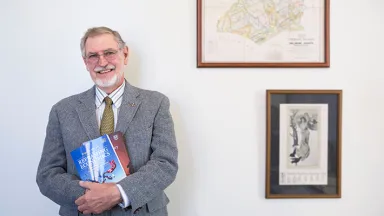
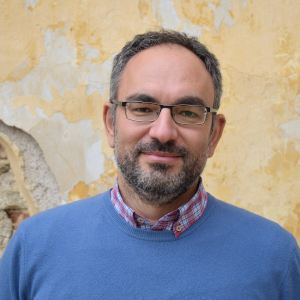
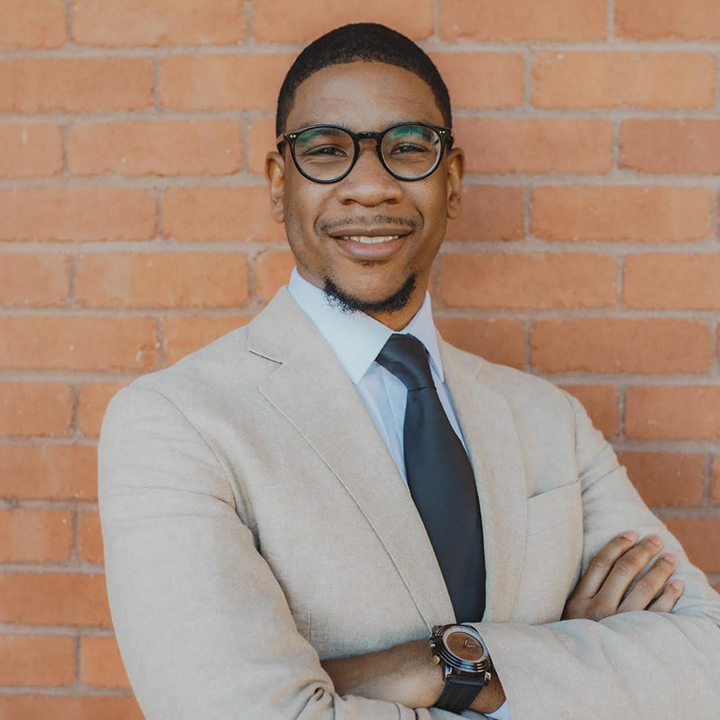
Nuri Vedit İnal is an Associate Professor at Yeditepe University's Faculty of Economics and Administrative Sciences, Department of Economics. With over three decades of academic experience, he has held positions at Yeditepe University (since 2004), Hofstra University (1983-1996), and other institutions. His academic journey includes a PhD in Economics from the University of Cambridge (1996), MA degrees from Yildiz Technical University (1979) and The New School for Social Research (1990), and a BA in Electronics Engineering from Istanbul Technical University (1976). Research interests span economic growth, history of economic thought, institutional economics, and Turkish economic development. His work critiques neoclassical investment theory, analyzes Keynesian frameworks, and explores Ottoman economic history and its implications for modern development. Recent publications focus on investment dynamics, monetary policy, and thermodynamical approaches to circular economies. Supervised theses include topics like technology transfer through 1933 university reform, tax effort in Jordan, solidarity economies, periodic economic crises in Turkey, and thermodynamically coherent economic models. He has taught courses such as Critique of Orthodox Economics , Intermediate Macroeconomics , Growth Theory , and Cinema and Economics , reflecting his interdisciplinary approach.
Anwar Shaikh serves as Professor of Economics at the Economics Department within the Graduate Faculty of Political and Social Sciences at The New School for Social Research. His academic career spans several decades, marked by significant contributions to heterodox economics and critical analyses of mainstream economic theories. Current position: Professor of Economics Institution: The New School for Social Research Previous affiliations: Columbia University (resigned during 1968 protests) Professor Shaikh's research centers on the fundamental dynamics of capitalism, with particular emphasis on profit as the central driving force of the system. His work challenges neoclassical economic frameworks, especially the concept of perfect competition, which he contrasts with his theory of 'real competition'—a process more akin to warfare than the idealized ballet depicted in mainstream economics. He examines capitalism as a unity of order and disorder, identifying inherent patterns including business cycles and long waves that emerge from the system's intrinsic dynamics rather than external shocks. His scholarship critically engages with capital theory, distribution theory, and the measurement problems associated with aggregate production functions, famously demonstrated through his 'humbug production function' critique of Robert Solow's work. Shaikh's methodological approach rejects the perfection/imperfection duality prevalent in orthodox economics, arguing instead for starting analysis from the reality of economic processes rather than idealized abstractions. His intellectual influences include classical political economists (Smith, Ricardo, Marx), Keynes, and the Cambridge Capital Controversy scholars like Joan Robinson and Geoff Harcourt. His work demonstrates how profit rate equalization tendencies interact with shaping factors like wage dynamics, technical change, and institutional arrangements to produce capitalism's characteristic patterns of growth, crisis, and transformation. As an educator, Professor Shaikh encourages students to maintain intellectual openness while critically examining economic theories. He advocates for understanding how the world actually works as a foundation for meaningful social change, emphasizing that policies built on false theoretical foundations have real consequences for people's lives. His teaching spans historical economic thought, standard economic theory, econometrics, and alternative approaches including econophysics.
Dr. Robert G. Chambers is a Professor in the Department of Agricultural and Resource Economics at the University of Maryland's College of Agriculture and Natural Resources. He serves as Editor-in-Chief of the Journal of Productivity Analysis and maintains an active research program spanning production theory, agricultural economics, and decision-making under uncertainty. Education: B.S.F.S. in International Relations, Georgetown University (1972) M.S. in Agricultural and Resource Economics, University of Maryland (1975) Ph.D. in Agricultural and Resource Economics, UC Berkeley (1979) His research integrates neoclassical production economics with agricultural applications, focusing on uncertainty, risk analysis, and productivity measurement. Recent work examines agricultural total factor productivity, environmental accounting in productivity frameworks, and weather risk management through index-based approaches. He bridges theoretical economics with practical policy applications in agricultural and resource management. Analysis of his 2020-2022 publications reveals a cohesive research trajectory centered on methodological advancements in production economics applied to agricultural contexts. Key contributions include foundational work on distance functions, production under uncertainty, and environmental integration in productivity accounting, often through OECD collaborations. His scholarship demonstrates rigorous theoretical grounding coupled with real-world relevance for agricultural policy. No specific scientific awards are documented in the provided materials, though his editorial leadership of the Journal of Productivity Analysis and invitations to contribute to major handbooks like the Handbook of Production Economics indicate significant professional recognition within the field. Professor Chambers advises graduate students in agricultural and resource economics and has secured research funding enabling collaborations with international organizations including the OECD. His work on agricultural productivity measurement and environmental accounting reflects sustained grant-supported research activity, though specific grant details are not enumerated in the source texts. He maintains academic affiliations through the Department of Agricultural and Resource Economics and contributes to scholarly discourse via editorial work and handbook authorship. While no dedicated research laboratory is described, his collaborative projects with institutions like the OECD demonstrate active participation in international research networks focused on agricultural productivity and environmental economics.
Roger McCain is a Professor in the Department of Economics at LeBow College of Business, Drexel University. His research and teaching focus on game theory, political economy, welfare economics, and institutional economics. He maintains an active scholarly presence with recent publications and conference presentations. His research interests are deeply rooted in theoretical and philosophical aspects of economics. He explores game theory and its applications to cooperation, strategic behavior, and public policy. His work in welfare economics critically examines concepts of fairness, need, and normative evaluation. He also investigates cooperative economic models , including worker and community cooperatives, and contributes to complexity economics and cognitive economics . His interdisciplinary approach bridges economics with philosophy, sociology, and public administration. The recent trend in his scholarly articles reflects a shift toward foundational and behavioral questions in economics, including ultrasociality, intentionality, and endogenous preferences. Earlier works focus on technical progress, innovation, and economic growth, showing a long-standing interest in dynamic economic processes. His publications span top journals such as the American Economic Review , Economic Journal , and Behavioral and Brain Sciences . Scientific Awards: No specific awards mentioned in the provided text. Roger McCain has advised numerous students and contributed to academic mentoring through his extensive publications and textbooks. While specific grants are not listed, his sustained research output suggests a history of scholarly funding and institutional support. His books, such as Game Theory: A Nontechnical Introduction and Reframing Economics , serve as educational resources widely used in academic settings. He is actively involved in scholarly discourse, presenting research at major conferences such as the Allied Social Sciences Association (ASSA) and the Western Economic Association International (WEAI). His forthcoming book chapters indicate ongoing engagement with cutting-edge topics like the nonprofit enterprise and complexity in economics.
Georgios Pallis is an Associate Professor at the Department of History and Archaeology , National and Kapodistrian University of Athens , specializing in Byzantine and Post-Byzantine Archaeology and Art . He earned his doctorate from the same institution and previously served in the Greek Archaeological Service. His research focuses on marble sculpture , epigraphy , and monumental topography of the Byzantine and Ottoman periods in Greece. Active in excavations at Andros (2004–2012) and Palaeopolis (since 2015) Key publications: From Lamia to Zitouni (2020), co-edited Ottoman Monuments in Greece (2023) Current research: Byzantine altars, templon screens, and Ottoman architectural legacies
Prof. Kenneth Carlaw is a Professor of Economics at the University of British Columbia's Irving K. Barber Faculty of Arts and Social Sciences. His research focuses on evolutionary economics applied to historical technological change, sustainable economic growth, and policy analysis. He holds a PhD from Simon Fraser University (2000) and previously held academic roles at the University of Canterbury. Education: PhD in Economics, Simon Fraser University (2000) His research interests include general purpose technologies (GPTs), climate justice policy, and the theoretical implications of evolutionary vs classical economic models. He co-authored the award-winning book Economic Transformations (2005), which won the 2006 Joseph Schumpeter Prize. Recent work explores green job potential in British Columbia and methodology for innovation policy assessment funded by Canada's Treasury Board Secretariat. His publications span evolutionary economics, productivity measurement, and technology policy, with notable contributions to understanding GPT-driven growth processes and policy frameworks for sustainable development. He leads research streams on climate justice and green economy transitions, funded by SSHRC and CIGI grants. Awards: 2006 Joseph Schumpeter Prize (for Economic Transformations ) Prof. Carlaw's advising and grants include SSHRC CURA funding for climate justice research (2010-2015) and Treasury Board projects on innovation spillover measurement. He collaborates closely with institutions like the Centre for International Governance Innovation (CIGI) on policy-relevant research. His work bridges macroeconomic analysis with practical policy design, emphasizing historical context and structural economic dynamics in addressing contemporary challenges like climate change and wealth distribution.
Edwin Burmeister is a Research Professor Emeritus of Economics at Duke University's Trinity College of Arts & Sciences. His career includes roles as Research Professor (1990–2007) and Visiting Scholar (1988, 1990). He holds a Ph.D. in Economics from MIT (1965), an M.A. from Cornell University (1962), and a B.S. from Cornell (1961). His research focuses on economic theory, the history of economic thought, and financial econometrics, particularly the Arbitrage Pricing Theory (APT). He has explored topics like multi-sector models, capital theory, and global economic stability. His work bridges theoretical frameworks with empirical analysis, addressing issues such as price expectations and market efficiency. Recent publications (2008–2016) analyze Sraffa-Samuelson marginalism, Hicks’s capital theory, and APT models. Earlier works (1972–1996) delve into multi-sector economic systems and nonlinear econometric techniques. While no awards are listed, his contributions span academic and applied economics. No advising or grant information is provided. His work is rooted in foundational economic theories, with applications to modern financial markets and dynamic systems.
Angelica Duran is a Professor of English, Comparative Literature, and Religious Studies at Purdue University, with a courtesy appointment in Critical Disability Studies. She holds a Ph.D. from Stanford University (2000), an M.A. (1988) and B.A. (1987) from the University of California, Berkeley. Her research spans 16th–21st century comparative literature, focusing on English and Spanish traditions, religious studies, disability studies, and translation theory. She has published extensively on Milton, including monographs and edited volumes exploring his global reception, visual adaptations, and pedagogical applications. Her recent publications examine Milton’s transnational influence, the role of prosthetic sign systems in literary interpretation, and intersections of disability, movement, and theological discourse. She bridges early modern and contemporary analyses, addressing issues of translation, cultural adaptation, and digital humanities. Duran has received two Irene Samuel Memorial Awards for her edited volumes Milton in Translation (2017) and Milton Across Borders and Media (2023). She serves on editorial boards and academic committees, including the Renaissance Society of America's Conference Chair (2022–27). As a comparative literature scholar, she connects European, American, and global traditions, emphasizing religious, diasporic, and pedagogical dimensions. Her work explores how texts traverse ideological, physical, and disciplinary boundaries.
Alessandro Mennuni is a Lecturer in Economics at the University of Southampton. His research focuses on macroeconomics with emphasis on quantitative methods, macroeconomic theory, public finance, and computational techniques. He is currently accepting PhD students and supervises research in economics. Research interests include Monetary Policy, Labor Market Dynamics, and Fiscal Policy Optimization. His work has been published in journals like The Review of Economic Studies and European Economic Review. He holds a position at Building 58, Highfield Campus, and can be reached via email: alessandro.mennuni@soton.ac.uk .
Justin P. Shaw serves as Assistant Professor of English at Clark University, specializing in Shakespeare and early modern literature through critical lenses of race, disability, and emotions. His current book project "Melancholy Marks: Emotion and Race-Making in Early Modern English Literature" investigates racial identity formation via melancholic discourse across 16th-17th century dramatic, poetic, and prose traditions. His academic credentials include: Ph.D. in English Literature, Emory University (2020) M.A. in English and American Literature, University of Houston (2014) B.A. in English Literature, Morehouse College (2011) Shaw's research fundamentally examines how racial categorization intersects with emotional expression and disability frameworks in Renaissance texts, revealing how melancholy functions as both racial signifier and embodied experience. His scholarship actively bridges academic rigor with public engagement through inclusive pedagogy frameworks and performance-centered approaches that challenge traditional Shakespearean interpretation. His recent publications demonstrate consistent thematic focus across multiple formats—journal articles, book chapters, and edited volumes—with recurring exploration of racialized emotions in canonical and non-canonical texts. Notable patterns include dismantling white supremacist frameworks in Shakespeare reception, applying disability justice principles to early modern studies, and developing accessible pedagogical models that center marginalized perspectives. His scholarly recognition includes: North Star Collective Fellowship (New England Board of Higher Education, Dec 2021–May 2022) CU Advance Fellowship (Clark University Dean of Faculty, Oct 2021–May 2022) Committed to transformative academic practice, Shaw actively develops inclusive teaching methodologies through courses like "Shakespeare and Race" and "Working my Nerves: Emotions in the Renaissance." His co-edited volume "Inclusive Shakespeare: Identity, Pedagogy, Performance" exemplifies his dedication to creating accessible scholarly spaces, while conference presentations consistently advocate for disability justice frameworks in humanities research and classroom practice. Though no formal lab structure is documented, his collaborative work with Race B4 Race collective and interdisciplinary teams at institutions like Folger Shakespeare Library demonstrates commitment to collective knowledge production centered on race, disability, and early modern studies.
Michael Loewy is an Associate Professor and MA Director in the Department of Economics at the University of South Florida. His research focuses on dynamic macroeconomics, monetary economics, and growth theory. He has published in prestigious journals such as the Journal of Monetary Economics and the Journal of Economic Growth. Prior to his current position, he held roles at The George Washington University and the University of Houston. Professor Loewy teaches courses in macroeconomic theory, monetary economics, American economic history, and economic growth. He holds a Ph.D. in Economics from the University of Minnesota. His work emphasizes theoretical frameworks addressing policy design, trade impacts, and long-term economic development. Notable contributions include analyses of bank runs, tariff policies, and regional income convergence. Loewy’s research integrates empirical and theoretical methods to explore how policy interventions affect economic stability and growth. His publications span topics from endogenous growth models to the macroeconomic effects of financial crises. His teaching philosophy, inspired by Mark Perlman, emphasizes rigorous analytical tools over descriptive methods. While no specific grants or awards are listed, his extensive publication record reflects sustained scholarly engagement with critical issues in macroeconomics and development. His work contributes to both academic discourse and practical policy debates in global economic systems.
Homa Zarghamee is Professor and Department Chair of Economics at Barnard College. She holds a Ph.D. and M.A. in Economics and a B.A. in Mathematics and Economics from Cornell University. Her research focuses on behavioral and experimental economics, with emphasis on social preferences, income inequality, and gender disparities. One research line uses laboratory and field experiments to examine decision-making that affects others' prosperity. Another analyzes survey data on how economic conditions influence subjective well-being. She teaches Behavioral Economics, Economics of Gender, and Narrative Economics. Professor Zarghamee's publications demonstrate consistent focus on experimental methods to investigate social preferences, charitable giving, and gender gaps in economic behavior. Recent work explores policy-relevant topics including COVID-19 impacts, government trust during crises, and mental health economics. A strong interdisciplinary trend connects economics with psychology, gender studies, and public policy. She has contributed to public discourse through media appearances discussing economic inequality, consumer behavior during crises, and historical drivers of economic growth. She co-developed the Interactive Economics website to make economic concepts accessible.
Amelia F Rauser serves as the Charles A. Dana Professor of Art History and Senior Associate Dean of the Faculty at Franklin & Marshall College, where she bridges academic leadership with groundbreaking scholarship in eighteenth-century visual culture. Her institutional affiliation centers on the Department of Art History within the broader liberal arts framework of the college. Rauser's educational foundation includes a BA from the University of California, Berkeley and MA/PhD degrees from Northwestern University, establishing her interdisciplinary approach to art historical research. Her research explores Eighteenth-Century Art , Fashion History , and Political Caricature through innovative lenses like material culture and sensory studies . The award-winning book The Age of Undress: Art, Fashion, and the Classical Ideal in the 1790s examines neoclassical fashion as a radical political statement, connecting draped garments to contemporary debates on liberty, race, and gender. Her work consistently reveals how clothing functions as ideological battlegrounds, notably analyzing madras cloth as cultural appropriation and black bodies in neoclassical whiteness . Recent projects like the co-curated exhibition Artful Nature: Fashion and Theatricality demonstrate her commitment to interdisciplinary public scholarship. Analysis of her 15 most recent publications shows a decisive shift toward materiality studies (2020-2022), with concentrated exploration of textile properties (transparency, drapery, muslin), bodily experience, and sensory dimensions of neoclassical aesthetics. Earlier works established foundational research on caricature's origins and the visual culture of war, but her current trajectory emphasizes fashion as a site of political resistance and identity formation. Rauser's scholarly recognition includes: Charles A. Dana Distinguished Professorship (2022) Bradley R. Dewey Research Award (2020) Fulbright-Nehru Fellowship (2018-19) NEH Enduring Questions Grant (2014) NEH Summer Stipend (2012) CPC/Mellon Award (2008) As Senior Associate Dean and past president of the Historians of Eighteenth-Century Art and Architecture (HECAA), she has secured significant external funding while pioneering curricular innovation like the first-year humanities course What is the Examined Life? . Her collaborative approach extends to co-curating exhibitions with scholars like Dr. Laura Engel and developing digital resources such as the Artful Nature online exhibition. Rauser maintains active engagement with public audiences through lectures at institutions like the National Arts Club and Lewis Walpole Library, alongside features in Atlas Obscura and History Buffs that translate complex scholarship into accessible narratives about topics ranging from Yankee Doodle to tuberculosis 'fashion'.
John Foster is a Professor at the School of Economics, University of Queensland, Australia, with a distinguished career spanning several decades. His academic journey began with a terminal degree in 1975 from the Department of Economics at the University of Manchester. At the University of Queensland, he has established himself as a leading scholar in evolutionary and complexity economics, with significant contributions to energy economics and macroeconomic theory. Foster's research interests center on evolutionary economics, complexity theory, and their applications to real-world economic systems. He has pioneered the integration of complex systems thinking into economic analysis, challenging traditional neoclassical approaches. His work spans multiple domains including energy economics (particularly electricity markets and renewable energy transitions), macroeconomic modeling, consumption theory, and innovation systems. He has consistently argued for reinstating historical context and uncertainty into economic analysis, positioning himself at the forefront of heterodox economics. Analysis of Foster's recent publications reveals a strong focus on the intersection of energy systems and economic theory. His work demonstrates consistent themes of evolutionary processes in economic systems, with increasing attention to sustainability challenges, energy transitions, and resilience in complex economic systems. His research often combines theoretical innovation with empirical analysis of the Australian National Electricity Market and international energy systems. Foster has demonstrated remarkable productivity throughout his career, with publications spanning from the 1970s to the present day. His work has appeared in leading journals across economics, energy studies, and complexity science. He has also edited significant volumes on evolutionary economics and complexity, contributing to the development of these fields. While specific details about his advising activities are not prominent in the available information, Foster has collaborated extensively with colleagues at the University of Queensland, particularly with researchers like Liam Wagner, Lynette Molyneaux, and William Paul Bell on energy-related projects. His work has attracted research funding for projects related to electricity market modeling, renewable energy integration, and economic resilience. Through his Energy Economics and Management Group at the University of Queensland, Foster has established a research hub focused on the application of evolutionary and complexity economics to contemporary energy challenges. His work has significant policy relevance, particularly for understanding the economic dimensions of the energy transition and electricity market design.
Marjorie J. Cooper is a Professor of Marketing at Baylor University's Hankamer School of Business, where she has served since 1984. She holds a PhD in Business Administration from Texas A&M University, an MBA in Marketing from Oklahoma City University, and a BA in Greek from Wheaton College. Cooper is also Editor of the Keller Center Research Report and a founding member of multiple academic and theological organizations. Education: PhD (Business Administration, Texas A&M), MDiv (Dallas Theological Seminary), MBA (Marketing, Oklahoma City University), BA (Greek, Wheaton College) Her research explores intersections of business ethics, theological principles, and marketing strategies, with a focus on constraints management and ethical frameworks in sales and promotional practices. Publications span rhetorical critiques of biblical texts, narcissism-religiosity dynamics in ethics, and innovative applications of theory of constraints to business processes. Cooper's affiliations include the Theory of Constraints International Certification Organization, Christian Business Faculty Association, Evangelical Theological Society, Mu Kappa Tau, Beta Gamma Sigma, and Pi Sigma Epsilon. She teaches foundational courses in marketing concepts, principles, and advertising procedures.