Jaime Rodriguez Matos is an Assistant Professor in the Department of Modern and Classical Languages and Literatures at California State University, Fresno, where he has been employed since 2018. His academic career includes prior roles as Lecturer at Fresno State (2016-2018) and Assistant Professor at the University of Michigan (2007-2016). Education: Ph.D., Spanish and Portuguese, Columbia University M.Phil., Spanish and Portuguese, Columbia University M.A., Spanish and Portuguese, Columbia University B.A., Spanish Language and Literature, University of New Hampshire Rodriguez Matos specializes in Latin American poetry, nihilism, infrapolitics, and temporal theory. His work interrogates the intersections of philosophy and literary form, particularly focusing on the deconstruction of time in works by José Lezama Lima, Eduardo Lalo, and Álvaro García Linera. Current research explores neo-revolutionary rhetoric and anarchic political thought in Latin America. His published and forthcoming articles address themes such as Lacanian critiques of hegemony, the ontologies of the present, and the formless in Caribbean politics. Rodriguez Matos has presented at international conferences including the Latin American Studies Association and the University of California, Irvine Humanities Commons cluster. Selected Publications: Writing of the Formless: José Lezama Lima and the End of Time (Fordham University Press, 2017)
Tan Sor Hoon is Professor of Philosophy at the School of Social Sciences, Singapore Management University. Holds a PhD from University of Hawaii (2000), MA from National University of Singapore (1991), and BA from Oxford University (1988). Research bridges Eastern and Western philosophical traditions with focus on political theory and cultural hermeneutics. Specializes in Confucian philosophy, Chinese political thought, John Dewey's pragmatism, and democratization processes. Current work examines intersections of Confucian ethics with contemporary issues including gender equality, meritocracy, and democratic governance. Publications (2019-2024) demonstrate strong thematic focus on: Confucian political ethics applied to modern governance Comparative analysis of Deweyan pragmatism and Confucianism Feminist reinterpretations of classical traditions Democratization challenges in Asian contexts Teaches Analytical Skills and Critical Thinking in Real World courses, emphasizing philosophical application to contemporary social issues.
Daniel D. De Haan serves as the Frederick Copleston Senior Research Fellow and Lecturer in Philosophy and Theology in the Catholic Tradition at Campion Hall and Blackfriars, University of Oxford. He is also a Research Fellow in the Ian Ramsey Centre for Science and Religion within the Faculty of Theology and Religion. As principal investigator, he leads the "Conceptual Clarity Concerning Human Nature" project sponsored by the Templeton World Charity Foundation. Dr. De Haan received his doctorate in philosophy in 2015 from the Center for Thomistic Studies at the University of St Thomas, Houston, Texas, and the De Wulf-Mansion Centre for Ancient, Medieval and Renaissance Philosophy at the Catholic University of Leuven, Belgium. Prior to Oxford, he was a postdoctoral fellow on the neuroscience strand of the "Theology, Philosophy of Religion, and the Sciences" project at the University of Cambridge. His research focuses on philosophical anthropology, examining how moral psychology, phenomenology, neuroscience, and metaphysics inform our understanding of human persons. He investigates challenges neuroscience and evolution pose for hylomorphism, along with questions in philosophy of religion and medieval philosophy, particularly Thomas Aquinas and Avicenna. His work demonstrates a distinctive integration of Thomistic philosophy with contemporary cognitive science and neuroscience. Analysis of Dr. De Haan's publications reveals consistent engagement with Thomistic philosophical anthropology, exploring the relationship between intellectual operations and psychosomatic processes. His work spans medieval philosophy, metaphysics, philosophy of mind, and theology-science dialogue, with notable application of Thomistic concepts to contemporary philosophical challenges in cognitive science. Dr. De Haan has secured significant research funding as principal investigator for the Templeton World Charity Foundation project "Conceptual Clarity Concerning Human Nature." His scholarly activities include editorial work on collections related to medieval philosophy and active participation in interdisciplinary research bridging theology, philosophy, and cognitive science. At Oxford, Dr. De Haan is affiliated with both Campion Hall and Blackfriars, institutions with strong connections to Catholic intellectual tradition. His work with the Ian Ramsey Centre positions him at the intersection of theological inquiry and scientific investigation, contributing to dialogues about religion and scientific understanding.
Stefan Büttner is Professor of Classics (Greek) at the University of Vienna , serving as Deputy Head of the Department of Classical Philology, Medieval and Neo-Latin Studies. His academic career spans institutions including Philipps University Marburg, University of Konstanz, and University of Vienna since 2011. Born 1986–1997: Studied Classical Philology and Philosophy at Johannes Gutenberg University Mainz, Ludwig Maximilian University Munich, and Philipps University Marburg. 1997: Doctorate at Marburg on Plato's Literary Theory. 2007: Habilitation in Classical Philology. 2011: Appointed Professor at University of Vienna. His research focuses on Ancient Philosophy , Antique Aesthetics , Greek Tragedy , and Reception History . Current projects include analyzing the modern self-perception of antiquity , the Euripides reception , and Artes Liberales educational programs . Recent publications explore: Euripides 's shifting image from antiquity to modernity. Mimesis in Platonic dialogues. Homeric elements in Aristotle's Rhetoric. Symmetry as a foundational concept in ancient aesthetics. He serves on editorial boards for Wiener Studien für Klassische Philologie and Eisodos. Zeitschrift für Antike Literatur und Theorie , and chairs the Society for Ancient Philosophy Austria . Supervised theses at University of Vienna include topics on Aristotelian analytics, Platonic deconstruction, and Chrysippus' Medea adaptation. Büttner leads research seminars on ancient rhetoric, metaphor theory, and the interplay of philosophy and tragedy. He co-founded the book series Philosophie und Literatur and Studien zu Literatur und Erkenntnis , emphasizing interdisciplinary approaches to classical studies.
Florin George Călian is a researcher at the Center for Ecumenical Research within the Lucian Blaga University of Sibiu , with a focus on the intersection of history of philosophy , religious studies , and classical philology . He co-founded the Dan Slușanschi School of Classical and Oriental Languages , which offers Latin, Ancient Greek, Biblical Hebrew, and Sahidic Coptic to international students. Călian’s editorial work includes coordinating the Review of Ecumenical Studies (RES) and the Ratio publishing series. Education : Master’s in Greco-Roman History (University of Bucharest), Master’s in Medieval Studies (Central European University), PhD in Philosophy (Central European University, supervised by Gabor Betegh). Research Areas : Ontology of numbers in Plato, sacred space politics, Neoplatonic theology, historiography of alchemy, and interdisciplinary links between philosophy and Eastern Orthodox Christianity. Recent Publications include analyses of Plato’s mathematical ontology, critiques of Hagia Sophia’s reconversion, and editorials on the problem of evil. His 2021 monograph Numbers, Ontologically Speaking: Plato on Numerosity reinterprets Platonic dialogues through mathematical philosophy. Academic Engagements span roles as a coordinator for the Dan Slușanschi School, editorial board member for RES and SCHOLÉ , and organizer of conferences bridging theology and philosophy.
Tao Jiang is a Professor of Religion and Philosophy at Rutgers University. He serves as Director of the Rutgers Center for Chinese Studies and co-chairs the Neo-Confucian Studies Seminar at Columbia University. His academic work bridges classical Chinese philosophy, Mahāyāna Buddhist thought, and cross-cultural analysis. Education: Ph.D. from Temple University Service: Former chair of the Religion Department (2010-2016, 2020-2023); co-founder of the Rutgers Workshop on Chinese Philosophy Research spans comparative philosophy , Buddhist psychology , and political thought . He explores intersections between Chinese and Western philosophy, focusing on concepts like subliminal mind and virtue ethics. His 15 most recent articles reflect trends in cross-cultural dialogue, particularly between Buddhist/Yogācāra traditions and Western philosophy (2012-2025). Topics range from Zhuangzi's freedom theories to Linji's Chan Buddhism and Nagārjuna's metaphysics. Awards include: Honorable Mention, Joseph Levenson Prize (2023) Active in academic leadership, Jiang serves on editorial boards of Dao , Journal of Buddhist Philosophy , and Neo-Confucian Studies . Contact: tjiang@rutgers.edu
Hao Hong is an Associate Professor of Philosophy and CLAS-Honors Preceptor at the University of Maine, jointly appointed by the Philosophy Department and the Honors College. He holds a PhD in Philosophy from Indiana University (2018), with minors in History and Philosophy of Science, and prior degrees from Peking University. His primary research focuses on metaphysics, particularly metaphysical anti-realism, truthmaking, and comparative metaphysics across philosophical traditions. He actively engages with analytic philosophy, modern European philosophy, and classical Chinese philosophy like the Daodejing and Laozi. Teaching responsibilities include core philosophy courses (e.g., Metaphysics, Classical Chinese Philosophy) and Honors College preceptorials. His experimental approach to philosophy challenges traditional boundaries, blending Daoist and punk influences in his methodologies. Recent research explores Xuanxue (魏晋玄学) ontology, the metaphysics of Dao, and pedagogical innovations in honors education. Notable publications include works on truthmaking theories, comparative philosophy of language, and metaphysical explanation. Teaching and research interests emphasize interdisciplinary dialogue between Eastern and Western traditions, as seen in his courses on Chinese philosophy and metaphysics. He has presented widely on topics ranging from Daoist nonaction to honors curriculum design, advocating for pedagogy that fosters student-driven scholarship and human flourishing.
Friedhelm Decher is an Honorary Professor at the University of Siegen , specializing in philosophical anthropology, ethics, aesthetics, and the history of philosophy. His work explores intersections of philosophy with psychology, literature, and pedagogy. Education: Studied philosophy, German studies, psychology, and educational science; obtained Dr. phil. in Philosophy and German Studies Research Interests : Decher's scholarship focuses on existentialist themes like boredom, envy, and suicide, with significant contributions to understanding Nietzsche's and Schopenhauer's philosophies. His work bridges classical and contemporary debates in ethics, metaphysics, and emotional theory. Publications Trends : His recent articles (2007-2015) emphasize the philosophy of mind, epistemology, and existential emotions. Earlier works analyze 19th-century philosophical anthropology and Nietzsche-Schopenhauer comparisons. Teaching and Media Contributions : He has authored textbooks on values and norms, created lecture manuscripts on the mind, and produced radio/television segments on envy and boredom for outlets like WDR 3 and ORF.
Paolo Falzone is an Associate Professor at the Department of Modern Literature and Culture, Sapienza University of Rome. He specializes in Dante studies, medieval philosophy, political thought, and classical sources in modern Italian literature. His research bridges theological, philosophical, and poetic dimensions in Dante's works and their historiography. His academic contributions include critical analyses of Dante's political discourse, studies on Averroism's influence, and comparative examinations of classical reception in 20th-century Italian writers like Pasolini and Morante. He has co-edited scholarly works and organized conferences on Dante's intellectual legacy. Keywords: Dante Alighieri, Averroism, Medieval Philosophy, Italian Literature, Political Thought, Classical Reception Falzone's publications reveal trends in Dante's philosophical foundations, Manzoni's ideological frameworks, and interconnections between Greek tragedy and modern Italian dramaturgy. His editorial projects highlight collaborative scholarship in Italian philology. Office hours and course materials are managed through the university's virtual classroom system, with email contact at paolo.falzone@uniroma1.it. He teaches graduate courses on Dante's works and 19th/20th-century Italian literature.
Brook A. Ziporyn serves as Professor at the University of Chicago Divinity School, specializing in ancient and medieval Chinese religion and philosophy. His prior academic appointments include faculty positions at the University of Michigan (Department of East Asian Literature and Cultures), Northwestern University (Departments of Religion and Philosophy), Harvard University (Department of East Asian Literature and Civilization), and the National University of Singapore (Department of Philosophy). He earned a BA in East Asian Languages and Civilizations from the University of Chicago followed by a PhD from the University of Michigan. Professor Ziporyn's research centers on Chinese philosophical and religious traditions, particularly Tiantai Buddhism and Neo-Taoism. His work explores conceptual tensions between holism and individuality, the nature of li (coherence), and paradoxes of value through close readings of classical texts. This comparative approach bridges Eastern and Western philosophical frameworks, examining how concepts like emptiness, omnipresence, and ambiguity operate across cultural contexts. His publications demonstrate a progressive deepening of engagement with primary Chinese sources, evolving from focused studies on Tiantai Buddhist thought toward broader investigations of coherence in early Chinese philosophy and its Buddhist reinterpretations. The consistent thread across his work is rigorous textual analysis combined with innovative cross-cultural conceptual mapping, particularly regarding the interplay between metaphysical frameworks and ethical implications in Daoist and Buddhist traditions.
Elise Crull is an Associate Professor in the Philosophy Department at The City College of New York (CCNY), which is part of the City University of New York (CUNY) system. She holds a Ph.D. from the University of Notre Dame and has established herself as a prominent scholar at the intersection of philosophy and physics. Crull's primary research interests include Philosophy of Physics, History and Philosophy of Science (HPS), History of Philosophy of Science (HOPOS), and Metaphysics. Her work demonstrates particular expertise in quantum mechanics, with a focus on decoherence theory, the foundations of quantum mechanics, and historical perspectives on quantum theory. She has made significant contributions to understanding Grete Hermann's interpretation of quantum mechanics and has explored connections between quantum physics and broader philosophical questions about realism, causality, and the nature of scientific knowledge. Her research often bridges historical and philosophical approaches to physics, showing how careful historical analysis can inform contemporary philosophical debates. Analysis of Crull's publication record reveals a consistent focus on quantum decoherence as a solution to foundational problems in quantum mechanics. Her influential 2015 paper "Less Interpretation and More Decoherence in Quantum Gravity and Inflationary Cosmology" argued that decoherence phenomena can resolve conceptual problems without requiring additional interpretive frameworks. She has also made important contributions to the history of quantum mechanics through her work on Grete Hermann and Jordan's derivation of blackbody fluctuations. More recently, her research has expanded to examine connections between quantum foundations and Feyerabend's philosophy of science, as well as exploring the relationship between quantum physics and theological questions. Crull has demonstrated scholarly leadership through several edited volumes, including "Grete Hermann: Between Physics and Philosophy" (2017) and forthcoming works such as "The Einstein Paradox: The Debate on Nonlocality and Incompleteness in 1935" and "God and the Problem of Quantum Physics." Her work has appeared in prestigious journals including Foundations of Physics, Studies in History and Philosophy of Modern Physics, and HOPOS: The Journal of the International Society for the History of Philosophy of Science.
Alexis Lavis is an Associate Professor of Philosophy at the University of Rouen Normandy , affiliated with the UFR Letters and Human Sciences . Their work focuses on Comparative Philosophy (East/West) , with expertise in Indian and Chinese philosophy , including Buddhism, Taoism, Confucianism , and ancient languages ( Sanskrit, Greek, Latin ). They have published extensively on Buddhist ethics, Taoist metaphysics, and Confucian cultural transmission, often engaging with ritual theory, textual analysis, and philosophical anthropology.
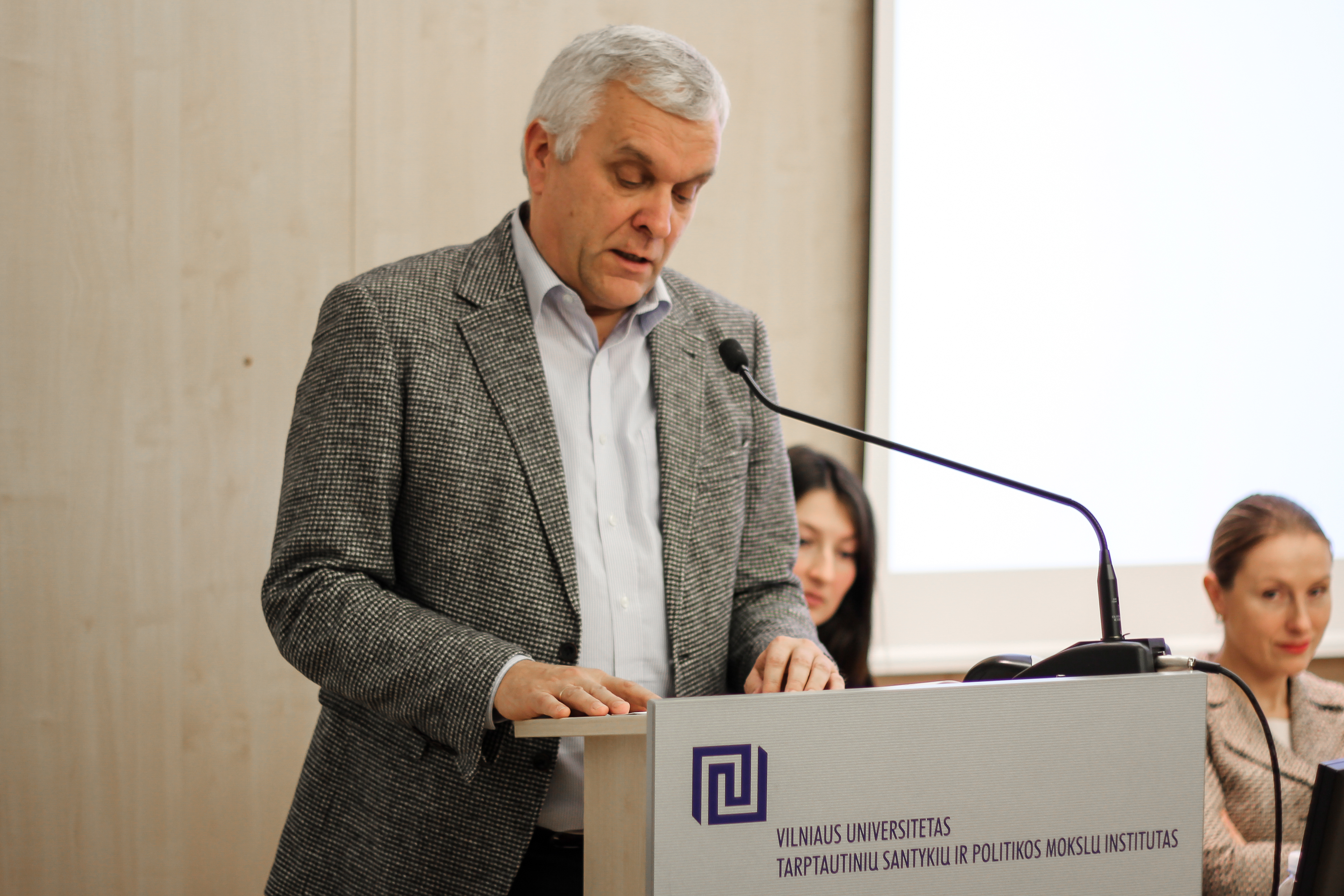
Alvydas Jokubaitis serves as Professor at Vilnius University's Institute of International Relations and Political Science (VU TSPMI/IIRPS), where he has been employed since 1996. He holds membership in the Vilnius University Senate and Science Committee, serves on the VU IIRPS Council, and is a member of the editorial board for 'Politologija'. Recognized as the best lecturer at IIRPS in both 2002 and 2017, he actively contributes to academic governance through multiple committees including the Department of Political Philosophy and History of Ideas, Doctoral Studies Committee, and Contemporary Politics MA Programme Committee. His research centers on political philosophy with emphasis on: Ethical foundations of political systems Conservative thought traditions Postmodernism's political implications National identity in globalization Relationship between morality and politics His work critically examines Enlightenment/romantic tensions, Schmittian political theory, and Lithuanian intellectual history while engaging with figures like Kant, Strauss, and Wojtyła. Analysis of his 15 most recent publications reveals consistent focus on: Critical engagement with liberalism's moral limitations Central European identity challenges within EU integration Revival of virtue ethics in contemporary politics Historical analysis of Lithuanian political thought Intersections of religion and political philosophy Postmodern critiques of political rationality His scientific recognition includes: 2005 Vilnius University Rector’s Science Prize 2017 Best VU Publication of the Year 2016 2018 Stasys Šalkauskis Prize for contributions to Lithuanian thought 2015 Honorary Citizenship of Gargždai Professor Jokubaitis teaches advanced courses including Non-orthodox Political Thought, Contemporary Political Theories, and Lithuanian Policy Research. His research projects have addressed critical areas such as 'The modern problem of the relationship between morality and politics', 'Democracy in a knowledge society', and 'Preserving national identity in a globalised world'. He has contributed to significant scholarly works including the 'Anthology of Lithuanian political thought' and supervised doctoral curriculum development in social humanities.
Daniel De Haan serves as the Frederick Copleston Senior Research Fellow and Lecturer in Philosophy and Theology in the Catholic Tradition at Blackfriars and Campion Hall, University of Oxford. He also holds a Research Fellowship at the Ian Ramsey Centre for Science and Religion within Oxford's Faculty of Theology and Religion, where he serves as Principal Investigator for the Conceptually Clarity Concerning Human Nature Project, funded by the Templeton World Charity Foundation. Previously, he was a postdoctoral fellow at the University of Cambridge's Faculty of Divinity and completed his studies at KU Leuven's De Wulf-Mansion Centre for Ancient, Medieval and Renaissance Philosophy. Dr. De Haan's research spans philosophical anthropology, philosophical theology, and the philosophy of cognitive science, with a distinctive focus on Thomistic and Aristotelian approaches to contemporary philosophical questions. His work demonstrates remarkable breadth across medieval philosophy, metaphysics, philosophy of mind, and neuroscience, consistently applying Thomistic insights to modern scientific and philosophical challenges. He has developed innovative approaches to understanding personhood, divine simplicity, human cognition, and the relationship between Aristotelian metaphysics and contemporary scientific methodology. His publications reveal a consistent pattern of bridging historical scholarship with contemporary philosophical concerns, particularly in the areas of Thomistic anthropology, metaphysics of being, and the philosophy of cognitive science. De Haan's work frequently addresses how classical philosophical frameworks can illuminate contemporary debates in neuroscience, cognitive science, and the philosophy of religion, while maintaining rigorous historical fidelity to medieval sources. Frederick Copleston Senior Research Fellowship As Principal Investigator of the Conceptual Clarity Concerning Human Nature Project, Dr. De Haan leads significant research efforts exploring the philosophical foundations of human nature in dialogue with contemporary science. His academic trajectory demonstrates a sustained engagement with both historical scholarship and contemporary philosophical issues, particularly through the lens of Thomistic thought. His collaborative work, including co-authored books and papers with scholars across multiple institutions, reflects a commitment to interdisciplinary dialogue. Dr. De Haan contributes to the vibrant intellectual community at the Ian Ramsey Centre for Science and Religion, which serves as a hub for interdisciplinary research at the intersection of theology, philosophy, and science. His work with the Conceptual Clarity Concerning Human Nature Project represents a significant contemporary engagement between Thomistic philosophy and modern scientific inquiry.
Philip J. Ivanhoe is a Distinguished Chair Professor at Sungkyunkwan University’s College of Confucian Studies and Eastern Philosophy, where he directs the Sungkyun Institute for Confucian Studies and East Asian Philosophy. He holds a PhD from Stanford University in Religious Studies and has authored seminal works on Confucian ethics, comparative philosophy, and East Asian thought. His research bridges classical Chinese philosophy with contemporary ethical issues, emphasizing themes like oneness, virtue, and moral self-cultivation. Ivanhoe has served as editor-in-chief of the Journal of Confucian Philosophy and Culture and leads international projects exploring East-West philosophical dialogues. His military background (U.S. Marine Corps and Army service) and academic contributions in ethics, history of philosophy, and cultural studies highlight his interdisciplinary impact. Awards include military commendations for service, but his scholarly accolades focus on advancing cross-cultural philosophical discourse. Education: B.A. in Philosophy (Stanford University, 1976), PhD in Religious Studies (Stanford, 1987). Key roles include directorships of multiple research centers and editorships in leading journals. Research interests span Confucianism, Neo-Confucianism, comparative ethics, and the application of classical thought to modern dilemmas. Notable books include Oneness (2017) and Confucian Moral Self Cultivation (2000), which explore interconnectedness and ethical development. His recent work addresses cosmopolitanism, Korean women philosophers, and the Four-Seven Debate in Neo-Confucianism. Grants and advising: Ivanhoe has secured funding for comparative philosophy initiatives and international collaborations. His grants support projects like the Eastern and Western Conceptions of Oneness , fostering global academic partnerships. Labs/teams include the Center for East Asian and Comparative Philosophy (CEACOP) and the Laboratory on Korean Philosophy in Comparative Perspectives, which host international conferences and publish interdisciplinary research.