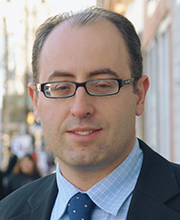
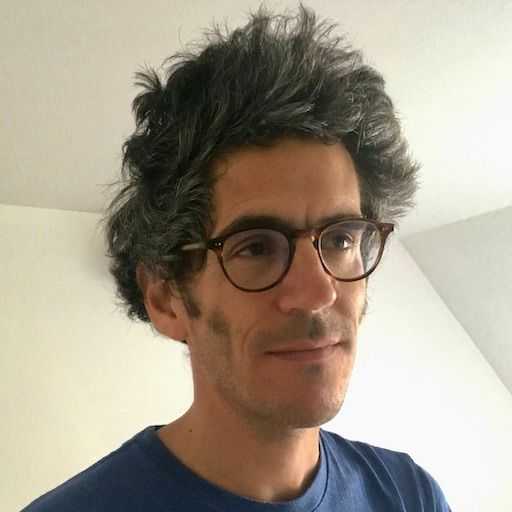
Dr. Olle Järv is an Academy Research Fellow at the University of Helsinki's Department of Geosciences and Geography. As Docent in Human Geography and holder of a joint PhD from University of Tartu and Ghent University, his research focuses on leveraging big data sources like mobile phone records and social media for analyzing human mobility patterns across European cross-border regions. Key research areas: Spatial segregation, urban diversity, transnationalism, and pandemic-induced mobility changes Current projects: BORDERSPACE (2020-2025) – Mapping transnational spaces through mobility data MOBI-TWIN (2023-2026) – Regional mobility patterns in twin transitions WinWin4WorkLife (2024-2027) – Sustainable cross-border remote work His methodological innovations include developing tools for analyzing social media data and mobile phone records to study urban dynamics. Recent recognitions include the 2024 Research Council of Finland Award and 2021 Best Paper Award from Journal of Location Based Services.
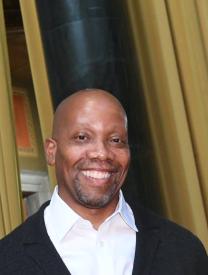
Adam Soliman is an Assistant Professor in the John E. Walker Department of Economics at Clemson University's College of Business. His research focuses on the intersection of economics, crime, and public policy, with particular expertise in drug policy, policing behavior, and enforcement strategies. Dr. Soliman's research interests center on understanding the economic incentives behind criminal behavior and law enforcement responses. His work examines how changes in punishment severity affect police behavior, with a particular focus on drug policy reforms. He investigates whether police treat enforcement effort and punishment severity as complements or substitutes, challenging conventional 'War on Drugs' approaches. His research combines economic theory with empirical analysis of geocoded crime data to provide evidence-based insights into criminal justice policy. His publication record demonstrates significant contributions to understanding drug markets, opioid epidemics, and policing strategies. His work shows that weakening drug sale penalties leads to decreased drug arrests without displacement to non-drug offenses, suggesting police treat enforcement and punishment as complements. His research indicates that certain enforcement reductions may not incur large public safety costs, challenging traditional deterrence models. As an active researcher in criminology and public policy, Dr. Soliman collaborates with scholars from various institutions including University of Colorado, University of Pittsburgh, and Duke University. His work appears in working paper series such as the Economic Research Initiatives at Duke (ERID) and has been cited in related fields including public economics, criminology, and urban studies.
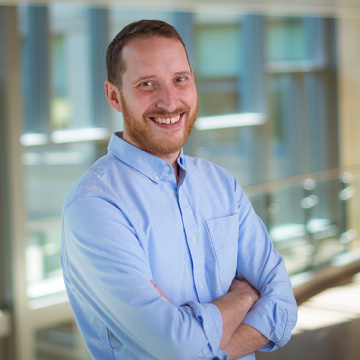
Jino Distasio is a Professor and Acting Dean of Science at The University of Winnipeg, Department of Geography. He teaches Urban Geography, Cultural Geography, and Social Geography, with courses like GEOG-3413 Urban Revitalization and GEOG-3430 Housing and Neighbourhood Planning . His research focuses on housing and neighborhood development, city planning, urban revitalization, homelessness, mental health, and urban transportation. Teaching Areas : Urban Geography, Cultural Geography, Social Geography Key Collaborations : Institute of Urban Studies (U. of Winnipeg), Housing First initiatives, interdisciplinary teams in public health and social policy His recent publications highlight Housing First interventions, urban policy impacts on homelessness, and social determinants of health. Scientific awards and honors were not explicitly mentioned in the provided text.
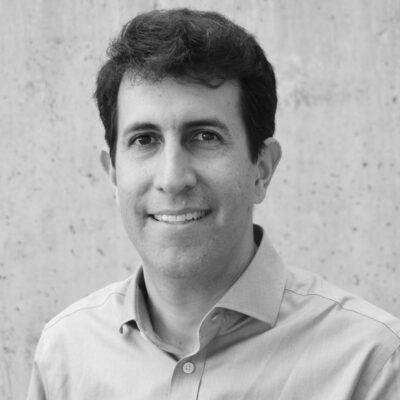
Stephen Billings is an Associate Professor of Finance at the Leeds School of Business, University of Colorado Boulder, where he holds the Global Real Estate Capital Markets Chair position. He serves as the faculty director of the MS in Real Estate program and research director for the CU Real Estate Center. His work spans multiple research centers including the Center for Research on Consumer Financial Decision Making and the Michael A. Klump Center for Real Estate. Billings received his PhD in Economics from the University of Colorado, a MS in urban planning from the University of North Carolina, and a BS in economics from Georgetown University. Prior to joining CU Boulder in 2016, he was faculty at the University of North Carolina Charlotte with appointments in both economics and public policy, where he also served as faculty director for the real estate center. His research focuses on the intersection of housing, schools, neighborhoods and crime, addressing critical policy issues including the impact of public investment in light-rail transit on neighborhoods, school segregation's influence on academic achievement and crime, neighborhood gentrification causes, lead-based paint in low-income housing, and the effects of sea level rise and natural disasters on neighborhood sorting and household finances. Billings employs sophisticated analysis of large micro-datasets with studies based on data and policies in Charlotte, NC and Denver, CO. His work connects urban economics with public policy, demonstrating how neighborhood environments shape individual outcomes across multiple dimensions. Billings' recent publication record demonstrates a consistent focus on neighborhood effects, school choice impacts, crime economics, and housing market dynamics. His work frequently examines the intersection of race, housing, and economic outcomes, with particular attention to policy implications. He has developed innovative methodological approaches to studying residential amenities and neighborhood spillovers, with increasing attention to climate change impacts on housing markets. His research appears in top journals including The Quarterly Journal of Economics, American Economic Review: Insights, and Journal of Urban Economics. As an educator, Billings teaches undergraduate and masters classes in real estate finance and economics, as well as doctoral and masters level courses on cost-benefit analysis and statistical methods. He has extensive consulting experience conducting economic impact studies, including assessments of North Carolina's public higher education system, affordable housing needs in Colorado communities, and the economic effects of marijuana legalization on property markets. His practical policy work complements his academic research, creating a bridge between theoretical insights and real-world applications. Billings leads significant research initiatives through the CU Real Estate Center, where he directs studies examining the impact of business improvement districts and other urban development policies. His work bridges academic research with practical policy applications, making substantial contributions to our understanding of how housing, education, and neighborhood environments shape individual outcomes and community development. His December 2023 memo on the HUD Officer Next Door Program exemplifies his engagement with current housing policy issues.
Wei Xiong is the Hugh Leander and Mary Trumbull Adams Professor in Finance and Professor of Economics at Princeton University, affiliated with the Department of Economics and Bendheim Center for Finance. His research centers on behavioral finance and capital market imperfections with a focus on China's financial system and commodity markets. His educational background includes: Ph.D. in Finance from Duke University (2001) B.S. in Physics from University of Science and Technology of China (1993) Research Interests: Professor Xiong's work fundamentally explores behavioral finance and capital market imperfections , pioneering studies on speculative bubbles , heterogeneous beliefs in asset pricing , and financing frictions . His recent scholarship critically examines the financialization of commodity markets , belief distortions during financial crises , and the unique institutional dynamics of China's hybrid economy , where state and market forces interact. Publication Trends: Xiong's 48 publications in top-tier journals reveal an evolving trajectory from classical behavioral finance (2001-2013) toward contemporary China-focused systemic analysis (2017-2025). Recent works integrate cryptocurrency economics, real estate risk management, and policy design in emerging markets, demonstrating methodological rigor through structural modeling and empirical analysis of large-scale financial datasets. Scientific Awards: 2012 Smith Breeden Award (first prize) for the best non-corporate finance paper published in Journal of Finance 2013 NASDAQ OMX Award for the best asset pricing paper presented in Western Finance Association Meetings Professional Activities: As NBER research associate and former Management Science finance editor (2009-2011), Xiong bridges academia and policy. He co-founded VoxChina.org to foster China-world economic dialogue and co-edited The Handbook of China’s Financial System (Princeton University Press). His keynote addresses at major conferences—including the 2024 Chinese Economists Society meeting on “Information Discovery in a Hybrid Economy”—demonstrate sustained policy influence. Labs and Initiatives: Xiong leads Princeton's Bendheim Center for Finance research initiatives and directs VoxChina.org, which produces influential policy analyses on China's economy. His recent work includes the NBER-commissioned study on commodity market risks and ongoing projects examining big tech lending models and data privacy impacts on digital finance.
Lance Freeman is the Penn Integrates Knowledge (PIK) Professor of City and Regional Planning and Sociology at the University of Pennsylvania's School of Arts & Sciences. His research focuses on neighborhood dynamics, gentrification, urban poverty, housing policy, and the interplay between the built environment and public health. He holds a Ph.D. in City and Regional Planning from the University of North Carolina at Chapel Hill (1997), an MRP in Regional Planning (1991), and a B.S. in Business Administration from SUNY Buffalo (1987). Prior to academia, he worked at Mathematica Policy Research and as a City Planner at the New York City Housing Authority. Freeman teaches courses on urban planning theory, quantitative methods, and community development at Columbia University and the University of Delaware. His research interests include understanding neighborhood change, leveraging social media and technology for urban analysis, and promoting equitable urban development. Key publications include There Goes the Hood: Views of Gentrification from the Ground Up (2006), A Haven and a Hell: The Ghetto in Black America (2019), and co-authored Planning and Control of Land Development (2020). He has contributed to debates on inclusionary zoning, racial equity planning, and the impacts of urban policies on marginalized communities. Freeman's work intersects urban sociology, policy analysis, and spatial demography. His recent studies explore gentrification migration patterns, the role of social media in neighborhood change, and historical segregation dynamics. He advocates for evidence-based planning to address urban inequality and spatial injustice.
Noah Nathan is an Associate Professor of Political Science at Massachusetts Institute of Technology , with faculty affiliation at MIT’s Global Diversity Lab . He previously taught at the University of Michigan and earned his PhD in Government from Harvard University (2016) . Research Interests: Political economy of development Comparative political behavior Urban politics State-building Distributive politics and clientelism Political parties African political systems Article Trends: His recent work integrates urban built environments into political behavior analysis, with empirical studies across African cities. Key themes include state-building legacies in inequality, clientelist electoral systems, and architectural impacts on political engagement. Earlier work (2013-2020) focused on ethnic politics, leadership dynamics, and institutional design. Scientific Awards: 2024 William Riker Award for Best Book in Political Economy 2024 African Politics Conference Group Best Book Award 2023 Foreign Affairs Best Books recognition 2015 Heinz I. Eulau Award (APSR) 2024 Political Ties Best Paper Award (APSA) Advising & Grants: He has advised multiple published studies in top journals and secured research funding for field experiments in Ghana. Current work explores vernacular architecture’s political impact and state capture mechanisms. Labs & Teams: Affiliated with MIT’s Global Diversity Lab and collaborative networks across African politics research institutions.
Laura Vaughan is Professor of Urban Form and Society and Director of the Space Syntax Lab at The Bartlett School of Architecture, University College London. Her research examines the relationship between urban form and society using space syntax methodologies, addressing critical urban challenges including spatial inequalities, health disparities, poverty, housing, and socioeconomic vitality. She maintains active policy engagement through memberships in the West Yorkshire Scientific Advisory Group and as Chair of the International Space Syntax Executive Committee. Education includes: Doctor of Philosophy, University of London (1995-1999) Master of Science, University of London (1992-1994) Bachelor of Design, Bezalel Academy of Arts and Design (1985-1989) Her research integrates space syntax methodology with urban geography and architecture to analyze how spatial configurations influence social patterns. Key interests include the historical evolution of urban segregation mechanisms, morphological predictors of community vitality, and geospatial determinants of public health outcomes. She maintains cross-disciplinary collaborations spanning public health, history, anthropology, and urban planning. Publication trends show consistent focus on urban morphology's societal impacts, with recent work emphasizing longitudinal health studies, historical cartography, and high street resilience. Methodological innovations include developing individual-level environmental exposure metrics and integrating geospatial analysis with cohort studies. Research consistently demonstrates how spatial configurations mediate social processes across temporal scales. Scientific recognition includes: Fellow of the Royal Geographical Society (elected 2005) Fellow of the Royal Historical Society (elected 2015) As Director of the Space Syntax Lab, she leads research on socio-spatial systems and advises PhD students. She teaches the 'Urban Form and Society' module in the MSc/MRes Space Syntax program, exploring urban design's relationship with crime, health, and inequality. Her pedagogical approach emphasizes integrating research with design practice and historical analysis.
Daniel Rodríguez is Chancellor’s Professor of City & Regional Planning at UC Berkeley and Director of the Institute for Transportation Studies. His research examines transportation-land development interactions and their environmental/health consequences, with focus on climate adaptation strategies, equity in urban mobility, and health impacts in Latin American cities. Current projects analyze behavioral responses to extreme heat, green space benefits, and low-emission zones. Education: PhD, University of Michigan (2000) MS, Transportation, MIT (1996) BS, Business Administration, Fordham University (1994) Rodríguez employs interdisciplinary approaches to study how physical urban attributes influence behavior and health. His work integrates transportation policy, environmental planning, and health geography, emphasizing low-income communities. Research utilizes geospatial analysis, epidemiological methods, and behavioral modeling to inform urban sustainability. Publications focus on transportation equity (45%), urban health (35%), and climate adaptation (20%), with strong emphasis on Latin America. Recent articles demonstrate innovative spatial analysis techniques including computer vision and multi-city ecological studies. Awards: Best Paper, Risk Analysis (2015) Excellence in Safety Research Award, RWJF/CDC (2015) Fred Burggraf Award, TRB (2000) Advises doctoral students and teaches sustainable mobility, transportation policy, and active transportation planning. Leads research teams on SALURBAL project analyzing urban health determinants across 11 countries. Future work focuses on climate-resilient infrastructure financing and mega-city mobility transitions.
Aaron Kappeler is a Lecturer in Anthropology of Development at the University of Edinburgh's School of Social and Political Science, Department of Social Anthropology. He teaches core courses in the MSc International Development program and MA Social Anthropology, including Anthropology and Environment and Social Development. Education: PhD, University of Toronto Graduate studies, University of Heidelberg and University of Leipzig Undergraduate, University of Arizona Research Focus: Kappeler specializes in Latin American political economy with emphasis on agricultural development , petro-populism , and rural livelihoods . His fifteen-year ethnographic fieldwork in Venezuela examines state enterprises, agrarian reform under Chávez, and the interplay of race, nature, and capital in socialist policy implementation. Current work analyzes oil rent redistribution mechanisms. Publication Trends: Recent scholarship (2021-2025) reveals consistent focus on Venezuelan political economy , bridging anthropology and political science . Key themes include petro-populism's impact on rural cooperatives (2024), racialized sovereignty production (2023), and neo-structural socialism in state enterprises (2025). His work critically engages with dependency theory while documenting grassroots responses to resource nationalism. Scientific Awards: None documented in source material. Academic Supervision: Kappeler annually supervises MSc dissertations in International Development and MA dissertations in Social Anthropology. He has served as Director of Admissions for graduate development programs and coordinates departmental open-day events.
Dr. Johan P Larsson serves as a Lecturer in Economics and Public Policy within the Department of Land Economy at the University of Cambridge, concurrently holding a Fellowship and Director of Studies position in Land Economy. His academic profile bridges theoretical and empirical research in spatial economic phenomena, with emphasis on policy-relevant investigations of regional competitiveness and urban dynamics. His educational foundation includes: PhD from Jönköping University Dr. Larsson's research program centers on economic geography and regional science, specializing in urban economics and entrepreneurship. He examines how historical industrial structures, neighborhood effects, and policy interventions shape economic integration and innovation ecosystems. Methodologically, he combines quantitative analysis of large-scale datasets with natural experiments (e.g., pandemic-induced remote work) to isolate causal mechanisms in spatial economic processes. His recent publication trajectory (2021-2025) reveals consistent focus on three interconnected domains: evaluation of place-based policies (e.g., City Deals), analysis of the entrepreneurial state's role in innovation, and investigation of immigrant integration dynamics. These works predominantly utilize Scandinavian and English case studies while generating globally applicable theoretical insights, demonstrating methodological sophistication through spatial econometrics and policy counterfactuals. Recognition for his scholarly contributions includes: The JIBS Student Association’s Pedagogical Prize (2017) The Martin Beckmann Award from Regional Science International (2015) Jan Wallander scholar designation (2015) His teaching portfolio spans Microeconomics, Macroeconomics, Urban economics, and Applied statistics, reflecting his interdisciplinary expertise. While doctoral advisees aren't explicitly listed, his Director of Studies role indicates active undergraduate supervision within Cambridge's collegiate system. Current research appears focused on post-pandemic labor geography and mission-oriented innovation policy evaluation, though dedicated laboratories or formal research teams aren't mentioned in available materials.
Yuhua Wang serves as the Ford Foundation Professor of Modern China Studies within Harvard University's Faculty of Arts and Sciences, Department of Government. His scholarly work establishes him as a leading authority on Chinese political development, state capacity, and historical institutional analysis across imperial and contemporary contexts. His academic foundation includes: B.A. from Peking University Ph.D. from the University of Michigan Professor Wang's research program integrates comparative politics with Chinese studies through core interests in bureaucracy , institutions , judiciary and public law , political economy & development , political geography , and state-society relations . He employs a methodological triad of historical , qualitative , and quantitative approaches to analyze China's political evolution. His work uniquely bridges macro-historical patterns with contemporary governance challenges, particularly examining how historical legacies shape modern state capacity and institutional resilience in authoritarian contexts. Analysis of his publication trajectory reveals consistent focus on state development mechanisms, with increasing sophistication in comparative historical methodology. Recent work demonstrates expanded geographic scope beyond China while maintaining analytical depth in imperial political economy. His research shows growing integration of cross-national datasets with deep historical case studies, reflecting broader trends in political science toward mixed-method designs for complex institutional analysis. His distinguished recognition includes: 2023 Lubbert Best Book Award in Comparative Politics from the American Political Science Association for The Rise and Fall of Imperial China Harvard College Professor appointment (2025) Professor Wang maintains active research leadership through extensive publication in premier journals including American Political Science Review and Comparative Political Studies , with significant contributions to theoretical frameworks like State-in-Society 2.0. His work generates substantial policy-relevant insights on corruption, judicial review, and urban governance in China. As a core faculty member in Harvard's Government Department, he contributes to the university's intellectual ecosystem through cross-disciplinary collaboration and participation in research initiatives focused on Asian political development, though specific lab affiliations are not documented in available sources.
Anastasia Loukaitou-Sideris is a Distinguished Professor of Urban Planning and Interim Dean of the UCLA Luskin School of Public Affairs. She holds a Ph.D. in Urban and Regional Planning from the University of Southern California. Her research focuses on the intersection of urban design, public spaces, and social equity, emphasizing user-centered perspectives in urban environments. Key research areas include public space utilization by diverse ethnic groups, transit security, gentrification impacts on transit neighborhoods, and urban regeneration strategies. Her work has been funded by entities like the U.S. Department of Transportation and the Mellon Foundation. She has authored/co-authored influential books such as Sidewalks: Conflict and Negotiation over Public Space (2009) and Transit-Oriented Displacement or Community Dividends? (2019). Dr. Loukaitou-Sideris has served as a consultant for organizations including the Transportation Research Board and the Greek Government, advising on urban design, land use, and transportation policy. She co-leads the UCLA Urban Humanities Initiative, blending interdisciplinary approaches to urban challenges. Her professional service includes roles as former Associate Dean at Luskin and leadership in academic programs. She actively engages in policy-relevant research, addressing issues such as parklet development, inner-city commercial corridors, and sexual harassment in transit environments.
Nebiyou Tilahun is an Associate Professor and Director of Graduate Studies in the Department of Urban Planning and Policy at the University of Illinois at Chicago (UIC), within the College of Urban Planning and Public Affairs (CUPPA). He leads the Mobility Urban Systems and Equity Lab , focusing on equitable transportation solutions. His roles include teaching courses such as Transportation Planning Methods, Spatial Statistics, and Plan Making Studio. Dr. Tilahun holds a PhD in Civil Engineering from the University of Minnesota (2010), with earlier degrees in Civil Engineering (B.Sc., 2001; M.Sc., 2005). His career includes post-doctoral research at UIC’s Urban Transportation Center and the University of Minnesota’s Humphrey School of Public Affairs, as well as professional experience at the Washington State Department of Transportation. Research Interests : His work bridges transportation equity, urban planning, and policy evaluation. Key areas include: Transport accessibility and equity Automated traffic enforcement (e.g., speed/red-light cameras) Social networks and travel behavior Disability and mobility challenges Intergenerational poverty and spatial mobility Recent Research Trends : His publications emphasize equity in urban systems, such as analyzing racial disparities in traffic stops, evaluating automated camera efficacy, and exploring how residential choices shape young adults’ travel patterns. He also investigates transit accessibility gaps in Chicago and the role of technology in urban informatics. Labs/Teams : Directs the Mobility Urban Systems and Equity Lab, which develops tools like the Chicago Accessibility Explorer to visualize transit equity. Collaborates on projects like Seeing Cities Through Big Data , applying data science to urban planning challenges. Grants/Advising : While specific grants are not detailed here, his lab’s work implies funding in transportation equity and technology. No advisees are listed in the provided materials.
Thomas Chaney is a Professor of Economics at the University of Southern California (USC), holding the John Elliott Chair in Economics. He is affiliated with Sciences Po’s Department of Economics and leads the ERC Project HTMG. His research focuses on International Trade, Networks, and Finance, with notable contributions to historical trade dynamics and modern financial constraints. Chaney is a CEPR and CESifo Research Fellow, reflecting his academic standing. Research Interests: Chaney’s work bridges historical and contemporary economic phenomena, analyzing trade networks, collateral constraints in corporate finance, and the impact of migration on innovation and urban development. His research often employs innovative methodologies, such as combining archaeological data with economic models to study ancient trade systems. Articles Trends: Recent work examines Bronze Age trade networks, modern corporate investment dynamics, and the role of real estate collateral. His 2024 articles explore ancient trade’s end and contemporary empathy’s economic implications, showcasing interdisciplinary approaches. Earlier papers like Trade, Merchants, and the Lost Cities of the Bronze Age (2019) exemplify his historical focus. Grants & Awards: Chaney leads the ERC-funded HTMG project and holds prestigious fellowships. His work has been published in top journals and spans empirical trade analysis, financial economics, and historical methods. Labs/Teams: Active in USC’s Economics Department and collaborates with global institutions like Sciences Po and the Bank for International Settlements (BIS). His research group integrates economists, historians, and data scientists for interdisciplinary projects.