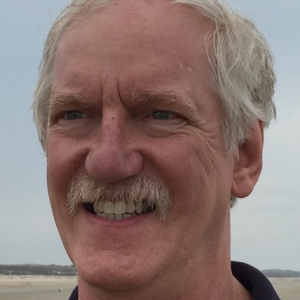
Maged Senbel is an Associate Professor at the School of Community and Regional Planning (SCARP), University of British Columbia (UBC) since 2007. His innovative teaching methods have earned him the Killam Prize for graduate instruction. He holds a B.Arch. (Oregon), M.Arch. (McGill), M.Sc. and Ph.D. (UBC), with professional certifications as MCIP and RPP. His research centers on transformative approaches to urban challenges, specializing in: Public engagement methodologies for neighborhood planning Climate change adaptation and GHG reduction strategies Equity-focused community development Digital/social media applications in planning Youth engagement and intercultural visioning Spatial thinking and visualization techniques This work aligns with SCARP's mission of 'Knowledge in Action - Planning in Partnership'. Awards & Honors: Killam Prize for Graduate Instruction (Faculty of Graduate Studies) He has supervised 23 PhD candidates and 95 Master's students through experiential learning projects addressing real-world planning challenges in urban design, environmental planning, and community engagement. His teaching portfolio includes courses on social justice (PLAN 331), planning studio (PLAN 541), planning theory (PLAN 558), thesis development (PLAN 560), and doctoral colloquia (PLAN 603).
Prof. Dagmar Haase is a Full Professor in Landscape and Urban Ecology at Humboldt Universität zu Berlin, serving as Deputy Director of the Geographical Institute. She holds affiliations with the Helmholtz Centre for Environmental Research (UFZ) and has earned honorary professorships in Sweden and Romania. Her academic journey includes a PhD from the University of Leipzig (1999) and Habilitation from Martin-Luther-University Halle-Wittenberg (2009). Her research focuses on urban ecosystem services, social-ecological systems, and nature-based solutions to urban challenges. Key projects include EU-funded initiatives on green infrastructure (e.g., Horizon Europe’s NaturaConnect) and climate resilience. Awards include the AXA Research Fund Award (2014) and Honorary Wallenberg Professorship (2016). Haase’s work integrates remote sensing, citizen science, and participatory modeling to address urban sustainability. Over 250+ publications and an h-index of 77 reflect her prolific contributions. She advises numerous PhD candidates exploring urban dynamics, biodiversity, and governance. Current grants span climate adaptation, urban densification, and ecological networks.
Tal Simons is Professor of Organization Theory in the Department of Organisation and Personnel Management at Rotterdam School of Management (RSM), Erasmus University Rotterdam, and has been an ERIM Fellow since 2019. His research examines organizational responses to societal pressures through institutional and behavioral lenses. Simons' work centers on institutional theory applications in regulatory resistance, ideological dynamics, and organizational authenticity. He investigates how firms navigate social movements, media scrutiny, and moral legitimacy challenges across diverse sectors including tobacco, wine, and contemporary dance. His methodology blends historical analysis with qualitative case studies to uncover patterns in community cohesion, aesthetic innovation, and cross-cultural collaboration. Publication trends reveal an evolution from foundational studies on kibbutzim and Israeli wine industry transformation (1997-2010) toward contemporary analyses of CSR-media relationships, regulatory compliance, and authenticity construction (2015-2024). Recent work emphasizes ideological imperatives in news coverage and moral legitimacy frameworks, while maintaining consistent theoretical grounding in institutional logics and organizational ecology. Professional recognition includes: ERIM Fellow (2019–present) As an active doctoral supervisor, Simons mentors nine PhD candidates across organization theory and behavior domains. His advisees explore cross-cultural collaborations, multi-stakeholder organizing, sustainability-focused community enterprises, and societal change mechanisms. Supervision spans 2015 to present with roles as promotor and committee member, reflecting sustained commitment to developing organizational scholarship through next-generation researchers.
Kisha Porcher is an Associate Professor in the Department of English at the University of Delaware, specializing in English Education. She serves as the Student Teaching Coordinator and holds a Ph.D. in Teaching and Teacher Education from George Mason University, alongside degrees from Spelman College and Teachers College Columbia University. B.A., English and Secondary Education, Spelman College M.A., Curriculum and Instruction, Teachers College Columbia University Ph.D., Teaching and Teacher Education, George Mason University Her research focuses on centering Blackness through frameworks like the Black Gaze and archeology of the self (Sealey-Ruiz, 2019), emphasizing racial identity development and community-engaged learning. She explores systemic assets for Black and Brown students while advocating for anti-racist pedagogies in urban education settings. Her recent publications highlight trends in critical literacy instruction , decolonizing curricula , and equity-driven teacher training , with a strong emphasis on racial justice and linguistic diversity. Notably, she received the College of Arts & Sciences Faculty Teaching Excellence Award in 2022. Porcher’s work bridges teacher self-reflection and structural reform , positioning educators as disruptors of systemic inequities. Her scholarship spans topics from cultural competency to community-embedded pedagogies, reflecting her commitment to redistributing power in educational systems.
Cathy Wu is an Associate Professor at MIT, with affiliations in the Laboratory for Information and Decision Systems (LIDS), Department of Civil and Environmental Engineering (CEE), and Institute for Data, Systems, and Society (IDSS). Her research group focuses on integrating machine learning with model-based optimization to solve complex problems in transportation systems and cyber-physical systems. Academic Leadership: Class of 1954 Career Development Associate Professor (MIT) Research Grants: NSF CAREER Award, Amazon Robotics, Mathworks, MIT Mobility Initiative, US DOT, Microsoft Research, Cintra, Symbotic Research Interests : Wu's work bridges AI and engineering challenges in transportation. Key areas include: Hybrid ML/Model-based Optimization (large neighborhood search, branch-and-cut) Sustainable Mobility (Project Greenwave, eco-driving) Multi-Agent Coordination (warehouse automation, cooperative driving) Cyber-Professional Systems (generalization in RL, transfer learning) Recent work demonstrates significant advances in eco-driving (11-22% emissions reduction), large-scale multi-agent path finding (1000+ agents), and foundational RL methods for traffic control. Her group has produced 15+ major publications since 2015, with notable media coverage in Science, Wired, and NewScientist. Selected Scientific Awards NSF CAREER Award (2023) Ole Madsen Mentoring Award (2025) IEEE ITSS WiE/YP Fellowship (2024) Harold L. Hazen Teaching Award (2022) Her lab has advised 12+ graduate students and postdocs, including: Vindula Jayawardana (PhD '24, now at Anthropic) Sirui Li (PhD '25, now at Microsoft Research) Yining Ma (Postdoc, active researcher) Zhongxia Yan (PhD '24, now at Anthropic)
Ian Wilson is the Deputy Director of the Centre for Regional Economic and Social Research (CRESR) and a Professor of Policy Research and Evaluation at Sheffield Hallam University. He holds BA and MSc degrees, with over 20 years of expertise in applied policy research and evaluation, securing £15M+ in research funding. His work spans housing policy, urban regeneration, and social welfare, collaborating with government agencies like DLUHC, DWP, and Welsh Government. Education: BA, MSc (institutions unspecified) Roles: Deputy Director (CRESR), Professor of Policy Research and Evaluation Affiliations: Social and Economic Research Institute, College of Social Sciences and Arts Research Focus: Wilson's work centers on measuring policy impacts, housing affordability, and place-based interventions addressing social inequities. He pioneered methods like shadow pricing for regeneration outcomes and developed frameworks for valuing policy effects on communities. His expertise includes econometric analysis, cost-benefit evaluation, and innovative solutions for complex societal challenges. Grants & Projects: Key projects include evaluations of the Affordable Homes Programme (£10M agreement with DLUHC), Warm Home Prescription project, and Community Renewal’s Lifting Neighbourhoods Together initiative. He has led over 100 research outputs, including studies on housing benefit reforms, urban regeneration, and third-sector subcontractor roles in EU programs. Labs/Teams: Core affiliations with CRESR and the Social and Economic Research Institute, collaborating with interdisciplinary teams on national and international projects.
Nicolò Cesa-Bianchi is a Professor of Computer Science at the University of Milan, where he serves as head of the Computer Science programs. He is also associated with the Department of Electronics, Information and Bioengineering (DEIB) at Politecnico di Milano. Cesa-Bianchi holds significant leadership roles including Board member, Fellow and co-director of the Milan unit of the European Laboratory for Learning and Intelligent Systems (ELLIS), and membership in the prestigious Accademia Nazionale dei Lincei. He is also involved with The European Lighthouse on Secure and Safe AI (ELSA), The European Lighthouse of AI for Sustainability (ELIAS), and The FAIR foundation. Professor Cesa-Bianchi's research focuses on the theoretical foundations of machine learning, with special emphasis on sequential decision making and online learning algorithms. His work spans multiple areas including multi-armed bandit problems, regret analysis, prediction with expert advice, and learning on graphs. He has made significant contributions to understanding the theoretical limits of learning algorithms and developing efficient methods for various learning scenarios. His research has important applications in online markets, social networks, and bioinformatics. His monographs 'Prediction, Learning, and Games' and 'Regret Analysis of Stochastic and Nonstochastic Multi-armed Bandit Problems' are considered seminal works in the field. His recent publications demonstrate continued leadership in advancing the theoretical understanding of machine learning, with 2024-2025 papers covering cooperative online learning, multitask learning, fair trade mechanisms, and refined analyses of bandit algorithms. The research shows increasing focus on practical economic applications while maintaining strong theoretical foundations. Google Research Award Xerox Foundation UAC Award Member of the Accademia Nazionale dei Lincei ELLIS Fellow Cesa-Bianchi has been deeply involved in academic service, having served as action editor for the Machine Learning Journal, IEEE Transactions on Information Theory, and the Journal of Machine Learning Research. He currently serves as associate editor for the Journal of Information and Inference and TheoretiCS. He has held leadership positions including President of the Association for Computational Learning and member of the steering committee for the EC-funded Network of Excellence PASCAL2. He was program chair of the 13th Annual Conference on Computational Learning Theory and the 13th International Conference on Algorithmic Learning Theory. He leads the Laboratory for AI and Learning Algorithms (ALGA) at the University of Milan, which focuses on theoretical and applied research in machine learning. His international collaborations are extensive, with visiting positions at UC Santa Cruz, Graz Technical University, Ecole Normale Supérieure in Paris, Google, and Microsoft Research. As an educator, he teaches advanced courses including Reinforcement Learning and Statistical Methods for Machine Learning, and has supervised numerous students through the years.
Stephen Marshall is Professor of Urban Morphology and Urban Design at The Bartlett School of Planning, University College London. He also served as Visiting Professor at the Department of Architecture and Urban Studies, Politecnico di Milano, Italy from 2019 to 2021. With over twenty-five years of experience in the built environment fields, initially in consultancy and subsequently in academia, Professor Marshall has established himself as a leading expert in urban morphology and design. His educational background includes a Doctor of Philosophy from University College London (2001), a Postgraduate Diploma from Edinburgh College of Art (1995), a Master of Science from the University of Leeds (1989), and a Bachelor of Engineering from the University of Glasgow (1988). Professor Marshall's principal research focuses on urban morphology and street layout, examining their relationships with urban formative processes including urban design, coding and planning. His work bridges urban design theory with practical applications, exploring how cities evolve through complex interactions of physical form, social processes, and planning interventions. He has written or edited several influential books including 'Streets and Patterns' (2005), 'Cities, Design and Evolution' (2009), and 'Urban Coding and Planning' (2011). His recent publications reveal a growing interest in applying complexity science to urban morphology, with particular attention to biological analogies for understanding self-organizing cities. He has pioneered research on digital participation methods in urban planning, exploring how online platforms can enhance public engagement in urban space design. His work consistently bridges theoretical urban morphology with practical applications for contemporary urban challenges like pandemic adaptation and sustainable transport. Professor Marshall has served as Chair of the Editorial Board of Urban Design and Planning from its launch to 2012, and is now co-editor of Built Environment journal. His editorial work has significantly shaped scholarly discourse in urban planning and design. He leads several significant research initiatives including the Incubators of Public Spaces project, which explores digital platforms for co-creating urban spaces, and the Self-Organising Built Environment project, which investigates biological analogies in urbanism. These projects reflect his interdisciplinary approach to understanding and shaping urban environments, connecting with Sustainable Development Goal 11 (Sustainable Cities and Communities).
Aleksandar Bojchevski is a full professor of Computer Science at the University of Cologne, leading the Trustworthy Artificial Intelligence Lab (TAIL). His research focuses on developing robust, interpretable, and privacy-preserving machine learning models, particularly graph neural networks (GNNs). The lab emphasizes trustworthiness in high-stakes applications through methods that handle noisy, adversarial, or anomalous data. Bojchevski holds a PhD and PostDoc from the Technical University of Munich, advised by Stephan Günnemann. Previously, he was faculty at CISPA Helmholtz Center for Information Security. His work bridges theory and practice, addressing adversarial robustness, uncertainty quantification, and scalable GNN techniques. Research interests include: robustness certification for GNNs, conformal prediction, adversarial attack analysis, and privacy-aware machine learning. His lab actively collaborates with RWTH Aachen and organizes events like the Learning on Graphs Meet Up. Recent achievements include a teaching award for the Machine Learning lecture (SS 24) and NeurIPS 2024 acceptance of SVFT: Parameter-Efficient Fine-Tuning with Singular Vectors . Open positions are available in his group focusing on trustworthy ML topics. Key labs/teams: Trustworthy Artificial Intelligence Lab (TAIL), Center for Data and Simulation Science (CDS) as a core scientist.
Professor Philip Birch is a distinguished academic in Criminology at the University of Technology Sydney (UTS), Faculty of Design & Society, School of International Studies & Education. With over 15 years of academic experience across British, American, and Australian university systems, he has established himself as a leading expert in policing, community safety, and criminal justice. His extensive practical background in criminology, including roles as a Specialist Crime Team Manager, Community Safety Research Manager, and Through Care Worker in UK correctional facilities, informs his applied research approach. Professor Birch's educational background includes a BSocSci. (Hons) in Social Policy (Crime & Justice) from the University of Manchester, multiple postgraduate qualifications from the Open University (including an MSc. in Social & Criminological Research Methods), a Post Graduate Certificate in Higher Education Practice from the University of Huddersfield, and a PhD in Criminology from the University of New South Wales. He also holds a Fellowship with the Higher Education Academy. His research centers on six key areas: Police & Policing; Community Safety & Crime Prevention; Prisons, Probation & Parole Policy & Practice; Assessment, Treatment & Management of Offenders; Gender & sexuality inclusive Domestic and Family Violence; and Sex Work, Sex Workers and Procurement. His work emphasizes the practical application of criminological research to real-world justice issues, with strong industry engagement across law enforcement and correctional services. Recent publications reveal a clear trend toward police mental health, aging in policing, hate crime identification, trauma-informed policing approaches, and digital community safety initiatives. His research employs diverse methodologies including qualitative case studies, Delphi methods, rapid evidence assessments, and comparative analyses across multiple jurisdictions. Teaching award (2019) from Australian College of Educators for outstanding contribution to education Literati Award (2019) for published work Fellowship of the Higher Education Academy Professor Birch has supervised numerous Honours, Masters by Coursework, Masters by Research and PhD students in Criminology, Criminal Justice and Policing, with several completions to date. He has secured over $1.3 million in research funding, including an ARC Linkage grant, and has acted as an external assessor for domestic and international funding bodies. His research projects address critical issues in criminology and policing, often with direct policy implications. He established the Crime & Security Science (CaSS) Research Group at UTS in 2022, a cross-faculty initiative connecting academia with industry to advance evidence-based criminology, criminal justice, policing, and community safety research. This group serves as a hub for collaborative projects addressing contemporary security challenges through translational research.
Fulong Wu holds the prestigious Bartlett Chair of Planning at University College London's Bartlett School of Planning since 2011. This distinguished position has previously been held by notable figures including Sir Patrick Abercrombie, Sir William Holford, Lord Richard Llewelyn-Davies, Sir Peter Hall, and Mike Batty FRS. Professor Wu's appointment represents a significant moment for the school to redefine planning discipline in global terms for a new generation. Wu received his BSc and MSc degrees from Nanjing University and completed his PhD at the University of Hong Kong. Prior to joining UCL, he taught at the Universities of Southampton and Cardiff. His academic journey reflects a deep commitment to urban planning scholarship with a specific focus on Chinese urban contexts. BSc, Nanjing University MSc, Nanjing University PhD, University of Hong Kong Professor Wu's research centers on urban development in China and its social and sustainable challenges. His work critically examines the Chinese model of urban governance, state entrepreneurialism, and the financialization of Chinese cities. He has made significant contributions to understanding migration patterns, spatial inequalities, suburbanization, neighborhood governance, and urban poverty in Chinese cities. His research provides valuable insights that challenge Western-centric planning theories while enriching global urban studies with Chinese perspectives. His recent publications reveal a clear trend toward analyzing the evolving relationship between statecraft and urban governance in China, particularly in the context of post-pandemic recovery and financialization processes. A significant portion of his recent work examines how Chinese cities manage crises, with several studies focusing on the Shanghai lockdown experience. His ERC-funded project on rethinking China's model of governance serves as an intellectual anchor for much of this research, demonstrating how Chinese urban governance represents both a distinctive model and a critical lens for understanding global urban transformations. Professor Wu's scholarly recognition includes: Fellow of the Academy of Social Sciences (2016) ESRC 2013 Outstanding International Impact Award Fellow of the Higher Education Academy (2002) British Academy Fellow As Principal Investigator of a European Research Council (ERC) Advanced Grant project titled 'Rethinking China's Model of Governance,' Professor Wu leads significant research funding that supports his team's work. He co-founded and coordinates the China Planning Research Group (CPRG) at UCL with Professor Fangzhu Zhang, which has become an influential research cluster generating substantial impact within and beyond the university. His mentorship extends to supervising PhD students and collaborating with early-career researchers on China-focused urban studies. The China Planning Research Group (CPRG), jointly coordinated by Professor Wu and Professor Zhang, serves as a vital hub for research on Chinese urban development. This group has produced influential work on topics including rural migrants in urban China, Chinese land and housing development, urban neighborhoods, and regional governance systems. The CPRG's research output has significant policy implications and contributes to global debates about alternative urban development models beyond neoliberal paradigms.
Theo Arentze is a Full Professor at Eindhoven University of Technology (TU/e) in the Department of the Built Environment, leading the Real Estate Management and Development group. He is affiliated with EAISI Health and EAISI Mobility research institutes. Education: MSc in Psychology (Cognitive Psychology & AI) from Groningen University, PhD from TU/e Urban Planning Research: Spatial choice behavior, decision support systems, activity-based modeling, agent-based simulation His research integrates bounded rationality into spatial choice models to enhance behavioral realism, with applications in real-estate management , neighborhood development , healthy cities , and hybrid work environments . Recent work includes child-friendly urban planning and energy-efficient housing impacts . Prominent article themes include: Hybrid work location decisions Urban public space affective experiences Child friendliness in residential choices Sustainable energy preferences Spatial decision support systems Social network modeling Scientific recognition includes: Best Poster Award (2025) - Computational Urban Planning Conference Long Paper of Distinction (2021) - Healthy Buildings Europe EuroFM Best Paper Award (2017) Pyke Johnson Award (2016) As an educator, he teaches courses in Urban Planning , Housing Economics , and Quantitative Research Methods . His multidisciplinary team combines expertise from psychology, sociology, and urban economics to create high-quality built environments through behavioral research.
Luc Anselin is the Stein-Freiler Distinguished Service Professor of Sociology and the College at the University of Chicago. He serves as Director of the Center for Spatial Data Science and Senior Fellow at NORC, with affiliations in the Department of Sociology and the Committee on Quantitative Research Methods in Social, Behavioral, and Health Sciences. B.S., Vrije Universiteit Brussel, 1975 M.S., Vrije Universiteit Brussel, 1976 M.A., Cornell University, 1979 Ph.D., Cornell University, 1980 Anselin is a pioneer in spatial data science, spatial econometrics, and computational social science. His work bridges quantitative geography, regional science, and computer science, with applications in urban studies, economic analysis, and health research. His recent publications focus on spatial regimes, software ecosystems like GeoDa and PySAL, stigma analysis in public health, and computational methods for urban equity. These reflect interdisciplinary trends in spatial statistical modeling, open-source development, and geospatial policy evaluation. Scientific recognition includes: Fellow, Regional Science Association International (2004) Walter Isard Prize (2005) William Alonso Memorial Prize (2006) National Academy of Sciences (2008) American Academy of Arts and Sciences (2011) Anselin has led major grants and directed institutions like the GeoDa Center for Geospatial Analysis and Computation at Arizona State University. He has mentored interdisciplinary collaborations across sociology, economics, and data science. His laboratories and teams include the Center for Spatial Data Science at the University of Chicago and the GeoDa Center at Arizona State University, fostering innovation in geospatial computation and open-source spatial analytics.
Arie van Steensel is an Assistant Professor of Medieval History at the University of Groningen's Faculty of Arts. His research focuses on the social and economic history of the European Middle Ages, with particular emphasis on urban history of England, Italy and the Low Countries, and the history of nobility in the Low Countries. His scholarly profile demonstrates deep expertise in late medieval urban development and nobility structures across European regions. His research examines how political and economic structures shaped community formation in pre-modern European cities, with particular attention to social boundaries, networks, and identities within urban environments. His publication record shows consistent focus on urban communities, nobility studies, and regional history, with significant contributions to understanding the dynamics of power, wealth, and social status in medieval Dutch society. His work bridges traditional historical research with contemporary methodological approaches including digital humanities. Editor of Stadsgeschiedenis Editor of BMGN - Low Countries Historical Review Secretary of the European Association for Urban History Van Steensel actively contributes to academic discourse through conference organization, editorial work, and public engagement. His current project editing a volume on Leiden's premodern history represents a significant effort to make Dutch urban history accessible to an international scholarly audience.
Guang Tian, Ph.D. , is an Assistant Professor of City and Metropolitan Planning at the University of Utah and a faculty member at the Scientific Computing and Imaging Institute . His research bridges land use-transportation planning , travel behavior , and urban data science , with a focus on sustainability , climate adaptation , and equitable transit-oriented development . He previously founded the Center for Equitable Transit-Oriented Communities at the University of New Orleans as an Associate Professor. Education : Ph.D. in City & Metropolitan Planning (University of Utah, 2016) Professional Affiliations : Faculty, Scientific Computing and Imaging Institute (2025–present) His research leverages machine learning and GIS to analyze VMT reduction , active transportation , and the built environment’s impact on mobility . Key findings include the superior performance of random forest models over traditional methods in predicting mode choice and the role of polycentric urban structures in reducing auto dependency. Scientific Awards : Rising Scholar Award (2024, Association of Collegiate Schools of Planning) Grants include funding from the US Department of Transportation for equitable transit communities and multiple Louisiana Transportation Research Center projects on VMT modeling, rail infrastructure, and truck parking efficiency. His teaching centers on GIS applications in urban planning and transportation analysis.