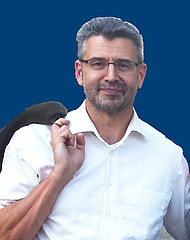
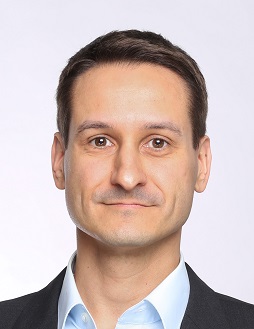
Prof. Ursel Fantz is a Professor at the University of Augsburg and Acting Head of the ITER Technology & Diagnostics Division at Max Planck Institute for Plasma Physics (IPP). Her expertise spans plasma physics, fusion technology, and neutral beam heating systems. She holds a PhD from the Technical University of Stuttgart and a habilitation in Experimental Physics from the University of Augsburg. Key collaborations include work on negative hydrogen ion sources for ITER and plasma diagnostics at the ASDEX Upgrade and LHD devices. Her research focuses on atomic/molecular plasma physics, plasma-wall interactions, and high-frequency ion sources. Teaching includes courses on Plasma Physics, Fusion Research, and Plasma Material Interaction. Her work bridges experimental and applied plasma physics, emphasizing ITER-related technology development. Recent publications highlight advancements in NBI systems and beam characterization techniques.
Dr. Tim Happel is a leading researcher in plasma physics and fusion energy, affiliated with the Max Planck Institute for Plasma Physics (IPP) in Garching, Germany, where he serves as Head of the Plasma Dynamics Division and a Scientific Member of the Max Planck Society since 2024. He also lectures at the University of Ulm, contributing to academic education in plasma physics. His research focuses on turbulence, confinement regimes, and advanced tokamak operation, particularly using the ASDEX Upgrade device. His research interests center on plasma turbulence in tokamaks, with a special emphasis on the Improved Energy Confinement Mode (I-mode) and discharges with negative triangularity, which are promising for future fusion reactors. He investigates turbulence-flow interactions, develops diagnostics like Doppler reflectometry, and validates gyrokinetic simulations against experiments. His work bridges theoretical modeling and experimental validation to improve predictive capabilities for ITER and DEMO. The 15 most recent publications highlight a strong trend toward predictive fusion science, with studies on gyrokinetic code validation (e.g., GENE), edge-localized modes, pedestal physics, and negative triangularity configurations. These works are published in top journals like Nuclear Fusion and Nature Communications , reflecting his leadership in advancing core and edge plasma physics for next-generation fusion devices. Itoh Prize for Plasma Turbulence (for doctoral work on Doppler reflectometry) Dr. Happel leads the Turbulence research group at IPP since 2023 and has been instrumental in major collaborative efforts, including the EUROfusion Tokamak Exploitation programme. His work is supported by extensive experimental campaigns and international grants, though specific funding sources are not detailed. He collaborates widely across institutions, as seen in co-authorship with teams from EUROfusion, ASDEX Upgrade, and other tokamak facilities. He heads the Plasma Dynamics Division at IPP, overseeing research on turbulence, transport, and confinement optimization in fusion plasmas. His team integrates experimental diagnostics, advanced data analysis, and high-performance simulations to tackle key challenges in plasma physics.
Guenter Fritz is a Lecturer at the Institute of Biology, University of Hohenheim , with a focus on structural biology and microbiology. He also holds a part-time Senior Scientist position at Expose Data Collection Service GmbH (Swiss Light Source, Villigen, CH). Key research areas: Structural biology of redox-driven ion pumps, ISG15/USP18 protease interactions, RAGE signaling in inflammation, and bacterial energy conversion systems. Projects: Analysis of FeS cluster assembly in Na+-NQR and RNF complexes (DFG project 311211092), LAPIN (anti-Gram-negative pathogen drug discovery). His publications highlight structural and functional studies of sodium-pumping enzymes in pathogens like Vibrio cholerae and Prevotella bryantii , amyloid-related proteins in neurodegeneration, and deubiquitinase activity in innate immunity. Current projects include inhibitor development for ISG15-specific proteases using high-throughput screening and crystallography. Key collaborations : Swiss Light Source (Villigen, CH), DFG-funded initiatives, and interdisciplinary teams in biochemistry and microbiology. Group members : Luise Weber, Sebastian Herdan, Jonatan Vering, Jann-Louis Hau, Mustafa Zeno, Anna-Maria Herzog, Stefan Jäger (contact details provided).
Prof. Dr. Andreas Gogol-Döring is a Professor of Computer Science and Bioinformatics at Technische Hochschule Mittelhessen (THM) , with research spanning interdisciplinary domains of computational methods and biological systems. He is affiliated with the School of Computer Science and Bioinformatics and maintains active roles in research and teaching.
Max Born Institute for Nonlinear Optics and Short Pulse SpectroscopyGermany
Dr. Matthias Schnuerer is an acting Department Head of B3 (Laser Development) and Project Coordinator at the Max Born Institute for Nonlinear Optics and Short Pulse Spectroscopy in Berlin. His research focuses on high-field physics, laser-driven matter acceleration, and plasma dynamics. He has pioneered proton imaging techniques for studying relativistic plasma behavior and contributed to advancements in laser systems for coherent X-ray generation. **Education**: PhD in Physics (1984), Humboldt-University Berlin Diploma in Physics (1982), Humboldt-University Berlin Habilitation (2001), Technical University Wien **Research Interests**: His work spans laser-plasma interactions, ultrafast laser systems (OPCPA, fs pulses), and applications in X-ray spectroscopy. Key areas include energy transformation in plasmas, coherent soft X-ray generation beyond the water window, and relativistic electron dynamics. Recent projects involve developing high-average-power MIR laser systems and studying magnetization dynamics via soft X-ray techniques. **Labs/Teams**: Leads the Laser Development department at MBI, coordinating projects like the Application Laboratories and Technology Transfer initiative. Collaborates on advanced X-ray optics and plasma diagnostics for material science and energy research.
Ursel Fantz is an apl. Professor (Associate Professor) in the Institute of Physics at the University of Augsburg, Germany, within the Faculty of Mathematics, Natural Sciences, and Materials Engineering. She leads research in experimental plasma physics, focusing on negative hydrogen ion sources for fusion applications, particularly for the ITER and DEMO neutral beam injection (NBI) systems. Her work spans fundamental plasma diagnostics, spectroscopy, surface physics, and engineering development. Her research interests include experimental plasma physics , fusion energy , negative ion sources , plasma diagnostics , spectroscopy , neutral beam injection , and plasma-surface interactions . She investigates cesium dynamics, work function behavior, RF coupling, and VUV radiation in low-temperature plasmas. Her work is central to advancing the performance and reliability of large-scale ion sources for fusion reactors. The most recent publications highlight her focus on negative ion beam photoneutralization , ultra-low work function surfaces , plasma diagnostics in the ELISE test facility , CO2 dissociation via microwave plasma , and VUV flux quantification . These reflect a strong trend toward both fundamental plasma science and applied fusion engineering, with increasing interdisciplinary work in energy and environmental applications. She has no listed scientific awards in the provided text. Ursel Fantz has supervised or collaborated with numerous researchers and students, as evidenced by her extensive publication record with co-authors such as Roland Friedl, Dirk Wünderlich, Stefan Briefi, and others. Her research is supported by major fusion programs and involves significant grant-funded projects related to ITER and DEMO. She is a key contributor to international collaborations in fusion research. She is actively involved with major experimental facilities such as ELISE (Extraction from a Large Ion Source Experiment), BATMAN Upgrade , and the ITER NBI test facility . These labs focus on developing and testing large-scale negative ion sources under conditions relevant to future fusion reactors.
Max Born Institute for Nonlinear Optics and Short Pulse SpectroscopyGermany
Sargis Ter-Avetisyan is a researcher formerly affiliated with the Max Born Institute for Nonlinear Optics and Short Pulse Spectroscopy. His work focuses on high-intensity laser-matter interactions, plasma physics, and advanced ion acceleration techniques. He contributed to developing novel methods for generating energetic negative ion and neutral atom beams, as well as advancing proton beam control through hybrid acceleration schemes. His research interests include laser-driven ion acceleration, plasma diagnostics, and the design of specialized spectrometers for analyzing neutral particles and ions. He has collaborated extensively on projects involving ultra-intense femtosecond laser systems and their applications in generating unique ion beams for scientific and technological purposes. Ter-Avetisyan’s publications highlight advancements in plasma surface modulation under petawatt laser pulses, liquid spray target techniques for beam steering, and calibration methods for high-energy ion detection systems. His work bridges fundamental plasma physics with applied technologies, such as creating compact ion sources and improving beam quality for applications in materials science and medical physics.
Dr. Florian Grussie is a Group Leader at the Max Planck Institute for Nuclear Physics (MPIK) in Heidelberg, Germany. He is actively involved in experimental atomic and molecular physics, with a focus on ion storage rings, astrochemistry, and low-temperature ion reactions. His research is conducted primarily using the Cryogenic Storage Ring (CSR), a unique facility for studying molecular ions under interstellar conditions. His research interests span atomic and molecular physics , astrochemistry , dissociative recombination , ion-neutral reactions , and cryogenic ion beam experiments . He investigates fundamental processes relevant to interstellar chemistry, such as the formation of water and molecular hydrogen, reaction kinetics of ions like H3+ and CH+, and the behavior of molecular anions at ultra-low temperatures. The most recent articles highlight a strong trend in precision measurements of ion-molecule reactions, photodetachment dynamics, and spectroscopy of molecular ions in cryogenic environments. These studies contribute significantly to astrophysical models, particularly in understanding the chemistry of diffuse interstellar clouds and the early universe. The use of merged beams, isochronous mass spectrometry, and action spectroscopy reflects a multidisciplinary approach combining physics, chemistry, and astrophysics. Dr. Grussie has not been listed with any scientific awards in the provided text. He collaborates extensively with leading scientists such as Holger Kreckel, Andreas Wolf, and Klaus Blaum. His work is supported by major infrastructure like the CSR and involves international collaborations. While no formal grants are listed, his repeated publication in top journals indicates sustained funding. He does not appear to have a formal advising role listed, as no students are mentioned. Dr. Grussie is part of a large research team at MPIK working on the Cryogenic Storage Ring (CSR) project. This team includes experts in ion beam physics, spectroscopy, instrumentation, and astrochemistry. The CSR enables studies of molecular ions at temperatures close to those in interstellar space, making it a world-leading facility for simulating cosmic environments.
Max Born Institute for Nonlinear Optics and Short Pulse SpectroscopyGermany
Dr. Sven Steinke was a researcher at the Max Born Institute for Nonlinear Optics and Short Pulse Spectroscopy, focusing on plasma physics, laser-matter interaction, and high-intensity laser applications. His work contributed to understanding plasma dynamics in relativistic regimes, proton acceleration mechanisms, and novel plasma target designs. Key research areas included structured plasma targets, laser-driven ion acceleration, and ultrafast laser-plasma interactions. Publications highlighted advancements in quasi-monoenergetic proton beam generation, relativistic mirror plasma dynamics, and temporal contrast optimization in high-intensity laser systems. His collaborative projects involved experimental setups for investigating light sail regimes and negative ion generation in water spray interactions. Research emphasized both theoretical plasma dynamics and applied laser technologies for particle acceleration.