
Dr. Hubert Zarzycki is a researcher at the Department of Computer Science and Systems Engineering within the Faculty of Information and Communication Technology at Wrocław University of Science and Technology. His work focuses on computational intelligence, fuzzy systems, and algorithm design for optimization problems. Research Interests: Dr. Zarzycki specializes in Ordered Fuzzy Numbers and their arithmetic operations Swarm Intelligence algorithms (e.g., bacterial foraging, cuckoo search, firefly) Applications in financial modeling, sensor placement, and routing optimization Integration of blockchain technology for supply chain transparency Publication Trends: His research spans multiple domains including fuzzy logic, computational finance, and industrial IoT. Recent work emphasizes directional representation in fuzzy systems, robust risk management frameworks, and modular control systems for time-sensitive applications. Contact: Available at hubert.zarzycki@pwr.edu.pl
جستوجوی استاد و پژوهشگر
استاد راهنما، استاد دانشگاه یا پژوهشگر مناسب برای مسیر پژوهشیتان را پیدا کنید و با او ارتباط بگیرید.
نمایش ۱۹۶-۲۰۹ از ۲۰۹ استاد راهنما
اطلاعات این پروفایلها از صفحات عمومی دانشگاهها جمعآوری شده و ممکن است بهروز نباشد.

- Algorithms
- Machine Learning
- Statistics
- +۳ مورد دیگر
Gregory Valiant is an Associate Professor of Computer Science at Stanford University , specializing in Algorithms, Machine Learning, Statistics, and Information Theory. He holds a PhD from UC Berkeley and a BA in Mathematics from Harvard University. His research focuses on designing efficient algorithms for inferring information from limited data, addressing challenges in computation, memory, communication, and data quality. He advises multiple PhD students and collaborates with institutions like Microsoft Research New England. Educations: PhD, Computer Science, UC Berkeley (2012) BA, Mathematics, Harvard University (2006) Research Interests: Gregory’s work centers on the interplay between algorithms and statistical inference, particularly in high-dimensional settings. His lab explores topics like distribution learning, sample amplification, and adversarial robustness. Recent projects include developing algorithms for trace reconstruction, matrix completion, and transformer-based in-context learning. His methodologies often combine theoretical rigor with practical applications in machine learning and data science. Key Article Trends: His publications span theoretical foundations (e.g., sample amplification, convex optimization complexity) and applied machine learning (e.g., transformer capabilities, adversarial testing). Notable work includes contributions to distribution testing, statistical estimation under constraints, and algorithmic lower bounds. Advising: Current advisees include Annie Marsden, Steven Cao, and Chirag Pabbaraju. Former students have pursued roles at institutions like Harvard, Berkeley, and companies like Google, Waymo, and Facebook.
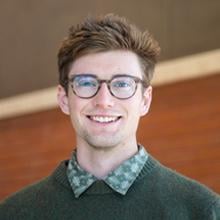
Samuel Mickaمشاهده پروفایل
استادیار
Dr. Samuel Micka is an Assistant Professor of Computer Science at Western Colorado University's Math & Computer Science Department. Specializing in algorithms, computational topology, and geometry, his work bridges theoretical computer science with practical applications in data analysis and education. PhD in Computer Science (2020), Montana State University B.S. in Computer Science (2015), University of Wisconsin - Oshkosh His research focuses on: Topological data analysis Graph reconstruction algorithms Computational geometry applications STEM education initiatives Self-assembly complexity Network performance monitoring Recent publications show strong emphasis on topological descriptors, geometric algorithms, and educational technology. Key trends include: Development of reconstruction algorithms Applications of persistence diagrams Computational approaches to shape analysis STEM outreach for rural students Scientific achievements include: Best Student Paper Award (2015), International Workshop on DNA-Based Computers As an educator, Dr. Micka teaches courses ranging from introductory computer science to advanced topics in computational geometry. His work combines rigorous theoretical research with practical applications in outdoor technology and education.
- Computer Science
- Machine Learning
- Data Mining
- +۴ مورد دیگر
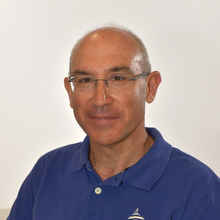
Salvatore Orlando is a Full Professor and Director of the Department of Environmental Sciences, Computer Science and Statistics at Ca' Foscari University of Venice. He holds academic roles including membership in the University Scientific Instrumentation Service Center (CSA) Management Committee and the Academic Senate. His research focuses on machine learning, information retrieval, and data mining, with notable contributions to learning-to-rank algorithms, decision tree ensembles, and adversarial machine learning. Key areas include efficient algorithms for large-scale systems, model interpretability, and fairness in AI. Orlando’s work bridges theoretical advancements with practical applications in database technology and cybersecurity. His recent publications emphasize optimizing ranking models, enhancing algorithm resilience, and addressing ethical considerations in AI systems. He is actively involved in organizing international conferences and serves on program committees, further contributing to the academic community.
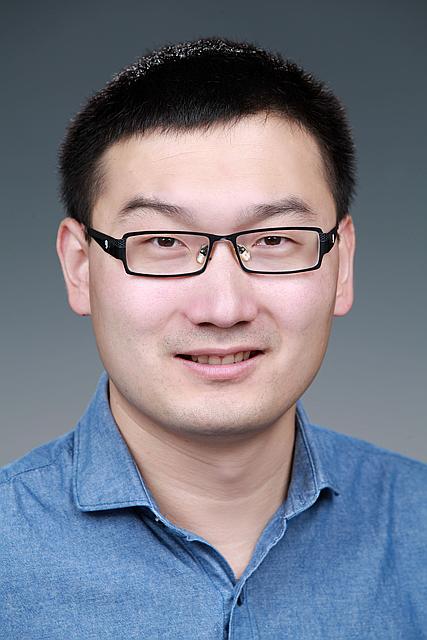
Bin Renمشاهده پروفایل
استادیار
Bin Ren is an Assistant Professor in the Department of Computer Science at the College of William & Mary, where he has been a faculty member since Fall 2016. He holds a Ph.D. in Computer Science and Engineering from The Ohio State University (2014) and was a postdoctoral research associate at Pacific Northwest National Laboratory from 2014 to 2016. Research Interests: His work centers on high-performance computing, compiler techniques, and machine learning systems, with a focus on enabling real-time and energy-efficient deep neural network execution on mobile and edge devices. He explores compiler optimizations, DNN pruning, neural architecture search, and GPU memory management to improve system performance and efficiency. Publication Trends: His recent publications (2023–2025) reveal a strong focus on compiler-aware deep learning systems, mobile and edge AI, and performance optimization across heterogeneous platforms. Key themes include DNN acceleration, memory efficiency, real-time inference, and hardware-software co-design. His work frequently appears in top-tier venues such as ASPLOS, SC, CVPR, and PLDI. Scientific Awards: NSF CAREER Award, 2021 Best Paper Award, SC 2020 Best Student Paper Nomination, SC 2020 Jeffress Trust Award, 2020 ISLPED Design Contest First Place, 2020 Student Cluster Reproducibility Challenge Paper, SC 2019 Best Paper Award, CGO 2013 SIGPLAN Research Highlights, 2013 Advising and Grants: Bin Ren has advised numerous Ph.D. and master’s students, many of whom have co-authored influential papers. His research has been supported by competitive grants, including the NSF CAREER Award. He actively mentors students in areas of parallel computing, compiler design, and machine learning systems. He has also received funding from the Jeffress Trust Awards and other sources to support interdisciplinary research. Professional Service: He has served in leadership roles such as Program Co-Chair for PPoPP'25 and HIPS'21, Track Co-Chair for ICPP'24 and HiPC'24, and Artifact Evaluation Co-Chair for PPoPP'24 and ALENEX'25. He is a frequent reviewer for top journals and conferences including TPDS, TACO, NeurIPS, and SC. Teaching: He teaches courses such as CS304 (Computer Organization) and CS642 (Compiler Techniques for High Performance Computing), contributing to both undergraduate and graduate education in systems and programming. Lab and Team: His research group focuses on system-software co-design for efficient AI deployment. Collaborators include researchers from institutions like Pacific Northwest National Laboratory and The Ohio State University. His team works on real-world applications in healthcare, autonomous systems, and scientific computing.
Anxiang Zengمشاهده پروفایل
پژوهشگر
Anxiang Zeng is a researcher affiliated with the University of Kansas School of Business , Department of Management and Leadership. His work focuses on machine learning applications in e-commerce , particularly in search engines, recommender systems, and preference optimization.
Sihem Amer-Yahiaمشاهده پروفایل
استاد پژوهشی
Sihem Amer-Yahia is a distinguished Research Professor at the University of Grenoble Alpes (affiliated with Grenoble Informatics Laboratory ), with significant contributions to database systems , data exploration , and fairness in AI . Her work bridges human-computer interaction and machine learning to create systems that enhance data-driven decision-making. Research Pillars : Algorithmic fairness, interactive data mining, recommender systems, and human-AI collaboration Recent Advances : 2023-2025 publications focus on statistically sound hypothesis testing , multi-objective recommendation , and conversational analytics Leadership : Co-organized major conferences (DASFAA 2024) and led DEI initiatives in database communities Her 15 most recent articles (2020-2025) span topics like producer fairness in recommendation , statistical hypothesis frameworks , and AI-powered education systems , with keywords covering database optimization , reinforcement learning , and ethical data mining . She actively contributes to ACM/IEEE journals and VLDB/SIGMOD conferences.
- Computational Biology
- Machine Learning
- Genomics
- +۴ مورد دیگر
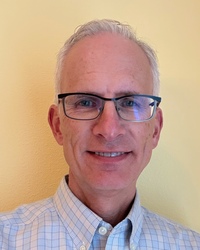
William Stafford Noble is a Professor in the Department of Genome Sciences with a joint appointment in the Paul G. Allen School of Computer Science and Engineering at the University of Washington. He earned his Ph.D. in Computer Science and Cognitive Science from UC San Diego (1998) after completing a B.S. in Symbolic Systems at Stanford University (1991). Research Focus: Dr. Noble develops machine learning and statistical methods for complex biological data analysis. His interdisciplinary work spans: Computational genomics and proteomics Sequence analysis and genome annotation 3D genome architecture modeling Mass spectrometry data analysis AI applications in biological discovery Publication Trends: His recent work (2025) focuses on advanced computational techniques for single-cell analysis, mass spectrometry innovation, and multi-modal biological data integration, demonstrating consistent leadership in AI-driven biological research. Awards & Honors: ISCB Innovator Award NSF CAREER Award Sloan Research Fellowship Highly Cited Researcher (Clarivate Analytics) ISCB Fellow Leadership & Training: Co-director of the UW 4D Genomic Nuclear Organization Center. Mentored 24 Ph.D. students and 34 postdoctoral fellows, with trainees now holding faculty positions at Columbia, UCLA, UBC, and other leading institutions.
Weijie Zhaoمشاهده پروفایل
استادیار
- Scalable Machine Learning Systems
- Approximate Nearest Neighbor Search
- Security in Machine Learning
- +۲ مورد دیگر
Weijie Zhao serves as an Assistant Professor in the Department of Computer Science at the Golisano College of Computing and Information Sciences, Rochester Institute of Technology (RIT), where he maintains an active research and teaching profile. Education: Ph.D. under Professor Florin Rusu, part of the academic lineage from Avi and Raghu Research Interests: Scalable Machine Learning Systems Approximate Nearest Neighbor Search Security in Machine Learning Scientific Data Processing Database Systems Advising and Grants: Dr. Zhao mentors two Ph.D. students (Jun Woo Chung and Huawei Lin, both since August 2022) and leads an active National Science Foundation grant project focused on secure machine learning systems.
Mahdi Vasighiمشاهده پروفایل
استادیار
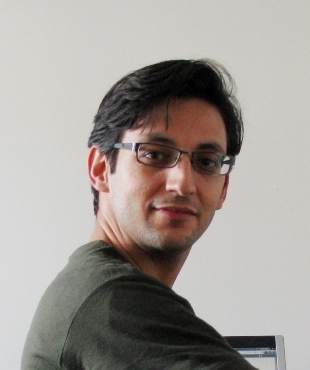
Mahdi Vasighi is currently serving as an Assistant Professor at the Department of Computer Science and Information Technology, Institute for Advanced Studies in Basic Sciences (IASBS) in Zanjan, Iran, a position he has held since February 2012. Prior to this, he was a Post-doc Researcher at the same institution from February 2011 to February 2012. He has also served as a Visiting Researcher at the Milano Chemometrics and QSAR Research Group, University of Milano - Bicocca, Milan, Italy from September to October 2009, and as a Guest Lecturer at the Pasteur Institute, Tehran, Iran since September 2016. Dr. Vasighi earned his educational qualifications from the Institute for Advanced Studies in Basic Sciences (IASBS) in Zanjan, Iran, where he completed his Ph.D. in Chemometrics in May 2010 and his M.Sc. in Analytical Chemistry between 2002 and 2005. His undergraduate education was in Pure Chemistry at Imam Khomeini International University, Qazvin, Iran, from 1998 to 2002. Dr. Vasighi's primary research interests lie at the intersection of bioinformatics, machine learning, and data analysis. His work focuses on structural bioinformatics, particularly on modeling relationships between biological sequences and their corresponding structure or function. He has made significant contributions to the field of self-organizing maps with dynamic structure, developing innovative approaches like the Directed Batch Growing Self-Organizing Map (DBGSOM) that enhance topology preservation and visualization of high-dimensional data. His research spans multiple domains including protein structural classification, cancer diagnostics using fluorescence spectroscopy, and drug discovery for diseases like COVID-19. Dr. Vasighi's publication record demonstrates a strong trajectory in applying machine learning techniques to solve complex problems in bioinformatics and medical diagnostics. His recent work shows an increasing focus on applying computational approaches to healthcare challenges, including cancer detection, protein analysis, and drug discovery for viral diseases. He has successfully bridged the gap between theoretical machine learning advancements and practical applications in biology and medicine, with a particular emphasis on developing interpretable models that can be used by domain experts. Dr. Vasighi has actively contributed to the academic community through teaching and conference organization. He has served as Local Chair for the International Conference on Contemporary Issues in Data Science 2019 (CiDaS 19) and as Scientific Committee Member and Organizing Chair for previous CICIS conferences. His teaching portfolio includes graduate courses in Artificial Neural Networks, Computational Data Mining, Bioinformatics, Statistical Pattern Recognition, and Multimedia Systems. Dr. Vasighi has supervised numerous MSc students, with over twenty graduated students and nine current students listed in his profile. His research has been supported through collaborations with institutions like the Pasteur Institute, where he worked on projects related to nuclear magnetic resonance-based screening of thalassemia and determination of coronary heart disease risk using NMR spectra of plasma lipoproteins. Through his Directed Batch Growing Self-Organizing Map (DBGSOM) package and other software contributions, Dr. Vasighi has made his research tools accessible to the broader scientific community. His work continues to push the boundaries of how machine learning can be applied to solve challenging problems in bioinformatics and medical diagnostics.
Dr. Joachim Spoerhase is a Lecturer at the Department of Computer Science , University of Liverpool , specializing in algorithm design and combinatorial optimization. His research focuses on approximation algorithms for clustering, network design, and geometric optimization problems. PhD in Computer Science (2010) and Habilitation (2017) from the University of Würzburg Former Research Associate at the Max Planck Institute for Informatics Research positions at Aalto University and University of Wroclaw His recent work explores high-dimensional data structures, polyline bundle simplification, and robust clustering frameworks. He also investigates hardness of approximation and theoretical limits in algorithm design. The University of Liverpool serves as his primary affiliation, with contributions to both computational geometry and machine learning. Notable research trends include interdisciplinary applications in network design, geometric optimization, and interpretable AI frameworks. Dr. Spoerhase teaches modules like Computer Networks (COMP211) and contributes to algorithmic theory development.
- Aeronautics and Aerospace
- Intelligent and Autonomous Systems
- Industrial Internet of Things
- +۳ مورد دیگر
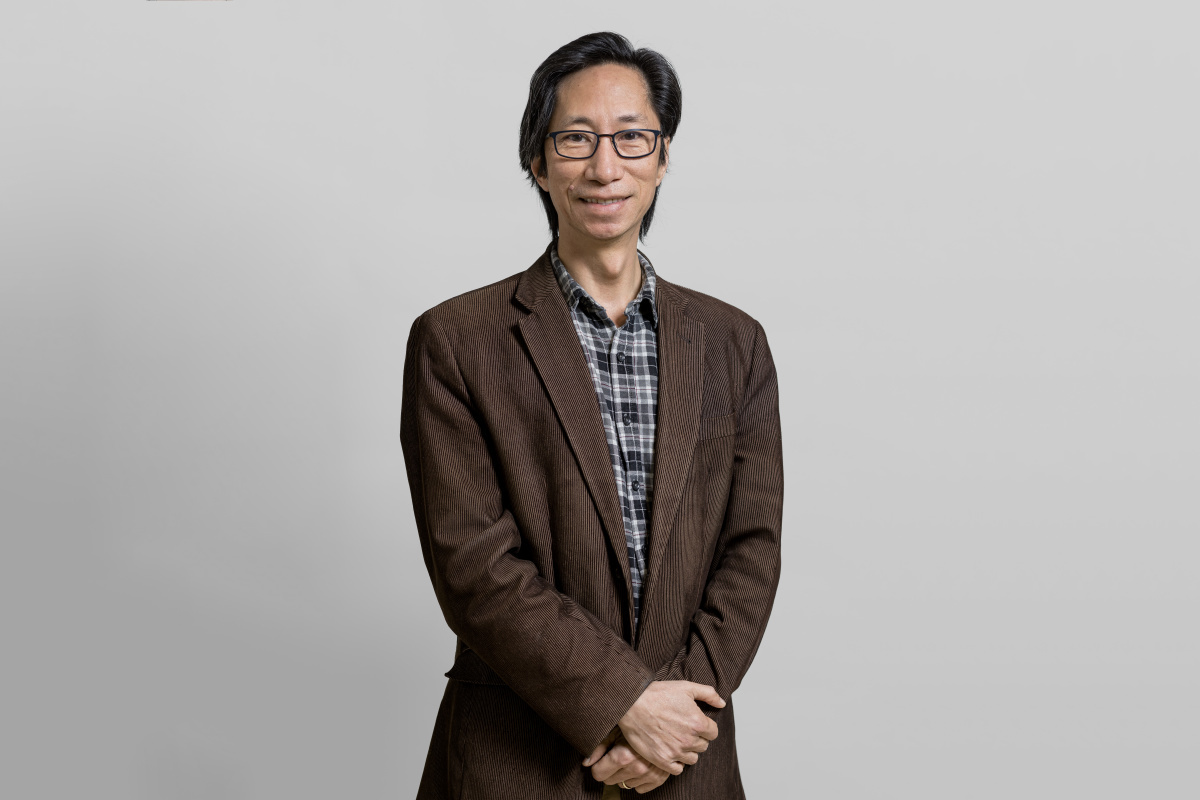
Tony Wong is a Professor in the Department of Systems Engineering at École de technologie supérieure (ÉTS), specializing in aeronautics, autonomous systems, and industrial automation. He holds affiliations with three key research laboratories: the Control and Robotics Laboratory (CoRo), LARCASE (Aeronautical Research), and SYNCHROMEDIA (Multimedia Communication). His work bridges theoretical optimization and practical applications, particularly in UAV design, renewable energy, and blockchain logistics. Research interests span: Aeronautics/Aerospace : Morphing wing optimization, computational fluid dynamics, UAV performance enhancement. Intelligent Systems : Robotic automation, machine learning for predictive maintenance, low-code industrial solutions. Sustainable Technologies : Hybrid energy systems, IoT for resource optimization, edge computing deployments. Dr. Wong mentors 47+ graduate students, with recent projects including wind-tunnel validations of morphing wings, AI-driven supply chains, and solar energy forecasting. His publication record (31+ journal articles since 2021) demonstrates consistent contributions to aerodynamic design and computational intelligence. While no awards are documented, his leadership in collaborative labs underscores institutional recognition. Laboratory engagements focus on experimental validation and industrial partnerships, utilizing ÉTS facilities like the Price-Païdoussis Wind Tunnel and advanced flight simulators. Current projects prioritize sustainability, including aerodynamic drag reduction and blockchain-enabled cost optimization.

Pankaj Mehraمشاهده پروفایل
استاد پژوهشی
Pankaj Mehra is a Research Professor in the Department of Computer Science and Engineering at The Ohio State University and CEO of Elephance Memory, a company he founded that develops software for disaggregated data center memory optimization. He holds a Ph.D. in Computer Science from The University of Illinois at Urbana-Champaign and has extensive industry leadership experience including SVP/WW CTO at Fusion-io, VP/Senior Fellow roles at SanDisk and Western Digital, and VP positions at Samsung where he led SmartSSD development. His research focuses on memory-semantic fabrics (CXL, UALink), Memory Objects abstraction for data-centric programming, and AI Super Devices (AISDs) for near-data processing in AI workloads. Key interests include optimizing memory systems for Retrieval Augmented Generation (RAG), vector databases, and Approximate Nearest Neighbor Search (ANNS) algorithms. His notable scientific awards include: Samsung R&D Award (2019) for SmartSSD development CES R&D Innovation Award (2021) for SmartSSD Dr. Mehra founded HP Labs Russia and served as Chief Scientist until 2010. He is an active industry contributor to the Open Compute Project and DOE EMC3 initiatives, with scheduled presentations at the 2025 OCP Global Summit on composable memory systems and data-centric computing. His entrepreneurial ventures include Elephance Memory, IntelliFabric, Whodini, and AwarenaaS, with publications spanning 3 books and over 100 papers and patents in memory technologies and distributed systems.

Myoungsoo Jung is the KAIST Endowed Chair Professor and Full Professor at Korea Advanced Institute of Science and Technology, holding primary appointment in the School of Electrical Engineering with additional affiliations in the School of Semiconductor System Engineering, Graduate School of AI Semiconductor, Graduate School of System Architect, and Graduate School of AI. His research focuses on cutting-edge computer architecture and operating systems with specialization in memory and storage systems. Professor Jung's research interests span computer architecture, operating systems, flash memory, solid-state drives, non-volatile memory, file systems, parallel processing, and heterogeneous computing. He has pioneered work in CXL-based memory expansion, computational SSDs, and memory disaggregation technologies that are transforming modern data centers and AI infrastructure. His recent publications demonstrate significant advancements in CXL-driven architectures, computational storage, and memory systems. The research trends show increasing integration of storage and memory technologies with AI workloads, particularly in large-scale graph processing, federated learning, and billion-scale data management. His team's work frequently appears in top-tier venues including ISCA, HPCA, SOSP, and USENIX ATC. Hall of Fame, IEEE/ACM ISCA (2024) Digital Innovation Award from Minister of Science and ICT (2024) CES Innovation Award Winner, CXL-Enabled AI Accelerator (2025) Korea Innovative Startup Award, Ministry of Science and ICT (2025) Samsung Best Paper Award Winner (Grand Prize) (2022) Professor Jung has successfully advised numerous PhD students including Miryeong Kwon (recipient of KAIST Outstanding PhD Dissertation Award) and Donghyun Gouk. His CAMEL research lab has secured over $13M in funding from sources including DOE, NSF, and Korean government agencies. The lab maintains strong industry partnerships with Samsung, SK Hynix, and Panmnesia, focusing on translating research into practical systems. Current projects include CXL-based memory expansion, computational SSDs for AI acceleration, and next-generation storage architectures for hyperscale data centers.