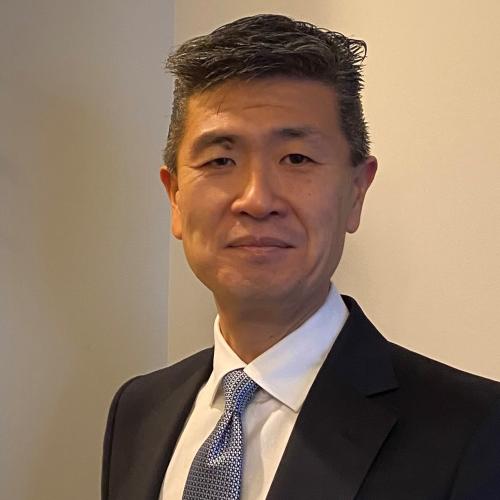
Tim Twardzik is a Researcher at the Chair of Integrated Systems within the School of Computation, Information and Technology at the Technical University of Munich . His work focuses on hardware acceleration techniques for Linux systems, particularly in optimizing inter-process communication (IPC), event notification mechanisms, and synchronization primitives through FPGA-based and MPSoC architectures. His research explores: Hardware-assisted scheduling for Linux Low-latency system-on-chip (SoC) design User-space event notification acceleration Thread synchronization mechanisms MPSoC-based embedded computing Performance analysis through simulation frameworks Publications highlight his contributions to hardware acceleration trends, with a focus on improving operating system primitives (e.g., futex, epoll) through custom silicon implementations.
Roee Holtzer is a Professor at the Ferkauf Graduate School of Psychology and Department of Neurology at Albert Einstein College of Medicine. He holds dual faculty appointments bridging psychology and clinical neurology. His research focuses on brain mechanisms underlying cognitive and motor function in aging and neurological diseases, with emphasis on dual-task walking, prefrontal cortex activation, and cognitive reserve. Dr. Holtzer directs the Clinical Neuropsychology minor and teaches courses like Clinical Neuropsychology I/II and Neuropsychology Research Seminars. Education: MA and PhD from Binghamton University. Postdoctoral training at Columbia University’s Sergievsky Center. Licensed psychologist in NY State. His work integrates neuropsychology, neuroimaging (fNIRS), and clinical trials to develop interventions for mobility and cognition in aging populations. Key research areas include multiple sclerosis, mild cognitive impairment, and the effects of comorbidities like asthma on neurological functioning. Over 100 peer-reviewed publications focus on neural efficiency, physical/cognitive reserve, and interdisciplinary interventions. Active in mentoring graduate students conducting predoctoral projects on topics like music therapy effects, social support, and gender differences in cognitive decline. His lab collaborates with institutions like Montefiore Medical Center and uses advanced tools like functional near-infrared spectroscopy (fNIRS) to study brain-behavior relationships.
Dr. Junlin Yuan is an Associate Professor in the Department of Mechanical Engineering at Michigan State University, within the College of Engineering. Her research focuses on large-scale numerical simulations of complex turbulent shear flows, particularly addressing non-equilibrium turbulence, wall roughness, and fluid-structure interaction. Applications span engineering, environmental, and bio-locomotive systems. She has secured funding from NSF, ONR, and industry partners. Education: Ph.D. Mechanical Engineering, Queen's University, Canada (2015) M.S. Mechanical Engineering, Queen's University, Canada (2011) B.Eng. Aerospace Engineering, Northwestern Polytechnical University, China (2009) Research Interests: Dr. Yuan's work emphasizes understanding turbulence in complex geometries through direct numerical simulations (DNS) and developing physics-based models. Key areas include roughness sublayer dynamics, adverse pressure gradient effects, hyporheic exchange modeling, and turbulence-induced noise prediction. Her lab, the Turbulence Simulation & Modeling (TSM) Lab, bridges fundamental turbulence physics with practical engineering challenges. Grants & Advising: She secured a $400k NSF grant (CC* Compute) for high-memory computing infrastructure and a $490k NSF award on biomimetic fluid-structure interaction. Advised PhD students include Guangchen Shen, Saurabh Pargal, and Sai Mangavelli. Students have received fellowships such as the Richard H. Brown Endowed Fellowship and CFD Society of Canada scholarships. Labs & Teams: Directs the TSM Lab, which employs DNS and CFD tools to explore turbulence in environmental and engineered systems. Collaborates on projects involving sediment-water interface dynamics and rough wall aerodynamics.
Elisa Krackow is an Associate Professor in the Department of Psychology at West Virginia University, where she directs the Memory and the Law Lab. Her research integrates clinical, developmental, cognitive, and forensic psychology to study eyewitness memory, suggestibility, false memories, and juror perceptions, with a focus on children and legal applications. Dr. Krackow earned her Ph.D. from Binghamton University, State University of New York. She completed a predoctoral internship at the University of Illinois at Chicago and a postdoctoral fellowship at the University of Illinois at Urbana-Champaign. Her research interests lie at the intersection of memory and the legal system, particularly in how children recall events, the impact of suggestive questioning, and the development of interventions like Event Report Training to improve eyewitness accuracy. She also investigates the cognitive mechanisms behind false and recovered memories, the role of emotion in memory, and childhood depression with a focus on cognitive biases and intergenerational transmission. Her work has important implications for forensic interviewing, child protection, and legal policy. The 15 most recent publications reflect a consistent focus on applied memory, child eyewitness testimony, false memory creation, and interventions. The research spans cognitive, clinical, developmental, and forensic domains, often using experimental and narrative methods to explore memory accuracy, suggestibility, and emotional influences. Dr. Krackow's research has been supported by funding from NIH/NICHD, the Society for the Psychological Study of Social Issues (SPSSI), and the American Psychology-Law Society (AP-LS). She mentors graduate students in the Clinical Child doctoral program, including Benjamin Thomas, Victoria DiSciullo, and Emily Deming, who are engaged in research on juror perceptions, juvenile justice, child memory, and traumatic recall. Her lab provides training in high-quality research design across multiple psychological subfields. She teaches courses such as Child and Adolescent Development, Behavior Pathology, Behavioral and Psychological Assessment, and Clinical Child Psychology Practicum. Her lab, the Memory and the Law Lab, focuses on applied research with real-world implications for psychology, law, and child welfare.
Sean Meehan, PhD, serves as an Associate Professor in the Department of Kinesiology and Health Sciences, having joined the department in summer 2018 after previously holding an assistant professorship at the University of Michigan's School of Kinesiology from 2011 to 2018. His academic career focuses on elucidating neural mechanisms underlying skilled motor behavior and sensorimotor integration. Professor Meehan's research program investigates how the brain transforms sensory inputs into precise motor commands, with particular emphasis on circuit-level adaptations during skill acquisition and cognitive modulation through attention allocation. Utilizing transcranial magnetic stimulation (TMS) and electroencephalography (EEG), his work bridges fundamental neuroscience with clinical applications in brain injury rehabilitation, examining mechanistic changes in sensorimotor processing following acquired neurological damage. Analysis of his 2020-2025 publications reveals dominant research trajectories in concussion neurophysiology, neural plasticity in motor circuits, and attention-motor interactions. His studies consistently employ TMS to probe cortical excitability dynamics, with significant contributions to understanding sport-related concussion effects, cerebellar modulation of motor adaptation, and neurodevelopmental aspects of pediatric motor skills, demonstrating strong translational potential for rehabilitation protocols. Information regarding Professor Meehan's student advising responsibilities and external research grant funding was not available in the provided source material.
Mark Oskin is an Adjunct Professor at the School of Computer Science and Engineering , University of Washington , focusing on Software & Hardware Systems . He leads the Sampa Group and collaborates on projects like HammerBlade and BlackParrot. University: University of Washington School: School of Computer Science and Engineering Department: Department of Electrical & Computer Engineering His research spans Computer Architecture , Parallel Computing , and Graph Processing , with additional expertise in Quantum Computing , Open Source Hardware , and Distributed Shared Memory . Ongoing work includes custom manycore devices for graph execution and open-source RISC-V designs. Past projects like Grappa and WaveScalar advanced distributed memory and dataflow execution. Recent publications include BlackParrot: An Agile Open Source RISC-V Multicore for Accelerator SoCs (IEEE Micro 2020) and Perceptual Compression of Video Storage and Processing Systems (SoCC 2019), reflecting trends in hardware-software co-design, quantum systems, and energy-efficient video processing. Best Paper Award , USENIX ATC 2015 IEEE Micro Top Picks , 2009 Mark has advised numerous students, including Amrita Mazumdar (IoT video compression startup), Brandon Lucia (CMU), and Steve Swanson (UC San Diego). He co-founded Corensic, a startup exploring deterministic multithreaded execution.
Carolina López-Ruiz is a Professor at the University of Chicago, holding joint appointments in the Divinity School, the Department of Classics, and the College. She serves as Department Chair of Classics. Her research focuses on comparative mythology and cultural exchange in the ancient Mediterranean, challenging Hellenocentric paradigms through interdisciplinary analysis of textual and archaeological evidence. Key areas include Greco-Phoenician interactions, Near Eastern and Classical mythological integration, and ancient cosmogonies. Recent work emphasizes Phoenician cultural agency through projects like the Cerro del Villar excavations in Spain, co-directed since 2022 with David Schloen and J. Suárez Padilla. Her 2021 monograph Phoenicians and the Making of the Mediterranean received three major awards, including the Mediterranean Seminar Book Prize and ASOR Frank Moore Cross Award. Publications span monographs, edited volumes, and peer-reviewed articles addressing topics like deity etymology (Aphrodite's Semitic roots), mythological hybridity (Sphinx, Aion), and disaster narratives (earthquakes/tsunamis in Mediterranean myths). She co-edited the Oxford Handbook of the Phoenician and Punic Mediterranean (2019) and authored a widely used mythological sourcebook. Her scholarly contributions bridge linguistic, religious, and archaeological methodologies, advocating for a more interconnected understanding of the ancient Mediterranean. Current research continues exploring Phoenician cultural contributions and mythological cross-pollination between Mediterranean civilizations.
Michael Filler is Associate Professor at Georgia Tech's School of Materials Science and Engineering and Traylor Faculty Fellow in Chemical & Biomolecular Engineering. His Filler Lab specializes in nanoscale materials synthesis and deployment for electronic, photonic, and energy technologies. Research focuses on: Nanowire synthesis using in situ spectroscopy to understand atomic-level growth mechanisms Engineering nanowire structure via precursor design for heterostructures and doping control Semiconductor nanowire plasmonics for infrared light manipulation Scalable manufacturing through innovations like the Geode process for high-throughput production His work bridges fundamental chemical understanding with practical applications in energy and electronics. Research has been supported by NSF, DOE, DARPA, SRC, and Schmidt Futures.
Jeffrey Young is a Principal Research Scientist at Georgia Institute of Technology, working with the Partnership for Advanced Computing Environments (PACE) and leading Georgia Tech’s Open Source Program Office. His research focuses on high-performance computing (HPC), computer architecture, and novel accelerators including GPUs, FPGAs, and Arm/RISC-V processors. He leads next-generation computing strategy at PACE and directs the NSF-funded CRNCH Rogues Gallery testbed, which explores post-Moore accelerators like neuromorphic and near-memory systems. His work bridges hardware-software co-design and scientific software engineering. Recent research trends show expertise in quantum programming (Qwerty/ASDF), heterogeneous computing (Cupbop), and memory system optimization across GPUs, FPGAs, and CPUs. He has contributed to exascale workflows (HIPLZ), safe HPC libraries, and UAV co-simulation frameworks. Scientific Awards: NSF-funded CRNCH Rogues Gallery testbed (2020-2024) Education: Ph.D. in Computer Architecture (2013), advised by Dr. Sudhakar Yalamanchili Labs & Initiatives: Director, CRNCH Rogues Gallery testbed Co-Director, Georgia Tech Center for Scientific Software Engineering Director, Georgia Tech Open Source Program Office
Jacqueline Vayntrub is an Associate Professor of Hebrew Bible at Yale Divinity School (Yale University). Her research focuses on ancient literary cultures, particularly the Hebrew Bible's genres, ancient Near Eastern literary production, and the reception history of biblical scholarship. She co-chairs the Philology in Hebrew Studies program unit at the Society of Biblical Literature and chairs the Hebrew Bible, History, and Archaeology unit. Education: PhD (2015) and MA (2009) in Near Eastern Languages and Civilizations from the University of Chicago; MA (2006) in Bible and its World from the Hebrew University of Jerusalem; BA (2003) in Near Eastern Languages and Cultures from UCLA. Research emphasizes recovering ancient literary values through textual analysis and examining their modern reinterpretations. Her first book, Beyond Orality: Biblical Poetry on its Own Terms (2019), critiques modern assumptions about biblical poetry's origins. Ongoing projects include Reframing Biblical Poetry (Yale U.P., 2024) and Seeking Eternity: Transmission and Mortal Anxiety in Biblical Literature , exploring themes of legacy and mortality in ancient texts. Awards include a 2019–2020 fellowship at the Katz Center for Advanced Judaic Studies (UPenn). She has authored over 20 peer-reviewed articles in journals like Harvard Theological Review and Catholic Bible Quarterly , and serves as an editor for Brill's Studies in Cultural Contexts of the Bible . Her teaching and scholarship bridge ancient philology with contemporary critical theory, addressing questions of authorship, oral/written traditions, and intertextuality. Active in international collaborations like the Renewed Philology working group, she also directs a project on ancient writings about death with Matthew Suriano for SBL's Writings of the Ancient World series.
Dr. John Ahn is an Associate Professor of Hebrew Bible at Howard University School of Divinity (HUSD). He holds a PhD in Religious Studies from Yale University, and advanced degrees from Princeton Theological Seminary and New York University. His research focuses on historical and social reconstructions of 6th-5th century BCE Judah/Israel, employing ANE languages, paleoclimatology, and social theories like cultural memory and forced migration studies. He leads academic guilds including the 'Return Migrations in Biblical Literature' (SBL) and chairs the Journal of Black Religious Thought. Education: PhD in Religious Studies (Yale University) STM (Yale Divinity School, Class Marshal) MDiv (Princeton Theological Seminary, Seminary Fellow) BA in Linguistics & Religious Studies (NYU, Phi Beta Kappa) Research Interests: Dr. Ahn investigates forced migration narratives (e.g., exile/return), ancient Judah’s socio-historical contexts, and intertextual traditions. He bridges ancient texts with contemporary societal issues through methodologies like trauma studies and generational consciousness. His work emphasizes canonical consciousness and ethical actualizations in modern contexts. Publications Highlight: His 15+ monographs include Exile as Forced Migrations (2010) and Landscapes of Korean Biblical Interpretation (2019). Recent articles explore diaspora politics, memory studies, and ethical hermeneutics. Awards: Recognized for academic excellence (Phi Beta Kappa, NYU’s highest GPA citation) and leadership in biblical guilds. Served as Mid-Atlantic SBL President and Korean Biblical Colloquium leader. Advising & Grants: As PI of the Lilly-funded Pathways Grant at Howard, he develops programs integrating biblical studies with social justice. He mentors students through NGO projects in Africa, Ukraine, and beyond. Ministry & Beyond: Ordained in the Korean Presbyterian Church, he has four senior pastorships spanning 30+ years. Former NCAA volleyball athlete, married with three children.
Antonio Maria Gonzalez Colas is a Full Professor at the Universitat Politècnica de Catalunya (UPC), affiliated with the Department of Computer Architecture within the Faculty of Computer Science of Barcelona (FIB). He leads the ARCO research group focused on Microarchitecture and Compilers and is actively engaged in high-impact research in computer architecture, GPUs, and energy-efficient computing. His collaborations extend to the Barcelona Supercomputing Center and various national and European research initiatives. Research Interests: His primary research areas include computer architecture, microarchitecture, compilers, GPUs, and processor design. He focuses on energy-efficient computing, deep neural network (DNN) accelerators, GPU simulation and optimization, memory systems, and architectural support for machine learning and autonomous systems. His work often integrates compiler techniques with hardware design for performance and efficiency. Scientific Production Trends: His recent publications demonstrate a strong focus on energy-efficient hardware for AI workloads, particularly DNN and speech recognition acceleration, GPU architectural innovations, memory optimization, and real-time rendering. He frequently publishes in top-tier venues such as ISCA, MICRO, HPCA, and IEEE/ACM journals. ICREA Academia Award 2024 HiPEAC 2024 Paper Award ACM Senior Member (2020) Advising and Grants: He has advised numerous PhD students whose theses cover topics like energy-efficient architectures for autonomous driving, speech recognition, and neural networks. He leads competitive R&D projects, including an ERC Advanced Grant and projects funded by the Spanish National Program and the ICREA Academia program, focusing on domain-specific architectures and cognitive computing units. Labs and Teams: He is the principal investigator of the ARCO (Microarchitecture and Compilers) research group at UPC, a leading team in computer architecture research in Spain. The group is part of a larger collaborative network within UPC and with international partners.
Marina Zapater Sancho is a researcher at the Embedded Systems Laboratory (ESL) within the School of Engineering at École Polytechnique Fédérale de Lausanne (EPFL) . She specializes in computer architecture, with a focus on energy-efficient systems, AI accelerators, and memory-centric computing paradigms. Research Interests: Compute-Near-Memory (CnM) : Pioneering architectures like SideDRAM and processing-near-bank designs to reduce energy consumption and latency in DRAM systems. AI Accelerators : Frameworks such as LIONHEART for analog-digital hybrid systems, and Gem5-AcceSys for exploring interconnects in ML accelerators. System Simulation : Contributions to RISC-V full-system simulation validation (gXR5) and component-level calibration methodologies. Her work bridges software and hardware, addressing challenges in heterogeneous systems, thermal management in 2.5D/3D packages, and virtual memory optimization for cache-intensive workloads. Recent trends emphasize energy-proportional computing and edge AI deployment . Grants & Collaborations: Funded by EU H2020 programs and the ACCESS-AI Chip Center (Hong Kong), her research is conducted within the ESL team led by Prof. David Atienza Alonso.
Maria Loi is a Professor at the Faculty of Science and Engineering , University of Groningen, leading the Photophysics and OptoElectronics group. With over 321 research outputs and 17 datasets, her work focuses on the photophysics and optoelectronics of novel semiconductors including perovskites and quantum dots. Her research aims to understand and optimize semiconductor properties for applications in solar cells, LEDs, and photodetectors. Notable contributions include advancements in tin-based perovskites and unraveling hot carrier dynamics that challenge Shockley-Queisser limits. Scientific Awards : ERC Advanced Grant (2022) ERC Starting Grant (2013) Physica Prijs (2018) Fellowships: American Physical Society (2020), KNAW (2022), Royal Society of Chemistry (2022), EURASC (2022) Recent Trends : 2024-2025 publications emphasize defect passivation , scalable fabrication methods , hot carrier dynamics , and neuromorphic device applications in tin-lead and low-dimensional perovskites.
Xiaoyue Ni is an Assistant Professor at Duke University’s Thomas Lord Department of Mechanical Engineering and Materials Science, with additional appointments in Biostatistics & Bioinformatics and Electrical and Computer Engineering. They lead the Ni Lab, developing human-oriented materials intelligence through soft electronics and digital metamaterials. PhD, California Institute of Technology (2018) Research focuses on flexible electronics , mechanical metamaterials , and machine learning to create dynamic materials that sense and adapt to human physiology. Key innovations include soft wireless sensors , liquid metal actuation , and non-invasive biomarker monitoring . Recent publications (2022–2019) highlight expertise in wearable health technology , mechanical-acoustic interfaces , and programmable materials . Collaborative work spans reconstructive surgery , athlete monitoring , and thermal expansion control .