
Daniel Stilck França is an Associate Professor at the Department of Mathematical Sciences within the Faculty of Natural and Life Sciences at the University of Copenhagen . He is affiliated with the QMATH Centre for Quantum Mathematics and related research networks. His research focuses on quantum information and computation , particularly on noise characterization in quantum systems, its impact on computational tasks, and quantum-inspired convex optimization algorithms. Recent work explores tensor networks and quantum error mitigation limitations. Key publications (2023-2025) address topics like Pauli channel estimation, Hamiltonian parameter learning, and quantum simulator scalability. His work has been featured in Nature Communications , Nature Physics , and ACM/IEEE conferences.
جستوجوی استاد و پژوهشگر
استاد راهنما، استاد دانشگاه یا پژوهشگر مناسب برای مسیر پژوهشیتان را پیدا کنید و با او ارتباط بگیرید.
نمایش ۳۱-۴۵ از ۷۰۴ استاد راهنما
اطلاعات این پروفایلها از صفحات عمومی دانشگاهها جمعآوری شده و ممکن است بهروز نباشد.

Prof. Dr. Wolfgang Nejdl is a Professor at the Institute for Data Science within the Faculty of Electrical Engineering and Computer Science at Leibniz University Hannover. He serves as Executive Director of the L3S Research Centre and Leibniz Forschungszentrum Inclusive Citizenship. Web Science Information Retrieval Artificial Intelligence Deep Learning His recent research focuses on AI applications in medicine , multimodal data fusion , and ethical AI systems . Projects include CAIMed (AI in Causal Medicine) and DAISEC (AI & Cybersecurity). His publications span conferences like AAMAS, WWW, and SIGIR. Notable awards include membership in the National Academy of Science and Engineering (acatech) . Former students hold positions at institutions like Stanford, TU Dresden, and ETH Zürich. Current projects involve climate resilience AI , federated learning for healthcare , and quantum-inspired data science .
Joel Zylberbergمشاهده پروفایل
استادیار مدعو
Joel Zylberberg is an Adjunct Assistant Professor at the University of California, Los Angeles (UCLA), affiliated with the Department of Ophthalmology within the School of Medicine . His research bridges Computational Neuroscience , Neural Networks , and Machine Learning , focusing on how neural activity and biological mechanisms inform artificial intelligence and visual cortex dynamics . Joel's work explores retinal computation , population coding , and neural adaptation , often analyzing mouse visual cortex and neurophysiological data . His recent publications highlight trends in dynamic retinal processes , stimulus-driven network topology , and brain-inspired machine learning , emphasizing the interplay between biophysics and computational modeling . Collaborators include Greg Field (UCLA), Richard Born (Harvard), and Michael DeWeese (UC Berkeley), with affiliations spanning institutions like University of Washington and University of California, San Diego (UCSD). His work appears in journals such as Nature Neuroscience , Neuron , and PLOS Computational Biology .
Tom Conte is an academic leader with a joint appointment in the School of Electrical & Computer Engineering and School of Computer Science at Georgia Institute of Technology. As the founding director of the Center for Research into Novel Computing Hierarchies (CRNCH), he specializes in computer architecture and compiler optimization. His work focuses on manycore architectures, energy-efficient microprocessor design, and embedded system architectures. Prior to Georgia Tech, he directed the Center for Embedded Systems Research at North Carolina State University. He holds IEEE Fellow status and served as 2015 President of the IEEE Computer Society, co-leading the IEEE Rebooting Computing Initiative since 2011. Dr. Conte earned his bachelor’s degree in Electrical Engineering from the University of Delaware (1986), followed by M.S. and Ph.D. degrees in Electrical Engineering from the University of Illinois at Urbana-Champaign (1988 and 1992). His research has been recognized with prestigious awards including the IEEE Computer Society’s Golden Core Member award and the National Science Foundation’s CAREER Award (1996). His research interests span quantum computing, 3D chip architectures, energy-efficient processing, and post-Moore computing innovations. He has pioneered initiatives like the Superstrider architecture and CREEPY energy-efficient processing frameworks. Recent work includes advancements in quantum programming languages (e.g., Qwerty) and hybrid quantum-classical systems. Awards: IEEE Fellow, Young Alumni Achievement Award, CAREER Award Leadership: IEEE Computer Society President (2015), CRNCH Director Key Projects: Rebooting Computing Initiative, Superstrider Architecture His lab’s contributions include novel compiler optimizations for manycore systems, smart NIC offloading techniques, and thermodynamically inspired computing models. Conte’s work bridges academic research with industry needs through interdisciplinary collaborations and standardization efforts.
Sanjeev Baskiyar is a Professor in the Department of Computer Science and Software Engineering at Auburn University's College of Engineering. He has been actively involved in research, teaching, and academic leadership, with a strong focus on computer systems, real-time and embedded computing, scheduling, cloud and fog computing, and energy-aware architectures. Education: Ph.D., Electrical and Computer Engineering, University of Minnesota M.S., Electrical and Computer Engineering, University of Minnesota B.S., Electronics and Communications, Indian Institute of Science, Bangalore B.S., Physics (with honors), and distinction in Mathematics Dr. Baskiyar’s research interests span scheduling, real-time and embedded systems, computer architecture, fog/cloud computing, thermal/energy-aware computing, and STEM education. His recent work explores machine learning applications in scheduling and quantum computing for fake news detection. He has supervised over 25 graduate students, many of whom now hold academic and industry positions. His recent publications emphasize fog computing simulation, service placement, quantum-inspired fake news detection, and adaptive scheduling using machine learning. These works reflect a trend towards intelligent, scalable, and energy-efficient computing systems, particularly in distributed and edge environments. Scientific Awards and Honors: Walker Teaching Excellence Award, Auburn University, 2020 Summer Faculty Fellow, Air Force Research Labs, 2020 Nominated Best Teaching Assistant, University of Minnesota, 1992 Multiples Merit and State-merit Scholarships Honors in Physics and Distinction in Mathematics Dr. Baskiyar has successfully advised numerous MS and PhD students and secured over $2 million in research funding as Principal Investigator from the National Science Foundation, DARPA, NASA, and industry partners like Wind River Systems and Mentor Graphics. His grants focus on parallel computing education, real-time micro-architectures, and embedded systems. He has also served on editorial boards, program committees, and as a reviewer for NSF and IEEE journals. He has held leadership roles including Senator in the University Faculty Senate and Chair of the E-day Committee. Labs and Research Groups: While not explicitly named, Dr. Baskiyar leads a research group focused on computer systems, scheduling, and embedded computing, as evidenced by his long list of graduate student supervision and funded projects in fog, cloud, and real-time systems.
- Supersymmetry
- Particle Theory
- Quantum Field Theory
- +۱۶ مورد دیگر
Donald Spector is Professor of Physics at Hobart and William Smith Colleges (HWS), where he has been a faculty member since 1989. He holds a Ph.D. in Physics from Harvard University (1986) and has taught at Harvard, Cornell, and the University of Utrecht. He is affiliated with the Department of Physics in the School of Natural and Social Sciences and has served as coordinator of the Engineering Program and chair of the Physics Department. Ph.D., Harvard University, 1986 A.M., Harvard University, 1983 A.B., Harvard University, 1981, magna cum laude His research centers on supersymmetry, quantum field theory, and mathematical physics, with significant contributions to Q-balls, magnetic monopoles, and duality in supersymmetric quantum mechanics. He explores the intersection of physics with number theory, set theory, and computational complexity. His interdisciplinary work spans physics and the arts, particularly music (e.g., John Cage, Terry Riley) and theatre (e.g., Waiting for Godot ). His recent publications reveal a strong trend toward foundational questions in physics and information theory, especially the application of set-theoretic forcing to generalize information theory. His work bridges theoretical physics, mathematics, and the humanities, often drawing analogies between physical principles and artistic expression. Scientific awards and honors include: Teaching awards at Harvard and Cornell NSF-NATO Postdoctoral Fellowship KITP Scholar (2005–2008) Japan Society for the Promotion of Science Visiting Fellowship Philip J. Moorad Professor of Science (2005–2010) FQXi Grant (2013–2015) Spector has been regularly funded by the National Science Foundation, FQXi, KITP, and JSPS. He has supervised student research in quantum mechanics and simulated annealing. He is a founding member and board member of the Anacapa Society, which promotes theoretical physics at undergraduate institutions. He teaches courses such as Quantum Computing, Modern Physics, and interdisciplinary seminars like Physics through Star Trek and Time Travel & Multiple Universes . He is involved in multiple labs and collaborative initiatives, including organizing workshops at the Kavli Institute for Theoretical Physics and contributing to interdisciplinary projects at the Institute for Science and Interdisciplinary Studies. His recent work includes performing in plays and providing dramaturgical support for theatre productions.

Lisa Wu Willsمشاهده پروفایل
استادیار
Lisa Wu Wills is an Assistant Professor in the Department of Computer Science and Electrical and Computer Engineering at Duke University, leading the APEX Lab (Application-driven Programmable Efficient Accelerated Systems Lab). Her research focuses on hardware acceleration for big data analytics in genomics, graphs, and databases to advance healthcare and natural sciences. Education: Ph.D. in Computer Science, Columbia University, 2014 Research Interests: Dr. Wills pioneers computer architecture and hardware-software co-design to create efficient accelerators for emerging applications. Her work targets genomics , graph analytics , and database systems , emphasizing simplified hardware deployment and energy efficiency for scientific breakthroughs in healthcare and AI. Publication Trends: Her 2022-2025 publications reveal a strong focus on open-source frameworks (Beethoven, PyTFHE) for accelerator development, hardware acceleration in privacy-preserving computing, and optimization for large language models. Key themes include transfer learning for EDA, domain-specific architectures for genomics, and energy-efficient image processing. Scientific Awards: Google ML and Systems Junior Faculty Award (2025) Advising and Grants: Dr. Wills mentors three PhD students: Chris Kjellqvist (Beethoven framework architect), Mason Ma (PyTFHE lead for FHE applications), and Mansi Choudhary (COCOSSim simulator creator). Her 2025 Google award funds research on accelerating vector databases and retrieval-augmented generation for LLMs. Labs and Teams: She directs the APEX Lab at Duke, developing tools like Beethoven (open-source accelerator composer) and PyTFHE for hardware-software integration, enabling domain scientists to leverage custom acceleration with minimal hardware expertise.

Ankit Kariryaaمشاهده پروفایل
استادیار
Ankit Kariryaa is a Tenure Track Assistant Professor at the Department of Computer Science and Department of Geosciences and Natural Resource Management , University of Copenhagen. His work bridges Machine Learning and Environmental Informatics , focusing on remote sensing, geospatial analysis, and ecological modeling. University of Copenhagen, Denmark Machine Learning Section, Department of Computer Science Geography, Land, Environment and Society, Department of Geosciences Kariryaa specializes in applying deep learning and computer vision to environmental challenges. His research includes: Automated tree detection and biomass estimation via satellite imagery Multi-modal geospatial representation learning Monitoring farmland tree decline and carbon sequestration potential Agroforestry system mapping using AI Developing AI tools for climate policy and sustainability Recent work trends show a focus on quantum-inspired machine learning , environmental monitoring , and cross-cultural AI applications . His 15 most recent publications span topics in remote sensing , ecological modeling , and AI ethics , with methods ranging from neural networks to tensor-based learning. He collaborates across disciplines, notably with researchers in ecology , climate science , and quantum computing . His outreach includes seminars on AI in agroforestry and ecosystem management , while his team contributes to global tree resource databases like TreeSense.
David Klindtمشاهده پروفایل
استادیار
David Klindt is Assistant Professor at Cold Spring Harbor Laboratory, leading research at the intersection of biological systems and artificial intelligence. His lab investigates how brains process sensory information and generalize knowledge across contexts, studying neural representations to inspire robust AI models. Research combines computational neuroscience and machine learning to develop algorithms mimicking biological learning efficiency. Current projects examine latent computing in biological neural networks through dynamical systems frameworks, sparse coding principles in neural representations, and geometric organization in visual processing. His group develops methods for mechanistic interpretability, self-supervised learning identifiability, and compute-efficient inference. Recent publications analyze toroidal representations in grid cells, retinal feature detection, and Cryo-EM structure disentanglement. Dr. Klindt's work has been recognized through publications in Nature Communications, eLife, and NeurIPS. Before joining CSHL, he was a Machine Learning Research Scientist at Meta Reality Labs and postdoctoral researcher at Stanford University and NTNU. He holds a Ph.D. in Computational Neuroscience and Machine Learning from the University of Tübingen.
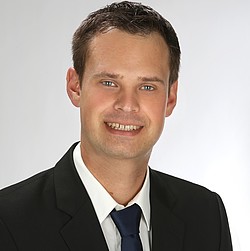
Jun.-Prof. Dr. Christian Krupitzer is a Tenure Track Professor in Food Informatics at the University of Hohenheim's Institute of Food Science and Biotechnology, part of the Faculty of Natural Sciences. He leads the Department of Food Informatics and is a member of the Computational Science Hub (CSH). His research focuses on self-adaptive software systems, machine learning (especially edge computing), IoT technologies, and software engineering applied to food processing and agricultural systems. Education: PhD in Business Information Systems (Dr. rer. pol.), University of Mannheim (2018) M.Sc. and B.Sc. in Business Information Systems, University of Mannheim (2010–2012) High School Diploma (Abitur) from Wilhelmi-Gymnasium Sinsheim (2007) Research Interests: Krupitzer’s work integrates computational methods with food science, emphasizing adaptive systems for food quality monitoring, IoT in agriculture, and machine learning for predictive analytics. He explores edge computing’s role in real-time decision-making and secure group communication schemes for IoT networks. Publications: His recent work spans predictive maintenance in Industry 4.0, digital twins in food systems, and blockchain applications in supply chain authentication. The articles highlight trends in interdisciplinary approaches combining AI, IoT, and domain-specific challenges in food production and logistics. Awards: No scientific awards explicitly listed in the provided materials. Grants & Advising: While specific grants are unmentioned, his roles as department head and tenure-track professor suggest involvement in research funding. No formal advisee list provided, though his team includes postgraduate researchers like Dana Jox, Daniel Einsiedel, and others. Labs & Teams: Leads the Food Informatics department and collaborates with the Computational Science Hub. His team focuses on developing innovative solutions for food systems through computational methods.
Yongchao Huangمشاهده پروفایل
استادیار
Dr. Yongchao Huang is a Lecturer (Assistant Professor) in the School of Natural and Computing Sciences at the University of Aberdeen, where he has been employed since August 2023. He also holds affiliations with the University of Oxford and the University of Cambridge through past postdoctoral and collaborative roles. He is actively involved in research, teaching, and academic service, and is currently accepting PhD students. His educational background includes: DPhil in Engineering Science, University of Oxford (2013–2017) Additional training in Machine Learning at Oxford (2015–2019) Dr. Huang's research focuses on fundamental and physics-informed machine learning, with core interests in Bayesian inference, variational methods, generative modeling (especially score-based), reinforcement learning, and interdisciplinary AI applications in mechanics, biology, energy, climate, and finance. A central theme of his work is the inference and sampling of probability densities, particularly through innovative particle-based and physics-inspired computational frameworks. He founded the Computational and Physical Learning (CPL) lab at Aberdeen in 2023. His recent publications (2020–2025) reflect a strong trend in probabilistic machine learning, with increasing focus on physics-based inference methods such as electrostatics, fluid dynamics, and material point methods. These works bridge machine learning with applied mathematics and physical simulation, demonstrating a unique interdisciplinary approach. Topics span Bayesian neural networks, acoustic wave propagation, mortality modeling, and adversarial cybersecurity. Dr. Huang has received academic recognition through invitations to serve on program committees and editorial roles: Program Committee Member, ECAI 2024 Organizing Committee, Bioinference 2024 Guest Editor, Journal of Theoretical Biology Senior Scientific Advisor to a UK firm He has supervised 57 MSc theses independently and currently supervises one PhD student. He has secured research engagement through collaborations with institutions including Oxford, Cambridge, and industry partners. His teaching includes courses such as Introduction to Software Engineering , Software Process and Management , and Computational Intelligence at Aberdeen, as well as practicals in inference at Cambridge. Dr. Huang leads the Computational and Physical Learning (CPL) lab at the University of Aberdeen, a curiosity-driven research group focused on foundational advances in machine intelligence. Though currently a solo researcher due to limited resources, the lab emphasizes end-to-end research and open collaboration. He encourages student mobility and interdisciplinary exploration.
Mohammad Rostamiمشاهده پروفایل
عضو هیئت علمی
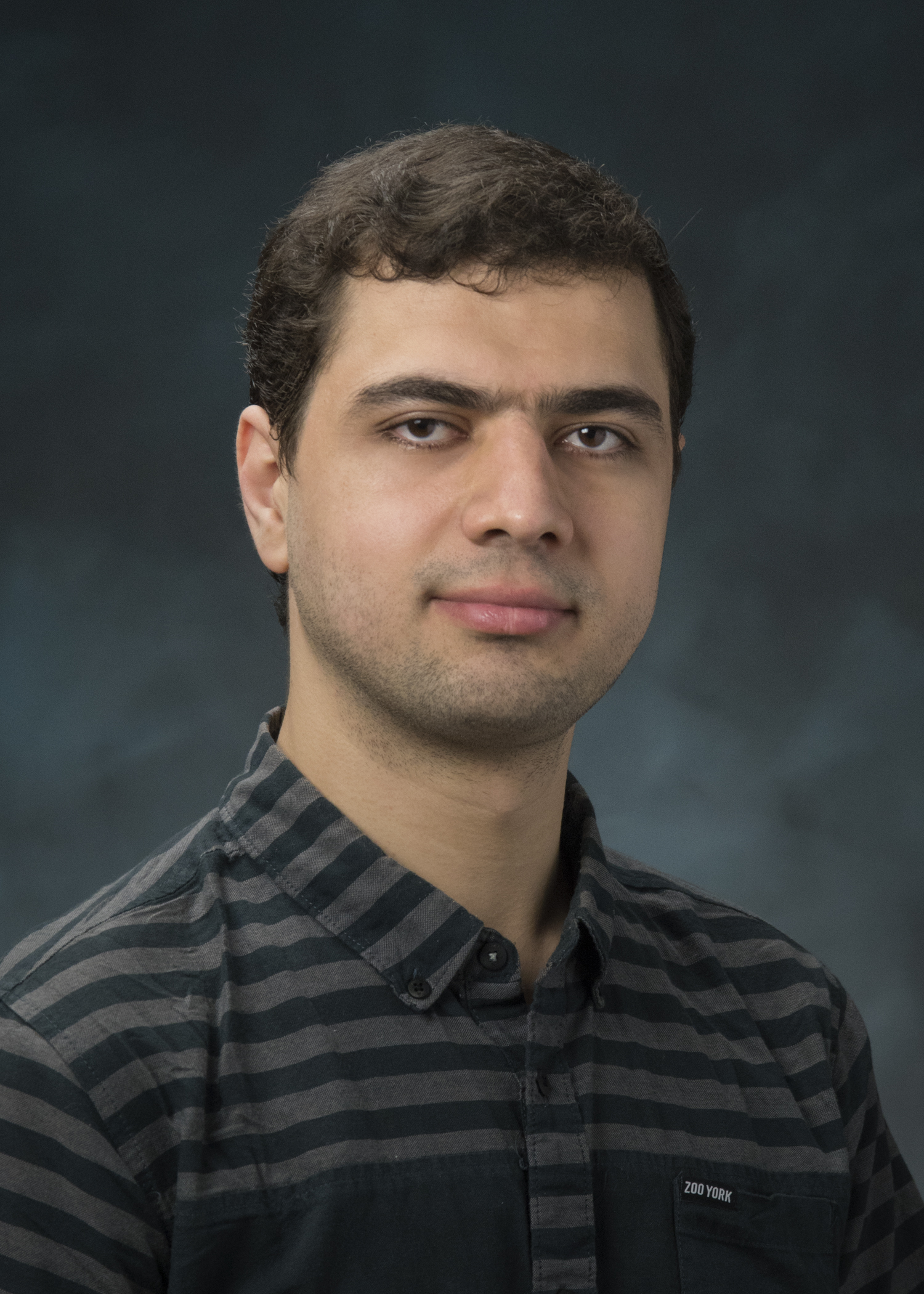
Mohammad Rostami is a Research Assistant Professor at the University of Southern California (USC) in the Department of Computer Science and Electrical and Computer Engineering, with a joint appointment at the USC Information Sciences Institute (ISI). He holds a PhD in Electrical and Systems Engineering from the University of Pennsylvania and additional degrees in Robotics, Philosophy, Electrical Engineering, and Pure Mathematics from prestigious institutions including the University of Waterloo and Sharif University of Technology. His research focuses on machine learning in data-scarce environments, particularly transfer learning, domain adaptation, low-shot learning, and improving learning efficiency through continual and collective learning. He incorporates symbolic logic and neuro-symbolic approaches to address challenges in catastrophic forgetting and knowledge retention. Applications span medical imaging, computer vision, and explainable AI. Rostami has received several accolades including the UPenn Best PhD Dissertation Award, IJCAI Distinguished Student Paper Award, and University of Waterloo Outstanding Achievement Award. His work bridges theoretical advancements with practical implementations, emphasizing real-world applications in healthcare and autonomous systems. He teaches graduate courses in applied natural language processing and knowledge graph construction. Rostami advises students at all academic levels and collaborates with remote researchers, emphasizing motivated, long-term project commitments.

Francesco Fabianoمشاهده پروفایل
پژوهشگر ارشد
Francesco Fabiano is a Research Fellow at the Department of Computer Science, University of Oxford, and an Affiliated Faculty Member at New Mexico State University. He previously served as Assistant Professor at New Mexico State University (2023–2024) and held Adjunct Professor roles at Saint Joseph’s University and University of Parma. His research spans neuro-symbolic AI, multi-agent systems, epistemology, and autonomous planning. Postdoctoral Research Associate at University of Oxford (2025–present) Ph.D. in Computer Science from University of Udine (2018–2021) Master’s Degree in Computer Science from New Mexico State University (2017–2018) Bachelor’s Degree in Computer Science from University of Parma (2013–2016) His work focuses on neuro-symbolic architectures that integrate formal logic with machine learning, particularly for multi-agent epistemic planning and ethical decision-making frameworks . He explores hybrid systems combining System-1/System-2 cognitive paradigms to enhance AI trustworthiness. Recent publications analyze knowledge representation in neuro-symbolic systems, the role of large language models in planning, and heuristic optimization in multi-agent epistemic solvers like EFP. His work also addresses ethical AI and explainable data-to-text frameworks . Best Ph.D. Thesis Award by GULP (2022) He collaborates with IBM Watson Research Lab on cognitive theory-inspired AI paradigms and contributes to open-source planning tools like EFP. His teaching experience includes courses in Applied Machine Learning , Automated Planning , and LaTeX programming .
Angelina Wangمشاهده پروفایل
استادیار
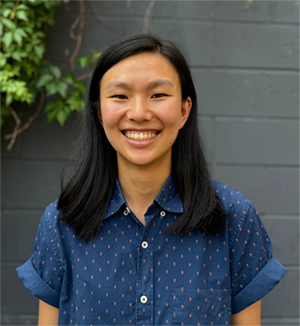
Angelina Wang is an incoming Assistant Professor at Cornell Tech and the Department of Information Science at Cornell University, starting Fall 2025. Her research focuses on responsible AI, particularly machine learning fairness and algorithmic bias. She holds a Ph.D. in Computer Science from Princeton University and a B.S. in Electrical Engineering and Computer Science from UC Berkeley. Current postdoctoral work at Stanford’s HAI and RegLab explores sociotechnical challenges in AI deployment. Her research addresses fairness evaluation in generative AI, societal impacts of AI systems, and ethical trade-offs in algorithm design. Notable awards include the NSF GRFP, Siebel Scholarship, and Microsoft AI & Society Fellowship. Her work bridges technical and social dimensions of AI, emphasizing human-centered evaluation and interdisciplinary collaboration. Recent publications span medical AI applications (e.g., Alzheimer’s subphenotypes, corticosteroid treatment efficacy) and foundational fairness research. She advocates for proactive ethical considerations in technical work, citing examples like surveillance risks in facial recognition and dataset biases in computer vision. Angelina advises prospective PhD students in Cornell’s Information Science program and collaborates on projects like SciDaSynth for scientific knowledge synthesis. Her advocacy includes challenging fairness impossibility theorems and promoting algorithmic pluralism in auditing practices.
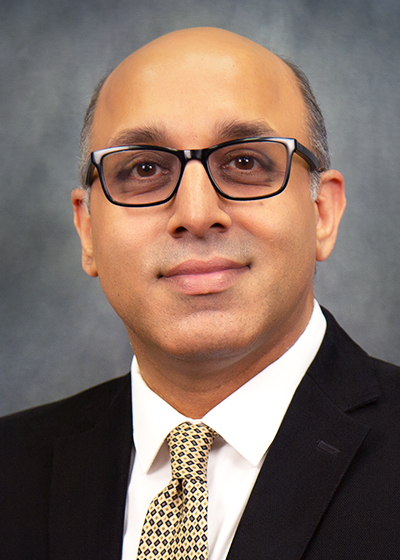
Shahram Rahimi is a Professor and Department Head in the Department of Computer Science at the University of Alabama, College of Engineering. He concurrently holds an Adjunct Professor position at Mississippi State University. His research spans computational intelligence, machine learning, healthcare AI, cybersecurity, and quantum computing. He leads the PATENT Lab, focusing on predictive analytics, decision support systems, and AI-driven healthcare solutions. His educational background includes a Ph.D. in Computer Science. Key research areas include multi-agent systems, generative models, and predictive maintenance. He has served as an editor for journals like Scalable Computing: Practice and Experience and Informatica . Rahimi’s recent work emphasizes secure MLOps, quantum algorithms, and patient-centric medical systems. His publications address challenges in explainable AI, anomaly detection, and healthcare informatics. He actively contributes to conferences and journals in AI, cybersecurity, and computational intelligence. Editorial Roles: Scalable Computing, Engineering Letters, Informatica Labs: Predictive Analytics & Technology Integration (PATENT) Lab Key Focus Areas: Healthcare AI, Quantum Computing, Cybersecurity, Explainable Machine Learning