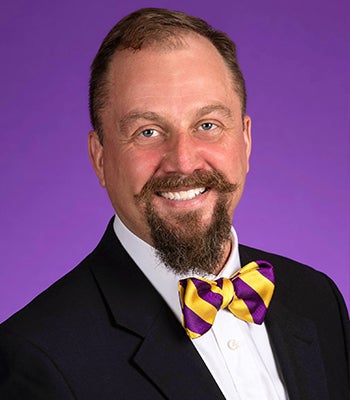
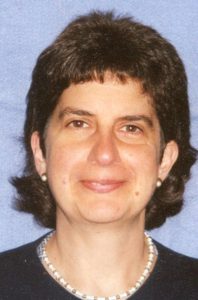
Rose Postma is an Assistant Professor of English and Director of the Academic Enrichment Center at Dordt University. She holds an MFA in Creative Writing (poetry) from the University of Missouri-St. Louis and has taught writing and composition courses while leading academic support services. Her research and creative work bridges poetry, theology, and pedagogy, often exploring themes of spirituality, personal reflection, and interdisciplinary connections. Publications span journals such as Perspectives: A Journal of Reformed Thought , Weber: The Contemporary West , and Valparaiso Poetry Review , reflecting her focus on metaphor, religious narratives, and experiential poetry. Rose's recent courses include Core 120 and Core 180 (online), emphasizing deep reading practices and combating fragmented attention. She advocates for flexible literacy tools like audiobooks and podcasts to enhance student engagement, while reflecting on the cultural and cognitive dimensions of reading.
Marie-Julie Catoir-Brisson is a Lecturer in Design and Communication at Université de Nîmes, where she teaches in the Licence Design, Master Design Innovation Société, Master MEEF, and Master COMPAC programs. She is a permanent member of the PROJEKT research team (EA 7447), the research unit in design and social innovation at Université de Nîmes, and serves as an associate member at MICA (Médiations Informations Communication et Arts – EA4426). Her research focuses on social innovation through design, media and new media, and the uses of digital interfaces and connected objects, analyzed from a critical perspective using semiotics and the anthropology of communication. Current research concerns social and digital innovation in mobile health and care, interaction design, and low-tech design with digital sobriety. She leads the Som'Health research project on connected sleep health objects and has initiated a research program on low-tech design, digital sobriety, and new human-computer interface imaginaries. Her recent publications demonstrate significant contributions to participatory design approaches, ethical frameworks in design, co-design for inclusive transitions, and the application of design methodologies in healthcare contexts. Her work particularly emphasizes digital sobriety, sustainable interaction design, and the development of alternative technology imaginaries that prioritize human-centered approaches over technological determinism. Dr. Catoir-Brisson has served on editorial boards for journals including MEI and Interfaces Numériques, and previously on reading committees for Terminal, Communication, Cygne noir, and Semiotica. She has coordinated special journal issues on screen metamorphoses and the user's place in design. Her teaching encompasses practical courses in service design and video communication, as well as theoretical courses on digital cultures and humanities, communication and project methodology, cultural mediation, and design mediation. She has previously taught at Université Bordeaux-Montaigne and was involved in audiovisual training at ISIC Bordeaux.
Bastian Cheng is a consultant neurologist and Associate Professor at the University Medical Center Hamburg, Department of Neurology. His clinical work focuses on diagnosis and treatment of stroke and cerebrovascular diseases, while his research spans structural and functional brain imaging, lesion-symptom mapping, and network analysis in stroke patients. Cheng's research interests center on the application of advanced neuroimaging techniques to understand stroke pathophysiology and recovery mechanisms. His work investigates structural and functional magnetic resonance imaging in stroke, multimodal approaches to lesion-symptom inference, and modeling of localized and large-scale structural brain networks related to clinical recovery. His research bridges clinical neurology with computational neuroscience to develop better diagnostic and prognostic tools for stroke patients. Analysis of Cheng's recent publication record reveals a strong focus on stroke imaging biomarkers, white matter hyperintensities, and network-based approaches to understanding stroke recovery. His work frequently involves large multicenter trials (WAKE-UP, TENSION) and population-based studies (Hamburg City Health Study), demonstrating his ability to translate basic neuroimaging findings into clinical applications. A notable trend is the increasing use of network neuroscience approaches to understand how structural brain damage translates to functional outcomes. Cheng has been actively involved in major stroke research initiatives, contributing to numerous publications in high-impact journals. His work often involves collaboration with international research teams across Europe, reflecting the collaborative nature of modern stroke research. While specific grant information isn't detailed in the provided text, his participation in large clinical trials suggests significant research funding support. Based at the University Medical Center Hamburg, Cheng appears to be part of a robust neuroimaging and stroke research environment, with connections to the Hamburg City Health Study and multiple European stroke research networks. His work integrates clinical practice with advanced computational approaches to stroke neuroscience.
Daniel Gleason is a Professor of English and current Chair of the English Department at Bryan College in Dayton, Tennessee. He serves as Poet in Residence and has held academic roles since at least 2010, when he defended his dissertation on William Faulkner at the University of Tennessee at Chattanooga. Ph.D. in English from Indiana University of Pennsylvania M.A. in English Literary Study from University of Tennessee, Chattanooga B.A. in English from Bryan College Dr. Gleason's research focuses on 20th-century American Literature, contemporary poetry, and trauma theory. His creative writing explores faith-infused poetics through publications in journals like Rappahannock Review and Dappled Things , often intersecting with religious themes and personal identity. His scholarly work shows strong engagement with Southern literature (Mary Oliver, Natasha Trethewey, William Faulkner), trauma's impact on narrative structure, and theological dimensions in contemporary poetry. Conference presentations at events like Theology on Tap and the Conference on Christianity and Literature demonstrate his interdisciplinary approach. As department chair and Poet in Residence, Dr. Gleason bridges academic leadership with creative practice, having coached soccer and worked in diverse educational settings including public schools and online programs.
Stephanie Menzies serves as an Associate Lecturer and First Year Lead within the School of Education and Tertiary Access at the University of the Sunshine Coast. Her academic profile demonstrates strong commitment to educational innovation through roles spanning primary school teaching, SPELD instruction, and Reading Recovery programs. Her institutional affiliations center on teacher development and student transition support. Her research interests form a cohesive focus on enhancing educational experiences through Play Based Learning across all teaching levels, inclusive pedagogical practices inspired by New Zealand's education system, and the critical balance between academic rigor and student wellbeing. Menzies investigates how teachers mitigate student stress while maintaining performance standards, examines social media's dual role in teacher agency and wellbeing, and explores transformative learning through natural environments. Analysis of her publication timeline reveals increasing focus on systemic educational challenges, particularly teacher-student wellbeing dynamics and institutional pressures. Her collaborative work consistently addresses Australian educational contexts while contributing to international discourse on teacher professionalism. Key recurring themes include the tightrope walk between academic agendas and mental health support, and the philosophical framework of 'respect, rights, and responsibilities' derived from human rights principles. AHE Advanced Higher Education Academy Membership Menzies actively supports first-year student transition through coordinated university activities while maintaining strong connections to classroom teaching realities. Her work with the Teachers of Australia social media campaign demonstrates commitment to elevating the teaching profession's public perception. Current research trajectories indicate growing emphasis on sustainable pedagogical models and teacher resilience strategies within high-pressure educational environments. Her laboratory and team affiliations include the Indigenous and Transcultural Research Centre and collaborative projects with the School of Education, featuring regular partnerships with researchers like Alison Willis and Catherine Thiele on multi-institutional studies examining teacher wellbeing and innovative learning environments.
Professor William Glamore is a leading academic in environmental engineering at the University of New South Wales (UNSW Sydney) , affiliated with the School of Civil and Environmental Engineering and the Water Research Laboratory . With a career spanning three decades since the early 1990s, he has pioneered nature-based solutions for tidal environments , conducting Australia’s first long-term tidal restoration PhD study and leading large-scale mangrove, saltmarsh, and estuarine restoration projects covering thousands of hectares. Research Focus : Blue carbon ecosystems, climate change adaptation in estuaries, surface/groundwater connectivity, PFAS contamination, and hydrodynamic modeling for coastal restoration. Leadership : Co-lead of Project Halo, Chair of PIANC Australia, member of NSW PFAS Expert Panel, and former Chair of the NSW Coastal Council. Scientific Awards include the Churchill Fellowship (2005) Engineers Australia’s Kevin Stark Medal (2007) National Trust of Australia’s Heritage Award (2013) Green Globe Award (2015) Supervision : Joint supervisor for 7 current PhD students, with previous mentorship of 12 PhD graduates and 3 research associates. His funded projects exceed $25 million in Category 1-3 grants.
Prof. Birutė Galdikas is a renowned anthropologist and VMU Honorary Doctor, celebrated for her 50-year dedication to orangutan conservation and environmental advocacy. She established the first orangutan research center in Tanjung Puting National Park, Borneo, and continues fieldwork there. Of Lithuanian descent, she maintains cultural ties to Lithuania, emphasizing its historical bond with nature. Roles: Honorary Doctor at VMU, member of President Valdas Adamkus’ Prize Committee Key Work: Pioneered orangutan behavioral studies, revealed social bonds among semi-solitary primates Conservation Focus: Combats palm oil plantations, illegal logging, and climate impacts on ecosystems Her research highlights orangutan familial relationships and their gaze's introspective qualities, advocating for humanity to emulate their gentle connection to nature. She links Lithuania's pagan heritage to ecological mindfulness, supporting initiatives like Punia Pinewood preservation. Prof. Galdikas promotes 'forest bathing' as mental rejuvenation and critiques Western disconnection from nature. She collaborates with global environmental movements, continuing the legacy of The Trimates alongside Jane Goodall.
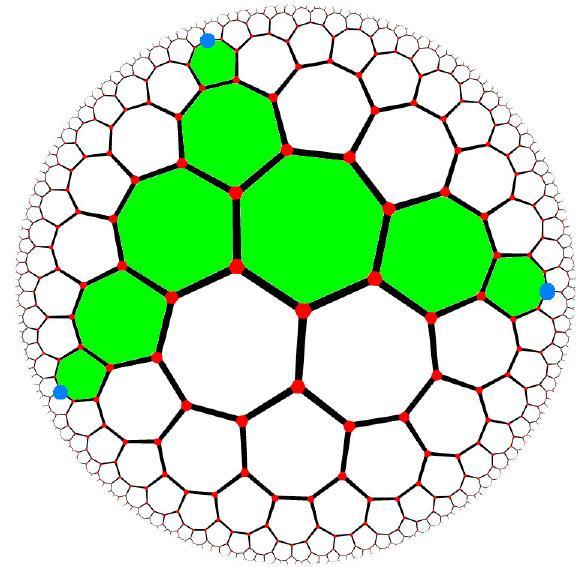
Dr. Eduardo Martínez Pedroza is a Professor in the Department of Mathematics and Statistics at Memorial University of Newfoundland, where he has maintained an active research and teaching career since at least 2011. His academic profile demonstrates sustained contributions to geometric group theory and its connections to geometry and topology. His primary research interests include: Geometric group theory and its applications to geometry and topology Hyperbolic groups and relatively hyperbolic groups Dehn functions and homological Dehn functions CAT(0) groups and non-positively curved cubical complexes Combinatorial games on graphs in relation to coarse geometry Topological data analysis Dr. Martínez Pedroza's recent publications (2023-2025) reveal a continued focus on geometric group theory with increasing emphasis on coarse geometric properties of groups. His work consistently explores quasi-isometry invariants, particularly through the lens of combinatorial games like the Cops and Robber game, and examines structural properties of hyperbolic and relatively hyperbolic groups. A significant portion of his recent research investigates how geometric properties of groups manifest in combinatorial settings, bridging theoretical mathematics with computational aspects. His research has been continuously supported by the Natural Sciences and Engineering Research Council of Canada (NSERC) since 2012, indicating sustained recognition of his contributions to mathematical research. Dr. Martínez Pedroza actively supervises graduate students and has taught a comprehensive range of courses at Memorial University, from undergraduate offerings like Set Theory and Projective Geometry to advanced graduate courses in topology and group theory. His teaching record spans multiple decades, with documented courses from 2011 through the upcoming 2024-2025 academic year.
Bjoern Schelter is a Professor in the School of Natural and Computing Sciences at the University of Aberdeen, affiliated with the Institute for Complex Systems and Mathematical Biology (ICSMB). His research integrates mathematical modeling, nonlinear dynamics, and neuroscience to study brain connectivity and neurodegenerative disorders. His research interests include computational neuroscience, nonlinear time series analysis, network inference, and mathematical biology, with a strong focus on Alzheimer’s disease, Parkinson’s disease, and epilepsy. He applies advanced statistical and dynamical systems methods to analyze neuroimaging and electrophysiological data, aiming to understand disease mechanisms and improve diagnostics. The recent publications reveal a consistent trend in applying network-based and machine learning approaches to clinical neuroscience, particularly in modeling Alzheimer’s progression, evaluating tau-targeting therapies, and refining brain connectivity estimation. His work bridges theoretical modeling with translational applications in neurology. Significant contributions to clinical trials on hydromethylthionine for Alzheimer’s and frontotemporal dementia Development of network inference and adaptive testing methods Patents in neurological assessment technologies He has advised and collaborated with numerous researchers in neuroscience and data science, contributing to both methodological advances and clinical insights. His work is supported by interdisciplinary collaborations across neurology, mathematics, and computational science. Schelter is actively involved in research groups focused on complex systems and biomedical data analysis, contributing to both theoretical frameworks and real-world applications in neurodegenerative disease research.
Dr. Jeffrey Skibins is a Professor in the Department of Recreation and Leisure Studies at East Carolina University (ECU). His research focuses on ecotourism , conservation psychology , and environmental education , particularly examining human-wildlife interaction, visitor behavior, and interpretation effectiveness in zoos, national parks, and virtual wildlife experiences. Department: Recreation and Leisure Studies Email: skibinsj18@ecu.edu Current research themes include: Wildlife Conservation Engagement : Through zoo exhibits, virtual bear cams, and flagship species recognition Interpretation Science : Cross-cultural adaptation of interpretive methods and training effectiveness in Japan Visitor Experience Frameworks : Temporal/spatial management models and technology-mediated nature connections Recent publications explore digital nature experiences , empathy development in zoo visitors, and cross-cultural interpretation . Active research includes projects with the ACE for Wildlife Advisory Board and Connection to Nature Working Group. Dr. Skibins advises graduate students including: Ph.D. candidate Andres Leon-Reyes M.S. candidate Meghan Roberts Undergraduate researcher Chase Webber Research collaborations span wildlife refuges, international training programs, and virtual tourism impact assessments.
Dr. Joann Mossa is Professor of Geography at the University of Florida with affiliate appointments in Geological Sciences and Hydrologic Sciences. Her research focuses on fluvial and coastal geomorphology, including river restoration, flood dynamics, and human impacts on river systems. She directs research on disturbed river systems across the southeastern United States, examining floodplain connectivity, sediment transport, and geomorphic recovery processes. Current projects investigate hydrological drought effects on floodplain disconnectivity and machine learning approaches for predicting riverbed changes. Dr. Mossa has received multiple teaching and advising awards including the College of Liberal Arts and Sciences Advising Award (2012). She has chaired over 28 graduate committees and serves on editorial boards for Physical Geography and Southeastern Geographer. Her field-based research contributes to sustainable river management and restoration.
Xiuping Li is an Associate Professor of Marketing at the National University of Singapore (NUS Business School). She currently serves as Deputy Head of the Marketing Department since January 2023. Her academic career began with a PhD in Marketing from the University of Toronto (2006), preceded by a Master of Management (2001) and Bachelor of Arts (Economics) from Dalian University of Science & Technology (1999). Her research focuses on consumer judgment and decision-making, particularly exploring topics like intertemporal choice, brand evaluation, and the impact of physiological states on consumption. Notable contributions include studies on the effects of social exclusion on advertising persuasion, the role of unpacking in calorie budgeting, and leveraging user-generated content for product promotion. Her work spans prestigious journals such as Journal of Consumer Research , Management Science , and Journal of Marketing Research . Key areas of investigation include consumer behavior under motivational states, cross-cultural marketing dynamics, and the psychological mechanisms behind consumer choices. Xiuping Li has secured research grants from institutions including the National Natural Science Foundation of China and the University Research Committee of the University of Hong Kong, supporting projects on ad choice effects and video advertising effectiveness.
Vera Alexander is a researcher at the Faculty of Arts, affiliated with the Research Centre Arts in Society (AiS). Her work explores interdisciplinary intersections between narrative studies, environmental humanities, and life-writing, focusing on human-plant interactions, garden narratives, and relational ontologies. Active in Anthropocene studies and ecocriticism Contributed to open-access journals and edited volumes Engaged in international academic presentations and public engagements Her research examines how gardens and more-than-human life narratives can foster resilience, transformation, and reconnection during global crises.
Jorge Sepulcre is an Associate Professor of Radiology and Biomedical Imaging at Yale School of Medicine. He holds appointments in the Bioimaging Sciences Center , Interdepartmental Neuroscience Program , and Yale Biomedical Imaging Institute . His research focuses on brain connectivity patterns in neurodegenerative diseases like Alzheimer's and neurodevelopmental conditions such as autism. Education: PhD in Neuroscience (2006) and MD (1999) from University of Navarra His work utilizes multimodal neuroimaging (PET, MRI, connectomics) to investigate tau pathology spreading , amyloid accumulation , and network-level disruptions across conditions. Recent studies examine cerebellar protective roles in aging and 16p11.2 deletion network abnormalities . Key collaborations include researchers like Elisenda Bueichekú , Georges El Fakhri , and Marc Normandin . Publications in Alzheimer's & Dementia , Nature Communications , and Molecular Psychiatry demonstrate his focus on spatiotemporal neuroimaging analysis and network biomarker development .
Johann Chaulet is a CNRS Research Officer permanently affiliated with the Interdisciplinary Laboratory for Solidarity, Societies, Territories (LISST) at the University of Toulouse. He holds a PhD in Sociology from the University of Toulouse (2007) with his thesis titled "La Confiance Médiatisée: La confiance et sa gestion au sein des communications médiatisées." As a permanent researcher, he teaches various sociology courses including "Qualitative methodologies: observation," "Qualitative methodologies: the interview," "Social productions and reproductions," and "Fundamental texts of sociology." Chaulet's research focuses on the sociology of digital technologies, particularly examining mediation, trust, and interpersonal communications in digital contexts. His work spans multiple areas including online communities, gender and digital practices, qualitative research methods, and the social implications of technology use. He has conducted extensive research on electronic writing, online dating platforms, LAN parties, and mobile technology usage patterns, often employing video-ethnographic approaches to capture detailed digital practices. His recent publications (2019-2023) demonstrate continued engagement with contemporary digital sociology topics, particularly examining minority experiences online, gender dynamics in gaming communities, and the nuanced ways people negotiate their digital connections. Chaulet frequently collaborates with researchers across disciplines and countries, reflecting the interdisciplinary nature of digital sociology research. His work consistently analyzes how digital technologies reshape social interactions, identity formation, and community building. As a CNRS researcher, Chaulet participates in various research projects including those funded by ANR (French National Research Agency) such as "Structuring of social worlds" and "Social and Digital Links and (Mobile) Information and Communication Technologies." He has also contributed to public understanding of digital issues through participation in events like the Novela festival of shared knowledge and the Afterwork Objectif News on smartphone dependency. Chaulet is an active member of the LISST laboratory, where he conducts research on digital sociology and contributes to the academic community through teaching, supervision, and collaborative projects. His work bridges theoretical sociology with practical observations of digital life, making significant contributions to understanding how technology mediates contemporary social relations.