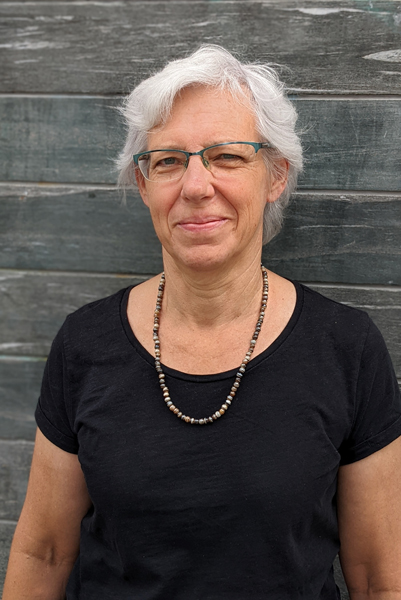
Varvara Arzt is a PreDoc Researcher in the Department of Data Science at TU Wien's Faculty of Informatics. She specializes in Natural Language Processing (NLP), Information Retrieval, and Computational Linguistics. She teaches courses such as Natural Language Processing and Information Extraction, Advanced Information Retrieval, and Innovation. Her research focuses on improving transparency in NLP benchmarks, analyzing biographical data through language models, and exploring digital humanities applications like automated analysis of music lyrics. She leads the project 'Designing an Annotation Framework for Creating a Health Dataset from Layperson Medical Forums in Bahasa Indonesia' funded by the Austrian Exchange Service (OeAD). Her recent publications address critical issues like hallucination detection in text generation models and the generalization limits of language models in relation extraction tasks. She advocates for methodological rigor in benchmark creation and leaderboards. Varvara has no listed scientific awards but actively contributes to academic discourse through peer-reviewed articles and teaching. She coordinates the mentioned projects and collaborates on interdisciplinary research spanning computational linguistics and cultural studies.
Anne Abeillé is a Professor of Linguistics at Université de Paris since 2000, previously holding academic positions at Université Paris 7 (1994-2000) and Université Paris 8 Saint Denis (1991-1994). She is an Ordinary Member of the Academy of Europe (elected 2008) in Linguistic Studies with her primary research base at Laboratoire de Linguistique Formelle (LLF/CNRS). Her research specializes in Natural Language Syntax and Syntactic Theories , with significant contributions to Descriptive Linguistics across multiple languages and Linguistic Resource Development for computational processing. She integrates formal linguistic frameworks with practical syntactic analysis methodologies. Major recognitions include: 1988: Grant J-W Zellidja from the French Academy 1992: Price Pierre Larousse for Language Sciences 1995 & 2007: CNRS Bronze and Silver Medals She maintains active research leadership at LLF but no student advisement or grant details are publicly documented in available sources.
Louise McNally is a Professor of Linguistics at Universitat Pompeu Fabra (UPF) in Barcelona, Spain. She holds a Ph.D. in Linguistics from the University of California, Santa Cruz (1992) and a Postgraduate Diploma in Computational Linguistics from UPF (2002). Her research focuses on semantic/pragmatic theory, morphosyntax-semantics-pragmatics interfaces, and computational semantics, with recent explorations into vector-based and information-theoretic models of meaning. McNally has held senior administrative roles at UPF, including Vice Rector for the Organization and Academic Project (2015–2017), Vice Rector for Faculty Affairs (2011–2015), and Vice Rector for Research (2009–2011). She is co-Editor-in-Chief of Semantics and Pragmatics and affiliated with the Grammar and Cognition Lab and Computational Linguistics and Linguistic Theory groups. Her work bridges formal semantics with experimental perspectives, addressing issues like nominalization, scalar implicatures, and idiomatic expressions. Key honors include the Alexander von Humboldt Research Prize (2017) and multiple ICREA Academia Awards (2008, 2013, 2018). Her publications span theoretical linguistics, computational semantics, and experimental studies, emphasizing cross-disciplinary collaboration.
Maria Rita Manzini is a Full Professor at the Department of Letters and Philosophy, University of Florence (since 2000). She previously held academic positions as Associate Professor (1992-2000) and Lecturer (1984-1990) at University College London's Italian Department and Faculty of Letters, later advancing to Reader and Visiting Professor there (1990-1999). Her affiliations span prestigious institutions including MIT, University of Florence, UCL, and collaborations with international universities like Georgetown, Universidade de Brasilia, and University of Leiden. 1983 Ph.D. in Linguistics and Philosophy from MIT 1979 Diploma from Scuola Normale Superiore, Pisa 1979 Laurea in Lettere (Italian Literature) from Università di Pisa Her research focuses on core areas of theoretical linguistics, particularly syntax, morphosyntax, and parametric variation in Romance and Balkan languages. She investigates grammatical categories, case marking, clitic placement, and syntactic structures across diverse linguistic frameworks. Her recent publications explore topics like DOM datives, middle-passive constructions, and complementizer systems in Romance languages. These works intersect with subfields including generative grammar, linguistic typology, and formal syntax analysis. Research Fellow, Netherlands Institute for Advanced Studies (1990-1991) Postdoctoral Fellow, Center for Cognitive Science, UC Irvine (1983-1984) Manzini has led major Italian PRIN research projects on linguistic categories, recursion, and grammatical features. She served as Editor for Quaderni di Linguistica e Studi Orientali (2015) and held editorial board positions for Rivista di Grammatica Generativa (since 1987) and Language Acquisition (1990-2003). Currently (as of 2012), she directs the Doctoral Programme in Filologie del Medioevo e Rinascimento e Linguistica at the University of Florence.
Sergei Tatevosov is a Professor of Linguistics and Head of the Department of Theoretical and Applied Linguistics at the Faculty of Philology, Lomonosov Moscow State University (MSU). His career spans decades, including roles as Visiting Fulbright Scholar at MIT (2010-2011), Associate Professor, Assistant Professor, and Senior Researcher at MSU. He focuses on theoretical semantics, linguistic typology, and the syntax-semantics interface, with expertise in Turkic, Mongolic, Uralic, and Nakh-Daghestanian languages. Education: Habilitation (Dr. of Sciences) in Philology (2010), dissertation: Actionality in lexicon and grammar , MSU. Ph.D. (Cand. of Sciences) in Philology (1997), dissertation: A typological perspective on quantification in natural language: universal quantifiers , MSU. Diploma in Linguistics with honors (1993), MSU. Research Interests: Formal Semantics, Syntax-Semantics Interface, Linguistic Typology, Theoretical Morphology, Tense & Aspect, Actionality, Evidentiality, Argument Structure, (Anti)causativization, Turkic Languages, Mongolic Languages, Nakh-Daghestanian Languages, Uralic Languages. His work bridges theoretical frameworks with fieldwork on lesser-studied languages, emphasizing cross-linguistic universals and typological variation. Scientific Awards and Honors: Lomonosov Moscow State University Award for Outstanding Scientific Schools (2019-2020). Professor of the Russian Academy of Sciences (2018). Fulbright Visiting Scholar Fellowship (2010). Lomonosov Moscow State University Award for Young Scholars (2007). Association for Linguistic Typology Greenberg Award for best Ph.D thesis (1999). Teaching and Supervision: He teaches graduate and undergraduate courses at MSU, including Theoretical Morphology, Formal Semantics, and Syntax and Semantics of Turkic languages. Over his career, he has supervised 3 Ph.D., 9 M.A., 10 B.A., and approximately 20 diploma papers. He has also taught at international summer schools like the Crete Summer School of Linguistics. Grants and Fieldwork: Tatevosov has led major research projects, including a 2019–2021 Russian Foundation for Basic Research (RFBR) grant on "Syntax and semantics of Uralic and Altaic languages: converging functional-typological and formal perspectives" and a 2016–2018 Russian Science Foundation grant on "Four Grammars of the Languages of Multilingual Russia." He has also received RFBR and Russian Foundation for the Humanities grants since 2002. As principal investigator (1999–present) for MSU's linguistic expeditions, he has conducted fieldwork on Caucasian, Turkic, and Uralic languages since 1990.
Livio Gaeta is a Full Professor of German Language and Linguistics at the University of Turin, Italy. His academic career includes roles such as Associate Professor (2012–2016) and Visiting Professor at Humboldt-University of Berlin (2009–2010). He specializes in contrastive linguistics, theoretical morphology, and the study of linguistic minorities, particularly Walser German dialects. Gaeta holds a PhD in Linguistics from the University of Rome Three (1998). Educational Background: PhD in Linguistics, University of Rome Three (1998); Guest Researcher at the Center for General Linguistics, Berlin (1998–1999). His research focuses on morphological theory, language contact in Alpine regions, and the documentation of minority languages. Notable projects include CLiMAlp (PRIN 2020–2024) and ArchiWals (PRIN 2017–2020), which digitize and preserve Walser linguistic heritage. Gaeta has authored monographs like Lineamenti di grammatica tedesca (2017) and edited volumes on German linguistics. His awards include the Alexander von Humboldt Research Grant (2009) and Fellowship (2010), and he served as President of the Societas Linguistica Europaea (2025). Key research themes include grammaticalization, derivational paradigms, and the interplay between syntax and morphology.
Asifa Majid is a Professor of Cognitive Science at the University of Oxford's Department of Experimental Psychology. She holds affiliated positions at the Max Planck Institute for Psycholinguistics and the Donders Institute for Brain, Cognition, and Behaviour. Her research focuses on language, cognition, and cross-cultural variation in semantic categories. Majid has held senior roles at the University of York and Radboud University Nijmegen. Education: PhD in Psychology (2001), University of Glasgow MSc in Cognitive Science and Natural Language (1997), University of Edinburgh MA (Hons) First Class in Psychology with Philosophy (1996), University of Glasgow Research Interests: Majid investigates how language shapes thought, with particular attention to cross-linguistic comparisons of semantic categories (e.g., color, olfaction, action verbs). Her work combines experimental psychology, field linguistics, and anthropological methods to explore cognitive diversity across cultures. She has conducted extensive fieldwork with Jahai (Malaysia) and Punjabi (Pakistan) communities. Awards & Grants: NWO Vici (2012–2017): €1.5M for innovative research leadership NWO Gravitation Program (2013–2023): €27.6M national consortium PI Swedish Collegium for Advanced Study Fellowship (2012) Professional Activities: She has held visiting roles at institutions including Columbia University, University of Massachusetts, and Max Planck Institutes. Her lab collaborates internationally on projects like the Hunter-Gatherers and Semantic Categories workshop (2010).
Attila Németh is a Professor of German Linguistics and Language Didactics at the University of Teacher Education Upper Austria, affiliated with the Department of Languages, Literatures, and Cultures (German Studies). His academic trajectory includes extensive research in language variation, dialectology, and cross-cultural communication, with a geographical focus on Hungarian-German linguistic communities. Education: PhD in German Linguistics (Sociolinguistics/Dialectology) from the University of Szeged (2009) Doctoral studies in German Linguistics at the University of Szeged (2001–2004) Interpreter and Translator training at the University of Szeged (2000–2001) MA in Hungarian and German Studies at the University of Szeged (1995–2001) Research Focus: Németh's work investigates the interplay between language contact, sociolinguistic attitudes, and educational applications. Key areas include dialect preservation in minority communities, morphosyntactic complexity in bilingual contexts, and pedagogical strategies for grammar instruction. His research consistently addresses the dynamics of German dialects in Hungary, emphasizing textbook design and language policy implications. Publication Trends: His articles predominantly explore sociolinguistic and contact-linguistic phenomena, with recurring themes of language simplification, bilingual normativity, and dialect erosion. Methodologically, they blend empirical fieldwork with theoretical frameworks, often focusing on Hungarian-German communities to analyze broader patterns of language change and identity. Professional Activities: He co-edited the Zeitschrift für Mitteleuropäische Germanistik (2011–2016) and contributed to DAAD-supported projects like Intercultural Relations within and beyond Borders (2008–2009). Earlier roles include editorial work for academic journals and research coordination at the Pannonian University.
Sigrid Beck serves as Professor of Theoretical and Descriptive English Linguistics at the University of Tübingen's Faculty of Philosophy since 2005, with prior appointments including Associate Professor at University of Connecticut and Junior Professor at Universität Potsdam. Her international engagements include Visiting Professorships at MIT and University of Canterbury. Educational background: PhD in Linguistics, Universität Tübingen (1997), "summa cum laude" (Dissertation: "Wh-constructions and transparent Logical Form") Habilitation, Johann-Wolfgang-Goethe-Universität Frankfurt (2003) (Thesis: "Pluralities and Comparisons") Masters in Linguistics with distinction, Eberhard-Karls-Universität Tübingen (1993) Beck's research pioneers formal approaches to meaning construction across languages, with signature contributions to: Theoretical frameworks for semantics-pragmatics interactions Diachronic evolution of semantic structures Crosslinguistic analysis of focus and presupposition Syntactic constraints on semantic interpretation Her methodology integrates formal theory with empirical cross-linguistic data to resolve foundational questions in meaning representation. Major recognitions: Academy of Europe membership (2022) Heinz-Maier-Leibnitz-Preis for doctoral work (1997) Oxford Visiting Fellowship at Magdalen College (2022) As principal investigator, Beck secured substantial DFG funding including the 12-year Collaborative Research Center SFB 833 'Construction of Meaning' (2009-2021) where she directed projects on crosslinguistic semantics and context reconstruction, plus XPRAG network leadership for experimental pragmatics research (2014-2020). Her grant portfolio demonstrates sustained leadership in coordinating large-scale interdisciplinary teams. She directs the 'Construction of Meaning' research consortium within the English Linguistics section, fostering collaboration between theoretical linguists, experimental researchers, and computational modelers to advance semantic theory through empirical validation.
Martin Tappler is a Postdoctoral Researcher in the Cyber-Physical Systems group at TU Wien's Faculty of Informatics. His work focuses on formal methods, scalable testing for AI systems, and NLP model interpretability. Publications include studies on generative automata models, importance-driven testing for reinforcement learning, and semantic analysis of RNNs. He contributes to the TAIGER project (2023-2027) on AI-driven systems.
Dag Trygve Truslew Haug is a Professor of Linguistics and Greek/Latin at the University of Oslo, affiliated with the Faculty of Humanities and the Department of Classics. He holds concurrent roles as a Professor of Linguistics and has served as a Visiting Professor at the University of Oxford. His academic journey includes degrees from the University of Oslo: Cand. mag. (1996), Cand. phil. (1998), and Dr.art. (2001) in Ancient Greek linguistics. Haug’s research focuses on corpus linguistics, syntactic theory, formal semantics, and Indo-European languages, with significant contributions to computational linguistics and historical linguistics. He leads projects like the DAMOS database for Mycenaean studies and the PROIEL treebank for early Indo-European texts. His awards include membership in the Norwegian Academy of Science and Letters (2016) and the HM King of Norway's Gold Medal for Young Scholars (2002). Haug is actively involved in teaching Greek, Latin, and comparative Indo-European linguistics, and serves on curriculum committees for these disciplines. His research groups include Digital Humanities, Grammar and Meaning, and Language Change. Key areas of innovation involve integrating formal semantics with dependency grammar and developing computational tools for analyzing ancient languages.
Univ.-Prof. Dr. Günther Specht is a faculty member in the Department of Computer Science at Universität Innsbruck. His research focuses on machine learning, data mining, and their applications in recommendation systems, music information retrieval, and authorship attribution. He has contributed to projects such as HPT4Rec (a hyperparameter optimization framework for recommenders) and Cloudgene (a cloud computing tool for biomedical pipelines). His work spans database systems, text analysis, and social media analytics. Notable tools include HaploGrep 2 (for mitochondrial DNA analysis) and StyleExplorer (for textual style visualization). Key research areas include: (1) Developing algorithms for music popularity prediction and playlist analysis; (2) Enhancing authorship attribution techniques using grammar profiling and syntax tree analysis; (3) Designing efficient database index structures like Height Optimized Tries; and (4) Investigating ethical aspects of recommendation systems and plagiarism detection. Publications from 2020-2024 highlight advancements in cross-domain text classification, social media behavior analysis, and automated music genre recognition. His work bridges traditional statistical methods with modern machine learning, emphasizing practical applications in both academic and industry contexts.
Ilia Afanasev is a linguist affiliated with the School of Linguistics at the Columbia Society and the Institute of Slavic Studies. He holds a BA and MA in Philology and Cultural Studies. Research Interests: His work focuses on computational analysis of Slavic languages, particularly East Slavic dialects and Ukrainian grammar. He applies corpus-based methods to study language structures and historical evolution. Scientific Contributions: Recent publications highlight automated detection of Swadesh list items and development of Ukrainian Universal Dependencies frameworks. 2023: Research Fellowship recipient 2023: Seed Grant awardee
Jonathan Ginzburg is a Professor of Linguistics at the University of Paris, holding a position in the Faculty of Anglophone Studies and the Laboratoire Linguistique Formelle (LLF), a research laboratory under the French National Center for Scientific Research (CNRS). He has been at the University of Paris since 2010, achieving exceptional class professor status in 2020, which represents the highest academic rank in the French system. Prior to this, he served as a Senior Lecturer in the Department of Computer Science at King's College London from 2000 to 2010. His academic journey includes: Habilitation á diriger des recherches, University of Paris 7 (2003) Ph.D. in Linguistics, Stanford University (1987-1992) B.S. in Mathematics (Cum Laude), Hebrew University of Jerusalem, Israel (1985-1987) Ginzburg's research spans multiple interconnected domains within linguistics and cognitive science. His work fundamentally explores how language functions in interactive contexts, with particular emphasis on dialogue structures and pragmatic phenomena. He investigates how laughter and gestures function as linguistic elements within conversation, examining language acquisition processes with focus on question comprehension and development. His theoretical contributions to formal semantics and pragmatics have reshaped understanding of interrogatives and clarification sequences. Through computational linguistics approaches, he develops models that capture the dynamic nature of dialogue, bridging theoretical linguistics with practical applications in dialogue systems. His research integrates empirical data from cross-linguistic studies with formal theoretical frameworks to create comprehensive models of human interaction. Ginzburg's publication record demonstrates a consistent focus on dialogue and interactive language use, with recent work increasingly examining non-verbal elements like laughter as integral components of linguistic communication. His research shows strong continuity in investigating questions and clarification phenomena while expanding into multimodal communication analysis. The cross-linguistic dimension of his work has grown over time, incorporating data from diverse languages to build more universal models of dialogue. His notable recognitions include: Senior Member of the Institut Universitaire de France (2016-2021) Visiting Scholar at Laboratoire de Linguistique Formelle, CNRS Paris (2011-2012) Senior Visitor for EU FP6 Project on Dealing With Uncertainty in Dialogue (2006-2007) Allon Fellowship from the Israeli Inter-University Planning and Budget Committee (1996-1999) Ginzburg has supervised 10 PhD students (7 graduated, 4 in progress) and 4 postdoctoral researchers, with several advisees now holding prominent academic positions. His successful grant acquisition includes the €400,000 DUEL project on "Disfluencies, Exclamations and Laughter in Dialogue" funded by ANR and DFG (2014-2017), and his coordination of three projects within the Laboratory of Excellence LabEx-EFL since 2011. His editorial leadership as Associate Editor of Dialogue and Discourse and Co-Editor of Cambridge Elements in Semantics demonstrates his significant contribution to scholarly communication in his field. As a key figure in the Laboratoire Linguistique Formelle (LLF), Ginzburg leads research on interactive language use, directing projects that investigate dialogue modeling, non-sentential utterances across the lifespan, and laughter in communication. His work connects theoretical linguistics with practical applications through collaborations with researchers across Europe, particularly within the LabEx-EFL network and through international projects like DUEL with Bielefeld University.
Norbert Corver is a Professor of Dutch Linguistics at the Department of Languages, Literature and Communication, Utrecht University. He has held visiting professorships at the Department of Linguistics, University of Connecticut (2018-2019) and previously served as an Assistant Professor at the Faculty of Arts, Tilburg University (1990-2000). His research focuses on syntactic theory, cross-linguistic variation, and the structural encoding of affective information in human language. Education: PhD in Linguistics (1990) and MA/BA in Linguistics (1985) from Tilburg University. Corver’s work examines the invariant core of natural language syntax, dialectal diversity in Dutch, and the modular properties of adverbials. He is currently leading the NWO-funded project "Mind your Manner Adverbials!" (2021-2025). His research also explores idioms, adjective phrases, and curse expressions as structured linguistic units. Scientific Awards: Fellow, Netherlands Institute for Advanced Studies (1996-1997) Visiting Scholar, MIT Linguistics and Philosophy Department (1988, 2009, 2016) He has held leadership roles including Head of the Dutch Department at Utrecht University (2005-2009, 2017-2021), Director of the national MA program Masterlanguage (2013-2018), and Chairperson of the Van Riemsdijk Foundation (2021-present). His editorial contributions include co-editing the Studies in Generative Grammar series (2014-present) and Comprehensive Grammar Resources (2020-present).