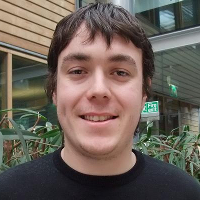
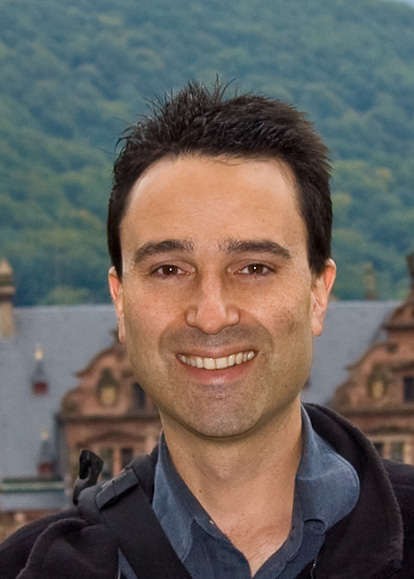
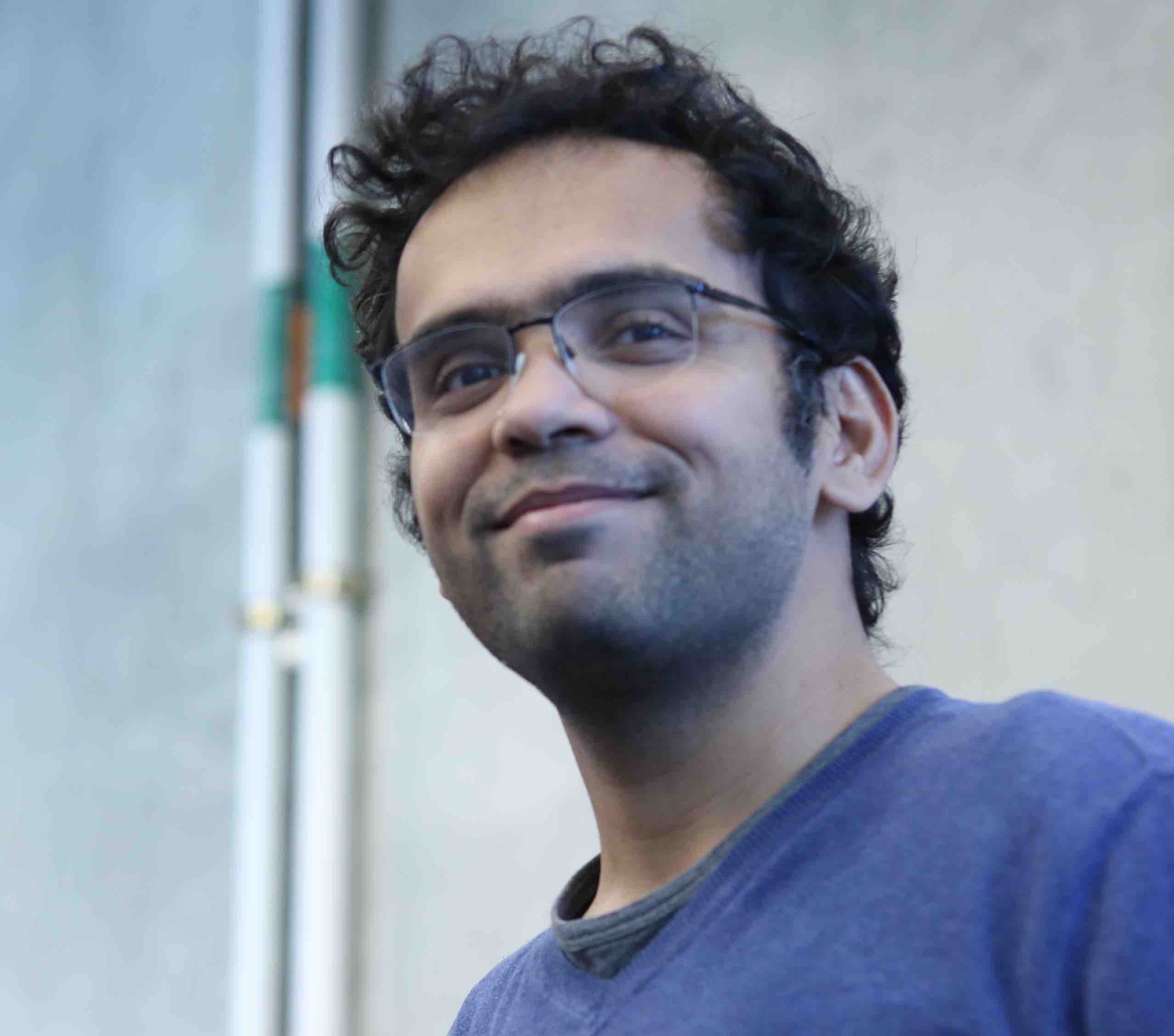
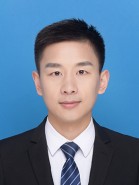
Dr. Damiano Spina is a Senior Lecturer at RMIT University's School of Computing Technologies, specializing in Information Retrieval (IR), Text Analytics, and Human-AI Interaction. He leads research on fairness-aware evaluation, interactive search systems, and conversational AI. His work includes the Walert chatbot, EXIST projects on sexism detection, and contributions to the Australian Internet Observatory. Research interests span IR evaluation, voice-enabled assistants, and ethics in AI. Awards include an ARC DECRA (2020-2023) and RMIT's Research Impact Award (2021). He supervises PhD/Master’s students on topics like neurophysiological approaches to IR and misinformation detection. Teaching includes Capoeira and Samba, reflecting his commitment to cultural engagement. Key affiliations include the ARC Centre of Excellence for Automated Decision-Making and Society (ADM+S) and the International Panel on the Information Environment (IPIE).
Dr. John H. Drake is an Associate Professor in Computer Science at the University of Leicester, affiliated with the School of Computing and Mathematical Sciences. His research focuses on metaheuristic and evolutionary computation methods, particularly in solving real-world optimization problems such as scheduling, routing, and combinatorial optimization. He has contributed to advancements in hyper-heuristics, memetic algorithms, and selection mechanisms within evolutionary computation frameworks. Dr. Drake's work spans applications in workforce scheduling, vehicle routing, and network design optimization. His research emphasizes cross-domain applicability of heuristic methods and the integration of machine learning techniques like reinforcement learning and neural networks into optimization processes. He has collaborated extensively with researchers in operational research and computer science, publishing widely in top-tier journals and conferences. Key areas of contribution include algorithm design, optimization under uncertainty, and the development of adaptive search strategies. His publications highlight innovations in both theoretical foundations and practical implementations of computational intelligence methods.
Professor Vladimir Zadorozhny is a faculty member at the University of Pittsburgh's School of Computing and Information, holding a PhD from the Institute for Problems of Informatics, Russian Academy of Sciences. His roles include Adjunct Professor at the University of Agder, Norway, and Core Faculty in Pitt's Biomedical Informatics Training Program. He leads projects in data science, medical informatics, and social inequality analysis, funded by NSF, NIH, and others. His research focuses on networked information systems, data fusion for medical and societal challenges, and scalable architectures. Education: PhD, Russian Academy of Sciences (Moscow) Research emphasizes historical data integration (e.g., CHIA project), medical decision-making (PREDICT initiative), and causal reasoning systems (CaReLearner). Awards include the Fulbright Scholarship and Leiv Eiriksson Fellowship. His work spans 100+ peer-reviewed articles, with recent contributions in Tsetlin Machine applications, fake news detection, and IoT credibility frameworks. Labs include the Center for Artificial Intelligence Research (CAIR) and ADMT Lab. Grants include NIH-funded cardiac arrest recovery prediction and NSF-funded horizontal inequality analysis. Collaborations span biomedical, engineering, and social science domains.
Ali Shariq Imran is an Associate Professor at the Department of Computer Science, Norwegian University of Science and Technology (NTNU), within the Faculty of Information Technology and Electrical Engineering. He holds a Ph.D. from the University of Oslo and a Master's from NUST, Pakistan. His research focuses on deep learning applications in speech analysis, image/video processing, semantic web technologies, and eLearning. He has published extensively in journals like IEEE Access, Engineering Applications of Artificial Intelligence, and Frontiers in Computational Neuroscience, with notable work on hate speech detection, biomedical signal analysis, and sentiment analysis in social media contexts. His awards include the HEC and UIUC scholarships and a 2015 Best Paper Award at HCI Intl. He serves on the board of the HCI International Conference and is an IEEE member. Teaching includes courses on coding/compression, software engineering, and web development. His competencies span AI, digital signal processing, and multimedia systems. Research interests include contextual understanding, OCR, and object identification in multimedia, alongside eLearning innovations like MOOCs and LMS integration. He has co-edited special issues on healthcare systems and software standards in journals like JMIHI and IEEE Access. His work frequently employs explainable AI (XAI) to enhance transparency in medical diagnostics and social media analysis.
Jeffrey A. Bilmes is a Professor in the Department of Electrical and Computer Engineering at the University of Washington, Seattle, with adjunct roles in Computer Science & Engineering and Linguistics. He founded the MELODI Lab, focusing on machine learning, optimization, and data interpretation. Bilmes holds a Ph.D. from UC Berkeley and a Master's from MIT. His research spans graphical models, speech recognition, bioinformatics, and submodular optimization, with notable contributions like the GMTK toolkit and pioneering work in submodularity. He has received prestigious awards including the NSF Career Award (2001), NAE Gilbreth Lectureship (2008), and best paper awards at ICML/NIPS (2013). Bilmes has held leadership roles in UAI and NeurIPS conferences, and his work bridges theoretical foundations with practical applications in computational systems and human-computer interaction. Education: Ph.D., Computer Science, UC Berkeley; M.S., MIT. Research Interests: Machine learning, temporal graphical models, submodularity, speech interfaces, and algorithmic optimization. His work on submodular functions has been recognized with multiple awards, including the 25-year ICS award for his 1997 matrix optimization research. He actively contributes to academic service through conference organization and editorial roles at JMLR. The MELODI Lab develops cutting-edge tools like GMTK, PhiPAC, and Vocal Joystick for real-world applications. Recent Activities: Invited lectures at Yale (2016), Harvard (2015), and IIT Bombay. Co-organized NIPS workshops on discrete optimization (2013–2016). Authored influential papers on submodular optimization, semi-supervised learning, and parallel computing. Current research emphasizes submodular applications in large-scale data management and distributed systems.
Loo Junn Yong is a Lecturer at the Malaysia School of Information Technology, Monash University, specializing in artificial intelligence, machine learning, and autonomous systems. His research focuses on applying advanced algorithms to real-world challenges in robotics, brain network analysis, and traffic safety. He leads projects such as 'Efficient and Interpretable Multi-view Deformable Transformer with 3D Position Embeddings and Intelligent Queries for Autonomous Driving' and collaborates on ASEAN NCAP assessment protocols for vehicle safety. His work spans generative models, trajectory prediction, and ethical decision-making in autonomous systems. Notable contributions include frameworks for brain disorder identification using dynamic graph representation and energy-efficient trajectory planning for electric vehicles. He actively publishes in top conferences like IJCAI and IEEE SMC. His research aligns with UN SDGs through innovations in sustainable transport and health diagnostics.
Sanjiban Choudhury is an Assistant Professor at Cornell University's Ann S. Bowers College of Computing and Information Science and a Machine Learning Researcher at Aurora. He leads the PoRTaL group, focusing on interactive AI agents that self-align through few-shot human interactions. His research emphasizes reinforcement learning (RLHF), imitation learning (IRL), and foundation models for robotics, planning, and code generation. Key achievements include receiving the 2025 ONR Young Investigator Award for multistep robot task learning, the OpenAI Superalignment Award (2024), and a Google Research Award for LLM-based planning. His group develops modular robotics foundation models (MOSAIC), earning best paper awards at ICRA 2024 workshops. Research projects aim to bridge AI language models with robotic execution, enabling robots to interpret manuals/videos and perform complex tasks like engine repairs in hazardous environments. Lab members include doctoral students Gonzalo Gonzalez, Yuki Wang, Kushal Kedia, and master’s student Prithwish Dan. Ongoing work focuses on task super-alignment, human-robot transfer learning, and open-source training models for the robotics community. Current funding supports developing robots capable of fluid, multi-step tasks through integrated AI systems.
Özgür Ulusoy is a Professor of Computer Engineering at Bilkent University, Turkey. He has held academic positions since 1993, including Assistant Professor (1993–2003) and Associate Professor (1998–2003) before becoming a full Professor in 2003. He earned his Ph.D. in Computer Science from the University of Illinois at Urbana-Champaign in 1992, following an M.S. (1988) and B.S. (1986) in Computer Engineering from Bilkent University and Middle East Technical University, respectively. His research focuses on web search engines, text-to-SQL systems, social network analysis, multimedia databases, and wireless/mobile systems. Notable projects include developing domain-specific web portals, optimizing query result caching, and exploring semantic relationships for search engine efficiency. He has directed over 20 sponsored projects funded by TÜBITAK, EU, and international collaborations, involving topics like data mining in mobile networks and real-time database scheduling. Ulusoy’s work bridges theoretical contributions with practical implementations, including prototyping video database systems and educational search engines. His research often emphasizes scalability, efficiency, and user-centric design. He has advised graduate students such as Arif Usta and Akifhan Karakayalı. His team’s contributions span algorithm development, system prototyping, and interdisciplinary applications in multimedia, social networks, and cloud computing. Key grants include projects on information retrieval paradigms in SQL translation (TÜBITAK, 2019–2021), refreshment strategies for web search caching (TÜBITAK, 2010–2011), and semantic relationships in search engines (TÜBITAK, 2008–2010). His recent work addresses challenges in IoT sensor networks, cloud resource scheduling, and mitigating misinformation in online platforms.
Dr. Yi Ava Wu is a ZJU100 Young Professor at the School of Management, Zhejiang University, where she serves as a doctoral supervisor. Her research focuses on Financial Accounting, Financial Analysis, Integrated Reporting, and Audit Quality. She is based in Hangzhou, China, and can be contacted at avayi_wu@zju.edu.cn. Her work bridges accounting practices, regulatory frameworks, and organizational behavior, with recent studies examining auditor litigation risk, analyst behavior, and the impact of integrated reporting on corporate strategy. Education details are not explicitly provided, but her role as a doctoral supervisor suggests advanced academic credentials in accounting or finance. Her research emphasizes empirical studies on market efficiency, regulatory effectiveness, and the application of technology in education and healthcare, as seen in her work on automated feedback systems and mobile healthcare surveillance. Publications highlight trends in audit quality evaluation, analyst decision-making under regulatory changes, and cross-disciplinary innovations in information systems. While no awards are noted, her prolific output across accounting, finance, and technology underscores her contributions to multiple academic domains. She advises doctoral students and has engaged in diverse research collaborations spanning both theoretical and applied fields.
Walid Gaaloul is a Professor at Télécom SudParis, part of the Institut Polytechnique de Paris (IP Paris) and Institut Mines Télécom. He serves as Deputy Director of the SAMOVAR research laboratory and leads the ACMES research team. He is also a member of the DIEGO group within the Computer Science Department at Télécom SudParis. Previously, he was a researcher at the Digital Enterprise Research Institute (DERI) and an adjunct lecturer at the National University of Ireland, Galway (NUIG). He holds an M.S. (2002) and Ph.D. (2006) in Computer Science from the University of Lorraine, France, and a habilitation (2014) from Pierre et Marie Curie University, Paris. His research focuses on Business Process Management, Process Mining, Cloud Computing, and Service-Oriented Computing. He has authored over 200 publications in these domains and actively contributes to international conferences and journals as a reviewer and committee member. His work spans topics like cloud resource allocation, process discovery from emails, IoT service optimization, and blockchain-based process execution. His articles explore cutting-edge topics such as energy-efficient IoT service migration, trustworthy decentralized auctions, and formal verification of edge service monitoring. He collaborates on national and European projects addressing cyber-physical systems and distributed cloud-edge infrastructures.
Professor Danilo Gligoroski is affiliated with the Norwegian University of Science and Technology (NTNU) under the Department of Information Security and Communication Technology. His work bridges cryptography, blockchain technology, and 5G network security, with a focus on decentralized systems and privacy-preserving protocols. Key research trends in his recent publications include blockchain applications in healthcare and reseller markets, verifiable delay functions for consensus mechanisms, and cryptographic frameworks for chat-based systems. He explores data integrity, network coding, and scalable storage solutions for blockchain ecosystems. Major collaborations include co-authors like Mayank Raikwar, Katina Kralevska, and Anton Karl Oskar Hasselgren. His work often intersects with GDPR compliance, network slice isolation, and secure service implementation in modern telecommunications.
Jedidiah McClurg is an Assistant Professor in the Department of Computer Science at Colorado State University, with prior faculty appointments at Colorado School of Mines and the University of New Mexico. He received his Ph.D. in Computer Science from the University of Colorado Boulder in 2018, where he was a member of the CUPLV research group under the supervision of Pavol Cerny. His research focuses on programming languages, program synthesis, verification, and their applications in networking, compilers, and distributed systems. His educational background includes an M.S. in Computer Science from Northwestern University (2013) and a B.S. in Electrical Engineering from the University of Iowa (2009). He has completed internships at Microsoft Research (RiSE Group, 2014) and Rockwell Collins (2011, 2013, 2004). McClurg’s research interests include programming languages, formal verification, software synthesis, software-defined networking, compilers, and system security. His work aims to develop tools and techniques that help programmers write more secure, reliable, and efficient code, especially in safety-critical domains. He has led multiple NSF-funded projects, including FMitF and CRII grants, totaling over $1 million in funding. His recent publications span high-impact venues such as PLDI, CAV, DISC, and SOSR, with topics ranging from neural network optimization and regular expression synthesis to network program verification and FEC code generation. These works reflect a consistent trend toward automating correctness, improving performance, and enabling scalable solutions in systems and networking. NSF CRII: SHF: Foundations for Stateful Network Programming ($175,000) NSF FMitF: Game Theoretic Updates for Network & Cloud Functions ($355,000 for him) NSF FMitF: Robust Enforcement of Customizable Resource Constraints ($250,000 for him) NSF GRFP (awarded to student Lauren Baker) He has advised multiple graduate and undergraduate students, many of whom have secured positions at leading tech companies such as Google, Apple, and Amazon. He is actively involved in academic service, having served on program committees for PLDI, SOSR, CAV, and others, and as a reviewer for journals like IEEE/ACM Transactions on Networking (ToN) and ACM Transactions on Software Engineering (TSE). He also contributes to open-source research via GitHub and maintains a strong online academic presence.
Jin-Dong Kim is a Project Associate Professor at the Database Center for Life Science (DBCLS) , part of the Research Organization of Information and Systems (ROIS) . His work bridges Natural Language Processing and Bioinformatics through innovative projects like PubAnnotation and LODQA. Research focus: Biomedical text mining and knowledge base construction Key projects: OntoFinder, OntoCloud, and DialoQ systems Leadership roles: Convener of ISO TC37 SC4 WG1 on language resources Email: jdkim@dbcls.rois.ac.jp Kim's research interests span NLP , Bioinformatics , and Semantic Web technologies. His recent publications emphasize semantic interoperability , biomedical event extraction , and ontology-driven data integration . Community contributions include: Area Chair, ACL 2023 Resources and Evaluation track Chair, COLING 2024 Ethics Committee Editorial Board member for multiple journals including Journal of Language Resources and Evaluation His work has advanced question-answering systems , annotation frameworks , and biomedical knowledge graph construction through collaborative initiatives like the BioHackathon series.
Guoray Cai is an Associate Professor in the College of Information Sciences and Technology at Pennsylvania State University, where he researches human-centered geospatial systems with applications in crisis management and democratic processes. Research Expertise His core work integrates: Geographic Information Systems (GIS) and spatial data infrastructure Human-Computer Interaction (HCI) for multimodal interfaces Geocollaboration frameworks for group decision-making Visual analytics in crisis response scenarios Spoken dialogue systems for geospatial databases He pioneers natural interaction techniques using large displays and conversational interfaces to enhance spatial reasoning in collaborative environments. Publication Evolution His 15-year publication trajectory (2005-2023) shows consistent innovation in human-GIS interaction, evolving from foundational crisis management geocollaboration (2005-2006) through spatial annotation for public deliberation (2007-2009) to contemporary work on point cloud semantics (2023) and topic model curation (2018). Recurring themes include situation awareness, multimodal interfaces, and democratic decision-making support, with methodological emphasis on Bayesian networks, visual analytics, and natural language processing.
Dr. Yapeng Tian is an Assistant Professor in the Computer Science Department within the Erik Jonsson School of Engineering and Computer Science at The University of Texas at Dallas. He leads the Computer Vision and Multimodal Computing (CVMC) Lab, where his research focuses on solving core problems in computer vision, computer audition, and machine learning with applications to multisensory perception, computational photography, AR/VR, accessibility, and healthcare. Dr. Tian received his PhD in Computer Science from the University of Rochester in 2022, Master's in Electronic Engineering from Tsinghua University in 2017, and Bachelor's in Electronic Engineering from Xidian University in 2013. Prior to joining UT Dallas, he completed research internships at Facebook and Adobe Research, and served as a Research Assistant at both University of Rochester and Tsinghua University. His research interests span audio-visual scene understanding, audio-visual scene generation, AI for accessibility and healthcare, and image/video processing. He has made significant contributions to multimodal learning, particularly in audio-visual integration, where his work has been recognized with numerous awards including the Amazon Research Award, Cisco Faculty Research Award, and AAAI New Faculty Highlights. Analysis of his recent publications reveals a strong focus on diffusion models for multimodal generation, audio-visual learning, accessibility applications, and efficient multimodal processing. His work increasingly integrates healthcare applications, particularly in autism assessment and assistive technologies for people with disabilities. Key awards and recognitions: Amazon Research Award [2024] UIST Belonging & Inclusion Best Paper Award [2024] ACCV Best Paper Honorable Mention Award [2024] IEEE ISMAR IDEATExR workshop Best Paper Award [2024] Cisco Faculty Research Award [2023] AAAI New Faculty Highlights [2023] Dr. Tian actively mentors students at multiple levels, including PhD candidates, undergraduate researchers, and even K-12 students through outreach programs. His lab has secured significant grant funding including an NIH R01 grant and an Amazon Research Award. Current research directions include developing AI/AR-assisted vision for people with low vision and creating tools for kitchen accessibility through wearable AR.