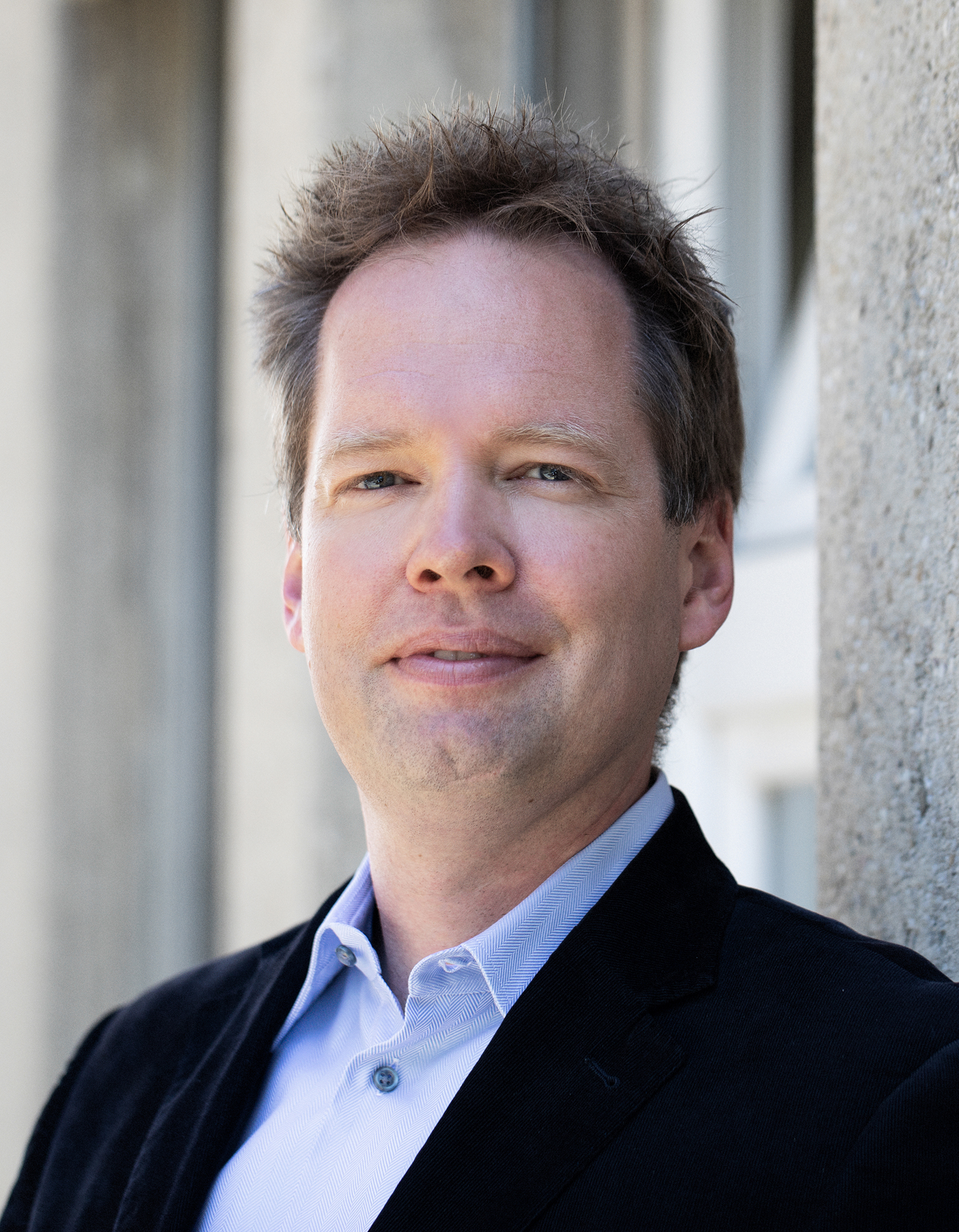
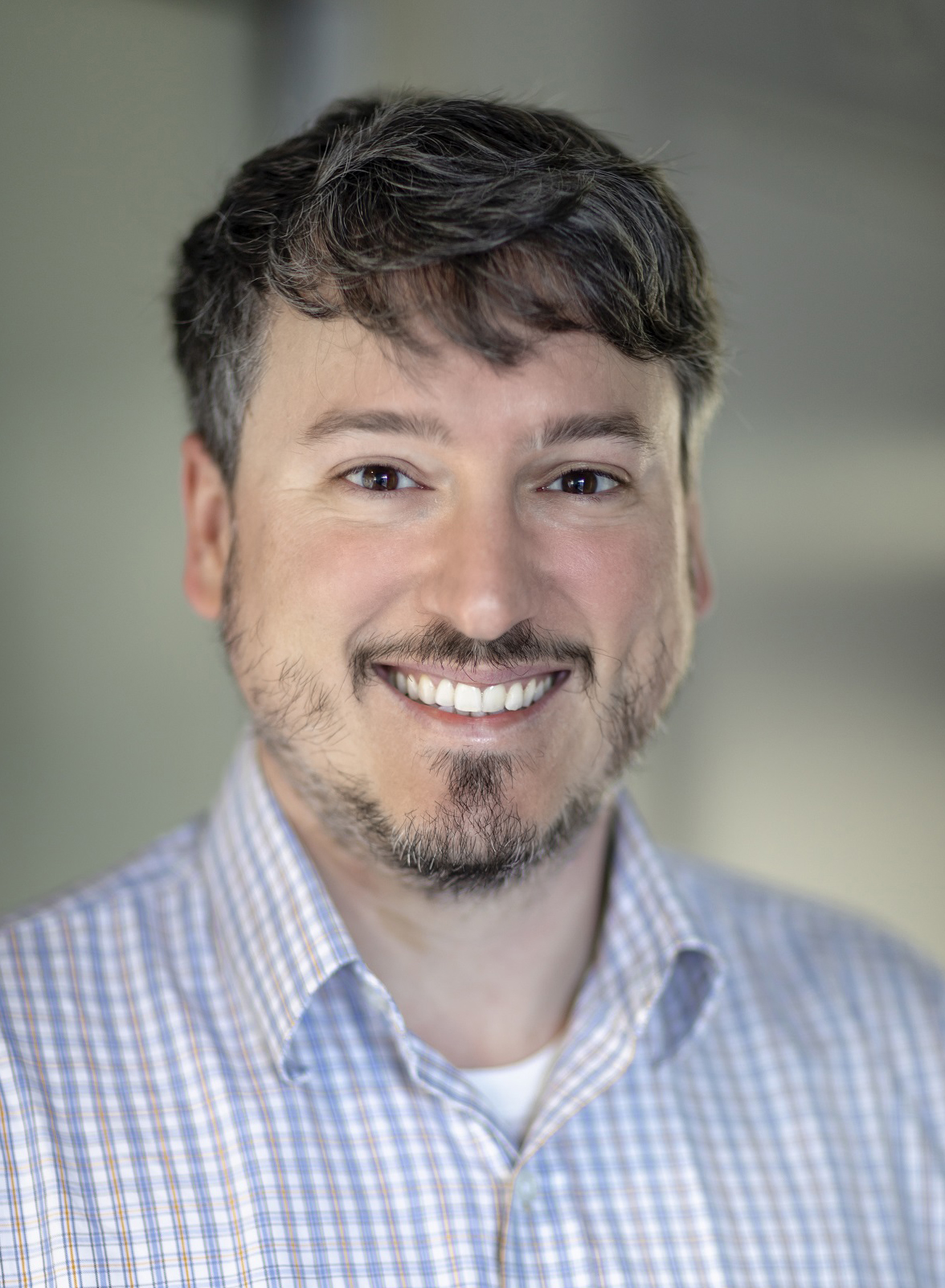
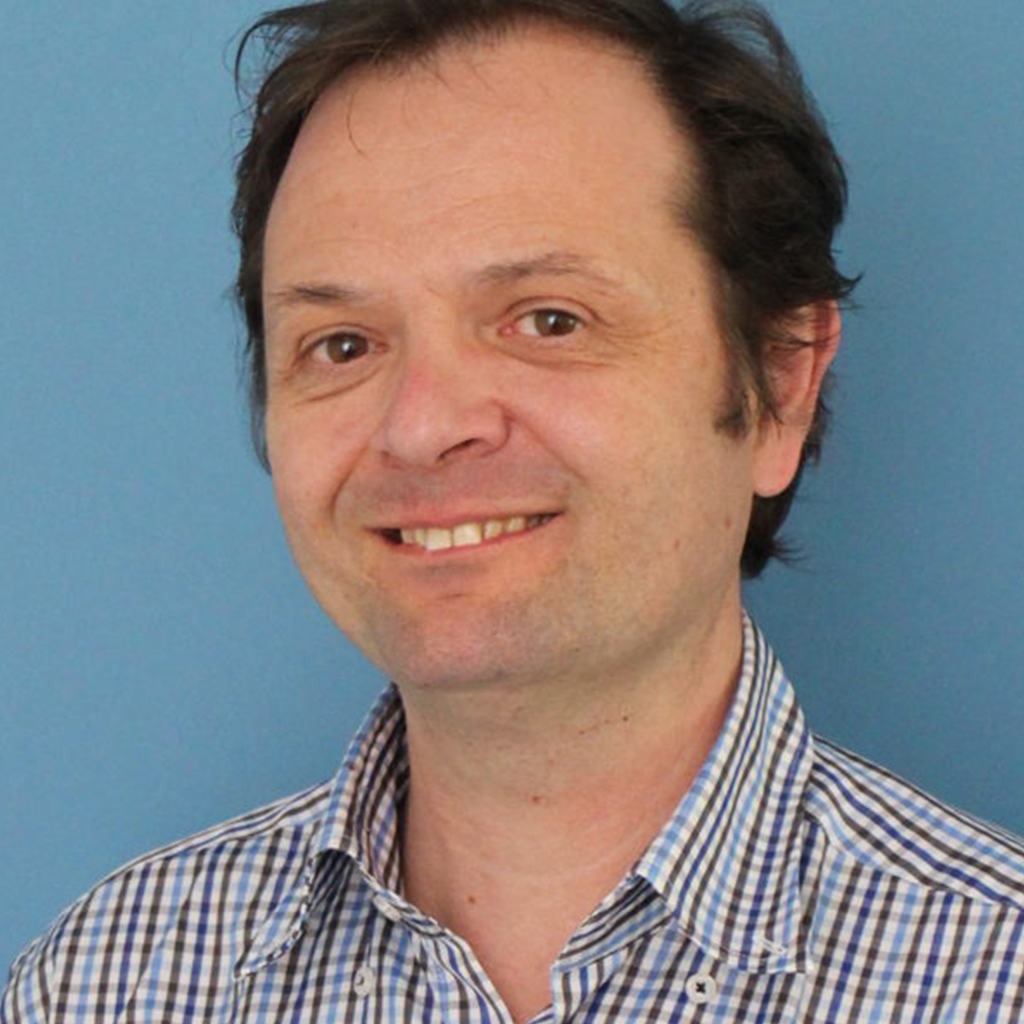
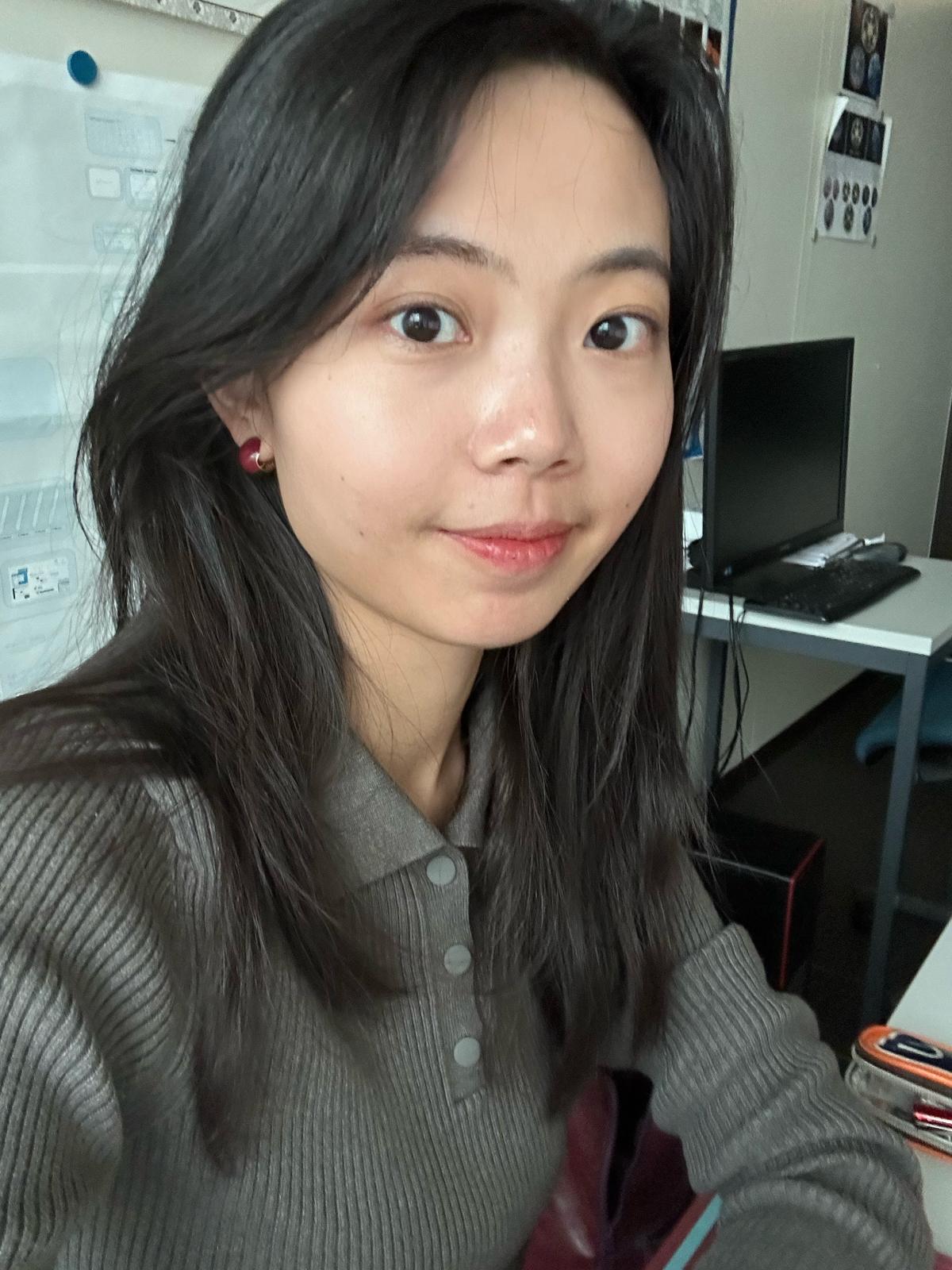
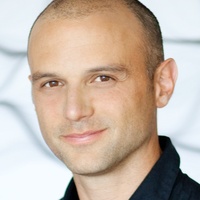
Prof. Dr. Otmar Hilliges is a Full Professor at the Department of Computer Science at ETH Zurich. He leads the AIT lab and serves as the head of the Institute of Intelligent Interactive Systems. His research focuses on spatio-temporal understanding of human movement and interaction, leveraging algorithms and representations from videos, images, and sensor data for applications in Augmented Reality (AR), Virtual Reality (VR), and Human-Robot Interaction. Education: Diplom (MSc) in Computer Science, Technical University of Munich (TUM), Germany PhD in Computer Science, Ludwig Maximilian University of Munich (LMU), Germany (2009) Research Interests: Hilliges' work spans computer vision, robotics, and human-computer interaction. He develops methods for 3D human pose estimation, generative models for realistic avatar creation, and physically plausible simulation of human-object interactions. His research emphasizes practical applications in AR/VR and assistive robotics, aiming to bridge the gap between perception and action. Grants & Contributions: ERC Consolidator Grant (2022-2027): 'AI-Perceive: Robust Human-Centric Computer Vision for Advanced AI-Agents' Google Research Agreement (2020-2025): 'Generative Modelling of Humans' Microsoft Research Grants: Focus on human-centric robotics and interactive technologies Labs & Teams: Leads the AIT Lab at ETH Zurich, which pioneers research in intelligent interactive systems, emphasizing human-centric AI and robotics. The lab collaborates on projects ranging from drone cinematography to haptic feedback systems.
Stefan Bechtold is a Full Professor of Intellectual Property at ETH Zurich since 2013 and Associate Vice President IP Policy (2023–2026). He is affiliated with the ETH AI Center and serves on global advisory boards including the Academic Advisory Board of the German Federal Ministry for Economic Affairs and Climate Action. His interdisciplinary research bridges law, economics, and computer science.
Elliott Ash is an Associate Professor of Law, Economics, and Data Science at ETH Zurich's Center for Law & Economics. He holds a Ph.D. in Economics and J.D. from Columbia University, a B.A. in Economics, Government, and Philosophy from the University of Texas at Austin, and an LL.M. in International Criminal Law from the University of Amsterdam. His research focuses on empirical legal studies using econometrics, NLP, and ML, examining topics like judicial behavior, legislative impact, and AI-driven governance. He has been funded by the ERC, Swiss NSF, and others. Research Interests: Elliott explores automation of legal decisions, text-as-data analysis in law, and the intersection of AI with legal systems. He develops tools like BallotBot and LePaRD to enhance legal transparency and public understanding. His work bridges law, economics, and computer science, with publications in top journals like the American Economic Journal and Review of Economics and Statistics . Teaching: Courses include Building a Robot Judge , Natural Language Processing for Law , and Big Data for Public Policy . He co-organizes the Zurich Workshop in AI+Economics and Monash-Warwick-Zurich Text-as-Data Workshops. Awards: European Research Council Starting Grant, Swiss National Science Foundation Grant, and multiple grants from U.S. and Swiss institutions. His work has been featured in NPR , VoxEU , and Georgetown Law Journal . Labs/Teams: Leads the Swiss AI Initiative's Human-AI Alignment team, collaborates with the CEPR on Political Economy research, and serves as an Economic Journal Associate Editor.
Swiss Federal Institute of Technology in LausanneSwitzerland
Olga Fink is a Tenure Track Assistant Professor at the École Polytechnique Fédérale de Lausanne (EPFL), affiliated with the Department of Intelligent Maintenance and Operations Systems (IMOS) within the School of Architecture, Civil and Environmental Engineering (ENAC). She also holds roles in PhD program committees for Civil and Environmental Engineering (EDCE) and Robotics, Control, and Intelligent Systems (EDRS). Her research focuses on machine learning for infrastructure monitoring, predictive maintenance, and physics-informed AI models. She teaches courses on machine learning, data science for infrastructure, and advanced deep learning topics. Fink advises multiple PhD students and is involved in interdisciplinary projects such as ThermoNeRF (multimodal 3D thermal modeling) and physics-informed neural networks for fault diagnostics. Her work bridges AI and engineering with applications in smart infrastructure, energy systems, and industrial IoT. Education: PhD in Engineering (inferred from role) Affiliations: IMOS Lab, ENAC-SGC, EPFL PhD Committees (EDCE, EDRS) Key Research Themes: Explainable AI, Digital Twins, Structural Health Monitoring, Domain Adaptation Her publications (2023–2025) emphasize robust AI for industrial systems, including fault detection in high-voltage equipment, multimodal data fusion, and physics-consistent models. She collaborates on EU and industry-funded projects, focusing on real-world applications like predictive maintenance and energy efficiency.
Swiss Federal Institute of Technology in LausanneSwitzerland
Devis Tuia serves as Associate Professor at the Swiss Federal Institute of Technology Lausanne (EPFL), holding appointments in the Institute of Environmental Engineering (IIE) within the School of Architecture, Civil and Environmental Engineering (ENAC). He leads the Environmental Computational Science and Earth Observation Laboratory (ECEO) since 2020 and contributes to EPFL's Doctoral Program in Civil and Environmental Engineering. His academic journey began in Lausanne with studies at UNIL and EPFL, culminating in a PhD in remote sensing from UNIL. Postdoctoral research followed at institutions in Valencia, Boulder, and EPFL, focusing on machine learning model adaptation. He progressed from Research Assistant Professor at University of Zurich to Associate and Full Professor at Wageningen University before joining EPFL. Tuia's research bridges Earth observation with artificial intelligence, specializing in interpretable deep learning for environmental applications. His lab develops algorithms for making remote sensing accessible, with particular emphasis on digital wildlife conservation through automated censuses using drone and satellite imagery. Current projects tackle the 'black box' problem in environmental modeling while advancing spatial intelligence for sustainable urban development. His 2023-2025 publication portfolio reveals three dominant trends: (1) species distribution modeling using incomplete observations, (2) multimodal fusion of satellite/drone data with textual descriptions, and (3) interpretable AI frameworks for environmental decision-making. This work consistently addresses real-world challenges like wildfire forecasting and biodiversity monitoring. As an educator, Tuia supervises 12 current PhD students and has graduated 4 former EPFL doctoral candidates. His teaching portfolio includes Frontiers of Deep Learning for Engineers , Sensing and Spatial Modeling for Earth Observation , and Image Processing for Earth Observation courses. The ECEO laboratory maintains active collaborations with ESA-NASA initiatives and conservation organizations globally.
Swiss Federal Institute of Technology in LausanneSwitzerland
Andrea Cavallaro is a Full Professor at the École Polytechnique Fédérale de Lausanne (EPFL) and Director of the Idiap Research Institute. He holds dual appointments in the School of Engineering (STI) within the Institute of Electrical Engineering and Measurements (IEM) and the School of Engineering's Education Unit (SEL-ENS). His research focuses on machine learning for multimodal perception, privacy-preserving AI, and autonomous systems. Cavallaro earned his PhD in Electrical Engineering from EPFL in 2002 and has held leadership roles including Director of Research at Queen Mary University of London and Turing Fellow at The Alan Turing Institute. Education: PhD in Electrical Engineering (EPFL, 2002) Leadership: Idiap Director, Affiliate at ELLIS Society Editorial Roles: Editor-in-Chief of Signal Processing: Image Communication (2020–2023), Senior Area Editor for IEEE Transactions on Image Processing Research Interests: Machine learning for audio-visual sensing, privacy in AI, autonomous systems perception, and ethical AI frameworks. Key projects include AlignAI (trustworthy AI alignment) and CORSMAL (multimodal object manipulation). Recent articles explore privacy-aware AI models, adversarial attacks, and multimodal perception systems. His work bridges theoretical advancements with practical applications in robotics, healthcare, and education. Awards include the Royal Academy of Engineering Teaching Prize and IAPR Fellowship. Teaching: Leads courses on deep learning ethics and multimodal AI at EPFL. Advising: Supervises 11 PhD students in areas like privacy-preserving algorithms and autonomous systems. Labs/Teams: Coordinates Idiap’s Audiovisual Intelligence and Learning Lab (LIDIAP) and collaborates on projects like GraphNEx (explainable AI via graph neural networks).
Mennatallah El-Assady serves as Assistant Professor at ETH Zurich's Department of Computer Science, where she leads the Interactive Visualization and Intelligence Augmentation Lab (IVIA). Her academic trajectory includes research fellowships at ETH's AI Center and doctoral work at University of Konstanz and OntarioTech University, establishing her expertise at the intersection of visualization and artificial intelligence. Her research focuses on advancing responsible data-driven decision-making through human-centered analytics, with particular emphasis on explainable machine learning systems. Dr. El-Assady combines data mining techniques with visual interfaces to create transparent AI workflows, specializing in text data analysis. Her work bridges computational linguistics, digital humanities, and information visualization to develop tools that make complex AI processes interpretable for end users. Recent publications demonstrate growing focus on generative AI's impact on visualization practices and sophisticated frameworks for interactive machine learning. Her research consistently addresses the challenge of maintaining human agency in increasingly automated systems, with applications spanning political debate analysis, musicology, and healthcare data interpretation. The trend shows increasing sophistication in evaluation methodologies for visual analytics systems. Best Paper Award: Honorable Mention for 'Progressive Learning of Topic Modeling Parameters: A Visual Analytics Framework' Dr. El-Assady actively shapes her field through workshop leadership including ArgVis (Argument Visualization), Vis4DH (Visualization for Digital Humanities), and VISxAI (Visualization for AI Explainability). Her teaching includes 'Interactive Machine Learning- Visualization and Explainability' at ETH Zurich, training next-generation researchers in human-centered AI development. She maintains strong industry connections with coverage in Forbes and ETH News regarding human-AI collaboration frameworks. The Interactive Visualization and Intelligence Augmentation Lab (IVIA) develops cutting-edge tools including explAIner for transparent machine learning, LingVis for linguistic analysis, VisArgue for debate structure visualization, and VALIDA for political deliberation analysis. These projects share a common thread of enhancing human understanding through carefully designed visual interfaces that expose AI decision processes.
Gerold Schneider is an Associate Professor at the University of Zurich , affiliated with the Department of Computational Linguistics under the Faculty of Arts and Social Sciences and Faculty of Business, Economics and Informatics . He leads the Text Crunching Center (TCC) , focusing on interdisciplinary research at the intersection of NLP, Digital Humanities, and Health Data Science. Research Interests His work spans Text Analytics , Digital Humanities , Corpus Linguistics , and Health Data Science , with applications in: Biomedical NLP (e.g., Alzheimer’s detection, clinical trials) Digital Humanities projects (e.g., analyzing Charles Dickens, UN archives) Migration discourse framing across languages Adversarial data collection for hate speech detection Interdisciplinary methodologies for digital unstructured data Recent Publications 2025–2024 research highlights include annotated corpora for preclinical and neurological studies, AI-driven analysis of historical linguistic variation, and innovative tools for language learners. His NLP applications address health diagnostics, ethical AI, and cross-lingual political discourse. Labs & Teams As TCC leader, he spearheads collaborative projects within the Digital Society Initiative (DSI) communities (AI & Law, Health, Ethics, etc.), integrating computational methods with humanities and health research.
Elaine M. Huang is an Associate Professor of Human-Computer Interaction at the Department of Informatics, University of Zurich, where she has served since 2010. She also leads the People and Computing Lab, focusing on the dynamic interplay between human practices and technological advancements. Her academic background includes: PhD in Computer Science, Georgia Institute of Technology (2006) Dr. Huang's research centers on human-computer interaction, examining the bidirectional relationship between technology and human practices. She is particularly known for her work on gender equality in technology, challenging assumptions about innate gender differences and investigating how AI systems may perpetuate biases. Her research also spans sustainable interaction design, mental health technologies, and chronic disease management, always emphasizing empirical data over intuition. Analysis of her recent publications (2023-2025) reveals a strong trajectory toward socially impactful HCI, with significant focus on health technologies (diabetes management, mental health), cultural sensitivity in design, and the ethical challenges of AI. Her methodology often involves field studies to understand real-world technology use, countering the industry's reliance on intuition. As head of the People and Computing Lab, Dr. Huang oversees a research group dedicated to designing and evaluating technologies that address complex human needs. The lab's work frequently involves co-design with diverse user communities to ensure relevance and inclusivity in technological solutions.
Sidi Wu is a Researcher affiliated with ETH Zürich's Institute of Cartography and Geoinformatics. Their primary role is as Staff of the Professorship for Cartography, contributing to academic research and technical operations within the department. They are based at HIL G 23.2, Stefano-Franscini-Platz 5 in Zürich, Switzerland, and can be reached at sidiwu@ethz.ch. Research interests center on advancing AI-driven cartographic methods, historical map analysis, and environmental spatial dynamics. Specific focuses include generative AI applications in map-making, semantic segmentation of historical documents, and leveraging digitized maps for ecosystem studies. They also explore steganography in image translation and cross-domain adaptation techniques for geospatial data. Recent work emphasizes innovations in automated map storytelling systems, spatio-temporal context modeling using transformers, and weakly supervised learning approaches for map segmentation. Their studies frequently bridge cartography with environmental science disciplines like hydrology and urban morphology. No scientific awards or grants are explicitly listed in the provided information. While no advisees are documented here, their research collaborations likely involve student contributions. They are part of the core team at the Institute of Cartography and Geoinformatics, contributing to cutting-edge projects in geomatics and computational cartography.
Swiss Federal Institute of Technology in LausanneSwitzerland
Tanja Käser is a Tenure Track Assistant Professor at EPFL's School of Computer and Communication Sciences (IC), leading the Machine Learning for Education Laboratory (ML4ED). Her interdisciplinary research bridges machine learning, data mining, and educational technology, focusing on personalized learning systems and human behavior modeling. PhD in Computer Science (ETH Zurich, 2015) - honored with Fritz Kutter Award Former Senior Data Scientist at Swiss Data Science Center (ETH Zurich) Postdoctoral Researcher at Stanford University's Graduate School of Education Research Focus Explainable AI for education Adaptive learning environments Behavioral pattern recognition Generative AI applications in pedagogy User modeling and personalization Learning analytics in unstructured settings Recent Publication Trends Her 2024-2023 work demonstrates: Interpretable clustering of learners Transformer-based language learning prediction GAN applications for creative education Teacher-AI collaboration frameworks Explainability validation methods Modular network architectures Scientific Recognition Fritz Kutter Award for best Swiss computer science thesis (2015) Advising & Collaborations Currently supervises multiple PhD students including: Cock Jade Maï L Glandorf Dominik Güres Fatma-Betül Neshaei Seyed Parsa Radmehr Bahar Shibu Abhinand Shved Ekaterina Research Infrastructure Operates from EPFL's ML4ED laboratory with hybrid on-site and digital educational systems research capabilities.
Swiss Federal Institute of Technology in LausanneSwitzerland
Dima Damen is a Professor of Computer Vision at the School of Computer Science, University of Bristol, where she leads the Machine Learning and Computer Vision Group. She also serves as a Senior Research Scientist at Google DeepMind. As an EPSRC Early Career Fellow (2020-2025) and a Fellow of ELLIS for Europe, her research focuses on advancing computer vision, particularly in egocentric (first-person) vision, video understanding, and action recognition. Her educational background and professional journey have positioned her as a leader in the field of computer vision, with a particular emphasis on understanding human activities from wearable cameras. She has received numerous awards including Best Paper at ACCV 2024 and Outstanding Paper at ICASSP 2021. Professor Damen's research interests span multiple areas of computer vision and machine learning. She specializes in egocentric vision, where she has made significant contributions to understanding human activities from first-person perspectives. Her work explores video understanding, action recognition, hand-object interactions, and the development of vision-language models that can interpret and generate instructions from visual data. She has pioneered approaches to unique video captioning, long video understanding through active memory representations, and spatial reasoning from egocentric videos. Her research often bridges the gap between theoretical computer vision and practical applications in human-centered AI. Her recent publications demonstrate a strong focus on egocentric vision, with papers like "AMEGO: Active Memory from long EGOcentric videos" (ECCV 2024) and "HOI-Ref: Hand-Object Interaction Referral in Egocentric Vision" (2024) advancing the state of the art in understanding long-form first-person videos. She has also contributed to vision-language models with works like "ShowHowTo: Generating Scene-Conditioned Step-by-Step Visual Instructions" (CVPR 2025) and "It's Just Another Day: Unique Video Captioning by Discriminitave Prompting" (ACCV 2024, Best Paper). Her research shows a consistent trajectory toward building systems that can understand human activities in natural environments with human-like capabilities. Professor Damen has received significant recognition for her work, including: EPSRC Early Career Fellow (2020-2025) ELLIS Fellow for Europe (Nov 2024) Best Paper at ACCV 2024 Outstanding Paper at ICASSP 2021 (awarded to only 3 out of 1700 papers) Outstanding Reviewer for CVPR 2020 and 2021 Program Chair for ICCV 2021 She has successfully advised numerous PhD students and postdoctoral researchers, many of whom have gone on to prestigious positions in academia and industry. Her group has secured significant research funding including the EPSRC Programme Grant Visual AI and the EPSRC UMPIRE grant. She actively collaborates with industry partners including Google DeepMind, Adobe, and Meta, ensuring her research has practical impact. Professor Damen leads the Machine Learning and Computer Vision Group at the University of Bristol, which focuses on egocentric vision, video understanding, and the development of vision-language models. The group has created influential datasets like EPIC-KITCHENS, which has become a standard benchmark in egocentric vision research. Her team regularly participates in and organizes workshops at major computer vision conferences including CVPR, ICCV, and ECCV.
Adam B. Badawi is a Professor of Law at the University of California, Berkeley - School of Law, where he maintains an active research agenda at the intersection of law, finance, and corporate governance. His scholarly work has established him as a leading expert in contract law, M&A transactions, securities litigation, and ESG compliance. Professor Badawi's research interests span multiple dimensions of corporate law and legal theory. His work on contractual complexity, particularly in debt agreements and M&A transactions, has provided significant insights into how legal drafting affects economic outcomes. He has extensively examined the business judgment rule, board authority, and the role of courts in corporate governance. More recently, his research has expanded into ESG-related topics, analyzing how environmental, social, and governance considerations intersect with traditional corporate law frameworks. His methodological approach often combines legal analysis with empirical techniques, including text analysis of legal documents and event studies of litigation outcomes. Professor Badawi's scholarly output demonstrates consistent high-impact research across multiple domains of corporate law. His early work focused on foundational aspects of contract theory and interpretation, while his more recent publications reflect growing interest in ESG metrics, executive compensation structures tied to sustainability goals, and the evolving regulatory landscape. The trajectory of his research shows a progression from theoretical legal analysis toward increasingly empirical and interdisciplinary approaches that bridge law with finance and data science. Professor Badawi has collaborated with numerous scholars across different institutions, including Duke University, Stanford Law School, and the University of Chicago Law School, reflecting the interdisciplinary nature of his work and its relevance to multiple academic communities.
Swiss Federal Institute of Technology in LausanneSwitzerland
Frédéric Kaplan serves as Director of the College of Humanities at École Polytechnique Fédérale de Lausanne (EPFL), where he holds the Chair of Digital Humanities. He also serves as President of the Time Machine Organisation, a nonprofit entity comprising over 600 institutions. His academic appointments span multiple departments including the Digital Humanities Laboratory (DHLAB), School of Architecture (SAR), and School of Humanities (SODH), demonstrating his interdisciplinary leadership across EPFL's academic structure. Dr. Kaplan's research focuses on the intersection of computational methods and humanities, particularly in historical urban analysis, cultural heritage digitization, and the development of the Mirror World concept. His work bridges computational techniques with historical scholarship, creating new methodologies for analyzing historical documents, maps, and urban structures through advanced digital tools. His research has significant implications for how we understand and reconstruct historical urban environments and cultural heritage. His publication record reveals a strong emphasis on computational approaches to historical data, with recent work focusing on LLM applications for historical cadastre navigation, historical map analysis through deformation patterns, 4D city modeling, and language technology applications for historical document processing. This research trajectory demonstrates an evolving focus from basic digitization toward sophisticated analytical frameworks that extract deeper historical insights from digital representations. Kaplan has supervised numerous doctoral students whose work spans digital heritage applications, historical document analysis, computational cartography, and language technology. His research has been supported through multiple institutional frameworks at EPFL and has resulted in practical applications demonstrated through exhibitions at major institutions including the Venice Architecture Biennale, Grand Palais, Centre Pompidou in Paris, and the Museum of Modern Art in New York. He leads the Digital Humanities Laboratory (DHLAB) which serves as a nexus for computational approaches to humanities research. The lab focuses on developing methodologies for historical data analysis, creating digital tools for cultural heritage institutions, and exploring the theoretical implications of computational approaches to historical scholarship. The lab's work with the Time Machine Organisation represents one of the most ambitious efforts to create comprehensive digital reconstructions of historical urban environments.
Swiss Federal Institute of Technology in LausanneSwitzerland
Matthieu Cord is a Professor at Sorbonne University and Scientific Director of valeo.ai, leading research in computer vision, deep learning, and computational cooking. He heads the MLIA team at ISIR Lab, focusing on multimodal models, transformers, and efficient architectures. Research areas include computer vision, large language models with vision, and AI-driven food analytics. Key projects: VISA-DEEP AI chair, Foundation VaViM models, and SmolVLA collaboration with Hugging Face. His recent work examines scalable multimodal models , trajectory prediction , and diffusion-based segmentation , with studies on in-context learning and biased shortcut learning in visual question answering. Articles highlight DeiT variants , fishr for OoD generalization , and STEEX for counterfactual explanations . Scientific awards include IUF Honorary Membership (2009), BMVC 2017 Best Paper, and ICIP 2018 Best Paper. As an advisor, he supervised PhD theses on topics like GAN editing , semantic segmentation , and multimodal retrieval . Current roles involve mentoring the 'Research Band' at MLIA and leading EU-funded initiatives like SCAPE. His work bridges theoretical AI exploration with practical applications in autonomous driving and food technology.