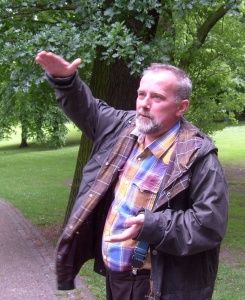
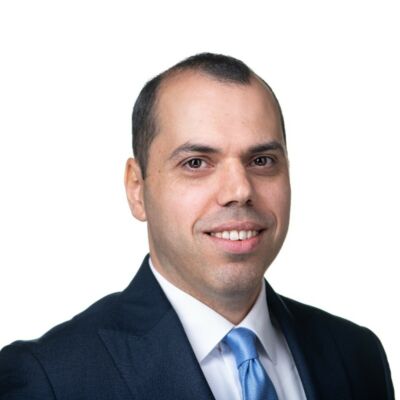
Sergiu Nisioi is an Associate Professor at the Faculty of Mathematics and Computer Science, University of Bucharest, with expertise in computational linguistics, machine translation, and text simplification. He bridges cognitive science with NLP through eye-tracking and EEG research, while also exploring sound art and digital autonomy via initiatives like HYPHA.ro. Current projects include PN-IV-P2-2.1-TE-2023-2007 (text complexity/readability), Legal Document Processing , and Europarl Dialectal Corpora Research spans computational psycholinguistics , LSTM-based translation models , and algorithmic composition for sound art His work integrates interdisciplinary methodologies, combining EEG signal processing for architecture data with the University of Architecture, and DSP for ecological projects at chlorophylla.live.
Daniela Margareta Chiorean serves as University Professor in the Graphics Department at the University of Art and Design Cluj-Napoca, where she has held academic positions since 2000 and currently serves as Prorector responsible for quality assurance (2023-2024). She previously served as Dean of the Faculty of Plastic Arts (2012-2015) and Department Director for Graphics (2015-2023). Concurrently, she maintains an active legal practice as an attorney specializing in civil law and intellectual property at the Cluj Bar Association since 2007. Her educational background includes a PhD in Visual Arts (2007) from UAD Cluj-Napoca with thesis 'Man - Media. Traditional and new media in graphics,' a Master's in Civil Law (2005-2007), Law degree (2001-2005), and dual Master's degrees in Visual Arts (2001-2003). She completed specialized training in intellectual property at WIPO (2002) and cultural management/multimedia in Germany (2002-2003). Chiorean's research bridges graphic design, digital media, and intellectual property law, examining how traditional media interacts with contemporary digital environments. Her work explores symbolic dynamics in advertising, the evolution of typography from Gutenberg to virtual publications, and the legal frameworks governing creative works in digital spaces. She investigates how new technologies transform artistic practices while maintaining connections to historical techniques, with particular focus on remix culture and copyright issues in visual communication. Her publication trends reveal consistent exploration of media transitions, with recent work analyzing digital image processing, urban-nature representations in artificial environments, and comparative studies of display versus print media. These publications demonstrate her interdisciplinary approach connecting artistic practice with scholarly inquiry into media evolution. Premiul UAP România pentru grafică - tineret (2002) Premiul Vespasian Lungu pentru grafică (1997) As a researcher, she has led multiple nationally-funded projects including 'Vector – Design and Book Illustration' (2012) through the National Cultural Fund and 'Center for Promoting Entrepreneurship in Sustainable Development' (2010-2013). She coordinates international collaborations through Erasmus+ and Leonardo da Vinci programs, organizing workshops on infographics, bookbinding, and digital media. Her professional activities span academic leadership, legal practice in intellectual property, and active participation in national and international artistic communities as both creator and evaluator. She coordinates specialized workshops in infographics and bookbinding techniques, and participates annually in the Brâncuși International Workshops for sculpture, painting, and graphics. Her collaborative network extends across European institutions through multiple international partnerships, with recent involvement in Korea's 'O întâlnire și o altă călătorie începe' exhibition (2024).
Stavros Vologiannidis serves as an Assistant Professor in the Department of Informatics, Computer and Telecommunications Engineering at the International University of Greece. His academic career spans both teaching and research in control theory, robotics, and machine learning applications. Previously, he was associated with the Mathematics Department at Aristotle University of Thessaloniki where he completed his education and conducted postdoctoral research. Education: B.Sc. in Mathematics from Aristotle University of Thessaloniki (1997) Ph.D. in Control Theory from Aristotle University of Thessaloniki (2005) with dissertation titled 'ALGEBRAIC-POLYONYMICAL COMPUTING METHODS IN CONTROL THEORY' Dr. Vologiannidis' research focuses on Classical and Intelligent Control Theory, Robotics, and Machine Learning, with particular expertise in polynomial matrices and automatic control systems. His work bridges theoretical mathematics with practical engineering applications, especially in educational robotics and industrial control systems. He has developed several educational platforms including EUROPA, a ROS-based educational robot for teaching sensor integration and data acquisition. His publication record shows a clear evolution from theoretical control systems research toward applied machine learning and educational technology. Recent work demonstrates increasing focus on practical applications of AI in education, urban feature recognition, industrial monitoring, and robotics education across multiple educational levels from middle school through university. His research combines mathematical rigor with real-world implementation. Scientific Recognition: Excellence Scholarship in the 'Excellence Scholarships 2010' program of the Research Committee Total citations exceeding 250 with Scopus H-index of 9 Dr. Vologiannidis has secured numerous research grants and led multiple projects including 'Rapid Earthquake Damage Assessment Consortium – REDACt', 'Predictive Maintenance 4.0', and 'Development of computational methods for optimization of eigenvalue assignment problems'. He has collaborated extensively with institutions across Europe including UTIA Foundation in Prague and has participated in EU-funded projects like GALENOS and GN4-1 GÉANT Research and Education Networking. His laboratory work centers around the EUROPA educational robotics platform and the StreetScouting urban feature detection system, both of which integrate hardware, software, and educational applications. These projects demonstrate his commitment to translating theoretical research into practical educational and industrial tools.
Maria Moruz serves as a Researcher at the Department of Social Sciences and Humanities, Alexandru Ioan Cuza University of Iasi, a position she has held since February 2009. Her academic profile centers on Romanian linguistic research with strong interdisciplinary connections to biblical studies and computational methods. She earned her PhD from Alexandru Ioan Cuza University of Iasi in December 2009 with a dissertation analyzing phraseological units in parallel bilingual corpora, establishing her foundational expertise in comparative linguistics. Maria Moruz's research program integrates traditional philological scholarship with modern computational techniques . Her primary domains include Romanian linguistics , phraseology , and computational linguistics , with significant contributions to Biblical philology through critical editions of historical texts. She examines national specificity in phraseological units while developing linguistic resources for Romanian language processing , bridging historical textual analysis with contemporary NLP applications. Her publication trajectory reveals distinct thematic phases: early computational linguistics work (2004-2012) on Romanian lexical resources and question-answering systems evolved into specialized biblical philology research (2014-present) within the Monumenta linguae Dacoromanorum project. Recent publications focus on Romanian lexicography and biblical marginalia, demonstrating sustained engagement with both digital humanities methodologies and historical textual criticism. Maria Moruz has secured significant research funding as Project Director for a CNCSIS TD grant and served as a POSDRU postdoctoral researcher. Her collaborative work includes membership in the international "Widespread Idioms in Europe and Beyond" project and leadership in multiple Romanian linguistics initiatives. Project Director: CNCSIS TD grant POSDRU Postdoctoral Researcher Collaborator: "Widespread Idioms in Europe and Beyond" project Co-organizer: International Symposium "Explorations in the Romanian and European Biblical Tradition" Founding Member: Romanian Association of Biblical Philology and Hermeneutics She maintains active scholarly infrastructure through editorial work on the Monumenta linguae Dacoromanorum series and organization of specialized symposia, fostering interdisciplinary dialogue between computational linguists, philologists, and biblical scholars.
Dr. Onet-Marian Zsuzsanna is a Lecturer in the Department of Computer Science at Babes-Bolyai University in Cluj-Napoca, Romania. Her research focuses on applying machine learning techniques to software engineering challenges, particularly software defect prediction and restructuring. Academic Rank: Lecturer Affiliation: Babes-Bolyai University Department: Computer Science Email: zsuzsanna.onet@ubbcluj.ro Research Interests : Dr. Marian specializes in developing machine learning models (clustering, association rules, reinforcement learning) for software defect detection, package-level restructuring, and test order optimization. She also explores applications of Formal Concept Analysis in text summarization and music pattern discovery. Recent Publications highlight her work in source-code embeddings, unsupervised learning for software analysis, and comparative studies of online/traditional learning environments. Her methods often integrate domain-specific metrics and AI-driven optimization. Contact : zsuzsanna.onet@ubbcluj.ro | Office: Teodor Mihaly street, Room 440
Prof. Alexandru Gafton is a Professor and Head of the Department of Romanian Language and General Linguistics at Alexandru Ioan Cuza University in Iași. His academic career spans roles from preparator (1995–1997) to professor since 2005. He holds a doctorate in philology (2000) and has led doctoral programs since 2008. Gafton is an editor of the journal Diacronia and has organized national conferences on religious discourse. His research focuses on diachronic linguistics, historical phonetics, biblical translation, and cultural anthropology. Key contributions include studies on the evolution of the Romanian language through biblical translations, paleography, and the foundational texts of the Iași School of Linguistics. He has authored over 30 books and numerous articles, including Elemente de istorie a limbii române and Evolutionismul Parabolelor . Gafton’s work emphasizes the interplay between language, culture, and history, with a focus on Romanian linguistic norms and their socio-historical contexts. He has held visiting professorships in Germany and Switzerland and has received grants, including the Prince Dimitrie Sturdza Fellowship. His editorial work includes critical editions of historical texts like Codicele Bratul and Palia de la Orăştie . Gafton’s research also explores the philosophical foundations of science and the role of metaphor in language evolution.
Răzvan-Virgil Bogdan is an Assistant Professor at the Faculty of Automation and Computer Science, Politehnica University of Timisoara (PUT), with expertise in Embedded Systems , Automotive Software Testing , and Dependability of Computer Systems . His research bridges Internet-of-Things and e-Learning , focusing on reliability, testing, and intelligent environments. University: Politehnica University of Timisoara School: Faculty of Automation and Computer Science Contact: razvan.bogdan@cs.upt.ro | Room B413A Research Focus: Bogdan's work emphasizes system reliability , embedded software quality , and automotive electronics , with projects like GEMSCLAIM (energy-efficient mobile systems) and HURO JCBICS (cross-border educational infrastructure). He also drives industrial collaborations (e.g., AC_G_xBU_Academy with Continental Automotive Romania). Teaching Career: Bogdan has taught courses such as Embedded Systems , Microprocessor Systems , and Advanced Embedded Systems at PUT, blending theoretical rigor with hands-on lab work in the Vector Lab . His pedagogical approach integrates software testing methodologies and energy-aware system design . Scientific Contributions: He has contributed to embedded systems validation, security frameworks for distributed systems (e.g., TD/54 project ), and automotive software tools. His publications span ACTA POLYTECHNICA HUNGARICA , BRAIN: Broad Research in Artificial Intelligence and Neuroscience , and conference proceedings like IEEE Sustainability and SACI. Awards: Mercy Diplomas 2021 Mercy Diplomas 2020 Memberships: IEEE ACM Prospective Students: Bogdan actively seeks undergrad, Masters, and PhD candidates, emphasizing practical research in automotive embedded systems and IoT . His lab provides direct access for project collaboration and discussions.
Ana-Sabina Uban is an Associate Professor at the Faculty of Mathematics and Computer Science, University of Bucharest . She earned her Ph.D. in Computer Science in 2020 under the supervision of Professor Liviu Dinu with a thesis on distributional and stylistic aspects of natural language. She teaches and coordinates courses in natural language processing, AI, and machine learning for both computer science and digital humanities students. Education: Ph.D. in Computer Science, University of Bucharest (2020) – Thesis: "Distributional aspects of natural language. Semantic and stylistic dimensions of text" Research Interests: Dr. Uban’s research is strongly interdisciplinary, bridging natural language processing , computational linguistics , psychology , and cognitive science . She explores historical computational linguistics , distributional semantics , and multilingualism , while also investigating explainability in AI models and mental health disorder detection using social media data. Research Trends & Publication Focus: Her recent publications span clinical NLP , mental health detection , historical linguistics , and multilingual cognate identification . A recurring theme is the application of advanced NLP techniques—such as transformer models, contrastive learning, and ensemble classification—to real-world problems in health, literature, and historical language study. Teaching & Student Supervision: Dr. Uban currently teaches and coordinates the following courses: Bio-medical NLP – Master’s level (English) Artificial Intelligence – Bachelor’s level for Mathematics students Practical Introduction to Machine Learning – Master’s level for Digital Humanities students Natural Language Processing 1 & 2 – Master’s labs and projects Contact: auban@fmi.unibuc.ro
Prof. Dan Cristea is a faculty member at the Faculty of Computer Science, Alexandru Ioan Cuza University (UAIC), specializing in Artificial Intelligence and Natural Language Processing. He holds a PhD and is a corresponding member of the Romanian Academy. His research focuses on computational linguistics, knowledge representation, and historical document deciphering, with notable projects like DeLORo for old Cyrillic texts and EUROLAN Summer Schools. He has supervised numerous students in AI and NLP projects, including systems for question-answering, sentiment analysis, and agent-based models. His work bridges theoretical linguistics with practical applications in digital heritage preservation and multilingual technologies. Education: PhD (not explicitly stated in text), but his academic rank implies doctoral qualifications. Research Interests: AI applications in NLP, discourse analysis, computational linguistics, and cultural heritage digitization. Projects include MappingBooks for geographical text navigation, CoBiLiRo for bimodal corpora, and Sentimatrix for sentiment analysis. He collaborates internationally on corpora like EuReCo and has developed tools for dependency parsing and semantic annotation. Key Achievements: Corresponding member of the Romanian Academy Lead developer of the Corpus of Contemporary Romanian Language (CoRoLa) Pioneered AI-driven historical document transcription systems Grants and Collaborations: Involved in EU-funded projects like i-Librarian and i-Publisher. Collaborates with institutions globally on NLP and corpus linguistics. Labs/Teams: Director of the NLP-Group@UAIC-FII and heads the DeLORo project team.
Cristian Mihaescu is a Lecturer at the Department of Computer Science and Engineering (DCTI), University of Craiova, within the Faculty of Automatic Control, Computers and Electronics. He is actively involved in teaching and research related to machine learning, distributed systems, and educational data mining. Teaching: Data Structures and Algorithms, Parallel and Distributed Algorithms, Machine Learning, Distributed Systems Engineering Research Focus: Machine learning applications in education, social network analysis, and compiler optimization Technological Interests: Microservices, data mining, and intelligent system design
Sorin Anagoste is a Professor and Vice Dean for Academic Affairs at FABIZ, part of the Bucharest University of Economic Studies. His primary affiliation is with the Bucharest Business School (BBS), where he contributes to academic leadership and faculty governance. He holds a PhD and focuses on interdisciplinary research at the intersection of business strategy, technology, and innovation. His academic career spans over two decades, with a strong emphasis on advancing education and research in digital transformation, artificial intelligence, and entrepreneurship. Prior roles include leadership in mergers and acquisitions studies, transformational leadership research, and Lean Six Sigma methodologies. Research Interests: Artificial Intelligence applications in business decision-making Digital transformation strategies Entrepreneurship dynamics across generations Impact of AI on political and economic systems Knowledge dynamics in organizational contexts Recent work emphasizes the societal implications of AI, including election influence via LLMs, post-pandemic consumer behavior, and Romania's economic interdependencies through Leontief matrix analysis. He has authored over 35 articles on topics ranging from robotic process automation to sustainable development. Professional Activities: Academic leadership in business education reform Consultancy on digital strategy for enterprises Founder of BBS's strategic frameworks for chatbot implementation
Dr. Timenko Artur Valentynovych serves as Senior Lecturer at Zaporizhia National Technical University's Department of Computer Systems and Networks within the Faculty of Computer Science and Technologies. Holding a specialist degree in Computer Systems and Networks (2010), he maintains active roles in both teaching and research. His educational background includes graduation from Zaporizhia National Technical University in 2010 with specialization in Computer Systems and Networks. Professional development is evidenced through continuous research output and curriculum development activities. Research focuses on Internet of Things , computer networks , and neural networks , with particular emphasis on protocol verification, device interoperability, and embedded system optimization. Recent work explores semantic chatbots for IoT management, air quality monitoring systems, and MQTT protocol compatibility analysis. His methodology integrates formal verification techniques with practical hardware implementation. Publication trends from 2020-2024 reveal consistent contributions to IoT infrastructure (45%), network protocols (30%), and AI applications (25%). Key journals include Shipbuilding & Marine Infrastructure and Scientific Notes of Vernadsky University. Research demonstrates strong industry relevance with applications in smart homes, environmental monitoring, and critical systems. Teaching responsibilities encompass Python programming basics, computer network design, IoT fundamentals, and wireless technologies. His laboratory guidelines for Embedded Computer Systems and IoT disciplines reflect practical, hands-on pedagogy. Current projects involve developing automated temperature control systems and network anomaly detection using hybrid neural networks. Professional activities include active participation in Ukrainian academic conferences and international collaborations through ZNTU's research infrastructure. His work contributes to the university's strategic focus on digital innovation and sustainable technology development.
Darius Bufnea is an Associate Professor at the Department of Computer Science, Faculty of Mathematics and Computer Science, Babeş-Bolyai University in Cluj-Napoca, Romania. His academic address is at No. 1 Mihail Kogalniceanu Street, RO-400084 Cluj-Napoca. He teaches various courses including Web Programming, Security Protocols in Communications, Web Security and Internet, Web Traffic Control, and Operating Systems for Parallel and Distributed Architectures. Dr. Bufnea's research spans multiple domains within computer science, with a strong focus on parallel and distributed computing systems. His work explores innovative frameworks like PowerList-based programming models and their implementation in Java. He has made significant contributions to web security research, particularly in detecting and measuring scraper sites and clickbait content. His research bridges theoretical computer science with practical applications in web technologies and parallel programming paradigms. His publication record shows a consistent trajectory of research in parallel computing frameworks, with recent work expanding into web security and content analysis. The trend indicates a progression from foundational parallel programming models toward applied research in web technologies, security, and educational approaches for teaching complex computing concepts. His work on measuring "scrappiness level" of websites represents an innovative approach to quantifying web spam and content duplication issues. Dr. Bufnea actively engages with students through undergraduate and dissertation thesis supervision, with specific research topics available through university channels. His teaching philosophy emphasizes hands-on learning, as evidenced by detailed laboratory assignments covering web technologies from HTML/CSS to advanced JavaScript and server-side programming.
Iulia Dumitrache is a Researcher (CS III) at the Alexandru Ioan Cuza University of Iași, affiliated with the Institute for Interdisciplinary Research - Science Domain and the ARHEOINVEST Center. Her academic work spans multiple disciplines within classical studies, with a strong institutional connection to the Department of Exact and Natural Sciences. Her primary research interests focus on Roman economic history, particularly examining trade networks, occupational structures, and military logistics through prosopographical methods. She specializes in Latin epigraphy (especially occupational epigraphy) and archaeology, with significant field experience as a member of the research team at Micia (Vețel, Hunedoara County). Her work consistently explores the economic systems of the Roman Empire, with particular attention to fishing industries, textile trade, and military supply chains in the Black Sea region and Danube provinces. Analysis of her recent publications reveals a sustained scholarly trajectory examining the intersection of economic activity, cultural exchange, and administrative structures in the Roman provinces. Her work demonstrates particular expertise in analyzing occupational epigraphy to reconstruct trade networks and economic relationships, with recurring themes including Roman frontier economies, cultural interactions along imperial borders, and the organization of specialized crafts and industries within the empire. Dr. Dumitrache is actively involved in academic collaborations and conferences, as evidenced by her participation in events such as the XXIII Colloquium of the International Academy of Heraldry and symposia on Romanian and European Biblical Tradition. She maintains an active scholarly profile through her ORCID (0000-0002-0115-6379) and continues to contribute to interdisciplinary research at the intersection of history, archaeology, and epigraphy.
János Szabolcs is an Associate Professor at Partium Christian University in Oradea, Romania, specializing in German and Hungarian literary and theatre studies. His research focuses on the cultural intersections between German and Hungarian communities, particularly in Transylvania and the Banat region, with emphasis on historical memory, travel writing, and theatre history from the 18th and 19th centuries. His educational background includes a PhD (1999-2006), MA in Literature and Society (1999-2001), and BA in Hungarian and German Studies (1997-2001), all completed at Babeş-Bolyai University of Cluj-Napoca. This foundation in comparative literature and cultural studies informs his interdisciplinary approach to Central European cultural history. Szabolcs's research spans multiple dimensions of cultural memory and historical representation, with particular attention to how theatrical practices and travel narratives shape regional identities. His work reveals the complex interplay between German and Hungarian cultural traditions in Transylvania, examining how sites of memory function within these communities. He has made significant contributions to understanding the professionalization of German-language theatre in Transylvania during the Enlightenment period and its relationship to broader Central European cultural developments. His recent publications demonstrate a consistent focus on cultural transfer processes, regional identity formation, and the representation of historical spaces in literary and theatrical works. The articles reveal a methodological approach that combines close textual analysis with broader cultural historical perspectives, particularly examining how 18th and 19th century travel writing and theatrical productions functioned as sites of cultural mediation between different ethnic and linguistic communities. As an active academic, Szabolcs regularly contributes to international conferences on German studies, theatre history, and Central European cultural studies, demonstrating engagement with both regional scholarly communities and broader international academic discourse. His work bridges disciplinary boundaries between literary studies, theatre history, cultural geography, and memory studies.