Brian MacWhinney is the Teresa Heinz Professor of Cognitive Psychology at Carnegie Mellon University. His research investigates language acquisition, cognitive science, and computational approaches to language analysis across diverse populations. Research focuses on: Child language development through the Competition Model Cross-linguistic psycholinguistics Aphasia and dementia language diagnostics Computational tools for language analysis (TalkBank) Publications emphasize clinical applications of language analysis, particularly for dementia and traumatic brain injury. Recent work develops standardized assessment tools and multilingual corpora through the TalkBank initiative. Teaches courses in language acquisition, cognitive psychology, and computational linguistics. Leads the development of open-access language databases supporting global research on typical and pathological language.
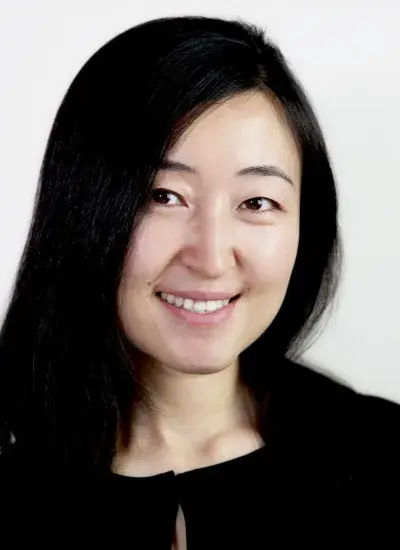
Dr. Lining Yao is a Cooper-Siegel Associate Professor of Human-Computer Interaction at Carnegie Mellon University's School of Computer Science, directing the Morphing Matter Lab. She holds courtesy appointments in Mechanical Engineering and Materials Science & Engineering, and is part of the Softbotics initiative. With a PhD from MIT Media Lab (2017), her research focuses on programmable materials, sustainable design, and interdisciplinary fabrication. Yao is a UNIDO eco-design instructor, CMU Inclusive Teaching Fellow, and NSF CAREER Award recipient. Education: PhD in Media Arts & Sciences, MIT Media Lab (2017) Bachelor's/Master's (unspecified in text) Research Interests: Yao's work bridges material science, computation, and design to create adaptive systems. Key themes include morphing materials for sustainability, soft robotics, food engineering, and human-plant interaction. Her lab explores biodegradable actuators, self-folding devices, and energy-harvesting systems. Key Contributions: Notable projects include self-burying seed carriers (Nature 2023), morphing pasta (Science Advances 2021), and the Thermorph 4D printing system (CHI 2018). She co-founded MorphingMatter4Girls, promoting STEM engagement. Awards: NSF CAREER Award 9 Best Paper/Talk Awards Wired UK Fellowship Labs & Future Work: The Morphing Matter Lab develops eco-conscious materials and systems. Upcoming directions include LLM-driven generative design, programmable degradation mechanisms, and interdisciplinary physical AI systems.
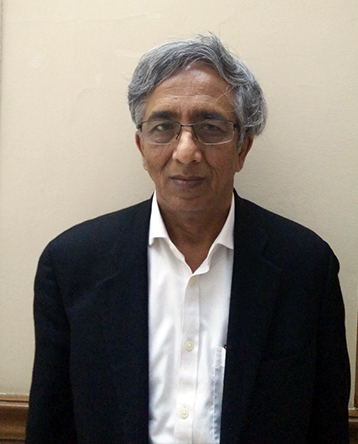
Eswaran Subrahmanian is a Research Professor at Carnegie Mellon University (CMU), affiliated with the Engineering Research Accelerator and the Department of Engineering and Public Policy within the College of Engineering. He concurrently serves as a Visiting Honorary Professor at the International Institute of Information Technology, Bangalore and an Adjunct Faculty member at Ahmadabad University. His roles include part-year work at the National Institute of Standards and Technology (NIST), USA, focusing on smart networks and societies. Education: Ph.D. in Public Policy & Information Systems, Carnegie Mellon University (1987) M.S. in Computer Science, University of South Carolina (1979) B.E. (Hons) in Chemical Engineering, Birla Institute of Technology & Science (1976) Research Focus: Subrahmanian's work centers on socio-technical systems design, decision support systems, and design theory. He explores intersections of technology, public policy, and societal impact through projects with industry leaders like Boeing, Bosch, and the World Bank. His theoretical contributions include the PSI framework and categorical models for complex systems analysis. Publications & Awards: With over 90 peer-reviewed articles and co-edited books, he co-authored We Are Not Users: Dialogues, Diversity, and Design (MIT Press, 2020). Honors include the Steven Fenves Award (2006), AAAS Fellowship (2008), and ACM Distinguished Scientist (2013). Advising & Innovation: Co-founder of Fields of View , a nonprofit designing games/simulations for policy challenges, and involved in initiatives like the National Health Information Systems Project. His work emphasizes inclusive design methodologies and interdisciplinary collaboration. Labs & Teams: Active in the Engineering Research Accelerator and collaborates across disciplines to address urban systems, energy policy, and ICT for sustainable development.
Varun Gangal is a Tenure-Track Assistant Professor in the School of Computing at Clemson University. He holds a Ph.D. in Language and Information Technology from Carnegie Mellon University's Language Technologies Institute (LTI), awarded in 2022. His academic background includes affiliation with the School of Computer Science at CMU. Education: Ph.D., Language and Information Technology, Carnegie Mellon University, 2022 His research interests likely focus on language technologies and related computational methods, given his doctoral training in LTI. Specific areas may include machine learning applications in natural language processing, information retrieval, or human-computer interaction, though precise subfields are not explicitly detailed in the provided text. No publications, grants, or awards are listed in the current data, and no lab affiliations or team collaborations are mentioned. His professional trajectory reflects a transition from doctoral studies at CMU to a tenure-track position in Clemson's computing department.
Swabha Swayamdipta is an Assistant Professor at the University of Southern California, having earned her Ph.D. in Language and Information Technology from the Language Technologies Institute (LTI) at Carnegie Mellon University in 2019. Her academic career bridges computational linguistics and artificial intelligence. Her research focuses on Natural Language Processing, Machine Learning, Computational Linguistics, and Artificial Intelligence, with emphasis on language modeling and information systems. These interests stem directly from her doctoral training at CMU's renowned LTI program. As a recent graduate transitioning to faculty, her work represents emerging scholarship in language technology. She maintains affiliations with Carnegie Mellon University's alumni network through the LTI's Class of 2019.
Diyi Yang is an Assistant Professor at Georgia Institute of Technology, having completed a Ph.D. in Language and Information Technology from Carnegie Mellon University's Language Technologies Institute in 2019 under advisor Robert Kraut. Prior to this appointment, they held a post-doctoral position at Google starting Fall 2019. Education includes a Ph.D. from Carnegie Mellon University (2019), with research centered on language technologies and information systems. Research interests span Natural Language Processing, Information Retrieval, and Machine Learning, emphasizing computational approaches to language understanding and data-intensive systems. Their doctoral work in CMU's Language Technologies Institute indicates specialization in algorithmic and applied aspects of language modeling and information access. No scientific awards or publications were documented in the source material. As a new faculty member at Georgia Tech, Yang is expected to establish research initiatives and mentor graduate students, though specific advising roles or laboratory structures were not detailed in the provided text.
Francis Ogoke is an incoming Assistant Professor in the Department of Mechanical Engineering at Carnegie Mellon University, set to begin in Fall 2025. He is currently a postdoctoral associate at the Massachusetts Institute of Technology. His academic journey includes a Ph.D. in Mechanical Engineering from Carnegie Mellon University (2024) and a B.S.E. in Chemical and Biological Engineering from Princeton University (2019). His research lies at the intersection of artificial intelligence and engineering systems, with a focus on developing foundational AI methods for complex engineering problems. Key areas include: Physics-informed deep learning Uncertainty quantification and probabilistic modeling Representation learning for generalization Applications in additive manufacturing, digital twins, and cyber-physical systems The recent articles reflect a strong trend in leveraging deep learning—especially vision transformers, generative models, and reinforcement learning—for accelerating simulations, enhancing in-situ monitoring, and improving control in additive manufacturing. His work consistently bridges AI innovation with real-world engineering challenges, particularly in metal 3D printing and multiphysics modeling. Notable scientific awards include: Presidential Fellowship in the College of Engineering, Carnegie Mellon University G.E.M. Fellowship Francis Ogoke advises emerging researchers and is expected to lead a research group focused on AI-driven engineering systems. His lab will likely focus on developing intelligent frameworks for digital twins and autonomous manufacturing. He has not yet advised any students as per current records. He is actively involved in pioneering research that integrates AI into core engineering workflows, supported by advanced computational and experimental infrastructure. He is affiliated with the College of Engineering at Carnegie Mellon University and conducts research relevant to advanced manufacturing, sensing technologies, and intelligent systems.
Franck Komi Adjogble is a Lecturer at the University of Hagen and TÜV Akademie Rheinland GmbH in Siegen, Germany, focusing on Technology and Innovation Management. His academic background includes a Ph.D. in Technology and Innovation Management from the University of Hagen (collaborating with Fraunhofer Institute) and an M.Sc. in Computer Science from the University of Siegen. Education: Ph.D. in Technology and Innovation Management, University of Hagen & Fraunhofer Institute M.Sc. in Computer Science, University of Siegen Technology and Innovation Management Certificate, University of Hagen & Fraunhofer Institute His research bridges industry expertise and academic rigor, emphasizing Industrial Internet of Things (IIoT), Artificial Intelligence in production planning, and Natural Language Processing. Adjogble's work spans IT security, software engineering, and automation systems in global industrial projects. Recognized with prestigious awards like the James Farrington Award, Hunt-Kelly Award, and AIST Board of Directors Award, he supervises master’s students and collaborates across disciplines. Adjogble is fluent in German, French, English, and Ewe.
Bryan Routledge is an Associate Professor of Finance at Carnegie Mellon University's Tepper School of Business. He holds a Ph.D. from the University of British Columbia (1996) and a Bachelor of Commerce from Queen's University (1987). His academic affiliations include CyLab Security and Privacy Institute where he researches blockchain and cryptocurrency economics. Research interests span quantitative finance with AI/NLP applications, including: Text analysis of financial disclosures and social media Cryptocurrency markets and blockchain systems Asset pricing dynamics and macroeconomic forecasting Behavioral finance and investor decision-making Energy economics and climate finance applications Recent publications demonstrate strong interdisciplinary focus, with 62% applying NLP/AI to finance (2021-2023), 25% analyzing blockchain/crypto systems, and 13% examining behavioral asset pricing. Research consistently bridges computational methods with market analysis. Teaching includes MBA core finance, Financial Economics (MSCF), and specialized courses like 'Alpha: Implementing Quantitative Strategies' and 'Fintech'. Actively involved in Tepper's Executive Education programs. Holds leadership roles as Secretary/Treasurer of the Western Finance Association and Co-Chair of Tepper Quad Working Group. Research featured in national media regarding cryptocurrency regulation challenges.
Yue Jiang is an incoming Assistant Professor at the University of Utah (Fall 2025) and is completing their PhD at Aalto University and the Finnish Center for Artificial Intelligence (FCAI). Their research focuses on computational user interface understanding, eye tracking, and adaptive GUI layouts. They have held roles such as Accessibility Chair for CHI2023/2024 and have organized workshops on computational UI methodologies. Education : PhD in Intelligent Systems (Aalto University & FCAI, Finland) Visiting PhD Student (CMU's BIG Lab, 2024) Master's in Computer Graphics (UMD, USA) Bachelor's in Computer Science & Mathematics (U of Toronto, Canada) Research Interests : Developing human-centered technologies for adaptive UIs, eye tracking analysis, and AI-driven HCI. Key projects include Graph4GUI, EyeFormer, and computational methods for GUI layout optimization. Awards : Meta PhD Fellowship (2023-2025) Google Europe Students with Disabilities Scholarship (2022) CHI2022 Best Paper Honorable Mention Heidelberg Laureate Forum Young Researcher (2024) Service : PC Member for VL/HCC2025, CHI2026 Associate Chair for CHI2025/2026 Organized three Computational UI Workshops at CHI Labs & Collaborations : Collaborates with Prof. Jeffrey Bigham (CMU), Prof. Wolfgang Stuerzlinger (SFU), and Prof. Christof Lutteroth (U of Bath). Former internships at Apple AIML Lab and Adobe Research.
Wändi Bruine de Bruin is a Professor in the Department of Engineering and Public Policy at Carnegie Mellon University's College of Engineering. She also holds a leadership role as the Chair in Behavioral Decision Making at Leeds University Business School, directing the Centre for Decision Research and serving as Deputy Director of the Priestley International Centre for Climate. Her affiliations include the University of Southern California's Center for Economic and Social Research and the RAND Corporation. She earned her Ph.D. in Behavioral Decision Theory and Psychology from Carnegie Mellon University (1998), following earlier degrees from the Free University of Amsterdam (BS 1989; MS in Cognitive Psychology 1993). Her research focuses on behavioral decision processes, climate change communication, risk analysis, and health policy. Notable contributions include studies on decision-making competence across adulthood, climate change terminology, and vaccine communication strategies. Dr. Bruine de Bruin leads efforts to improve policy decisions through behavioral insights. She has advised the U.S. National Academy of Sciences and the Canadian Academies on science communication, and her work bridges disciplines like psychology, environmental science, and public health. She serves on editorial boards of journals including Journal of Behavioral Decision Making and Medical Decision Making . Her recent work examines food insecurity dynamics in Los Angeles, pandemic responses, and the psychological underpinnings of climate policy preferences. Research outputs emphasize translating complex data into actionable insights for policymakers and practitioners. Awards: Fellow of the Psychonomic Society and Network for Studies on Pensions, Aging and Retirement (NETSPAR) Labs/Teams: Centre for Decision Research (Leeds), Center for Climate and Energy Decision Making (Carnegie Mellon)
Dunja Mladenic is a researcher at the Jožef Stefan Institute 's Department of Knowledge Technologies in Ljubljana, Slovenia. She has held visiting positions at Carnegie Mellon University 's School of Computer Science in 1996-1997 and 2000-2001, where she worked on text and data mining projects. Coordinator of the European project Sol-Eu-Net (2005) Tutorial chair for ECML/PKDD-2005 and ICML-2003 Key contributor to CMU's Text Learning Group Her research focuses on Text Mining , Data Mining , and Machine Learning , particularly in Web navigation assistance and intelligent agent design. She developed the Text Mining Group 's Personal WebWatcher system that uses machine learning to highlight interesting hyperlinks based on user behavior. Her publication trends show a strong emphasis on text learning and intelligent agent design, with technical reports and conference papers exploring feature selection, classifier comparison (kNN vs Naive Bayes), and document representation techniques for web browsing assistance. She maintains dual email contact through CMU and Jožef Stefan Institute . Her work spans multiple disciplines including biomedical data analysis, discrete event simulation, and encyclopedia typesetting using TeX.
Zachary Lipton is an Assistant Professor at Carnegie Mellon University (CMU) jointly appointed in the Tepper School of Business and the Machine Learning Department. He holds courtesy affiliations with the Heinz School of Public Policy and Societal Computing. His research bridges core ML methods, healthcare applications, natural language processing, and critical analysis of AI's societal impacts. Tepper School of Business Machine Learning Department Heinz School of Public Policy (courtesy) Societal Computing (courtesy) Dr. Lipton leads the Approximately Correct Machine Intelligence (ACMI) Lab, focusing on robust ML systems, causal representation learning, and ethical AI development for clinical medicine. He co-founded Abridge, a healthcare AI company, and authored the interactive textbook Dive into Deep Learning . His work emphasizes clear scientific communication through expository efforts like literature reviews and the Approximately Correct blog. Recent publications highlight ACMI Lab's contributions to synthetic data quality, causal fairness analysis, diffusion model hallucinations, and medical LLM adaptation. Key research themes include distribution shift, human-AI alignment, and empirical evaluation of AI's societal impacts. Contact: zlipton@cmu.edu