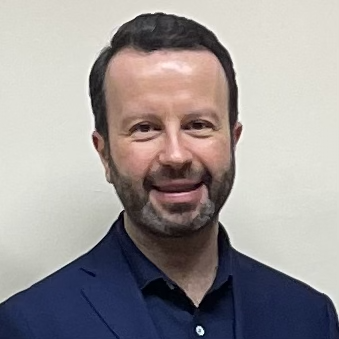
Dimitrios Soudris is a Professor at the School of Electrical and Computer Engineering, National Technical University of Athens (NTUA), leading the Microprocessor and Digital Systems Lab (MicroLab). Previously, he served as Lecturer, Assistant, and Associate Professor at Democritus University of Thrace from 1995 to 2008. Diploma in Electrical Engineering (1987), University of Patras PhD in Electrical Engineering (1992), University of Patras His research focuses on Embedded Systems , Reconfigurable Architectures (FPGAs) , Hardware Accelerators for data centers/space/cloud, Edge Computing , and Low Power VLSI Design . Recent publications highlight trends in: AI/ML acceleration for edge and space applications Secure FPGA architectures for 6G networks Energy-efficient heterogeneous memory systems Approximate computing techniques Transformer optimization for low-power contexts Scientific Awards: INTEL and IBM awards (project LPGD #25256) HiPEAC, DAC, and ISCA awards (2010–2024) XILINX Open Hardware Design Contest (2017, 2019, 2021) He has coordinated >70 R&D projects funded by the European Commission, ENIAC-JU, ESA, and industry partners. As Associate Editor of ACM TODAES and conference chair (PATMOS, VLSI-SOC), he contributes to academic leadership. His lab, MicroLab, specializes in hardware-software co-design for emerging computing paradigms.
Giorgos Stamou is a Professor at the School of Electrical and Computer Engineering, National Technical University of Athens (NTUA), and a Visiting Professor at the MIT Sloan School of Management and MIT Open Learning. He directs the Artificial Intelligence and Machine Learning Systems Laboratory (AILS Lab) and has been a senior researcher at the Institute of Communications and Computer Systems (2000-2008) and an academic visitor at Oxford University (2011-2012). His research spans Deep Learning , Explainable AI , and Knowledge Representation , with a focus on Large Language Models and Multimodal Learning . He has coordinated over 60 funded projects and published 150+ papers. Recent work highlights trends in LLM Evaluation , Gender Bias Mitigation , and Multimodal Music Analysis , reflecting his interdisciplinary approach to AI challenges. Stamou has served on steering committees for W3C working groups (Rule Interchange Format, Web Ontology Language) and contributed to cultural heritage metadata enrichment through the CrowdHeritage projects. He founded NTUA's MSc program in Data Science and Machine Learning (2018-2022) and has organized conference tracks on riddle-solving frameworks and hallucination detection.
Ioanna Kappa is a Professor of Linguistics at the University of Crete, affiliated with both the Department of Philology and the Department of Linguistics. Her office is located in room 009 and she can be reached at telephone number 28310-77269 or via email kappa@uoc.gr. Her educational background includes a PhD in Theoretical Linguistics (Phonology) from the University of Salzburg in 1995, with a dissertation titled "Silbenphonologie im Deutschen und Neugriechischen" (Syllabic Phonology of German and Greek). Professor Kappa's research focuses on several key areas within phonology. Her primary interests include phonological theory , phonological acquisition and development , the phonology of Greek and Greek dialects , the phonology-morphology interface , and language contact phenomena particularly between Greek and Turkish. Her work often examines child language development and dialectal variations, contributing significantly to the understanding of phonological processes in natural language. Her extensive publication record includes two authored books and numerous articles in scientific journals, conference proceedings, and mixed volumes. Recent research trends show a continued focus on Greek child speech, consonant cluster simplification, vowel harmony, and loanword adaptation in Cretan dialect, reflecting her deep engagement with both theoretical and empirical aspects of phonology. She has actively presented her research at Greek and international conferences, demonstrating her commitment to scholarly exchange in the field of linguistics.
Stergios Hadjikyriakidis is a Professor of Computational Linguistics at the Department of Philology, University of Crete. He holds a BA in Greek Philology (Linguistics specialization) from Aristotle University of Thessaloniki, an MSc in Computational Linguistics and Formal Grammar from King's College London, and a PhD in Linguistics from the same institution. He has held academic positions at Royal Holloway (University of London), CNRS (France), Open University of Cyprus, and University of Gothenburg. Research interests include: Natural Language Inference Dialogue Modeling Retrieval-Augmented Generation (RAG) Semantic Parsing Sentiment Analysis Metaphor Detection Interactive Theorem Proving for Natural Language Semantics Computational Dialectology Constructive Type-Theoretical Semantics Probabilistic Semantics Developing language resources for under-resourced languages Interaction between symbolic logic-based approaches and neural methods His work bridges theoretical linguistics and machine learning, focusing on probabilistic NLP implementations and cross-disciplinary methodological synthesis. Literary work : 4 novels in Greek: Grover , Skalomenoi se ena bar , Mēn milās, den eīnai aparemphaton , and an unnamed fourth 2 short story collections: one in English and one in Greek (e.g., Bats'niēs: Pyknes kart-postal apo ta Valkania )
Mattia Fazzini is an Assistant Professor in the Department of Computer Science & Engineering at the University of Minnesota's College of Science and Engineering. His primary academic appointment focuses on software engineering research and teaching, with active involvement in major conferences including ASE, ISSTA, ICSE, and MOBILESoft where he has served in leadership roles such as General Co-chair (MOBILESoft 2023) and Program Committee Co-chair. His research centers on software testing, maintenance, and security , with particular emphasis on mobile applications. Key research themes include: Developing techniques for automated Android testing and maintenance Addressing API compatibility issues across Android versions Creating tools for test oracle generation and bug reproduction Investigating security vulnerabilities in mobile ecosystems Optimizing test suites through test double analysis His recent publications (2021-2025) reveal strong focus on Android-specific challenges, with recurring themes in compatibility testing, automated test generation, and security analysis. Over 60% of his work involves tool development for practical testing scenarios, particularly targeting mobile platforms. Notable recognitions include: IEEE TCSE Distinguished Paper Award (2024) for work on test suite optimization ACM Distinguished Paper Award (2022) for COVID-19 app analysis As an educator, he advises multiple PhD and Master's students while teaching undergraduate and graduate courses including CSCI 3081W (Program Design) and CSCI 5802 (Software Engineering II). His service contributions span conference organization (MOBILESoft, ISSTA, ICSE) and extensive program committee work across top software engineering venues. He leads research projects focused on practical testing solutions with real-world applicability in mobile software development.
Chao Peng is a Principal Research Scientist at ByteDance where he leads the Trae Research team (ByteDance Software Engineering Lab), conducting cutting-edge research on AI agents for software engineering. He also serves as a Part-time Postgraduate Student Mentor at Fudan University's School of Computer Science, bridging industry research with academic mentorship. PhD in Informatics (2021), University of Edinburgh, UK MSc in High Performance Computing and Data Science (2017), University of Edinburgh, UK BEng in Computer Science and Technology (2016), Xuzhou University of Technology, China Dr. Peng's research focuses on the intersection of software testing, program analysis, and large language models. His work explores how AI agents can revolutionize software engineering practices, with particular emphasis on automated bug detection, code generation, and testing frameworks. He has pioneered approaches for evaluating LLM performance in software engineering contexts and developing agent-based systems that enhance developer productivity while maintaining code quality and security. His recent publications demonstrate a clear trend toward integrating large language models with traditional software engineering practices. The research spans code generation evaluation, security vulnerability detection, automated bug reproduction, and issue localization. These works collectively advance the field of AI-assisted software development by addressing practical challenges in reliability, security, and efficiency of AI-generated code. Distinguished Reviewer for FSE'25 School of Informatics Scholarship (fully-funded PhD scholarship) Outstanding Graduate Scholarship at Xuzhou University of Technology Multiple China National Scholarships Honours Spot Bonus at ByteDance Certificate of Achievement for HPCAC Student Cluster Competition Dr. Peng actively mentors students through his role at Fudan University and previously at the University of Edinburgh, where he served as sub-supervisor for MSc projects and teaching assistant for software testing courses. His research has attracted significant industry attention, leading to multiple collaborations between ByteDance and academic institutions. He frequently serves on program committees for major software engineering conferences including ASE, FSE, and ICSE, demonstrating his leadership in the field. As leader of the Trae Research team at ByteDance Software Engineering Lab, Dr. Peng oversees research on AI agents for software engineering, including the application and evaluation of AI agents and training LLMs for agent-based systems. The lab's work focuses on practical systems that predict, detect, diagnose, and fix bugs across various software systems, with particular emphasis on real-world applications and measurable impact on developer productivity.
Jifeng Xuan is a Professor and Deputy Dean at the School of Computer Science, Wuhan University, China. He leads the CSTAR (Centre of Software Testing, Analysis and Reliability) research group and has made significant contributions to software engineering, particularly in software testing, debugging, and analysis. Dr. Xuan completed his bachelor's degree and PhD at OSCAR Lab, School of Software, Dalian University of Technology, China, under the supervision of Prof. He Jiang. He also conducted postdoctoral research at SPIRALS Team in INRIA Lille - Nord Europe, France, working with Dr. Martin Monperrus and Prof. Lionel Seinturier. His research focuses on Software Analysis and Testing , with specific interests in software testing and debugging, software data analysis, and search-based software engineering. Dr. Xuan's work bridges theoretical foundations with practical applications, addressing real-world challenges in software quality assurance. His research has led to numerous publications in top-tier software engineering venues and has influenced both academic research and industrial practices. Dr. Xuan's recent publications demonstrate a strong focus on innovative approaches to software testing, debugging, and analysis. His work spans multiple subfields including log analysis, fuzz testing, bug triage, and automated program repair. He has made significant contributions to understanding software crashes, improving bug report quality, and developing techniques for more effective software testing and analysis. 2025 ACM SIGSOFT Distinguished Paper Award 2025 IEEE TCSE Distinguished Paper Award 2024 CCF NASAC Youth Software Innovation Award 2018 ACM SIGSOFT Distinguished Paper Award 2015 Young Talent Development Program of CAST and CCF 2015 Luojia Young Scholar Program of Wuhan University 2014 Outstanding Doctoral Dissertation of CCF Dr. Xuan actively mentors PhD and master's students through his CSTAR research group at Wuhan University. He has served on numerous program committees for major software engineering conferences including ICSE, FSE, ASE, and ISSTA. His editorial service includes roles on the editorial boards of Empirical Software Engineering (EMSE), PLOS One, and Frontiers of Computer Science. Dr. Xuan has also organized several workshops and conferences, demonstrating his leadership in the software engineering community. As founder of CSTAR (Centre of Software Testing, Analysis and Reliability), Dr. Xuan leads a research team focused on advancing the state of the art in software quality assurance. The group's work spans theoretical foundations and practical applications, with strong connections to industry challenges. CSTAR has established collaborations with both domestic and international research institutions, contributing to a vibrant research ecosystem in software engineering.
Eran Yahav is an Associate Professor in the Computer Science Department at the Technion - Israel Institute of Technology. He previously served as a research staff member at IBM T.J. Watson Research Center from 2004 to 2010. His academic journey began with a B.Sc. from the Technion in 1996, followed by a Ph.D. from Tel Aviv University in 2005. Yahav's research focuses on program analysis, program synthesis, program verification, and machine learning for programming. His work bridges theoretical foundations with practical applications, particularly in developing techniques that help programmers work more effectively with complex frameworks and APIs. He has pioneered approaches that combine static analysis with machine learning to address challenges in code search, completion, and understanding. His recent work heavily intersects with neural network applications to programming tasks, demonstrating how deep learning can enhance traditional program analysis techniques. His publication record shows a clear evolution from traditional program analysis and verification toward integrating machine learning with programming language processing. The most recent articles reveal a strong focus on neural methods for code understanding, including structural language models, adversarial examples for code models, and neural approaches to binary analysis and program synthesis. This represents a significant shift toward leveraging AI techniques to solve longstanding problems in programming languages and software engineering. Yahav has received numerous accolades including the prestigious Alon Fellowship for Outstanding Young Researchers, the Andre Deloro Career Advancement Chair in Engineering, and an ERC Consolidator Grant. He also earned best paper awards at ISSTA 2006 and 2007. As an advisor, Yahav has mentored numerous Ph.D. and Master's students who have gone on to make significant contributions in academia and industry. His research has been supported by substantial grants, including the ERC Consolidator Grant. He also serves as CTO at Tabnine, demonstrating the practical impact of his research. Yahav leads multiple research projects including PRIME (Programming with Millions of Examples), Fender (Preserving Correctness under Weak Memory Models), Saint (Synthesis using Abstract Interpretation), and several others focused on program analysis, verification, and synthesis. His work often involves building practical tools that translate theoretical advances into usable software engineering solutions.
Laura Dietz is a tenured Associate Professor in the Department of Computer Science at the University of New Hampshire, where she leads the TREMA lab. Her academic journey began with a PhD from the Max Planck Institute for Informatics in Saarbruecken, Germany (2011), followed by postdoctoral positions at the University of Massachusetts Amherst (2010-2015) and University of Mannheim (2015-2016). Her educational background includes PhD studies at both the Max Planck Institute for Informatics (2007-2011) under Prof. Gerhard Weikum and Prof. Tobias Scheffer, and earlier research at Humboldt University in Berlin. She has built a distinguished career bridging theoretical computer science with practical applications in information retrieval and machine learning. Dietz's research primarily focuses on the intersection of information retrieval, natural language processing, and knowledge graphs, with a parallel research initiative in watershed data science. She is particularly known for her work on entity-aspect linking, complex answer retrieval, and the vision of automatic Wikipedia construction. Her approach integrates fine-grained knowledge annotations with text understanding to create comprehensive information systems that go beyond traditional 10-blue-links search paradigms. In watershed data science, she applies similar machine learning techniques to environmental data streams, focusing on solute transport analysis during storm events. Her recent publications reveal a strong trend toward fine-grained semantic understanding, particularly in entity-oriented search tasks. She has pioneered methods for entity-aspect linking that significantly improve retrieval accuracy by capturing different contexts in which entities appear. Her work increasingly integrates knowledge graphs with neural architectures, showing sophisticated understanding of how to leverage both structured and unstructured information for better search experiences. Best paper award at JCDL 2018 for work on entity-aspect linking NSF CAREER Award (2019-2023) for "Utilizing Fine-grained Knowledge Annotations in Text Understanding and Retrieval" OSSI Award 2013 from UMass ICB3 for open-source hardware/software Dietz actively mentors PhD and Masters students through the TREMA lab, with current research focusing on entity ranking, topic extraction, conversational search, and watershed forecasting. Her grant portfolio includes the NSF CAREER award and funding from the Northeast Big Data Innovation Hub for forecasting salinity in rivers during storm events. She has also coordinated the TREC Complex Answer Retrieval track (2017-2019), creating important benchmarks for the IR community. The TREMA lab (Text Retrieval, Entity Modeling, and Applications) serves as the hub for Dietz's research activities, bringing together students and collaborators to work on cutting-edge problems in information access. The lab's work spans both theoretical contributions to information retrieval and practical applications in domains ranging from environmental science to scientific publication analysis.
Nadia Polikarpova is an Associate Professor in the Computer Science and Engineering Department at the University of California, San Diego. She leads the Programming Systems group and serves as a member of IFIP Working Group 2.8 on Functional Programming since 2022. Her academic journey includes a PhD from ETH Zurich (Switzerland) under Bertrand Meyer's supervision in 2014, followed by postdoctoral work at MIT CSAIL with Armando Solar-Lezama. Her research interests center around program synthesis, program verification, and type systems, with a focus on building practical tools that enhance software security and reliability. Polikarpova's work bridges theoretical foundations with real-world applications, particularly in the emerging area of AI-assisted programming. Her recent publications demonstrate a strong trajectory in program synthesis techniques, with increasing integration of machine learning approaches. The research spans from foundational type-driven synthesis methods to practical applications for validating AI-generated code and synthesizing heap-manipulating programs. Her work frequently appears in top-tier programming languages venues including PLDI, POPL, ICFP, and OOPSLA. 2020 Sloan Fellow 2020 Intel Rising Stars Award 2020 NSF CAREER Award Distinguished paper awards at PLDI'21, ICFP'20, and POPL'19 Best paper award at FM'15 Polikarpova actively mentors PhD students and has advised numerous graduates who now work at Microsoft Research, University of Michigan, and various tech companies. She teaches core programming languages courses including CSE 130 and specialized graduate courses on program synthesis (CSE 291). Her service to the community includes program committee roles for major conferences and co-chairing the Haskell conference in 2022.
Koushik Sen is a Professor in the Department of Electrical Engineering and Computer Sciences at the University of California, Berkeley. His academic career spans major contributions to software engineering and programming languages research through active participation in premier conferences including PLDI, ICSE, and ISSTA. His research focuses on Software Engineering , Programming Languages , and Formal Methods , with particular emphasis on developing software tools that enhance programmer productivity and software quality. Key research thrusts include automated test generation , symbolic execution , fuzzing techniques , and program synthesis . His work bridges theoretical foundations with practical tool development for real-world software verification challenges. Analysis of his publication record reveals consistent contributions to automated testing methodologies, with recent work integrating machine learning (particularly large language models) into traditional program analysis techniques. His research shows strong continuity in improving software reliability through innovative input generation and vulnerability detection approaches. As an active academic leader, he has served as General Chair for MAPL (2020), Program Chair for ISSTA (2017), and committee member for numerous top-tier conferences including PLDI, ICSE, and SPLASH across multiple years. His academic advising manifests through collaborative publications with students on topics like test corpus expansion (Bonsai Fuzzing), visualization synthesis (VizSmith), and smart contract auditing (ItyFuzz), though specific student names aren't listed in the source material. His research has been supported through conference participations and likely associated grants given his extensive publication record.
Maria Halkidi is an Associate Professor in the Department of Digital Systems at the University of Piraeus, Greece, where she conducts cutting-edge research in data mining and machine learning with over two decades of academic experience. Her educational background includes: Bachelor's degree in Informatics from the University of Piraeus (1997) Master's degree from Athens University of Economics and Business (1999) Ph.D. from Athens University of Economics and Business (2003) Dr. Halkidi's research focuses on fundamental and applied aspects of data mining, particularly recommender systems, graph data mining, cluster validity assessment, and distributed data mining. Her work bridges theoretical frameworks with practical implementations in sensor networks, social media, and real-time analytics, contributing significantly to algorithmic development in these domains. Analysis of her recent publications reveals a strong trajectory toward fairness and diversity optimization in recommender systems, alongside innovative approaches to graph clustering quality assessment and scalable sentiment analysis. Her research consistently addresses real-world challenges in dynamic data environments, with increasing emphasis on multi-stakeholder optimization and privacy-aware recommendation frameworks. Scientific awards: No specific awards or honors were documented in the provided materials. Dr. Halkidi has participated extensively in National and European-funded research projects, including a prestigious Marie-Curie fellowship at the University of California, Riverside. She serves on program committees for major international conferences in data mining and machine learning, demonstrating active community engagement. While specific graduate students aren't listed in the source materials, her professorial role indicates ongoing mentorship of Master's and Ph.D. candidates. She maintains active research affiliations with the Network oriented systems & services lab and the DataStories research group at the University of Piraeus, where she collaborates on interdisciplinary projects involving big data analytics, social network analysis, and distributed systems.
Dimitrios Karapiperis serves as an Academic Scholar at the School of Science and Technology, International Hellenic University (IHU), specializing in Entity Resolution and Privacy-Preserving Record Linkage. Previously, he held a post-doctoral position at the Hellenic Open University. He earned his PhD from the Hellenic Open University and his MSc from the University of York (UK). His doctoral thesis was featured in the IEEE Intelligent Informatics Bulletin of August 2017, highlighting its significance in the field. Dr. Karapiperis' research centers on developing advanced algorithms for entity resolution, including similarity measures, data structures, and scalable distributed solutions using randomization techniques. His work extends to privacy-preserving methods for record linkage with applications in electronic health records, cryptocurrency analysis, and social media sentiment. He has made significant contributions to efficient record linkage in data streams and spatio-temporal data through innovative blocking techniques and approximation schemes. His recent publications (2020-2022) reveal a consistent focus on scalable and privacy-aware record linkage, with increasing applications in financial technology and affective computing. Collaborations with prominent researchers like V.S. Verykios have resulted in numerous publications in top venues including IEEE Big Data and IEEE TIFS, demonstrating expertise in both theoretical foundations and practical implementations. Scientific Recognition Doctoral thesis featured in IEEE Intelligent Informatics Bulletin (2017) Research Projects University of York: Development of Java servlets for converting VisioXML into GSML within the High Integrity Systems Engineering research group University of Macedonia: Standardization of distance learning systems University of Macedonia: Establishment of a data bank for the fur sector in Kastoria University of Macedonia: System for organizing business processes of the Ministry of Macedonia and Thrace Dr. Karapiperis has collaborated with research teams across multiple institutions, contributing to diverse projects from healthcare data integration to government business process optimization, while maintaining active research in scalable entity resolution methodologies.
Dr. Paraskevas Koukaras is an Academic Scholar at the International Hellenic University (IHU) and a Postdoctoral Research Associate at the Information Technologies Institute (ITI) of the Centre for Research and Technology - Hellas (CERTH), affiliated with the School of Science and Technology at IHU. His educational background includes: IT Engineer from the Department of Informatics, Alexander Technological Educational Institute of Thessaloniki (ATEI) PhD in Interdisciplinary data science methods using machine learning for enhanced knowledge acquisition from the School of Science and Technology, International Hellenic University (IHU) Dr. Koukaras' research spans social media analytics, energy systems, and machine learning. His work focuses on energy load forecasting and optimization, data analytics, information modeling, and graph mining in heterogeneous networks. He applies these techniques to address challenges in public health, financial markets, and building energy efficiency through prescriptive analytics. His recent publications (2020-2023) demonstrate a strong focus on applying machine learning to real-world problems, particularly in social media analysis for public health during the COVID-19 pandemic, energy forecasting, and fake news detection. His work consistently employs multi-model approaches leveraging both traditional and deep learning techniques across healthcare, finance, and energy domains. Dr. Koukaras has participated in major European research projects including eDREAM (H2020), DRIMPAC (H2020), PRECEPT, SmartWins, easySRI, and SMACCs, focusing on demand response technologies and energy ecosystems. He contributes to academic training through teaching courses in data science and computing despite no formal advisees being listed. He operates within interdisciplinary research teams at ITI/CERTH and IHU's School of Science and Technology, collaborating on AI applications for energy efficiency, healthcare support, and social media analytics in residential and industrial contexts.
Evangelos Kalampokis serves as Assistant Professor of Information Systems and eGovernment at the Department of Business Administration, University of Macedonia, Greece. He maintains additional affiliations with the Hellenic Open University as an Adjunct Lecturer and with the Information Technologies Institute of the Centre for Research & Technology - Hellas (CERTH-ITI) in Thessaloniki. Dr. Kalampokis earned his Diploma (MEng) in Electrical and Computer Engineering from Aristotle University of Thessaloniki, followed by an MSc in Business Administration-MBA from the University of Macedonia, and completed his Ph.D. on "Linked Open Government Data Analytics" at the same institution. His academic foundation bridges engineering, business administration, and data science. His research spans Digital Government, Digital Health, Business Intelligence, Explainable Artificial Intelligence, Large Language Models, and Knowledge Graphs. With over fourteen years of experience, he has served as technical consultant and project initiator for numerous EU-funded initiatives including H2020 OpenGovIntelligence and FP7 OpenCube. His work consistently focuses on practical applications of advanced data technologies in public sector contexts, with particular emphasis on creating usable AI systems that government agencies can implement. Dr. Kalampokis' recent publications reveal a strategic shift toward healthcare applications of AI, particularly in oncology and cardiology, while maintaining his strong foundation in government data systems. His work demonstrates increasing sophistication in combining Large Language Models with structured government data to create practical decision support tools across multiple domains including healthcare, legal interpretation, and urban planning. He has published over 95 papers in high-impact journals including PLOS Digital Health (IF: 7.7), IEEE Intelligent Systems (IF: 6.1), and Journal of Web Semantics (IF: 3.1), establishing himself as a leading researcher at the intersection of AI and public sector applications. Dr. Kalampokis serves as proposal evaluator for the European Commission under Horizon Europe and has organized major conference tracks including the "AI, Data Analytics & Automated Decision Making" Track at EGOV-CeDEM-EPART 2023. His current research portfolio includes digiGOV-innoHUB (European Digital Innovation Hub for Digital Governance), TealHelix (Building Resilience Through Inclusive Food Labeling), and AI4Deliberation (Artificial Intelligence for Democratic Deliberations), reflecting his growing influence in shaping Europe's digital governance landscape.