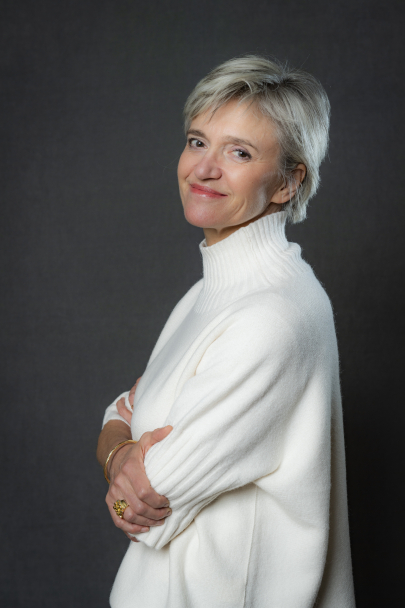
Adeline Nazarenko is a Professor at Sorbonne Paris Nord University and current Director of the Institute of Computer Science and Interactions (INS2I) at CNRS, with prior leadership as Deputy Scientific Director of CNRS Computer Sciences (2016-2021) and Director of CNRS's Mission for Scientific Expertise (2021-2023). Her academic background includes: Degree in Modern Literature from École normale supérieure Doctorate in Computer Science A specialist in Natural Language Processing, her research centers on semantic text analysis and information access methodologies. She champions interdisciplinary collaboration, particularly through her co-direction of the LabEx "Empirical Foundations of Linguistics" since 2011, bridging computational techniques with linguistic theory to advance empirical language studies. Nazarenko has supervised approximately twenty doctoral students and contributed to multiple European research projects. Her leadership extends to directing research teams at the Paris Nord Computer Science Laboratory (LIPN) and shaping national research strategy through CNRS initiatives. She heads the LabEx "Empirical Foundations of Linguistics" and previously led research teams at LIPN, fostering cross-institutional partnerships that integrate computer science with humanities disciplines to explore language processing foundations.
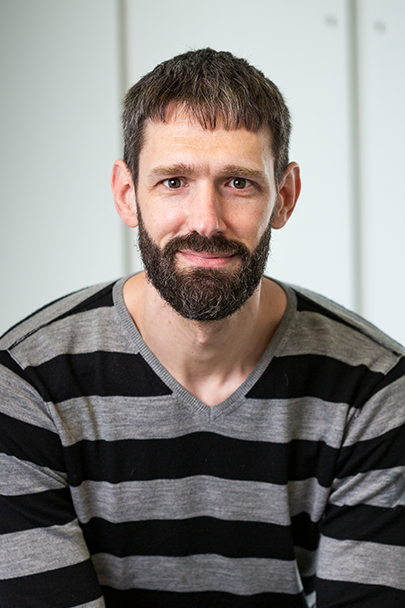
Olivier Serre is a CNRS Research Director working at the Institute for Research in Fundamental Computer Science (IRIF), a joint research unit of CNRS and University of Paris. Since September 2021, he serves as Deputy Scientific Director at the Institute for Information Sciences and Technologies (INS2I) at CNRS. His research focuses on theoretical computer science with particular emphasis on automata theory and formal verification frameworks. Dr. Serre completed his education at ENS Cachan (1999-2003) and earned his PhD in Computer Science from Paris-Diderot University (now University of Paris) in 2004. Following a postdoctoral position at RWTH Aachen, he joined LIAFA (now IRIF) as a research fellow in 2005 and became a CNRS Research Director in 2016. His academic journey reflects deep engagement with foundational theoretical problems and their practical verification applications. His research centers on automata theory and formal languages, with particular expertise in games and logic, infinite structures, and verification of higher-order functional programs. Dr. Serre has made significant contributions to collapsible pushdown systems, recursion schemes, and parity games, bridging theoretical foundations with practical applications in program verification. His work demonstrates exceptional depth in developing decision procedures for complex verification problems previously considered intractable. Dr. Serre's extensive publication record in premier theoretical venues shows consistent contribution to advancing the state of the art. His research trajectory reveals a clear evolution from foundational automata theory toward increasingly sophisticated systems involving higher-order computation and imperfect information, with notable breakthroughs in establishing decidability results for complex verification problems.
Mikaela KELLER serves as an Associate Professor in the Department of Computer Science at the Faculty of Science and Technology, University of Lille, and is an active member of the Magnet research team jointly operated by CRIStAL CNRS laboratory and Inria. Her research portfolio spans critical AI domains: Machine Learning Representation Learning Natural Language Processing Music Information Retrieval She maintains a robust academic mentorship program with current and former doctoral candidates: Current: Bastien Liétard (since Nov 2022), Dinh-Viet-Toan Le (since Oct 2022) Graduated: Gaurav Maheshwari (Nov 2020 - Mar 2024), Pauline Wauquier (Dec 2013 - Dec 2016) Her research operations are based at Inria's Haute Borne campus in Room 220, Building B.
Hélène Vassiliadou is a faculty member at the University of Toulouse Jean Jaurès, affiliated with the CLLE research unit (Centre de Recherches sur la Langue et les Langages de l'Occitan, le Roman et le Français). She specializes in Linguistics with a focus on identity/otherness phenomena in discourse, holding an academic rank equivalent to Associate Professor following her successful HDR defense. Her research centers on epistemological operations of reformulation, categorization, and approximation in language. She investigates discourse markers, connectors, and adverbials as indices of identity/otherness relations, while analyzing discursive coherence/cohesion frameworks. Her work bridges theoretical linguistics with practical applications in psycholinguistics and natural language processing, directly informing language pedagogy and academic supervision practices. Dr. Vassiliadou is embedded in the CLLE research ecosystem, a CNRS-joint unit focusing on Romance languages and linguistic structures. Her December 2023 HDR defense on 'Semantic identity and otherness: from lexicon to discourse' was evaluated by an international jury including scholars from Bar-Ilan University, CNRS/Lattice, and University of Neuchâtel, underscoring her transnational academic engagement within European linguistics networks.
Radia Hannachi is a Senior Lecturer in Language Didactics at the University of Franche-Comté, affiliated with the research team Heritage and Creation in Text and Image (HCTI). Her work bridges language pedagogy and digital innovation, emphasizing: AI-driven writing assessment and generative tools Multimodal grammar instruction Collaborative digital literacy frameworks Her research, often co-authored with international collaborators, examines technology's role in reshaping language education. Recent publications highlight trends in generative AI applications, scientific text simplification, and social media discourse analysis. She actively contributes to CLEF initiatives, focusing on accessibility in academic communication. Key research domains include: Language Didactics : Active learning methodologies enhanced by digital tools Digital Writing : From mind mapping to AI-assisted co-creation Multimodal Communication : Integrating text, image, and data visualization She maintains a focus on practical pedagogical innovations, as evidenced in her development of virtual collaborative environments and strategies for technology integration in curricula.
Nicolas Garcelon leads the data science platform at the Imagine Institute , specializing in developing biomedical data infrastructure for translational research between hospitals and research institutions. The platform manages 82 phenotypic databases covering 480,000 patients and has developed multiple software tools including eCohorte for database creation, BioPancarte for lab result visualization, and Dr. Warehouse for comprehensive clinical data integration. Director of a platform managing 36 million biological results Developed software registered with Program Protection Agency Open-source contributor with GNU GPL licensed Dr. Warehouse His research focuses on automated phenotypic data processing , clinical text mining , and patient similarity metrics for rare disease diagnosis. The platform enables Google-like search across 4 million clinical documents and provides diagnostic support through patient similarity calculations. Key publication themes include: Biomedical data warehouse architecture Phenotypic similarity algorithms Clinical decision support systems Unstructured clinical data processing Rare disease patient recruitment As part of the Necker-Enfants Malades Hospital collaboration, his team manages a data warehouse containing: 4 million clinical documents 36 million biological results 35 million extracted phenotypes Over 1000 completed studies
National School of Advanced Techniques BrittanyFrance
Fabrice Louis is an Associate Professor at INSPE de Bretagne (Institut National Supérieur du Professorat et de l'Éducation de Bretagne), affiliated with the University of Western Brittany, where he specializes in EPS (Physical Education and Sports) Didactics. He is a member of CREAD (Center for Research on Education, Learning and Didactics) and actively participates in the CdPE collective, which meets monthly for action seminars focused on didactic theory and practice. His work bridges philosophical inquiry with educational practice, particularly in physical education contexts. Dr. Louis's research is situated at the interface of Analytical Philosophy and Didactic Anthropology, with a particular emphasis on Joint Action Theory in Didactics (TACD). His scholarly contributions explore the philosophical foundations of sport, examining its anthropological, metaphysical, and ethical dimensions. He has developed a distinctive perspective on sport as a form of joint action that produces unique outcomes through paradoxical competition. His work also engages deeply with Wittgensteinian philosophy, applying linguistic and conceptual analysis to physical education practices and the philosophy of mind. More recently, he has extended his philosophical investigations to examine human-AI interaction through the lens of Ruyer's metaphysics. Analysis of Dr. Louis's publication record reveals a consistent trajectory exploring the philosophical underpinnings of educational practice, particularly in physical education. His work demonstrates a sophisticated integration of continental philosophy (particularly Ruyer and Wittgenstein) with didactic theory. The recurring themes across his publications include the nature of joint action in educational settings, the essential characteristics of sporting activity, and the philosophical implications of embodiment and cognition in learning contexts. His research increasingly connects traditional philosophical questions with contemporary issues like AI and cognitive science. Dr. Louis has made significant contributions through his book chapters and academic publications in journals such as STAPS, Education & Didactics, and Aesthetica. His work has appeared in both French and English language publications, demonstrating international scholarly engagement. His research on the epistemological status of teacher-researchers within the anthropological hypothesis framework has been particularly influential in French educational circles. As an educator, Dr. Louis focuses on preparing future physical education teachers while simultaneously advancing theoretical understanding of didactic processes. His work with the CdPE collective represents an innovative approach to bridging research and practice in teacher education. His scholarship demonstrates how philosophical inquiry can illuminate practical educational challenges, particularly in the domain of physical education where traditional cognitive approaches often fall short.
National School of Arts and Textile IndustriesFrance
Pascal Bruniaux is a Full Professor and Research Supervisor at the École Nationale Supérieure des Arts et Industries Textiles (ENSAIT) in Roubaix, France, where he leads research in textile engineering and human-centered design. His work focuses on the intersection of textile science, digital technologies, and human anatomy, with particular emphasis on creating innovative solutions for garment design and customization. Professor Bruniaux's research spans four major themes: (1) Modeling, simulation and multi-scale perception of textile materials; (2) Modeling of the Human/Clothing/Environment interface; (3) Analysis and classification of typical and atypical human morphologies; and (4) Development of personalized co-creation processes integrating 3D virtual prototyping, human perception, and knowledge. His work bridges the gap between traditional textile manufacturing and cutting-edge digital technologies, with applications ranging from everyday apparel to specialized medical garments and protective clothing. His recent publications demonstrate a strong trend toward integrating artificial intelligence and machine learning with 3D garment design and virtual prototyping. The research spans disciplines including textile engineering, computer science, human factors engineering, and sustainable fashion, with particular emphasis on improving garment fit, comfort, and customization through digital technologies. His work addresses critical challenges in the fashion industry, including reducing waste through virtual prototyping and improving accessibility for people with atypical body morphologies. Professor Bruniaux has received significant recognition for his contributions to the field: 2016 Gratitude Diploma from Gheorghe Asachi Technical University of Iasi for supporting and promoting their interests PEDR Award for PhD students and research supervision, received annually from the French Ministry of National Education since 2021 Throughout his career, Professor Bruniaux has supervised numerous PhD students and led multiple significant research projects funded by various programs including FUI, Erasmus Mundus, and European H2020. His research has been supported by collaborations with institutions across Europe and Asia, demonstrating the international impact of his work. He has also contributed to the development of innovative teaching methods in textile and apparel design, integrating digital tools into the curriculum. As a key member of the GEMTEX laboratory at ENSAIT, Professor Bruniaux leads the Human Centered Design Group, which focuses on developing technologies that place human needs at the center of textile and apparel innovation. The group's work has applications in diverse areas including adaptive clothing for people with physical disabilities, personalized sportswear, and advanced protective garments.
Edwige CAMP is a Professor at the Polytechnic University of Hauts-de-France (UPHF), within the Faculty of Humanities and Social Sciences, Department of English Studies. She has served as a University Professor since 2010, having previously been a Maître de conférences (equivalent to Associate Professor) from 2000-2010 at the same institution (formerly known as University of Valenciennes and Hainaut-Cambresis). She is an elected member of the CRISS laboratory council and participates in research axes 3 and 4. Her educational background includes a Habilitation à Diriger des Recherches (HDR) in English from Strasbourg II in 2008, a PhD in English Studies from Paris III in 1997, a Master's degree in Law from Aix-Marseille III in 1993, and a DEA in Contemporary British Civilization from Paris III in 1992. She also holds a diploma from the Institute of Political Studies of Aix-en-Provence. Professor CAMP specializes in Scottish political life, institutions, and public policies, with particular expertise in devolution processes, Scottish independence movements, constitutional politics within the UK framework, and the impact of Brexit on Scotland. Her research examines the evolution of Scottish political institutions since devolution, the Scottish National Party's strategies, and the complex interplay between Scottish identity and British unionism. She has extensively analyzed referendums, electoral behavior in Scotland, and the development of distinct Scottish policies in areas such as justice, education, and social welfare. Her recent publications demonstrate a clear trajectory focusing increasingly on post-referendum Scottish politics, the evolving relationship between Scotland and the UK following Brexit, and the changing nature of Scottish nationalism. While her earlier work concentrated on the establishment and functioning of devolved institutions, her more recent scholarship addresses contemporary challenges including fiscal autonomy, the impact of Brexit on devolution, and the SNP's evolving political strategies in the post-2014 referendum landscape. Professor CAMP is an active member of several academic societies including the CRECIB (Centre for Studies and Research in British Civilization), the SFEEC (French Society for Scottish Studies), and the SAES (Society of English Studies in Higher Education). She regularly contributes expert commentary to major media outlets including France Culture, France Inter, Radio Canada, France Info, RFI, and France 24, where she provides analysis on Scottish politics, Brexit, and UK constitutional issues. Her teaching responsibilities include British civilization and UK history for undergraduate programs in English Studies, International Business, and Law/AES-Language programs. She also teaches in the Master MEEF programs, covers the British market and European institutions in the International Business Negotiation Master's program, and leads seminars in various research Master's programs, particularly the HVCI Master's.
Jorge Raul Navarro-Cabrera serves as a contracted lecturer in the Faculty of Engineering and Architecture at Peruvian Union University since March 2025, while concurrently holding technical and editorial roles at Universidad Nacional de San Martin in Tarapoto, Peru. His institutional affiliations demonstrate dual engagement in academic instruction and university publishing operations. He earned his Systems and Computer Engineering degree from Universidad Nacional de San Martin, establishing the foundation for his interdisciplinary research career. This educational background directly informs his applied technical approach across diverse domains. Navarro-Cabrera's research program centers on artificial intelligence and data science applications addressing Peruvian societal challenges. His work in health informatics develops non-invasive diagnostic tools using computer vision, while tourism technology research focuses on ICT solutions for destination promotion. Educational data mining constitutes another pillar, particularly unsupervised learning for student retention prediction. These threads converge in practical implementations like municipal sociocultural web applications and immigration risk classification systems. Analysis of his 15 most recent publications reveals a consistent pattern of collaborative research with Miguel Valles-Coral and Lloy Pinedo, spanning healthcare diagnostics, tourism innovation, and educational technology. The geographical focus remains predominantly Peruvian, with methodological strengths in unsupervised learning algorithms and multimodal data analysis. His academic service includes editorial assistance for scientific journals at Universidad Nacional de San Martin, complementing his technical role in the university's editorial department. This combination of teaching, research, and publishing support reflects a multifaceted academic profile engaged with both theoretical and operational aspects of higher education.
Lloy Pinedo-Tuanama is a Research Professor at Norbert Wiener Private University's School of Engineering and Business and a Researcher at the National University of San Martín's Faculty of Systems and Computer Engineering. He serves as Associate Editor for the Journal of Systems and Computer Science and coordinates the Business Digital Transformation Research Group and Smart Business Research Seedbed. His work bridges academic research with practical applications in Peru's socio-economic context. Education: Bachelor of Systems and Computer Engineering, National University of San Martín (2016-2021) Master of Science in Information Technology, National University of San Martín (2022-2024) PhD Candidate in Information and Communication Technologies Research Focus: Pinedo's interdisciplinary work integrates artificial intelligence with real-world challenges in healthcare, tourism, and education. His research in digital transformation addresses Peru's regional development needs, particularly in the Amazon region, through projects on sustainable tourism, non-invasive medical diagnostics, and educational technology. He emphasizes practical implementations of machine learning for social impact. Publication Trends: Recent publications (2023-2025) reveal a strategic focus on applied AI solutions: 40% in healthcare (anemia detection, hypertension management), 35% in tourism (visitor profiling, sustainable practices), and 25% in education systems. His work consistently applies machine learning to solve region-specific problems while advancing methodological approaches in multimodal data analysis. Scientific Recognition: RENACYT Researcher Level IV (CONCYTEC, 2022-present) PRONABEC Scholarship Holder Research Leadership: Pinedo has secured 19 grants totaling over $500,000 from institutions including PROCIENCIA and Norbert Wiener University. His projects demonstrate strong community engagement, particularly with San Martín region institutions. Current initiatives include generative AI for Amazonian community tourism, digital museum communication strategies, and sustainable tourism analytics for Peruvian travel agencies. Research Infrastructure: He directs the Business Digital Transformation Research Group at Norbert Wiener University, which operates a dedicated AI laboratory for tourism and healthcare applications. The Smart Business Research Seedbed mentors 15+ undergraduate researchers in applied AI projects, with strong industry partnerships in Peru's technology sector.
Rindy Anderson is an Associate Professor in the Department of Biological Sciences at Florida Atlantic University's College of Science, Davie campus. Her research focuses on behavioral ecology and animal communication in avian and marine systems, with primary study organisms including Bachman's Sparrow, zebra finches, and bottlenose dolphins. Dr. Anderson's work investigates environmental influences on vocal behavior, song development, and communication networks. Key research areas include temperature effects on avian personality, evolution of complex song syntax, acoustic transmission in natural habitats, and microbiome-behavior interactions. Her integrative approach combines field ecology, bioacoustics, and physiological measurements to understand climate resilience in wild populations. Recent publications demonstrate her leadership in syntax analysis across taxa and microbiome-behavior linkages. Her work reveals how habitat structure shapes song transmission, how ornamentation correlates with microbial diversity, and evolutionary patterns in vocal communication systems. Dr. Anderson has received several prestigious awards: 2023-2024 Faculty Member of the Year for the FAU Davie campus 2022 FAU College of Science Scholar of the Year FAU College of Science Research Fellows Award (2023) She currently mentors seven graduate students across PhD and MS programs, with notable grant successes including American Ornithological Society and Animal Behavior Society funding. Student achievements feature: Ray Pressman: Jacobson Jewish Community Foundation Graduate Scholarship, Dr. G. Alex and Carla Marsh FAU Biological Sciences Graduate Scholarship Lauren Dawson-Scully: Cruickshank Research Award, American Ornithological Society Grant, Animal Behavior Society Grant, John Nambu Scholarship The BABEL Lab (active on Instagram @babel_fau and X @AndersonLabFAU) operates from FAU's Davie campus with field collaborations at Jonathan Dickinson State Park. Current projects examine temperature-behavior relationships in finches, song quality indicators in sparrows, and dolphin vocalization patterns.