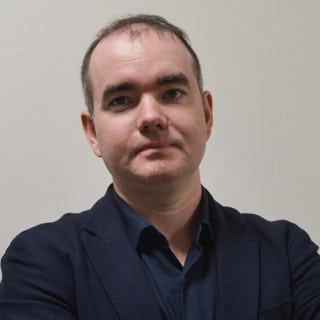
Achilleas Pavlou is an Assistant Professor in Psychology and Clinical Communication Skills at the University of Nicosia Medical School. He holds a BSc in Computer Science from the University of East Anglia (UK), followed by a BSc in Psychology, MSc in Cognitive Neuroscience, and PhD in Cognitive Science/Neuropsychology from the University of Essex (UK). His research focuses on cognitive neuroscience, sleep science, and AI applications in healthcare. He pioneered a machine learning-driven protocol for lucid dream induction via acoustic stimulation, now a core part of his PhD work. His work extends to AI in medical education, including virtual patient simulations powered by generative AI. Research interests include lucid dreaming’s therapeutic potential (e.g., PTSD treatment), motor rehabilitation, and machine learning for medical diagnostics. His published work spans AI in medical curricula, surgical complication analyses, and sleep technology reliability. Pavlou’s contributions bridge neuroscience, technology, and clinical practice, with a focus on innovation in both research and education.
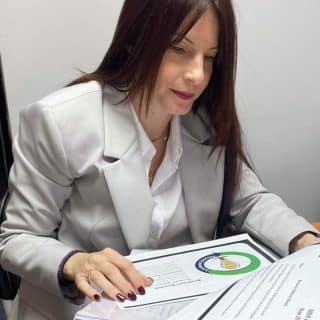
Dr. Elena Kakoulli is a Lecturer in Information Systems and Coordinator of the MSc in Information Systems and Digital Innovation at the University of Nicosia. She holds a Ph.D. in Computer Engineering from Cyprus University of Technology (2015), following a Master’s in Computer Science (2009) and B.Sc. (2007) from the University of Cyprus. Her research focuses on computer architecture, photonics-based interconnection networks, cybersecurity, and AI-driven educational technologies. Notable contributions include work on resilient NoC architectures, distributed storage systems (OctopusFS), and silicon photonics integration for high-performance computing. Dr. Kakoulli’s research interests span network-on-chip (NoC) design, IoT security, and adaptive learning frameworks. She has collaborated on projects such as distributed tiered storage for cluster computing with Dr. Herodotou. Recognitions include awards from the University of Cyprus and Marfin Laiki Bank Foundation for academic excellence during her postgraduate studies. She has also contributed to teaching roles as a Teaching Assistant at the University of Cyprus and lecturer at Ctl Eurocollege, covering courses like computer architecture, compilers, and operating systems. Her publications highlight advancements in cybersecurity models, AI-integrated education tools, and next-generation computing architectures. She actively participates in academic conferences, including the 21st European, Mediterranean, and Middle Eastern Conference on Information Systems (EMCIS 2024), and has served as a Technical Program Committee member.
Spyros Makridakis holds the position of Research Professor (1970–2008) at INSEAD and is affiliated with the Department of Digital Innovation. His research focuses on forecasting methodologies, artificial intelligence, medical predictions, and blockchain technology. He earned his PhD in 1969, though the specific institution is not detailed in the provided texts. Key research interests include advancing forecasting techniques through competitions like the M Competitions, exploring applications of AI and machine learning, and addressing uncertainty in medical and financial decision-making. His work contributes to UN Sustainable Development Goals related to education and innovation. Notable contributions include organizing influential forecasting competitions (e.g., M4 and M5), analyzing the impact of large language models (LLMs) like ChatGPT, and investigating the integration of blockchain with AI. Over 130+ publications span journals like International Journal of Forecasting and PLoS ONE . Despite no explicit mention of awards, his high h-index (107) and 14,000+ citations reflect significant academic influence. Collaborations span global institutions, addressing topics from pandemic modeling to financial market dynamics. Advising/grants: No formal advisee list provided, but his work involves collaborative research networks. Lab/teams: Active in forecasting and AI research groups, though specific lab affiliations are not detailed.
Konstantinos Zagoris is a Lecturer in Databases and Distributed Systems at Neapolis University Pafos, Department of Computer Science. He coordinates ERASMUS programs and student affairs. Previously, he held research roles at Salford University, Institute of Informatics & Telecommunications (Demokritos), and Democritus University of Thrace. Education: Diploma in Electrical and Computer Engineering (2003) - Democritus University of Thrace, Greece PhD in Content and Metadata Based Image Document Retrieval (2010) - Democritus University of Thrace Research focuses on content-based image retrieval, handwritten text recognition, document image processing, and medical image analysis. He has authored over 40 publications in journals and conferences, emphasizing innovative methods like Fuzzy Delphi Method for staff selection, convolutional recurrent neural networks for historical manuscript recognition, and bio-inspired models for document enhancement. Led projects funded by Hellenic/EU grants, with notable contributions to competitions like ICDAR DIBCO and ICFHR H-KWS. His work bridges computer science and digital humanities, advancing archival digitization and medical diagnostic tools.
Dr. Christopher Alexander is an Associate Professor in Technology Enhanced Learning, Applied Linguistics, and TESOL at the University of Nicosia. He currently serves as Head of the AI Learning Centre (AI-LC), leading initiatives to integrate AI into educational practices. Previously, he led the Technology Enhanced Learning (TEL) Centre and the Distance Learning IT Unit, driving innovations like the NEPTON Test and e-learning strategies since 2004. His research focuses on AI-driven learning, learning design, and data analytics, with over 80 single-authored papers and 150+ AI/TEL-related publications. He co-edits the Journal of Teaching English with Technology (Scopus-indexed). As AI-LC director, he develops the Accelerate/PowerFlow platform to enhance teaching and learning via AI, collaborating across academic and IT teams. His work emphasizes AI-infused learning spaces, data-informed education, and pedagogical innovation. He has led five applications and numerous IT projects, ensuring the university remains a leader in AI-driven education. Research contributions span AI applications in education, learning analytics, and language technology. His recent studies address AI-generated writing detection in higher education and safety-critical AI systems in aviation. Collaborations include projects on UAV compliance and neural network-based image restoration. Dr. Alexander holds editorial leadership roles and has shaped UNIC's distance learning and blended learning strategies. His interdisciplinary approach bridges applied linguistics, computer science, and educational technology, contributing to UN Sustainable Development Goals through innovation in learning systems.
Professor Marios Dikaiakos is a faculty member at the University of Cyprus Department of Computer Science, where he also served as Head of Department (2010-2014) and founded the Centre for Entrepreneurship (2014-2021). He holds a Ph.D. and M.A. in Computer Science from Princeton University and a Dipl.-Ing. in Electrical Engineering from the National Technical University of Athens. His research focuses on Cloud Computing systems performance and dependability, and Online Social Network analysis. Research Interests: Professor Dikaiakos leads the Laboratory for Internet Computing, directing numerous EU-funded projects. His work spans network-centric systems, cloud computing infrastructure, and social media analytics, with over 160 peer-reviewed publications. Recent work explores energy efficiency in edge computing and misinformation detection in polarized media environments. Publication Trends: His recent articles show a strong focus on sustainable computing, edge AI systems, and social media analysis, with emerging work on LLM ethics and industrial IoT. Methodologies include benchmarking frameworks, federated learning, and unsupervised NLP techniques applied to large-scale datasets. Collaborations & Labs: As Principal Investigator of the Laboratory for Internet Computing, he oversees multiple research projects and has held visiting positions at Rutgers University, Université de Paris Cité, and National Technical University of Athens. He serves as Associate Editor for Springer's Computing journal.
Marios D. Dikaiakos is Professor of Computer Science at the University of Cyprus where he serves as the Founding Director of the Laboratory for Internet Computing. He previously served as founding Director of the Center for Entrepreneurship (2015-2021) and Head of the Computer Science Department (2010-2014). His academic journey includes a Ph.D. from Princeton University (1994) and a Dipl.-Ing. from the National Technical University of Athens (1988). Dr. Dikaiakos' educational background: Ph.D. in Computer Science from Princeton University (1994) M.A. degree from Princeton University (1991) Dipl.-Ing. degree from National Technical University of Athens (summa cum laude, 1988) His research spans Internet Computing with a focus on Cloud Computing, Online Social Networks, and Vehicular Computing. Recent work explores Edge Computing, Fog Computing, and AI applications in entrepreneurship and social media analysis. His interdisciplinary approach combines technical computing expertise with insights into human behavior and business applications, particularly examining how technology influences entrepreneurship, polarization, and misinformation detection. His recent publications reveal a strong trend toward energy-efficient computing, AI-driven social media analysis, and the intersection of computing with entrepreneurship. The work spans technical domains like Edge and Fog Computing while addressing societal challenges including misinformation detection, polarization analysis, and sustainable computing practices. Many publications demonstrate collaborative research across computer science subfields. Dr. Dikaiakos has received several prestigious awards: Best paper award of the 14th IEEE CloudCom conference (2023) Best student paper award for BenchPilot (2022) Best paper award for 5G-Slicer (2022) Best Demo Award at the ACM/IEEE Symposium on Edge Computing (2020) As an academic advisor, Dr. Dikaiakos has successfully guided PhD students including Demetris Paschalides (2024) and Moysis Symeonidis (2022). He has been principal or co-principal investigator for 25 projects funded by the European Union and the Research Promotion Foundation of Cyprus. His service includes editorial roles at ACM Computing Surveys and Computing journals, and leadership positions in major conferences like EuroPar 2023 and CCGrid 2019. Dr. Dikaiakos founded and directs the Laboratory for Internet Computing at the University of Cyprus, which focuses on cutting-edge research in distributed systems, cloud and edge computing, and social network analysis. The lab has developed multiple research software systems released internationally and maintains active collaborations with institutions across Europe. Current projects address challenges in energy-aware computing, misinformation detection, and AI applications in entrepreneurship.
Valentina Vassallo is a Researcher at the Science & Technology in Archaeology and Culture Research Center (STARC) of The Cyprus Institute, where she serves as a Research Assistant in Digital Heritage. She is also a PhD candidate at the same institution, focusing on 3D digital approaches for archaeological artifact analysis. Her academic background includes two Master's degrees: one in Conservation of Cultural Heritage (Archaeology) and another in Conservation and Management of Cultural Heritage with a specialization in digital methodologies. Her research interests span data documentation, 3D digital acquisition, and semantic web technologies. She has conducted extensive work on 3D documentation pipelines, GIS applications for archaeological spatial analysis, and the development of ontologies for integrating multidisciplinary archaeological datasets. Notable projects include contributions to the New Swedish Cyprus Expedition excavations at Hala Sultan Tekke and the digital refitting of fragmented artifacts like the Palaikastro Kouros statue. Valentina's work emphasizes the FAIR principles for data management and the practical implementation of semantic frameworks to enhance knowledge communication in cultural heritage. Her research bridges traditional archaeological methods with cutting-edge digital tools, aiming to improve data interoperability and accessibility for both academic and public audiences. Her publications reflect a focus on 3D modeling’s role in artifact analysis, virtual reconstructions, and the integration of analytical and digital data. She has also explored topics such as metadata standardization for inscriptions and decision-making support systems in archaeology using natural language processing.
Dr. Elias Iosif is an Assistant Professor in the Department of Digital Innovation at the School of Business, University of Nicosia. He specializes in blockchain technologies, machine learning, and natural language processing. His research focuses on integrating blockchain with AI, semantic models, and spoken dialogue systems. He holds a PhD in Network-Based Distributional Semantic Models from the Technical University of Crete (2013). His career includes postdoctoral roles at the National Technical University of Athens (2014–2017) and research positions at institutions like AT&T Labs and the Athena Research Center. Notable contributions include blockchain maturity models, fraud detection frameworks, and AI applications in pharmaceuticals. Research highlights include over 80 peer-reviewed publications, with recent work emphasizing blockchain scalability, NFTs, and cross-chain interoperability. He co-authored the Handbook of Blockchain Technology (2025), exploring cryptocurrency regulation and tokenization landscapes.
Alexia Papageorgiou is a Professor in Medical Education and Clinical Communication, and Chair of the Centre of Medical Education at the University of Nicosia Medical School. She holds a BA in Psychology from the American College in Greece, an MSc in Health Psychology from City University London, and a PhD in Psychiatry from UCL London University. Her work focuses on clinical communication, medical education innovation, health psychology, and ethical patient care practices. Prof Papageorgiou’s research spans chronic disease management, cultural competence in healthcare, and the integration of technology (e.g., AI, virtual learning) into medical training. She has pioneered studies on empathy curricula, pharmacology learning in problem-based curricula, and barriers to medication adherence in diverse populations. Her recent work emphasizes virtual teaching methodologies, leadership training in medical curricula, and the ethical implications of advance statements in psychiatric care. She actively contributes to interdisciplinary collaborations, including projects on personality’s role in nutrition during pandemics and the use of concept maps for medical assessment. Prof Papageorgiou advises students such as Isioma Igweike and Panayiota Andreou on clinical communication pedagogy. Her grants and projects include funding for empathy curriculum development using VR technology and cross-cultural healthcare education initiatives. She leads the Centre of Medical Education, fostering innovation in medical training through interprofessional collaboration and evidence-based teaching strategies.
Dmitrii Botov holds the position of Assistant Professor in Generative Artificial Intelligence and Machine Learning at Neapolis University Pafos (NUP). He currently serves as Head of the R&D Department at Everypixel company, leading projects in dialogue systems, predictive analytics, video analytics, speech synthesis, and AI education integration. Education: Bachelor's in Computer Engineering (with honors) from South Ural State University (Russia, 2010) PhD in Artificial Intelligence (Natural Language Processing of Short Texts, 2019) Research Focus: Specializes in generative AI, NLP techniques, and large language models. Active in developing educational methodologies for machine learning engineers through project-oriented and problem-based learning. Professional Roles: Designs courses on Project Management in Data Science Leads applied AI research in speech/video generation and education technology Collaborations: Oversees R&D operations at Everypixel, a tech company specializing in AI-driven visual content solutions.
Professor Athena Stassopoulou is a faculty member at the University of Nicosia , serving as Head of the Department of Computer Science within the School of Sciences and Engineering. Her academic journey began with a BSc in Computer Science and Mathematics from the University of Manchester (UK) and a PhD in Artificial Intelligence from the University of Surrey (UK). She has held prestigious research roles at NASA Commercial Space Center, Ohio State University, and the National Imagery and Mapping Agency (USA), focusing on machine vision algorithms and image understanding. Education : BSc (University of Manchester), PhD (University of Surrey) Research Expertise : Uncertain reasoning, Bayesian Networks, Computer Vision, Machine Learning, Medical Informatics, Geographic Information Systems Her research spans decades, integrating Temporal Abstraction and Bayesian Networks for medical diagnosis, particularly in coronary heart disease. Recent work explores Adverse Drug Reaction Classification in Social Media and Dynamic Bayesian Network Models . Funded by NASA, EU, and Cypriot agencies, she has also contributed to web crawler detection and GIS-based decision-making systems. Notable collaborations include partnerships with Ohio State University and European institutions. Her career bridges theoretical AI with practical applications in healthcare and cybersecurity.
Dr. Andreas Artemiou serves as Professor, Vice Rector for Academic Affairs and Quality Assurance, and Dean of the Technology and Innovation School at the University of Larnaca's Department of Information Technologies. His leadership spans academic administration and cutting-edge statistical research with global collaborations. His academic foundation includes: BSc in Mathematics and Statistics from University of Cyprus (2005) MSc and PhD in Statistics from Pennsylvania State University (2008, 2010) Artemiou's research pioneers statistical methods for high-dimensional datasets, specializing in dimension reduction, kernel techniques, and machine learning applications. His work bridges theoretical innovation with practical implementations across engineering, computer science, and medical sciences, particularly evident in pandemic-related mortality analysis and cytometry data processing. Recent publications (2021-2024) reveal accelerating focus on SVM-based dimension reduction, sparse modeling, and medical applications. The trajectory shows increasing interdisciplinary impact, with 2024 works emphasizing matrix data analysis and time-series dimension reduction for real-world health crises. His professional recognition includes: New Researcher Fellow at Statistics and Applied Mathematical Sciences Institute Artemiou actively contributes to major collaborative initiatives without explicit grant details. His editorial role at Computational Statistics and Data Analytics journal and board membership in the European Statistical Computing Association highlight academic leadership. Current projects drive innovation in cytometry analysis and pandemic mortality modeling. He directs CytoPy - an autonomous cytometry analysis framework - and leads pandemic mortality research through the international CMOR consortium, demonstrating commitment to translating statistical theory into public health solutions.
Eleni Constantinou is an Assistant Professor at the University of Cyprus (UCY), affiliated with the Software Engineering and Internet Technologies (SEIT) group. Previously, she held an Assistant Professor position at the Eindhoven University of Technology (TU/e) from 2019–2022. She obtained her B.Sc., M.Sc., and Ph.D. from Aristotle University of Thessaloniki, Greece. Her research focuses on software ecosystems, mining software repositories, software evolution, and cybersecurity in software development. Key research interests include analyzing software health, dependency vulnerabilities in open-source ecosystems, and automated tools for developer collaboration. She has coordinated projects like SECOHealth, investigating interdisciplinary methodologies for software ecosystem health. Her work often bridges technical and social aspects of software development. Eleni’s scholarly contributions span over two decades, with notable studies on Docker security, Dependabot vulnerability mitigation, and bot activity in GitHub. She has also explored API evolution, library feature extraction, and developer practices in open-source platforms like OpenStack. No scientific awards are explicitly listed in the provided text. Her advisory role details and grant funding remain unspecified, though her involvement in interdisciplinary projects suggests active engagement in collaborative research. Eleni is part of the SEIT group at UCY and has contributed to initiatives like the Special Issue on Software Health of Software Ecosystems. Her research often leverages data from GitHub and Stack Overflow to understand developer behaviors and ecosystem dynamics.
Georgia Kapitsaki is an Associate Professor in the Department of Computer Science at the University of Cyprus. She holds a PhD from the National Technical University of Athens (2009) and has extensive experience in both academia and industry. Her research focuses on Software Engineering, particularly Open Source Software Reuse, Context-aware Applications, and Privacy Enhancing Technologies. Recent work examines GDPR compliance in software systems, open source ecosystems, and human aspects of software development. Awards received: Best Paper Award, ICSR 2015 Best Paper Award, MODELS 2008 Doctoral Symposium She has organized international conferences (ICSME 2022, SAC 2019, ICSR 2016), serves on program committees, and contributes to open source projects. She represents the University of Cyprus at GFOSS Open Technologies Alliance and has secured EU funding for research projects.