Patrick T. Brandt is a Professor of Political Science, Public Policy, and Political Economy at the University of Texas at Dallas , affiliated with the School of Economic, Political and Policy Sciences . His work integrates advanced statistical methods with political science, focusing on time series analysis, machine learning, and Bayesian modeling to study political dynamics. His research spans international relations , political economy , terrorist targeting , and conflict forecasting . He specializes in developing novel models for event count time series, including the Bayesian Poisson Vector Autoregression and MS-BVAR packages for R. His NSF-funded projects focus on event data generation and real-time conflict forecasting. Recent publications emphasize domain-specific language models (ConfliBERT variants), graph neural networks for conflict prediction, and machine translation challenges in political text analysis. He maintains the OpenEvent Data Repository and develops software like MSBVAR and PESTS for academic use. Scientific Awards : Robert H. Durr Award for Best Methodology Paper, Midwest Political Science Association (2006)
Payam Barnaghi is a Professor and Chair in Machine Intelligence Applied to Medicine at Imperial College London's Department of Brain Sciences, part of the Faculty of Medicine. He holds multiple leadership roles, including Co-Director of the School of Convergence Science in Human and Artificial Intelligence and Deputy Head of Neurology. His research focuses on AI-driven healthcare solutions, particularly in neurosciences and dementia care. He leads the Translational Machine Intelligence group at the UK Dementia Research Institute (UK DRI) and is a Visiting Professor at University College London's Institute of Child Health. His affiliations include the NVIDIA Deep Learning Institute, the British Heart Foundation Centre for Research Excellence, and the UK DRI Care and Research Technology Centre. He has received awards such as the Wellcome Trust Mental Health Ideathon Award (2023) and the IEEE Outstanding Leadership Award (2017). His work emphasizes remote patient monitoring, digital biomarkers, and explainable AI for early health event detection. Key projects include the TIHM (Technology Integrated Health Management) initiative for dementia care, leveraging wearable sensors and machine learning. He contributes to interdisciplinary efforts in smart care ethics and has published extensively on topics like neural network applications, healthcare data analysis, and clinical decision support systems.
Dr. Richard Segall is a Professor in the Department of Information Systems and Business Analytics at Arkansas State University , affiliated with the Beck College of Sciences & Mathematics . He is also affiliated faculty in the Master of Engineering Management (MEM) Program , the Environmental Sciences Program , and serves on thesis committees at the University of Arkansas at Little Rock (UALR) . Education: Ph.D. in Operations Research, University of Massachusetts at Amherst (1984) M.S. in Operations Research and Statistics, Rensselaer Polytechnic Institute (1975) M.S. in Mathematics, Rensselaer Polytechnic Institute (1973) B.S. in Mathematics, Rensselaer Polytechnic Institute (1971) Dr. Segall's research spans data mining, text mining, web mining, big data analytics, bioinformatics, supercomputing applications, and mathematical modeling . His work bridges business analytics and computational biology , with a focus on transdisciplinary applications in agriculture, healthcare, and space systems. His recent publications emphasize genomic data analysis , plant disease diagnostics , AI-driven healthcare solutions , and space technology forecasting . The integration of machine learning , data visualization , and open-source tools is a recurring theme across domains. Scientific Awards & Grants: Three research awards from the National Research Council (NRC) Software grants from Oracle Corporation and SAS Institute, Inc. Dr. Segall has served on the editorial boards of the International Journal of Data Science , International Journal of Data Mining, Modelling and Management , and International Journal of Fog Computing . He previously contributed to the Arkansas Center for Plant-Powered Production (P3) and currently participates in the Center for No-Boundary Thinking (CNBT) .
Andrew O. Arnold is a Principal Applied Machine Learning Engineer at Shopify and an Adjunct Professor at New York University's Tandon School of Engineering, Department of Finance and Risk Engineering. He earned his Ph.D. in Machine Learning from Carnegie Mellon University and a BA in Computer Science and Artificial Intelligence from Columbia University. Education Ph.D., Machine Learning, Carnegie Mellon University BA, Computer Science and Artificial Intelligence, Columbia University His research focuses on robust machine learning , developing models that perform well in low signal-to-noise regimes, handle distributional shifts (transfer learning), and extract features from unstructured data. Key applications include time series analysis and natural language processing in financial and other domains. Recent publications highlight work on large language models (LLMs) for code generation, including multitask pretraining, contrastive learning, and quantization techniques for efficiency. He has contributed to understanding model robustness and adapting NLP methods to dynamic market conditions. Arnold teaches NYU FRE GY 7871: News Analytics and Machine Learning , covering NLP and ML techniques for quantitative trading strategies. The course emphasizes practical applications of sentiment analysis, text relevance, and novelty detection in financial contexts. He has led teams at Amazon Web Services (AI Labs), served as Chief Scientist at Oracle Alpha, and worked at Microsoft Research, IBM Research, and other institutions. His technical expertise spans code generation , anomaly detection , and NLP for commerce , with patents in these areas.
Bo An is a President's Chair Professor and Head of the Division of Artificial Intelligence at the College of Computing and Data Science , Nanyang Technological University, Singapore . He also holds a courtesy appointment as Professor at the School of Physical & Mathematical Sciences and serves as Director of the Centre of AI-for-X. Previously, he was a Nanyang Assistant Professor (2014-2018), Associate Professor at the Chinese Academy of Sciences (2012-2013), and Postdoctoral Researcher at the University of Southern California (2010-2012). His academic journey began with B.Sc. and M.Sc. degrees from Chongqing University, followed by a Ph.D. in Computer Science from the University of Massachusetts, Amherst (advised by Victor Lesser). Research Interests : Artificial Intelligence Multiagent Systems Computational Game Theory Reinforcement Learning Automated Negotiation Optimization Research Impact : Applications in infrastructure security (deployed by US Coast Guard and Federal Air Marshals), e-commerce, sensor networks, and financial technology. Over 150 publications in top venues like AAMAS, IJCAI, AAAI, ICML, NeurIPS, KDD, and ACM/IEEE Transactions. Scientific Recognition : 2010 IFAAMAS Victor Lesser Distinguished Dissertation Award 2012 INFORMS Wagner Prize 2018 & 2022 Nanyang Research Awards 2017 Microsoft Collaborative AI Challenge IEEE Intelligent Systems 'AI's 10 to Watch' (2018) Leadership Roles : Editor-in-Chief of IEEE Intelligent Systems, Associate Editor for AIJ, JAAMAS, and ACM Transactions. Served as General Co-Chair for AAMAS'23 and Program Chair for IJCAI'27.
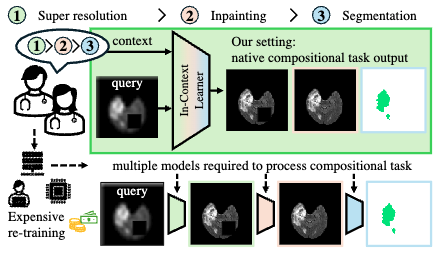
Prof. Dr. Erik Rodner is a faculty member at the University of Applied Sciences Berlin (HTW Berlin), where he serves as a Professor for Machine Learning and Data Science. He also contributes to the School of Engineering Sciences - Technology and Life. His research spans computer vision, machine learning, and biomedical applications, with a focus on learning with limited data, robust visual recognition models, and medical image analysis. He has developed innovative methods for medical diagnostics, industrial classification, and anomaly detection. Recent publications (2025-2016) highlight his expertise in visual in-context learning, semi-weakly segmentation, and active learning frameworks. He has collaborated with institutions such as ZEISS Group, Friedrich Schiller University Jena, and UC Berkeley. Scientific Awards: Award for Excellent Teaching (2023)
Hao Yang is an Assistant Professor in the Department of Civil and Systems Engineering at Johns Hopkins University, with dual affiliations at the Johns Hopkins Data Science and AI Institute and the Johns Hopkins Institute for Assured Autonomy. His research develops Trustworthy Machine Learning methods to enhance urban mobility systems, focusing on traffic safety, equity, and sustainability through ethical AI and human-machine cooperative systems. Yang earned dual bachelor's degrees in Electrical and Computer Engineering from Beijing University of Posts and Telecommunications and the University of London, followed by a Ph.D. in Civil Engineering (Transportation) from the University of Washington. His educational background bridges telecommunications, electrical engineering, and transportation systems. His research integrates spatio-temporal modeling, assured autonomous systems, and multimodal representation learning to address transportation equity and safety. Key projects include edge-AI-powered traffic surveillance, real-time crash identification, and cooperative signal assistance for vulnerable road users. His work emphasizes ethical AI deployment in cyber-physical infrastructure to create sustainable urban mobility solutions. Recent publications reveal a strategic shift toward large language models and multimodal AI for transportation challenges, with strong emphasis on explainability, reliability, and equity in traffic crash prediction, flow forecasting, and autonomous driving systems. This evolution demonstrates his commitment to adapting cutting-edge AI for real-world transportation problems. Yang's scientific contributions have earned significant recognition: Michael Kyte Outstanding Student of the Year Award (2022) High-Value Research Award from AASHTO (2022) Best Paper Award from TRB Information Systems Committee (2023) Best and Outstanding Dissertation Awards (2024) IEEE DTPI Outstanding Paper Award (2022) TRANSFOR22 Data Competition 2nd place (2022) ASCE Bridges Photo Contest First Place (2021) He actively mentors graduate researchers and seeks 2-3 PhD students for Fall 2025 to advance trustworthy AI in transportation. His research is supported by NSF, USDOT, and AASHTO grants including the Real-Time Truck Parking Information System project that received the High-Value Research Award. Current work focuses on edge-AI for traffic safety and multimodal data integration. Yang leads research within Johns Hopkins' Data Science and AI Institute and Institute for Assured Autonomy, collaborating with Transportation Research Board committees. His lab develops real-time perception systems using edge computing and representation learning, with active projects on non-motorized user safety and equitable traffic management for people with disabilities.
Wei Gao is an Associate Professor at the Swanson School of Engineering, University of Pittsburgh. His research focuses on the design, deployment, analysis and measurement of on-device AI architectures and algorithms on mobile, embedded and networked systems. He has strong interests in unveiling analytical principles underneath practical AI deployment problems, and designing systems based on these principles. The developed AI and system solutions are widely applied to various application scenarios, including Internet of Things, edge computing and smart health. Dr. Gao received his PhD from Pennsylvania State University in 2012 and his B.E. from the University of Science and Technology of China in 2005. Dr. Gao's research spans across Cyber-Physical Systems , Infrastructure Security , High Performance Computing , and the Distributed Governance of Information . His work particularly emphasizes on-device AI architectures and algorithms for mobile and embedded systems. He explores how to deploy AI efficiently on resource-constrained devices, with applications in Internet of Things, edge computing, and smart health. His research aims to bridge theoretical principles with practical system implementations, focusing on creating efficient, secure, and reliable AI solutions for real-world deployment scenarios. His recent work has increasingly focused on bringing Large Language Models to edge devices while maintaining performance and security. Analysis of Dr. Gao's recent publications (2021-2025) reveals a strong focus on on-device AI, particularly around Large Language Models for resource-constrained environments. His work addresses critical challenges including model personalization, security against illegal adaptation, sparse activation techniques, and physics-grounded generation. Much of his research targets making AI more efficient, secure, and practical for deployment on edge devices with limited computational resources, while also exploring applications in health monitoring and power systems. Dr. Gao has received significant recognition for his research, including: NSF Faculty Early Career Development (CAREER) Award (2016) Dr. Gao mentors numerous graduate students who contribute to his research in mobile computing, embedded systems, and on-device AI. His research has been supported by various grants, most notably the NSF CAREER award, enabling his team to explore innovative approaches to mobile and embedded AI systems. His lab investigates how to optimize AI for resource-constrained environments while maintaining performance and security, with particular focus on balancing computational efficiency with model accuracy. Dr. Gao leads a research group focused on mobile and embedded AI systems, with particular emphasis on making AI practical for deployment on everyday devices. His team explores novel techniques for model compression, efficient inference, and secure deployment of AI models on edge devices, with applications ranging from health monitoring to smart infrastructure.
Akash Srivastava is a Research Scientist and Principal Investigator (PI) at the MIT-IBM Watson AI Lab in Cambridge, MA, and Chief Architect of Large Language Model Alignment at IBM Research. His work focuses on generative modeling , Bayesian inference , and machine learning for constrained engineering design . He previously conducted PhD research at the University of Edinburgh under Dr. Charles Sutton and Dr. Michael U. Gutmann on variational inference for generative models using deep learning. His research spans Neuro-Symbolic AI , Language Model Alignment , and Synthetic Data Generation , with applications in 3D modeling , urban logistics , and material science . Recent publications highlight advancements in diffusion models , continual learning , and privacy-preserving data synthesis . As a PI, he collaborates with MIT faculty like Prof. Faez Ahmed and Prof. Rafael Gomez-Bombarelli on projects such as generative modeling for mechanical systems , synthetic data in decision-making , and greener delivery networks . He has received funding through a DARPA grant for machine common sense research.
Tanel Alumäe is an Associate Professor of Speech Processing at Tallinn University of Technology's School of Information Technologies, Department of Software Science. With over 15 years of academic experience, he has held various research and teaching positions at the university since 2006, progressing from Research Fellow to Tenured Associate Professor. His work focuses on speech and language technologies with a particular emphasis on Estonian language applications. PhD in Information and Communication Technology (2006), Tallinn University of Technology Research Master's Degree in Informatics (2002), Tallinn Technical University MSc studies at Tallinn Technical University (1999-2002) and Universität Erlangen-Nürnberg, Germany (1999-2000) Diploma in Computer and Systems Engineering (1994-1999), Tallinn Technical University Alumäe's research spans automatic speech recognition, speaker recognition, natural language processing, and computational linguistics with a focus on Estonian language technology. His work addresses challenges in multilingual speech processing, deep learning applications for speech technologies, and developing practical systems for real-world applications including broadcast media processing and accessibility solutions. He has made significant contributions to low-resource language processing and specialized applications for children's speech and emotion recognition. His recent publications demonstrate a strong focus on cutting-edge speech processing techniques including deepfake detection, multi-speaker systems, speech-to-speech translation, and applying large language models to speech applications. The research shows a consistent pattern of addressing both theoretical challenges in speech processing and practical implementations for Estonian language technology. Award 'Keeletegu 2019' from the Ministry of Education and Research Award 'Keeletegu 2011' from Estonian Ministry of Education and Research 3rd award at the Tallinn University of Technology contest for applied scientific projects (2011) Boris Tamm stipend (2007) First prize at the national contest of students' scientific works (2007) Ustus Agur stipend of Estonian Information Technology and Telecommunications Association (2005) Alumäe has supervised postdoctoral researchers including Rena Nemoto (2012-2015) on pronunciation modeling for speech recognition. He serves in editorial and review capacities for major journals including Nature, Computer Speech & Language, and IEEE Transactions. His administrative roles include Secretary of the Northern European Association for Language Technology Board and membership on the Department of Software Science Council at TalTech. His research group at Tallinn University of Technology actively participates in international challenges (IWSLT, Interspeech, Odyssey) and collaborates with institutions worldwide. The team has developed open-source platforms for Estonian speech transcription and created systems for automatic closed captioning of Estonian broadcasts, demonstrating strong practical applications of their research.
Prof. Dr. Patrick Cichy is an affiliated professor at the Institute for Technology and Innovation Management (TIM) of RWTH Aachen University and also associated with Bern University of Applied Sciences. His research agenda lies at the intersection of information systems, innovation management, and data science, with a core focus on privacy & cybersecurity, service and business-model innovation, IoT ecosystems, and text mining/visual analytics. Research Interests: Privacy & Cybersecurity: Investigating how individuals and organizations balance privacy concerns with data sharing incentives, especially in emerging technology contexts. Service & Business Model Innovation: Examining how firms create and capture value from digitally enabled services and personal data. IoT Ecosystems: Studying the dynamics of value creation, legitimacy, and privacy within interconnected Internet-of-Things environments. Text Mining & Visual Analytics: Leveraging advanced computational techniques to map and analyze large-scale discourse and innovation patterns. Across his latest publications (2014–2024), a clear thematic trajectory emerges: an evolving exploration of privacy calculus and data-sharing behavior, methodological advances in text mining for innovation studies, and longitudinal analyses of privacy discourse spanning three decades. These works collectively contribute to both theoretical development and practical guidance for policymakers and managers navigating digital transformation. Contact: Email: cichy@time.rwth-aachen.de Office hours: By appointment
Marylyn D Ritchie, PhD, is the Edward Rose, M.D. and Elizabeth Kirk Rose, M.D. Professor at the Perelman School of Medicine, University of Pennsylvania. She concurrently serves as Director of the Institute for Biomedical Informatics, Vice President for Research Informatics for the University of Pennsylvania Health System, Director of the Division of Informatics in the Department of Biostatistics, Epidemiology, and Informatics, and Vice Dean of Artificial Intelligence and Computing. Education: BS in Biology, University of Pittsburgh at Johnstown, 1999 MS in Applied Statistics, Vanderbilt University, 2002 PhD in Statistical Genetics, Vanderbilt University, 2004 Research Interests Dr Ritchie’s work integrates computational genomics , bioinformatics , pharmacogenomics , and systems genomics to advance precision medicine. She develops statistical and machine-learning approaches to dissect epistasis , genetic epidemiology , and evolutionary computation in large-scale biobanks, with a special focus on cardiovascular disease and Alzheimer’s disease . Her group is also pioneering translational informatics methods that incorporate social determinants of health and fairness metrics into AI-driven clinical decision support. Publication Trends In 2025 alone, Dr Ritchie co-authored more than fifteen high-impact studies spanning vision-language models for 3D CT , multi-omics Alzheimer’s risk prediction , fairness in neuroimaging AI , ancestry-specific pharmacogenomics , and cloud-based polygenic risk score platforms . The collective work highlights a shift from single-omics discovery to integrative, equitable, and clinically actionable models across diverse ancestries. Awards & Honors While specific named awards were not detailed in the text, Dr Ritchie’s endowed professorship and multi-institutional leadership roles signify sustained recognition. Grants & Advising Dr Ritchie leads large NIH, foundation, and industry-funded initiatives that support interdisciplinary teams of postdocs, graduate students, and data scientists. Her lab actively mentors trainees from UPenn’s Cell and Molecular Biology and Genomics and Computational Biology graduate groups. Laboratories & Teams She directs the Ritchie Lab (ritchielab.org), which develops open-source visualization tools such as PhenoGram , PheWAS-View , and Synthesis-View for genome-wide and phenome-wide data exploration. The lab operates within the Institute for Biomedical Informatics and collaborates closely with the Penn Medicine BioBank and multiple clinical departments to translate big-data discoveries into precision medicine workflows.
Dr. Barbara E. Jones serves as an Associate Professor in the Department of Internal Medicine at the University of Utah School of Medicine, with dual appointments in Pulmonary and Critical Care Medicine. Her clinical practice spans diverse healthcare settings within the Veterans Affairs system and academic medical centers, focusing on evidence-based adaptation of care to varied patient populations. Her educational background includes: M.D. from University of Washington School of Medicine B.A. in Philosophy from Dartmouth College Master of Science in Clinical Investigation (M.S.C.I) from University of Utah Postdoctoral Fellowship in Pulmonary and Critical Care Medicine at University of Utah Residency in Internal Medicine at University of Utah Dr. Jones' research centers on decision-making processes in pneumonia diagnosis and treatment, employing a tripartite informatics approach combining population analytics, cognitive behavior analysis, and clinical decision support systems. Her work specifically targets reducing diagnostic uncertainty and treatment variation across healthcare systems, with emphasis on equitable care delivery for diverse patient populations. Current projects investigate diagnostic discordance in community-acquired pneumonia, electronic surveillance for hospital-acquired infections, and machine learning applications for diagnostic error detection. Analysis of her 15 most recent publications reveals consistent focus on pneumonia management systems, with emerging emphasis on pandemic impacts on diagnostic practices and AI-driven quality improvement. Her work predominantly utilizes large VA healthcare datasets spanning 100+ medical centers, featuring mixed-methods approaches that integrate quantitative analytics with qualitative clinician experience assessment. Dr. Jones actively contributes to clinical guideline development and medical education through editorial work in major journals including Chest and Annals of Internal Medicine , where she frequently addresses controversies in pneumonia diagnosis and antibiotic stewardship. Her research program operates at the intersection of the University of Utah Health system and the Veterans Affairs national healthcare network, leveraging electronic clinical decision support implementations across diverse hospital settings including rural and critical access facilities. Current initiatives focus on real-time feedback systems for diagnostic performance improvement and automated surveillance for healthcare-associated infections.
Tetsuya Sakai is a Professor at the School of Fundamental Science and Engineering within Waseda University's Faculty of Science and Engineering. His work focuses on information access, retrieval, and natural language processing, with a particular emphasis on evaluation frameworks for search systems. Affiliations: Waseda University (Faculty of Science and Engineering, School of Fundamental Science and Engineering) Academic Rank: Professor Research Interests : Dr. Sakai's research spans four key areas: (1) Information Access —designing systems for direct and immediate information delivery, (2) Search Evaluation —developing metrics like Height-Biased Gain and hierarchical intent-based diversity measures, (3) Fairness in IR —pioneering frameworks for group fairness in conversational search, and (4) Statistical Reform —advocating Bayesian methods and robust experimental design. His work also addresses privacy inconsistencies in mobile apps and cognitive biases in LLMs. Scientific Awards : Notable recognitions include induction into the SIGIR Academy (2023) , ACM Distinguished Member (2018) , ACM Senior Member (2016) , and multiple DEIM/FIT/CSS Best Paper Awards . He has received teaching honors like the Waseda Presidential Teaching Award (2016) and WASEDA e-Teaching Award (2018) . Article Trends : Recent publications highlight: Advancements in LLM-assisted relevance assessments and hallucination diagnostics for tool-augmented models Conversational search fairness through multi-level evaluation frameworks and group diversity metrics Innovations in 3D medical reconstruction from clinical data and multimodal uncertainty modeling Statistical rigor via randomization tests , credible intervals , and topic set design Privacy analysis in mobile app descriptions and cognitive bias studies in search interaction
Jukka K Nurminen is a Professor of Computer Science at the University of Helsinki (since 2019) and a Research Professor at VTT. He leads the Empirical Software Engineering research group and supervises doctoral students in the Doctoral Programme in Computer Science. His career spans academia and industry, including roles as Adjunct Professor at Aalto University (part-time, 2016-2021) and Principal Scientist at VTT (2016-2019). His research focuses on efficient software systems , particularly energy-efficient software , mobile cloud computing , and data-intensive systems . Recent work addresses AI system testing , ethical decision-making in software , and quantum computing software . His publications highlight trends in quantum algorithms , machine learning for edge computing , and ethical AI . Best Paper Award (2023) Nurminen has supervised 6 PhD theses, 48 MSc theses, and 21 BSc theses. He has secured over 1 MEUR in research funding, including projects like FrameQ and EM4QS for quantum middleware. His teaching innovations include hackathons and summer schools, with excellence recognized in tenure-track evaluation (2018) and adjunct professorship (2015).