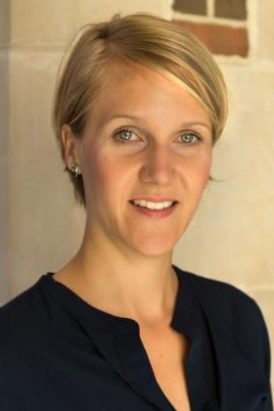
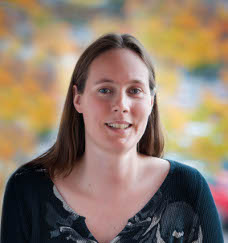
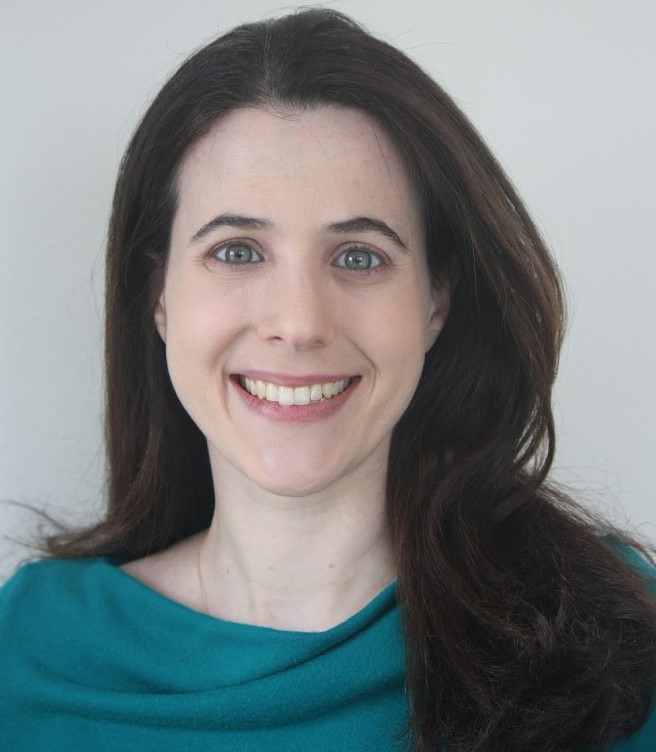
Ryan Heuser is an Assistant Professor in Digital Humanities at the University of Cambridge, specializing in computational approaches to literary and intellectual history, prosody, and artificial intelligence's impact on language. His work bridges data science, machine learning, and literary studies through digital methodologies. Doctoral training in Eighteenth-Century British Literature, Stanford University (2019) Founding member & Associate Research Director, Stanford Literary Lab Junior Research Fellow, King’s College Cambridge (2019-2022) Research interests span computational modeling of semantic revolutions, large-scale literary field analysis, and the intersection of digital methods with historical and intellectual studies. His book Explorations in the Digital History of Ideas (2023) co-edited with Peter de Bolla exemplifies this approach. Recent publications focus on historical semantics, metrical analysis, and digital mapping of emotions in literature, reflecting his interdisciplinary expertise in natural language processing, network theory, and literary data visualization. Currently leads teaching initiatives at Cambridge Digital Humanities and contributes to computational projects exploring textual rhythms and large language models.
Silvia Lindtner is an Associate Professor at the University of Michigan's School of Information and Director of the Center for Ethics, Society, and Computing (ESC). She holds courtesy appointments in the Penny W. Stamps School of Art and Design and the Digital Studies Institute. Her work focuses on the social and cultural study of technology in China and globally, with a focus on data-driven governance, AI ethics, and the intersection of technology and labor. Lindtner has conducted nearly two decades of fieldwork in China, examining innovation ecosystems, digital economies, and the affective dimensions of state control. She is the author of the award-winning *Prototype Nation: China and the Contested Promise of Innovation* (2020) and co-author of *Technoprecarious* (2020). Education: PhD in Information and Computer Sciences from University of California, Irvine; BS/MS in Media Technology and Design from University of Hagenberg, Austria. Research Interests: Science and Technology Studies (STS), China Studies, HCI, Critical Computing, AI Ethics, Data Governance, Labor Studies, and Transnational Digital Economies. She explores how technological systems shape governance, labor practices, and everyday life, particularly in contexts of global inequality and state surveillance. Awards: Joseph Levenson Prize (2021), Francis L.K. Hsu Book Prize (2021), ACM Distinguished Member (2022), and fellowships from the National Committee on US-China Relations (2021-2023) and China-US Scholars Program (2021-2022). Grants: Supported by NSF, IMLS, Intel Labs, Google Anita Borg, and Chinese National Natural Science Foundation. Leads interdisciplinary initiatives including Tech.Culture.Matters research group and Michigan Interactive and Social Computing (MISC) research group. Labs/Teams: Directs the Center for Ethics, Society, and Computing (ESC) and collaborates with the Lieberthal-Rogel Center for Chinese Studies. Current projects include studies on affective control in AI governance and transnational data practices in healthcare and labor.
Alexandra Livada is a Professor at the Department of Statistics within the School of Information Sciences and Technology at Athens University of Economics and Business (AUEB). She holds office at two locations: 12 Codringtonos Street, 2nd Floor and 76 Patision Street, Antoniadou Wing, 3rd Floor in Athens, Greece. Her contact information includes email livada@aueb.gr and phone number +30 210-8203521. Dr. Livada earned her BA and MA in Economics from Athens School of Economics and Business followed by a PhD in Economics from Essex University, UK in 1988. Her academic career has spanned several decades with extensive teaching experience at both undergraduate and postgraduate levels. Her research interests encompass a diverse range of quantitative fields: Quantitative economics and applied econometrics Time series analysis and forecasting techniques Income distribution and inequality measurement Applied financial econometrics Business cycles analysis Medical statistics Index numbers and official statistics Professor Livada's publication record demonstrates consistent scholarly productivity across multiple disciplines, with a noticeable trend toward interdisciplinary work connecting economics with healthcare and social policy. Her recent research shows increasing focus on income inequality across different geographic regions, economic sentiment during crises, and the intersection of medical conditions with statistical analysis. Her scholarly contributions have been recognized through numerous citations in leading journals and books. She has served as a referee for prestigious journals including the European Journal of Political Economy, Journal of Public Economics, and Journal of Insurance, Mathematics and Economics. Professional service highlights include: Member of multiple project teams Marie-Curie project supervisor External evaluator for the Greek State Scholarship Foundation (IKY) External evaluator for the Social Sciences and Humanities Research Council of Canada Co-author of the book "Index Numbers and Official Statistics" Professor Livada maintains an active research agenda with collaborations spanning economics, statistics, and medical fields, demonstrating the interdisciplinary nature of contemporary quantitative research.
Amy Bruckman is a Regents’ Professor and Senior Associate Chair in the School of Interactive Computing at Georgia Institute of Technology. As a Fellow of The ACM and member of the SIGCHI Academy , she contributes to social computing research focusing on online collaboration, cross-cultural understanding, and content moderation. Her 2022 book "Should You Believe Wikipedia? Online Communities and the Construction of Knowledge" explores digital knowledge creation. Education: Ph.D. from MIT Media Lab (1997), B.A. in Physics from Harvard (1987) Research Affiliations: GVU Center, IRI People and Technology Her work addresses social computing challenges including: AI ethics in human-AI interaction Algorithmic bias in content moderation Epistemic justice in online communities Comparative platform analysis (Reddit, Discord, TikTok) Grassroots technology movements Recent publications examine: AI support tools for online counseling Community-driven research frameworks Racial bias mitigation in toxic language detection Designing teachable social media experiences Human trafficking intervention ethics Scientific recognition includes: ACM Fellowship SIGCHI Academy membership She has contributed to: Georgia Tech's Computing Education initiatives Research ethics frameworks for Human-Computer Interaction
Melanie Mitchell is a Professor at the Santa Fe Institute, focusing on artificial intelligence, cognitive science, and complex systems. She is an inaugural Fractal Faculty member and originated the Complexity Explorer platform. PhD in Computer Science from University of Michigan (1990) Faculty/research roles at Santa Fe Institute, Portland State University, Los Alamos National Laboratory, and others Her research explores abstraction, analogy-making, and reasoning in AI and human intelligence. She has authored six books, including the award-winning Complexity: A Guided Tour and Artificial Intelligence: A Guide for Thinking Humans . Recent work examines large language models, conceptual understanding, and cognitive parallels between humans and AI. Her 15 most recent publications address topics like AI reasoning, language model robustness, cognitive metaphors, and the Turing test's evolving relevance. Awards include the Phi Beta Kappa Science Book Award and the Herbert A. Simon Award. She advises numerous PhD and postdoctoral students and leads public outreach through online courses and media appearances.
Gregg M. Garfin is a Professor and Specialist in Climate, Natural Resources, and Policy at the University of Arizona’s School of Natural Resources and the Environment, and Deputy Director for Science Translation and Outreach at the Arizona Institute for Resilience. He holds a Ph.D. in Geosciences from the University of Arizona (2003), an M.S. in Geology and Geography from the University of Massachusetts (1997), and a B.S. in Geology and Geography from the same institution (1993). His work bridges science and societal decision-making, focusing on climate adaptation, drought management, and climate services. He directs the Water, Society, and Policy M.S. Program and has led interdisciplinary projects on climate resilience, including contributions to the Fourth National Climate Assessment. Roles: Professor, Deputy Director, Program Director Affiliations: Arizona Institute for Resilience, School of Natural Resources and the Environment Research Interests His research emphasizes climate adaptation strategies, climate policy, and the co-production of knowledge between scientists and decision-makers. Key areas include: Climate impacts on water resources and ecosystems Extreme heat and drought resilience in urban and border communities Climate change communication and education Awards & Recognition Garfin has received multiple accolades, including AAAS Fellowship (2020), University of Arizona Service Awards (2020, 2015), and the Global Initiative for Academic Networks (GIAN) Visiting Fellowship (2018). His work has been featured in peer-reviewed journals and media outlets, emphasizing actionable science for climate resilience. Grants & Contributions He has led federal and transnational projects, including binational climate resilience initiatives in the U.S.-Mexico border region and flood risk assessments in Seoul, South Korea. His work integrates participatory governance approaches to enhance community preparedness.
Charles M. Jones is a Professor of Finance at Columbia Business School, Columbia University, with an extensive publication record spanning several decades. His research focuses on market microstructure, high-frequency trading, short selling, retail investor behavior, and stock market liquidity. His work has appeared in top finance journals including the Journal of Finance, with his most recent publication "Nonstandard Errors" appearing in the June 2024 issue. Professor Jones's research interests center on understanding how financial markets function at a granular level. His work on market microstructure examines the mechanics of price formation, liquidity provision, and the impact of trading technologies on market quality. His research on short selling has been particularly influential, investigating when short sellers trade, what information they possess, and how regulatory interventions like short sale bans affect market functioning. His more recent work has explored the rise of retail trading through platforms like Reddit and its implications for price discovery, particularly during events like the GameStop phenomenon and the COVID-19 pandemic. Analysis of his publication trends reveals a consistent focus on market efficiency and price discovery mechanisms, with increasing attention to retail investor behavior in recent years. His work spans both theoretical modeling and empirical analysis of market data, often utilizing high-frequency datasets to examine intraday trading patterns. The interdisciplinary nature of his research bridges finance, economics, and information science, contributing to both academic understanding and practical market regulation. Professor Jones has collaborated extensively with researchers across the globe, as evidenced by his numerous co-authored papers with scholars from institutions worldwide. His work has significant implications for market regulators seeking to understand the impact of technological changes and regulatory interventions on market quality and efficiency.
Dragan Huterer is a Professor of Physics and Associate Chair for the Graduate Program at the University of Michigan. His research focuses on cosmology, particularly dark energy and large-scale structure, utilizing data from the Dark Energy Survey (DES) and the Dark Energy Spectroscopic Instrument (DESI) collaborations. He earned his Ph.D. from the University of Chicago (2001) and B.S. from MIT (1996). His work explores the nature of dark energy through cosmological probes like Type Ia supernovae, galaxy clustering, and cosmic microwave background anisotropies. Key contributions include co-leading DESI's first-year cosmological analysis, revealing unprecedented constraints on dark energy and neutrino masses. He also investigates the statistical isotropy of the universe and authored the textbook A Course in Cosmology: From Theory to Practice . Awards include the Friedrich Wilhelm Bessel Research Award (2019) and the Chambliss Astronomical Writing Award (2025). He has advised numerous graduate and undergraduate students, and his funding includes DOE, NSF, and NASA grants. Current projects include the Michigan Cosmology Summer School and leadership in the DESI Collaboration.
Sara Stymne is a Senior Lecturer in Computational Linguistics at the Department of Linguistics and Philology, Uppsala University, where she has been working since 2012. She initially joined as a post-doc (2012-2015), then worked as a researcher (2015-2017), and served as an assistant professor (2017-2023) before her current position as Senior Lecturer. Prior to Uppsala, she was a researcher at Linköping University's Department of Computer and Information Science. Dr. Stymne earned her PhD in Computational Linguistics from Linköping University in 2012 with the thesis 'Text Harmonization Strategies for Phrase-Based Statistical Machine Translation,' following a Licentiate degree in Computational Linguistics (2009) and a Master's degree in Cognitive Science (2006), both also from Linköping University. During her doctoral studies, she spent the autumn of 2010 and spring of 2009 at Xerox Research Centre Europe in Grenoble, France. Her primary research interests focus on cross-lingual natural language processing and digital humanities, with particular emphasis on multilingual dependency parsing. Dr. Stymne is passionate about applying computational linguistics to solve research questions in other fields, including language history, literary analysis, and political science. Her earlier work concentrated on machine translation, with specific interests in discourse-aware translation, compound processing, and error analysis. She has made significant contributions to the development of language technology tools for analyzing dialogue, narrative, and stylistic features in literature. Analysis of Dr. Stymne's recent publications reveals a strong focus on cross-lingual and cross-domain natural language processing. Her work spans multiple subfields including dependency parsing across genres and topics, discourse relation analysis in low-resource languages like Egyptian Arabic, direct speech identification in Swedish literature, and causality detection in governmental documents. A notable trend is her application of NLP techniques to digital humanities problems, particularly in analyzing literary texts and historical language change. Her research often involves creating and utilizing specialized datasets for specific linguistic phenomena across multiple languages. Dr. Stymne actively supervises graduate students, having guided numerous master's and bachelor's theses on topics ranging from speech recognition to multilingual parsing and causality detection. She leads or participates in several research projects including 'Fictional prose and language change' (funded by VR, 2021-2023) and 'Enabling climate-resilient development' (funded by Marianne and Marcus Wallenberg Foundation, 2023-2027), demonstrating her commitment to interdisciplinary research with practical applications. Her work has resulted in several notable software resources including uuPronPred for cross-lingual pronoun prediction, uuparser for dependency parsing, and Docent for document-level machine translation. Within the Computational Linguistics and Language Technology group at Uppsala University, Dr. Stymne contributes to multiple research initiatives focused on developing language technology tools for digital humanities applications. Her team works closely with literary scholars and historians to create computational methods for analyzing large corpora of literary texts, particularly focusing on Swedish literature across different historical periods. Her research bridges the gap between theoretical computational linguistics and practical applications in the humanities, creating new methodologies for quantitative analysis of literary and historical texts.
Dr Dominic McCafferty is a Senior Lecturer in Physiology, Ageing & Welfare at the University of Glasgow, based at the Scottish Centre for Ecology and the Natural Environment. He holds academic roles including Editor-in-Chief of the Journal of Thermal Biology and previously Ibis . His research focuses on thermal adaptation, behavioral thermoregulation, and urban wildlife ecology, particularly using thermal imaging techniques. He has a Ph.D. and BSc in Ecological Science from the University of Edinburgh (1989–1993 and 1985–1989). His work spans physiological studies in mammals, birds, and marine species, emphasizing conservation applications. Notable projects include habitat suitability modeling for urban water voles and thermal physiology studies in elephant seals. His educational background includes advanced studies in ecological science, complemented by post-doctoral research at institutions like the British Antarctic Survey (1993–1998). He has contributed to over 99 publications, advancing methodologies in non-invasive wildlife monitoring and ecological field studies. His editorial roles reflect expertise in thermal biology and avian science. McCafferty has led projects on carrion dynamics, stress physiology, and behavioral adaptations in diverse species, with a focus on applying findings to conservation challenges. Labs/Teams: Scottish Centre for Ecology and the Natural Environment (SCENE), part of the broader University of Glasgow's ecological research network. Collaborations include the Muséum National d’Histoire Naturelle in France and the National Trust for Scotland.
Andy Pavlo is an Associate Professor with Indefinite Tenure in the Computer Science Department at Carnegie Mellon University's School of Computer Science. He is an active member of the CMU Database Group and the Parallel Data Laboratory, where he leads research in database management systems with a focus on self-driving architectures, transaction processing, and large-scale analytics. His work bridges academic research and industry applications through projects like NoisePage, OtterTune (which he co-founded and served as CEO before it ceased operations), and Peloton. Dr. Pavlo's research interests span database management systems with particular emphasis on autonomous database architectures that can self-tune and optimize without human intervention. His work explores transaction processing systems that can handle high-throughput workloads while maintaining consistency, and large-scale data analytics techniques that efficiently process massive datasets. He has made significant contributions to query optimization, database extensibility, and automatic database tuning using machine learning techniques. His recent work on database extensibility revealed critical issues in PostgreSQL's extension ecosystem, showing that approximately 16% of extensions are incompatible with at least one other extension due to API violations and memory errors. His research output demonstrates a consistent focus on practical database systems challenges, with recent publications examining database extensibility, user-defined function optimization, and the cyclical nature of database research. The articles show a strong trend toward making database systems more autonomous, with increasing integration of machine learning techniques for automatic tuning and optimization. His work often combines deep theoretical analysis with practical implementation in open-source systems. Dijkstra Award 2024 for contributions to database systems research Dr. Pavlo actively mentors graduate students, with current advisees including Wan Shen Lim, William Zhang, and Sam Arch (co-advised with Todd Mowry). His former students have gone on to successful careers in both industry and academia. He has secured significant research funding through CMU's affiliate program with major database companies including ClickHouse, DataStax, dbt, Firebolt, MotherDuck, RelationalAI, SingleStore, Spiral, PingCAP/TiDB, Yellowbrick, and Yugabyte. His research is supported by these industry partnerships and likely includes NSF funding given his active participation in the database research community. At CMU, Dr. Pavlo leads the Database Group and organizes several seminar series including "SQL or Death," "Database Building Blocks," and "ML⇄DB Technical Talks." These seminars bring together researchers and practitioners to discuss cutting-edge developments in database systems. He also runs a summer research internship program that has attracted students for multiple consecutive years, indicating a strong research group with ongoing projects and funding.
Professor Jason Rentfrow is a Professor of Personality & Individual Differences and Director of Graduate Education at the University of Cambridge's Department of Psychology. His research focuses on geographical psychology, exploring how regional environments shape personality, cultural differences, and societal outcomes. He also serves as Director of Studies in Psychology at Fitzwilliam College, Cambridge. Key research interests include the psychological effects of geography on traits like openness, conscientiousness, and neuroticism; the role of music preferences in personality expression; and the impact of socioeconomic status on self-concept. He has pioneered studies linking personality to political behavior, urban planning, and public health responses to crises like the 2020 pandemic. His work combines large-scale data analysis with spatial methodology, examining datasets from over 133 nations. Notable contributions include frameworks for measuring regional personality differences and their implications for innovation, entrepreneurship, and electoral outcomes. He has also developed psychometric tools like the Test of Attribute Preferences (TAP) for studying musical preferences. Recent research highlights include analyzing how Roman historical legacies influence modern German well-being disparities, the psychological roots of Brexit and Trump voter behavior, and the link between childhood trauma and adult empathy levels. His interdisciplinary approach spans psychology, sociology, economics, and geography. Professional activities include supervising graduate students, reviewing for top journals, and advising on cultural policy. He maintains an active lab focused on personality-environment interactions and their societal consequences.
Adriana Schulz is an Assistant Professor in the Department of Computer Science & Engineering at the University of Washington's College of Engineering. She leads a research group focused on computational design, computer-aided design (CAD), and digital fabrication. Her work bridges computer science with practical applications in manufacturing, robotics, and sustainable design. Dr. Schulz received her Ph.D. in Computer Science from MIT in 2018 under the supervision of Professor Wojciech Matusik. Prior to her doctoral studies, she earned a Master's degree in Mathematics from IMPA (Instituto Nacional de Matemática Pura e Aplicada) in Rio de Janeiro, where she worked with Professor Luiz Velho, and a Bachelor's degree in Electronics Engineering from UFRJ (Federal University of Rio de Janeiro). Her research interests center around computational tools that enhance design and manufacturing processes. She develops novel algorithms for CAD systems, computational fabrication techniques, and sustainable design approaches. Her work spans multiple domains including robotics, textiles, electronics, and architecture, with a strong emphasis on creating practical tools that designers and engineers can use in real-world applications. She explores how machine learning, particularly neurosymbolic approaches, can improve design workflows and enable new capabilities in computational design systems. Analysis of her recent publications reveals a strong trend toward more intelligent and user-centered design tools. Her research increasingly integrates machine learning with traditional CAD systems to create more intuitive interfaces, supports sustainable design practices with computational tools, and develops novel fabrication techniques that push the boundaries of what's possible with digital manufacturing. She has made significant contributions to zero-waste fashion design, immersion cooling for high-performance computing, and CAD program understanding through novel representation learning techniques. Innovators Under 35 - MIT Technology Review Bolsa Aluno Nota 10 from FAPERJ Engineer 20000 award Dr. Schulz actively mentors several PhD students and postdoctoral researchers, including Haisen Zhao, Ben Jones, Yuxuan Mei, and others, often in collaboration with colleagues across different departments. Her research has attracted significant media attention, with coverage in major outlets including MIT News, BBC, IEEE Spectrum, Wired, and TechCrunch. Her work on Interactive Robogami was noted as the most read article in the International Journal of Robotics Research in its publication year. She leads a vibrant research group at the University of Washington that focuses on computational design systems, with particular emphasis on creating tools that bridge the gap between digital design and physical fabrication. Her team develops novel algorithms for CAD systems, computational fabrication techniques, and sustainable design approaches that have practical applications across multiple industries.
Dr Olga Petri is an Assistant Professor in Human Geography at the Department of Geography, University of Cambridge. She is a Bye-Fellow and Director of Studies in Geography (Part II) at Jesus College, and a Leverhulme/Newton Trust Early Career Research Fellow. Her research bridges cultural and historical geography, queer studies, and more-than-human geographies, with a focus on urban modernity in non-Western contexts. Born in St Petersburg, Olga holds a BA and MA in Geography from Saint-Petersburg State University, an MSc in Urban Studies from University College London (merit), and a PhD in Geography from the University of Cambridge. Olga's research explores four key areas: Queer Geographies in authoritarian urban spaces, More-than-Human Geographies analyzing human-animal relationships, Russian Arctic Studies examining environmental and geopolitical transformations, and Migration Urbanism studying cities as hubs for political refugees. Her work on Beastly St Petersburg and Winged Worlds reconfigures urban history through animal and queer lenses. Scientific awards include the Leverhulme/Newton Trust Early Career Research Fellowship and a 2020 shortlisting for Student-Led Teaching Award . She is a Junior Research Fellow at Wolfson College since 2018. Olga leads postdoctoral research on human-animal dynamics in imperial Russia. She supervises graduate students in cultural/historical geography and urban studies. Her work features in Vital Geographies research group at Cambridge.
Ruth Mostern is Associate Professor of History at the University of Pittsburgh and Director of the Institute for Spatial History Innovation (ISHI). She is Vice-President and President-Elect (2025-2026) of the World History Association and leads the award-winning World Historical Gazetteer project. Education Ph.D. in History, University of California, Berkeley, 2003 Research Interests Mostern is an interdisciplinary historian specializing in world, Chinese, environmental, and spatial history. She investigates long-term human–environment interactions at continental and millennial scales, focusing on how societies organize space, resources, and risk. Her work integrates GIS, digital gazetteers, and environmental science to reconstruct historical geographies of empire, water management, and ecological change. Current projects include: Place: A Global History – a study of itineraries, gazetteers, and databases as technologies of spatial knowledge. The Medieval Climate Anomaly and the Global Medieval Era – cultural adaptations to climate change c. 950-1250 CE. Research Trends Her recent publications span digital environmental humanities, historical GIS, Song-dynasty political economy, and pre-industrial Asian political ecology. A dominant theme is the coupling of state power with environmental transformation, exemplified by her 2021 book The Yellow River: A Natural and Unnatural History (Yale), winner of the 2023 Joseph Levenson Prize. Awards & Honors Joseph Levenson Prize, Association for Asian Studies, 2023 NEH Digital Humanities Advancement Grant, 2023-2025 Digital Humanities Awards 2021 – Best DH Tool (World Historical Gazetteer) Fudan University Fellowship for Studies of Chinese Civilization, 2019 NEH Humanities Connections Implementation Grant, 2018-2020 Chiang Ching-kuo Foundation Summer Institute Grant, 2015-2016 NSF Collaborative Research Grant, 2013-2015 ACLS Digital Innovation Fellowship, 2011-2012 Advising & Grants Mostern welcomes graduate students interested in environmental, global, Asian, or digital history. She has directed multiple externally funded projects, including the NSF-funded Center for Historical Information and Analysis and NEH-supported initiatives on water in Central Asia and global historical gazetteers. Labs & Teams She directs the Institute for Spatial History Innovation (ISHI) at the University of Pittsburgh, a hub for interdisciplinary research integrating spatial technologies with historical inquiry. ISHI hosts the World Historical Gazetteer , providing open tools and datasets that link knowledge about historical places across world regions.